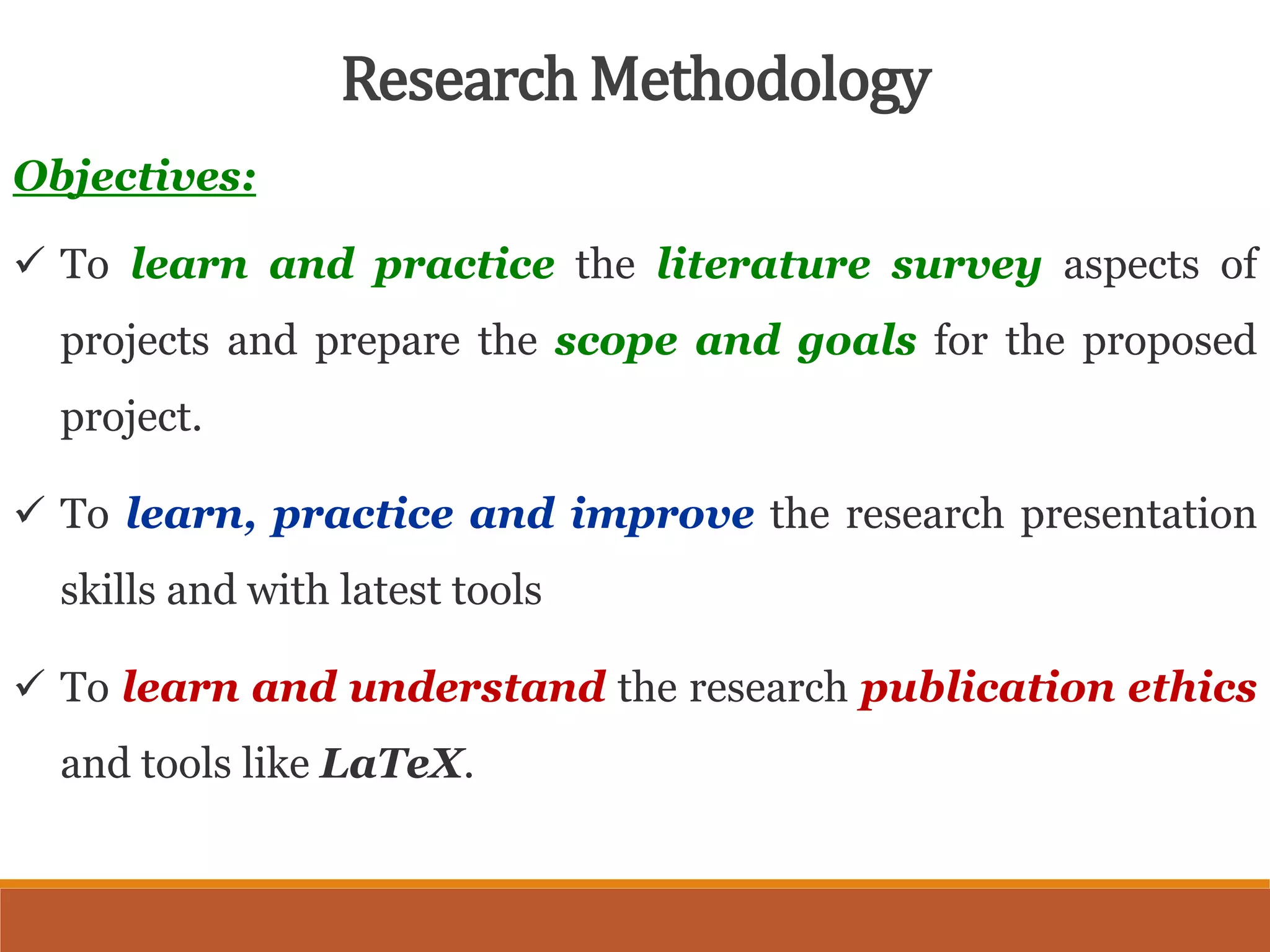
Objectives:
 To learn and practice the literature survey aspects of
projects and prepare the scope and goals for the proposed
project.
 To learn, practice and improve the research presentation
skills and with latest tools
 To learn and understand the research publication ethics
and tools like LaTeX.
Research Methodology
Key words:
 Plagiarism
 Seminar
 LaTeX
 Journal
 Ethics
 Scopus
 Science Citation
 Web of Science
 Thomson Reuters & H-index
Research Methodology
Contents:
 Logical Thinking – Approach Towards Analytical Probing –
Defining Problems – Perceptive Views of Conclusions –
Selection of Project Domain – Publication Ethics–Tools and
Evaluation –Basic Components of a Research Paper –
Procedures and Processes –Journal Types–Scopus– Web of
Science –Thomson Reuters–Science Citation Index–H-Index
Research Methodology
Contents:
 Google Citations–Selection of Tentative Project Area –
Process of Literature Survey – Literature Survey Components
and Procedures–Presentation of Selected Project Proposal –
Oral Presentation Preparation of a Report on the Selected
Project Proposal in LaTeX Format
 Attending Special Invited Lectures – Practical Orientation in
Searching and Collecting Literature – Online Tools –
Presenting a Seminar on Selected Project Proposal &
Submitting Project Report Prepared Using LaTeX.
Research Methodology
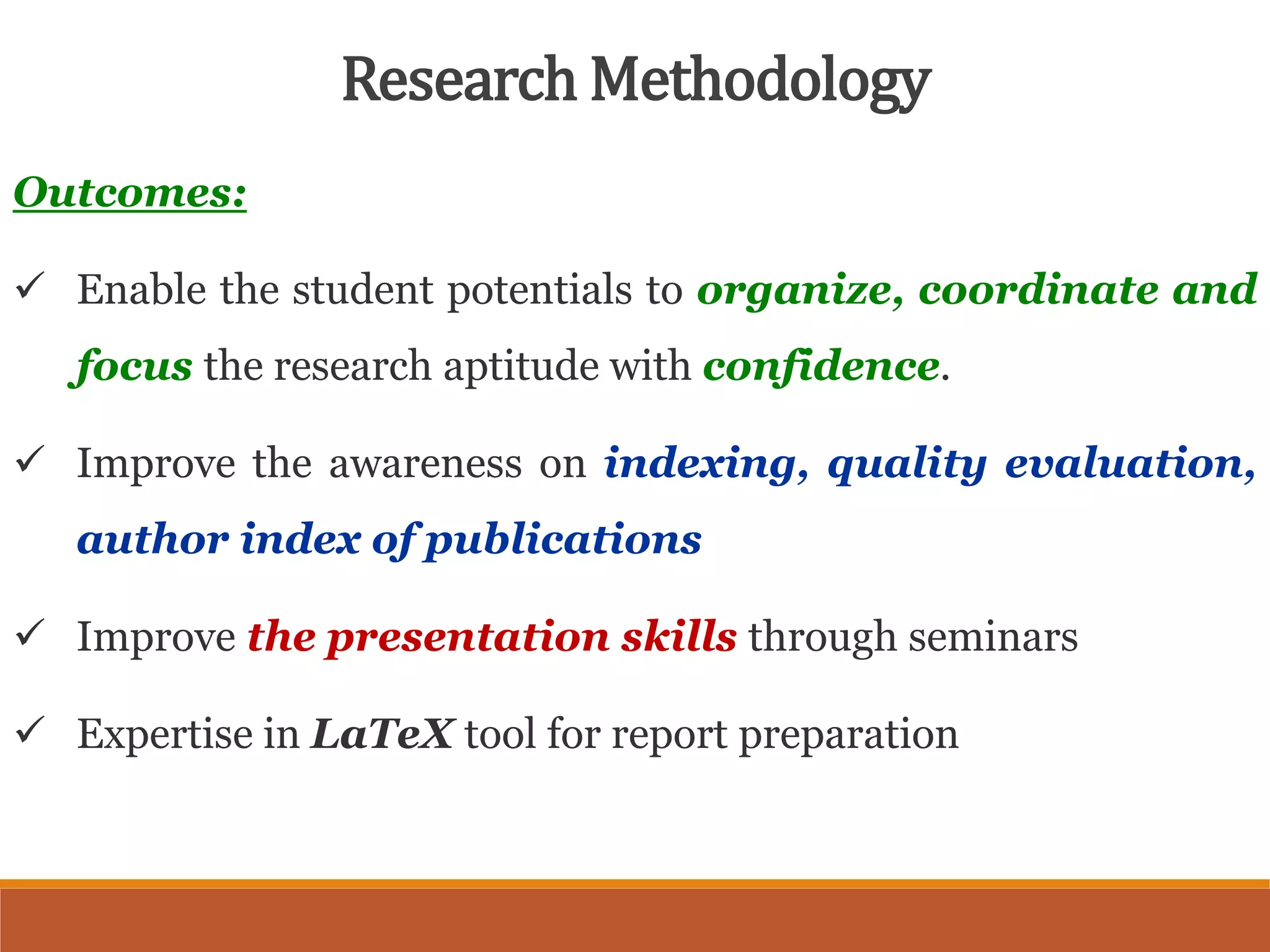
Outcomes:
 Enable the student potentials to organize, coordinate and
focus the research aptitude with confidence.
 Improve the awareness on indexing, quality evaluation,
author index of publications
 Improve the presentation skills through seminars
 Expertise in LaTeX tool for report preparation
Research Methodology
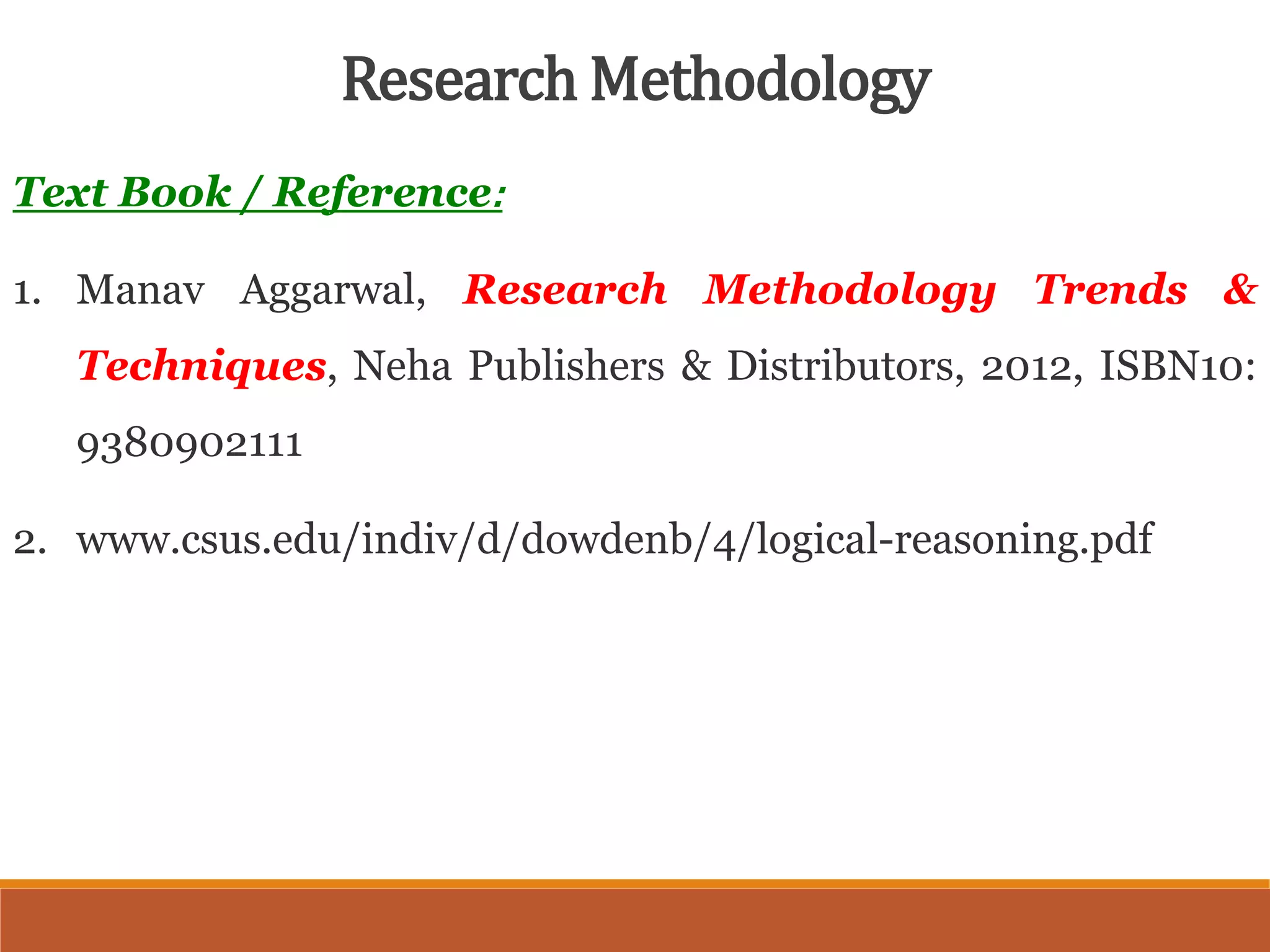
Text Book / Reference:
1. Manav Aggarwal, Research Methodology Trends &
Techniques, Neha Publishers & Distributors, 2012, ISBN10:
9380902111
2. www.csus.edu/indiv/d/dowdenb/4/logical-reasoning.pdf
Research Methodology
Research can be defined as “an activity that involves
finding out, in a more or less systematic way, things
you did not know”. (Walliman and Walliman, 2011, p.7)
Methodology is “the philosophical framework within
which the research is conducted or the foundation upon
which the research is based” (Brown, 2006).
Research Methodology of a research describes research
methods, approaches and designs in detail highlighting
those used throughout the study, justifying the choice through
describing advantages and disadvantages of each
approach and design taking into account their practical
applicability to our research.
Research Methodology
Aims and Objectives of Research Methodology
Formulation of research aims and objectives in an appropriate
manner is the most important aspect of your thesis because it
determines….
The scope, depth and overall direction of the research
Common mistakes in formulation of research aims and objectives
usually relate to the following
1. Choosing the topic too broadly
2. Setting unrealistic aims and objectives
3. Choosing research methods incompatible with the timeframe
available
Example of SMART research objectives
The following is an example:
Research title: Effects of organizational culture on achieving its aims and
objectives: a case study of Virgin Atlantic
Research aim: To assess the effects of Virgin Atlantic organizational culture
on achievement of its aims and objectives
Following research objectives would facilitate the achievement of this aim
1. Analyzing the nature of organizational culture at Virgin Atlantic by
September 1, 2017
2. Identifying factors impacting Virgin Atlantic organizational culture by
September 16, 2017
3. Analyzing impacts of Virgin Atlantic organizational culture on
employee performances by September 30, 2017
4. Providing recommendations to Virgin Atlantic strategic level
management in terms of increasing the level of effectiveness of
organizational culture by October 5, 2017

Aims and objectives of Research methodology

  • 1.
    Objectives:  To learnand practice the literature survey aspects of projects and prepare the scope and goals for the proposed project.  To learn, practice and improve the research presentation skills and with latest tools  To learn and understand the research publication ethics and tools like LaTeX. Research Methodology
  • 2.
    Key words:  Plagiarism Seminar  LaTeX  Journal  Ethics  Scopus  Science Citation  Web of Science  Thomson Reuters & H-index Research Methodology
  • 3.
    Contents:  Logical Thinking– Approach Towards Analytical Probing – Defining Problems – Perceptive Views of Conclusions – Selection of Project Domain – Publication Ethics–Tools and Evaluation –Basic Components of a Research Paper – Procedures and Processes –Journal Types–Scopus– Web of Science –Thomson Reuters–Science Citation Index–H-Index Research Methodology
  • 4.
    Contents:  Google Citations–Selectionof Tentative Project Area – Process of Literature Survey – Literature Survey Components and Procedures–Presentation of Selected Project Proposal – Oral Presentation Preparation of a Report on the Selected Project Proposal in LaTeX Format  Attending Special Invited Lectures – Practical Orientation in Searching and Collecting Literature – Online Tools – Presenting a Seminar on Selected Project Proposal & Submitting Project Report Prepared Using LaTeX. Research Methodology
  • 5.
    Outcomes:  Enable thestudent potentials to organize, coordinate and focus the research aptitude with confidence.  Improve the awareness on indexing, quality evaluation, author index of publications  Improve the presentation skills through seminars  Expertise in LaTeX tool for report preparation Research Methodology
  • 6.
    Text Book /Reference: 1. Manav Aggarwal, Research Methodology Trends & Techniques, Neha Publishers & Distributors, 2012, ISBN10: 9380902111 2. www.csus.edu/indiv/d/dowdenb/4/logical-reasoning.pdf Research Methodology
  • 7.
    Research can bedefined as “an activity that involves finding out, in a more or less systematic way, things you did not know”. (Walliman and Walliman, 2011, p.7) Methodology is “the philosophical framework within which the research is conducted or the foundation upon which the research is based” (Brown, 2006). Research Methodology of a research describes research methods, approaches and designs in detail highlighting those used throughout the study, justifying the choice through describing advantages and disadvantages of each approach and design taking into account their practical applicability to our research. Research Methodology
  • 8.
    Aims and Objectivesof Research Methodology Formulation of research aims and objectives in an appropriate manner is the most important aspect of your thesis because it determines…. The scope, depth and overall direction of the research Common mistakes in formulation of research aims and objectives usually relate to the following 1. Choosing the topic too broadly 2. Setting unrealistic aims and objectives 3. Choosing research methods incompatible with the timeframe available
  • 9.
    Example of SMARTresearch objectives The following is an example: Research title: Effects of organizational culture on achieving its aims and objectives: a case study of Virgin Atlantic Research aim: To assess the effects of Virgin Atlantic organizational culture on achievement of its aims and objectives Following research objectives would facilitate the achievement of this aim 1. Analyzing the nature of organizational culture at Virgin Atlantic by September 1, 2017 2. Identifying factors impacting Virgin Atlantic organizational culture by September 16, 2017 3. Analyzing impacts of Virgin Atlantic organizational culture on employee performances by September 30, 2017 4. Providing recommendations to Virgin Atlantic strategic level management in terms of increasing the level of effectiveness of organizational culture by October 5, 2017