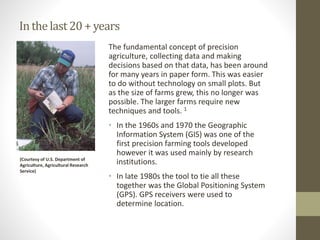
Precision agriculture involves collecting data about variability within fields in order to make targeted management decisions on a sub-field level. This allows for more efficient use of inputs like fertilizer and chemicals by varying application rates within a single field based on differences in soil type, crop growth, and other factors. While the concept has existed for hundreds of years, recent technologies like GPS, GIS, sensors, and data analysis software have enabled much more precise data collection and implementation at scale. Potential benefits include cost savings from reduced input usage, improved environmental stewardship, and increased economic returns through optimized field management.