Irrigation water management
1. Flood System:
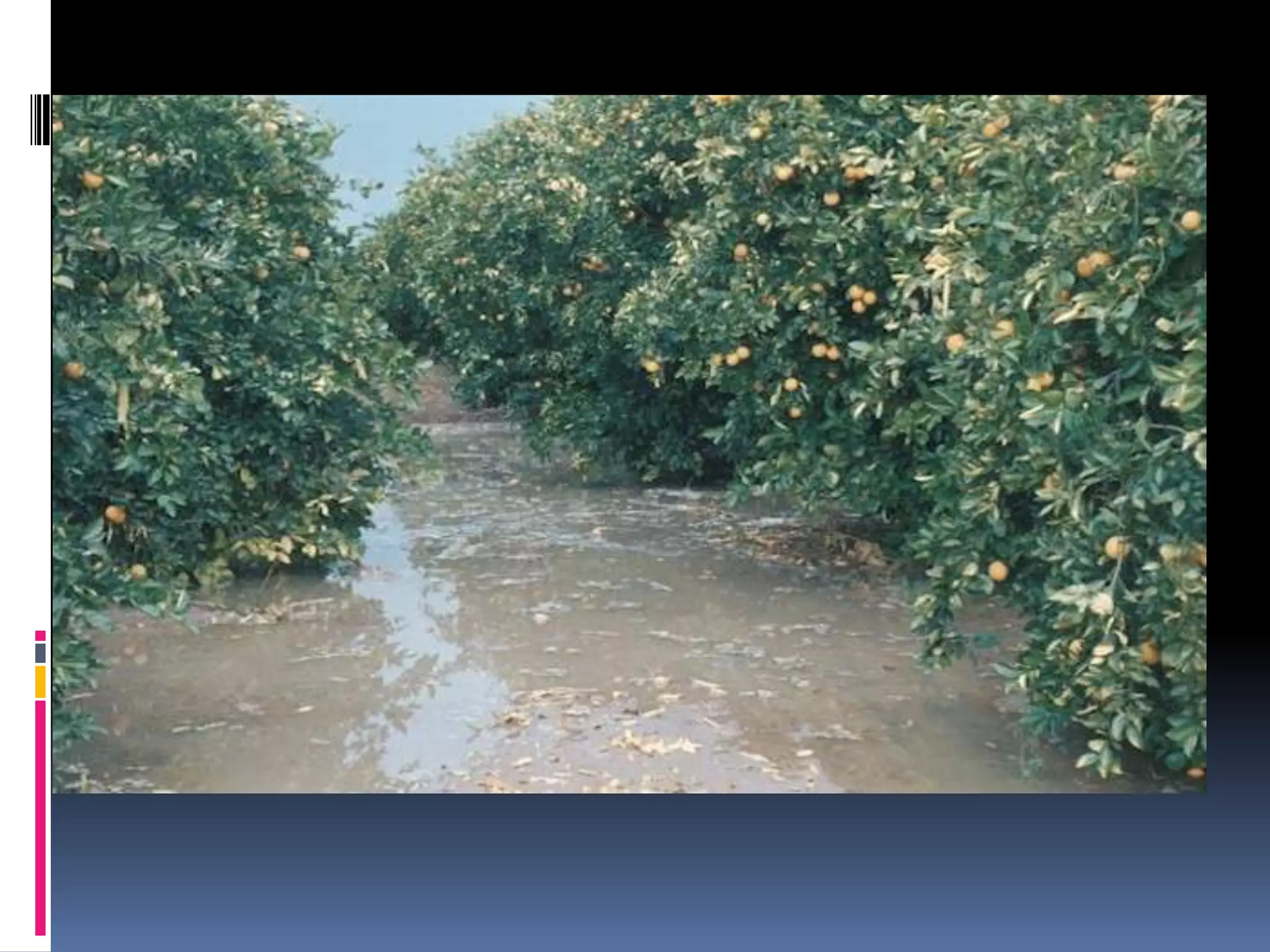
 When the land is flat, the entire area is flooded
   by letting in water. This system is commonly
   practiced in canal or tankard areas, in wet lands
   for banana, and other crops.
 This is a water method as the water is supplied in
   excessive quantity.
 The entire area is allowed to saturate with water
   and the interval between two irrigations is kept
   fairly long. It also causes stagnation in shallow
   and ill drained soils.
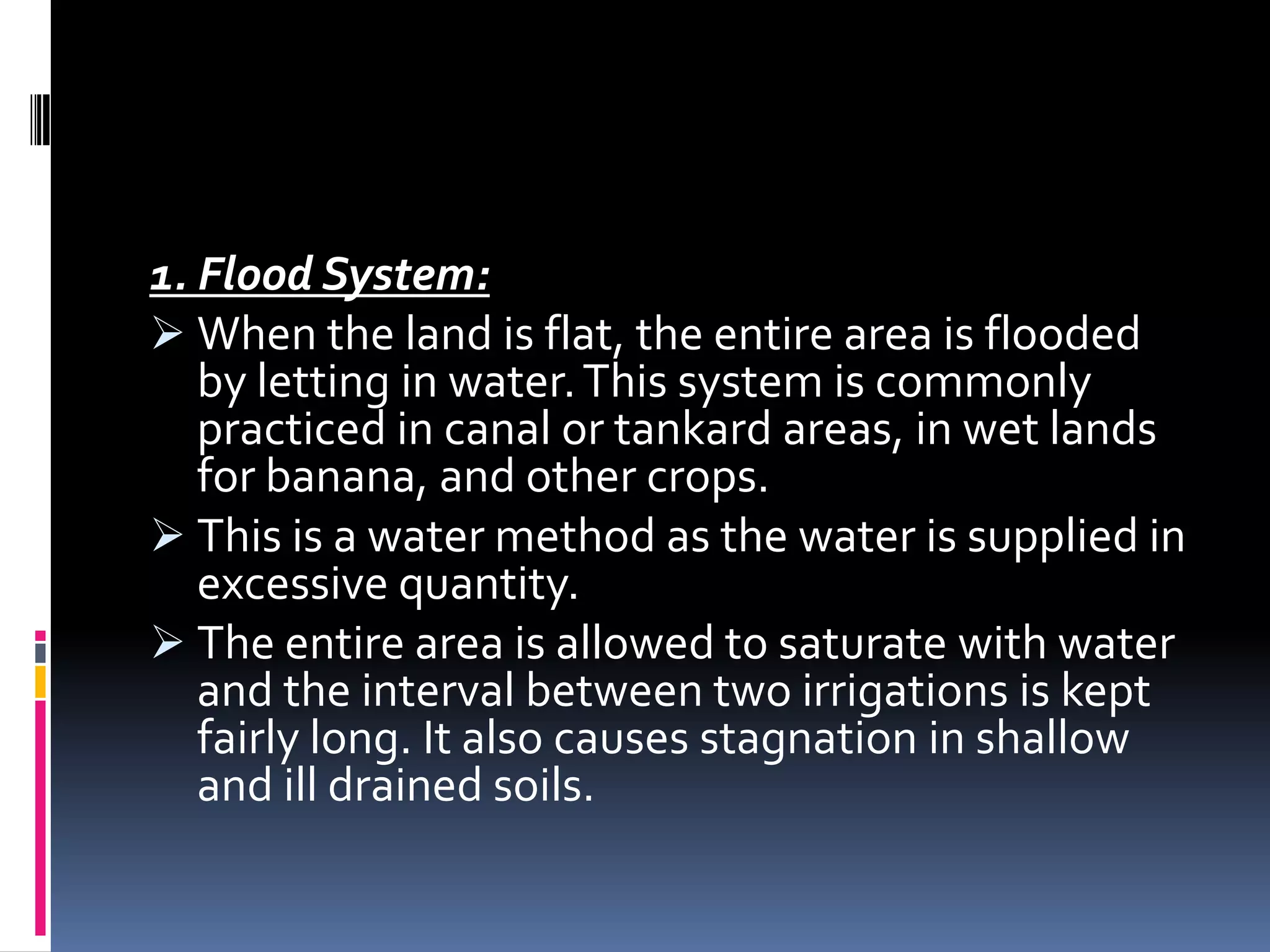
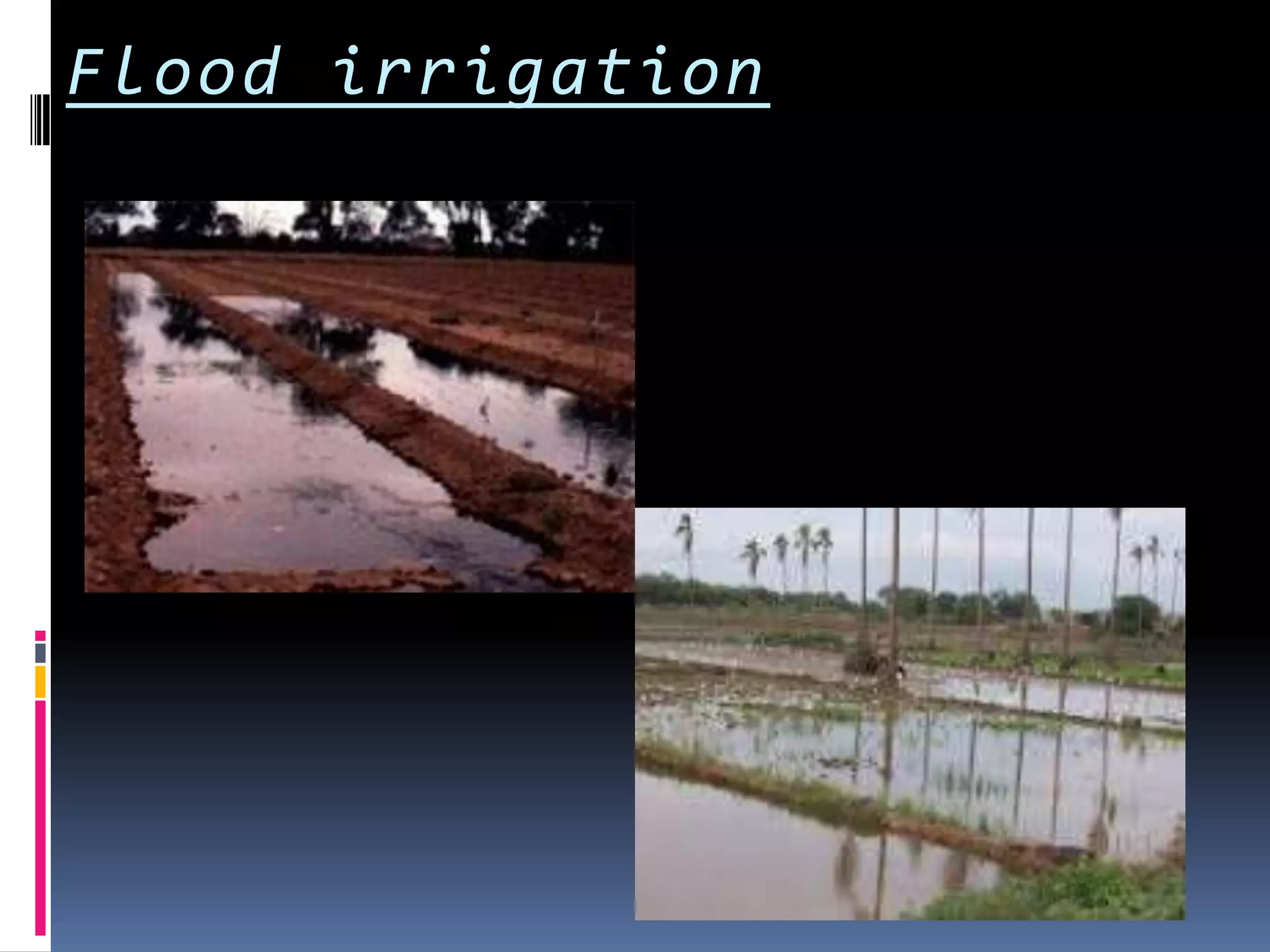
Flood irrigation
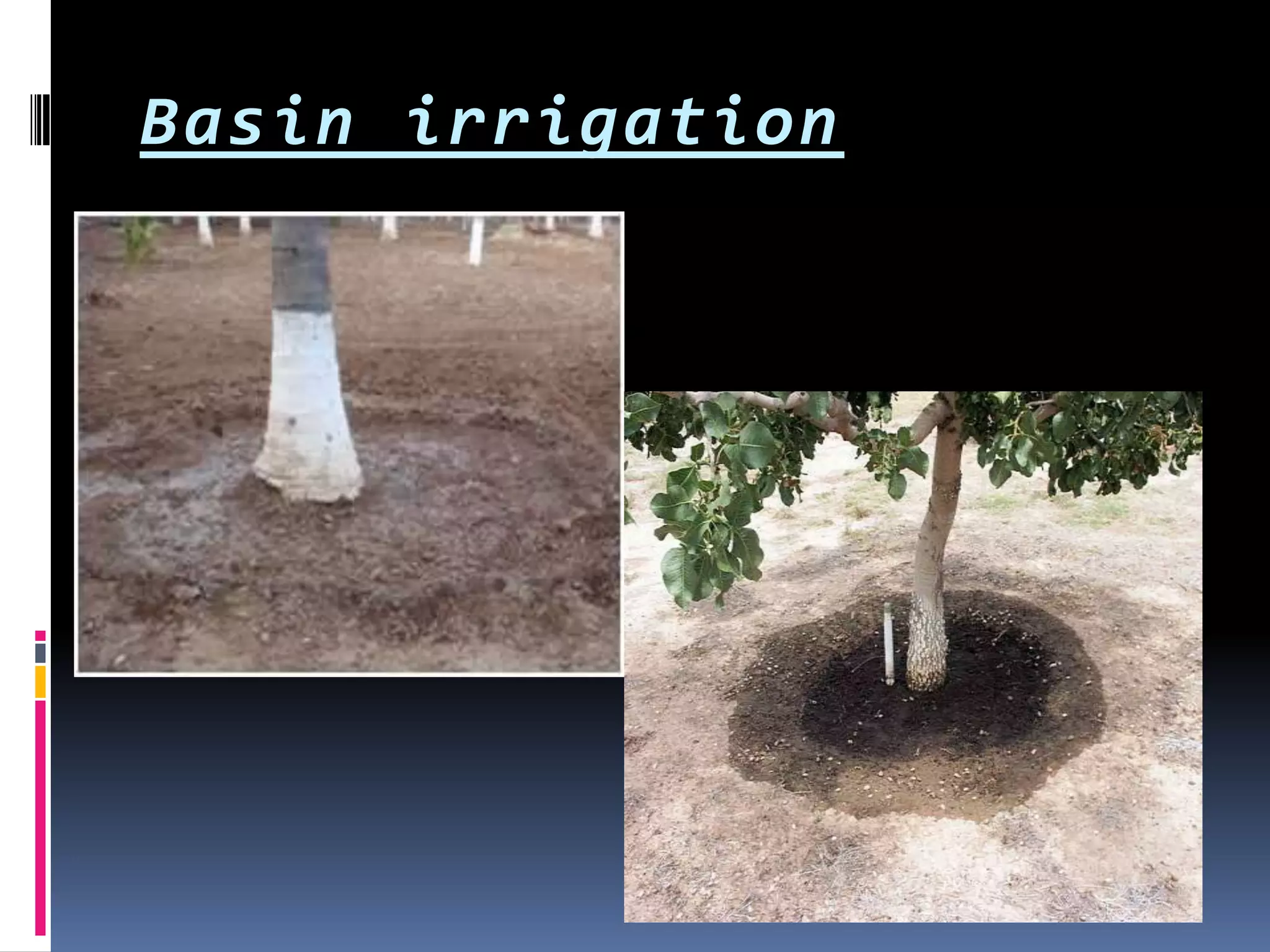
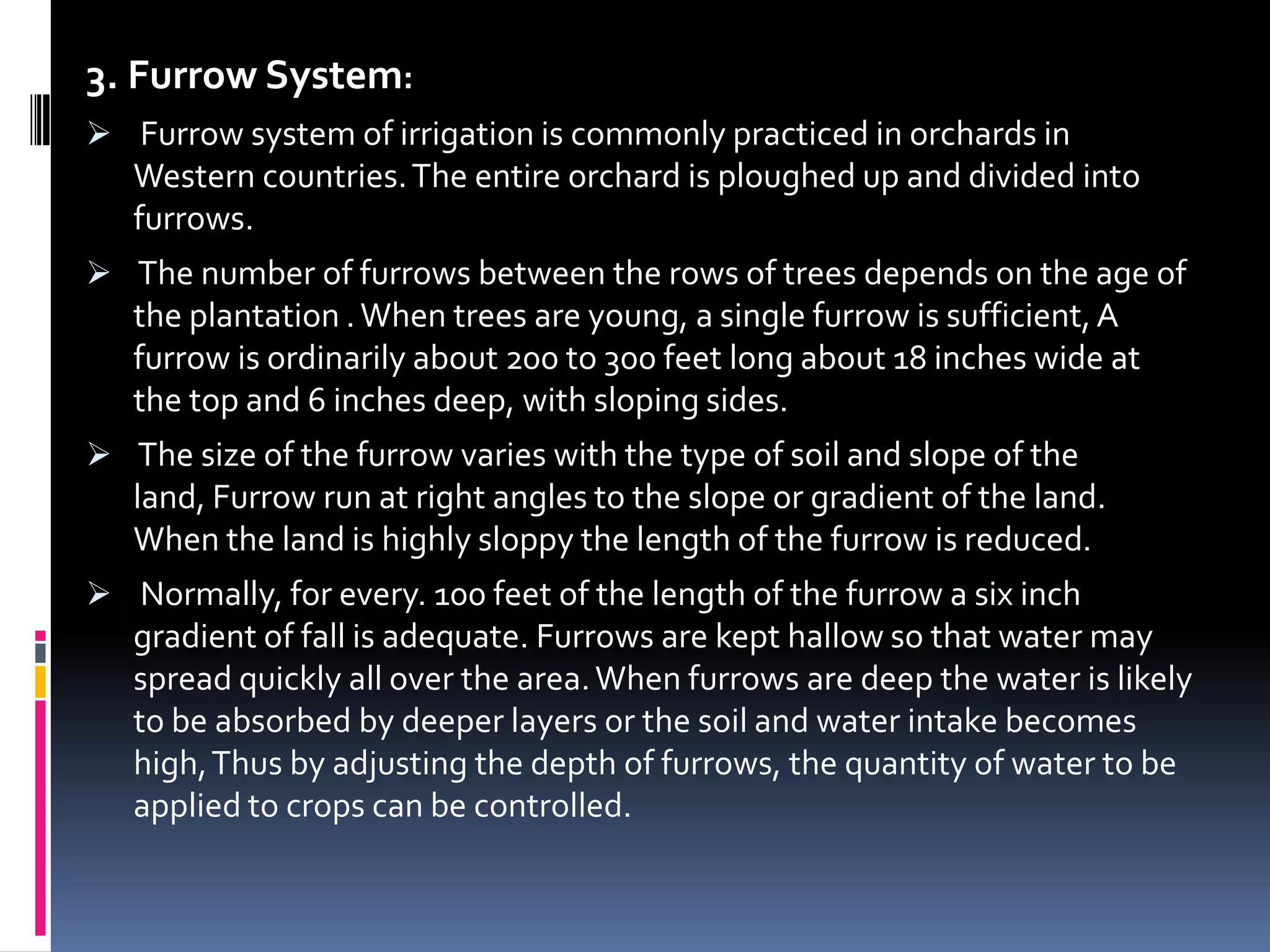
2. Basin System:
 This system is widely practiced on large scale all over
  the world. A basin is a small patch or land bounded
  around a tree.
 It is usually a square with the tree in the centre. The
  soil gradually slopes down from, the base of the tree to
  the edge of tile basin, resulting in a trough.
 Circular basins are also made sometimes. Water let In
  from the main water channel first reaches the
  periphery, soaks the outer area and "gradually spreads
  towards the trunk, and thus is prevented from coming
  in contact with the tree trunk. This system is useful for
  loamy soils.
Basin irrigation
3. Furrow System:
 Furrow system of irrigation is commonly practiced in orchards in
   Western countries. The entire orchard is ploughed up and divided into
   furrows.
 The number of furrows between the rows of trees depends on the age of
   the plantation . When trees are young, a single furrow is sufficient, A
   furrow is ordinarily about 200 to 300 feet long about 18 inches wide at
   the top and 6 inches deep, with sloping sides.
 The size of the furrow varies with the type of soil and slope of the
   land, Furrow run at right angles to the slope or gradient of the land.
   When the land is highly sloppy the length of the furrow is reduced.
 Normally, for every. 100 feet of the length of the furrow a six inch
   gradient of fall is adequate. Furrows are kept hallow so that water may
   spread quickly all over the area. When furrows are deep the water is likely
   to be absorbed by deeper layers or the soil and water intake becomes
   high, Thus by adjusting the depth of furrows, the quantity of water to be
   applied to crops can be controlled.
Furrow irrigation
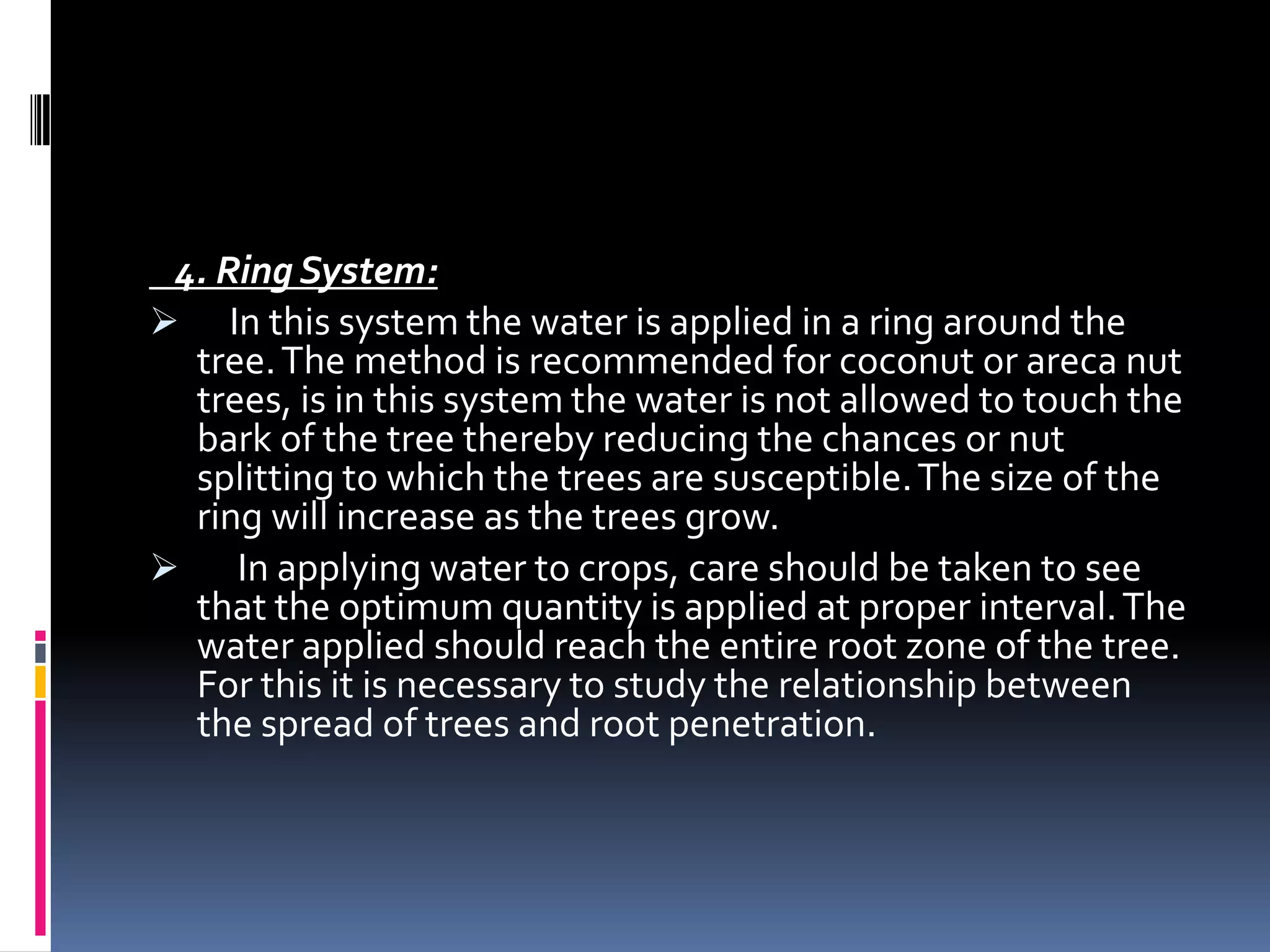
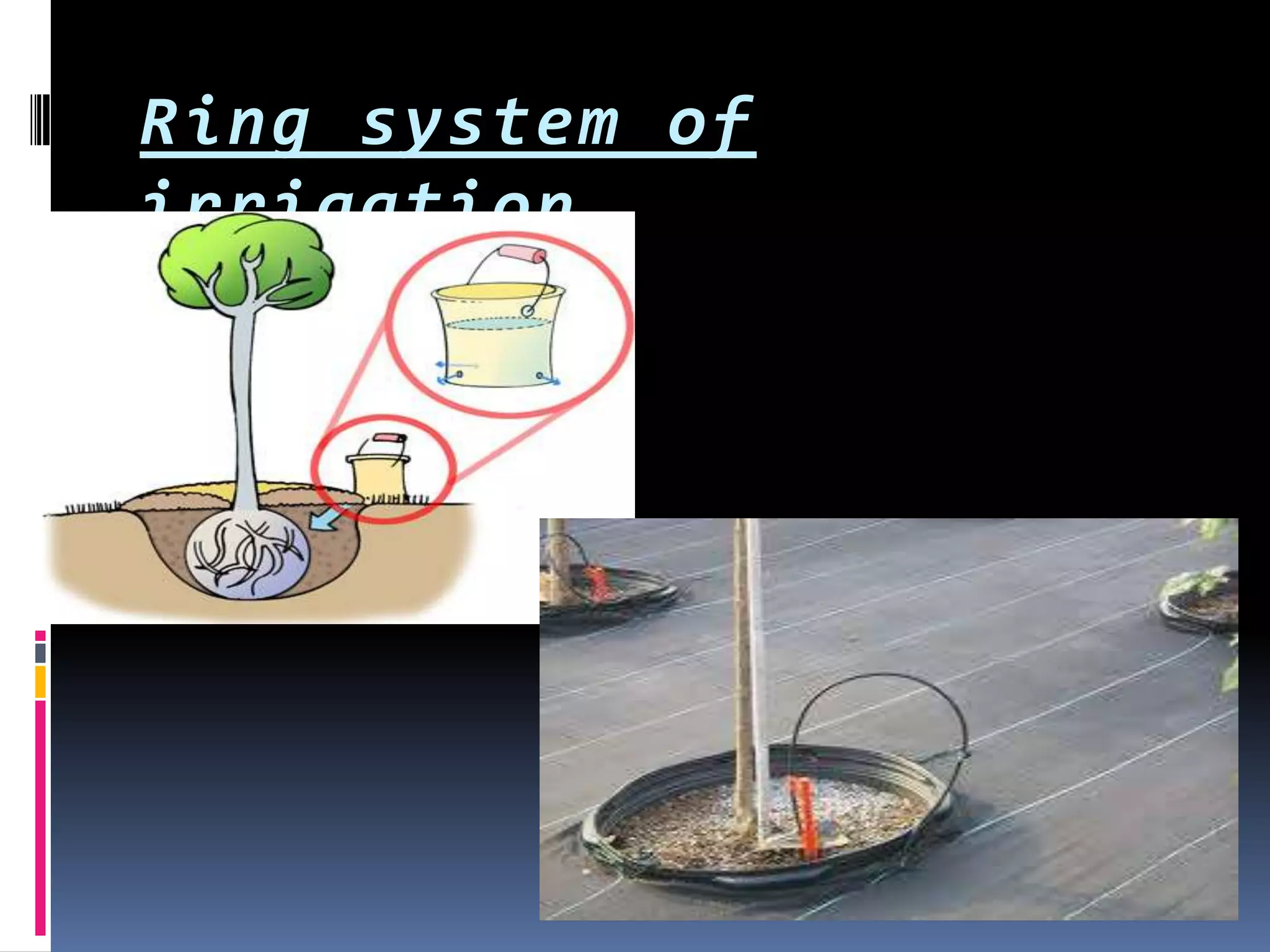
4. Ring System:
 In this system the water is applied in a ring around the
  tree. The method is recommended for coconut or areca nut
  trees, is in this system the water is not allowed to touch the
  bark of the tree thereby reducing the chances or nut
  splitting to which the trees are susceptible. The size of the
  ring will increase as the trees grow.
 In applying water to crops, care should be taken to see
  that the optimum quantity is applied at proper interval. The
  water applied should reach the entire root zone of the tree.
  For this it is necessary to study the relationship between
  the spread of trees and root penetration.
Ring system of
irrigation
5. Border Strip or Modified Furrow System:

    A better system of irrigation is the modified furrow system.
  Water is applied from one main channel simultaneously into
  several furrows.
 It is let out first in a main feeder channel where it rises up and
  flows uniformly into all the furrows at the same period            A
  good initial preparation of land is necessary. The land should be
  perfectly leveled with a gently slope.
    In this system, water penetrates quickly into the deeper
  layers, the horizontal movement is slow. There is thus deep
  penetration of water into the entire root zone of the crop.
 Erosion is almost eliminated due to slow flow of water
  supervision is easy, the main feeder or head channel alone has to
  be regulated and this saves considerable amount of labour
Border strip or modified
furrow system of
irrigation
Agr 301 ppt
Agr 301 ppt
Agr 301 ppt

Agr 301 ppt

  • 2.
  • 3.
    1. Flood System: When the land is flat, the entire area is flooded by letting in water. This system is commonly practiced in canal or tankard areas, in wet lands for banana, and other crops.  This is a water method as the water is supplied in excessive quantity.  The entire area is allowed to saturate with water and the interval between two irrigations is kept fairly long. It also causes stagnation in shallow and ill drained soils.
  • 4.
  • 6.
    2. Basin System: This system is widely practiced on large scale all over the world. A basin is a small patch or land bounded around a tree.  It is usually a square with the tree in the centre. The soil gradually slopes down from, the base of the tree to the edge of tile basin, resulting in a trough.  Circular basins are also made sometimes. Water let In from the main water channel first reaches the periphery, soaks the outer area and "gradually spreads towards the trunk, and thus is prevented from coming in contact with the tree trunk. This system is useful for loamy soils.
  • 7.
  • 8.
    3. Furrow System: Furrow system of irrigation is commonly practiced in orchards in Western countries. The entire orchard is ploughed up and divided into furrows.  The number of furrows between the rows of trees depends on the age of the plantation . When trees are young, a single furrow is sufficient, A furrow is ordinarily about 200 to 300 feet long about 18 inches wide at the top and 6 inches deep, with sloping sides.  The size of the furrow varies with the type of soil and slope of the land, Furrow run at right angles to the slope or gradient of the land. When the land is highly sloppy the length of the furrow is reduced.  Normally, for every. 100 feet of the length of the furrow a six inch gradient of fall is adequate. Furrows are kept hallow so that water may spread quickly all over the area. When furrows are deep the water is likely to be absorbed by deeper layers or the soil and water intake becomes high, Thus by adjusting the depth of furrows, the quantity of water to be applied to crops can be controlled.
  • 9.
  • 10.
    4. Ring System: In this system the water is applied in a ring around the tree. The method is recommended for coconut or areca nut trees, is in this system the water is not allowed to touch the bark of the tree thereby reducing the chances or nut splitting to which the trees are susceptible. The size of the ring will increase as the trees grow.  In applying water to crops, care should be taken to see that the optimum quantity is applied at proper interval. The water applied should reach the entire root zone of the tree. For this it is necessary to study the relationship between the spread of trees and root penetration.
  • 11.
  • 12.
    5. Border Stripor Modified Furrow System:  A better system of irrigation is the modified furrow system. Water is applied from one main channel simultaneously into several furrows.  It is let out first in a main feeder channel where it rises up and flows uniformly into all the furrows at the same period A good initial preparation of land is necessary. The land should be perfectly leveled with a gently slope.  In this system, water penetrates quickly into the deeper layers, the horizontal movement is slow. There is thus deep penetration of water into the entire root zone of the crop.  Erosion is almost eliminated due to slow flow of water supervision is easy, the main feeder or head channel alone has to be regulated and this saves considerable amount of labour
  • 13.
    Border strip ormodified furrow system of irrigation