#onetime@AgileCamp
#onetime@AgileCamp
#onetime@AgileCamp
September 12, 2017
#onetime@AgileCamp
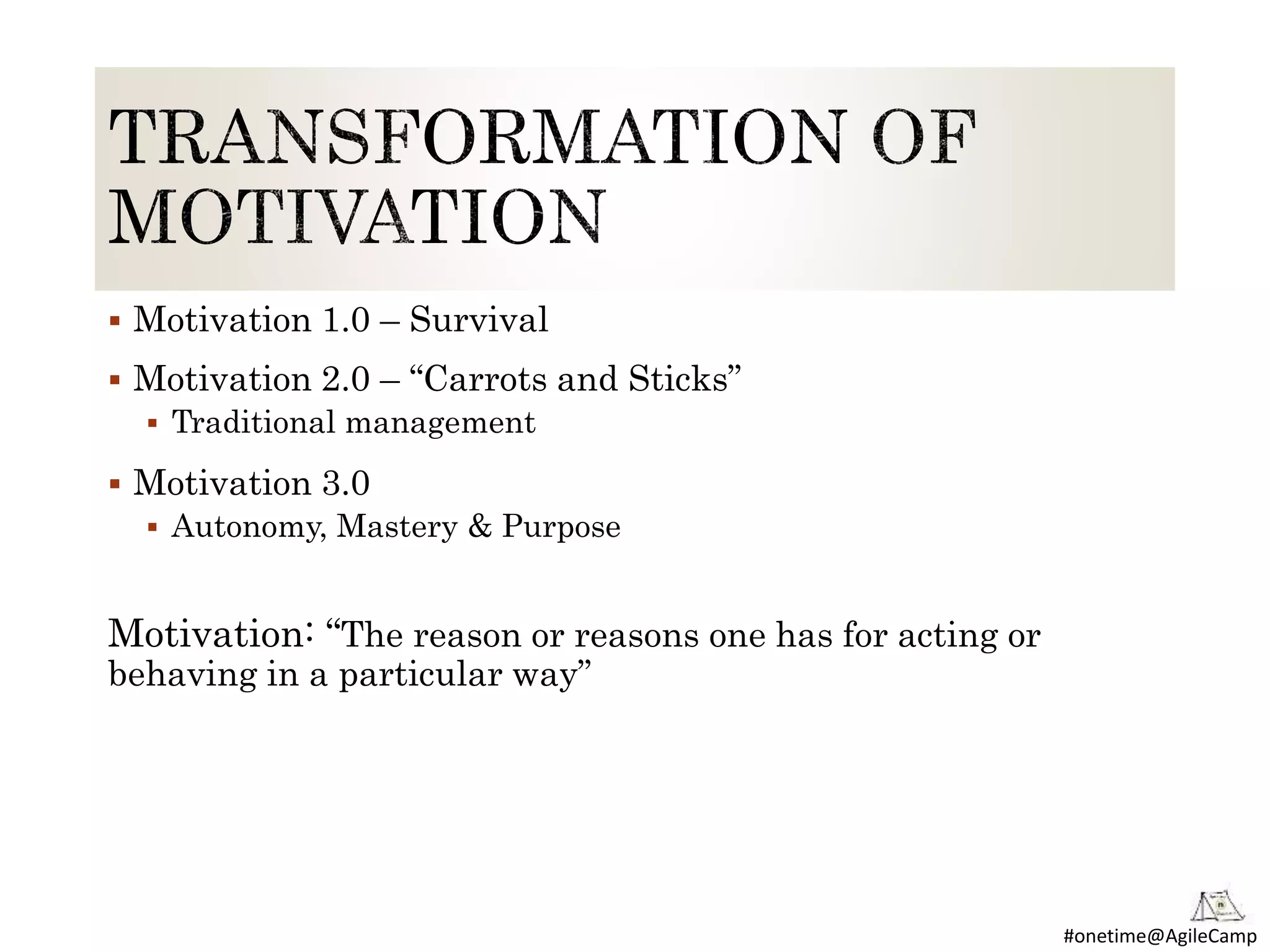
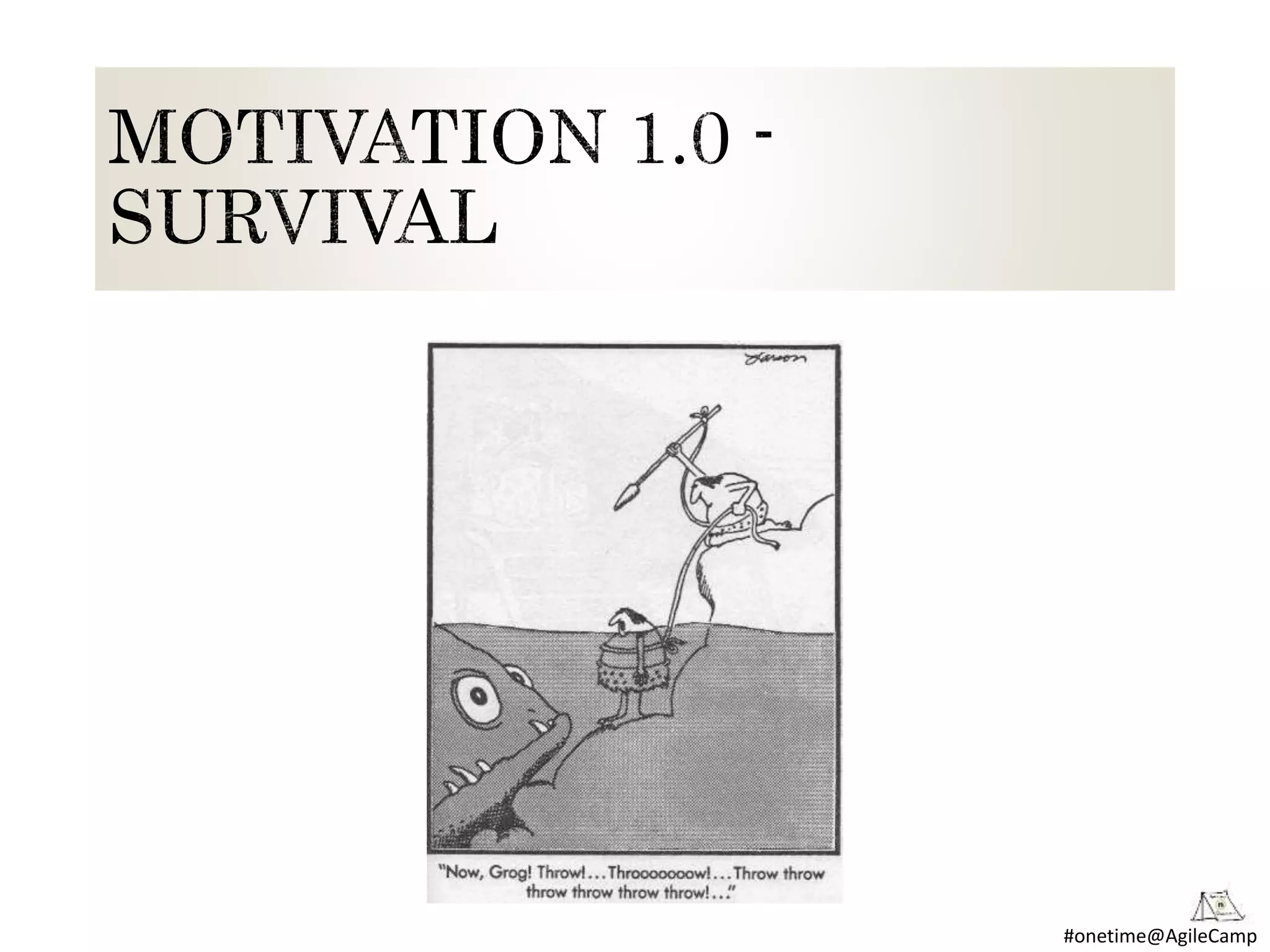
 Motivation 1.0 – Survival
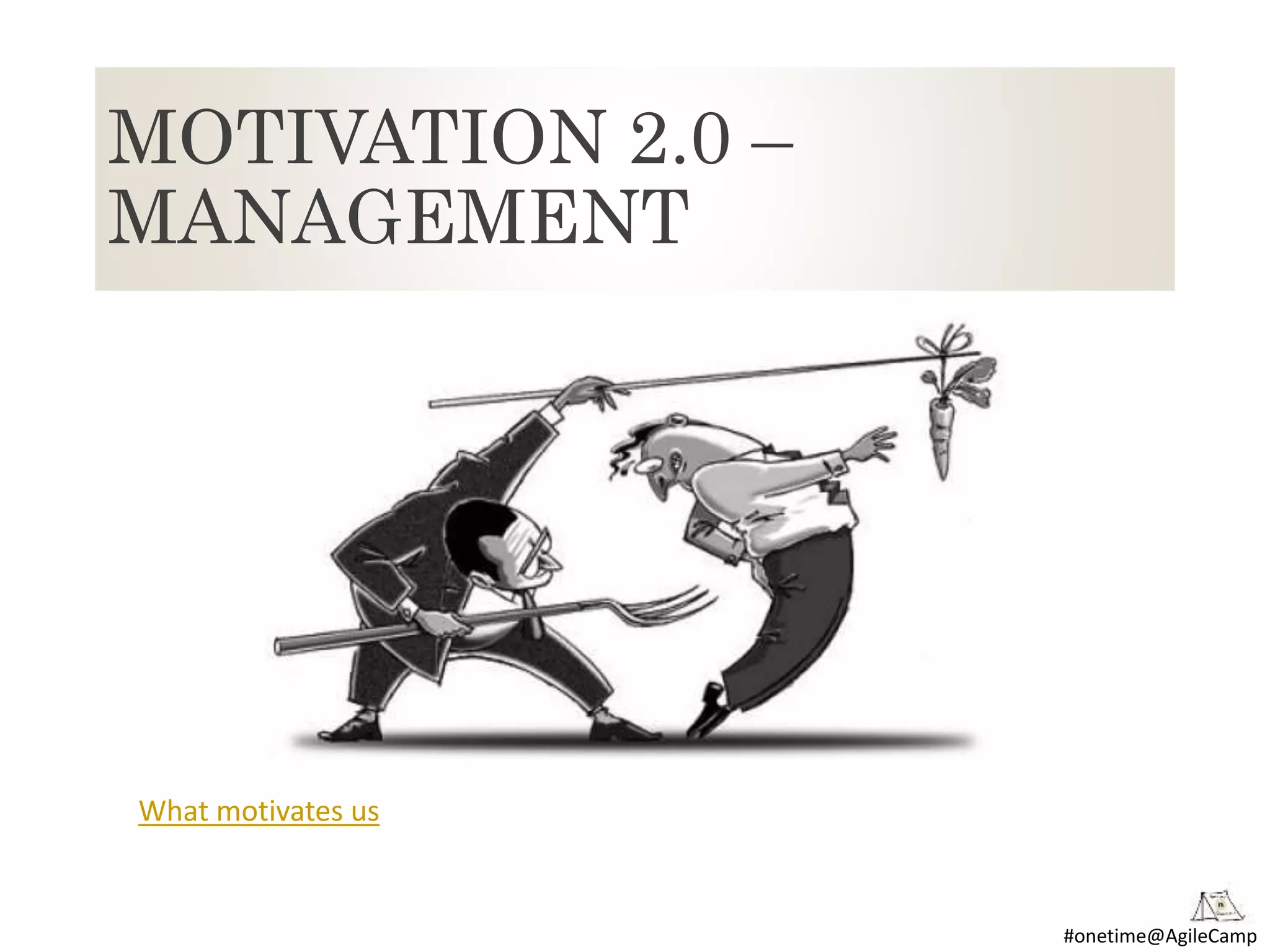
 Motivation 2.0 – “Carrots and Sticks”
 Traditional management
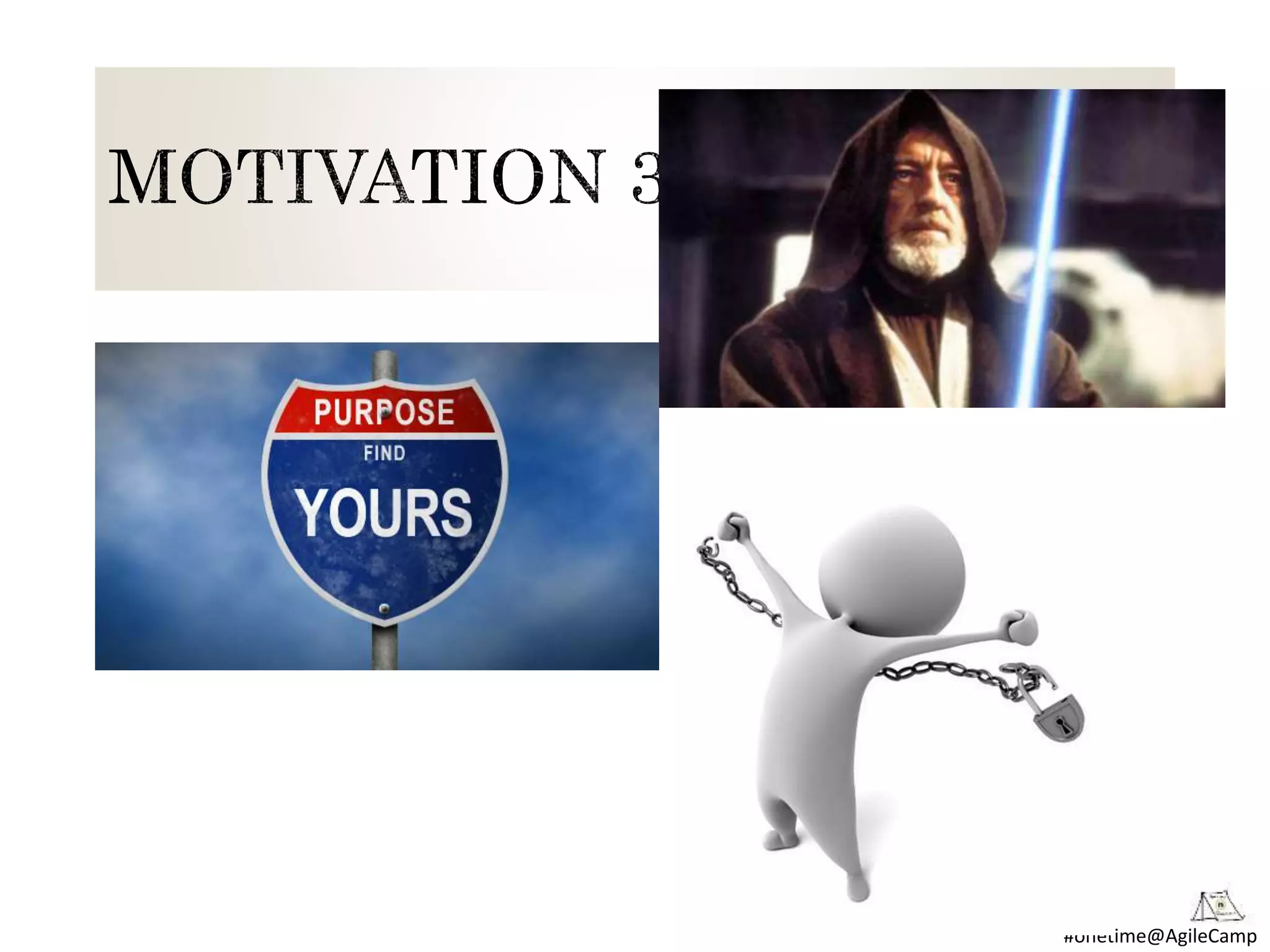
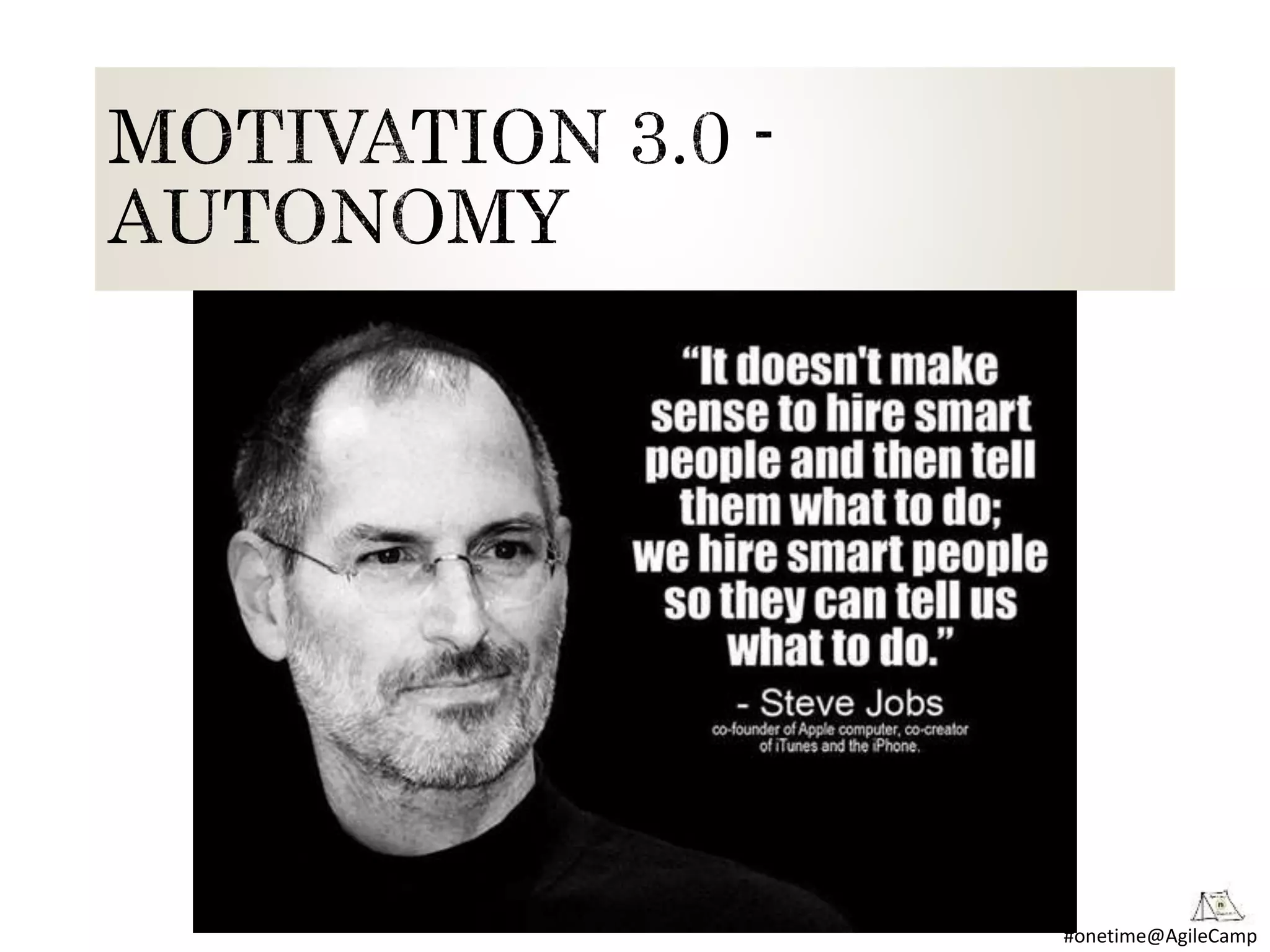
 Motivation 3.0
 Autonomy, Mastery & Purpose
Motivation: “The reason or reasons one has for acting or
behaving in a particular way”
#onetime@AgileCamp
#onetime@AgileCamp
#onetime@AgileCamp
MOTIVATION 2.0 –
MANAGEMENT
What motivates us
#onetime@AgileCamp
#onetime@AgileCamp
#onetime@AgileCamp
#onetime@AgileCamp
What might teams accomplish when given autonomy
over what they build?
#onetime@AgileCamp
#onetime@AgileCamp
#onetime@AgileCamp
#onetime@AgileCamp
#onetime@AgileCamp
#onetime@AgileCamp
#onetime@AgileCamp
 Drive: The Surprising Truth About What Motivates Us
 Daniel Pink
#onetime@AgileCamp
#onetime@AgileCamp

Agile camp2017 motivation through autonomy

Editor's Notes

  • #3  Poll Title: What role are you in? https://www.polleverywhere.com/free_text_polls/Go64lJe667geMZF QR codes for door prizes What swag we have Schedule for the day Alliance for session All slides will be available tonight on The Agile Den. Recordings to follow in the next couple of weeks. Survey – Link / QR codes on tables and on the live feedback wall. Anything else?
  • #5 As we have evolved, so have the systems that motivate us. We will go further into these as we continue our conversation There is a difference between what Science knows, and what Business does… - Dan Pink
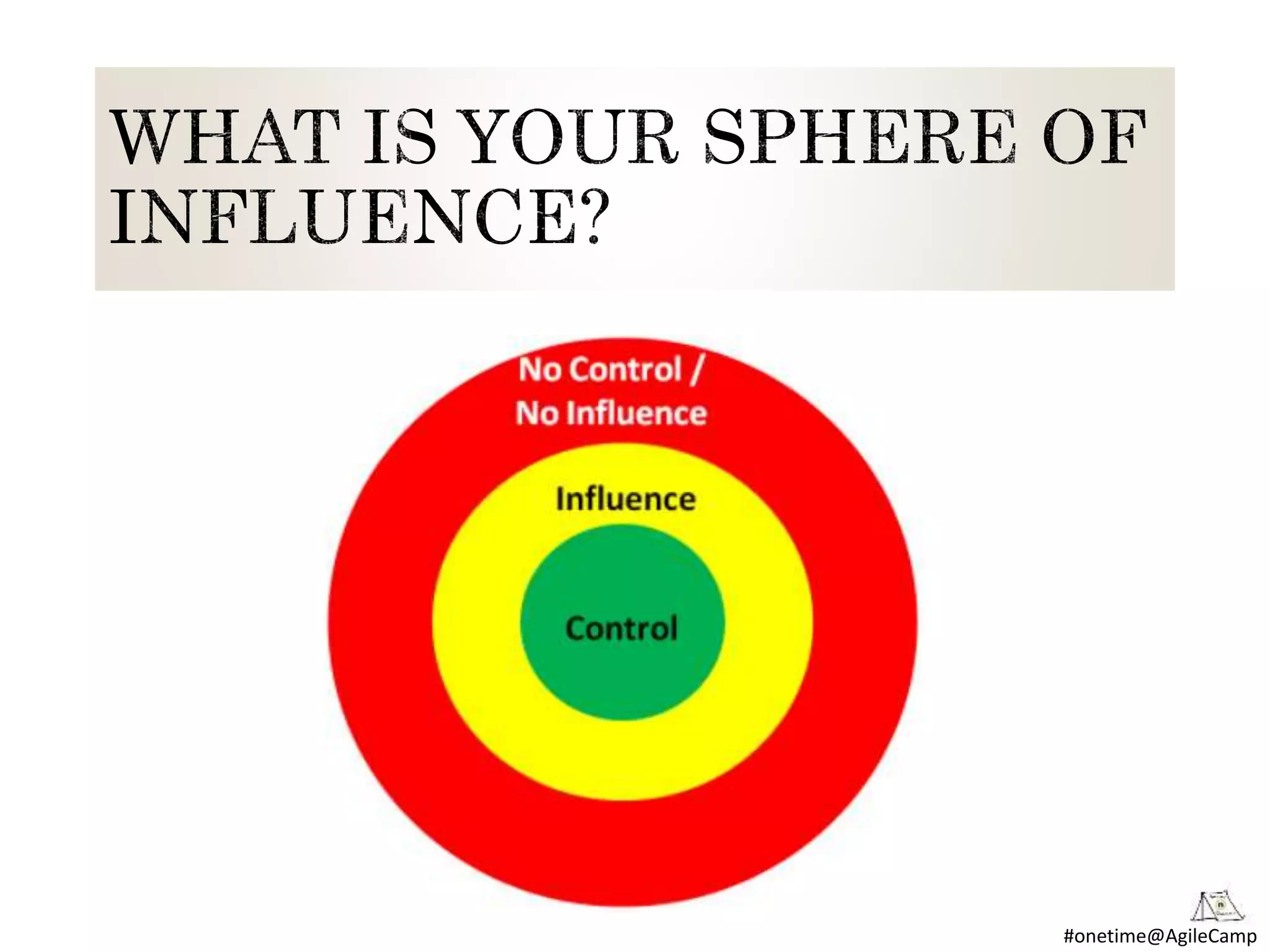
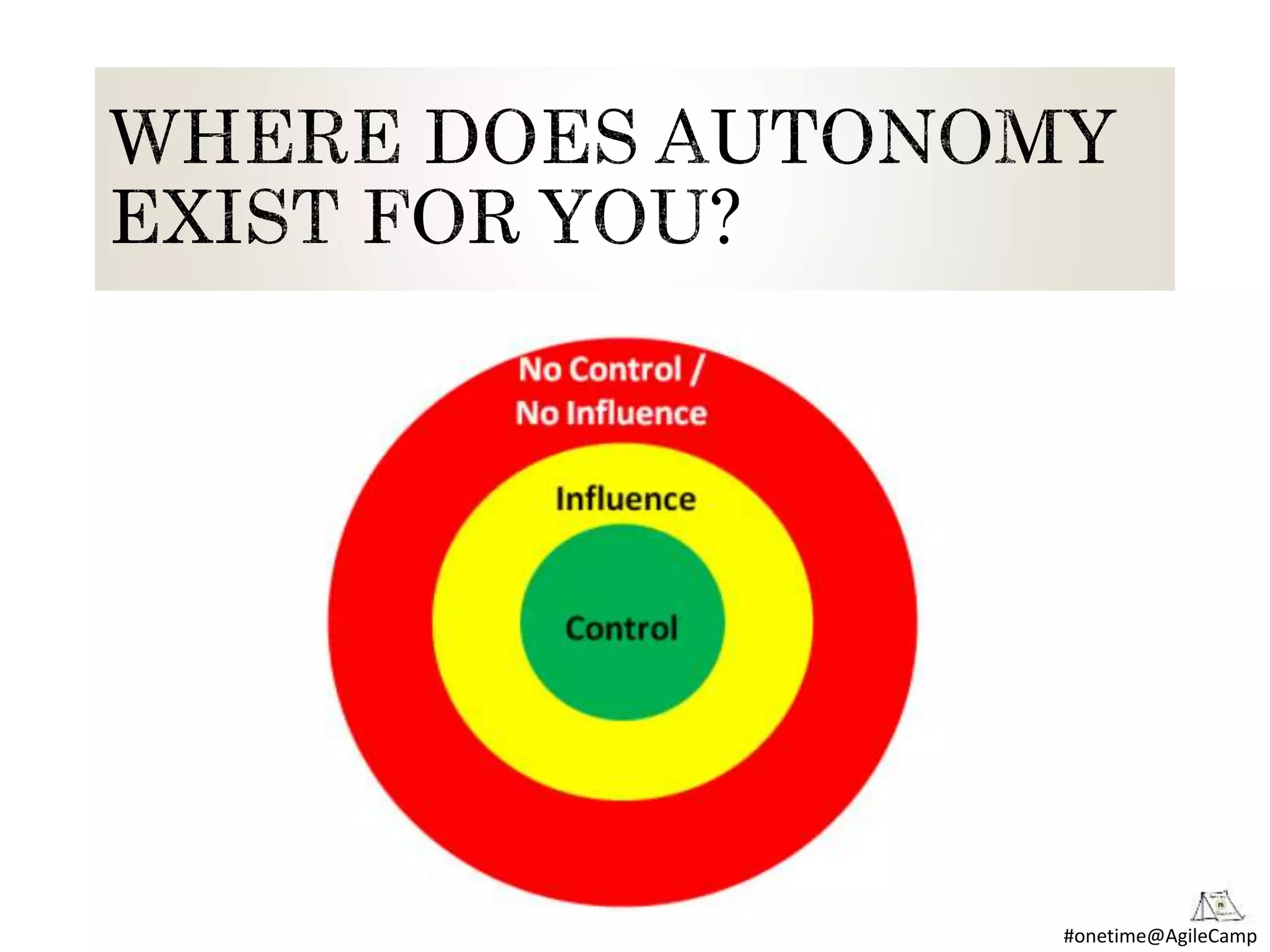
  • #6 Conduct exercise at tables – we will come back to this toward the end: Guidelines – Inner: What we have direct control over (e..g. our behaviors, actions, attitudes); Middle: What we can influence (e.g. work environment, friends, family, colleagues); Outer: What we have no influence over (e.g. policies beyond our reach, people we do not interact with) 2. Think of the 1 thing you are being challenged with today in your team. Think About: Where do you spend the majority of your mental energy? What things do you spend the most time talking about? 3. 5 minutes – do alone 4. 5 minutes – share with a partner or triad Ask powerful ?’s – What about that can you control/influence? What about that excites you? Challenge one another. 5. Discuss as a group What is the conversation that you are having more than once? Ex. Monday morning after weekend on-call or push to production.
  • #7 Motivation 1.0 – Survival… But we don’t worry so much about this now, we have EVOLVED
  • #8 Motivation 2.0 – what we might characterize as traditional management; SHOW VIDEO Idea of management makes assumptions (are these really true?): In order to take action or move forward, those being managed need a prod; and Once people do get moving, they need direction Examples: - IF-THEN Rewards and/or Punishments Carrots and Sticks Generally the history or larger organizations – like Nelnet
  • #9 Mastery – Asymptote: we continue to strive for mastery, but through growth, learning and trying new ways we should never achieve mastery. Examples – Tiger Woods and Michael Phelps Purpose – We are motivated through purpose. Why are we doing this? What is our purpose? How am I involved? Autonomy – We will spend the rest of the session focusing on autonomy
  • #10 Perhaps it is time we EVOLVE again
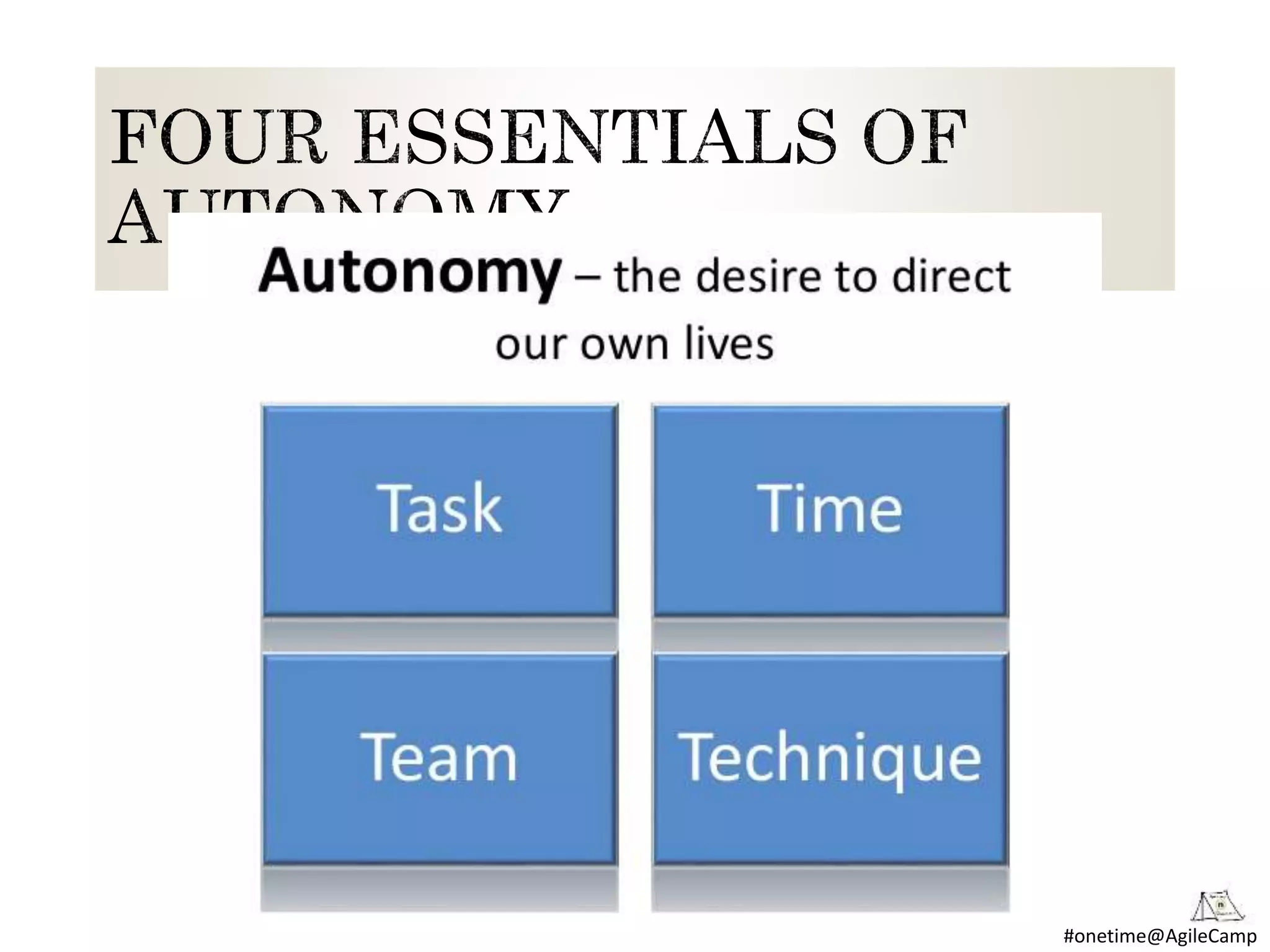
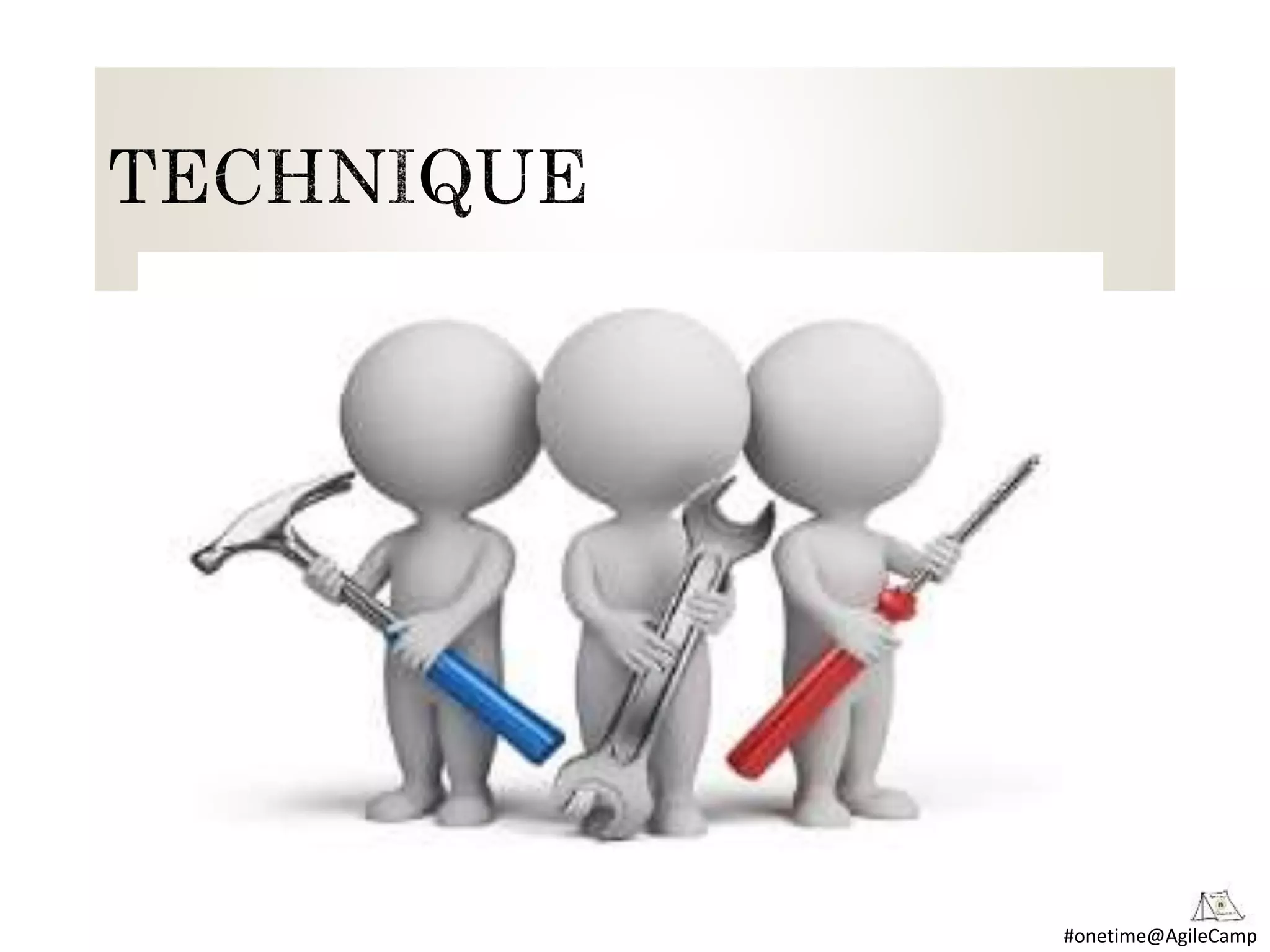
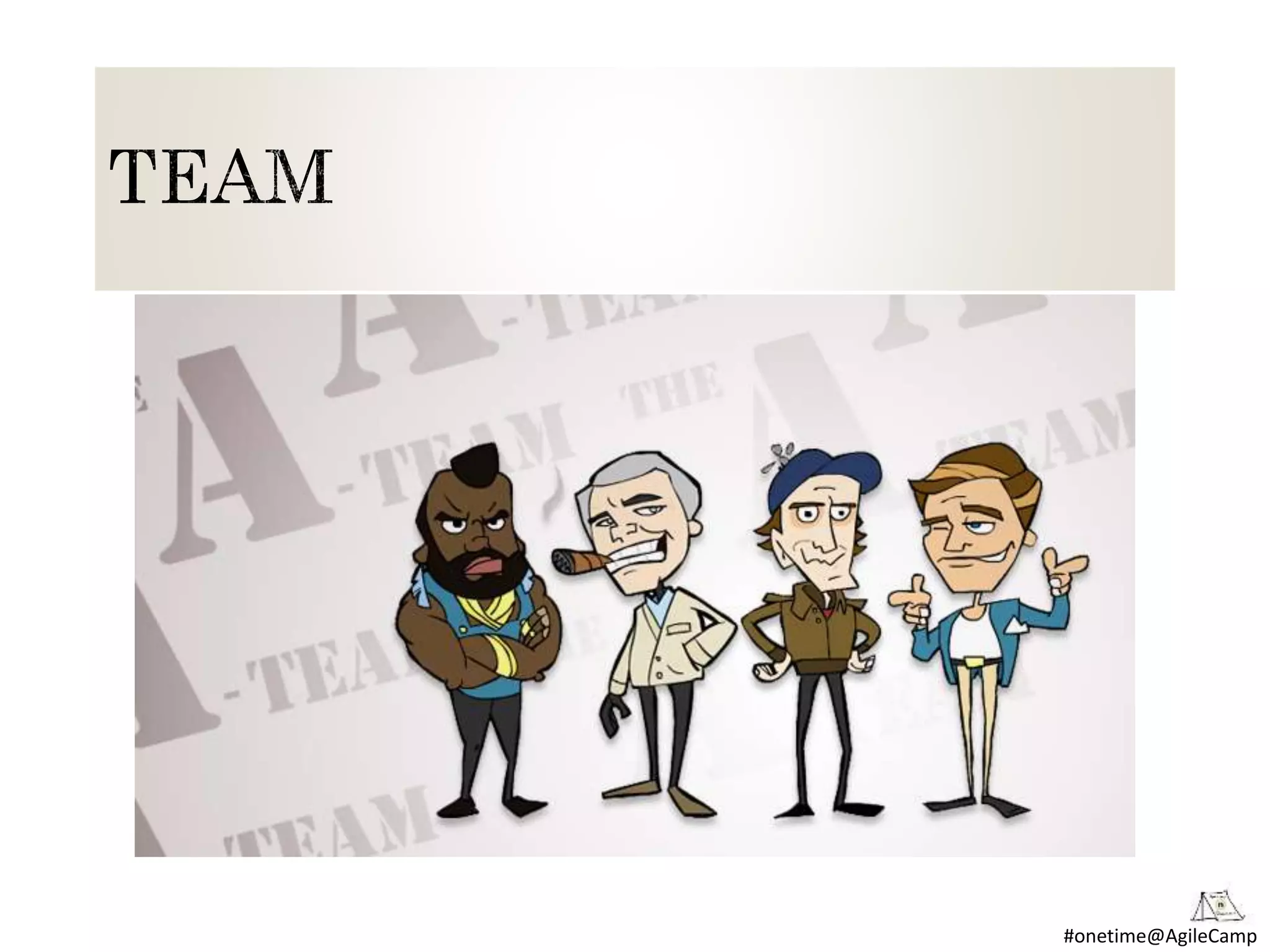
  • #11 Task – What we have to complete, learn or produce Time – When we need to complete each task Team – who we will work with Technique – How will we complete it (materials, process, product)
  • #12 Task – Autonomy Over What You Do Examples: FedEx days – Atlassian 20 Percent Time – 3M, Gmail Nelnet – Some teams choose 1 story per sprint (tech debt, perhaps)
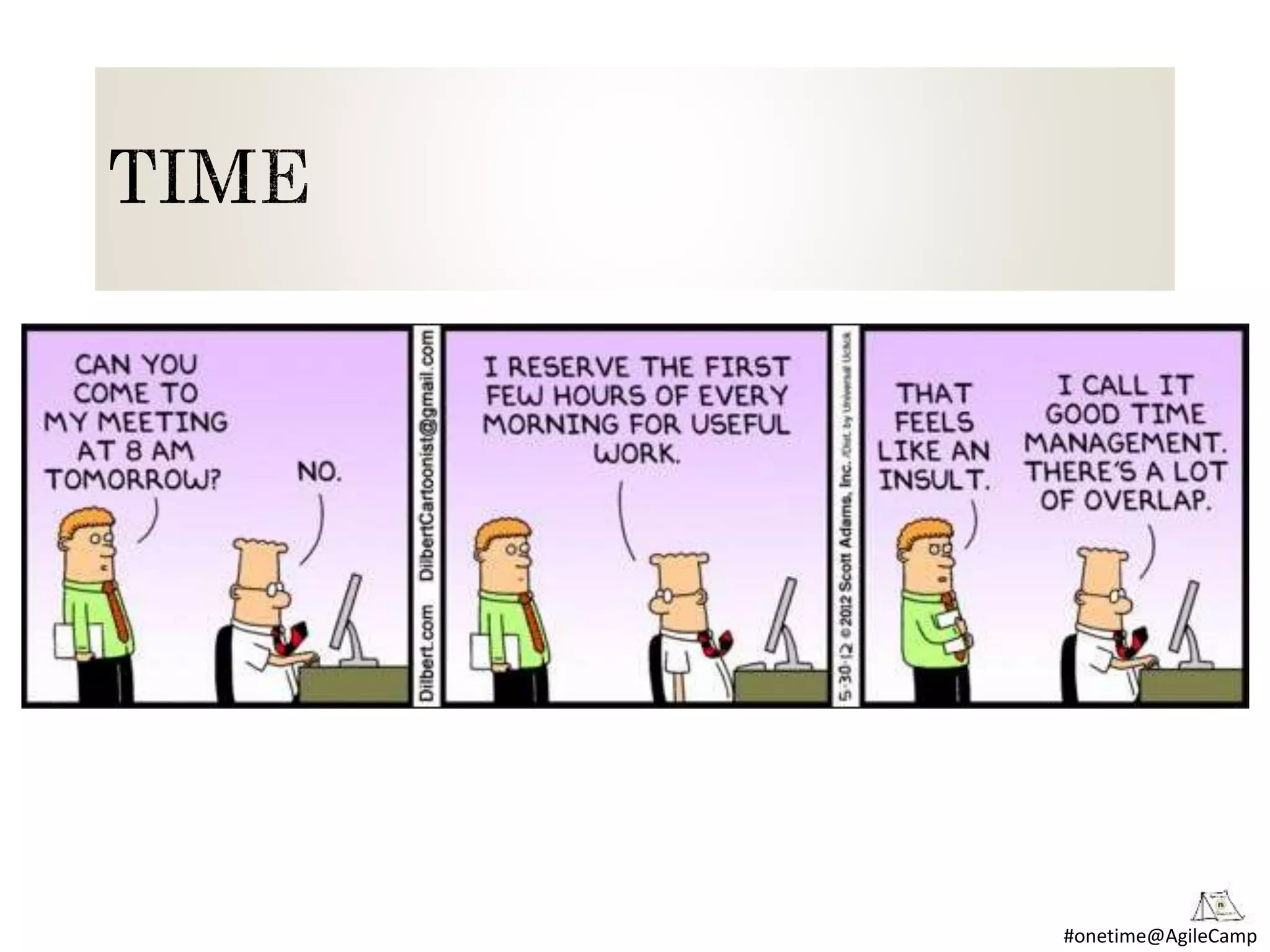
  • #13 Anecdote about miserable lawyers – why? Not because they are pessimistic by nature, Not because they deal with zero-sum games (winner and loser of cases) They have little “Decision latitude” – most notably, the billable hour. This shifts focus from output of their work, to the input. Nelnet – Flexible work arrangements – let teams decide how they will work most effectively – We have core hours, but providing some flexibility?
  • #14  Nelnet (and Agile) – Team decides How to build it Allows creative intellect… ?
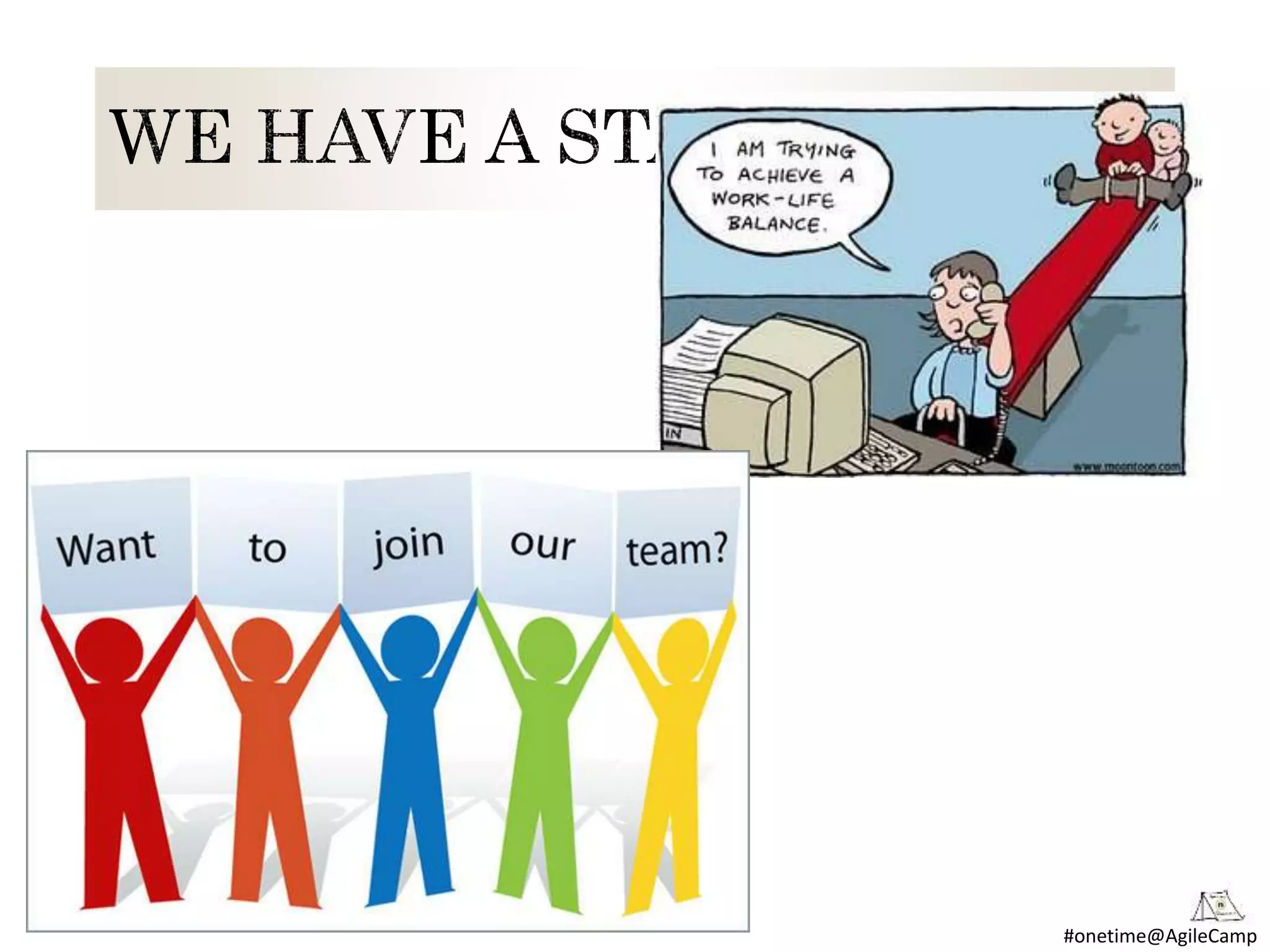
  • #15 Autonomy over who we work with Examples: Whole Foods – Candidates work 30-day trial period then teammates make full-time hiring decision Gore & Assoc. (GORE-TEX) – if you want to be a team lead, you must assemble people willing to work with you Facebook – 6 week boot camp, interviews with multiple teams, then you choose which team to join Nelnet CL Team Aloha – Team hired new associate for open position in February, she has transitioned from contractor to full-time – How did the team “feel” during the process? Notes from the team – How they felt Our DTM, PO, and SM truly trusted us to make this decision as a team, and that really was empowering. As a team we walked out of each interview largely in agreement on who would and would not be a great fit for our team – we still had discussion, but being part of the process it was easier to feel like we were making the right choice I would definitely prefer this process over one where these decisions are made by DTMs or others outside the team, whether we are hiring a new associate or even moving people between teams As an interviewee/candidate (per Shilpa) – I expected the interview to be tough or uncomfortable with the team there initially, but as we moved along I found the team to be very comfortable, and seeing now after 6 months I like the approach as we now work closely, where I would not have with the DTM, PO, or SM.  2. The process: Team met and agreed on what types of skills and knowledge they thought most important for a new team member to be successful; Team discussed and decided on the types of questions to ask, working alongside their DTM and People Services to make sure everything was “in bounds” The Team conducted the interviews as a group, and would then meet to discuss each candidate, ultimately making a decision and selecting someone to whom they wanted to extend an offer DTM handled the offer process Amy Neff – Teams interviewing potential SM’s for their team. As a leader how did that feel? Jason and Erin to share experience as a candidate from HealthGrades. The team chose me and I essentially chose that team. Built in trust and accountability from the start.
  • #16 Provide more detail on some things Nelnet is doing Flexible work arrangements How we work together Team hiring Capacity for team to select work they want to complete BUT…………
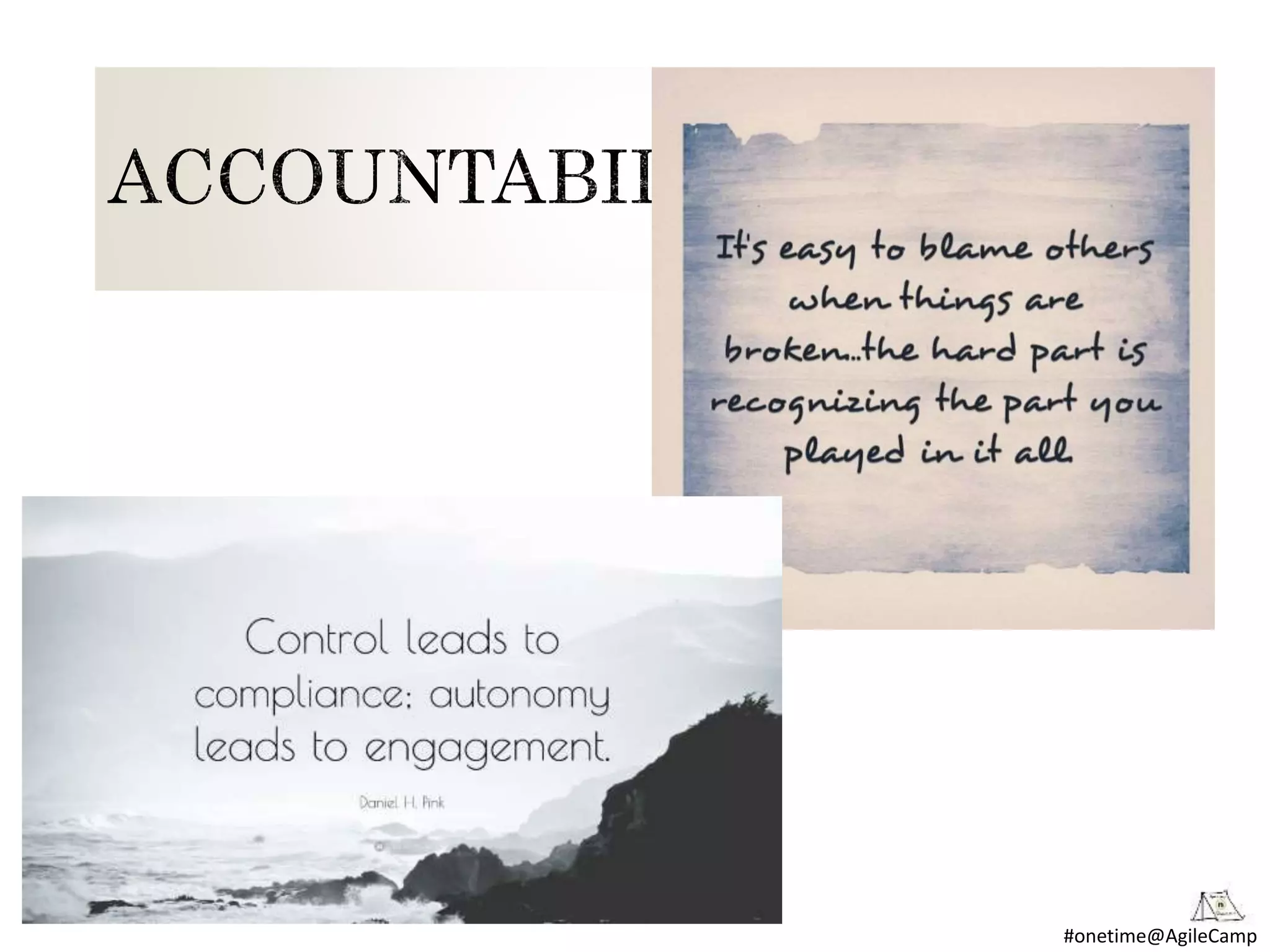
  • #17 Motivation 3.0 begins with the assumption that people want to be accountable, and that making sure they have autonomy over their task, time, technique, and team is the most effective way to get there. Autonomy is not without Accountability There is a responsibility to be Transparent
  • #18 ACTIVITY Create new Sphere at your table. Group work Where do we have it? Where do we need more of it?