













AGGREGATE
DAVID GRUBBA
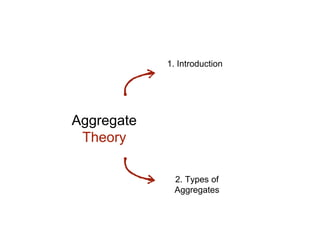
Theory
Aggregate
Theory
2. Types of
Aggregates
1. Introduction
1
Introduction
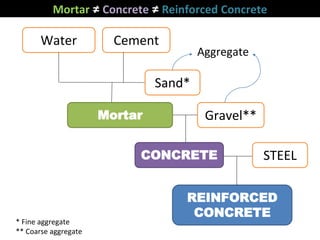
Water Cement
Sand*
Mortar Gravel**
CONCRETE STEEL
REINFORCED
CONCRETE
Aggregate
Mortar ≠ Concrete ≠ Reinforced Concrete
* Fine aggregate
** Coarse aggregate
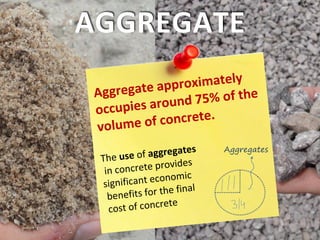
AGGREGATE
Aggregates
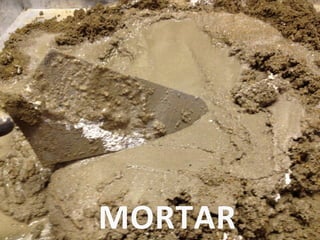
MORTAR
BALLAST (RAILROADS)
2
Types
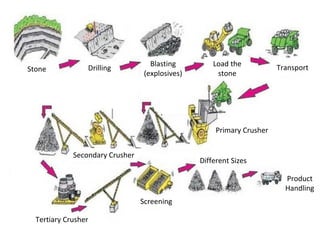
How is it made:
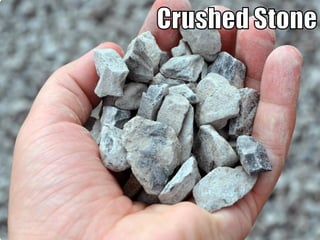
Crushed
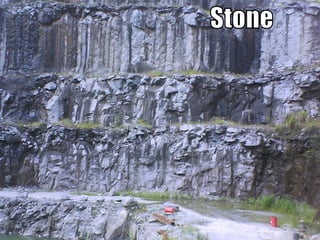
Stone
Stone Drilling
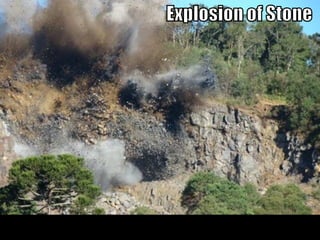
Blasting
(explosives)
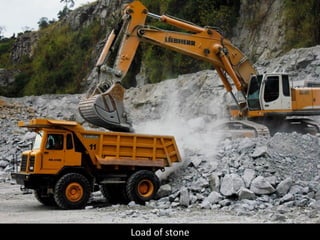
Load the
stone
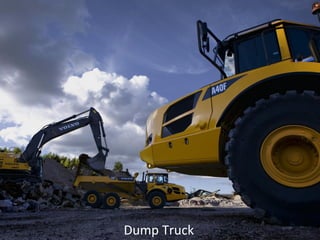
Transport
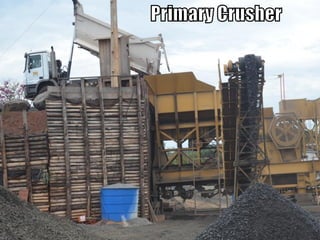
Primary Crusher
Secondary Crusher
Tertiary Crusher
Screening
Different Sizes
Product
Handling
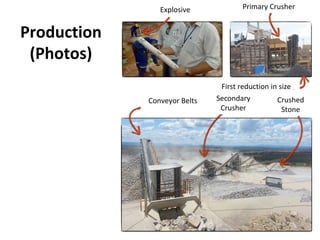
Production
(Photos)
Explosive Primary Crusher
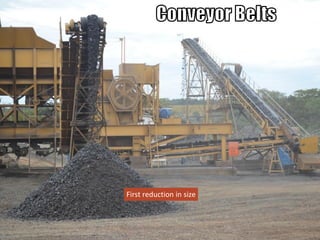
First reduction in size
Secondary
Crusher
Crushed
Stone
Conveyor Belts
Load of stone
Dump Truck
First reduction in size
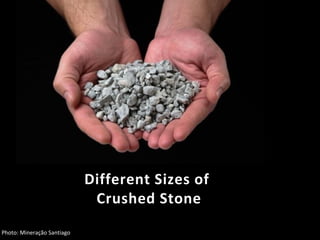
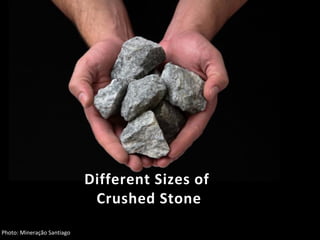
Different Sizes of
Crushed Stone
Photo: Mineração Santiago
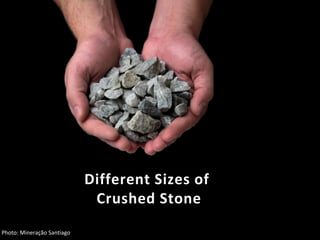
Different Sizes of
Crushed Stone
Photo: Mineração Santiago
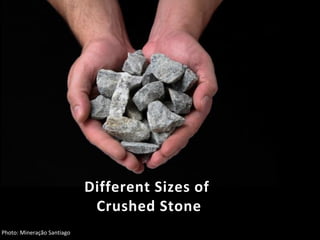
Different Sizes of
Crushed Stone
Photo: Mineração Santiago
Different Sizes of
Crushed Stone
Photo: Mineração Santiago
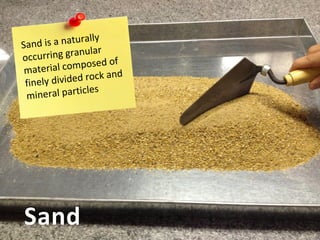
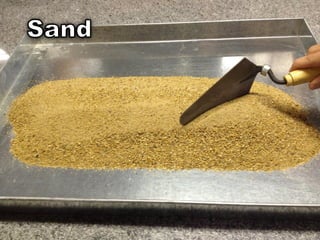
Sand
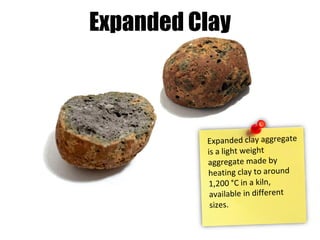
Expanded Clay
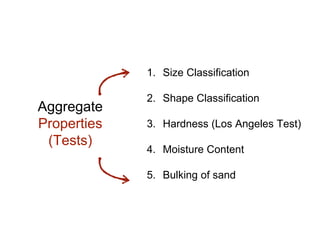
Common Tests
Aggregate
Properties
(Tests)
1. Size Classification
2. Shape Classification
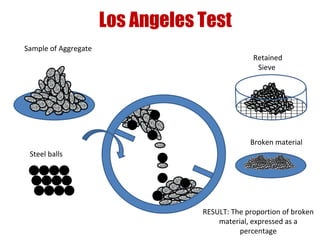
3. Hardness (Los Angeles Test)
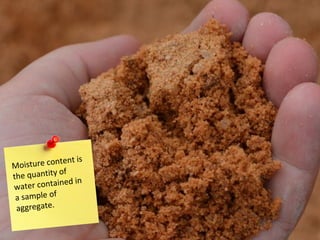
4. Moisture Content
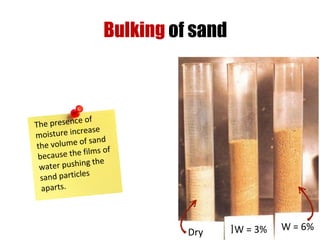
5. Bulking of sand
1
Size
Classification
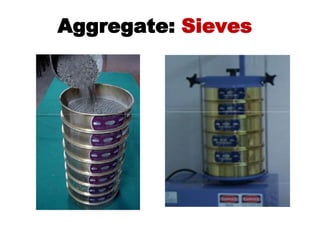
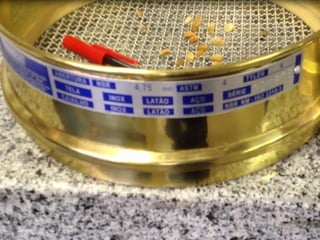
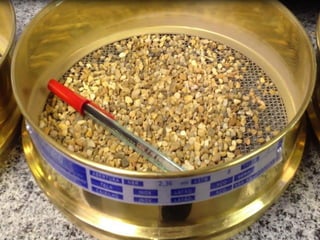
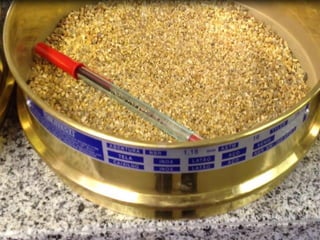
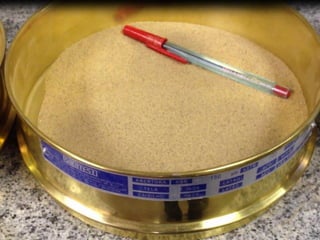
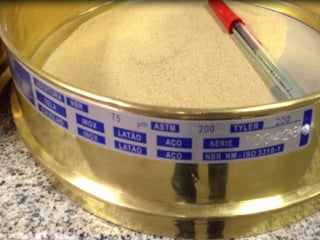
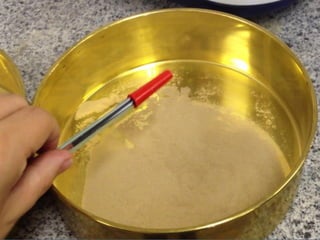
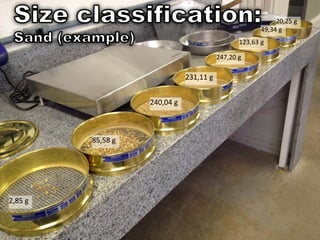
Aggregate: Sieves
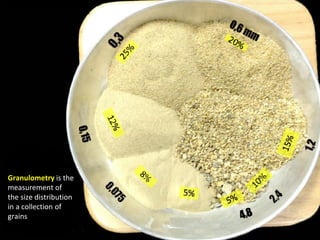
Granulometry is the
measurement of
the size distribution
in a collection of
grains
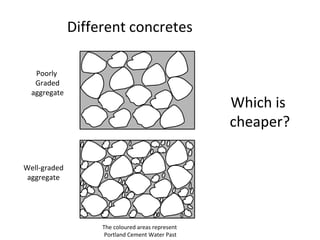
Poorly
Graded
aggregate
Well-graded
aggregate
Different concretes
Which is
cheaper?
The coloured areas represent
Portland Cement Water Past
Photos
2,85 g
85,58 g
240,04 g
231,11 g
247,20 g
20,25 g
49,34 g
123,63 g
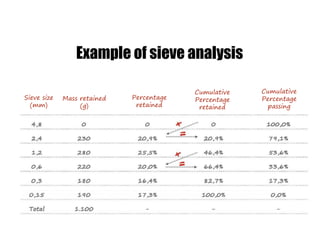
Example of sieve analysis
Sieve size
(mm)
Mass retained
(g)
Percentage
retained
Cumulative
Percentage
retained
Cumulative
Percentage
passing
Sieve
Percentage
Retained
Cumulative
Percentage
Retained
4,8 0 % 0%
2,4 0 % 0 %
1,2 0 % 0 %
0,6 40 % 40 %
0,3 30% 70 %
0,15 30% 100 %
Sum 210
FM 2,1
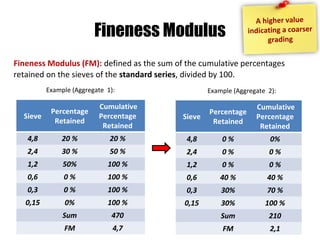
Fineness Modulus
Fineness Modulus (FM): defined as the sum of the cumulative percentages
retained on the sieves of the standard series, divided by 100.
Sieve
Percentage
Retained
Cumulative
Percentage
Retained
4,8 20 % 20 %
2,4 30 % 50 %
1,2 50% 100 %
0,6 0 % 100 %
0,3 0 % 100 %
0,15 0% 100 %
Sum 470
FM 4,7
Example (Aggregate 2):Example (Aggregate 1):
2
Shape Classification
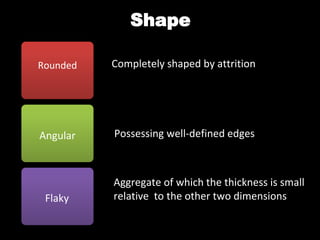
Rounded
Angular
Flaky
Shape
Completely shaped by attrition
Possessing well-defined edges
Aggregate of which the thickness is small
relative to the other two dimensions
To make concrete, which is
better:
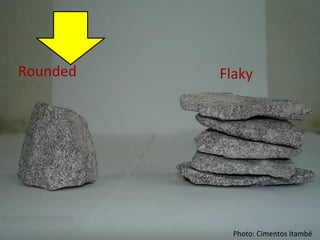
Rounded or Flaky
aggregate
Photo: Cimentos Itambé
FlakyRounded
3
Hardness
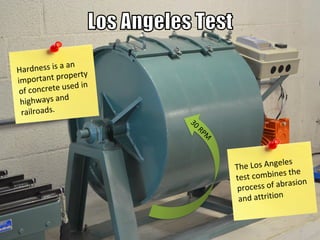
Los Angeles Test
Sample of Aggregate
Steel balls
Retained
Sieve
Broken material
Los Angeles Test
RESULT: The proportion of broken
material, expressed as a
percentage
4
Moisture
Content
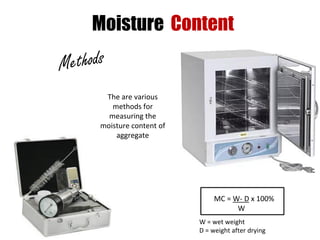
Moisture Content
MC = W- D x 100%
W
W = wet weight
D = weight after drying
The are various
methods for
measuring the
moisture content of
aggregate
5
Bulking of Sand
Bulking of sand
Dry W = 3% W = 6%
The End

Aggregate - Concrete Technology