
This document summarizes a laboratory experiment conducted by civil engineering students at MUST to determine the crushing strength of a concrete aggregate sample. The experiment involved:
- Compacting an aggregate sample into a steel cylinder and subjecting it to a gradually increasing load in a compression testing machine according to British Standard 812.
- Sieving the crushed sample and calculating the aggregate crushing value (ACV) as the percentage of sample passing a 2.36mm sieve.
- The sample was found to have an ACV of 14.87%, indicating a "normal" quality aggregate suitable for use in road construction according to the standard.
Group members of the Department of Civil Engineering at MUST introduced.
Testing for crushing strength of concrete specimens using BS-812 standards to evaluate aggregates in road construction.
Overview of the apparatus used for crushing strength test and methodology for aggregate testing.
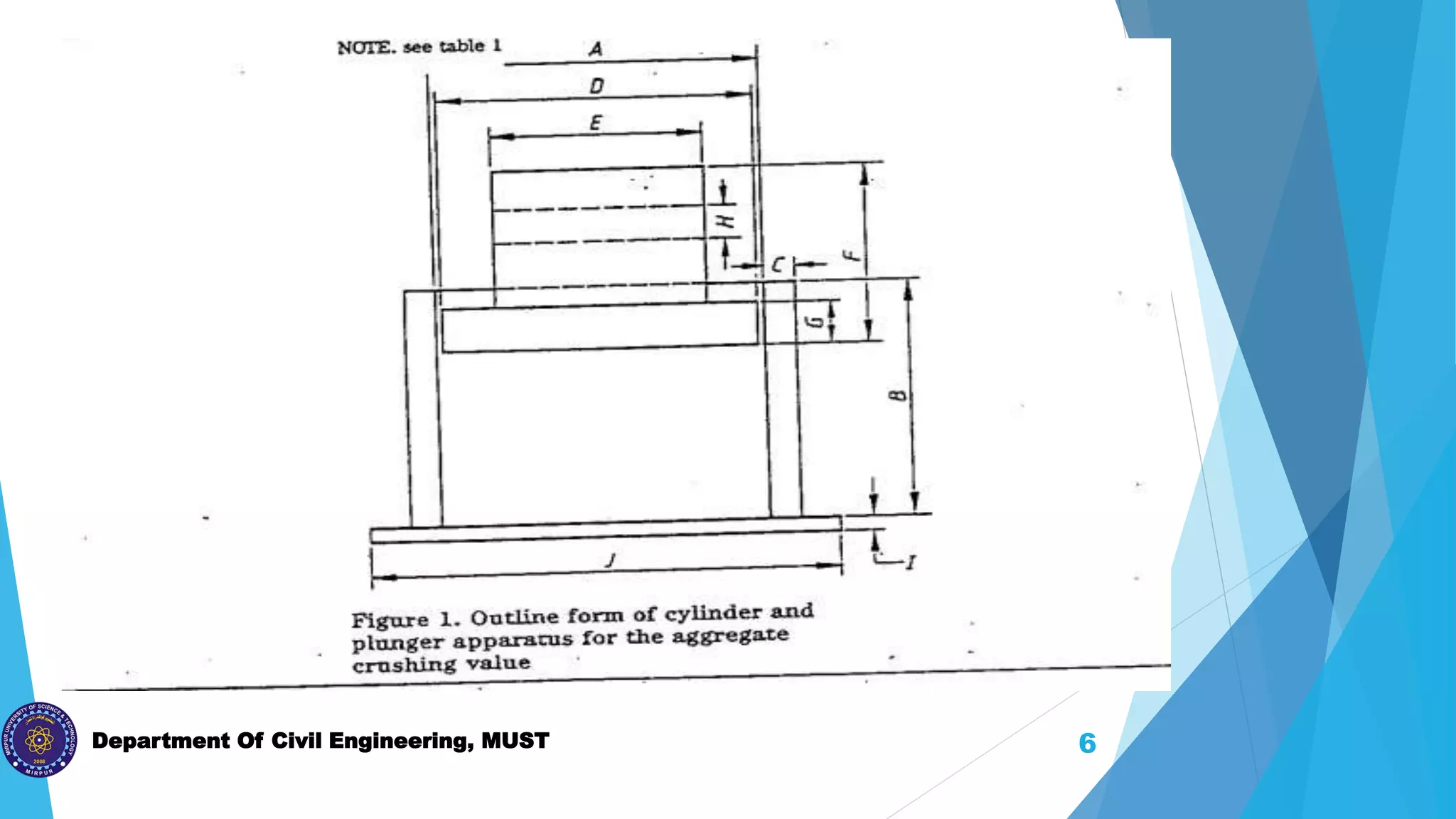
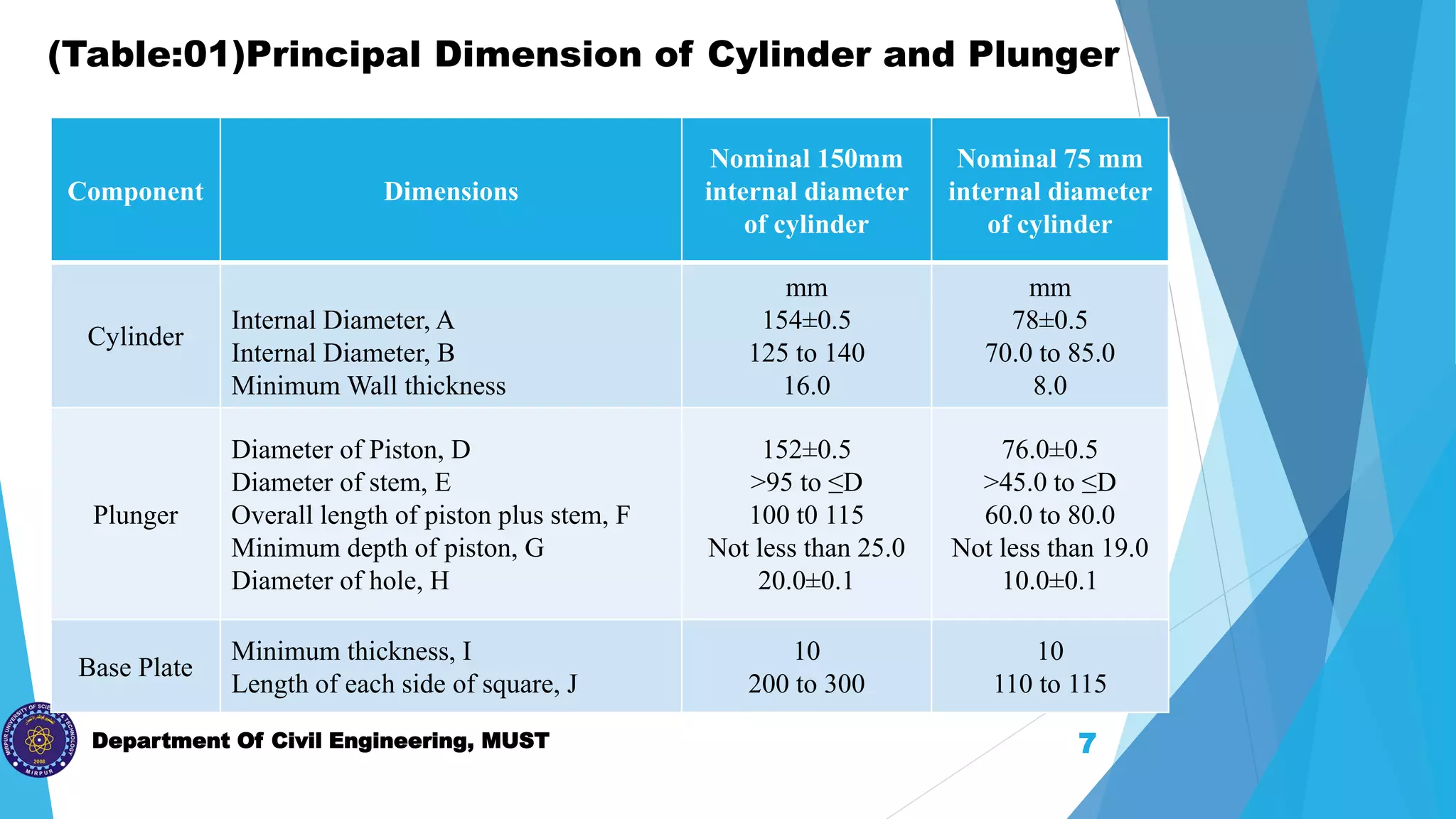
Detailed dimensions and specifications of the cylinder and plunger used in testing aggregates.
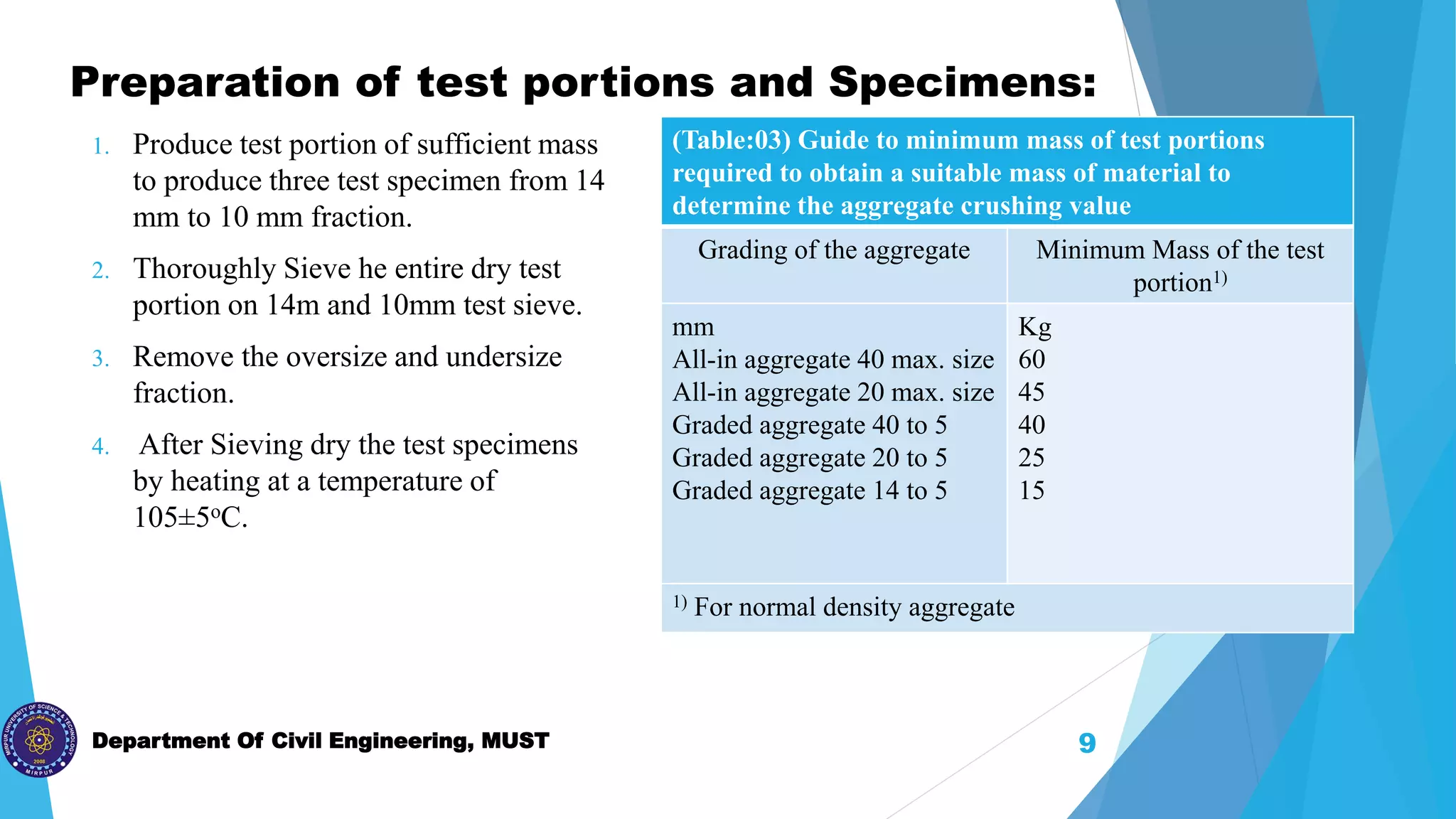
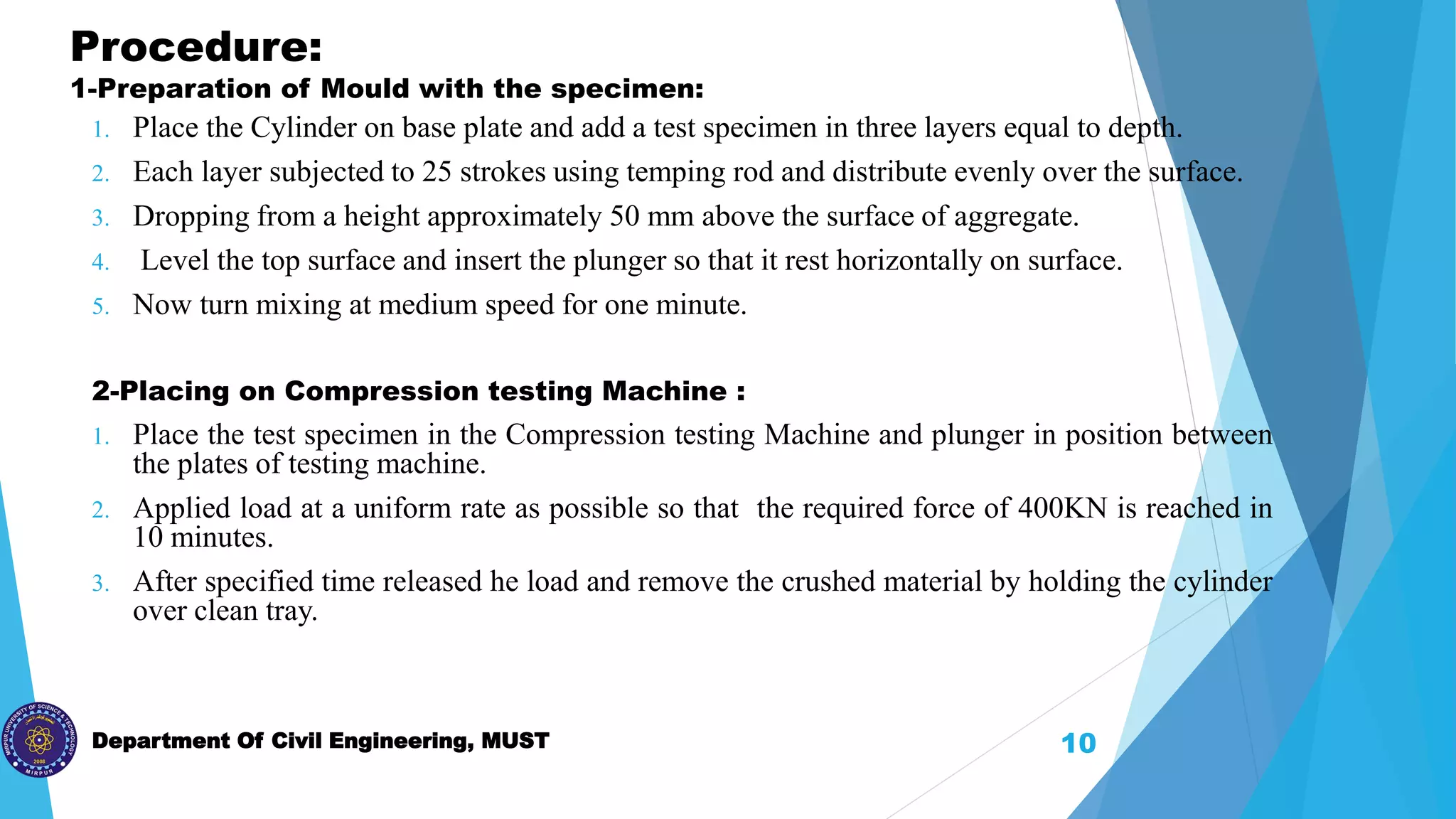
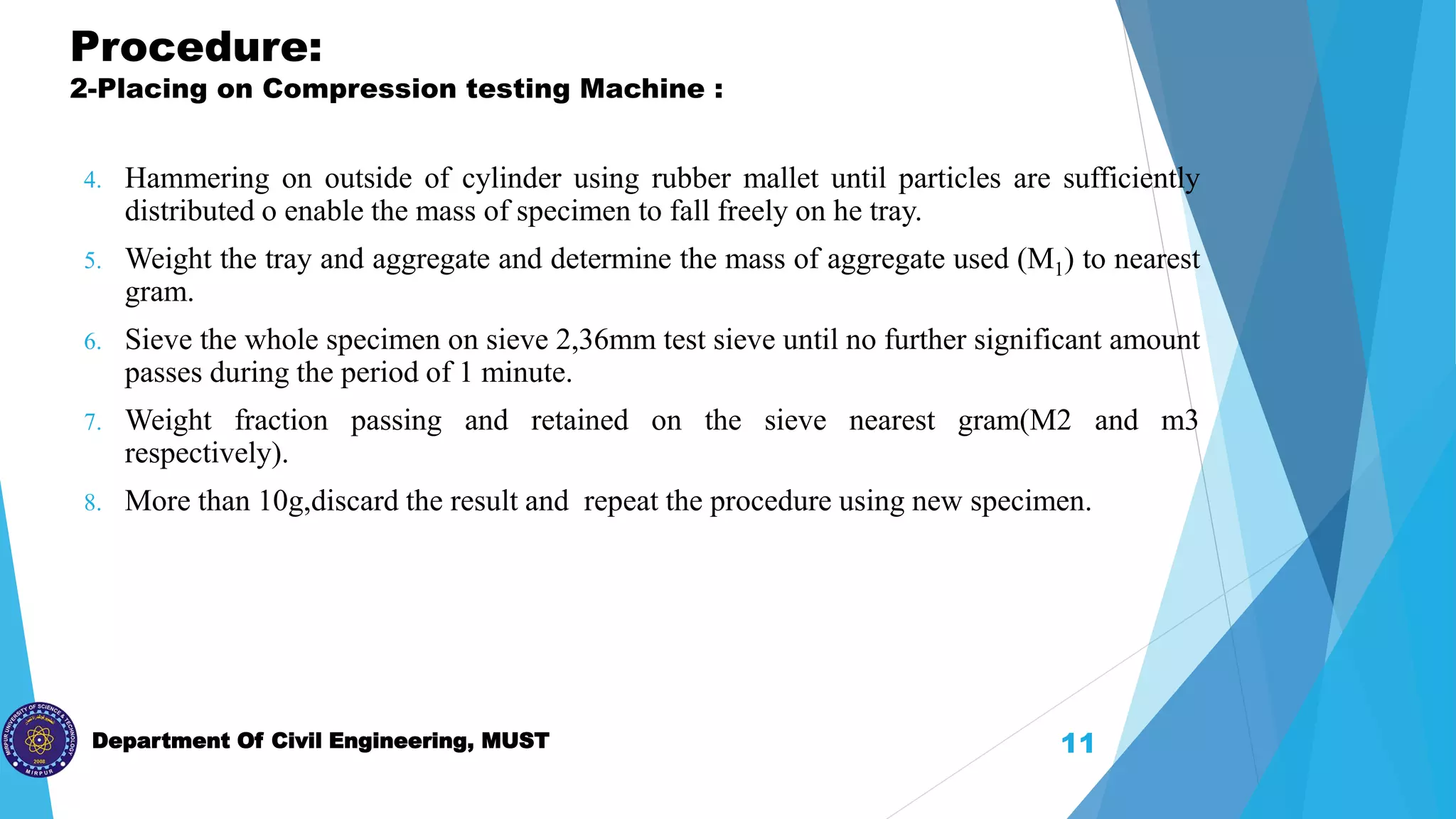
Guidelines for preparing test specimens through sieving and standardization of mass for aggregate crushing value.Step-by-step procedure for placing specimens and applying load in the compression testing machine.
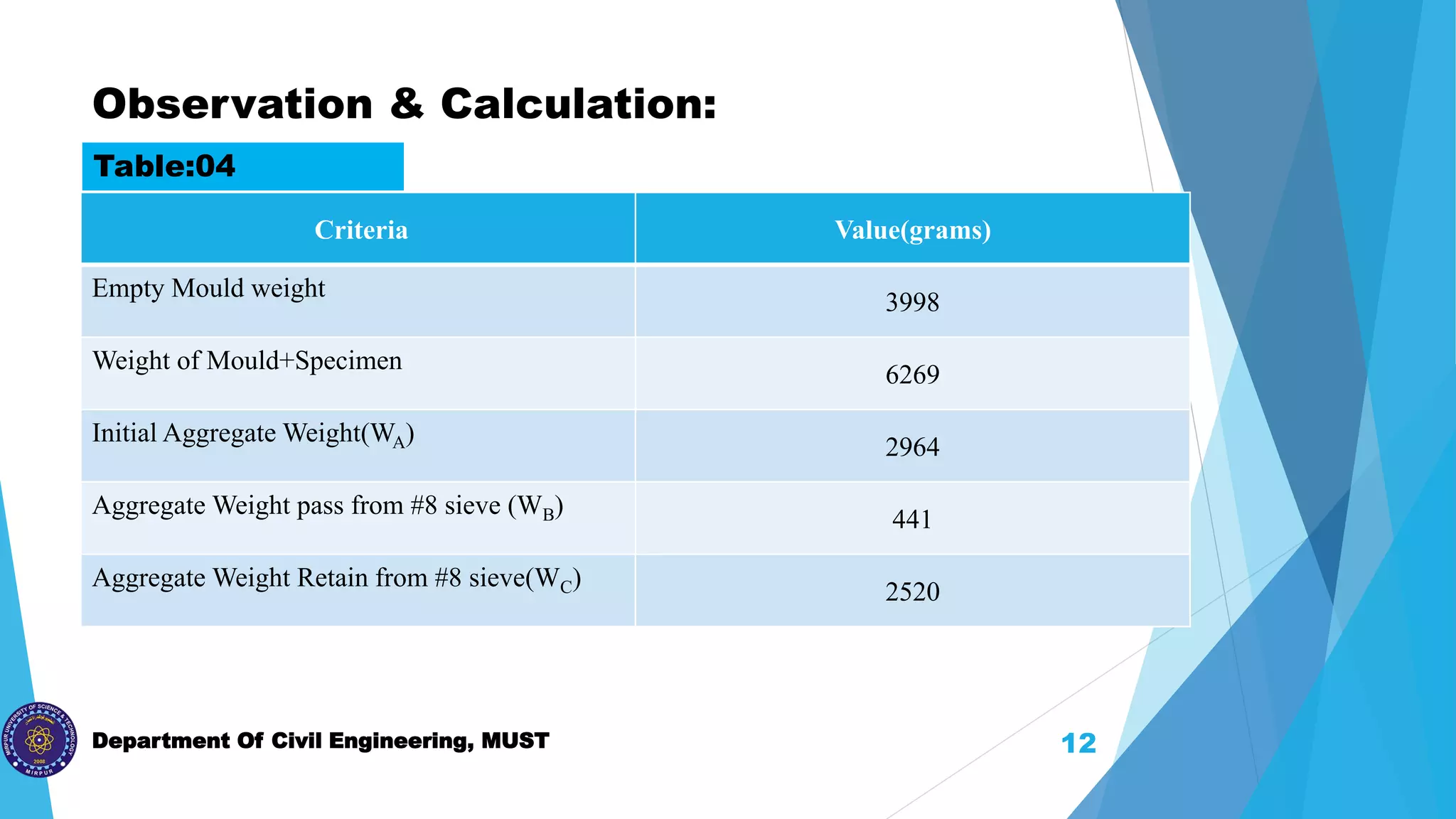
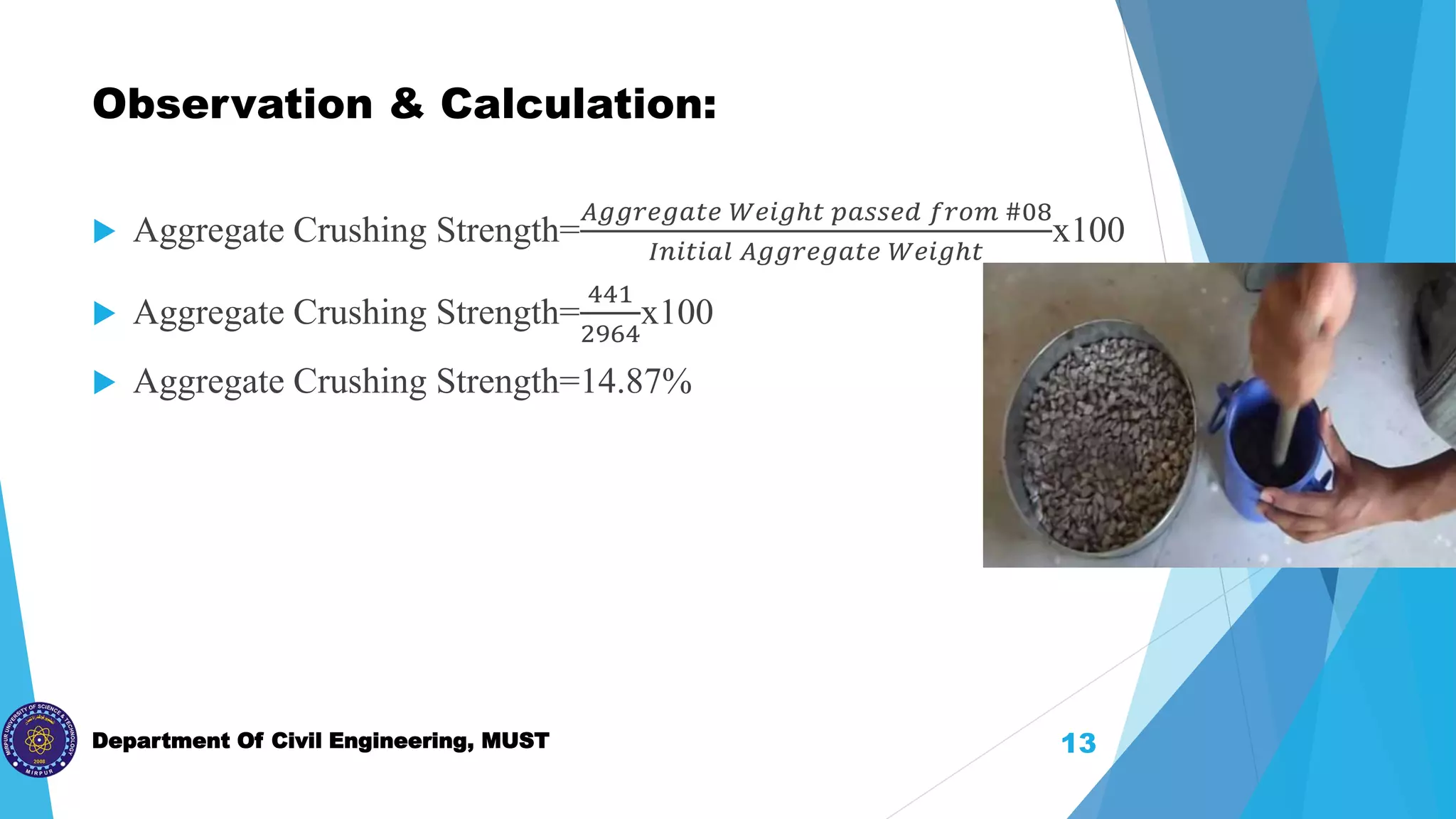
Details on observing weight measurements, calculations for Crushing Strength as a percentage.
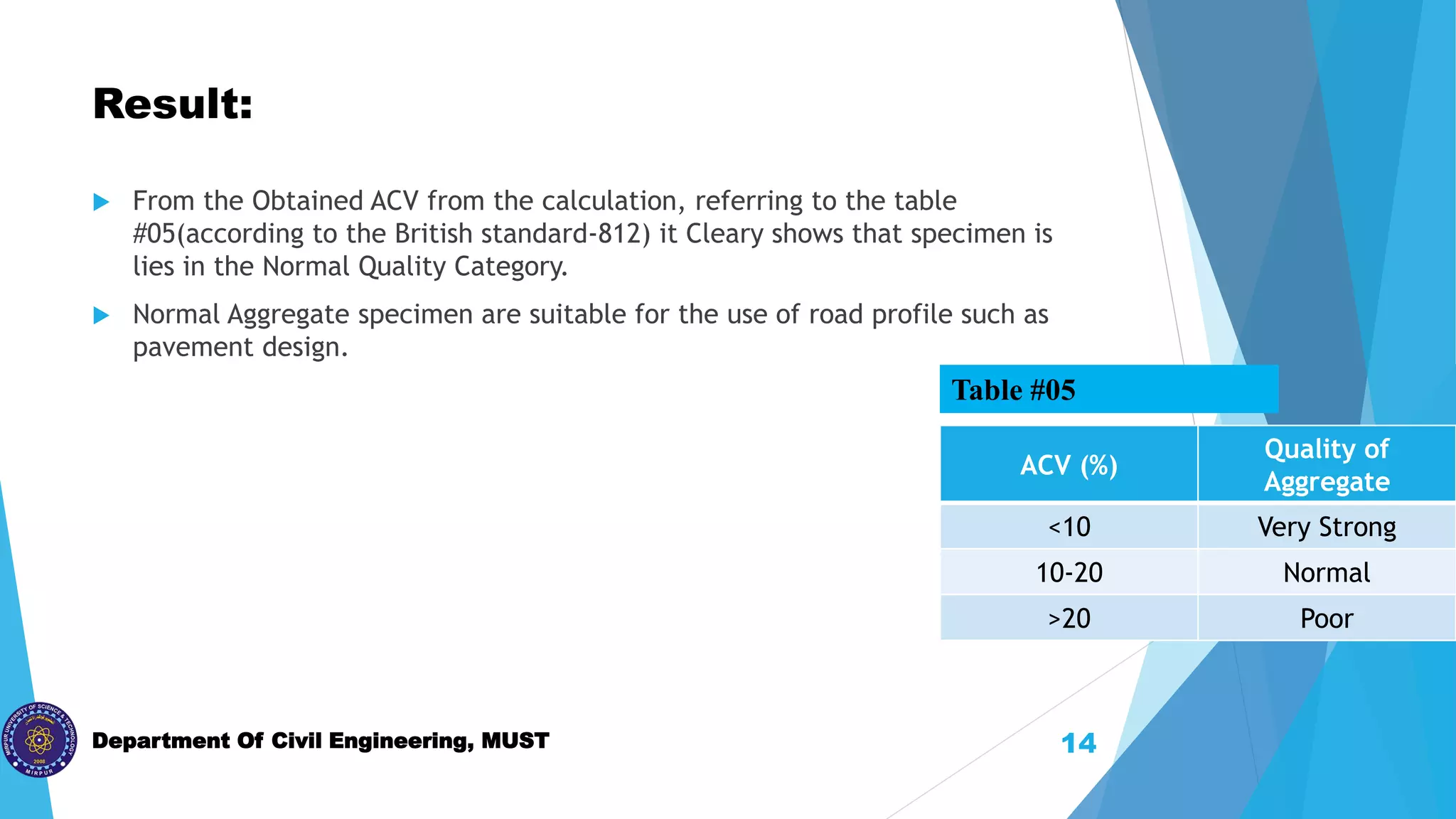
Interpretation of results showing aggregate quality categories based on crushing strength according to British Standard.Final comments on the suitability of aggregates based on testing results for use in highway construction.
Department Of CivilEngineering, MUST
Group Members:
FA15-BCV-049 Sheryar Bismil
FA15-BCV-062 Falak Sher
FA15-BCV-074 Arbab Ashiq
FA15-BCV-088 Tamoor Qayyum
Mirpur University Of Science And Technology,
MUST
2.
Department Of CivilEngineering, MUST
Topic:
Determination the Crushing Strength of concrete specimen by using
Compression Testing Machine.
Standard:
BS(British Standard)-812
Reference Standard:
The Standard of this test confirm the British Standard with
Specification requirement 812.
BS-812:Part-110:1990
2
3.
Department Of CivilEngineering, MUST
This test evaluate the ability of aggregate used in Road-Highway
construction to withstand the stress induced by moving vehicle in
form of crushing and gradual loading.
This test method is applicable to aggregate passing on 14.0 mm test
sieve and retained on a 10.0 mm test sieve.
3
Objectives:
The basic aim is to find out Aggregate Crushing Strength.
To determine the resistance of aggregate against gradually applied
load.
To determine the ability of material aggregate to used in road
construction to withstand against the gradually applied load.
Significance:
4.
Department Of CivilEngineering, MUST
Principal:
A test specimen is compacted in a standard manner into a steel cylinder
fitted with freely moving plunger. The specimen is then subjected to
standard loading regime applied through the plunger. This action
crushes the aggregate to a degree which is dependent on he crushing
resistance of the material. This degree is assessed by a sieving test on
the crushed specimen and is taken as a measure of aggregate crushing
value (ACV).
Related Theory:
Crushing Strength of Aggregate:
The aggregate crushing value provides a relative measure of
resistance to crushing under a gradually applied compressive
load.
To achieve a high quality of pavement aggregate possessing low
aggregate crushing value should be preferred.
4
5.
Department Of CivilEngineering, MUST
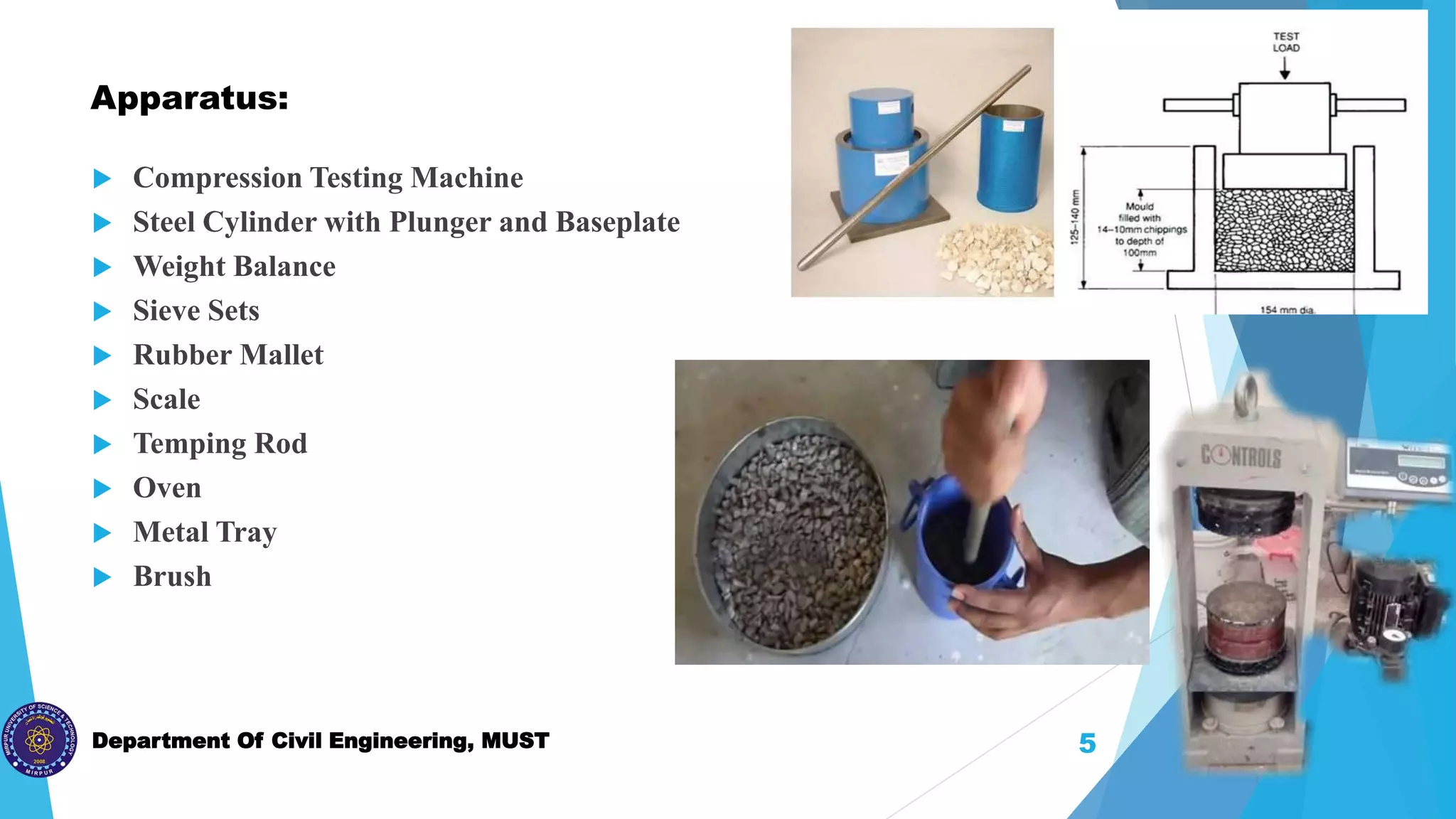
Apparatus:
Compression Testing Machine
Steel Cylinder with Plunger and Baseplate
Weight Balance
Sieve Sets
Rubber Mallet
Scale
Temping Rod
Oven
Metal Tray
Brush
5
Department Of CivilEngineering, MUST
(Table:01)Principal Dimension of Cylinder and Plunger
7
Component Dimensions
Nominal 150mm
internal diameter
of cylinder
Nominal 75 mm
internal diameter
of cylinder
Cylinder
Internal Diameter, A
Internal Diameter, B
Minimum Wall thickness
mm
154±0.5
125 to 140
16.0
mm
78±0.5
70.0 to 85.0
8.0
Plunger
Diameter of Piston, D
Diameter of stem, E
Overall length of piston plus stem, F
Minimum depth of piston, G
Diameter of hole, H
152±0.5
>95 to ≤D
100 t0 115
Not less than 25.0
20.0±0.1
76.0±0.5
>45.0 to ≤D
60.0 to 80.0
Not less than 19.0
10.0±0.1
Base Plate
Minimum thickness, I
Length of each side of square, J
10
200 to 300
10
110 to 115
8.
Department Of CivilEngineering, MUST
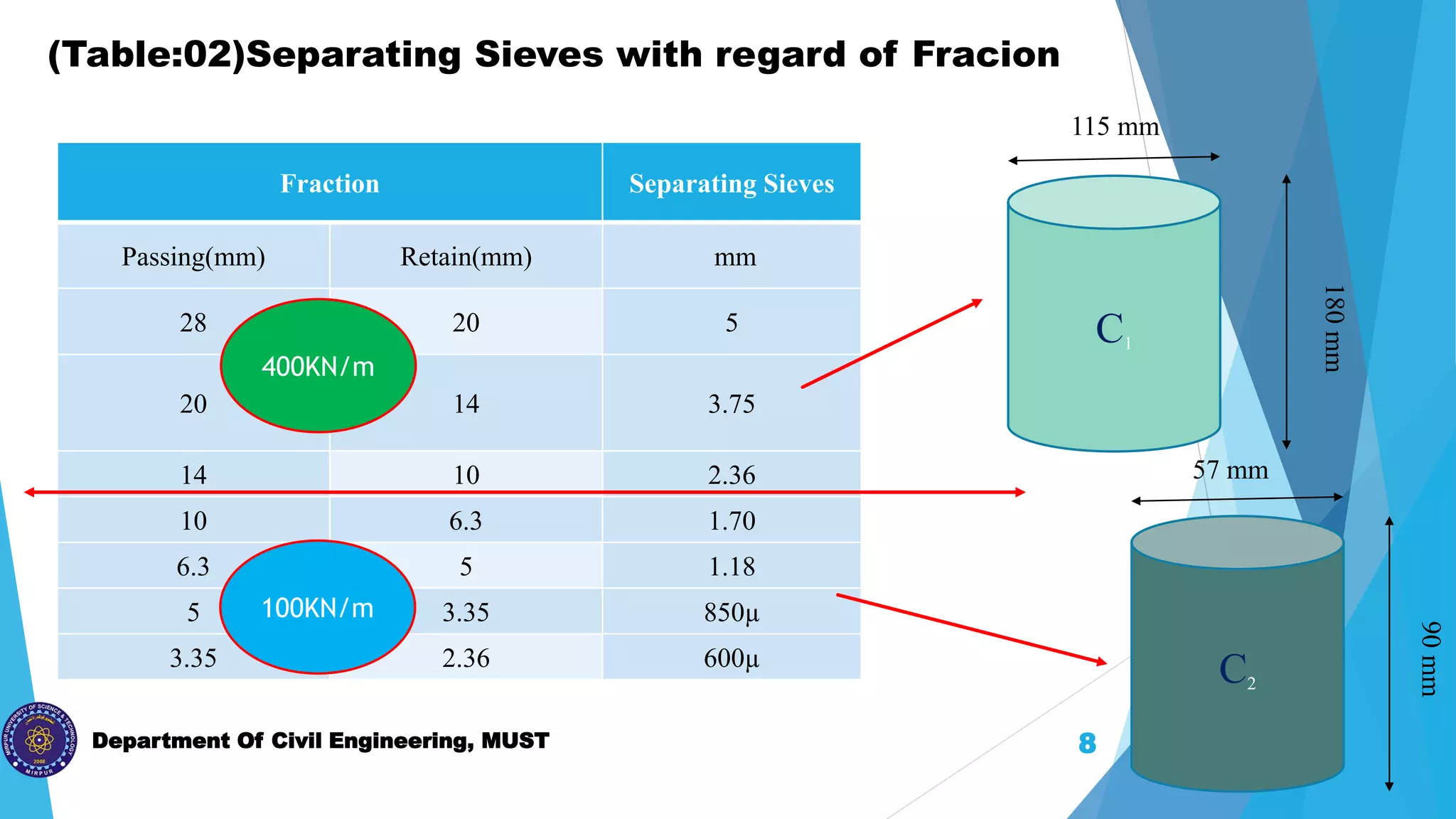
(Table:02)Separating Sieves with regard of Fracion
8
Fraction Separating Sieves
Passing(mm) Retain(mm) mm
28 20 5
20 14 3.75
14 10 2.36
10 6.3 1.70
6.3 5 1.18
5 3.35 850µ
3.35 2.36 600µ
400KN/m
100KN/m
C1
C2
115 mm
180mm
57 mm
90mm
9.
Department Of CivilEngineering, MUST
Preparation of test portions and Specimens:
1. Produce test portion of sufficient mass
to produce three test specimen from 14
mm to 10 mm fraction.
2. Thoroughly Sieve he entire dry test
portion on 14m and 10mm test sieve.
3. Remove the oversize and undersize
fraction.
4. After Sieving dry the test specimens
by heating at a temperature of
105±5oC.
9
(Table:03) Guide to minimum mass of test portions
required to obtain a suitable mass of material to
determine the aggregate crushing value
Grading of the aggregate Minimum Mass of the test
portion1)
mm
All-in aggregate 40 max. size
All-in aggregate 20 max. size
Graded aggregate 40 to 5
Graded aggregate 20 to 5
Graded aggregate 14 to 5
Kg
60
45
40
25
15
1) For normal density aggregate
10.
Department Of CivilEngineering, MUST
Procedure:
1-Preparation of Mould with the specimen:
1. Place the Cylinder on base plate and add a test specimen in three layers equal to depth.
2. Each layer subjected to 25 strokes using temping rod and distribute evenly over the surface.
3. Dropping from a height approximately 50 mm above the surface of aggregate.
4. Level the top surface and insert the plunger so that it rest horizontally on surface.
5. Now turn mixing at medium speed for one minute.
2-Placing on Compression testing Machine :
1. Place the test specimen in the Compression testing Machine and plunger in position between
the plates of testing machine.
2. Applied load at a uniform rate as possible so that the required force of 400KN is reached in
10 minutes.
3. After specified time released he load and remove the crushed material by holding the cylinder
over clean tray.
10
11.
Department Of CivilEngineering, MUST
Procedure:
2-Placing on Compression testing Machine :
4. Hammering on outside of cylinder using rubber mallet until particles are sufficiently
distributed o enable the mass of specimen to fall freely on he tray.
5. Weight the tray and aggregate and determine the mass of aggregate used (M1) to nearest
gram.
6. Sieve the whole specimen on sieve 2,36mm test sieve until no further significant amount
passes during the period of 1 minute.
7. Weight fraction passing and retained on the sieve nearest gram(M2 and m3
respectively).
8. More than 10g,discard the result and repeat the procedure using new specimen.
11
12.
Department Of CivilEngineering, MUST
Observation & Calculation:
Criteria Value(grams)
Empty Mould weight
3998
Weight of Mould+Specimen
6269
Initial Aggregate Weight(WA)
2964
Aggregate Weight pass from #8 sieve (WB)
441
Aggregate Weight Retain from #8 sieve(WC)
2520
12
Table:04
Department Of CivilEngineering, MUST
Result:
14
From the Obtained ACV from the calculation, referring to the table
#05(according to the British standard-812) it Cleary shows that specimen is
lies in the Normal Quality Category.
Normal Aggregate specimen are suitable for the use of road profile such as
pavement design.
ACV (%)
Quality of
Aggregate
<10 Very Strong
10-20 Normal
>20 Poor
Table #05
15.
Department Of CivilEngineering, MUST
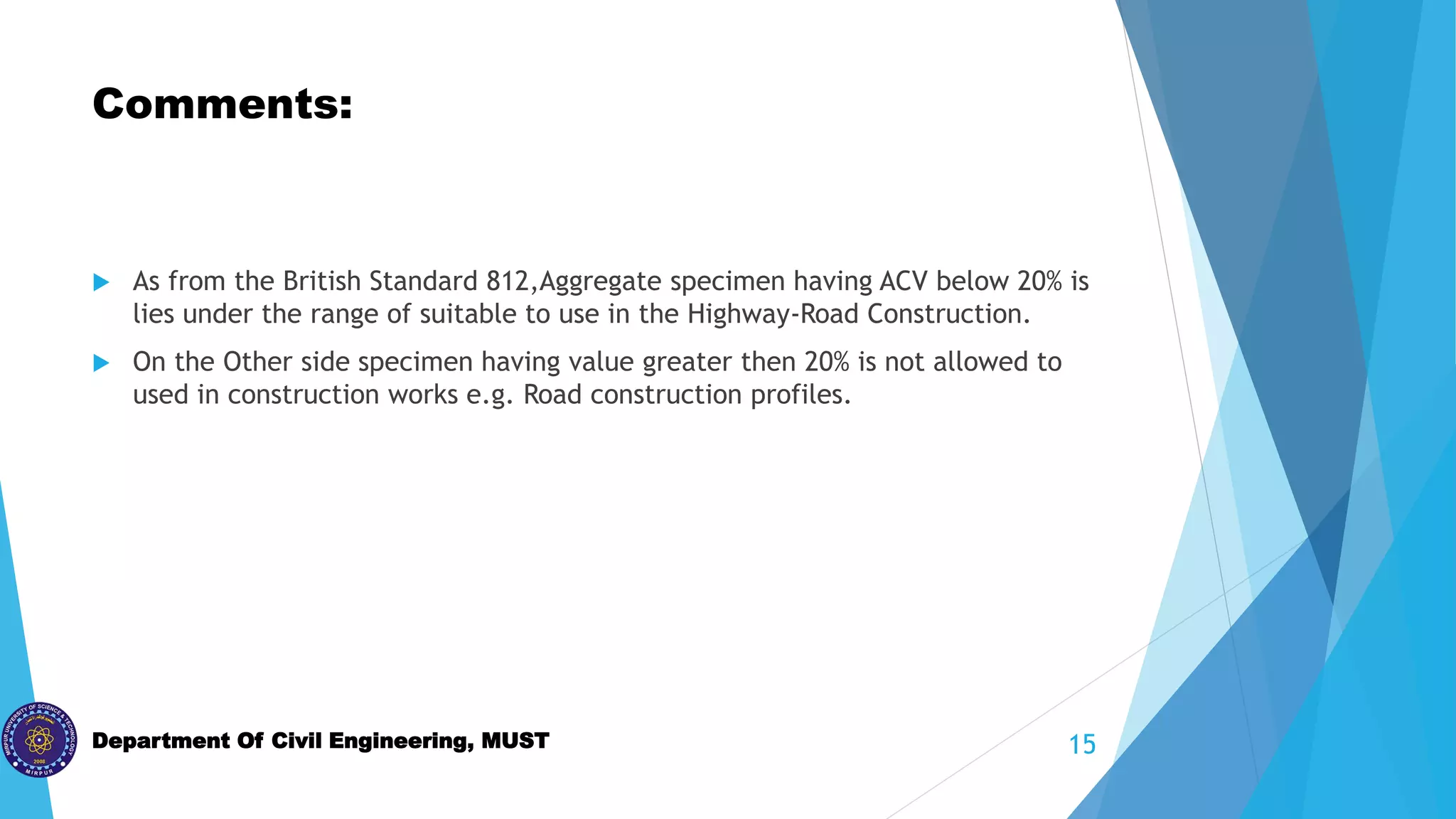
Comments:
As from the British Standard 812,Aggregate specimen having ACV below 20% is
lies under the range of suitable to use in the Highway-Road Construction.
On the Other side specimen having value greater then 20% is not allowed to
used in construction works e.g. Road construction profiles.
15