Age Distribution
•The proportionate numbers of persons in successive age categories in a given
population.
•Almost one-third of the population in less developed countries is under age
15. In contrast, less than one-fifth of the population in more developed
countries is under 15.
• Today there are more than 2 billion young people below age 20 in less
developed regions—the age cohort that will soon become the world’s newest
group of parents.
Youngest Nation : India
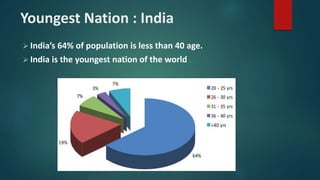
 India’s 64% of population is less than 40 age.
 India is the youngest nation of the world .
Advantages Of Youngest Nation
 Gives the country a chance to build an educated & civilized community.
 Provide a growing market for the manufactured products.
 Provides a large tax base for the country.
Disadvantages
 It strains the education and health care services, food supplies and
accommodation availabilities.
 Rural-urban migration increases as rural areas are unable to sustain
growing population. This leads to shanty towns. This further leads to
increase poverty and lower standard of country.
 Unable to maintain & control the growing population, there is a political
instability in the country.
Challenges For India
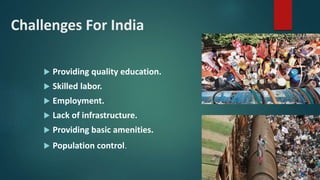
 Providing quality education.
 Skilled labor.
 Employment.
 Lack of infrastructure.
 Providing basic amenities.
 Population control.
The Critical Analysis
 The first is the increased labor supply. However, the magnitude of this
benefit appears to be dependent on the ability of the economy to absorb
and productively employ the extra workers rather than be a pure
demographic gift.
 The second mechanism is the increase in savings. As the number of
dependents decreases individuals can save more. This increase in national
savings rates increases the stock of capital in developing countries already
facing shortages of capital and leads to higher productivity as the
accumulated capital is invested.
 The third mechanism is human capital. Decreases in fertility rates result in
healthier women and fewer economic pressures at home. This also allows
parents to invest more resources per child, leading to better health and
educational outcomes.
 The fourth mechanism for growth is the increasing domestic demand
brought about by the increasing GDP per capita and the decreasing
dependency ratio.
Concerns for India
 Demographic Dividend is a limited time window, in which all the
appropriate policy framework has to put in, to be able to utilize
the window.
 India needs to create 1 million jobs every month to be able to
provide employment for the population entering working age
group and for those moving out of agriculture.
 About 92% of India's are informal workers. Informal employment
is insecure, poorly paid and has no social security. There's also a
difference between wages of regular workers and informal or
contract workers.
 The overall quality of the higher education system is well below
global standards.
 India ranks 135 on the global Human Development Index
rankings.
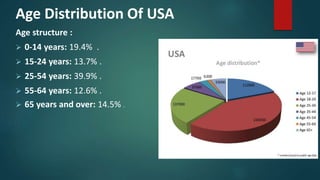
Age Distribution Of USA
Age structure :
 0-14 years: 19.4% .
 15-24 years: 13.7% .
 25-54 years: 39.9% .
 55-64 years: 12.6% .
 65 years and over: 14.5% .
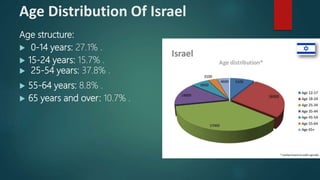
Age Distribution Of Israel
Age structure:
 0-14 years: 27.1% .
 15-24 years: 15.7% .
 25-54 years: 37.8% .
 55-64 years: 8.8% .
 65 years and over: 10.7% .

Age distribution janty das

  • 1.
    Age Distribution •The proportionatenumbers of persons in successive age categories in a given population. •Almost one-third of the population in less developed countries is under age 15. In contrast, less than one-fifth of the population in more developed countries is under 15. • Today there are more than 2 billion young people below age 20 in less developed regions—the age cohort that will soon become the world’s newest group of parents.
  • 2.
    Youngest Nation :India  India’s 64% of population is less than 40 age.  India is the youngest nation of the world .
  • 3.
    Advantages Of YoungestNation  Gives the country a chance to build an educated & civilized community.  Provide a growing market for the manufactured products.  Provides a large tax base for the country.
  • 4.
    Disadvantages  It strainsthe education and health care services, food supplies and accommodation availabilities.  Rural-urban migration increases as rural areas are unable to sustain growing population. This leads to shanty towns. This further leads to increase poverty and lower standard of country.  Unable to maintain & control the growing population, there is a political instability in the country.
  • 5.
    Challenges For India Providing quality education.  Skilled labor.  Employment.  Lack of infrastructure.  Providing basic amenities.  Population control.
  • 6.
    The Critical Analysis The first is the increased labor supply. However, the magnitude of this benefit appears to be dependent on the ability of the economy to absorb and productively employ the extra workers rather than be a pure demographic gift.  The second mechanism is the increase in savings. As the number of dependents decreases individuals can save more. This increase in national savings rates increases the stock of capital in developing countries already facing shortages of capital and leads to higher productivity as the accumulated capital is invested.  The third mechanism is human capital. Decreases in fertility rates result in healthier women and fewer economic pressures at home. This also allows parents to invest more resources per child, leading to better health and educational outcomes.  The fourth mechanism for growth is the increasing domestic demand brought about by the increasing GDP per capita and the decreasing dependency ratio.
  • 7.
    Concerns for India Demographic Dividend is a limited time window, in which all the appropriate policy framework has to put in, to be able to utilize the window.  India needs to create 1 million jobs every month to be able to provide employment for the population entering working age group and for those moving out of agriculture.  About 92% of India's are informal workers. Informal employment is insecure, poorly paid and has no social security. There's also a difference between wages of regular workers and informal or contract workers.  The overall quality of the higher education system is well below global standards.  India ranks 135 on the global Human Development Index rankings.
  • 8.
    Age Distribution OfUSA Age structure :  0-14 years: 19.4% .  15-24 years: 13.7% .  25-54 years: 39.9% .  55-64 years: 12.6% .  65 years and over: 14.5% .
  • 9.
    Age Distribution OfIsrael Age structure:  0-14 years: 27.1% .  15-24 years: 15.7% .  25-54 years: 37.8% .  55-64 years: 8.8% .  65 years and over: 10.7% .