Agenda	
  1/12/15
•Lecture:	
  West	
  African	
  Trading	
  Empires	
  (#2)	
  
•Homework:	
  Map	
  Quiz	
  on	
  Friday
The	
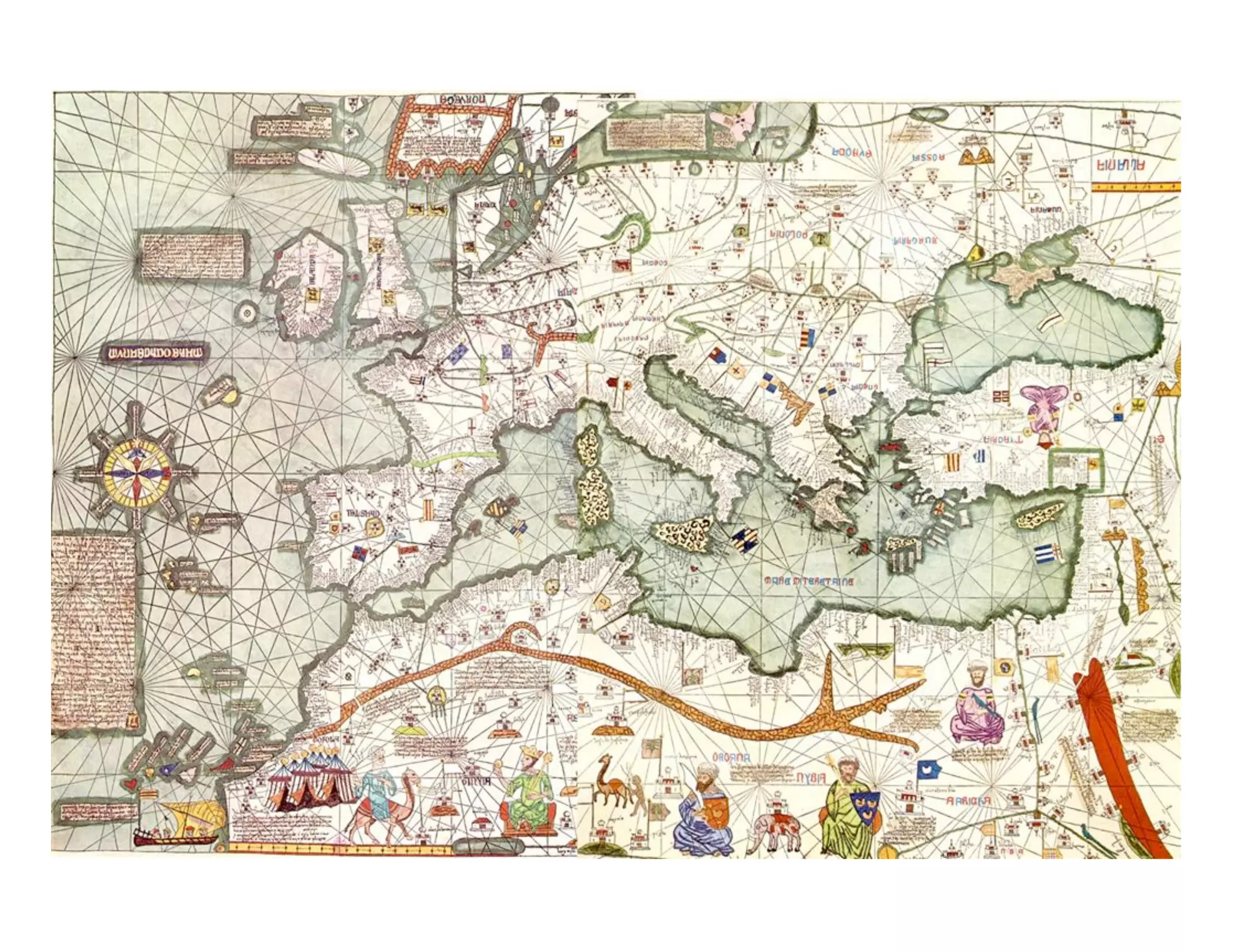
  Gold-­‐Salt	
  Trade
•Caravans	
  -­‐	
  groups	
  of	
  traders	
  often	
  in	
  
the	
  thousands	
  that	
  traded	
  goods	
  
between	
  kingdoms.	
  
•Many	
  traders	
  were	
  Berbers	
  or	
  
indigenous	
  people	
  of	
  Algeria	
  or	
  
Morocco	
  
•Salt	
  from	
  the	
  North	
  of	
  Africa	
  and	
  Gold	
  
from	
  the	
  South	
  were	
  exchanged	
  
•Introduction	
  of	
  Camels	
  were	
  key	
  
Why	
  is	
  salt	
  such	
  an	
  
important	
  item	
  in	
  the	
  
ancient	
  world?
Empire	
  of	
  Ghana
•790-­‐1240	
  CE	
  
•Earliest	
  West	
  African	
  kingdom	
  
•Had	
  control	
  over	
  the	
  gold	
  trade	
  
and	
  used	
  this	
  money	
  to	
  create	
  
an	
  army	
  and	
  trade	
  for	
  salt.	
  
•Ghana	
  means	
  “war	
  chief”	
  
•Earliest	
  inQluences	
  of	
  Islam	
  
emerge	
  in	
  West	
  Africa	
  in	
  Ghana
Empire	
  of	
  Mali	
  1230s	
  -­‐	
  1600s
•The	
  Mali	
  empire	
  was	
  known	
  for	
  its	
  great	
  
wealth	
  as	
  far	
  away	
  as	
  Europe	
  and	
  Middle	
  East	
  
•Mansa	
  Musa	
  rules	
  the	
  empire	
  of	
  Mali	
  from	
  
1312	
  to	
  1337	
  
•He	
  expanded	
  the	
  empire	
  and	
  acquired	
  more	
  
gold	
  and	
  monopolized	
  the	
  trade	
  routes	
  
•The	
  caravans	
  from	
  the	
  Middle	
  East	
  brought	
  
the	
  Islamic	
  faith	
  to	
  West	
  Africa.	
  
•Mansa	
  Musa	
  converted	
  to	
  Islam	
  and	
  makes	
  a	
  
pilgrimage	
  in	
  1324
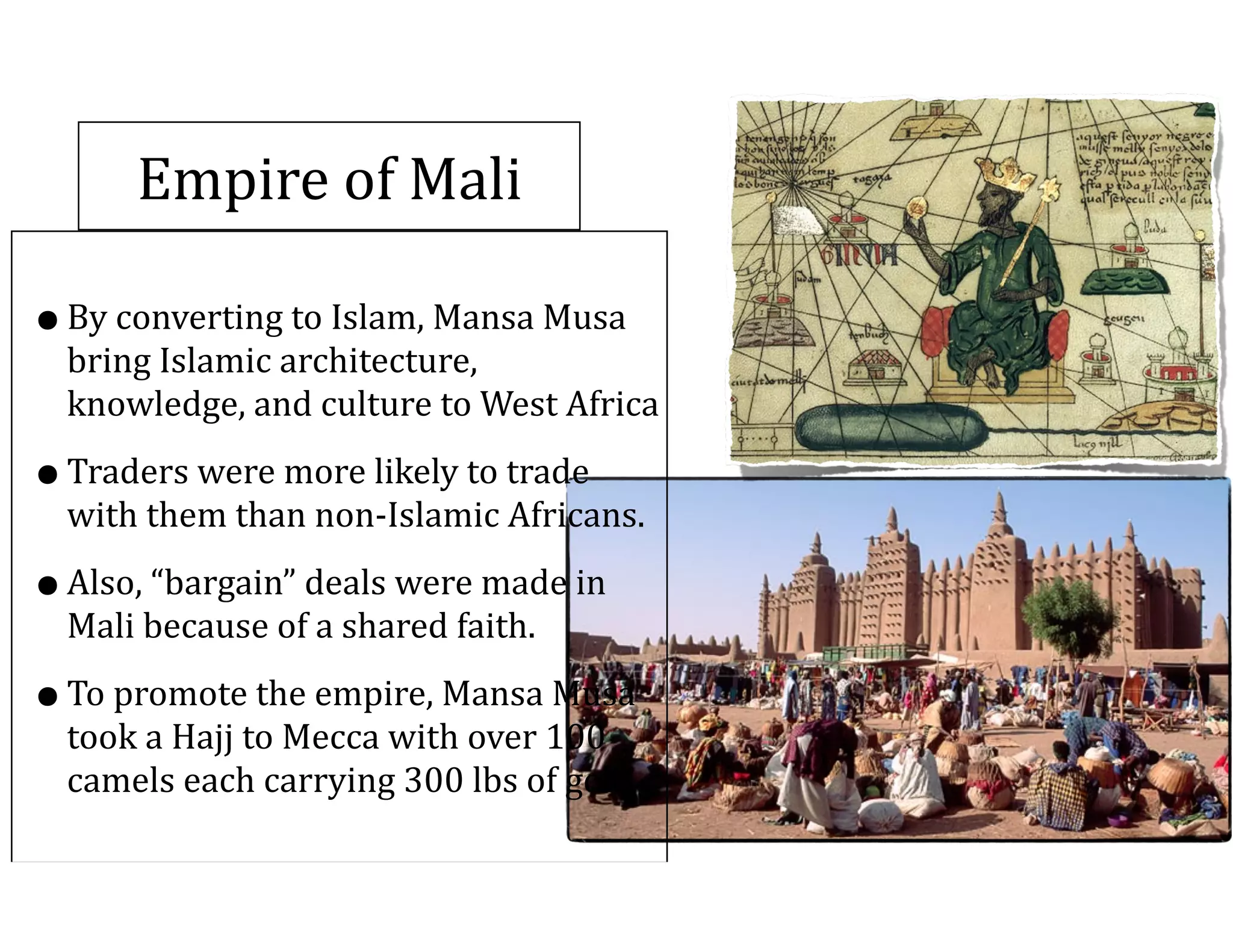
Mansa	
  Musa
Empire	
  of	
  Mali
•By	
  converting	
  to	
  Islam,	
  Mansa	
  Musa	
  
bring	
  Islamic	
  architecture,	
  
knowledge,	
  and	
  culture	
  to	
  West	
  Africa	
  
•Traders	
  were	
  more	
  likely	
  to	
  trade	
  
with	
  them	
  than	
  non-­‐Islamic	
  Africans.	
  
•Also,	
  “bargain”	
  deals	
  were	
  made	
  in	
  
Mali	
  because	
  of	
  a	
  shared	
  faith.	
  
•To	
  promote	
  the	
  empire,	
  Mansa	
  Musa	
  
took	
  a	
  Hajj	
  to	
  Mecca	
  with	
  over	
  100	
  
camels	
  each	
  carrying	
  300	
  lbs	
  of	
  gold
•Capital	
  city	
  was	
  Gao	
  
•Sunni	
  Ali	
  (r.	
  1464-­‐1492)	
  the	
  Qirst	
  
great	
  king	
  of	
  Songhai	
  who	
  
captured	
  Timbuktu	
  and	
  Jenne.	
  
Also	
  expanded	
  the	
  navy	
  and	
  
conquered	
  the	
  former	
  Mali	
  and	
  
Ghana	
  empires	
  
•Askia	
  Muhammed	
  (1493-­‐1528)	
  -­‐	
  
ruler	
  of	
  Songhai	
  after	
  Sunni	
  Ali.	
  
Timbuktu	
  became	
  the	
  capital	
  of	
  
Islamic	
  studies.	
  Created	
  a	
  
government	
  based	
  on	
  
bureaucracy.	
  Standardized	
  trade	
  
measurements	
  in	
  W.	
  Africa
Rise	
  of	
  Songhai
Kingdom	
  of	
  Benin	
  (1440-­‐1897	
  c.e.)
•Small	
  but	
  wealthy	
  coastal	
  kingdom	
  in	
  
West	
  Africa	
  
•Their	
  trade	
  was	
  based	
  on	
  exchanging	
  
goods	
  from	
  the	
  central	
  part	
  of	
  Africa	
  
to	
  Europeans	
  and	
  African	
  kingdoms	
  
in	
  the	
  south.	
  
•Portuguese	
  and	
  later	
  Britain	
  are	
  
trade	
  partners	
  
•Ivory,	
  gold,	
  salt,	
  slaves	
  and	
  later	
  
rum	
  for	
  guns	
  and	
  manufactured	
  
goods
Exploring	
  the	
  Coast	
  
of	
  Africa
•Portugal’s	
  Prince	
  Henry	
  “the	
  
navigator”	
  wished	
  to	
  bypass	
  northern	
  
Africa	
  
•Looking	
  for	
  direct	
  route	
  to	
  Asia	
  
•Trading	
  posts	
  established	
  along	
  the	
  
coast	
  including	
  in	
  Senegal	
  
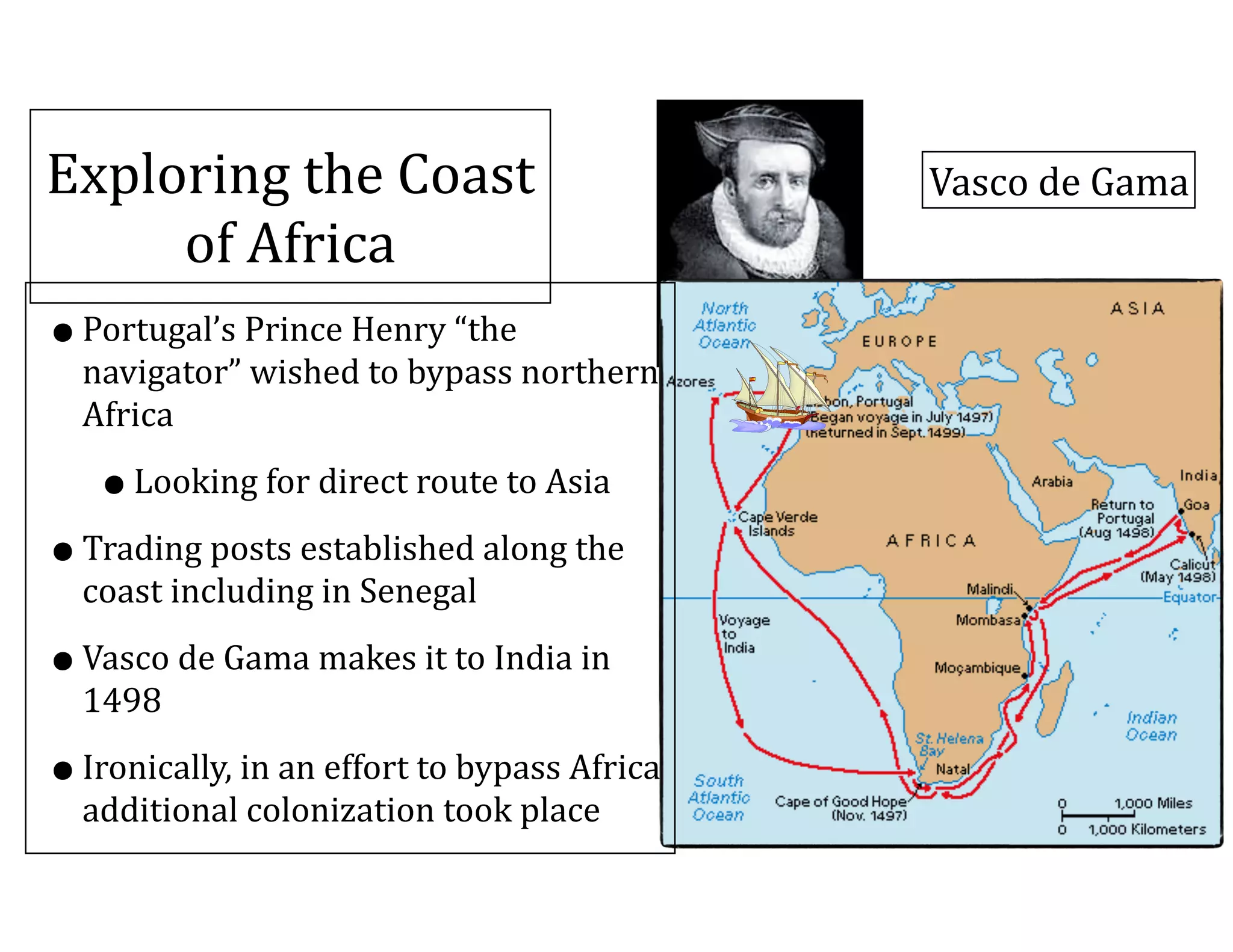
•Vasco	
  de	
  Gama	
  makes	
  it	
  to	
  India	
  in	
  
1498	
  
•Ironically,	
  in	
  an	
  effort	
  to	
  bypass	
  Africa	
  
additional	
  colonization	
  took	
  place
Vasco	
  de	
  Gama
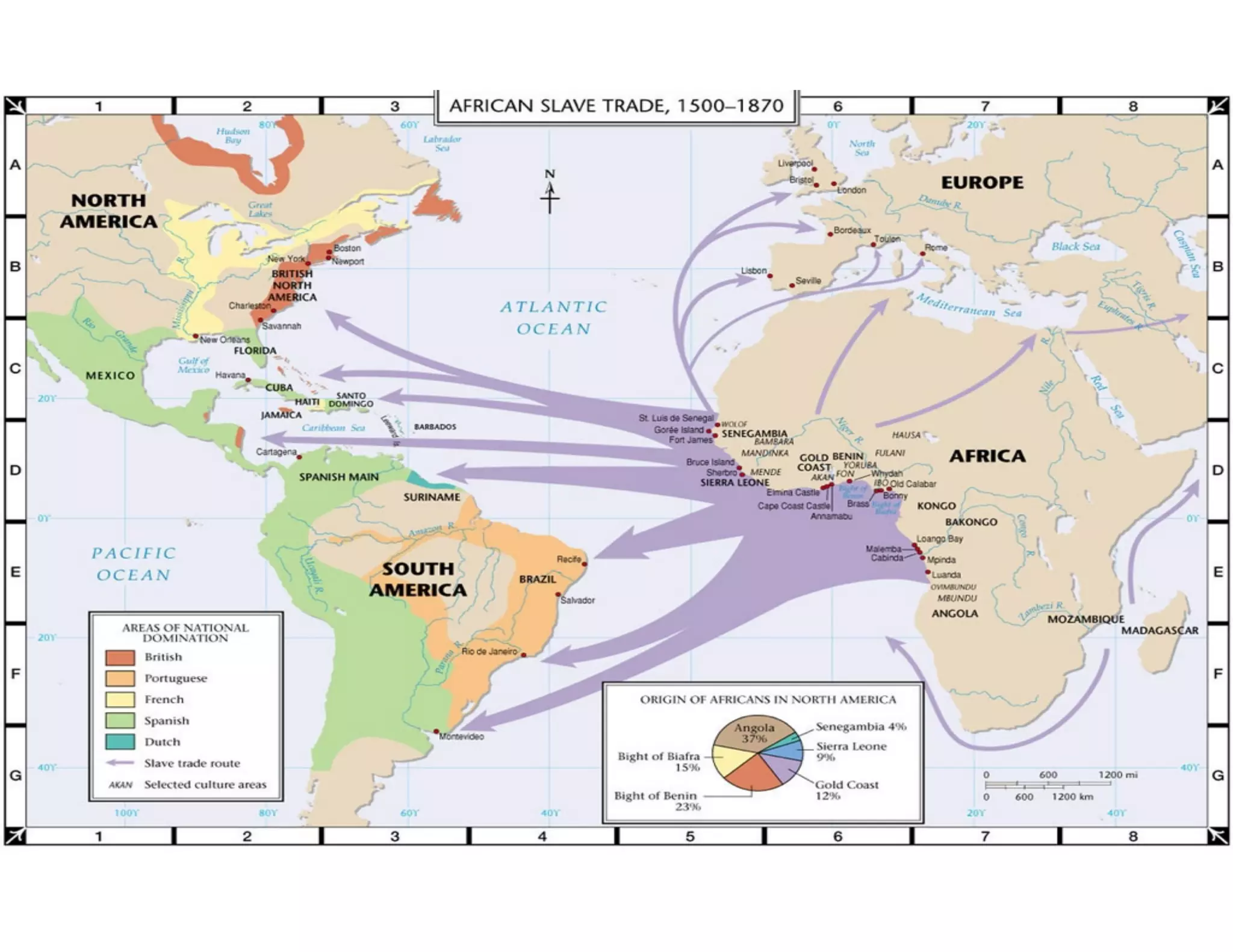
Trade	
  in	
  Human	
  
Beings
•Early	
  on	
  Europe	
  was	
  
not	
  interested	
  in	
  
trading	
  for	
  African	
  
slaves.	
  
•In	
  the	
  1500s	
  the	
  
demand	
  for	
  slaves	
  
increased	
  
dramatically.	
  Why	
  
was	
  demand	
  
suddenly	
  so	
  high?
The	
  New	
  World	
  -­‐	
  Columbus
•European	
  colonization	
  of	
  New	
  
World	
  spread	
  disease	
  among	
  
Native	
  Americans	
  killing	
  
millions.	
  
•From	
  the	
  1500s	
  to	
  the	
  1800s,	
  
slave	
  traders	
  sent	
  an	
  estimated	
  
10	
  to	
  15	
  million	
  Africans	
  
across	
  the	
  Atlantic	
  to	
  the	
  
Americas.	
  
•It	
  was	
  the	
  largest	
  forced	
  
movement	
  of	
  people	
  in	
  human	
  
history.
Effects	
  of	
  Slave	
  Trade
•Hundreds	
  of	
  years	
  of	
  slave	
  
trade	
  caused	
  many	
  tribal	
  wars	
  
in	
  Africa.	
  	
  
•Tribes	
  would	
  hunt	
  other	
  
tribes	
  for	
  slaves	
  -­‐	
  sell	
  slaves	
  
for	
  guns	
  -­‐	
  then	
  hunt	
  more.	
  
•African’s	
  misunderstanding	
  
of	
  European-­‐style	
  slavery	
  
led	
  to	
  devastating	
  results
Effects	
  of	
  Slave	
  Trade
•African	
  diaspora	
  (def)	
  -­‐	
  the	
  scattering	
  of	
  
Africans	
  taken	
  captive	
  by	
  slave	
  traders.	
  
•After	
  Columbus	
  discovered	
  the	
  New	
  World,	
  
Europeans	
  were	
  interested	
  in	
  exploration	
  and	
  
fame.	
  
•Europe	
  also	
  engaged	
  in	
  mercantilism	
  -­‐	
  which	
  
needs	
  colonies	
  to	
  be	
  successful.
Directions for Document Work
•1. We are going to quickly form groups of 4. (teacher will
assist)
•2. In your groups, each person will read part of the
document by Alexander Falconbridge.
•3. After you read, discuss as a group. Each group will write
down the questions below and submit answers, in-class.
Questions for Document Work
1. Who wrote this document?
2. When and where was it written?
3. Why do you think it was written?
4. What is the basic summary?
Thinking critically
5. What part of the account was the most shocking or disturbing to you
and your group?
6. Describe how the system of slavery dehumanized Africans? Give
specific examples.

Africa lecture #2

  • 1.
    Agenda  1/12/15 •Lecture:  West  African  Trading  Empires  (#2)   •Homework:  Map  Quiz  on  Friday
  • 3.
    The  Gold-­‐Salt  Trade •Caravans  -­‐  groups  of  traders  often  in   the  thousands  that  traded  goods   between  kingdoms.   •Many  traders  were  Berbers  or   indigenous  people  of  Algeria  or   Morocco   •Salt  from  the  North  of  Africa  and  Gold   from  the  South  were  exchanged   •Introduction  of  Camels  were  key   Why  is  salt  such  an   important  item  in  the   ancient  world?
  • 4.
    Empire  of  Ghana •790-­‐1240  CE   •Earliest  West  African  kingdom   •Had  control  over  the  gold  trade   and  used  this  money  to  create   an  army  and  trade  for  salt.   •Ghana  means  “war  chief”   •Earliest  inQluences  of  Islam   emerge  in  West  Africa  in  Ghana
  • 5.
    Empire  of  Mali  1230s  -­‐  1600s •The  Mali  empire  was  known  for  its  great   wealth  as  far  away  as  Europe  and  Middle  East   •Mansa  Musa  rules  the  empire  of  Mali  from   1312  to  1337   •He  expanded  the  empire  and  acquired  more   gold  and  monopolized  the  trade  routes   •The  caravans  from  the  Middle  East  brought   the  Islamic  faith  to  West  Africa.   •Mansa  Musa  converted  to  Islam  and  makes  a   pilgrimage  in  1324 Mansa  Musa
  • 6.
    Empire  of  Mali •By  converting  to  Islam,  Mansa  Musa   bring  Islamic  architecture,   knowledge,  and  culture  to  West  Africa   •Traders  were  more  likely  to  trade   with  them  than  non-­‐Islamic  Africans.   •Also,  “bargain”  deals  were  made  in   Mali  because  of  a  shared  faith.   •To  promote  the  empire,  Mansa  Musa   took  a  Hajj  to  Mecca  with  over  100   camels  each  carrying  300  lbs  of  gold
  • 7.
    •Capital  city  was  Gao   •Sunni  Ali  (r.  1464-­‐1492)  the  Qirst   great  king  of  Songhai  who   captured  Timbuktu  and  Jenne.   Also  expanded  the  navy  and   conquered  the  former  Mali  and   Ghana  empires   •Askia  Muhammed  (1493-­‐1528)  -­‐   ruler  of  Songhai  after  Sunni  Ali.   Timbuktu  became  the  capital  of   Islamic  studies.  Created  a   government  based  on   bureaucracy.  Standardized  trade   measurements  in  W.  Africa Rise  of  Songhai
  • 8.
    Kingdom  of  Benin  (1440-­‐1897  c.e.) •Small  but  wealthy  coastal  kingdom  in   West  Africa   •Their  trade  was  based  on  exchanging   goods  from  the  central  part  of  Africa   to  Europeans  and  African  kingdoms   in  the  south.   •Portuguese  and  later  Britain  are   trade  partners   •Ivory,  gold,  salt,  slaves  and  later   rum  for  guns  and  manufactured   goods
  • 9.
    Exploring  the  Coast   of  Africa •Portugal’s  Prince  Henry  “the   navigator”  wished  to  bypass  northern   Africa   •Looking  for  direct  route  to  Asia   •Trading  posts  established  along  the   coast  including  in  Senegal   •Vasco  de  Gama  makes  it  to  India  in   1498   •Ironically,  in  an  effort  to  bypass  Africa   additional  colonization  took  place Vasco  de  Gama
  • 10.
    Trade  in  Human   Beings •Early  on  Europe  was   not  interested  in   trading  for  African   slaves.   •In  the  1500s  the   demand  for  slaves   increased   dramatically.  Why   was  demand   suddenly  so  high?
  • 11.
    The  New  World  -­‐  Columbus •European  colonization  of  New   World  spread  disease  among   Native  Americans  killing   millions.   •From  the  1500s  to  the  1800s,   slave  traders  sent  an  estimated   10  to  15  million  Africans   across  the  Atlantic  to  the   Americas.   •It  was  the  largest  forced   movement  of  people  in  human   history.
  • 13.
    Effects  of  Slave  Trade •Hundreds  of  years  of  slave   trade  caused  many  tribal  wars   in  Africa.     •Tribes  would  hunt  other   tribes  for  slaves  -­‐  sell  slaves   for  guns  -­‐  then  hunt  more.   •African’s  misunderstanding   of  European-­‐style  slavery   led  to  devastating  results
  • 14.
    Effects  of  Slave  Trade •African  diaspora  (def)  -­‐  the  scattering  of   Africans  taken  captive  by  slave  traders.   •After  Columbus  discovered  the  New  World,   Europeans  were  interested  in  exploration  and   fame.   •Europe  also  engaged  in  mercantilism  -­‐  which   needs  colonies  to  be  successful.
  • 15.
    Directions for DocumentWork •1. We are going to quickly form groups of 4. (teacher will assist) •2. In your groups, each person will read part of the document by Alexander Falconbridge. •3. After you read, discuss as a group. Each group will write down the questions below and submit answers, in-class.
  • 16.
    Questions for DocumentWork 1. Who wrote this document? 2. When and where was it written? 3. Why do you think it was written? 4. What is the basic summary? Thinking critically 5. What part of the account was the most shocking or disturbing to you and your group? 6. Describe how the system of slavery dehumanized Africans? Give specific examples.