Agenda 2/2/15
1. Lecture #6: Pan-Africanism
2. Classwork - Read pages 106-111 & 139-143; Answer
Questions 2-7 (pg 111) and Questions 1-4 (pg 143) Due in-
class
African Nationalism
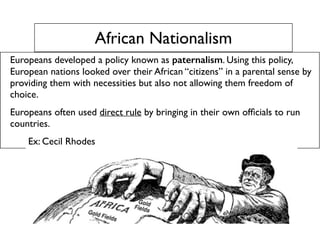
Europeans developed a policy known as paternalism. Using this policy,
European nations looked over their African “citizens” in a parental sense by
providing them with necessities but also not allowing them freedom of
choice.
Europeans often used direct rule by bringing in their own officials to run
countries.
Ex: Cecil Rhodes
African Nationalism
Nationalists felt various tribes had
to unite to create independence
from Europe - (Us versus Them
mentality)
Pan-Africanism emerges -
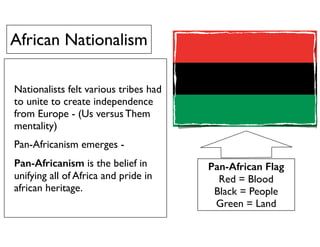
Pan-Africanism is the belief in
unifying all of Africa and pride in
african heritage.
Pan-African Flag
Red = Blood
Black = People
Green = Land
African Nationalism
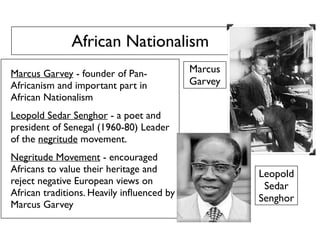
Marcus Garvey - founder of Pan-
Africanism and important part in
African Nationalism
Leopold Sedar Senghor - a poet and
president of Senegal (1960-80) Leader
of the negritude movement.
Negritude Movement - encouraged
Africans to value their heritage and
reject negative European views on
African traditions. Heavily influenced by
Marcus Garvey
Marcus
Garvey
Leopold
Sedar
Senghor
The Negritude
Movement
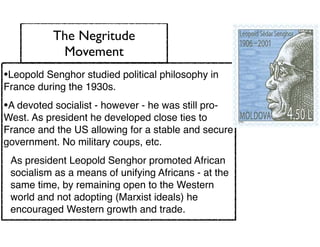
•Leopold Senghor studied political philosophy in
France during the 1930s.
•A devoted socialist - however - he was still pro-
West. As president he developed close ties to
France and the US allowing for a stable and secure
government. No military coups, etc.
As president Leopold Senghor promoted African
socialism as a means of unifying Africans - at the
same time, by remaining open to the Western
world and not adopting (Marxist ideals) he
encouraged Western growth and trade.
The Negritude
Movement
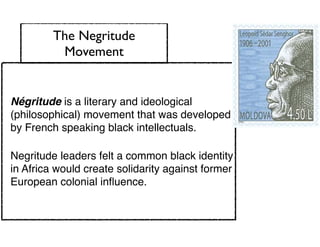
Négritude is a literary and ideological
(philosophical) movement that was developed
by French speaking black intellectuals.
Negritude leaders felt a common black identity
in Africa would create solidarity against former
European colonial influence.
Rastafarianism
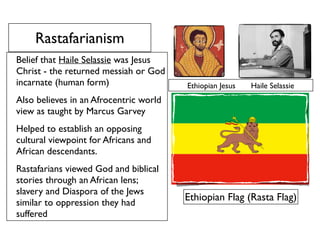
Belief that Haile Selassie was Jesus
Christ - the returned messiah or God
incarnate (human form)
Also believes in an Afrocentric world
view as taught by Marcus Garvey
Helped to establish an opposing
cultural viewpoint for Africans and
African descendants.
Rastafarians viewed God and biblical
stories through an African lens;
slavery and Diaspora of the Jews
similar to oppression they had
suffered
Ethiopian Flag (Rasta Flag)
Ethiopian Jesus Haile Selassie
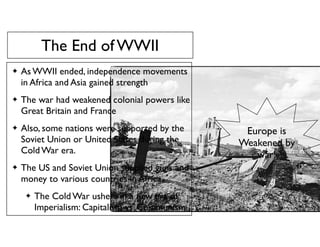
The End of WWII
✦ As WWII ended, independence movements
in Africa and Asia gained strength
✦ The war had weakened colonial powers like
Great Britain and France
✦ Also, some nations were supported by the
Soviet Union or United States during the
Cold War era.
✦ The US and Soviet Union supplied guns and
money to various countries in Africa.
✦ The Cold War ushers in a new era of
Imperialism: Capitalism vs. Communism
Europe is
Weakened by
war!
New Nations Emerge
1.Ghana - In the Gold Coast region, Kwame Nkrumah
organized strikes and boycotts to protest British rule. In 1957,
Ghana was the first black African country to win
independence.
2.North Africa - Libya,Tunisia, and Morocco win freedom in
1950s peacefully. But, a bloody war was fought by France over
Algeria.
3.Kenya - Jomo Kenyatta led a series of violent attacks on the
British who lived in Kenya. Eventually, the British left and
Kenyatta became president.
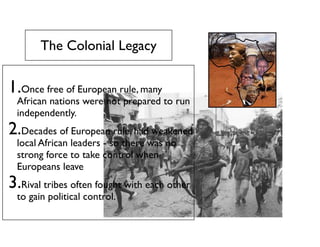
The Colonial Legacy
1.Once free of European rule, many
African nations were not prepared to run
independently.
2.Decades of European rule, had weakened
local African leaders - so there was no
strong force to take control when
Europeans leave
3.Rival tribes often fought with each other
to gain political control.
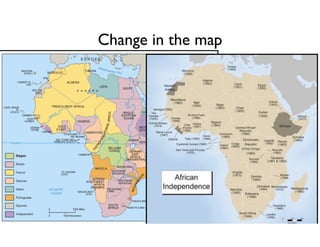
Change in the map
Lasting Effects of Colonial Rule
1.civil war and political unrest - tribes
fight over control and cause civil wars
or genocide.
2.economic dependence - African
countries were abused by Europe that
they haven’t developed independent
economies yet.
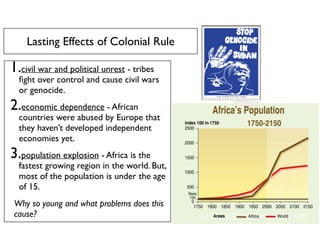
3.population explosion - Africa is the
fastest growing region in the world. But,
most of the population is under the age
of 15.
Why so young and what problems does this
cause?

Africa lecture #6

  • 1.
    Agenda 2/2/15 1. Lecture#6: Pan-Africanism 2. Classwork - Read pages 106-111 & 139-143; Answer Questions 2-7 (pg 111) and Questions 1-4 (pg 143) Due in- class
  • 2.
    African Nationalism Europeans developeda policy known as paternalism. Using this policy, European nations looked over their African “citizens” in a parental sense by providing them with necessities but also not allowing them freedom of choice. Europeans often used direct rule by bringing in their own officials to run countries. Ex: Cecil Rhodes
  • 3.
    African Nationalism Nationalists feltvarious tribes had to unite to create independence from Europe - (Us versus Them mentality) Pan-Africanism emerges - Pan-Africanism is the belief in unifying all of Africa and pride in african heritage. Pan-African Flag Red = Blood Black = People Green = Land
  • 4.
    African Nationalism Marcus Garvey- founder of Pan- Africanism and important part in African Nationalism Leopold Sedar Senghor - a poet and president of Senegal (1960-80) Leader of the negritude movement. Negritude Movement - encouraged Africans to value their heritage and reject negative European views on African traditions. Heavily influenced by Marcus Garvey Marcus Garvey Leopold Sedar Senghor
  • 5.
    The Negritude Movement •Leopold Senghorstudied political philosophy in France during the 1930s. •A devoted socialist - however - he was still pro- West. As president he developed close ties to France and the US allowing for a stable and secure government. No military coups, etc. As president Leopold Senghor promoted African socialism as a means of unifying Africans - at the same time, by remaining open to the Western world and not adopting (Marxist ideals) he encouraged Western growth and trade.
  • 6.
    The Negritude Movement Négritude isa literary and ideological (philosophical) movement that was developed by French speaking black intellectuals. Negritude leaders felt a common black identity in Africa would create solidarity against former European colonial influence.
  • 7.
    Rastafarianism Belief that HaileSelassie was Jesus Christ - the returned messiah or God incarnate (human form) Also believes in an Afrocentric world view as taught by Marcus Garvey Helped to establish an opposing cultural viewpoint for Africans and African descendants. Rastafarians viewed God and biblical stories through an African lens; slavery and Diaspora of the Jews similar to oppression they had suffered Ethiopian Flag (Rasta Flag) Ethiopian Jesus Haile Selassie
  • 8.
    The End ofWWII ✦ As WWII ended, independence movements in Africa and Asia gained strength ✦ The war had weakened colonial powers like Great Britain and France ✦ Also, some nations were supported by the Soviet Union or United States during the Cold War era. ✦ The US and Soviet Union supplied guns and money to various countries in Africa. ✦ The Cold War ushers in a new era of Imperialism: Capitalism vs. Communism Europe is Weakened by war!
  • 9.
    New Nations Emerge 1.Ghana- In the Gold Coast region, Kwame Nkrumah organized strikes and boycotts to protest British rule. In 1957, Ghana was the first black African country to win independence. 2.North Africa - Libya,Tunisia, and Morocco win freedom in 1950s peacefully. But, a bloody war was fought by France over Algeria. 3.Kenya - Jomo Kenyatta led a series of violent attacks on the British who lived in Kenya. Eventually, the British left and Kenyatta became president.
  • 10.
    The Colonial Legacy 1.Oncefree of European rule, many African nations were not prepared to run independently. 2.Decades of European rule, had weakened local African leaders - so there was no strong force to take control when Europeans leave 3.Rival tribes often fought with each other to gain political control.
  • 11.
  • 12.
    Lasting Effects ofColonial Rule 1.civil war and political unrest - tribes fight over control and cause civil wars or genocide. 2.economic dependence - African countries were abused by Europe that they haven’t developed independent economies yet. 3.population explosion - Africa is the fastest growing region in the world. But, most of the population is under the age of 15. Why so young and what problems does this cause?