Copyright © Aeroclub 2018-19



Copyright © Aeroclub 2018-19
Introduction
The purpose of this manual is to guide and provide the instructions on the design of the
model RC planes. The benefit of learning the information from this manual is to create
professional looking informative implements that will help understand aeromodelling
better. It is important to implement the information within this manual in order move
you to optimal levels of performances
Parts of RC Airplane
Fuselage is the main structural element of the RC Airplane or the body of the RC Airplane.
The Wing, Horizontal and Vertical Tail are connected to the fuselage. The Engine is also
mounted to the fuselage. The fuselage is made up of bulk-heads. The bulk-heads are
structural members which give strength and rigidity to the fuselage, support load and weight
of the RC Airplane.
Wings
Wings are the main lifting body of the RC Airplane providing the lift necessary for RC
Airplane flight. The wing provides lift because of its aerodynamic shape which creates a
pressure differential causing lift. If a cross-section of the wing is cut, a shape or profile is
visible which is called an airfoil. Airfoil shape is the key to the wings ability to provide lift
and is airfoil selection and design is an important criterion in the design of RC Airplanes.
Engine is the main power-plant of RC Airplane. The power-plant of RC Airplanes can be
electric motor, internal combustion gas engines and jet engines. The engine is mounted on the
Copyright © Aeroclub 2018-19
RC Airplanes and provides thrust to the RC Airplanes. Thrust is the forward force necessary
for flight. The engines run a propeller
Propeller is basically a wing section made of airfoil sections just like a wing but it is twisted
along the span. The propeller is mounted to the engine in propeller driven RC airplanes.
Horizontal Stabilizer provides pitch control to the RC Airplane. Elevator is mounted on the
horizontal stabilizer or horizontal tail of RC Airplanes.
Vertical Stabilizer provides the yaw control to the RC Airplanes. Rudder is mounted to the
vertical tail or vertical stabilizer of the RC Airplanes.
Control Surfaces
Ailerons are roll-control control surfaces of the RC Airplanes. Ailerons provide roll by
moving in opposite direction to each other. When one aileron moves down the other moves
up thus providing more lift on one side as oppose to the other causing the RC Airplane to roll.
Elevators are the pitch-control control surfaces of the RC Airplanes. Elevators provide pitch
control by moving either up or down simultaneously causing the airplane to pitch about the
center of gravity of RC Airplane.
Rudder is the yaw-control control surface of the RC Airplanes. Rudder provides yaw control
by moving to either side be it left or right. The rudder yaws the RC Airplane about the center
of gravity cg of RC Airplane causing the RC Airplane nose to move right or to move left.
BASIC AERODYNAMICS
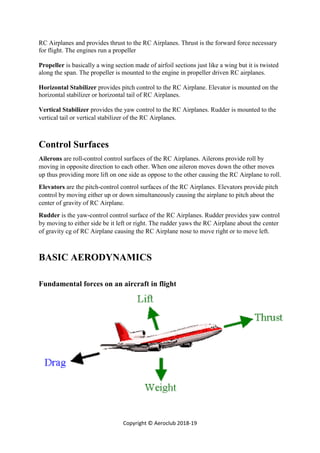
Fundamental forces on an aircraft in flight
Copyright © Aeroclub 2018-19
Lift is the force that directly opposes the weight of an airplane and holds the airplane in the
air. Lift is generated by every part of the airplane, but most of the lift on a normal airliner is
generated by the wings.
Drag is the force of wind or air resistance pushing in the opposite direction to the motion of
the object,
Thrust is the force which moves an aircraft through the air. Thrust is used to overcome the
drag of an airplane,
Weight is the force of gravity. It acts in a downward direction—toward the centre of the
Earth. Lift is the force that acts at a right angle to the direction of motion through the air.
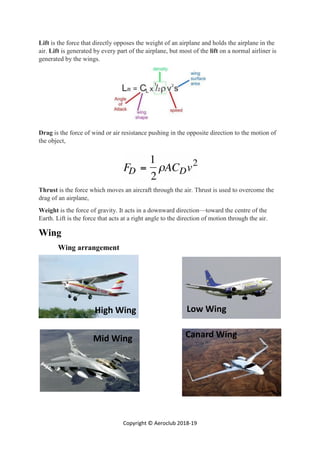
Wing
Wing arrangement
High Wing Low Wing
Mid Wing Canard Wing
Copyright © Aeroclub 2018-19
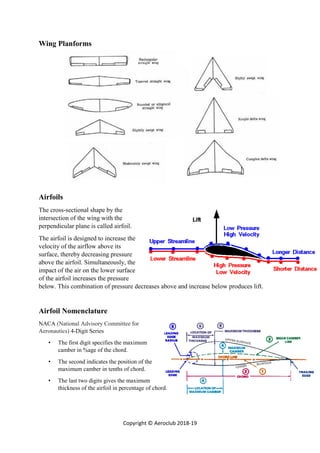
Wing Planforms
Airfoils
The cross-sectional shape by the
intersection of the wing with the
perpendicular plane is called airfoil.
The airfoil is designed to increase the
velocity of the airflow above its
surface, thereby decreasing pressure
above the airfoil. Simultaneously, the
impact of the air on the lower surface
of the airfoil increases the pressure
below. This combination of pressure decreases above and increase below produces lift.
Airfoil Nomenclature
NACA (National Advisory Committee for
Aeronautics) 4-Digit Series
• The first digit specifies the maximum
camber in %age of the chord.
• The second indicates the position of the
maximum camber in tenths of chord.
• The last two digits gives the maximum
thickness of the airfoil in percentage of chord.
Copyright © Aeroclub 2018-19
Construction
Material required is Coroplast.
Durable material.
Stronger than Styrofoam but a bit heavier
Good choice for fuselage and crash-prone areas
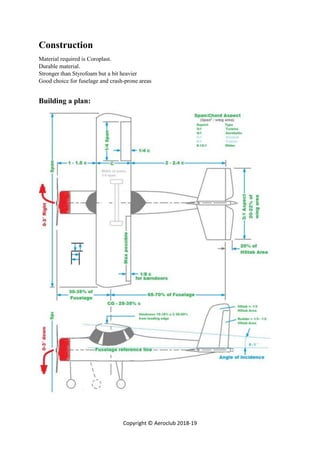
Building a plan:
Copyright © Aeroclub 2018-19
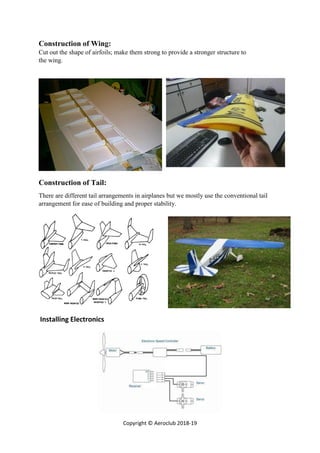
Construction of Wing:
Cut out the shape of airfoils; make them strong to provide a stronger structure to
the wing.
Construction of Tail:
There are different tail arrangements in airplanes but we mostly use the conventional tail
arrangement for ease of building and proper stability.
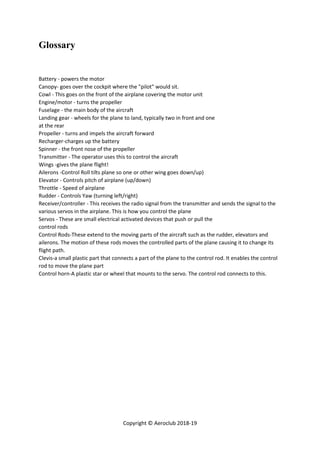
Installing Electronics
Copyright © Aeroclub 2018-19
Glossary
Battery - powers the motor
Canopy- goes over the cockpit where the "pilot" would sit.
Cowl - This goes on the front of the airplane covering the motor unit
Engine/motor - turns the propeller
Fuselage - the main body of the aircraft
Landing gear - wheels for the plane to land, typically two in front and one
at the rear
Propeller - turns and impels the aircraft forward
Recharger-charges up the battery
Spinner - the front nose of the propeller
Transmitter - The operator uses this to control the aircraft
Wings -gives the plane flight!
Ailerons -Control Roll tilts plane so one or other wing goes down/up)
Elevator - Controls pitch of airplane (up/down)
Throttle - Speed of airplane
Rudder - Controls Yaw (turning left/right)
Receiver/controller - This receives the radio signal from the transmitter and sends the signal to the
various servos in the airplane. This is how you control the plane
Servos - These are small electrical activated devices that push or pull the
control rods
Control Rods-These extend to the moving parts of the aircraft such as the rudder, elevators and
ailerons. The motion of these rods moves the controlled parts of the plane causing it to change its
flight path.
Clevis-a small plastic part that connects a part of the plane to the control rod. It enables the control
rod to move the plane part
Control horn-A plastic star or wheel that mounts to the servo. The control rod connects to this.

Aeromodelling Instruction manual

  • 1.
    Copyright © Aeroclub2018-19   
  • 2.
    Copyright © Aeroclub2018-19 Introduction The purpose of this manual is to guide and provide the instructions on the design of the model RC planes. The benefit of learning the information from this manual is to create professional looking informative implements that will help understand aeromodelling better. It is important to implement the information within this manual in order move you to optimal levels of performances Parts of RC Airplane Fuselage is the main structural element of the RC Airplane or the body of the RC Airplane. The Wing, Horizontal and Vertical Tail are connected to the fuselage. The Engine is also mounted to the fuselage. The fuselage is made up of bulk-heads. The bulk-heads are structural members which give strength and rigidity to the fuselage, support load and weight of the RC Airplane. Wings Wings are the main lifting body of the RC Airplane providing the lift necessary for RC Airplane flight. The wing provides lift because of its aerodynamic shape which creates a pressure differential causing lift. If a cross-section of the wing is cut, a shape or profile is visible which is called an airfoil. Airfoil shape is the key to the wings ability to provide lift and is airfoil selection and design is an important criterion in the design of RC Airplanes. Engine is the main power-plant of RC Airplane. The power-plant of RC Airplanes can be electric motor, internal combustion gas engines and jet engines. The engine is mounted on the
  • 3.
    Copyright © Aeroclub2018-19 RC Airplanes and provides thrust to the RC Airplanes. Thrust is the forward force necessary for flight. The engines run a propeller Propeller is basically a wing section made of airfoil sections just like a wing but it is twisted along the span. The propeller is mounted to the engine in propeller driven RC airplanes. Horizontal Stabilizer provides pitch control to the RC Airplane. Elevator is mounted on the horizontal stabilizer or horizontal tail of RC Airplanes. Vertical Stabilizer provides the yaw control to the RC Airplanes. Rudder is mounted to the vertical tail or vertical stabilizer of the RC Airplanes. Control Surfaces Ailerons are roll-control control surfaces of the RC Airplanes. Ailerons provide roll by moving in opposite direction to each other. When one aileron moves down the other moves up thus providing more lift on one side as oppose to the other causing the RC Airplane to roll. Elevators are the pitch-control control surfaces of the RC Airplanes. Elevators provide pitch control by moving either up or down simultaneously causing the airplane to pitch about the center of gravity of RC Airplane. Rudder is the yaw-control control surface of the RC Airplanes. Rudder provides yaw control by moving to either side be it left or right. The rudder yaws the RC Airplane about the center of gravity cg of RC Airplane causing the RC Airplane nose to move right or to move left. BASIC AERODYNAMICS Fundamental forces on an aircraft in flight
  • 4.
    Copyright © Aeroclub2018-19 Lift is the force that directly opposes the weight of an airplane and holds the airplane in the air. Lift is generated by every part of the airplane, but most of the lift on a normal airliner is generated by the wings. Drag is the force of wind or air resistance pushing in the opposite direction to the motion of the object, Thrust is the force which moves an aircraft through the air. Thrust is used to overcome the drag of an airplane, Weight is the force of gravity. It acts in a downward direction—toward the centre of the Earth. Lift is the force that acts at a right angle to the direction of motion through the air. Wing Wing arrangement High Wing Low Wing Mid Wing Canard Wing
  • 5.
    Copyright © Aeroclub2018-19 Wing Planforms Airfoils The cross-sectional shape by the intersection of the wing with the perpendicular plane is called airfoil. The airfoil is designed to increase the velocity of the airflow above its surface, thereby decreasing pressure above the airfoil. Simultaneously, the impact of the air on the lower surface of the airfoil increases the pressure below. This combination of pressure decreases above and increase below produces lift. Airfoil Nomenclature NACA (National Advisory Committee for Aeronautics) 4-Digit Series • The first digit specifies the maximum camber in %age of the chord. • The second indicates the position of the maximum camber in tenths of chord. • The last two digits gives the maximum thickness of the airfoil in percentage of chord.
  • 6.
    Copyright © Aeroclub2018-19 Construction Material required is Coroplast. Durable material. Stronger than Styrofoam but a bit heavier Good choice for fuselage and crash-prone areas Building a plan:
  • 7.
    Copyright © Aeroclub2018-19 Construction of Wing: Cut out the shape of airfoils; make them strong to provide a stronger structure to the wing. Construction of Tail: There are different tail arrangements in airplanes but we mostly use the conventional tail arrangement for ease of building and proper stability. Installing Electronics
  • 8.
    Copyright © Aeroclub2018-19 Glossary Battery - powers the motor Canopy- goes over the cockpit where the "pilot" would sit. Cowl - This goes on the front of the airplane covering the motor unit Engine/motor - turns the propeller Fuselage - the main body of the aircraft Landing gear - wheels for the plane to land, typically two in front and one at the rear Propeller - turns and impels the aircraft forward Recharger-charges up the battery Spinner - the front nose of the propeller Transmitter - The operator uses this to control the aircraft Wings -gives the plane flight! Ailerons -Control Roll tilts plane so one or other wing goes down/up) Elevator - Controls pitch of airplane (up/down) Throttle - Speed of airplane Rudder - Controls Yaw (turning left/right) Receiver/controller - This receives the radio signal from the transmitter and sends the signal to the various servos in the airplane. This is how you control the plane Servos - These are small electrical activated devices that push or pull the control rods Control Rods-These extend to the moving parts of the aircraft such as the rudder, elevators and ailerons. The motion of these rods moves the controlled parts of the plane causing it to change its flight path. Clevis-a small plastic part that connects a part of the plane to the control rod. It enables the control rod to move the plane part Control horn-A plastic star or wheel that mounts to the servo. The control rod connects to this.