ADVERTISING
Definition “ Advertising includes any paid form of non-personal presentation and promotion of ideas, goods or services by an identified sponsor.” It uses media like newspapers, magazines, outdoor banners, hoardings, direct mail, radio, television, internet etc.
Developing effective advertising programmes Identify the target audience Follow the DAGMAR and AIDA Models Carry five “M”s stage
Identify the target audience One should start with clear audience in mind It could be potential, current, lost customer Individual, groups, special public, general public Target audience affect the decisions like what to say, when to say, how to say, when to say, where to say and who will say
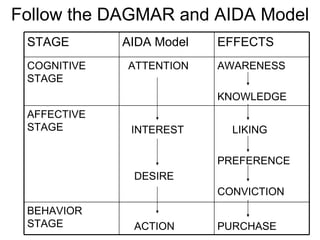
Follow the DAGMAR and AIDA Model STAGE AIDA Model EFFECTS COGNITIVE STAGE ATTENTION AWARENESS KNOWLEDGE AFFECTIVE STAGE INTEREST DESIRE LIKING PREFERENCE CONVICTION BEHAVIOR STAGE ACTION PURCHASE
Carry five “M”s stage MISSION MONEY MESSAGE MEDIA MEASUREMENT
TYPES OF ADVERTISING Informative Persuasive  Reminding
Informative Advertisements Telling market about new product Suggesting new uses of product Informing about price change Explaining how the product works Describing available services Correcting false impressions Reducing buyer’s fear Building a company image
Persuasive Advertisements  Building brand preference Encouraging switching to your brand Persuading buyers to purchase now Persuading buyers to receive a sales call Creating fear in the minds of people Changing buyers’ perception of product attributes
Reminding Advertisements  Keeping it in buyers’ mind during off season Maintaining its top-of-mind awareness Reminding buyers where to buy it Reminding buyers that the product may be needed in near future
MISSION-  SETTING THE ADVERTISING OBJECTIVES  Includes DAGMAR Approach  by Russel Colley  concerned with  objectives  like targeted sales, targeted growth in market share, sales turnover Based on decisions like target market, market positioning, marketing mix Designed as per the type of advertisement
MONEY-  DECIDING THE ADVERTISING BUDGET Stage in PLC Market share and consumer base Competition and cluster Advertising frequency Product substitutability
Deciding the  Advertising MESSAGE Message generation Message content Message structure Message format Message evaluation and selection Message execution
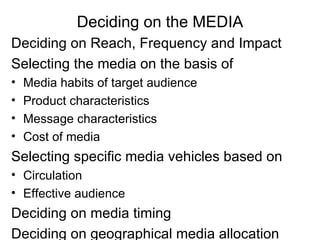
Deciding on the MEDIA Deciding on Reach, Frequency and Impact Selecting the media on the basis of  Media habits of target audience Product characteristics Message characteristics Cost of media Selecting specific media vehicles based on Circulation Effective audience Deciding on media timing Deciding on geographical media allocation
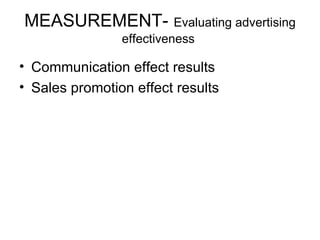
MEASUREMENT-   Evaluating advertising effectiveness  Communication effect results Sales promotion effect results

Advertising1

  • 1.
  • 2.
    Definition “ Advertisingincludes any paid form of non-personal presentation and promotion of ideas, goods or services by an identified sponsor.” It uses media like newspapers, magazines, outdoor banners, hoardings, direct mail, radio, television, internet etc.
  • 3.
    Developing effective advertisingprogrammes Identify the target audience Follow the DAGMAR and AIDA Models Carry five “M”s stage
  • 4.
    Identify the targetaudience One should start with clear audience in mind It could be potential, current, lost customer Individual, groups, special public, general public Target audience affect the decisions like what to say, when to say, how to say, when to say, where to say and who will say
  • 5.
    Follow the DAGMARand AIDA Model STAGE AIDA Model EFFECTS COGNITIVE STAGE ATTENTION AWARENESS KNOWLEDGE AFFECTIVE STAGE INTEREST DESIRE LIKING PREFERENCE CONVICTION BEHAVIOR STAGE ACTION PURCHASE
  • 6.
    Carry five “M”sstage MISSION MONEY MESSAGE MEDIA MEASUREMENT
  • 7.
    TYPES OF ADVERTISINGInformative Persuasive Reminding
  • 8.
    Informative Advertisements Tellingmarket about new product Suggesting new uses of product Informing about price change Explaining how the product works Describing available services Correcting false impressions Reducing buyer’s fear Building a company image
  • 9.
    Persuasive Advertisements Building brand preference Encouraging switching to your brand Persuading buyers to purchase now Persuading buyers to receive a sales call Creating fear in the minds of people Changing buyers’ perception of product attributes
  • 10.
    Reminding Advertisements Keeping it in buyers’ mind during off season Maintaining its top-of-mind awareness Reminding buyers where to buy it Reminding buyers that the product may be needed in near future
  • 11.
    MISSION- SETTINGTHE ADVERTISING OBJECTIVES Includes DAGMAR Approach by Russel Colley concerned with objectives like targeted sales, targeted growth in market share, sales turnover Based on decisions like target market, market positioning, marketing mix Designed as per the type of advertisement
  • 12.
    MONEY- DECIDINGTHE ADVERTISING BUDGET Stage in PLC Market share and consumer base Competition and cluster Advertising frequency Product substitutability
  • 13.
    Deciding the Advertising MESSAGE Message generation Message content Message structure Message format Message evaluation and selection Message execution
  • 14.
    Deciding on theMEDIA Deciding on Reach, Frequency and Impact Selecting the media on the basis of Media habits of target audience Product characteristics Message characteristics Cost of media Selecting specific media vehicles based on Circulation Effective audience Deciding on media timing Deciding on geographical media allocation
  • 15.
    MEASUREMENT- Evaluating advertising effectiveness Communication effect results Sales promotion effect results