Topic 6: What does the term ‘Decentralisation’
  mean? What are the advantages of new ways of
organizational structures? Give an example for this
          new organizational structure.


                     Group 5
Outline
I. Introduction
II. Content
    2.1 Definition of Decentralization
    2.2 Comparison between Centralization and
       Decentralization
    2.3 An examples of decentralization
    2.4 Advantages of Decentralization
III. Conclusion
I. Introduction
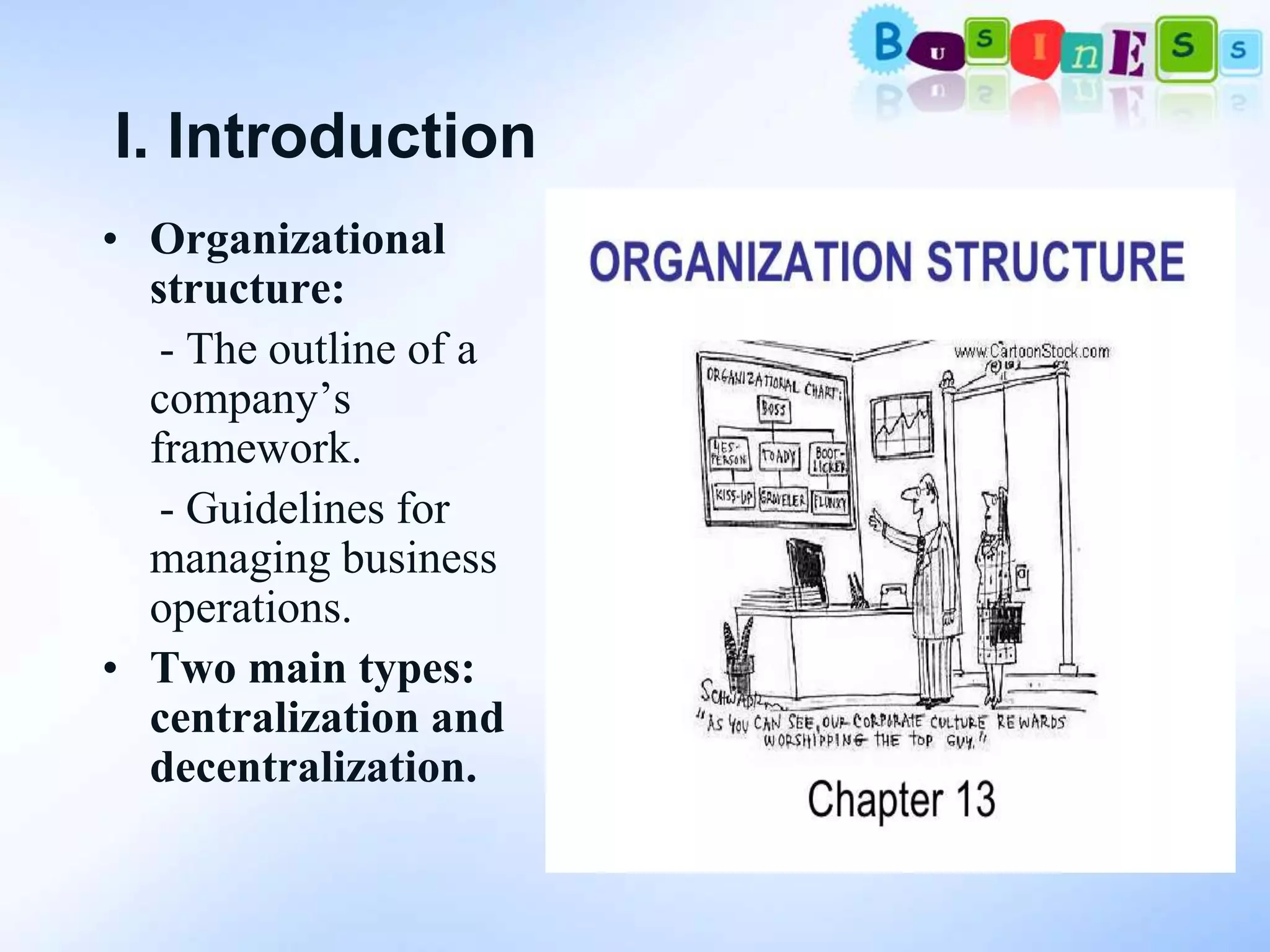
• Organizational
  structure:
   - The outline of a
  company’s
  framework.
   - Guidelines for
  managing business
  operations.
• Two main types:
  centralization and
  decentralization.
2. Definition.
   • Decentralization:
     - the assignment of logical.
     - the transfer of responsibility for
     planning, management.
   • Each level has the authority to act, promote
     dynamism.
   • Several individuals responsible for making
     business decisions and running the business
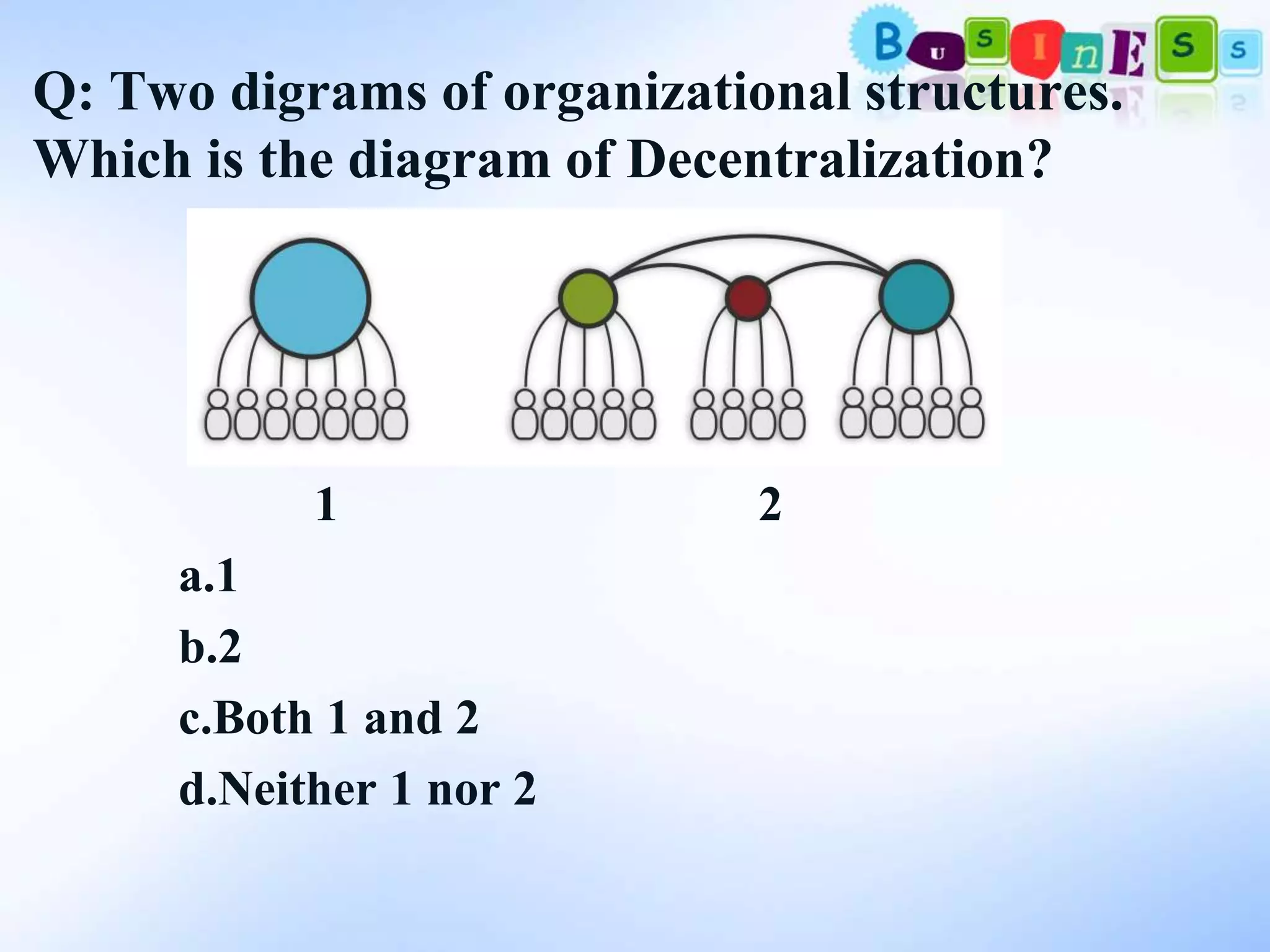
Q: Two digrams of organizational structures.
Which is the diagram of Decentralization?


           1                 2
     a.1
     b.2
     c.Both 1 and 2
     d.Neither 1 nor 2
3. Comparision.


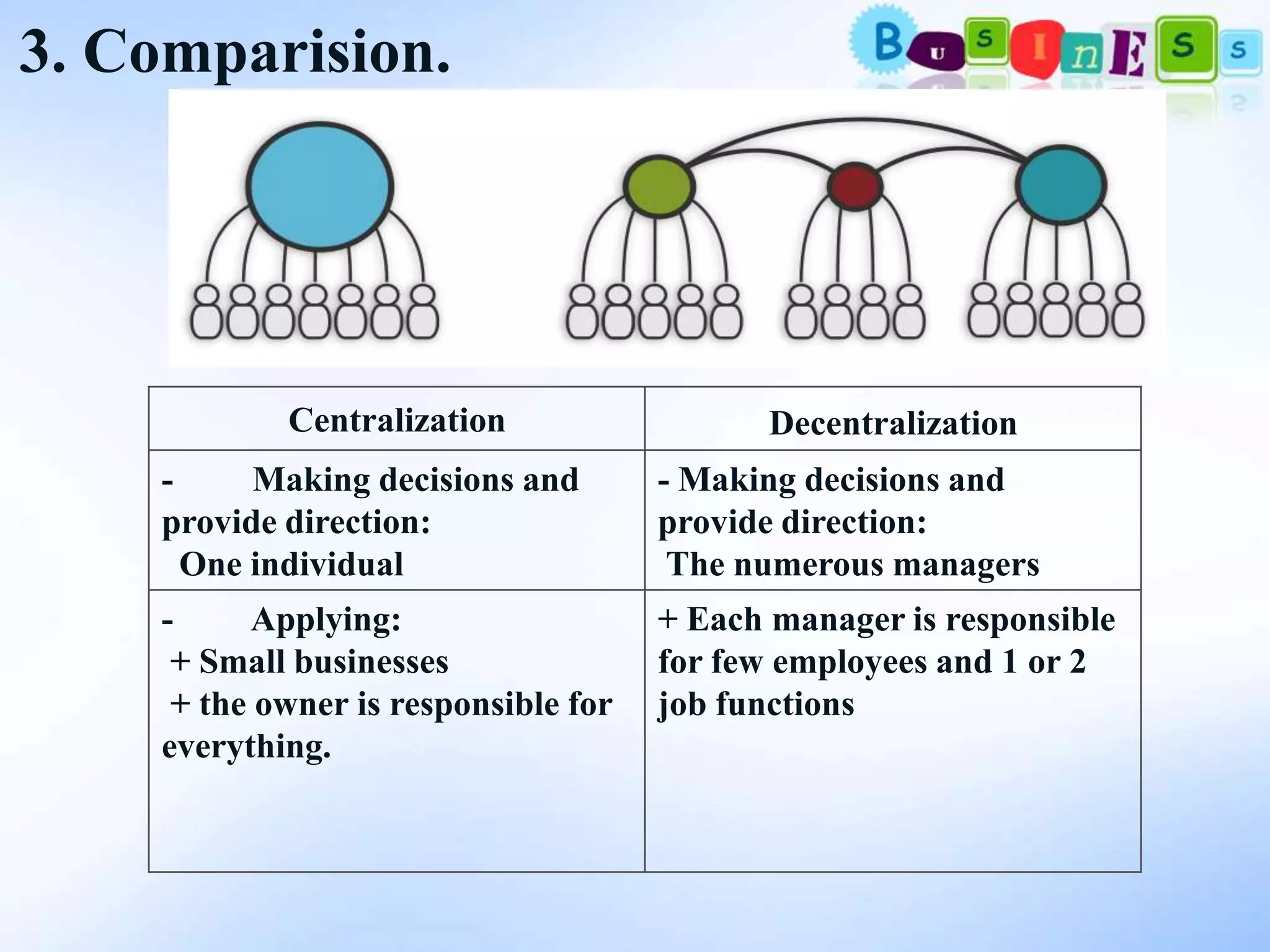
            Centralization                   Decentralization
    -     Making decisions and        - Making decisions and
    provide direction:                provide direction:
      One individual                   The numerous managers
    -     Applying:                   + Each manager is responsible
     + Small businesses               for few employees and 1 or 2
     + the owner is responsible for   job functions
    everything.
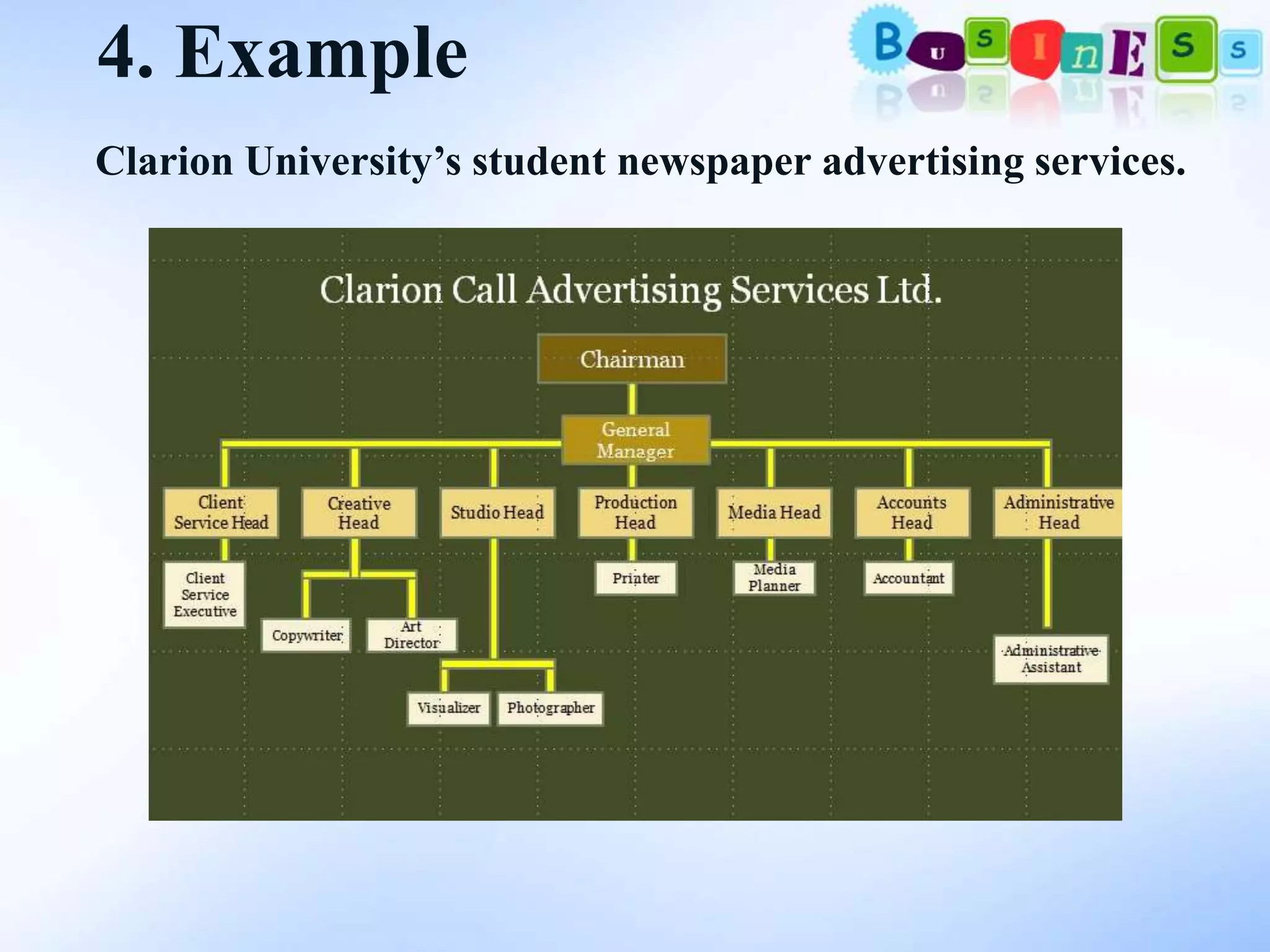
4. Example
Clarion University’s student newspaper advertising services.
5. Advantages.
   1. Reduces burden of top executives.
     - Concentrate on more important functions.
     - Extend leadership.

   2. Quick and better decisions.
      - Making accurate decisions without consulting
      higher levels.
3. Growth and diversification.
  - Facilitate growth and diversification of
   products and markets.
4. Better communication.
  - Improve organizational communication.
  - Reduce bureaucracy.
5. Development of executives.
  - Make for stability and continuity of the
   company.
  - Promote autonomy, initiative and creativity of
   subordinates.
6. Improvement in motivation and morale.
  - Improve the job satisfaction and morale of
   subordinates.

7. Effective supervision and control.
  - Result in effective supervision.
  - Promote effective control.

8. Democratic management.
  -Make flexible operation.
6. Conclusion.
    • Decentralized organizations are becoming
      more popular.
    • Decentralization is an organization's form of
      freedom.
    • Companies are able to take advantage of
      decentralized structure to gain better
      business growth faster.
Questions
 Q: How many advantages were given in our
   presentation?
      a. 5
      b. 6
      c. 7
      d. 8

Q: In our example, Clarion Call is...
    a. A newspaper.
    b. A store.
    c. A person.
    d. A city.
THANKS FOR LISTENING!

Advantages of Decentralization

  • 1.
    Topic 6: Whatdoes the term ‘Decentralisation’ mean? What are the advantages of new ways of organizational structures? Give an example for this new organizational structure. Group 5
  • 2.
    Outline I. Introduction II. Content 2.1 Definition of Decentralization 2.2 Comparison between Centralization and Decentralization 2.3 An examples of decentralization 2.4 Advantages of Decentralization III. Conclusion
  • 3.
    I. Introduction • Organizational structure: - The outline of a company’s framework. - Guidelines for managing business operations. • Two main types: centralization and decentralization.
  • 4.
    2. Definition. • Decentralization: - the assignment of logical. - the transfer of responsibility for planning, management. • Each level has the authority to act, promote dynamism. • Several individuals responsible for making business decisions and running the business
  • 5.
    Q: Two digramsof organizational structures. Which is the diagram of Decentralization? 1 2 a.1 b.2 c.Both 1 and 2 d.Neither 1 nor 2
  • 6.
    3. Comparision. Centralization Decentralization - Making decisions and - Making decisions and provide direction: provide direction: One individual The numerous managers - Applying: + Each manager is responsible + Small businesses for few employees and 1 or 2 + the owner is responsible for job functions everything.
  • 7.
    4. Example Clarion University’sstudent newspaper advertising services.
  • 8.
    5. Advantages. 1. Reduces burden of top executives. - Concentrate on more important functions. - Extend leadership. 2. Quick and better decisions. - Making accurate decisions without consulting higher levels.
  • 9.
    3. Growth anddiversification. - Facilitate growth and diversification of products and markets. 4. Better communication. - Improve organizational communication. - Reduce bureaucracy. 5. Development of executives. - Make for stability and continuity of the company. - Promote autonomy, initiative and creativity of subordinates.
  • 10.
    6. Improvement inmotivation and morale. - Improve the job satisfaction and morale of subordinates. 7. Effective supervision and control. - Result in effective supervision. - Promote effective control. 8. Democratic management. -Make flexible operation.
  • 11.
    6. Conclusion. • Decentralized organizations are becoming more popular. • Decentralization is an organization's form of freedom. • Companies are able to take advantage of decentralized structure to gain better business growth faster.
  • 12.
    Questions Q: Howmany advantages were given in our presentation? a. 5 b. 6 c. 7 d. 8 Q: In our example, Clarion Call is... a. A newspaper. b. A store. c. A person. d. A city.
  • 13.