WELCOME TO THE
PRESENTATION
Presentation Topics
Advantages and Disadvantages of
Nuclear Power
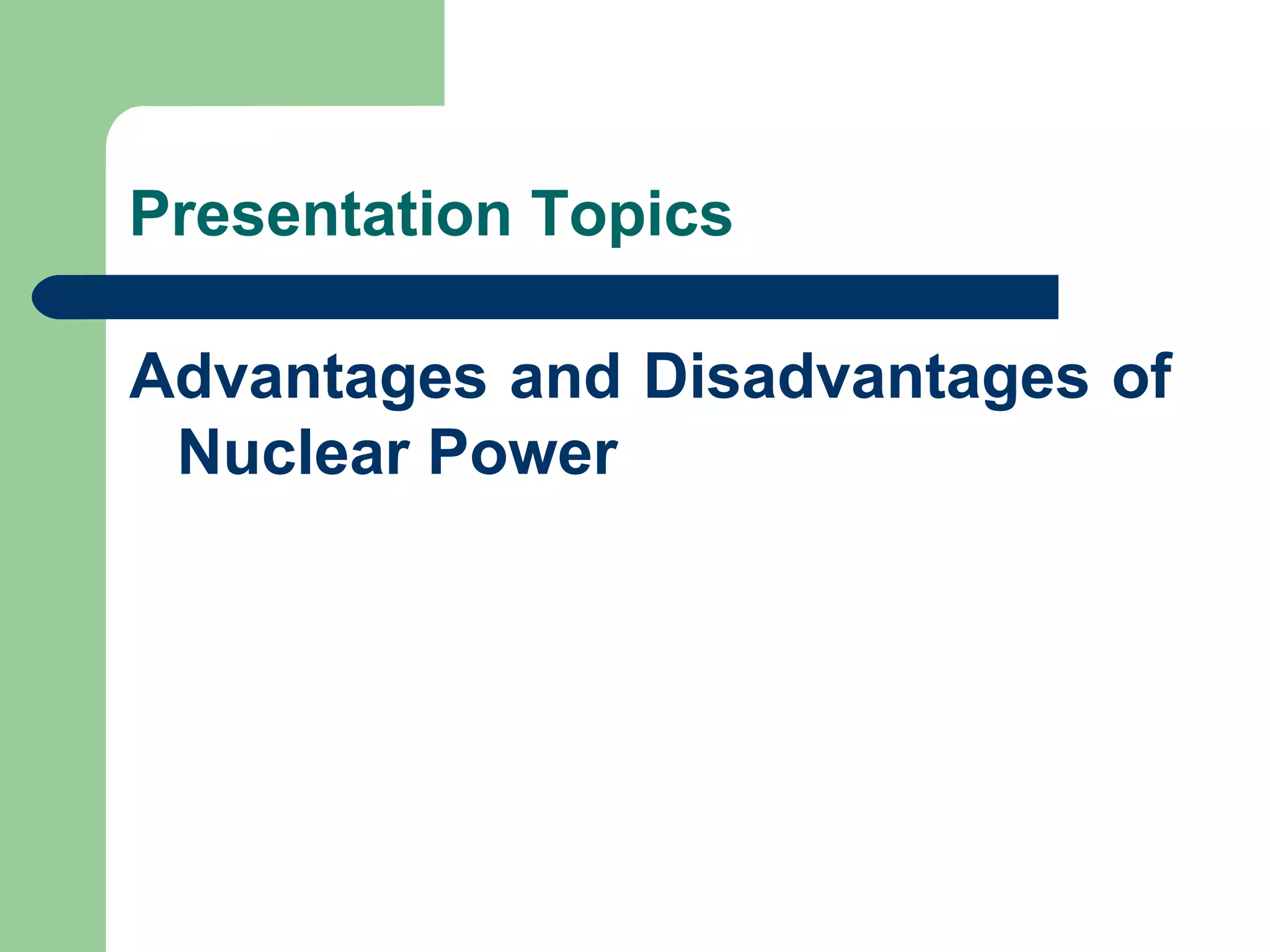
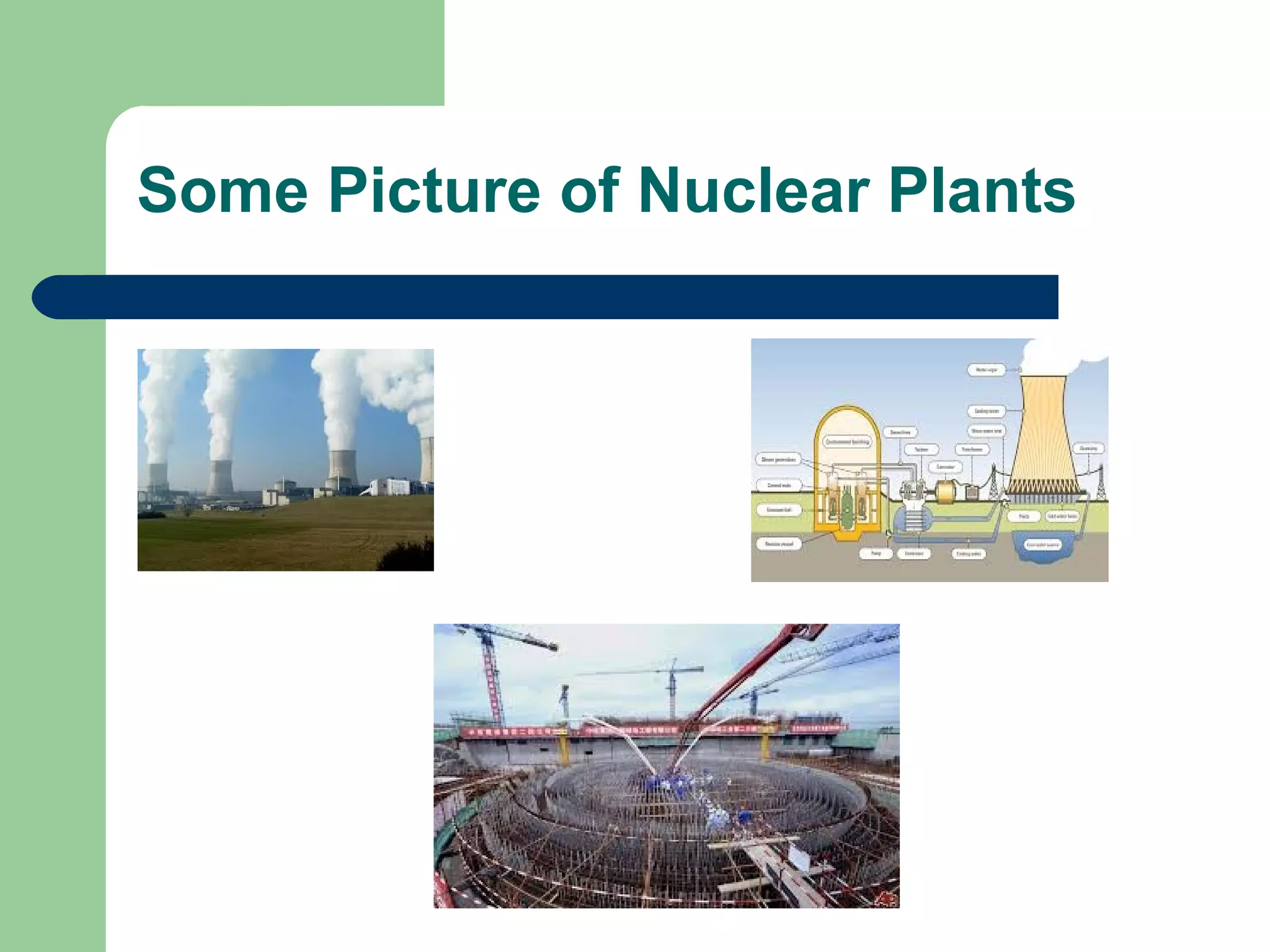
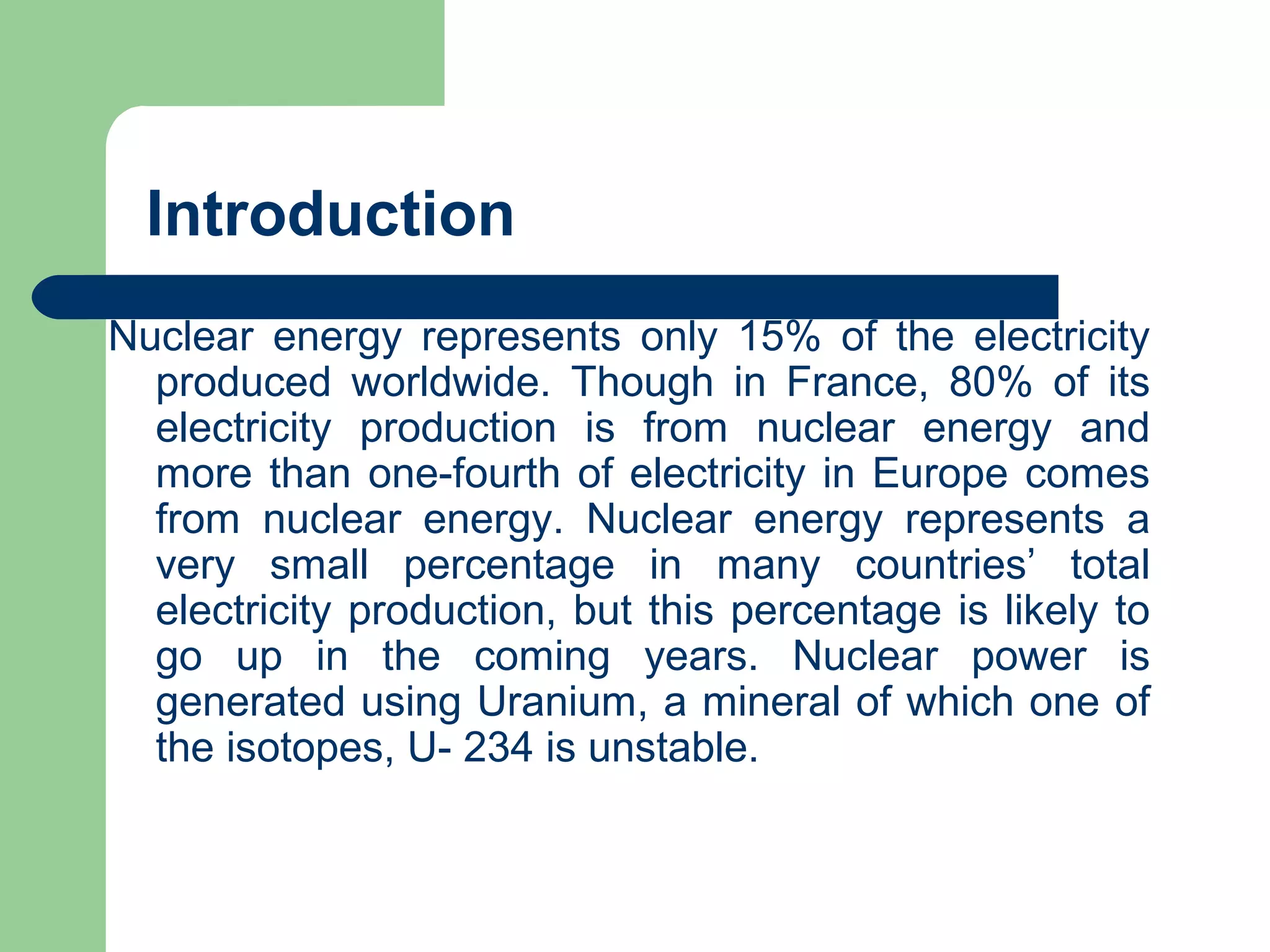
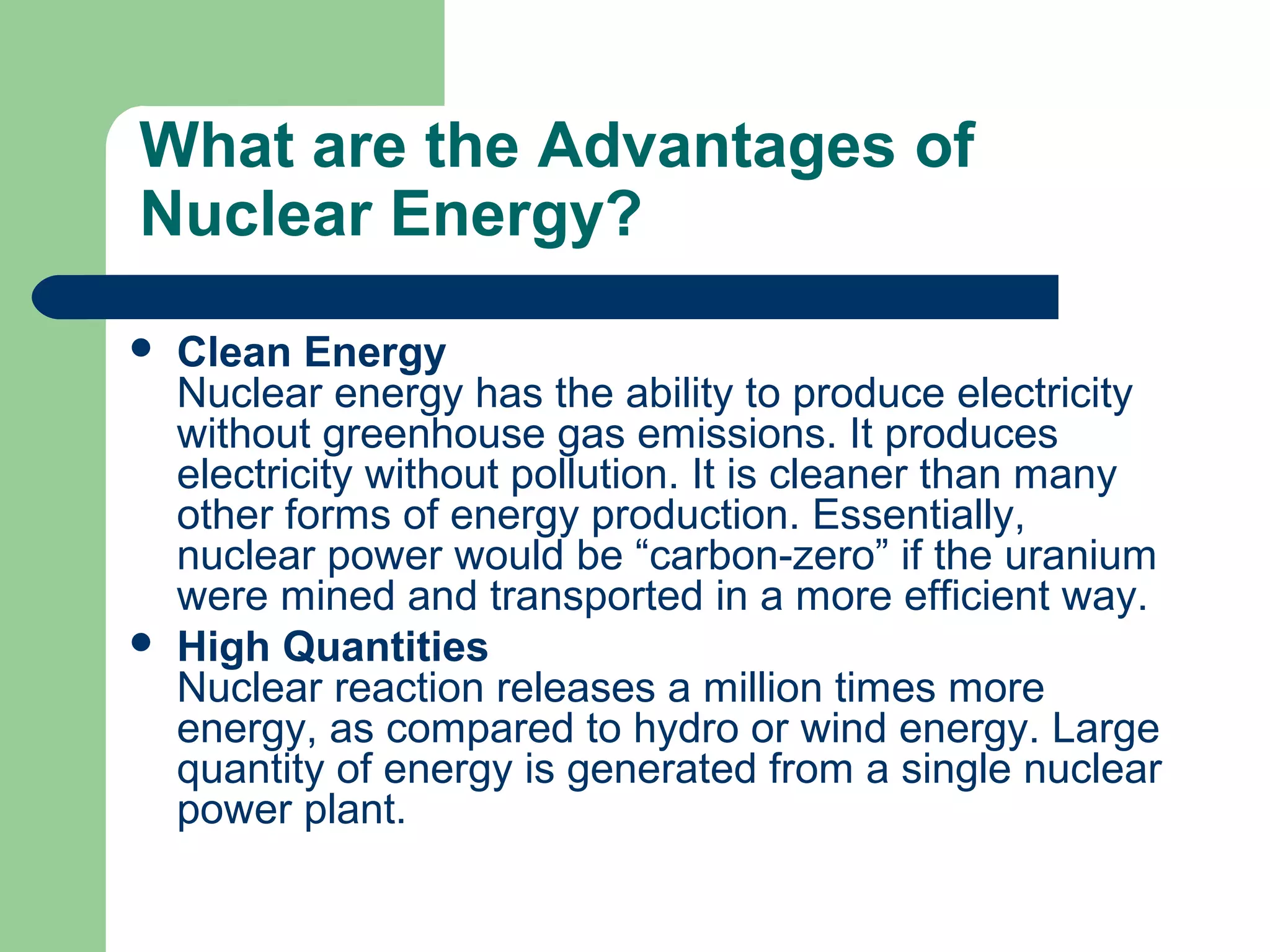
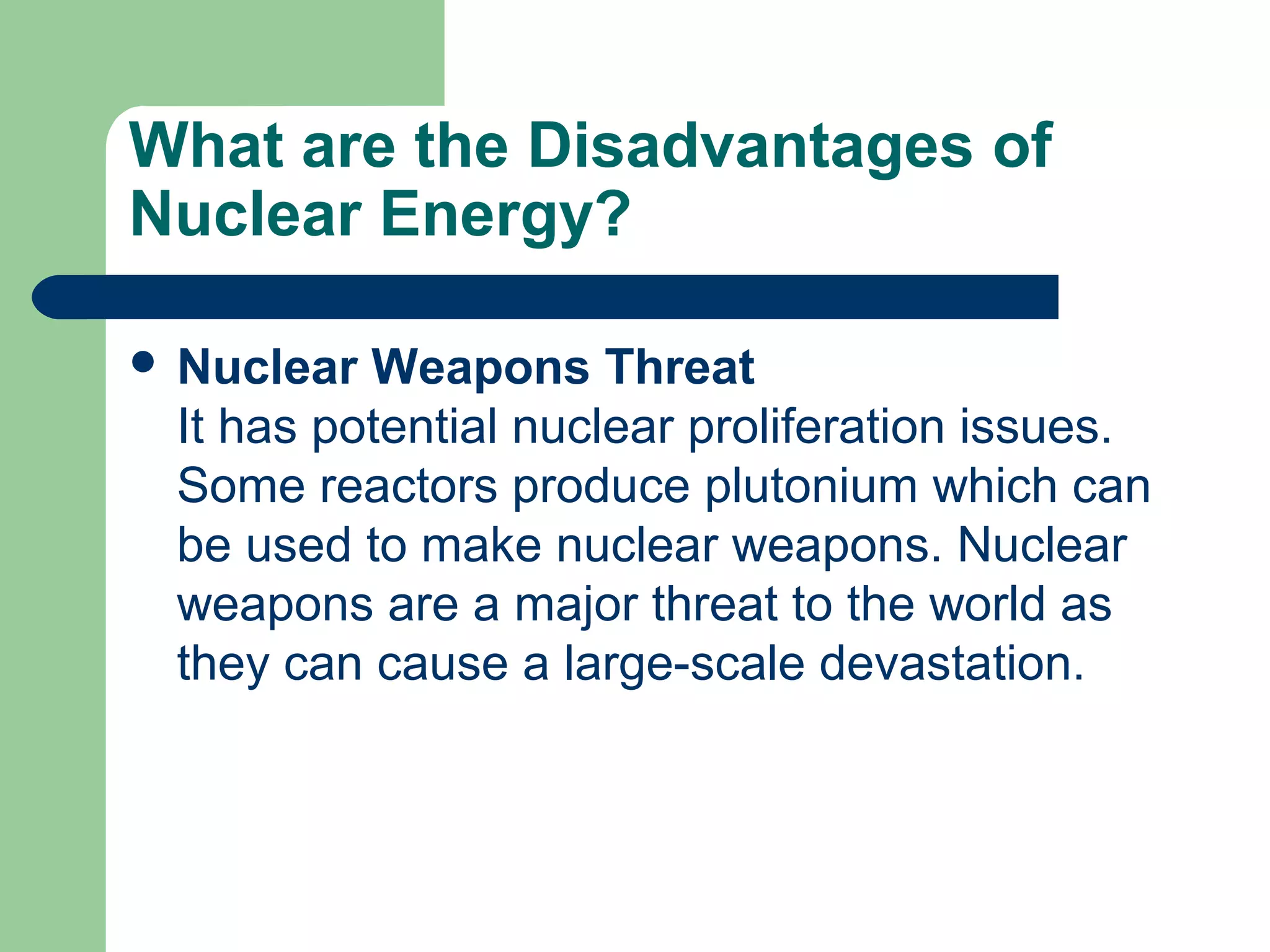
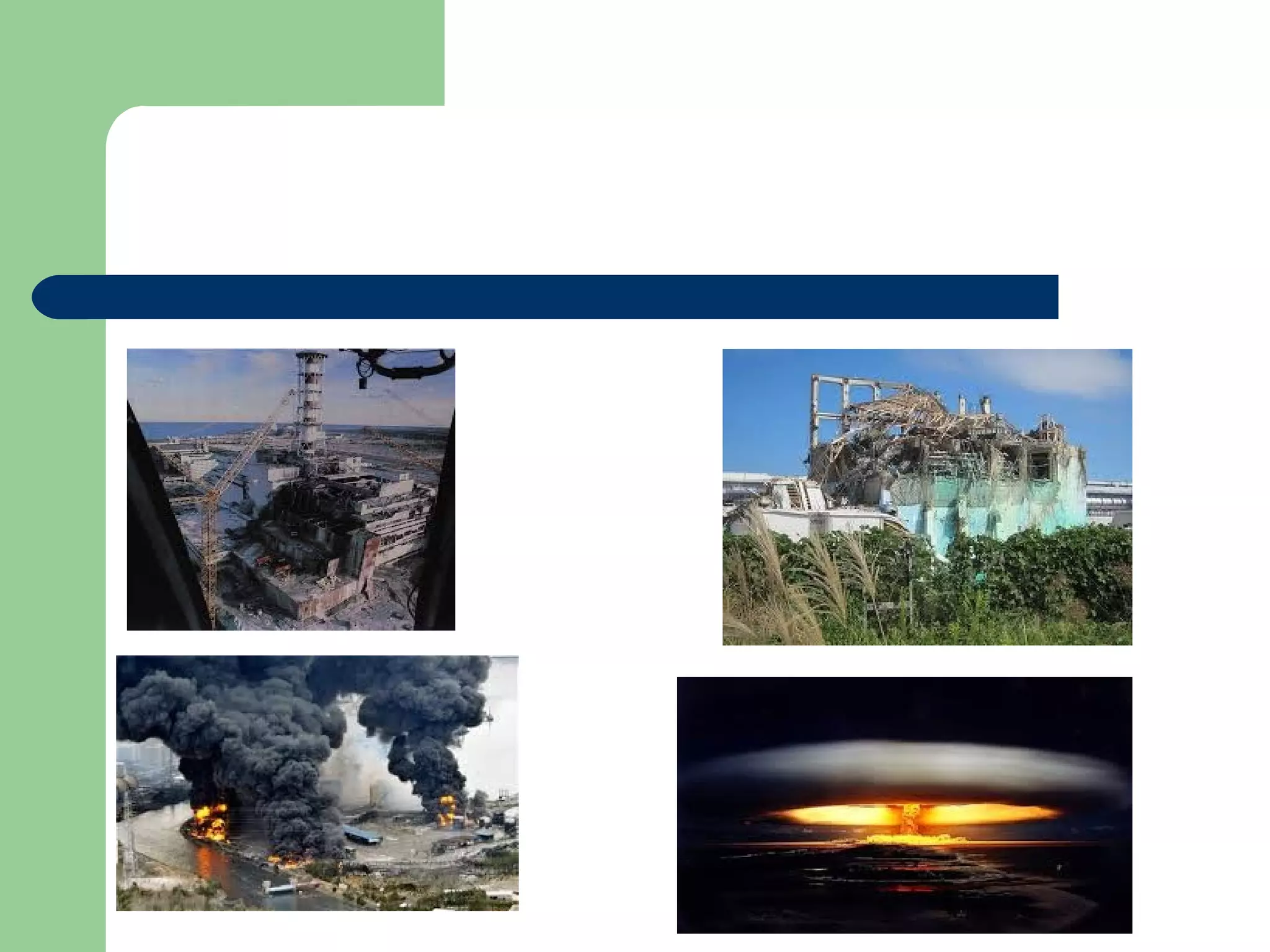
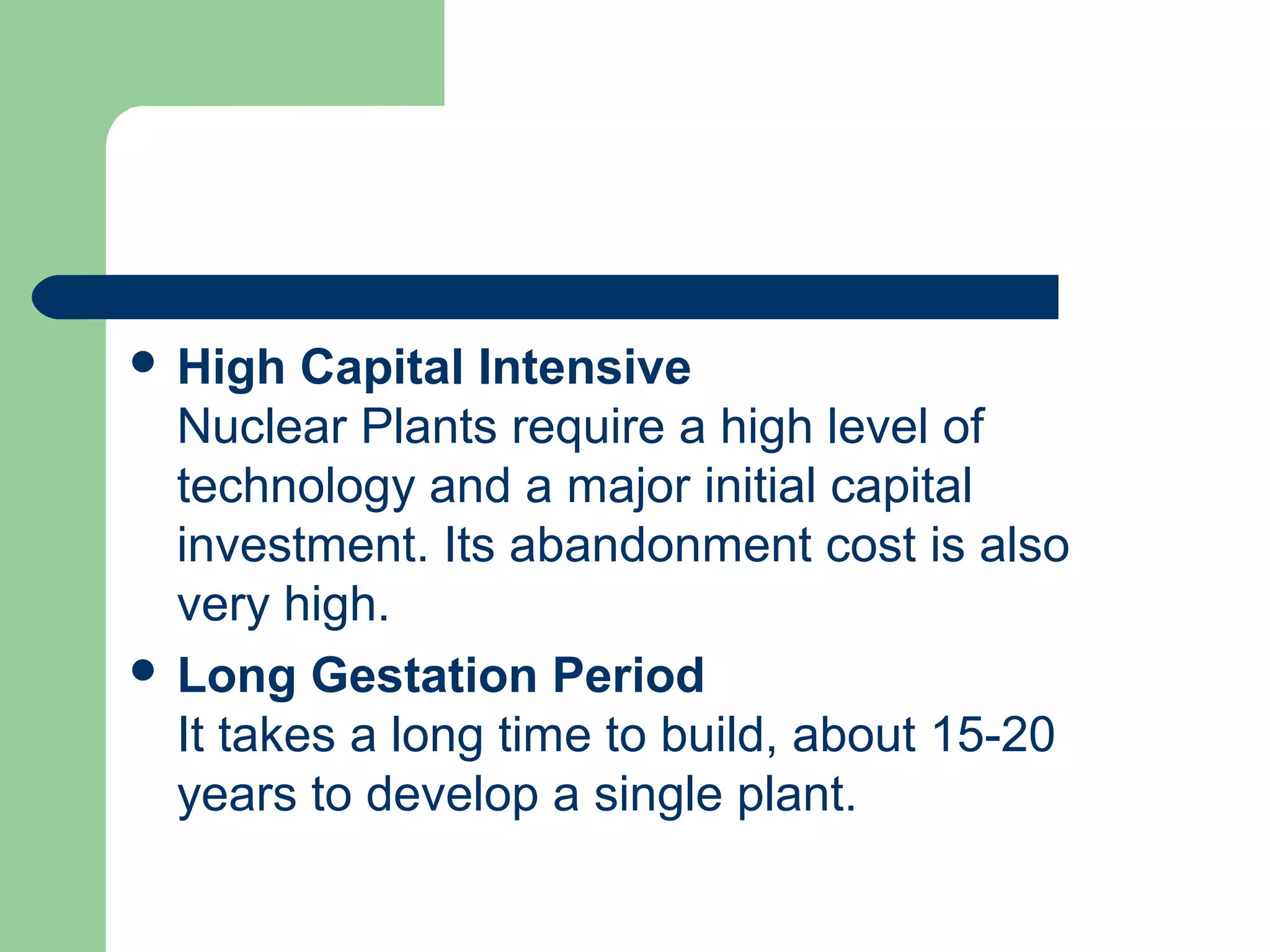
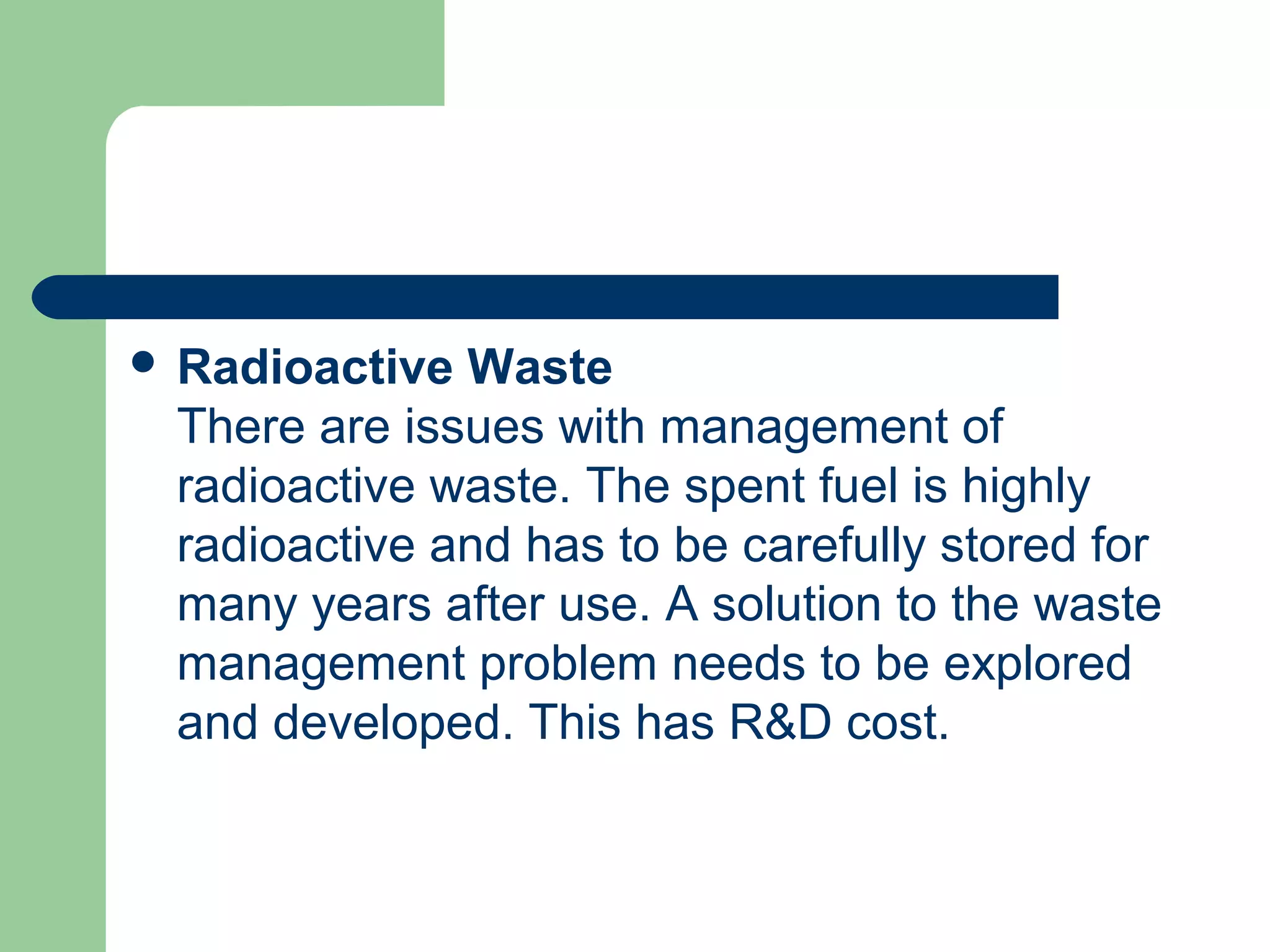
Some Picture of Nuclear Plants
Introduction
Nuclear energy represents only 15% of the electricity
produced worldwide. Though in France, 80% of its
electricity production is from nuclear energy and
more than one-fourth of electricity in Europe comes
from nuclear energy. Nuclear energy represents a
very small percentage in many countries’ total
electricity production, but this percentage is likely to
go up in the coming years. Nuclear power is
generated using Uranium, a mineral of which one of
the isotopes, U- 234 is unstable.
What are the Advantages of
Nuclear Energy?
 Clean Energy
Nuclear energy has the ability to produce electricity
without greenhouse gas emissions. It produces
electricity without pollution. It is cleaner than many
other forms of energy production. Essentially,
nuclear power would be “carbon-zero” if the uranium
were mined and transported in a more efficient way.
 High Quantities
Nuclear reaction releases a million times more
energy, as compared to hydro or wind energy. Large
quantity of energy is generated from a single nuclear
power plant.
 High Reserves
Nuclear reactors make use of uranium as
fuel and produces huge amounts of energy
from small amounts of uranium. The Earth
has the high reserves of uranium. Current
estimates put the uranium supply as enough
to last for 30 to 60 years. Moreover other fuel
cycles like Thorium are available for power
generation. Whereas, oil reserves and other
fossil type fuels are likely to run out shortly.
Reliability
Nuclear power plants operate reliably and have a
continuous output of power. The plants do not
generally face operations and maintenance problems.
This is a contrast to other alternative energies which
depend on the activity of the weather.
Low Operating cost
Although nuclear power reactors are expensive to
build, they are relatively cheap to operate. Fuel is
inexpensive and a plant can be operated by small
number of people, approximately 10 people.
 Concentration
The nuclear energy is by far the most
concentrated form of energy, so it can be
produced in large quantities over short
periods of time.
 Low Waste
Produces small amounts of waste and waste
is more compact.
 Cheap
Nuclear energy produces electricity at a competitive
price and is generally comparable in output to coal
plants.
 Location
A nuclear plant is not dependant on local sources
like oil and coal and can be set up in any part of the
globe. It also does not require a lot of space and so
can be placed in already developed areas and the
power does not have to be transferred over long
distances.
What are the Disadvantages of
Nuclear Energy?
 Nuclear Weapons Threat
It has potential nuclear proliferation issues.
Some reactors produce plutonium which can
be used to make nuclear weapons. Nuclear
weapons are a major threat to the world as
they can cause a large-scale devastation.
 High Capital Intensive
Nuclear Plants require a high level of
technology and a major initial capital
investment. Its abandonment cost is also
very high.
 Long Gestation Period
It takes a long time to build, about 15-20
years to develop a single plant.
 Radioactive Waste
There are issues with management of
radioactive waste. The spent fuel is highly
radioactive and has to be carefully stored for
many years after use. A solution to the waste
management problem needs to be explored
and developed. This has R&D cost.
 Disasters, Accidents & Risk
An accident may cause a major disaster
resulting in thousands of casualties and
releasing high amounts of radiation into the
environment, example: explosion of a reactor
at Chernobyl Nuclear Power Plant in Ukraine
and melting of the core of a reactor at Three-
Mile Island in the United States.
 Non-renewable energy
Nuclear energy is an alternative energy but
not a renewable energy as Uranium is a non-
renewable source and its supplies are
limited.
 Terrorism
Nuclear plants may be vulnerable targets to
anyone wanting to disrupt the power supply,
and to have quite horrific results and to
devastate an entire region.
Conclusion
Today, nuclear energy remains controversial.
There are proponents and opponents of
nuclear energy, but nuclear energy along
with other green energies has a major role to
play in years to come. The actions to mitigate
the risk associated with nuclear energy need
to given due importance to harness its full
potential.
THANK YOU

Advantages and disadvantages of nuclear power

  • 1.
  • 2.
    Presentation Topics Advantages andDisadvantages of Nuclear Power
  • 3.
    Some Picture ofNuclear Plants
  • 4.
    Introduction Nuclear energy representsonly 15% of the electricity produced worldwide. Though in France, 80% of its electricity production is from nuclear energy and more than one-fourth of electricity in Europe comes from nuclear energy. Nuclear energy represents a very small percentage in many countries’ total electricity production, but this percentage is likely to go up in the coming years. Nuclear power is generated using Uranium, a mineral of which one of the isotopes, U- 234 is unstable.
  • 5.
    What are theAdvantages of Nuclear Energy?  Clean Energy Nuclear energy has the ability to produce electricity without greenhouse gas emissions. It produces electricity without pollution. It is cleaner than many other forms of energy production. Essentially, nuclear power would be “carbon-zero” if the uranium were mined and transported in a more efficient way.  High Quantities Nuclear reaction releases a million times more energy, as compared to hydro or wind energy. Large quantity of energy is generated from a single nuclear power plant.
  • 6.
     High Reserves Nuclearreactors make use of uranium as fuel and produces huge amounts of energy from small amounts of uranium. The Earth has the high reserves of uranium. Current estimates put the uranium supply as enough to last for 30 to 60 years. Moreover other fuel cycles like Thorium are available for power generation. Whereas, oil reserves and other fossil type fuels are likely to run out shortly.
  • 7.
    Reliability Nuclear power plantsoperate reliably and have a continuous output of power. The plants do not generally face operations and maintenance problems. This is a contrast to other alternative energies which depend on the activity of the weather. Low Operating cost Although nuclear power reactors are expensive to build, they are relatively cheap to operate. Fuel is inexpensive and a plant can be operated by small number of people, approximately 10 people.
  • 8.
     Concentration The nuclearenergy is by far the most concentrated form of energy, so it can be produced in large quantities over short periods of time.  Low Waste Produces small amounts of waste and waste is more compact.
  • 9.
     Cheap Nuclear energyproduces electricity at a competitive price and is generally comparable in output to coal plants.  Location A nuclear plant is not dependant on local sources like oil and coal and can be set up in any part of the globe. It also does not require a lot of space and so can be placed in already developed areas and the power does not have to be transferred over long distances.
  • 10.
    What are theDisadvantages of Nuclear Energy?  Nuclear Weapons Threat It has potential nuclear proliferation issues. Some reactors produce plutonium which can be used to make nuclear weapons. Nuclear weapons are a major threat to the world as they can cause a large-scale devastation.
  • 12.
     High CapitalIntensive Nuclear Plants require a high level of technology and a major initial capital investment. Its abandonment cost is also very high.  Long Gestation Period It takes a long time to build, about 15-20 years to develop a single plant.
  • 13.
     Radioactive Waste Thereare issues with management of radioactive waste. The spent fuel is highly radioactive and has to be carefully stored for many years after use. A solution to the waste management problem needs to be explored and developed. This has R&D cost.
  • 14.
     Disasters, Accidents& Risk An accident may cause a major disaster resulting in thousands of casualties and releasing high amounts of radiation into the environment, example: explosion of a reactor at Chernobyl Nuclear Power Plant in Ukraine and melting of the core of a reactor at Three- Mile Island in the United States.
  • 15.
     Non-renewable energy Nuclearenergy is an alternative energy but not a renewable energy as Uranium is a non- renewable source and its supplies are limited.  Terrorism Nuclear plants may be vulnerable targets to anyone wanting to disrupt the power supply, and to have quite horrific results and to devastate an entire region.
  • 16.
    Conclusion Today, nuclear energyremains controversial. There are proponents and opponents of nuclear energy, but nuclear energy along with other green energies has a major role to play in years to come. The actions to mitigate the risk associated with nuclear energy need to given due importance to harness its full potential.
  • 17.