UNIVERSITY OF AGRICULTURAL SCIENCES, DHARWAD
DEPARTMENT OF SEED SCIENCE AND TECHNOLOGY
TOPIC : Advances in seed storage
PRESENTED BY :
VAMSHI KRISHNA V
PGS18AGR7846
Dept. of seed science and technology
Introduction
• The constant growth of the worlds population requires substantial resources for
the production of food.
• The post harvest activities have an important role to play in achieving this
objectives.
• Inadequate storage methods in developing countries still lead to losses of seeds
and food grains
• Good storage is therefore a basic requirements in seed production
• The purpose of seed storage is to maintain the seed in good physical and
physiological condition from the time they are harvested until the time they are
planted.
Advancement in seed storage:
• The produce must be thoroughly cleaned and graded
• Dried to the safe storage moisture level of 10-12 % for cereals and 7-9% for oil
seeds (on wet basis) for a safe storage period of 6-12 months.
• Storage structures should to be properly repaired, cleaned and disinfected,
• Structures should bear the load of seeds stored and do not permit contact/exchange
with outside humid air,
• Structures should be constructed in the coolest part of the house/ farm.
• Decreasing temperature and seed moisture are effective means of maintaining seed
quality in storage
Custom-made plastic bags:
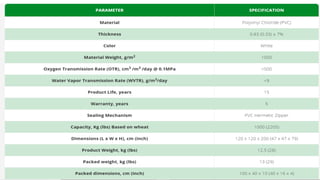
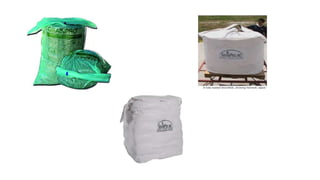
• It is a portable ultra-hermetic storage system for dry agricultural commodities. It is
used for bagged seeds with optional fumigation features for easy CO2 flushing
with its low permeability to air and moisture, it safely preserves up to 1 metric ton
of dry agricultural commodities such as maize, paddy, coffee, etc.
• The Grain Safe is made from flexible UV-resistant Polyvinyl Chloride with a
hermetic zipper. It can be installed at home, outside on a leveled concrete, on a
pallet, or a raised platform with rodent guards as well. Insects inside are wiped-out
within just 10 days of storage
• Bags for hermetic-seed storage are manufactured where, there are both large size
and smaller bags. Consistent access to appropriate storage bags remains a major
constraint to adoption, as does cost.
Metal bins:
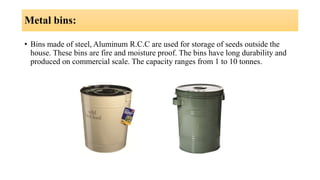
• Bins made of steel, Aluminum R.C.C are used for storage of seeds outside the
house. These bins are fire and moisture proof. The bins have long durability and
produced on commercial scale. The capacity ranges from 1 to 10 tonnes.
Jute Bags
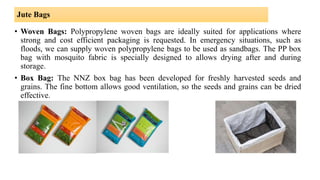
• Woven Bags: Polypropylene woven bags are ideally suited for applications where
strong and cost efficient packaging is requested. In emergency situations, such as
floods, we can supply woven polypropylene bags to be used as sandbags. The PP box
bag with mosquito fabric is specially designed to allows drying after and during
storage.
• Box Bag: The NNZ box bag has been developed for freshly harvested seeds and
grains. The fine bottom allows good ventilation, so the seeds and grains can be dried
effective.
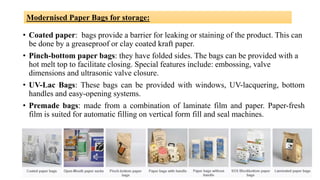
• Coated paper: bags provide a barrier for leaking or staining of the product. This can
be done by a greaseproof or clay coated kraft paper.
• Pinch-bottom paper bags: they have folded sides. The bags can be provided with a
hot melt top to facilitate closing. Special features include: embossing, valve
dimensions and ultrasonic valve closure.
• UV-Lac Bags: These bags can be provided with windows, UV-lacquering, bottom
handles and easy-opening systems.
• Premade bags: made from a combination of laminate film and paper. Paper-fresh
film is suited for automatic filling on vertical form fill and seal machines.
Modernised Paper Bags for storage:
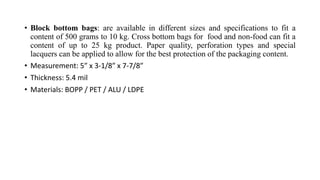
• Block bottom bags: are available in different sizes and specifications to fit a
content of 500 grams to 10 kg. Cross bottom bags for food and non-food can fit a
content of up to 25 kg product. Paper quality, perforation types and special
lacquers can be applied to allow for the best protection of the packaging content.
• Measurement: 5″ x 3-1/8″ x 7-7/8″
• Thickness: 5.4 mil
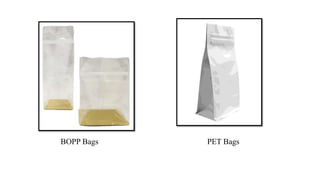
• Materials: BOPP / PET / ALU / LDPE
BOPP Bags PET Bags
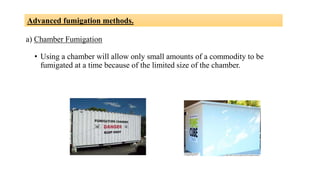
a) Chamber Fumigation
• Using a chamber will allow only small amounts of a commodity to be
fumigated at a time because of the limited size of the chamber.
Advanced fumigation methods.
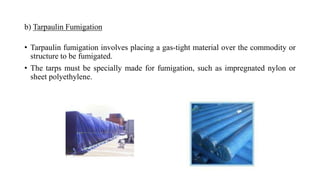
b) Tarpaulin Fumigation
• Tarpaulin fumigation involves placing a gas-tight material over the commodity or
structure to be fumigated.
• The tarps must be specially made for fumigation, such as impregnated nylon or
sheet polyethylene.
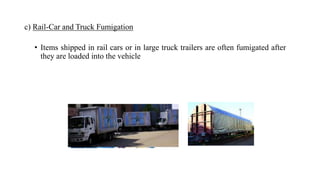
c) Rail-Car and Truck Fumigation
• Items shipped in rail cars or in large truck trailers are often fumigated after
they are loaded into the vehicle
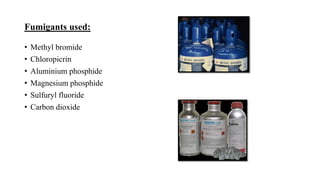
Fumigants used:
• Methyl bromide
• Chloropicrin
• Aluminium phosphide
• Magnesium phosphide
• Sulfuryl fluoride
• Carbon dioxide
Steps necessary for good storage practice:
Before storage
• Checking for leakage of rain water and sufficiency of drainage
facilities
• Cleanliness of the facility and environment
• Assessment of capacity of the facility
• Pesticidal treatment
• Security and firefighting arrangements and
• Repairs to available equipment
During storage
• Maintenance of cleanliness
• Ensuring aeration where necessary
• Checking for leakage after rains
• Inspection for insects, rats and mites at fortnightly intervals
• Watch for advancement in deterioration, if any,
• Pesticidal treatments necessarily based on observations
• Ensuring disposal where called for, and
• Arrangement for segregation, salvage and processing, wherever, damage
owing to leakage of water and other causes might have taken place.
Advances in seed storage

Advances in seed storage

  • 1.
    UNIVERSITY OF AGRICULTURALSCIENCES, DHARWAD DEPARTMENT OF SEED SCIENCE AND TECHNOLOGY TOPIC : Advances in seed storage PRESENTED BY : VAMSHI KRISHNA V PGS18AGR7846 Dept. of seed science and technology
  • 2.
    Introduction • The constantgrowth of the worlds population requires substantial resources for the production of food. • The post harvest activities have an important role to play in achieving this objectives. • Inadequate storage methods in developing countries still lead to losses of seeds and food grains • Good storage is therefore a basic requirements in seed production • The purpose of seed storage is to maintain the seed in good physical and physiological condition from the time they are harvested until the time they are planted.
  • 3.
    Advancement in seedstorage: • The produce must be thoroughly cleaned and graded • Dried to the safe storage moisture level of 10-12 % for cereals and 7-9% for oil seeds (on wet basis) for a safe storage period of 6-12 months. • Storage structures should to be properly repaired, cleaned and disinfected, • Structures should bear the load of seeds stored and do not permit contact/exchange with outside humid air, • Structures should be constructed in the coolest part of the house/ farm. • Decreasing temperature and seed moisture are effective means of maintaining seed quality in storage
  • 4.
    Custom-made plastic bags: •It is a portable ultra-hermetic storage system for dry agricultural commodities. It is used for bagged seeds with optional fumigation features for easy CO2 flushing with its low permeability to air and moisture, it safely preserves up to 1 metric ton of dry agricultural commodities such as maize, paddy, coffee, etc. • The Grain Safe is made from flexible UV-resistant Polyvinyl Chloride with a hermetic zipper. It can be installed at home, outside on a leveled concrete, on a pallet, or a raised platform with rodent guards as well. Insects inside are wiped-out within just 10 days of storage • Bags for hermetic-seed storage are manufactured where, there are both large size and smaller bags. Consistent access to appropriate storage bags remains a major constraint to adoption, as does cost.
  • 7.
    Metal bins: • Binsmade of steel, Aluminum R.C.C are used for storage of seeds outside the house. These bins are fire and moisture proof. The bins have long durability and produced on commercial scale. The capacity ranges from 1 to 10 tonnes.
  • 8.
    Jute Bags • WovenBags: Polypropylene woven bags are ideally suited for applications where strong and cost efficient packaging is requested. In emergency situations, such as floods, we can supply woven polypropylene bags to be used as sandbags. The PP box bag with mosquito fabric is specially designed to allows drying after and during storage. • Box Bag: The NNZ box bag has been developed for freshly harvested seeds and grains. The fine bottom allows good ventilation, so the seeds and grains can be dried effective.
  • 9.
    • Coated paper:bags provide a barrier for leaking or staining of the product. This can be done by a greaseproof or clay coated kraft paper. • Pinch-bottom paper bags: they have folded sides. The bags can be provided with a hot melt top to facilitate closing. Special features include: embossing, valve dimensions and ultrasonic valve closure. • UV-Lac Bags: These bags can be provided with windows, UV-lacquering, bottom handles and easy-opening systems. • Premade bags: made from a combination of laminate film and paper. Paper-fresh film is suited for automatic filling on vertical form fill and seal machines. Modernised Paper Bags for storage:
  • 10.
    • Block bottombags: are available in different sizes and specifications to fit a content of 500 grams to 10 kg. Cross bottom bags for food and non-food can fit a content of up to 25 kg product. Paper quality, perforation types and special lacquers can be applied to allow for the best protection of the packaging content. • Measurement: 5″ x 3-1/8″ x 7-7/8″ • Thickness: 5.4 mil • Materials: BOPP / PET / ALU / LDPE
  • 11.
  • 12.
    a) Chamber Fumigation •Using a chamber will allow only small amounts of a commodity to be fumigated at a time because of the limited size of the chamber. Advanced fumigation methods.
  • 13.
    b) Tarpaulin Fumigation •Tarpaulin fumigation involves placing a gas-tight material over the commodity or structure to be fumigated. • The tarps must be specially made for fumigation, such as impregnated nylon or sheet polyethylene.
  • 14.
    c) Rail-Car andTruck Fumigation • Items shipped in rail cars or in large truck trailers are often fumigated after they are loaded into the vehicle
  • 15.
    Fumigants used: • Methylbromide • Chloropicrin • Aluminium phosphide • Magnesium phosphide • Sulfuryl fluoride • Carbon dioxide
  • 16.
    Steps necessary forgood storage practice: Before storage • Checking for leakage of rain water and sufficiency of drainage facilities • Cleanliness of the facility and environment • Assessment of capacity of the facility • Pesticidal treatment • Security and firefighting arrangements and • Repairs to available equipment
  • 17.
    During storage • Maintenanceof cleanliness • Ensuring aeration where necessary • Checking for leakage after rains • Inspection for insects, rats and mites at fortnightly intervals • Watch for advancement in deterioration, if any, • Pesticidal treatments necessarily based on observations • Ensuring disposal where called for, and • Arrangement for segregation, salvage and processing, wherever, damage owing to leakage of water and other causes might have taken place.