Chapter6.Post harvestfactors affecting grain
storage
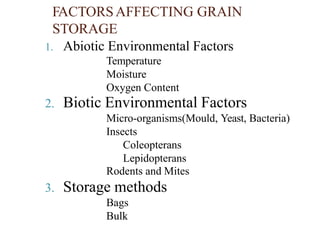
FACTORSAFFECTING GRAIN
STORAGE
1. Abiotic Environmental Factors
Temperature
Moisture
Oxygen Content
2. Biotic Environmental Factors
Micro-organisms(Mould, Yeast, Bacteria)
Insects
Coleopterans
Lepidopterans
Rodents and Mites
3. Storage methods
Bags
Bulk
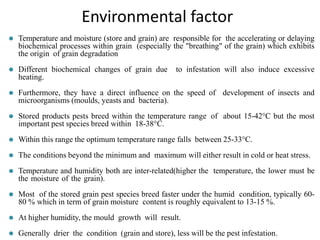
⚫ Temperature and moisture (store and grain) are responsible for the accelerating or delaying
biochemical processes within grain (especially the "breathing" of the grain) which exhibits
the origin of grain degradation
⚫ Different biochemical changes of grain due to infestation will also induce excessive
heating.
⚫ Furthermore, they have a direct influence on the speed of development of insects and
microorganisms (moulds, yeasts and bacteria).
⚫ Stored products pests breed within the temperature range of about 15-42°C but the most
important pest species breed within 18-38°C.
⚫ Within this range the optimum temperature range falls between 25-33°C.
⚫ The conditions beyond the minimum and maximum will either result in cold or heat stress.
⚫ Temperature and humidity both are inter-related(higher the temperature, the lower must be
the moisture of the grain).
⚫ Most of the stored grain pest species breed faster under the humid condition, typically 60-
80 % which in term of grain moisture content is roughly equivalent to 13-15 %.
⚫ At higher humidity, the mould growth will result.
⚫ Generally drier the condition (grain and store), less will be the pest infestation.
Environmental factor
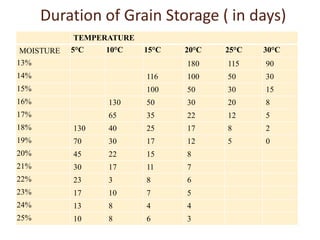
Duration of Grain Storage ( in days)
TEMPERATURE
MOISTURE 5°C 10°C 15°C 20°C 25°C 30°C
13% 180 115 90
14% 116 100 50 30
15% 100 50 30 15
16% 130 50 30 20 8
17% 65 35 22 12 5
18% 130 40 25 17 8 2
19% 70 30 17 12 5 0
20% 45 22 15 8
21% 30 17 11 7
22% 23 3 8 6
23% 17 10 7 5
24% 13 8 4 4
25% 10 8 6 3
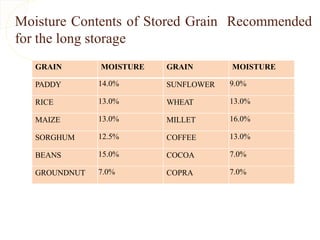
Moisture Contents of Stored Grain Recommended
for the long storage
GRAIN MOISTURE GRAIN MOISTURE
PADDY 14.0% SUNFLOWER 9.0%
RICE 13.0% WHEAT 13.0%
MAIZE 13.0% MILLET 16.0%
SORGHUM 12.5% COFFEE 13.0%
BEANS 15.0% COCOA 7.0%
GROUNDNUT 7.0% COPRA 7.0%
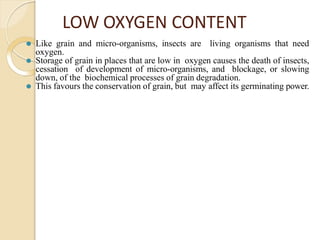
LOW OXYGEN CONTENT
⚫ Like grain and micro-organisms, insects are living organisms that need
oxygen.
⚫ Storage of grain in places that are low in oxygen causes the death of insects,
cessation of development of micro-organisms, and blockage, or slowing
down, of the biochemical processes of grain degradation.
⚫ This favours the conservation of grain, but may affect its germinating power.
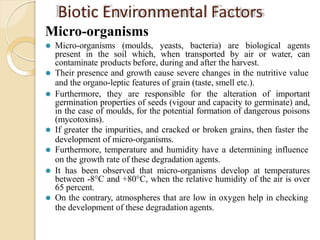
Biotic Environmental Factors
Micro-organisms
⚫ Micro-organisms (moulds, yeasts, bacteria) are biological agents
present in the soil which, when transported by air or water, can
contaminate products before, during and after the harvest.
⚫ Their presence and growth cause severe changes in the nutritive value
and the organo-leptic features of grain (taste, smell etc.).
⚫ Furthermore, they are responsible for the alteration of important
germination properties of seeds (vigour and capacity to germinate) and,
in the case of moulds, for the potential formation of dangerous poisons
(mycotoxins).
⚫ If greater the impurities, and cracked or broken grains, then faster the
development of micro-organisms.
⚫ Furthermore, temperature and humidity have a determining influence
on the growth rate of these degradation agents.
⚫ It has been observed that micro-organisms develop at temperatures
between -8°C and +80°C, when the relative humidity of the air is over
65 percent.
⚫ On the contrary, atmospheres that are low in oxygen help in checking
the development of these degradation agents.
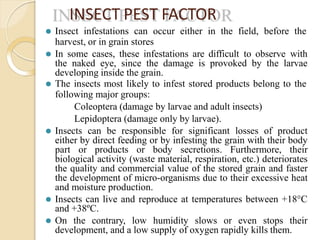
INSECT PEST FACTOR
⚫ Insect infestations can occur either in the field, before the
harvest, or in grain stores
⚫ In some cases, these infestations are difficult to observe with
the naked eye, since the damage is provoked by the larvae
developing inside the grain.
⚫ The insects most likely to infest stored products belong to the
following major groups:
Coleoptera (damage by larvae and adult insects)
Lepidoptera (damage only by larvae).
⚫ Insects can be responsible for significant losses of product
either by direct feeding or by infesting the grain with their body
part or products or body secretions. Furthermore, their
biological activity (waste material, respiration, etc.) deteriorates
the quality and commercial value of the stored grain and faster
the development of micro-organisms due to their excessive heat
and moisture production.
⚫ Insects can live and reproduce at temperatures between +18°C
and +38ºC.
⚫ On the contrary, low humidity slows or even stops their
development, and a low supply of oxygen rapidly kills them.
INSECT PEST FACTOR
Different Important stored grain insect pests are:
Red Flour Beetle
Lesser Grain Borer
Rice Weevil
Khapra Beetle
Dhora Beetle/ Seed Beetle
Saw Toothed Grain Beetle/ Silvanid Beetle
Angoumois Grain moth
Rice Moth/ Pyralid Moth
All these either act as Primary stored grain insect pest or
secondary insect pest, thus exhibiting the quantitative or
qualitative losses to grains. They may also produce foul
or bad smell or off taste in the grain or in milling
cereals.
RODENTS
⚫ Rodents include rats, mice and are omnivorous thus feeding on
grains, vegetables, fruits, meat etc.
⚫ They cause serious damage not only to stored grains but also to
packaging and even to storage buildings. They contaminate the
grains with their excreta, urine, body hairs in addition to their
grain consumption.
⚫ The rodents that attack stored products, belong to the following
species:
Black rat, also called roof rat (Rattus rattus),
Brown or Norway rat, also called sewer rat (Rattus
norvegicus),
Mouse (Mus musculus).
⚫ Prolonged attack by these pests results in serious quantitative
and qualitative losses of stored products. They damage the 20
times the amount they actually consume.
⚫ This contamination is as important from the marketing
standpoint as it is for hygiene and health.
Mites
• creatures that cause qualitative and
quantitative losses to the stored grains.
⚫They reduce the germination ability of the
seed.
⚫They may produce toxins to the stored
food.
⚫These are small, tiny microscopic
Storage
Methods
⚫There are basically two methods of storage: in
bags and in bulk.
⚫Bags can be stored either in the open air or in
warehouses; bulk grain is stored in bins or
silos of various capacities.
⚫The choice between these methods depends
upon the objective of the storage, duration of
the storage and amount of grain under storage
(Storage at micro or macro level).
⚫The method selected may affect the grain
storage or even the storage conditions which
ultimately result in favour the attack of
different stored grain pests.
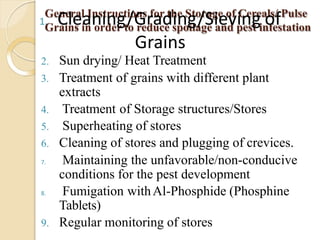
General Instructions for the Storage of Cereals/ Pulse
Grains in order to reduce spoilage and pest infestation
1. Cleaning/Grading/Sieving of
Grains
2. Sun drying/ Heat Treatment
3. Treatment of grains with different plant
extracts
4. Treatment of Storage structures/Stores
5. Superheating of stores
6. Cleaning of stores and plugging of crevices.
7. Maintaining the unfavorable/non-conducive
conditions for the pest development
8. Fumigation withAl-Phosphide (Phosphine
Tablets)
9. Regular monitoring of stores

1588295171-factors-affecting-grain-storage-pdf.pptx

  • 1.
  • 2.
    FACTORSAFFECTING GRAIN STORAGE 1. AbioticEnvironmental Factors Temperature Moisture Oxygen Content 2. Biotic Environmental Factors Micro-organisms(Mould, Yeast, Bacteria) Insects Coleopterans Lepidopterans Rodents and Mites 3. Storage methods Bags Bulk
  • 3.
    ⚫ Temperature andmoisture (store and grain) are responsible for the accelerating or delaying biochemical processes within grain (especially the "breathing" of the grain) which exhibits the origin of grain degradation ⚫ Different biochemical changes of grain due to infestation will also induce excessive heating. ⚫ Furthermore, they have a direct influence on the speed of development of insects and microorganisms (moulds, yeasts and bacteria). ⚫ Stored products pests breed within the temperature range of about 15-42°C but the most important pest species breed within 18-38°C. ⚫ Within this range the optimum temperature range falls between 25-33°C. ⚫ The conditions beyond the minimum and maximum will either result in cold or heat stress. ⚫ Temperature and humidity both are inter-related(higher the temperature, the lower must be the moisture of the grain). ⚫ Most of the stored grain pest species breed faster under the humid condition, typically 60- 80 % which in term of grain moisture content is roughly equivalent to 13-15 %. ⚫ At higher humidity, the mould growth will result. ⚫ Generally drier the condition (grain and store), less will be the pest infestation. Environmental factor
  • 4.
    Duration of GrainStorage ( in days) TEMPERATURE MOISTURE 5°C 10°C 15°C 20°C 25°C 30°C 13% 180 115 90 14% 116 100 50 30 15% 100 50 30 15 16% 130 50 30 20 8 17% 65 35 22 12 5 18% 130 40 25 17 8 2 19% 70 30 17 12 5 0 20% 45 22 15 8 21% 30 17 11 7 22% 23 3 8 6 23% 17 10 7 5 24% 13 8 4 4 25% 10 8 6 3
  • 5.
    Moisture Contents ofStored Grain Recommended for the long storage GRAIN MOISTURE GRAIN MOISTURE PADDY 14.0% SUNFLOWER 9.0% RICE 13.0% WHEAT 13.0% MAIZE 13.0% MILLET 16.0% SORGHUM 12.5% COFFEE 13.0% BEANS 15.0% COCOA 7.0% GROUNDNUT 7.0% COPRA 7.0%
  • 6.
    LOW OXYGEN CONTENT ⚫Like grain and micro-organisms, insects are living organisms that need oxygen. ⚫ Storage of grain in places that are low in oxygen causes the death of insects, cessation of development of micro-organisms, and blockage, or slowing down, of the biochemical processes of grain degradation. ⚫ This favours the conservation of grain, but may affect its germinating power.
  • 7.
    Biotic Environmental Factors Micro-organisms ⚫Micro-organisms (moulds, yeasts, bacteria) are biological agents present in the soil which, when transported by air or water, can contaminate products before, during and after the harvest. ⚫ Their presence and growth cause severe changes in the nutritive value and the organo-leptic features of grain (taste, smell etc.). ⚫ Furthermore, they are responsible for the alteration of important germination properties of seeds (vigour and capacity to germinate) and, in the case of moulds, for the potential formation of dangerous poisons (mycotoxins). ⚫ If greater the impurities, and cracked or broken grains, then faster the development of micro-organisms. ⚫ Furthermore, temperature and humidity have a determining influence on the growth rate of these degradation agents. ⚫ It has been observed that micro-organisms develop at temperatures between -8°C and +80°C, when the relative humidity of the air is over 65 percent. ⚫ On the contrary, atmospheres that are low in oxygen help in checking the development of these degradation agents.
  • 8.
    INSECT PEST FACTOR ⚫Insect infestations can occur either in the field, before the harvest, or in grain stores ⚫ In some cases, these infestations are difficult to observe with the naked eye, since the damage is provoked by the larvae developing inside the grain. ⚫ The insects most likely to infest stored products belong to the following major groups: Coleoptera (damage by larvae and adult insects) Lepidoptera (damage only by larvae). ⚫ Insects can be responsible for significant losses of product either by direct feeding or by infesting the grain with their body part or products or body secretions. Furthermore, their biological activity (waste material, respiration, etc.) deteriorates the quality and commercial value of the stored grain and faster the development of micro-organisms due to their excessive heat and moisture production. ⚫ Insects can live and reproduce at temperatures between +18°C and +38ºC. ⚫ On the contrary, low humidity slows or even stops their development, and a low supply of oxygen rapidly kills them.
  • 9.
    INSECT PEST FACTOR DifferentImportant stored grain insect pests are: Red Flour Beetle Lesser Grain Borer Rice Weevil Khapra Beetle Dhora Beetle/ Seed Beetle Saw Toothed Grain Beetle/ Silvanid Beetle Angoumois Grain moth Rice Moth/ Pyralid Moth All these either act as Primary stored grain insect pest or secondary insect pest, thus exhibiting the quantitative or qualitative losses to grains. They may also produce foul or bad smell or off taste in the grain or in milling cereals.
  • 10.
    RODENTS ⚫ Rodents includerats, mice and are omnivorous thus feeding on grains, vegetables, fruits, meat etc. ⚫ They cause serious damage not only to stored grains but also to packaging and even to storage buildings. They contaminate the grains with their excreta, urine, body hairs in addition to their grain consumption. ⚫ The rodents that attack stored products, belong to the following species: Black rat, also called roof rat (Rattus rattus), Brown or Norway rat, also called sewer rat (Rattus norvegicus), Mouse (Mus musculus). ⚫ Prolonged attack by these pests results in serious quantitative and qualitative losses of stored products. They damage the 20 times the amount they actually consume. ⚫ This contamination is as important from the marketing standpoint as it is for hygiene and health.
  • 11.
    Mites • creatures thatcause qualitative and quantitative losses to the stored grains. ⚫They reduce the germination ability of the seed. ⚫They may produce toxins to the stored food. ⚫These are small, tiny microscopic
  • 12.
    Storage Methods ⚫There are basicallytwo methods of storage: in bags and in bulk. ⚫Bags can be stored either in the open air or in warehouses; bulk grain is stored in bins or silos of various capacities. ⚫The choice between these methods depends upon the objective of the storage, duration of the storage and amount of grain under storage (Storage at micro or macro level). ⚫The method selected may affect the grain storage or even the storage conditions which ultimately result in favour the attack of different stored grain pests.
  • 13.
    General Instructions forthe Storage of Cereals/ Pulse Grains in order to reduce spoilage and pest infestation 1. Cleaning/Grading/Sieving of Grains 2. Sun drying/ Heat Treatment 3. Treatment of grains with different plant extracts 4. Treatment of Storage structures/Stores 5. Superheating of stores 6. Cleaning of stores and plugging of crevices. 7. Maintaining the unfavorable/non-conducive conditions for the pest development 8. Fumigation withAl-Phosphide (Phosphine Tablets) 9. Regular monitoring of stores