The Contiki netstack
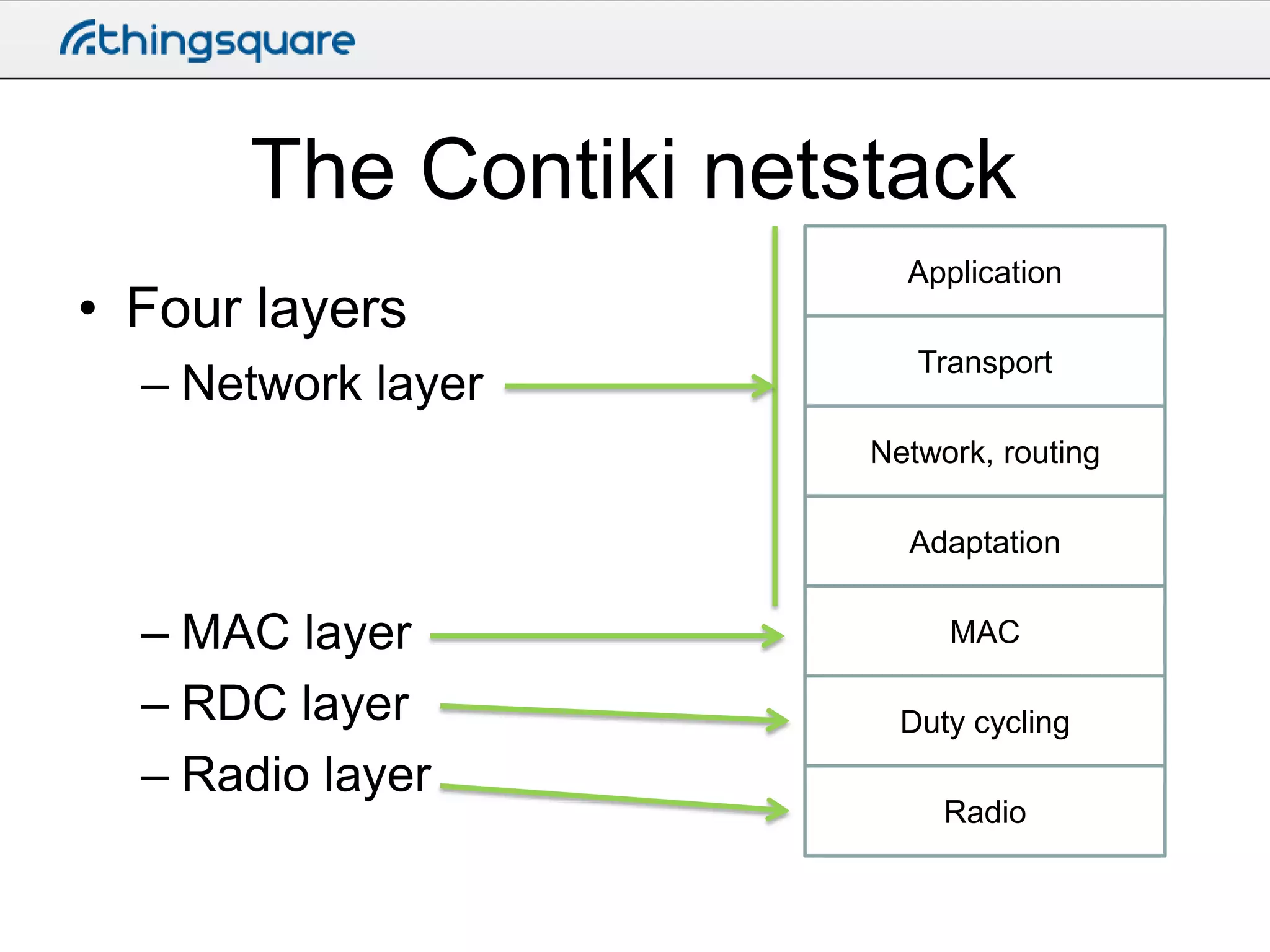
• Four layers
– Network layer

Application
Transport

Network, routing
Adaptation

– MAC layer
– RDC layer
– Radio layer

MAC
Duty cycling
Radio
Netstack concepts
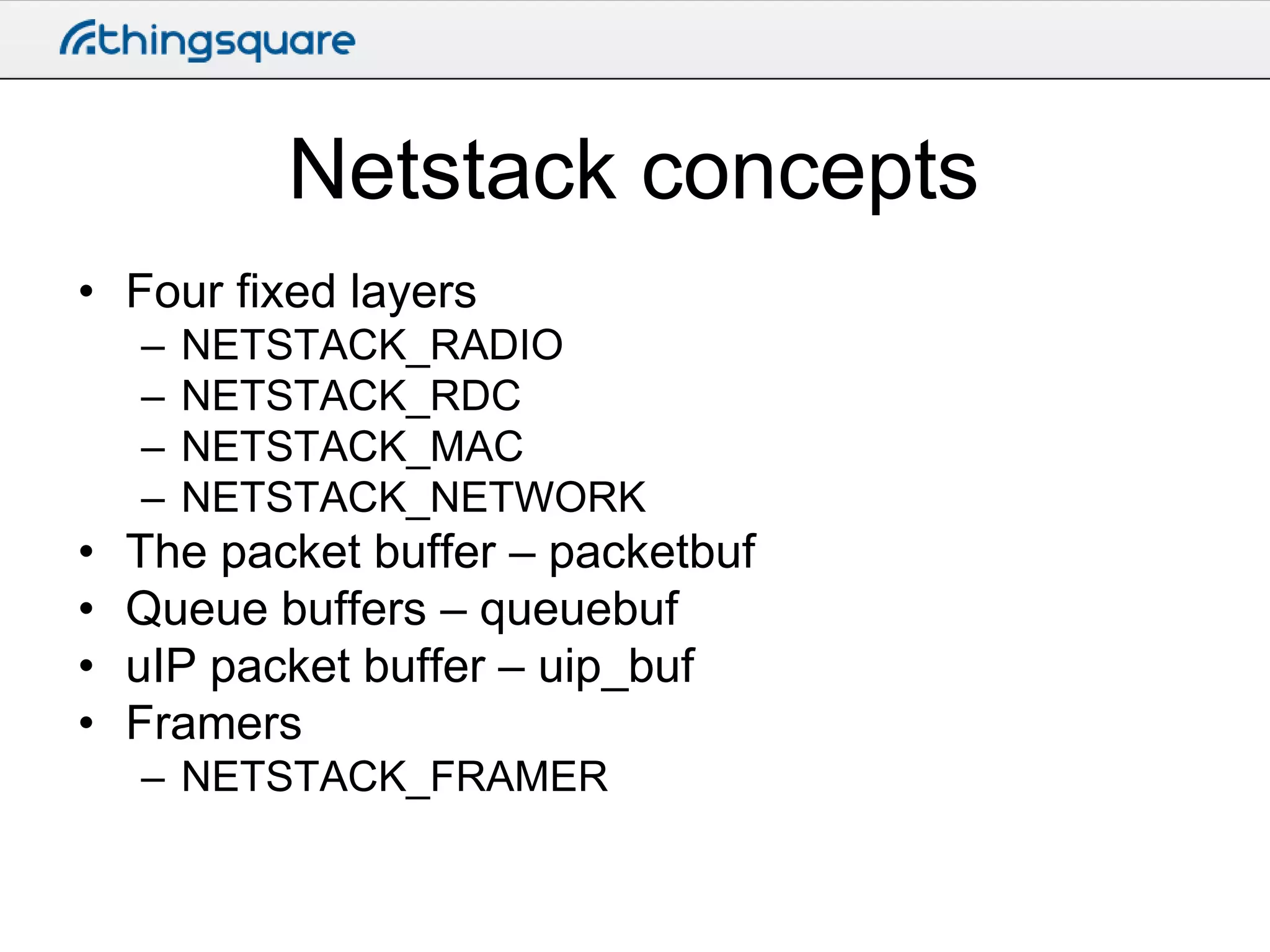
• Four fixed layers
–
–
–
–

•
•
•
•

NETSTACK_RADIO
NETSTACK_RDC
NETSTACK_MAC
NETSTACK_NETWORK

The packet buffer – packetbuf
Queue buffers – queuebuf
uIP packet buffer – uip_buf
Framers
– NETSTACK_FRAMER
The packetbuf
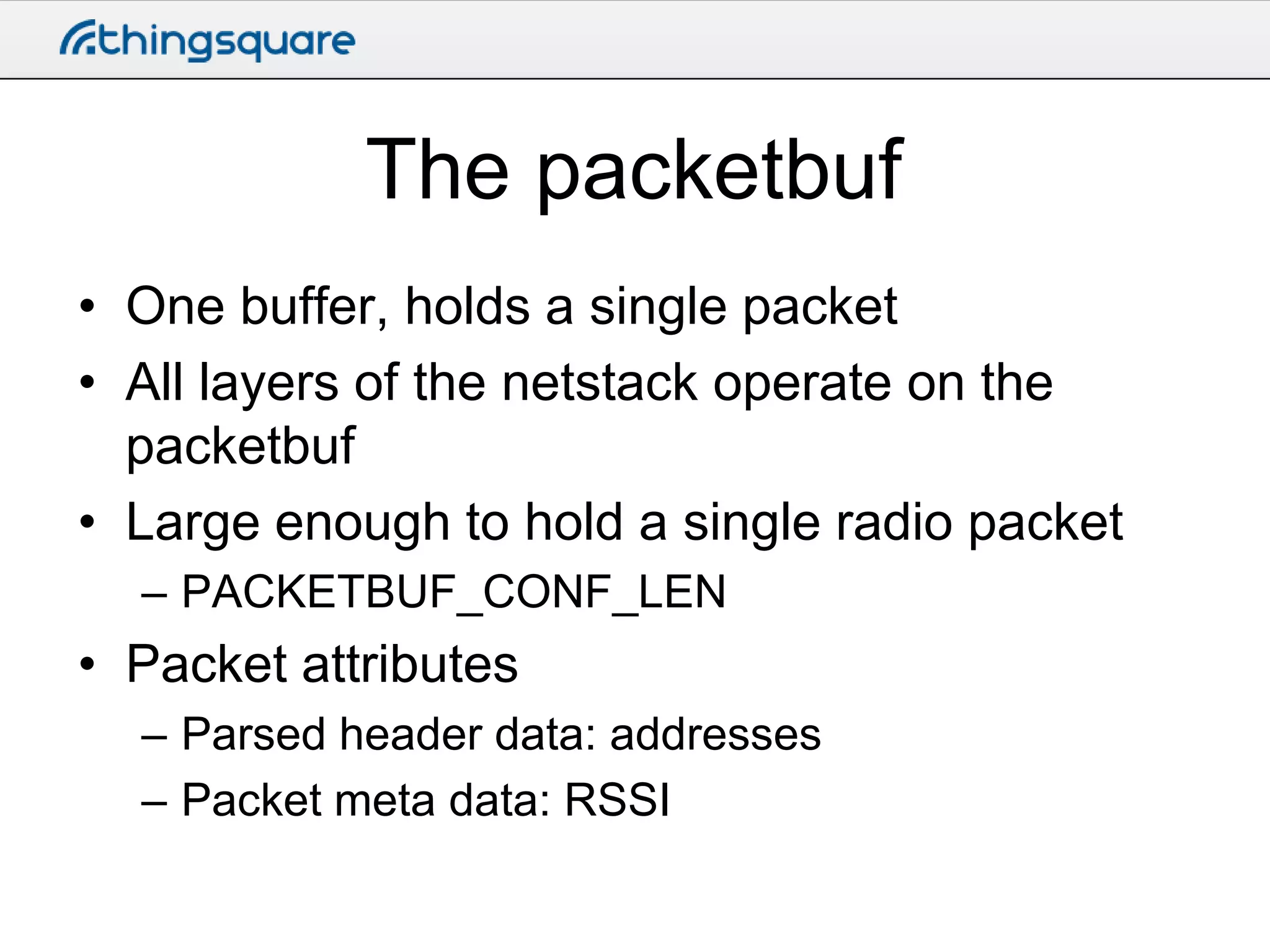
• One buffer, holds a single packet
• All layers of the netstack operate on the
packetbuf
• Large enough to hold a single radio packet
– PACKETBUF_CONF_LEN

• Packet attributes
– Parsed header data: addresses
– Packet meta data: RSSI
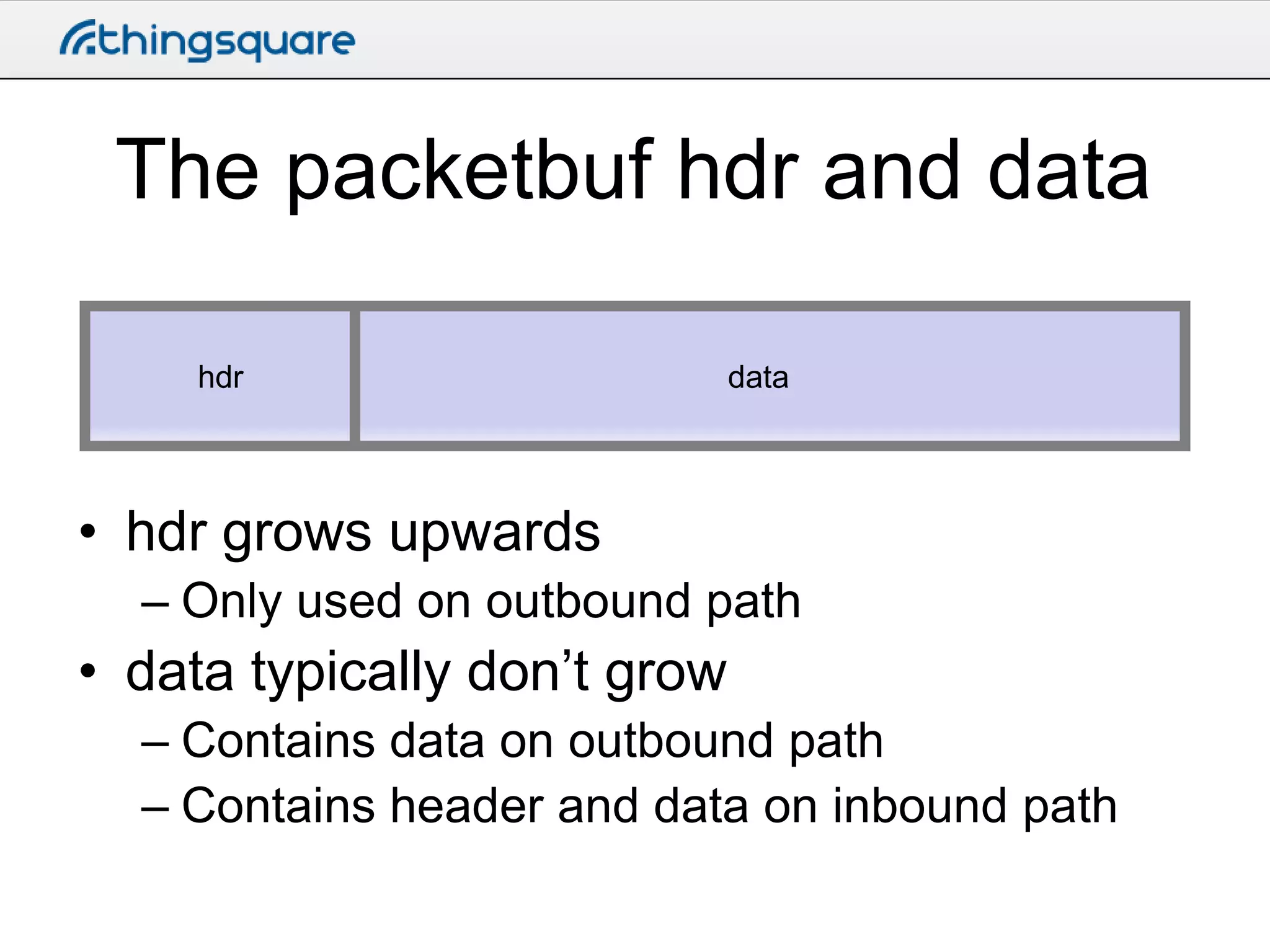
The packetbuf hdr and data
hdr

data

• hdr grows upwards
– Only used on outbound path

• data typically don’t grow
– Contains data on outbound path
– Contains header and data on inbound path
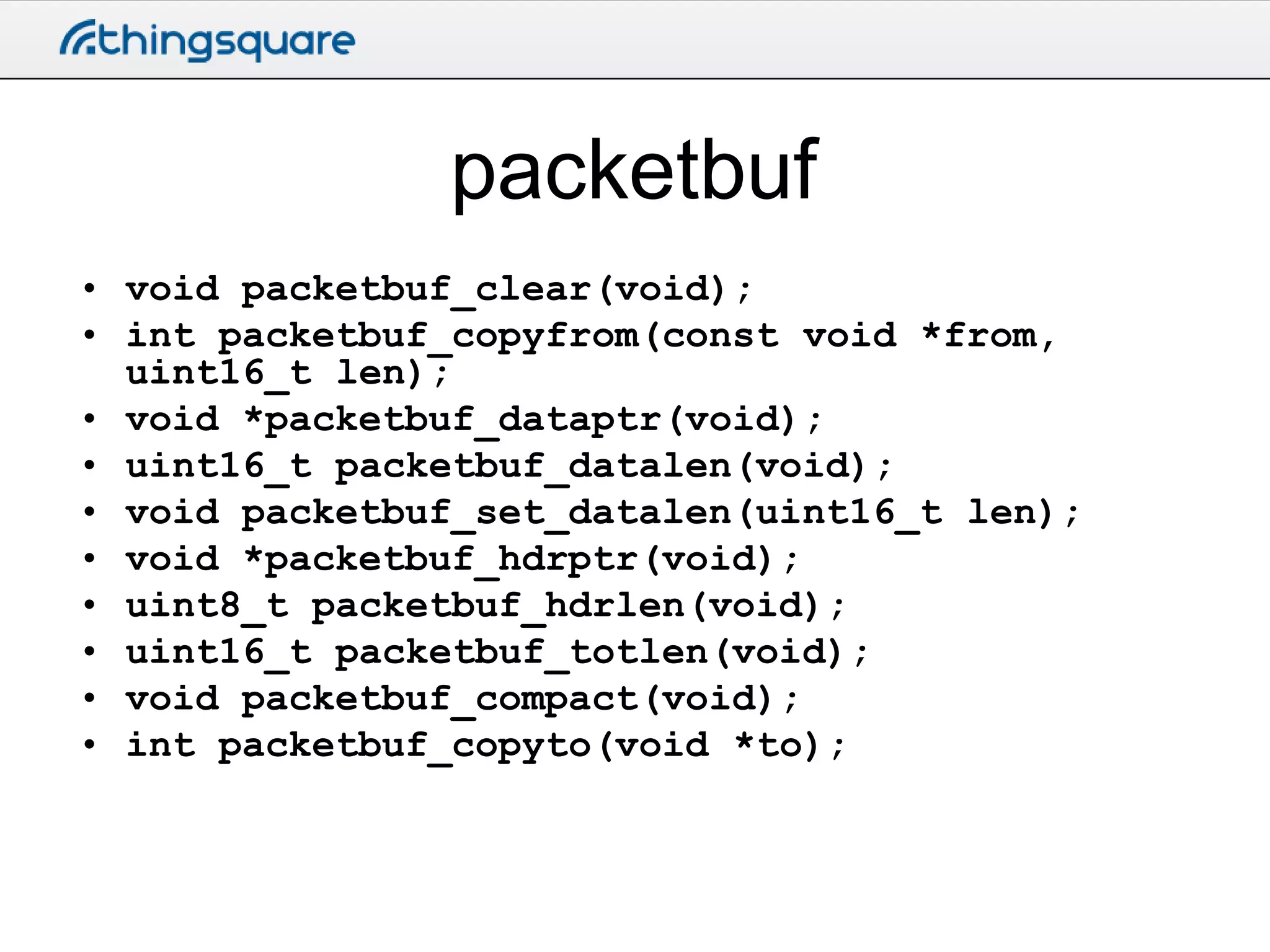
packetbuf
• void packetbuf_clear(void);
• int packetbuf_copyfrom(const void *from,
uint16_t len);
• void *packetbuf_dataptr(void);
• uint16_t packetbuf_datalen(void);
• void packetbuf_set_datalen(uint16_t len);
• void *packetbuf_hdrptr(void);
• uint8_t packetbuf_hdrlen(void);
• uint16_t packetbuf_totlen(void);
• void packetbuf_compact(void);
• int packetbuf_copyto(void *to);
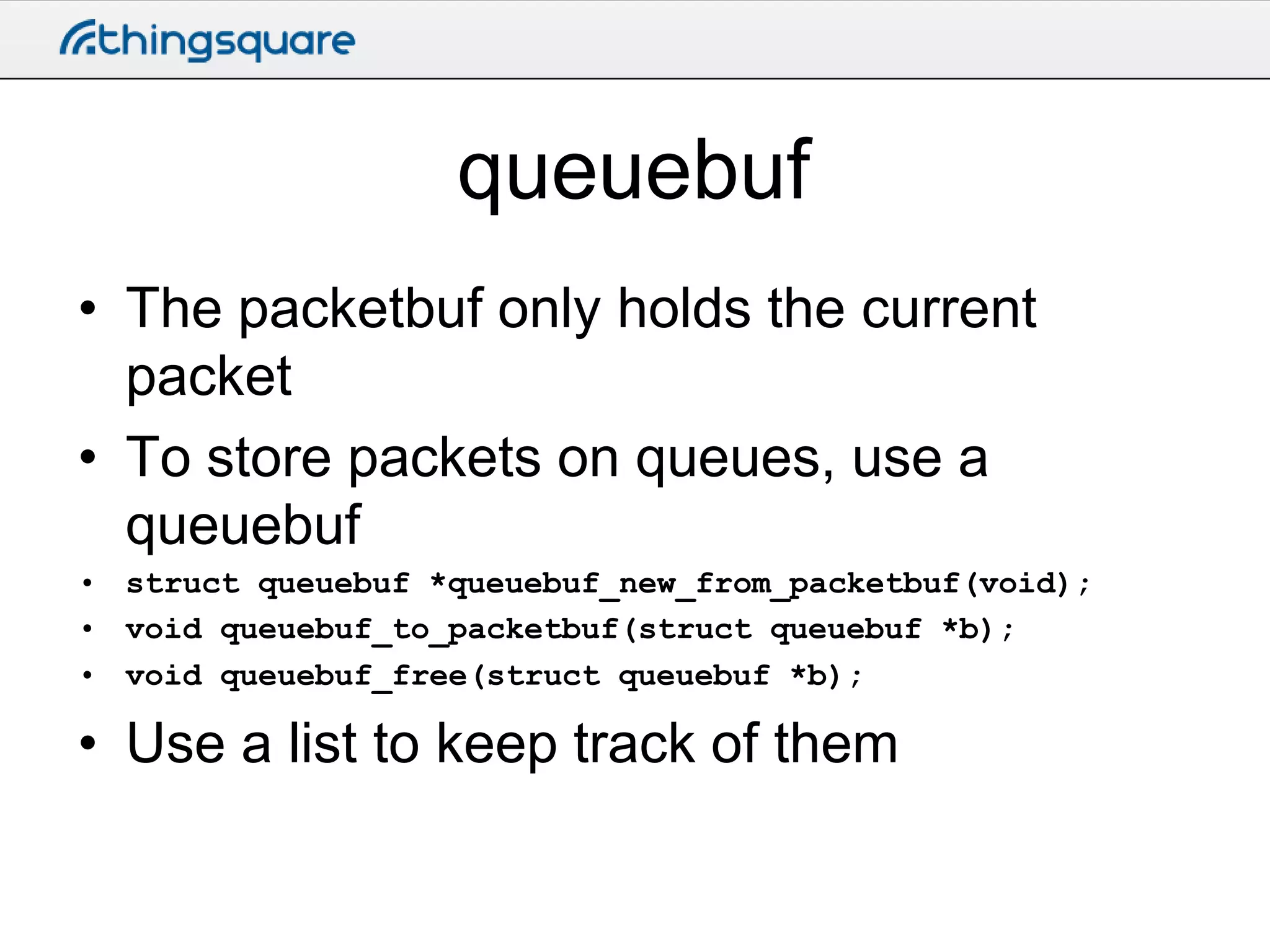
queuebuf
• The packetbuf only holds the current
packet
• To store packets on queues, use a
queuebuf
• struct queuebuf *queuebuf_new_from_packetbuf(void);
• void queuebuf_to_packetbuf(struct queuebuf *b);
• void queuebuf_free(struct queuebuf *b);

• Use a list to keep track of them
Framer
• The framer module converts link-layer
headers to packet attributes
– parse()

• And packet attributes to link-layer headers
– create()
Walking up the netstack
A packet through the netstack
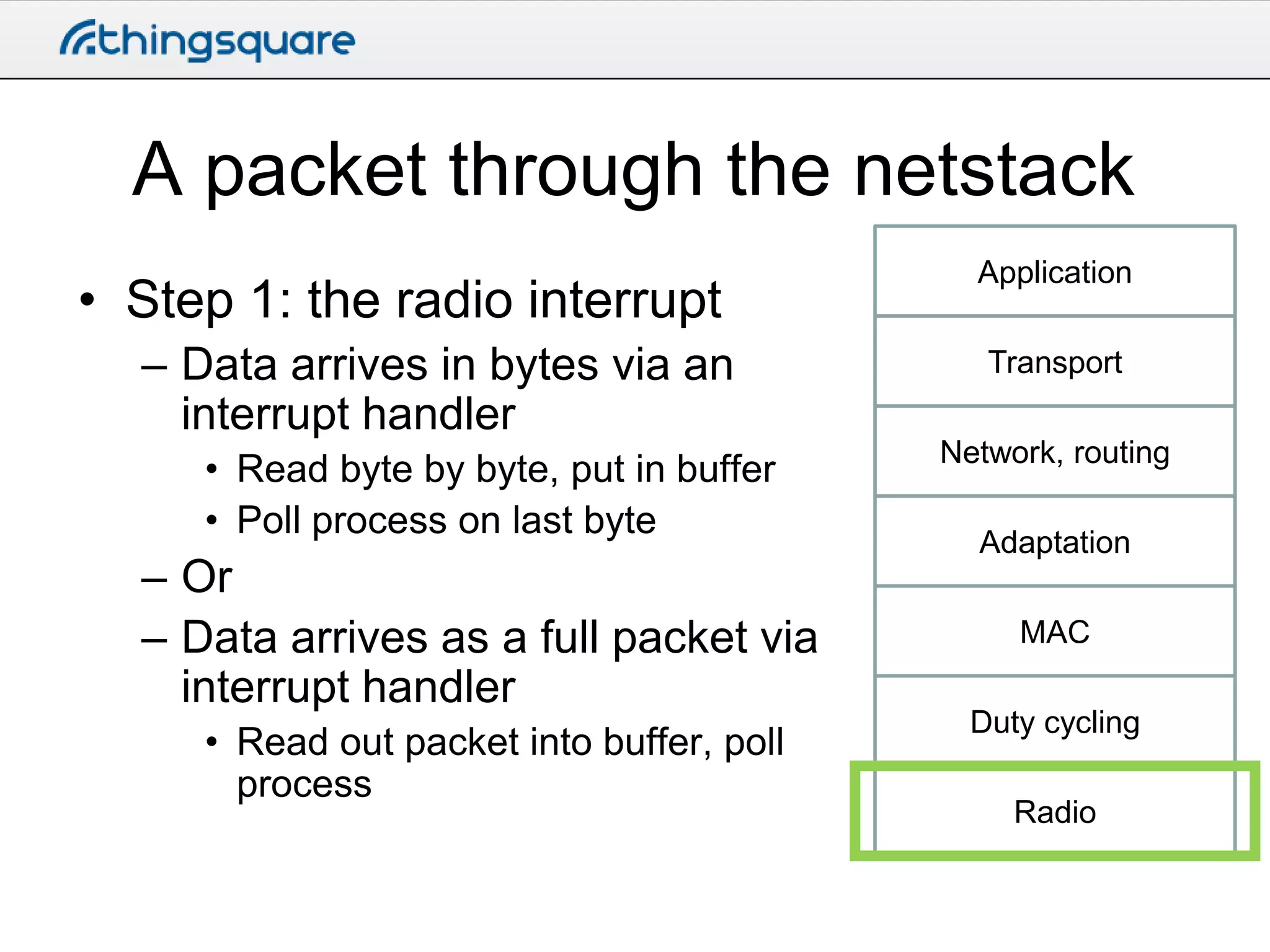
• Step 1: the radio interrupt
– Data arrives in bytes via an
interrupt handler
• Read byte by byte, put in buffer
• Poll process on last byte

– Or
– Data arrives as a full packet via
interrupt handler
• Read out packet into buffer, poll
process

Application
Transport

Network, routing
Adaptation
MAC
Duty cycling
Radio
A packet through the netstack
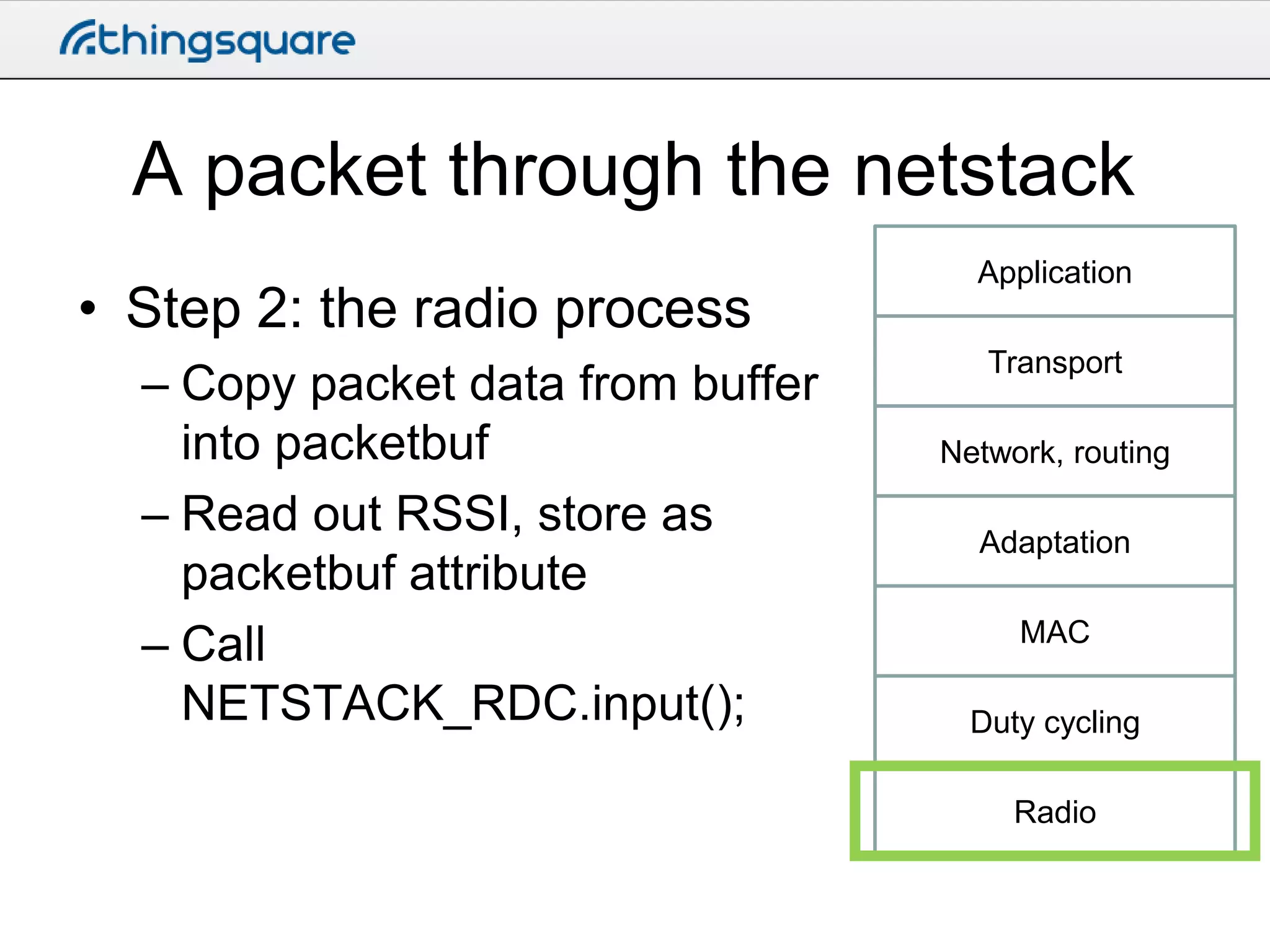
• Step 2: the radio process
– Copy packet data from buffer
into packetbuf
– Read out RSSI, store as
packetbuf attribute
– Call
NETSTACK_RDC.input();

Application
Transport

Network, routing
Adaptation
MAC
Duty cycling
Radio
Interruption: Calling Contiki from
an interrupt
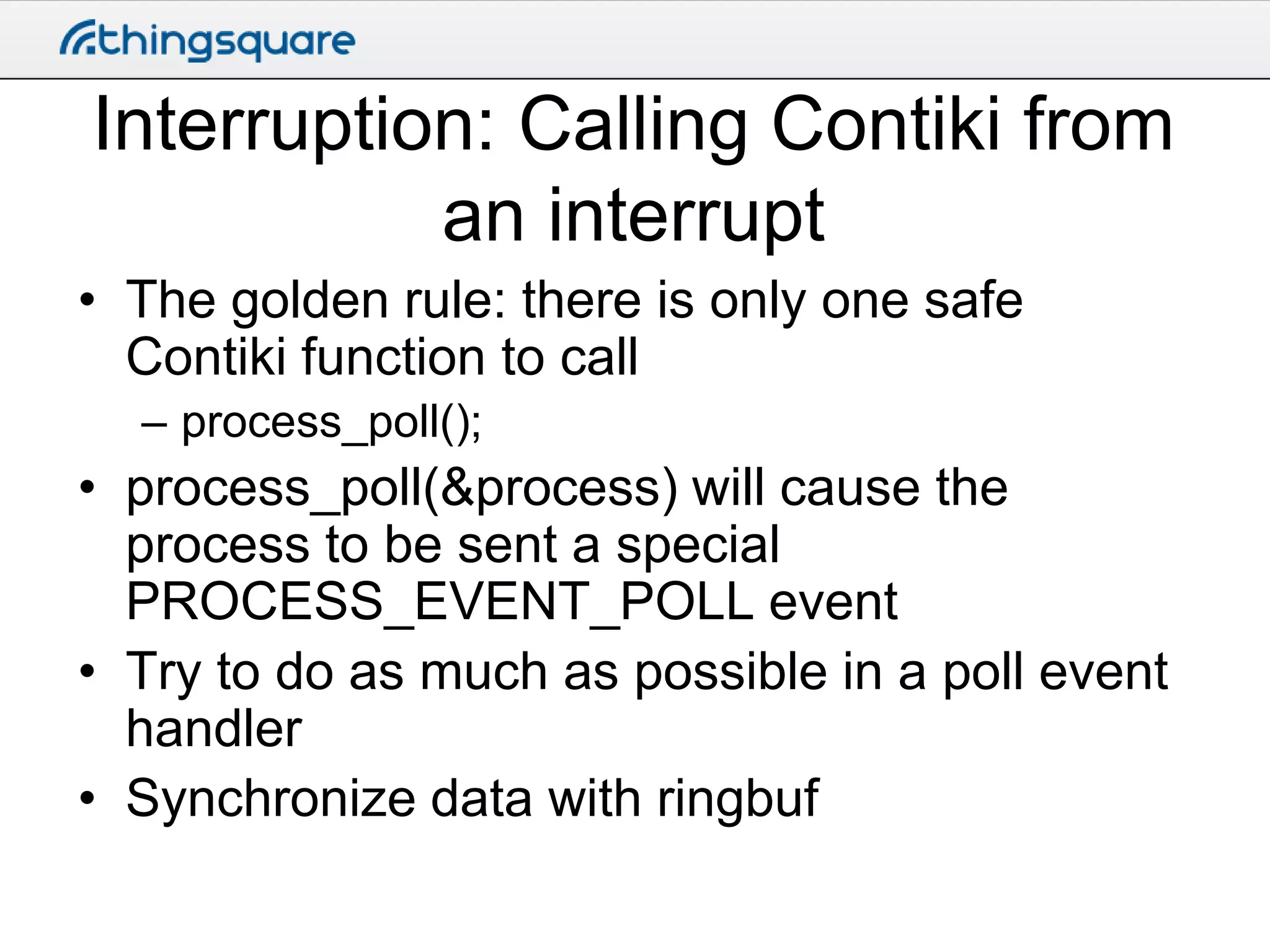
• The golden rule: there is only one safe
Contiki function to call
– process_poll();

• process_poll(&process) will cause the
process to be sent a special
PROCESS_EVENT_POLL event
• Try to do as much as possible in a poll event
handler
• Synchronize data with ringbuf
A packet through the netstack
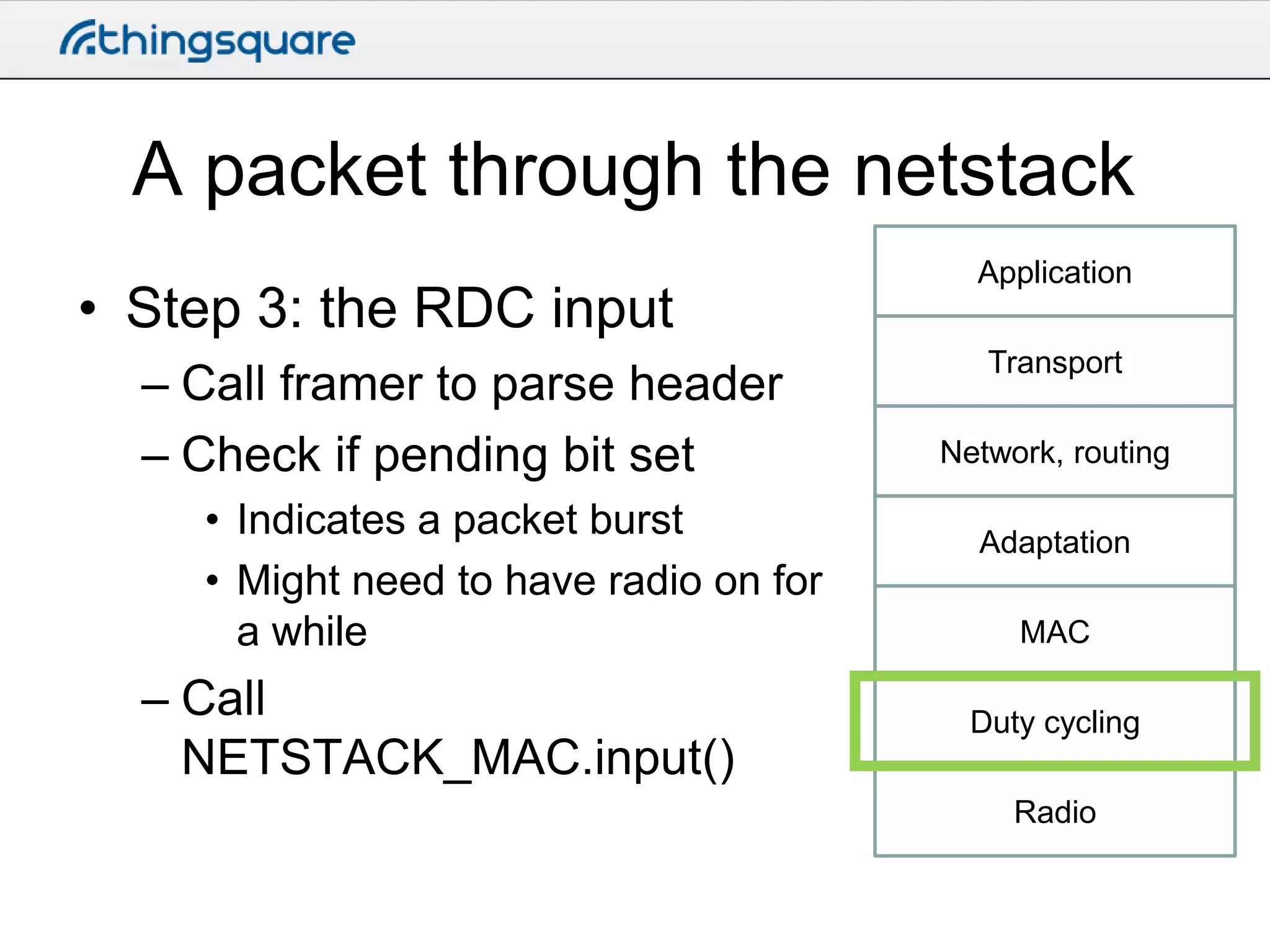
• Step 3: the RDC input
– Call framer to parse header
– Check if pending bit set
• Indicates a packet burst
• Might need to have radio on for
a while

– Call
NETSTACK_MAC.input()

Application
Transport

Network, routing
Adaptation
MAC
Duty cycling
Radio
A packet through the netstack
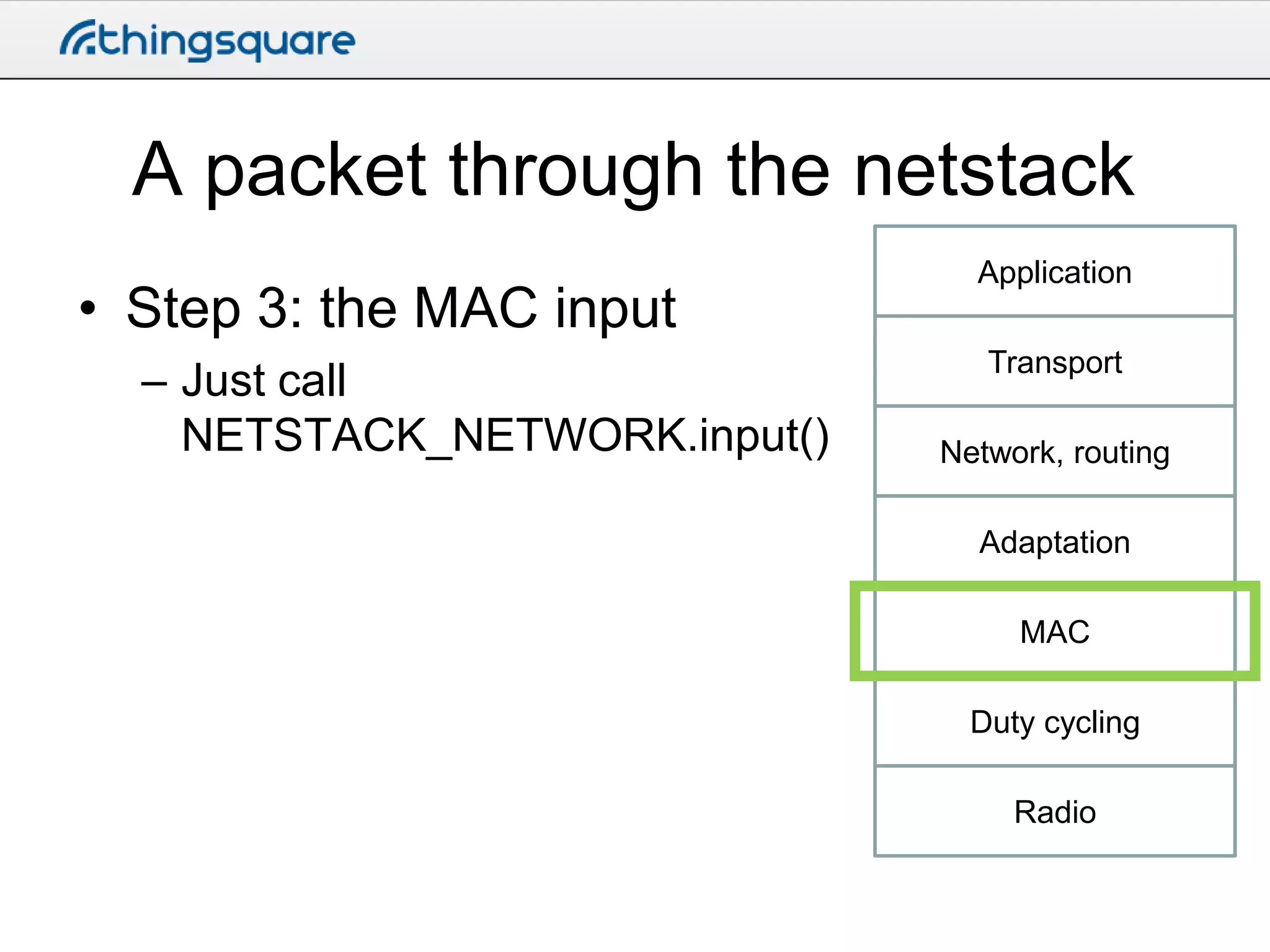
• Step 3: the MAC input
– Just call
NETSTACK_NETWORK.input()

Application
Transport

Network, routing
Adaptation
MAC
Duty cycling
Radio
A packet through the netstack
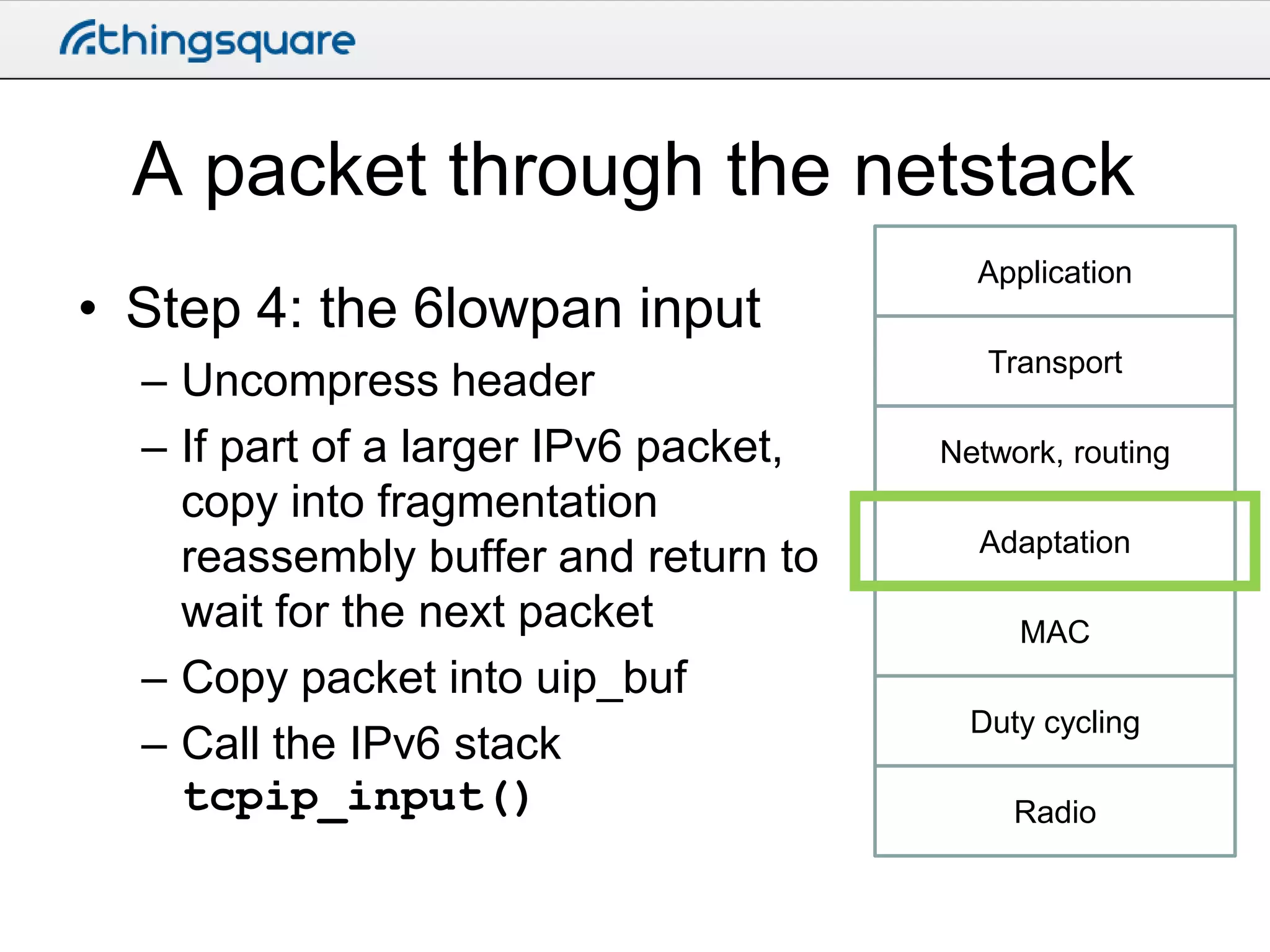
• Step 4: the 6lowpan input
– Uncompress header
– If part of a larger IPv6 packet,
copy into fragmentation
reassembly buffer and return to
wait for the next packet
– Copy packet into uip_buf
– Call the IPv6 stack
tcpip_input()

Application
Transport

Network, routing
Adaptation
MAC
Duty cycling
Radio
Walking down the netstack
A packet through the netstack
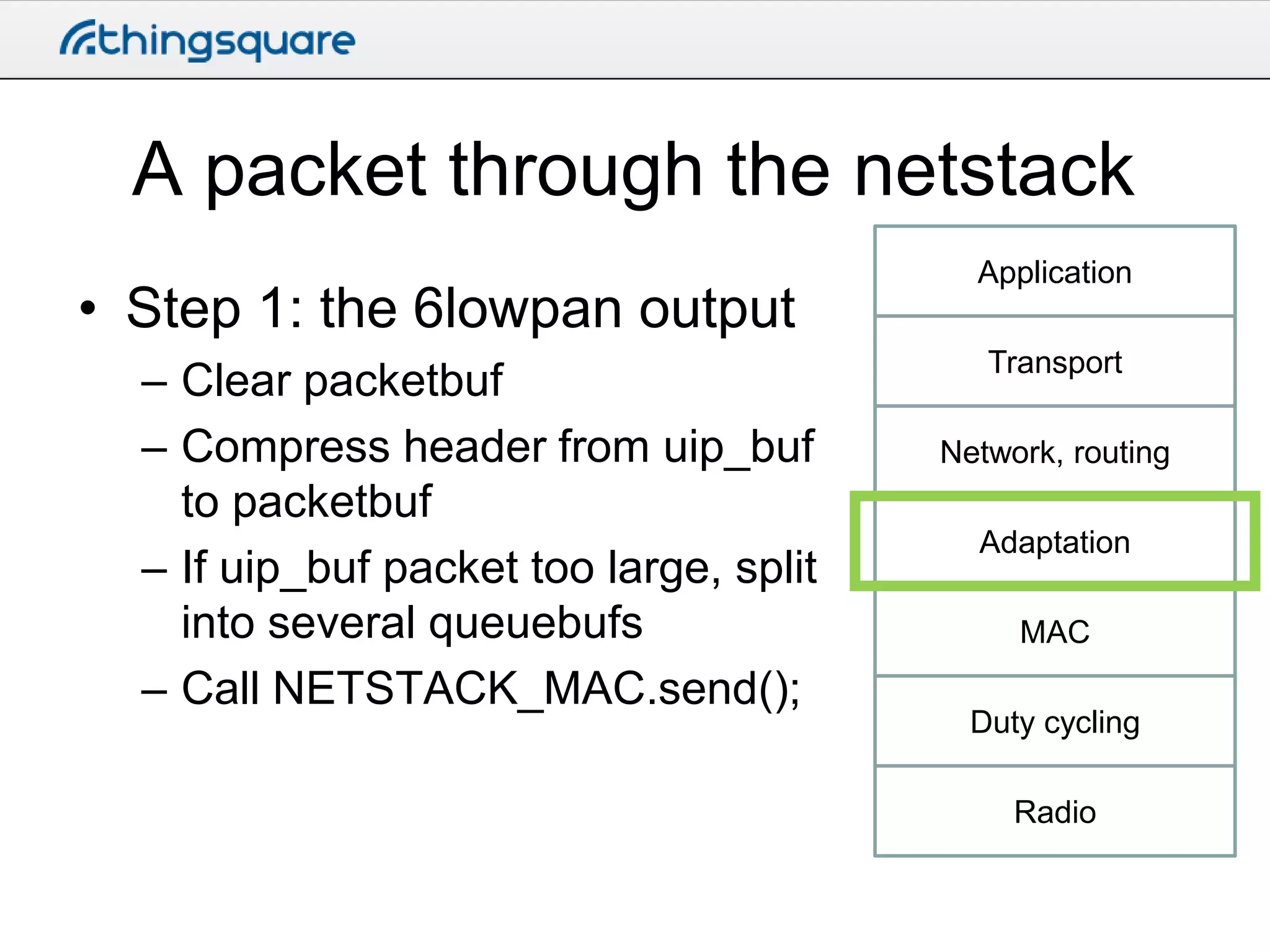
• Step 1: the 6lowpan output
– Clear packetbuf
– Compress header from uip_buf
to packetbuf
– If uip_buf packet too large, split
into several queuebufs
– Call NETSTACK_MAC.send();

Application
Transport

Network, routing
Adaptation
MAC
Duty cycling
Radio
A packet through the netstack
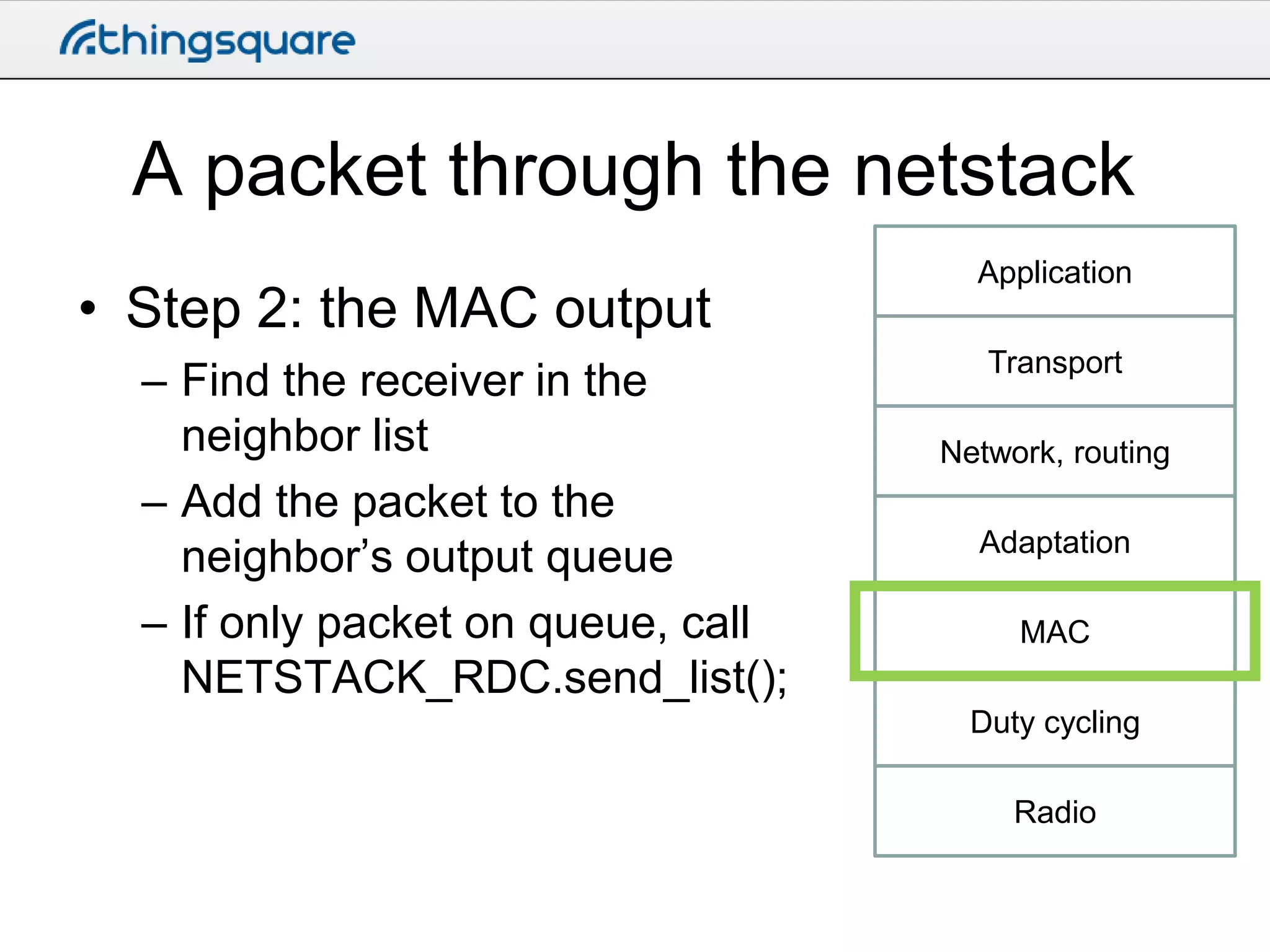
• Step 2: the MAC output
– Find the receiver in the
neighbor list
– Add the packet to the
neighbor’s output queue
– If only packet on queue, call
NETSTACK_RDC.send_list();

Application
Transport

Network, routing
Adaptation
MAC
Duty cycling
Radio
A packet through the netstack
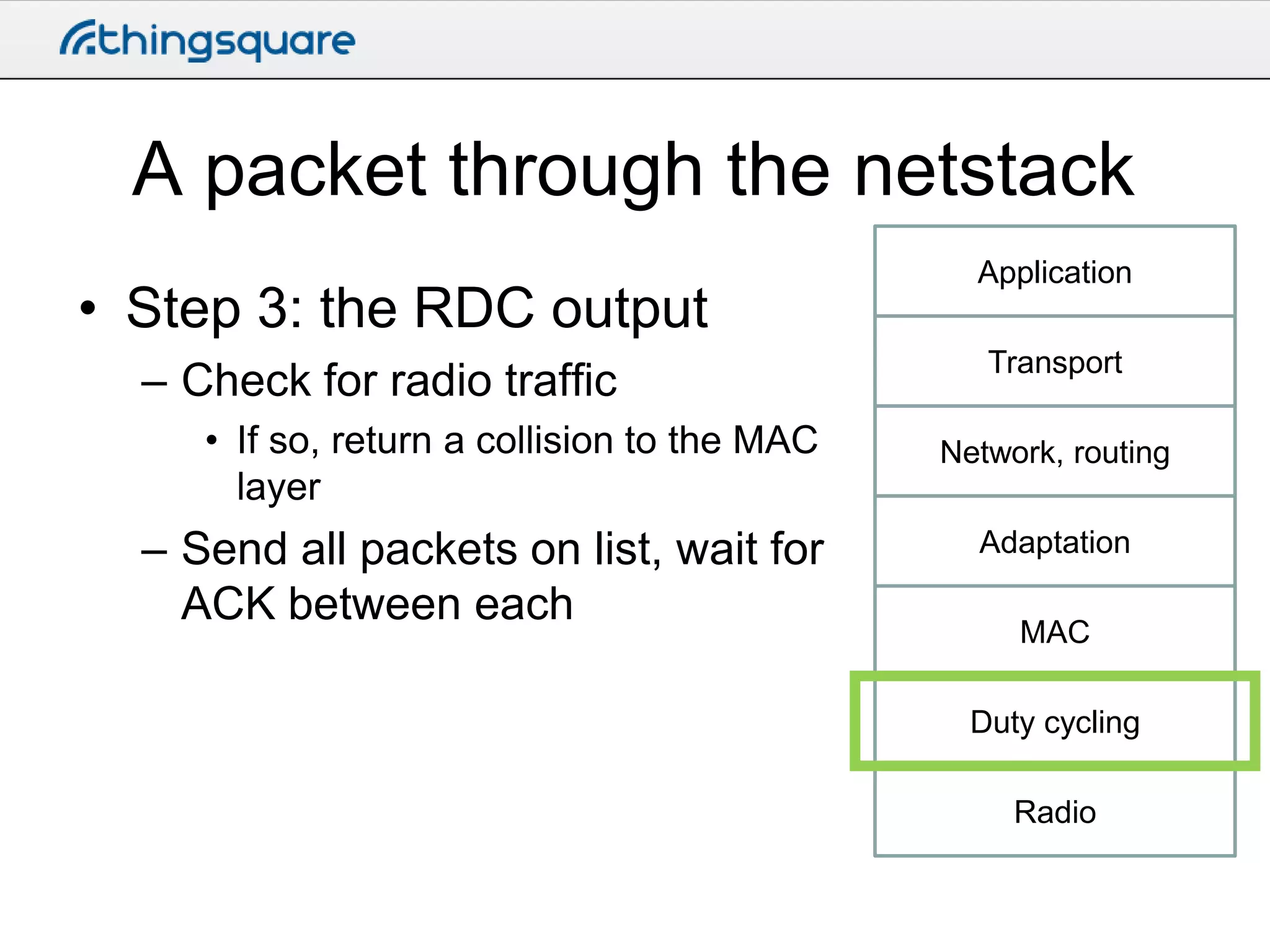
• Step 3: the RDC output
– Check for radio traffic
• If so, return a collision to the MAC
layer

– Send all packets on list, wait for
ACK between each

Application
Transport

Network, routing
Adaptation
MAC
Duty cycling
Radio
A packet through the netstack
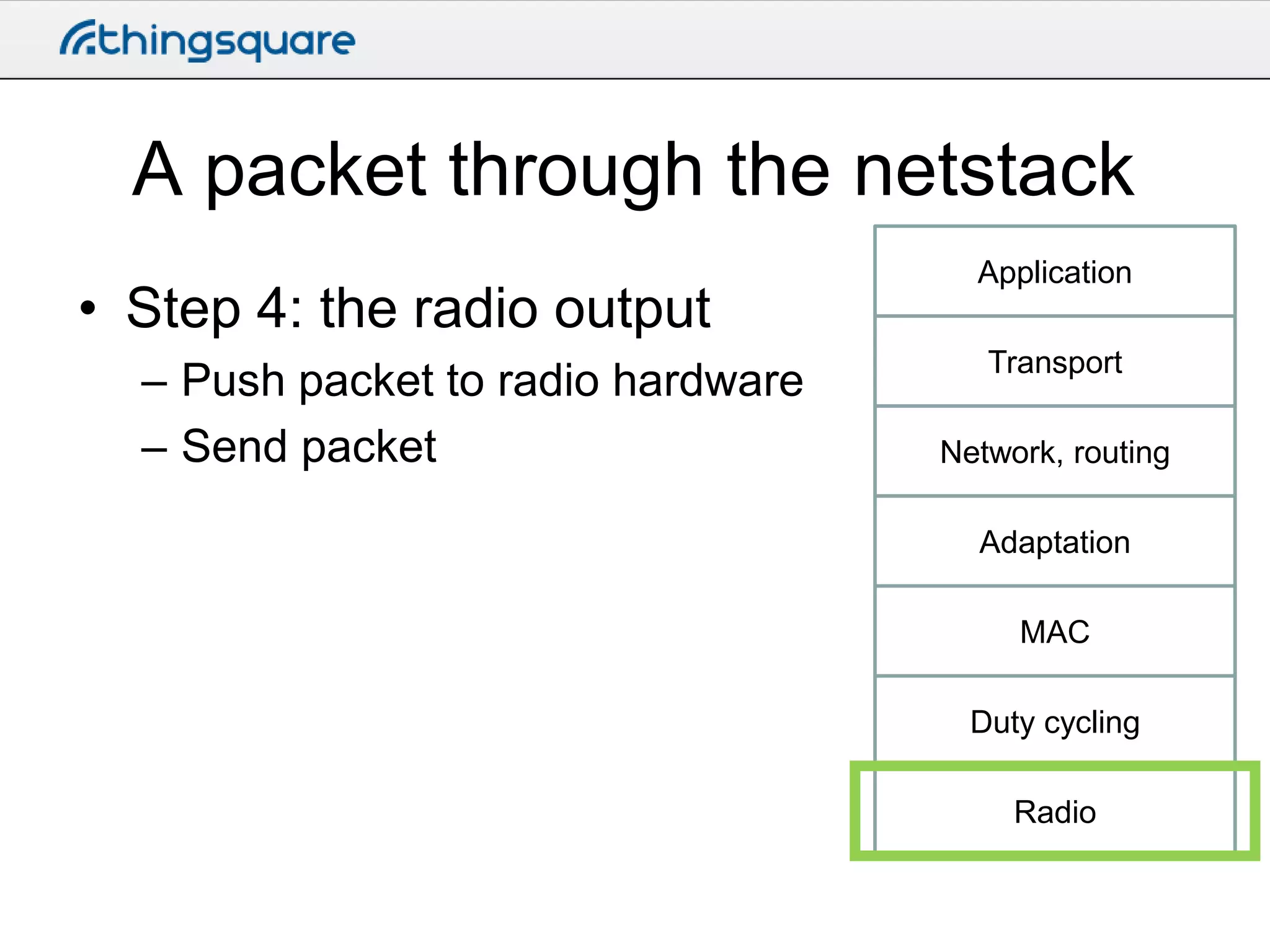
• Step 4: the radio output
– Push packet to radio hardware
– Send packet

Application
Transport

Network, routing
Adaptation
MAC
Duty cycling
Radio
More

http://thingsquare.com

Advanced Internet of Things firmware engineering with Thingsquare and Contiki - day 1, part 2

  • 1.
  • 2.
    The Contiki netstack •Four layers – Network layer Application Transport Network, routing Adaptation – MAC layer – RDC layer – Radio layer MAC Duty cycling Radio
  • 3.
    Netstack concepts • Fourfixed layers – – – – • • • • NETSTACK_RADIO NETSTACK_RDC NETSTACK_MAC NETSTACK_NETWORK The packet buffer – packetbuf Queue buffers – queuebuf uIP packet buffer – uip_buf Framers – NETSTACK_FRAMER
  • 4.
    The packetbuf • Onebuffer, holds a single packet • All layers of the netstack operate on the packetbuf • Large enough to hold a single radio packet – PACKETBUF_CONF_LEN • Packet attributes – Parsed header data: addresses – Packet meta data: RSSI
  • 5.
    The packetbuf hdrand data hdr data • hdr grows upwards – Only used on outbound path • data typically don’t grow – Contains data on outbound path – Contains header and data on inbound path
  • 6.
    packetbuf • void packetbuf_clear(void); •int packetbuf_copyfrom(const void *from, uint16_t len); • void *packetbuf_dataptr(void); • uint16_t packetbuf_datalen(void); • void packetbuf_set_datalen(uint16_t len); • void *packetbuf_hdrptr(void); • uint8_t packetbuf_hdrlen(void); • uint16_t packetbuf_totlen(void); • void packetbuf_compact(void); • int packetbuf_copyto(void *to);
  • 7.
    queuebuf • The packetbufonly holds the current packet • To store packets on queues, use a queuebuf • struct queuebuf *queuebuf_new_from_packetbuf(void); • void queuebuf_to_packetbuf(struct queuebuf *b); • void queuebuf_free(struct queuebuf *b); • Use a list to keep track of them
  • 8.
    Framer • The framermodule converts link-layer headers to packet attributes – parse() • And packet attributes to link-layer headers – create()
  • 9.
  • 10.
    A packet throughthe netstack • Step 1: the radio interrupt – Data arrives in bytes via an interrupt handler • Read byte by byte, put in buffer • Poll process on last byte – Or – Data arrives as a full packet via interrupt handler • Read out packet into buffer, poll process Application Transport Network, routing Adaptation MAC Duty cycling Radio
  • 11.
    A packet throughthe netstack • Step 2: the radio process – Copy packet data from buffer into packetbuf – Read out RSSI, store as packetbuf attribute – Call NETSTACK_RDC.input(); Application Transport Network, routing Adaptation MAC Duty cycling Radio
  • 12.
    Interruption: Calling Contikifrom an interrupt • The golden rule: there is only one safe Contiki function to call – process_poll(); • process_poll(&process) will cause the process to be sent a special PROCESS_EVENT_POLL event • Try to do as much as possible in a poll event handler • Synchronize data with ringbuf
  • 13.
    A packet throughthe netstack • Step 3: the RDC input – Call framer to parse header – Check if pending bit set • Indicates a packet burst • Might need to have radio on for a while – Call NETSTACK_MAC.input() Application Transport Network, routing Adaptation MAC Duty cycling Radio
  • 14.
    A packet throughthe netstack • Step 3: the MAC input – Just call NETSTACK_NETWORK.input() Application Transport Network, routing Adaptation MAC Duty cycling Radio
  • 15.
    A packet throughthe netstack • Step 4: the 6lowpan input – Uncompress header – If part of a larger IPv6 packet, copy into fragmentation reassembly buffer and return to wait for the next packet – Copy packet into uip_buf – Call the IPv6 stack tcpip_input() Application Transport Network, routing Adaptation MAC Duty cycling Radio
  • 16.
  • 17.
    A packet throughthe netstack • Step 1: the 6lowpan output – Clear packetbuf – Compress header from uip_buf to packetbuf – If uip_buf packet too large, split into several queuebufs – Call NETSTACK_MAC.send(); Application Transport Network, routing Adaptation MAC Duty cycling Radio
  • 18.
    A packet throughthe netstack • Step 2: the MAC output – Find the receiver in the neighbor list – Add the packet to the neighbor’s output queue – If only packet on queue, call NETSTACK_RDC.send_list(); Application Transport Network, routing Adaptation MAC Duty cycling Radio
  • 19.
    A packet throughthe netstack • Step 3: the RDC output – Check for radio traffic • If so, return a collision to the MAC layer – Send all packets on list, wait for ACK between each Application Transport Network, routing Adaptation MAC Duty cycling Radio
  • 20.
    A packet throughthe netstack • Step 4: the radio output – Push packet to radio hardware – Send packet Application Transport Network, routing Adaptation MAC Duty cycling Radio
  • 21.