1. rolled up
2. lazy students
3. to the floor
4. in the street
5. our corridor
PHRASE
A phrase is two or more
words that do not contain
the subject-verb pair
necessary to form a clause.
Phrases can be very short
or quite long.
Noun Phrases
A noun phrase includes
a noun—a person, place,
or thing—and
the modifiers—either
before or after—which
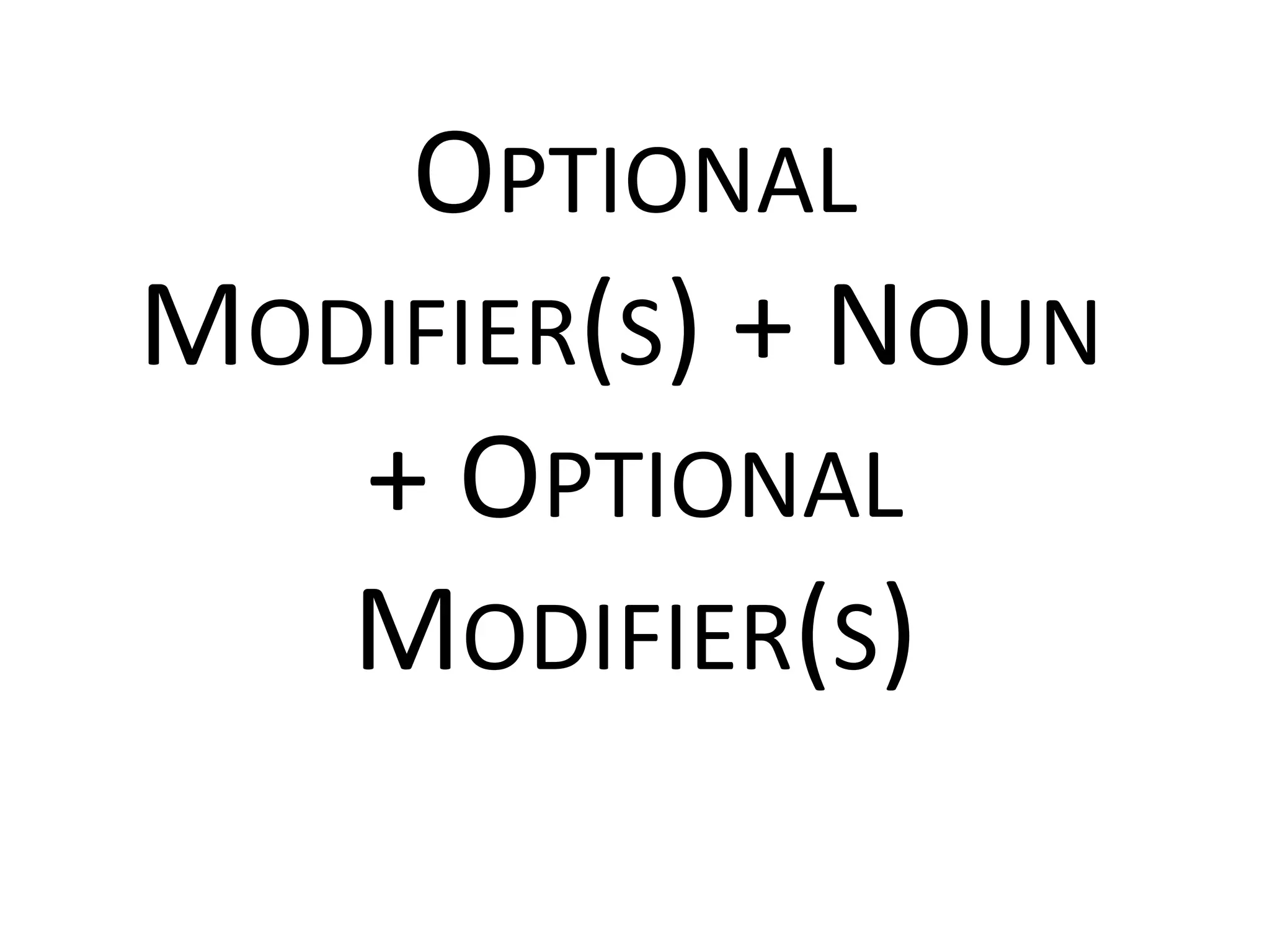
distinguish it. The pattern
looks like this:
OPTIONAL
MODIFIER(S) + NOUN
+ OPTIONAL
MODIFIER(S)
Here are some
examples:
The shoplifted pair
of jeans.
Pair =
noun; the, shoplifted,
of jeans = modifiers.
A cat that
refused
to meow
Cat = noun; a, that
refused to meow =
modifiers.
A great
English
teacher
Teacher =
noun;
a, great, English =
modifiers.
Noun phrases
function as subjects,
objects, and
complements:
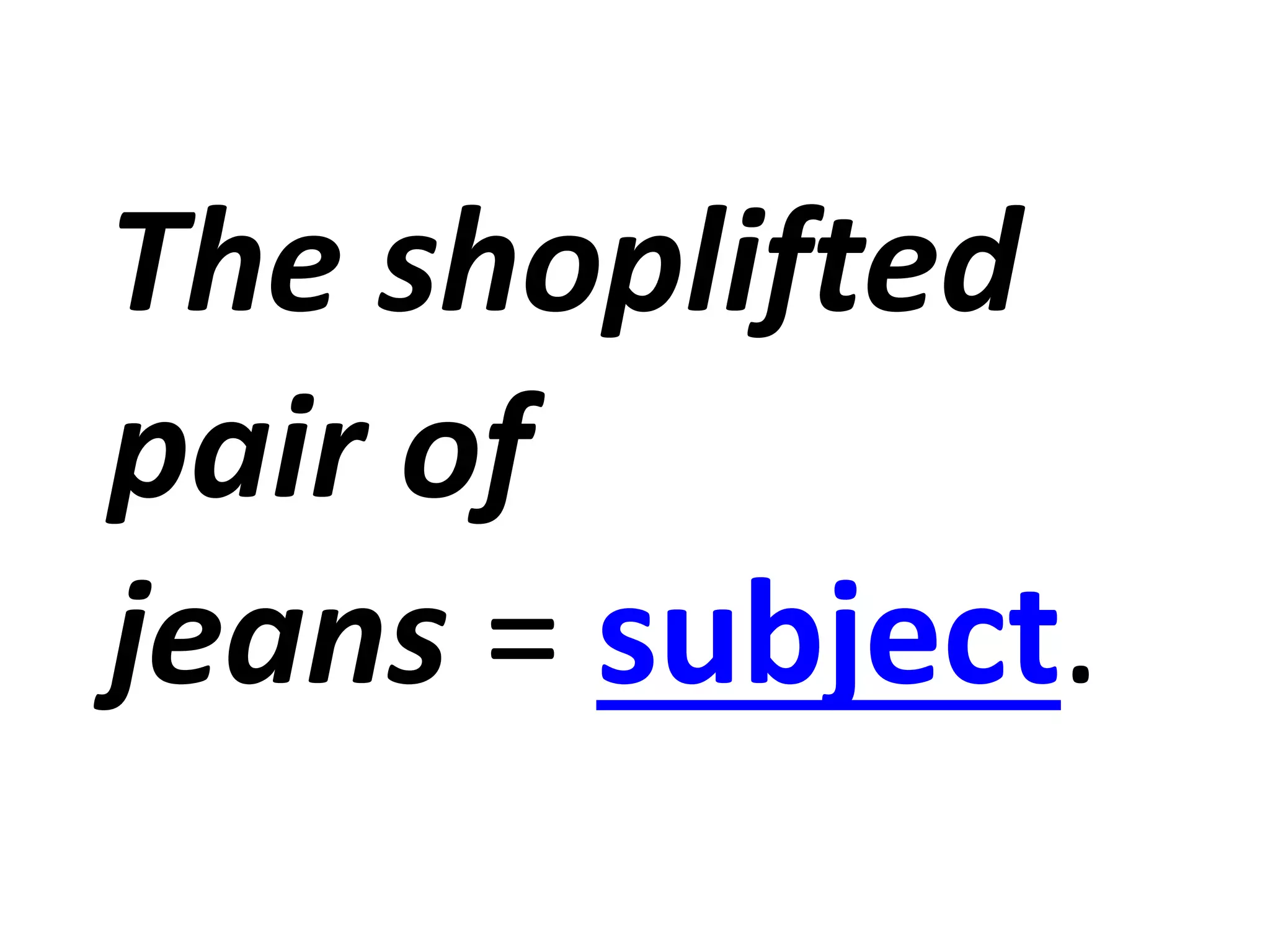
The shoplifted pair of
jeans caused Nathaniel
so much guilt that he
couldn't wear them.
The shoplifted
pair of
jeans = subject.
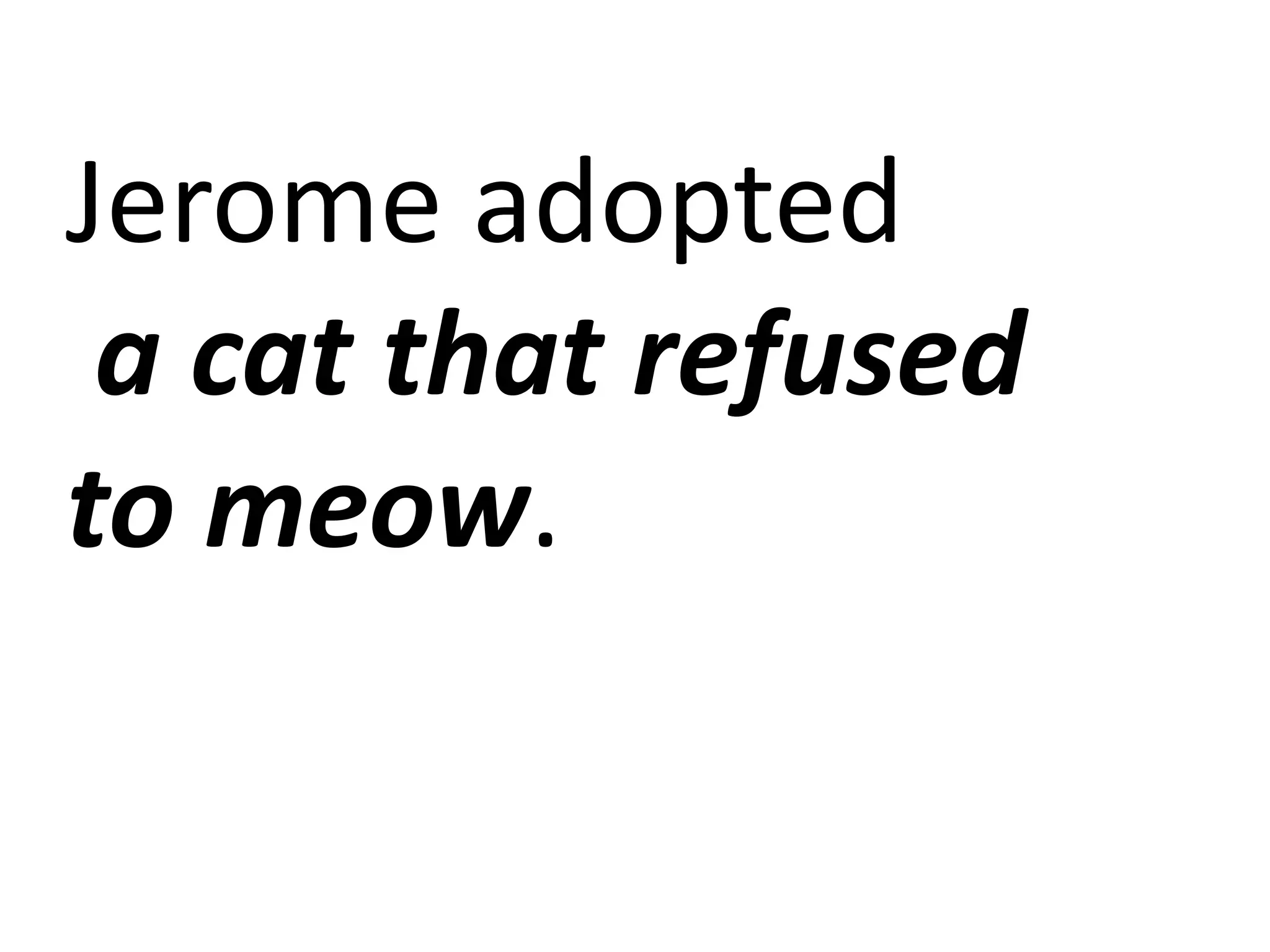
Jerome adopted
a cat that refused
to meow.
A cat that refused
to meow
= direct object.
With her love of
Shakespeare and
knowledge of grammar,
Jasmine will someday be a
great English teacher.
A great English
teacher = subjec
t complement.
Directions:
Underline the noun
phrases in the
following
sentences.
1. I hope to win the
first prize.
2. I tried to solve the
puzzle.
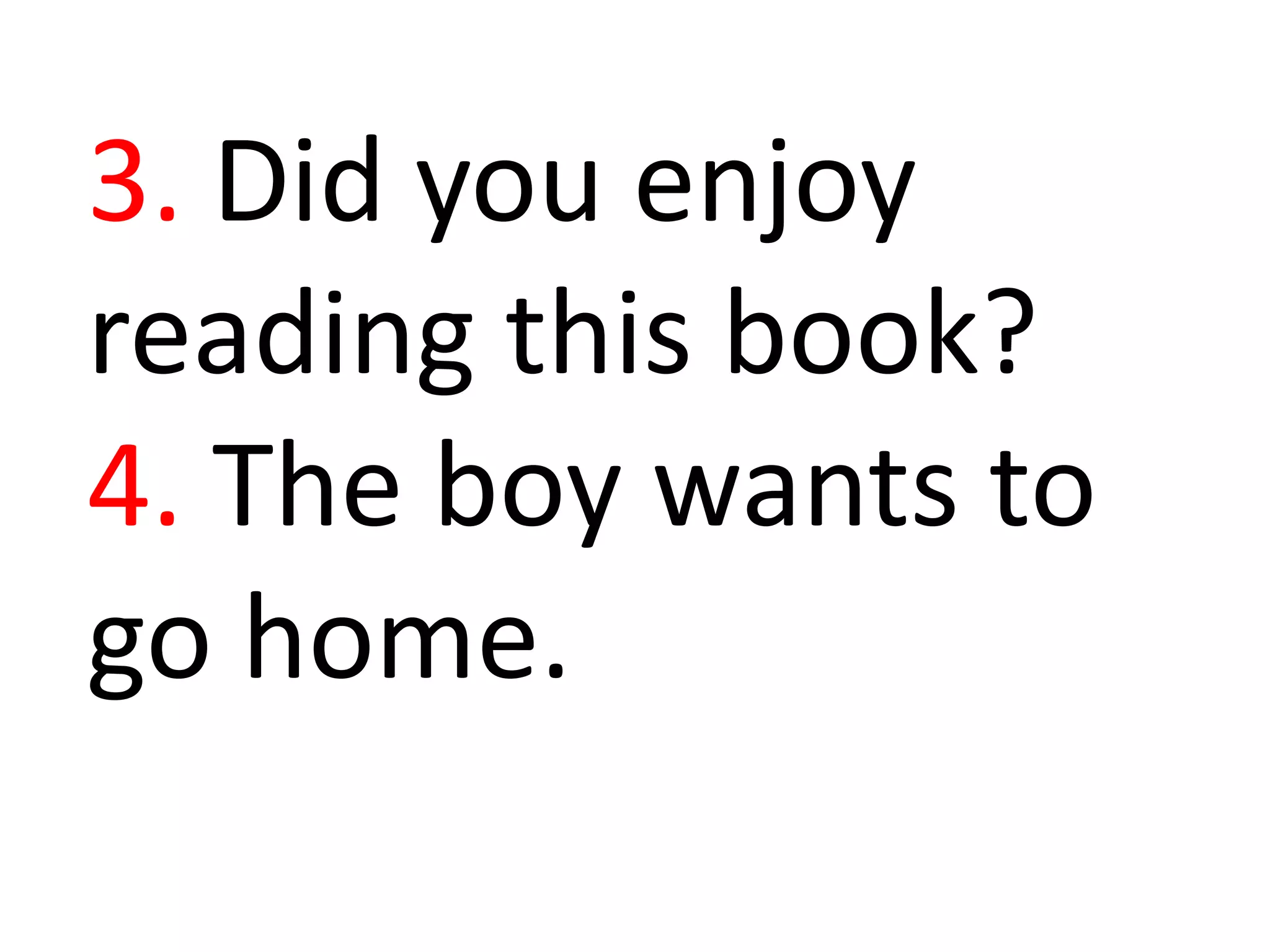
3. Did you enjoy
reading this book?
4. The boy wants to
go home.
5. Horses prefer living
in dark stables.
6. The accused refused
to answer the
question.
7. The boy denied
stealing the money.
8. To write such
rubbish is
disgraceful.
9. I dislike having to
punish my kids.
10. I will hate to do such a
thing.
ANSWERS.
1. to win the first prize
2. to solve the puzzle
3. reading this book
4. to go home
5. living in dark stables
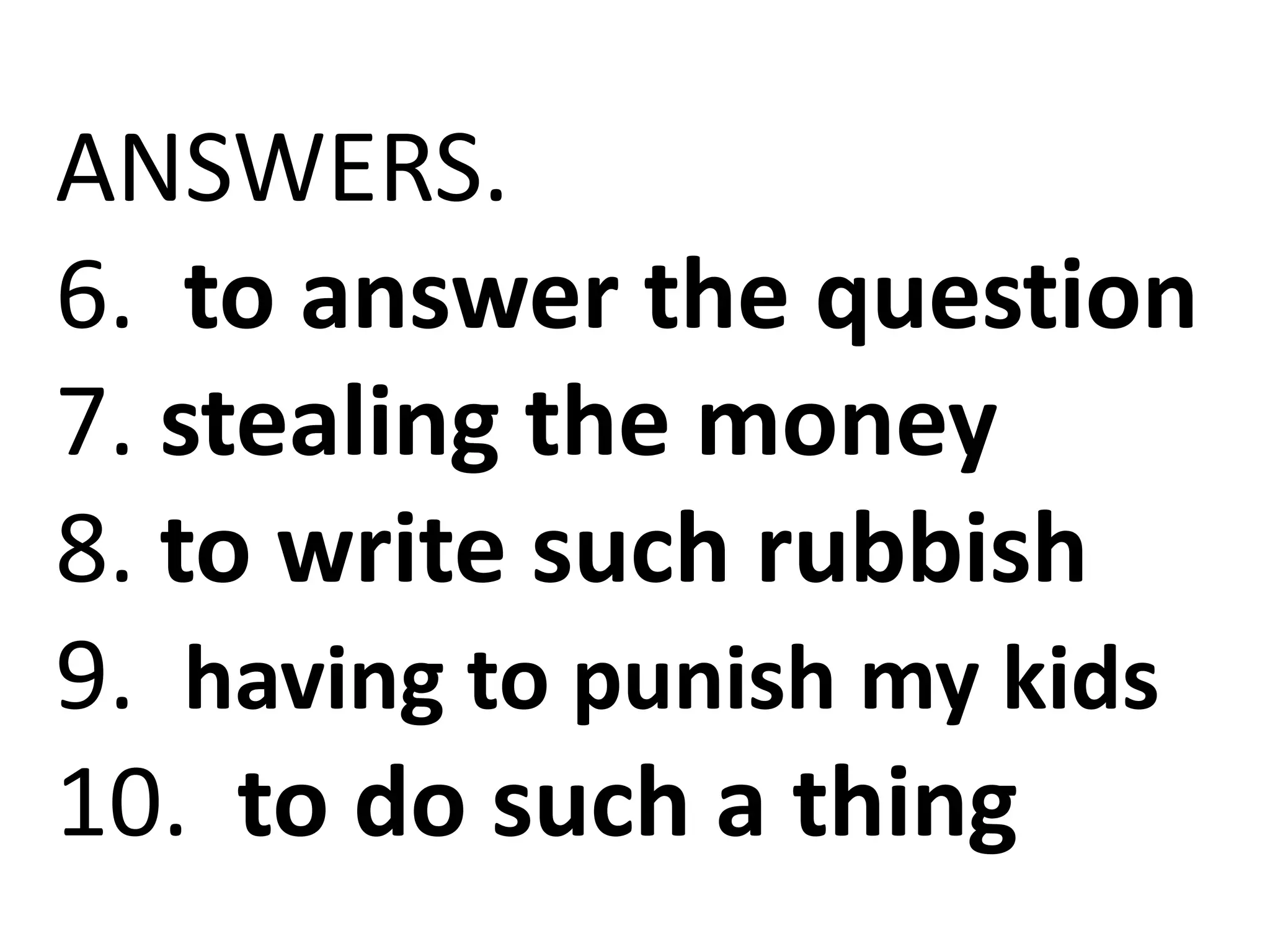
ANSWERS.
6. to answer the question
7. stealing the money
8. to write such rubbish
9. having to punish my kids
10. to do such a thing
Verb Phrases
Sometimes a sentence can
communicate its meaning with a
one-word verb. Other times,
however, a sentence will use
a verb phrase, a multi-word verb,
to express more nuanced action or
condition. A verb phrase can have
up to four parts.
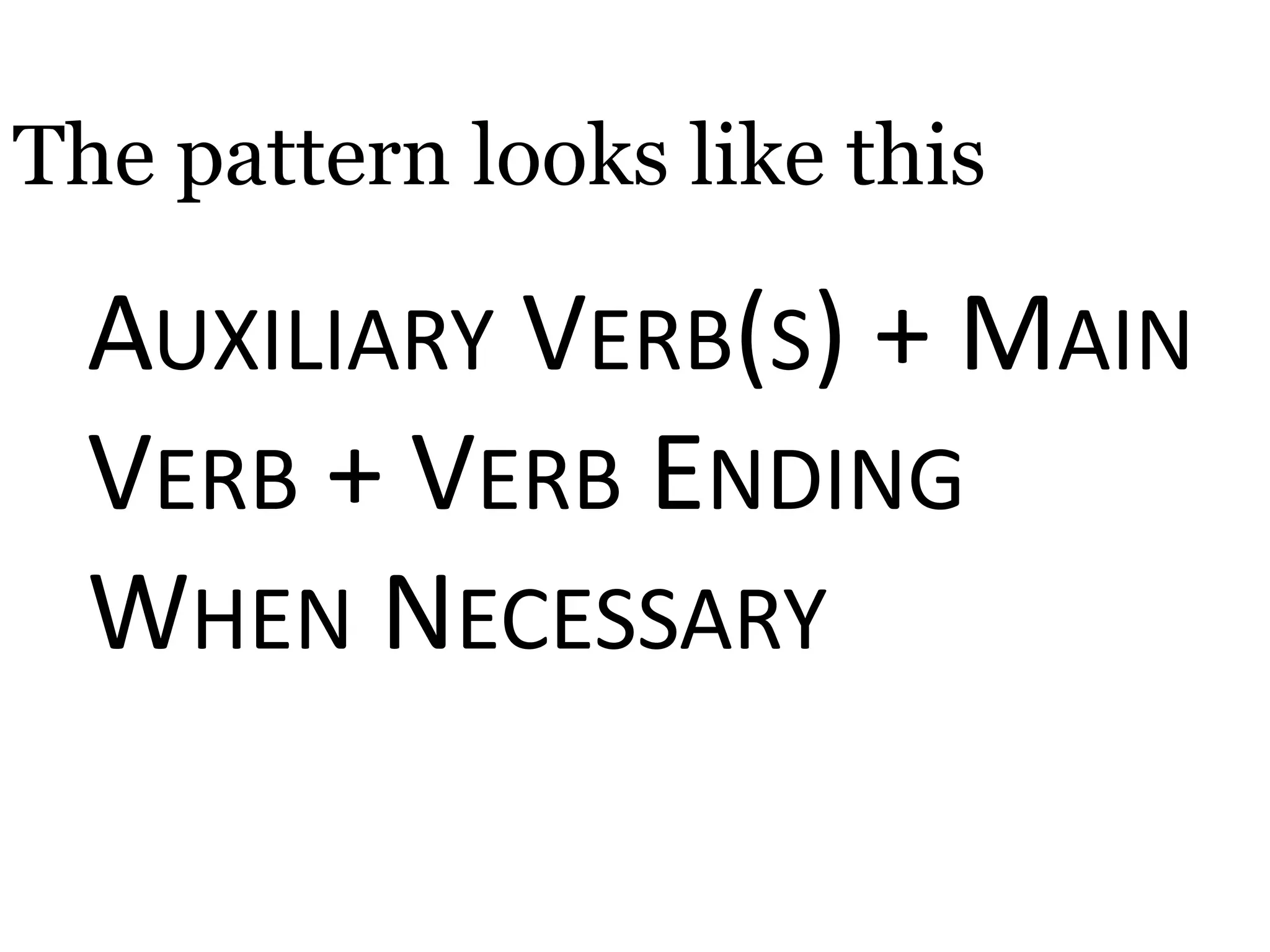
The pattern looks like this
AUXILIARY VERB(S) + MAIN
VERB + VERB ENDING
WHEN NECESSARY
Had cleaned
Had = auxiliary
verb; clean = main
verb; ed = verb ending.
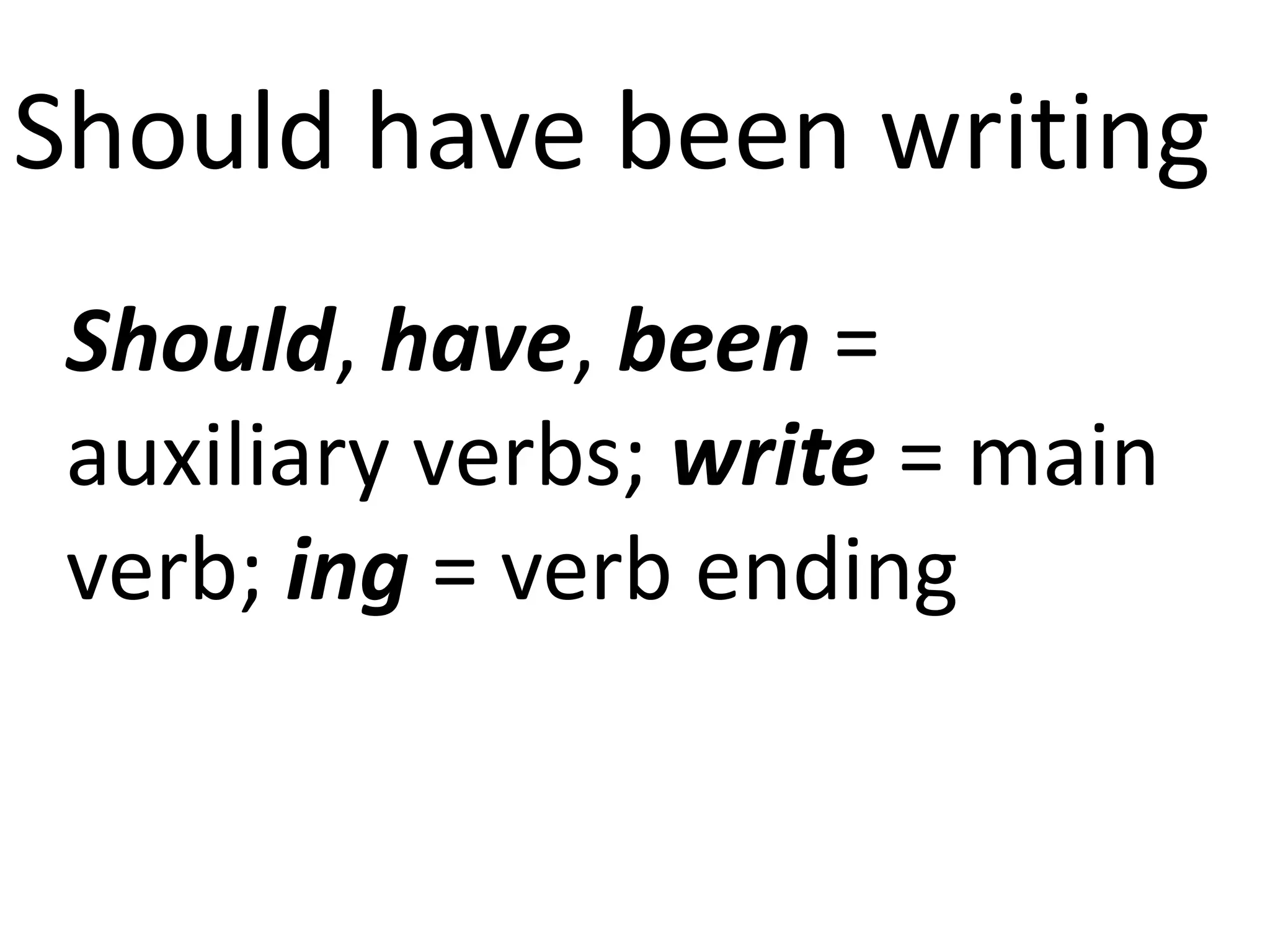
Should have been writing
Should, have, been =
auxiliary verbs; write = main
verb; ing = verb ending
Must wash
Must = auxiliary
verb; wash =
main verb.
Mom had just cleaned
the refrigerator
shelves when
Lawrence knocked
over the pitcher of
orange juice
Sarah should have been
writing her research
essay, but she couldn't
resist another short
chapter in her Stephen
King novel.
If guests are coming
for dinner, we must
wash
our smelly dog!
Directions: Pick out
the verb phrases in
the following
sentences.
1. Encouraged by her
coach’s praise, Melody
repeated her routine on
the balance beam.
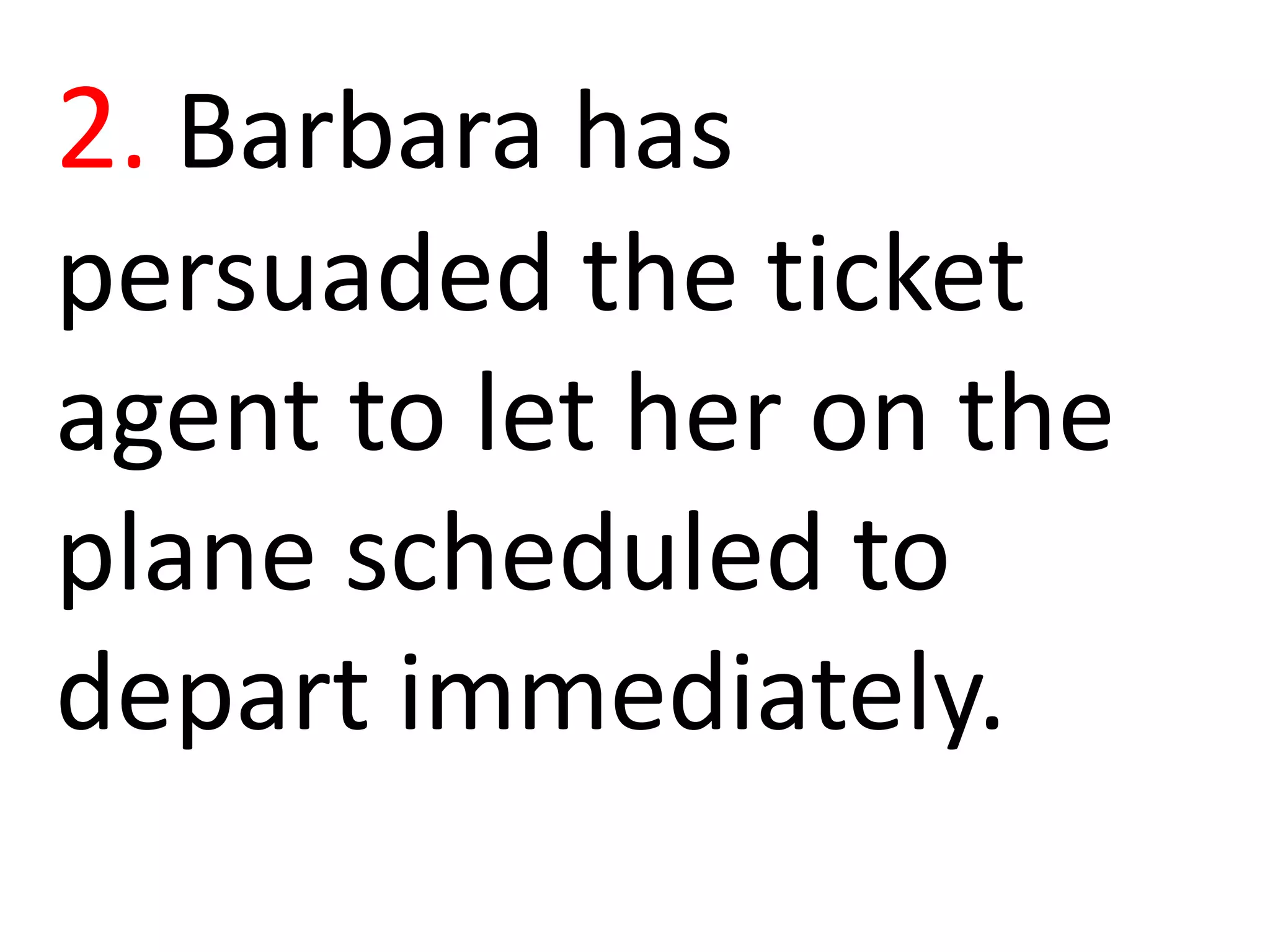
2. Barbara has
persuaded the ticket
agent to let her on the
plane scheduled to
depart immediately.
3. Though bitten
by mosquitoes, the
hikers smiled as
they neared the
peak.
4. Described as
almost a saint by his
mother, Ernesto tried
to live up to her
expectations.
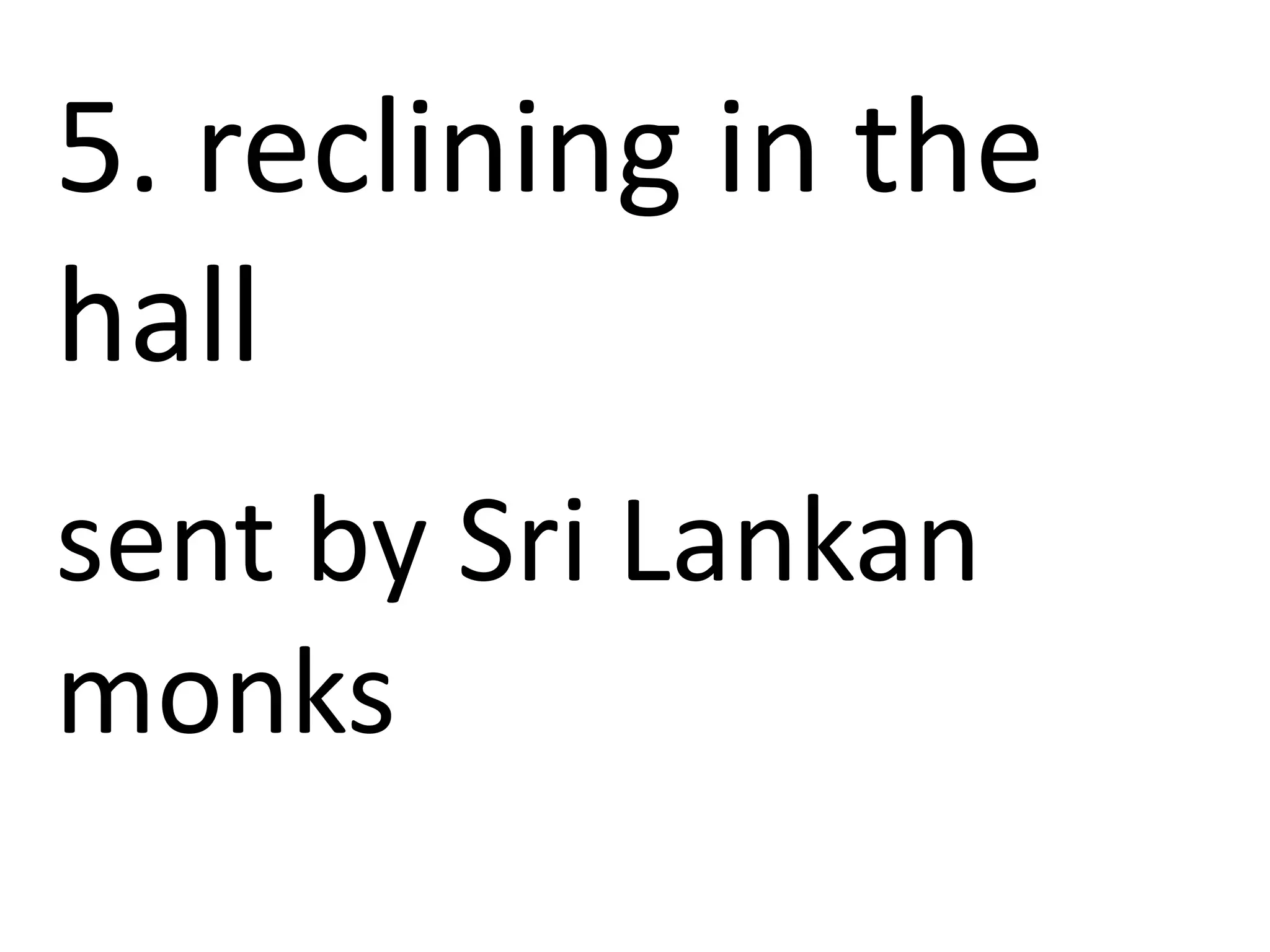
5. The jade Buddha
reclining in the hall
was one of three gifts
sent by Sri Lankan
monks.
ANSWERS
1. encouraged by her
coach’s praise
repeated her routine on
the balance beam
2. has persuaded
the ticket agent to
let her on the plane
3. bitten by mosquitoes
smiled as they
neared the peak
neared the peak
4. described as almost a saint
by his mother
tried to live up to
her expectations
5. reclining in the
hall
sent by Sri Lankan
monks

Phrase