Your E-Learning Strategy
by Gihan Perera
www.GihanPerera.com
What is e-learning?
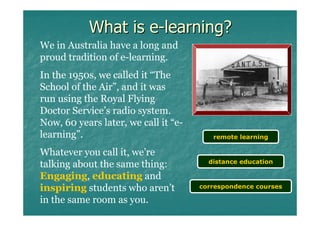
We in Australia have a long and
proud tradition of e-learning.
In the 1950s, we called it “The
School of the Air”, and it was
run using the Royal Flying
Doctor Service’s radio system.
Now, 60 years later, we call it “e-
learning”.                               remote learning

Whatever you call it, we’re
                                        distance education
talking about the same thing:
Engaging, educating and
inspiring students who aren’t         correspondence courses

in the same room as you.
What’s in it for us?
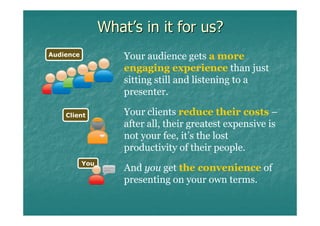
Audience             Your audience gets a more
                     engaging experience than just
                     sitting still and listening to a
                     presenter.

    Client           Your clients reduce their costs –
                     after all, their greatest expensive is
                     not your fee, it’s the lost
                     productivity of their people.
           You
                     And you get the convenience of
                     presenting on your own terms.
E-learning is simple, but not easy
Many presenters want to add e-learning to their
delivery mix – but they don’t know how to do it.
It’s simple … but not easy.
There are seven common mistakes most people
make.
Let’s look at them … and what you can do to
avoid them.
Mistake #1: Trying to sell to strangers

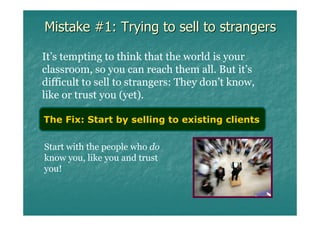
It’s tempting to think that the world is your
classroom, so you can reach them all. But it’s
difficult to sell to strangers: They don’t know,
like or trust you (yet).

The Fix: Start by selling to existing clients

Start with the people who do
know you, like you and trust
you!
Mistake #2: Casting your net too wide

It’s tempting to make your programs broad, so
they are more applicable to more people. But
the broader they are, the less valuable they are.


The Fix: Focus on a niche, not the masses

The narrower your niche, the
more valuable your e-learning
programs will be.
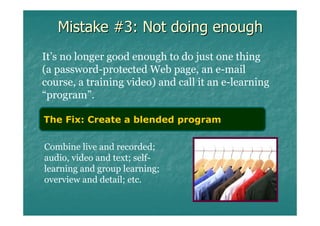
Mistake #3: Not doing enough
It’s no longer good enough to do just one thing
(a password-protected Web page, an e-mail
course, a training video) and call it an e-learning
“program”.

The Fix: Create a blended program

Combine live and recorded;
audio, video and text; self-
learning and group learning;
overview and detail; etc.
Mistake #4: Too much sizzle, not enough
                 steak
Audiences expect tangible results from your e-
learning program. You can't get by with just
pretty pictures, low-value content and your
personality.

The Fix: Engage and educate, don’t just entertain


Build in clear outcomes. Work to
a plan. Check in on progress.
Over-promise and over-deliver!
Mistake #5: Not taking it seriously

It's difficult to create an e-learning program on
weekends, tea breaks and while waiting for taxis –
especially if you’re doing it for the first time.


The Fix: Invest in making it world class

The technology and tools are
available and affordable, but you
still need to learn how to use
them well.
Mistake #6: Not having a clear strategy

The strategy that works for your face-to-face
presentations won’t necessarily work. You need
to plan and prepare differently to work with the
medium and the technology.

The Fix: Build it around a strategy

Principles of effective program
design are relevant in the on-
line world as well – but you need
to apply them differently.
Mistake #7: Not doing it!

E-learning is no longer an optional luxury that
gives you a competitive advantage. It’s fast
becoming an expectation –you’ll be at a
disadvantage if you don’t offer it.

The Fix: Just do it!

You’ll never know everything
you need to know. So don’t wait.
Start before you’re ready.
E-learning is not about the
future.
It’s about the present.
Now.


                                There’s never been a
                              better time to add it to
                                   your delivery mix.
Want to know more?
Come to the Thought Leaders
conference in Sydney.
I’ll be doing my presentation from
Perth by webinar (appropriately
enough).
In it, I’ll show you the 20 key
components of an effective e-
learning program.
     www.thoughtleaders.com.au       www.GihanPerera.com

Adding an E-Learning Strategy

  • 1.
    Your E-Learning Strategy byGihan Perera www.GihanPerera.com
  • 2.
    What is e-learning? Wein Australia have a long and proud tradition of e-learning. In the 1950s, we called it “The School of the Air”, and it was run using the Royal Flying Doctor Service’s radio system. Now, 60 years later, we call it “e- learning”. remote learning Whatever you call it, we’re distance education talking about the same thing: Engaging, educating and inspiring students who aren’t correspondence courses in the same room as you.
  • 3.
    What’s in itfor us? Audience Your audience gets a more engaging experience than just sitting still and listening to a presenter. Client Your clients reduce their costs – after all, their greatest expensive is not your fee, it’s the lost productivity of their people. You And you get the convenience of presenting on your own terms.
  • 4.
    E-learning is simple,but not easy Many presenters want to add e-learning to their delivery mix – but they don’t know how to do it. It’s simple … but not easy. There are seven common mistakes most people make. Let’s look at them … and what you can do to avoid them.
  • 5.
    Mistake #1: Tryingto sell to strangers It’s tempting to think that the world is your classroom, so you can reach them all. But it’s difficult to sell to strangers: They don’t know, like or trust you (yet). The Fix: Start by selling to existing clients Start with the people who do know you, like you and trust you!
  • 6.
    Mistake #2: Castingyour net too wide It’s tempting to make your programs broad, so they are more applicable to more people. But the broader they are, the less valuable they are. The Fix: Focus on a niche, not the masses The narrower your niche, the more valuable your e-learning programs will be.
  • 7.
    Mistake #3: Notdoing enough It’s no longer good enough to do just one thing (a password-protected Web page, an e-mail course, a training video) and call it an e-learning “program”. The Fix: Create a blended program Combine live and recorded; audio, video and text; self- learning and group learning; overview and detail; etc.
  • 8.
    Mistake #4: Toomuch sizzle, not enough steak Audiences expect tangible results from your e- learning program. You can't get by with just pretty pictures, low-value content and your personality. The Fix: Engage and educate, don’t just entertain Build in clear outcomes. Work to a plan. Check in on progress. Over-promise and over-deliver!
  • 9.
    Mistake #5: Nottaking it seriously It's difficult to create an e-learning program on weekends, tea breaks and while waiting for taxis – especially if you’re doing it for the first time. The Fix: Invest in making it world class The technology and tools are available and affordable, but you still need to learn how to use them well.
  • 10.
    Mistake #6: Nothaving a clear strategy The strategy that works for your face-to-face presentations won’t necessarily work. You need to plan and prepare differently to work with the medium and the technology. The Fix: Build it around a strategy Principles of effective program design are relevant in the on- line world as well – but you need to apply them differently.
  • 11.
    Mistake #7: Notdoing it! E-learning is no longer an optional luxury that gives you a competitive advantage. It’s fast becoming an expectation –you’ll be at a disadvantage if you don’t offer it. The Fix: Just do it! You’ll never know everything you need to know. So don’t wait. Start before you’re ready.
  • 12.
    E-learning is notabout the future. It’s about the present. Now. There’s never been a better time to add it to your delivery mix.
  • 13.
    Want to knowmore? Come to the Thought Leaders conference in Sydney. I’ll be doing my presentation from Perth by webinar (appropriately enough). In it, I’ll show you the 20 key components of an effective e- learning program. www.thoughtleaders.com.au www.GihanPerera.com