ACUTE RESPIRATORY TRACT
INFECTIONS
IMNCI Protocol (WHO)
(Integrated Management Of Neonatal and
Childhood Illnesses)
Prep & Presented by Dr. Zujaja Baloch
Instructed by Lt Col Jawad Jalil
History
Name: XYZ (Male)
Age: 15 months
Address: Gujranwala
DOA: 10 dec 2014
DOD: 14 dec 2014
Source: OPD
History (Cont)
• Presenting compliants:
Rhinorrhea 7 days
Cough 6 days
Fever 4 days
Breathing Difficulty 2 days
History (Cont)
• Birth History :
Antenatal History: Booked Case.
Natal History: FTP & SVD, delivered in Hospital.
Post Natal: Cried after birth, no jaundice or cyanosis
• Feeding History :
Exclusively Breast fed for 6 months & weaning started.
• Vaccination History :
Vaccinated according to EPI Schedule
History (Cont)
• Developmental History:
Gross Motor, Fine Motor & Social Development was fine
• Family History:
Non consangious marriage.
No history of asthma, epilepsy, TB or congenital heart diseases.
• Socioeconomic history :
Middle class family.
Examination
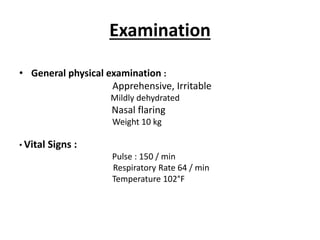
• General physical examination :
Apprehensive, Irritable
Mildly dehydrated
Nasal flaring
Weight 10 kg
• Vital Signs :
Pulse : 150 / min
Respiratory Rate 64 / min
Temperature 102°F
Systemic examination
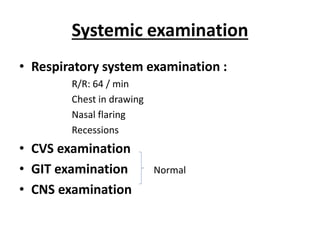
• Respiratory system examination :
R/R: 64 / min
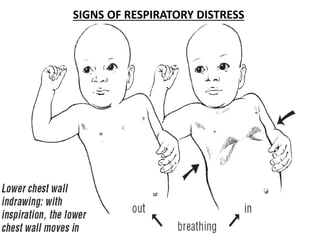
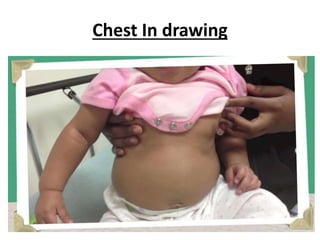
Chest in drawing
Nasal flaring
Recessions
• CVS examination
• GIT examination Normal
• CNS examination
Investigation
• Complete Blood Picture:
Hb 11.4 g/dl
TLC 7 × 10 / L
• Chest X – Ray :
Normal findings
9
DIAGNOSIS
Acute Respiratory Tract Infection
(Bronchiolitis)
Treatment
• Anti pyretic :
Paracetamol 5 ml—(SOS)
• Nebulization:
Ipratropium (Atem) 6 hourly.
• Discharged on 3rd day
Case discussion
Epidemiology
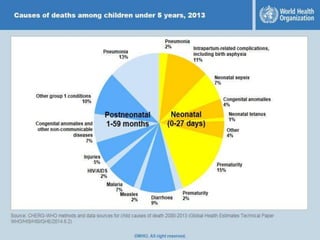
•Each year, acute respiratory
infections cause approximately 2-3
million deaths among children <5
years old and are the leading cause of
death in this age group.
ARI
• ARI is the most common of the human
ailment.
• It runs a natural course and mostly settles
without treatment and complications.
• In young infants, children and elderly there is
increased morbidity and mortality.
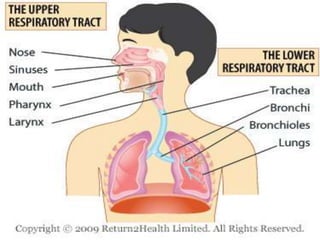
TYPES
• Acute Upper Respiratory Infections.
Mild cough, cold, pharyngitis, otitis media, and
allergic rhinitis.
• Acute Lower Respiratory Infections.
Laryngotracheitis, bronchitis, bronchiolitis,
pneumonia.
RISK FACTORS
• Low Birth Weight
• Malnutrition
• Specific nutritional deficiencies
• Climatic conditions
• Housing (over crowding, poor housing
conditions)
• Level of Industrialization
• Socio-economic Level
• Pollution
• Smoking
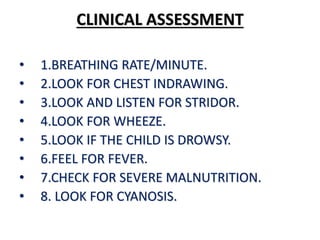
CLINICAL ASSESSMENT
• 1.BREATHING RATE/MINUTE.
• 2.LOOK FOR CHEST INDRAWING.
• 3.LOOK AND LISTEN FOR STRIDOR.
• 4.LOOK FOR WHEEZE.
• 5.LOOK IF THE CHILD IS DROWSY.
• 6.FEEL FOR FEVER.
• 7.CHECK FOR SEVERE MALNUTRITION.
• 8. LOOK FOR CYANOSIS.
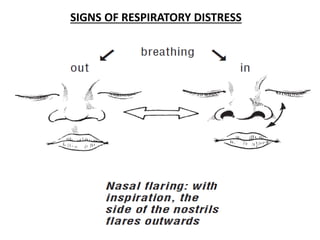
SIGNS OF RESPIRATORY DISTRESS
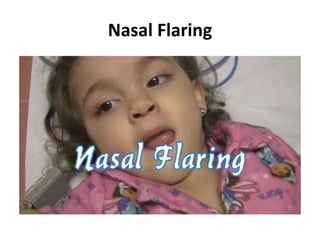
Nasal Flaring
SIGNS OF RESPIRATORY DISTRESS
Chest In drawing
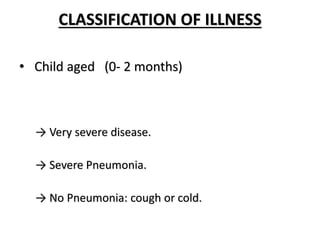
CLASSIFICATION OF ILLNESS
• Child aged (0- 2 months)
→ Very severe disease.
→ Severe Pneumonia.
→ No Pneumonia: cough or cold.
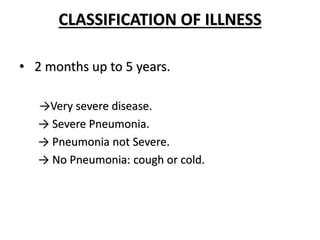
CLASSIFICATION OF ILLNESS
• 2 months up to 5 years.
→Very severe disease.
→ Severe Pneumonia.
→ Pneumonia not Severe.
→ No Pneumonia: cough or cold.
O-2 Months
• PNEUMONIA :
Fast breathing without chest in drawing
• SEVERE PNEUMONIA :
Respiratory rate
60 or more/minute
Chest in drawing
Nasal flaring
Grunting
Cyanosis
0-2 months
• VERY SEVERE DISEASE
→ Danger signs
Convulsions
Stridor
Stopped feeding well
Wheezing
Fever/ Low body temperatures
2-5 yrs
• NO PNEUMONIA :
cough or cold
• PNEUMONIA NOT SEVERE :
Fast breathing without chest in drawing
2-5 yrs
• SEVERE PNEUMONIA :
Chest in drawing
Nasal flaring
Grunting
Cyanosis
Fast breathing
• Age 2 -12 months R/R : 50 or more/ min
• Age 1- 5 years R/R : 40 or more/ min
2-5 YRS
• VERY SEVERE PNEUMONIA :
Child is unable to drink
Convulsions
Strider in the calm child
Severe malnutrition
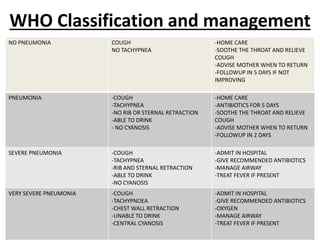
WHO Classification and management
NO PNEUMONIA COUGH
NO TACHYPNEA
-HOME CARE
-SOOTHE THE THROAT AND RELIEVE
COUGH
-ADVISE MOTHER WHEN TO RETURN
-FOLLOWUP IN 5 DAYS IF NOT
IMPROVING
PNEUMONIA -COUGH
-TACHYPNEA
-NO RIB OR STERNAL RETRACTION
-ABLE TO DRINK
- NO CYANOSIS
-HOME CARE
-ANTIBIOTICS FOR 5 DAYS
-SOOTHE THE THROAT AND RELIEVE
COUGH
-ADVISE MOTHER WHEN TO RETURN
-FOLLOWUP IN 2 DAYS
SEVERE PNEUMONIA -COUGH
-TACHYPNEA
-RIB AND STERNAL RETRACTION
-ABLE TO DRINK
-NO CYANOSIS
-ADMIT IN HOSPITAL
-GIVE RECOMMENDED ANTIBIOTICS
-MANAGE AIRWAY
-TREAT FEVER IF PRESENT
VERY SEVERE PNEUMONIA -COUGH
-TACHYPNOEA
-CHEST WALL RETRACTION
-UNABLE TO DRINK
-CENTRAL CYANOSIS
-ADMIT IN HOSPITAL
-GIVE RECOMMENDED ANTIBIOTICS
-OXYGEN
-MANAGE AIRWAY
-TREAT FEVER IF PRESENT
THANK
YOU

acute respiratory infection

  • 2.
    ACUTE RESPIRATORY TRACT INFECTIONS IMNCIProtocol (WHO) (Integrated Management Of Neonatal and Childhood Illnesses) Prep & Presented by Dr. Zujaja Baloch Instructed by Lt Col Jawad Jalil
  • 3.
    History Name: XYZ (Male) Age:15 months Address: Gujranwala DOA: 10 dec 2014 DOD: 14 dec 2014 Source: OPD
  • 4.
    History (Cont) • Presentingcompliants: Rhinorrhea 7 days Cough 6 days Fever 4 days Breathing Difficulty 2 days
  • 5.
    History (Cont) • BirthHistory : Antenatal History: Booked Case. Natal History: FTP & SVD, delivered in Hospital. Post Natal: Cried after birth, no jaundice or cyanosis • Feeding History : Exclusively Breast fed for 6 months & weaning started. • Vaccination History : Vaccinated according to EPI Schedule
  • 6.
    History (Cont) • DevelopmentalHistory: Gross Motor, Fine Motor & Social Development was fine • Family History: Non consangious marriage. No history of asthma, epilepsy, TB or congenital heart diseases. • Socioeconomic history : Middle class family.
  • 7.
    Examination • General physicalexamination : Apprehensive, Irritable Mildly dehydrated Nasal flaring Weight 10 kg • Vital Signs : Pulse : 150 / min Respiratory Rate 64 / min Temperature 102°F
  • 8.
    Systemic examination • Respiratorysystem examination : R/R: 64 / min Chest in drawing Nasal flaring Recessions • CVS examination • GIT examination Normal • CNS examination
  • 9.
    Investigation • Complete BloodPicture: Hb 11.4 g/dl TLC 7 × 10 / L • Chest X – Ray : Normal findings 9
  • 10.
    DIAGNOSIS Acute Respiratory TractInfection (Bronchiolitis)
  • 11.
    Treatment • Anti pyretic: Paracetamol 5 ml—(SOS) • Nebulization: Ipratropium (Atem) 6 hourly. • Discharged on 3rd day
  • 12.
  • 15.
    Epidemiology •Each year, acuterespiratory infections cause approximately 2-3 million deaths among children <5 years old and are the leading cause of death in this age group.
  • 16.
    ARI • ARI isthe most common of the human ailment. • It runs a natural course and mostly settles without treatment and complications. • In young infants, children and elderly there is increased morbidity and mortality.
  • 17.
    TYPES • Acute UpperRespiratory Infections. Mild cough, cold, pharyngitis, otitis media, and allergic rhinitis. • Acute Lower Respiratory Infections. Laryngotracheitis, bronchitis, bronchiolitis, pneumonia.
  • 19.
    RISK FACTORS • LowBirth Weight • Malnutrition • Specific nutritional deficiencies • Climatic conditions • Housing (over crowding, poor housing conditions) • Level of Industrialization • Socio-economic Level • Pollution • Smoking
  • 21.
    CLINICAL ASSESSMENT • 1.BREATHINGRATE/MINUTE. • 2.LOOK FOR CHEST INDRAWING. • 3.LOOK AND LISTEN FOR STRIDOR. • 4.LOOK FOR WHEEZE. • 5.LOOK IF THE CHILD IS DROWSY. • 6.FEEL FOR FEVER. • 7.CHECK FOR SEVERE MALNUTRITION. • 8. LOOK FOR CYANOSIS.
  • 22.
  • 23.
  • 24.
  • 25.
  • 26.
    CLASSIFICATION OF ILLNESS •Child aged (0- 2 months) → Very severe disease. → Severe Pneumonia. → No Pneumonia: cough or cold.
  • 27.
    CLASSIFICATION OF ILLNESS •2 months up to 5 years. →Very severe disease. → Severe Pneumonia. → Pneumonia not Severe. → No Pneumonia: cough or cold.
  • 28.
    O-2 Months • PNEUMONIA: Fast breathing without chest in drawing • SEVERE PNEUMONIA : Respiratory rate 60 or more/minute Chest in drawing Nasal flaring Grunting Cyanosis
  • 29.
    0-2 months • VERYSEVERE DISEASE → Danger signs Convulsions Stridor Stopped feeding well Wheezing Fever/ Low body temperatures
  • 30.
    2-5 yrs • NOPNEUMONIA : cough or cold • PNEUMONIA NOT SEVERE : Fast breathing without chest in drawing
  • 31.
    2-5 yrs • SEVEREPNEUMONIA : Chest in drawing Nasal flaring Grunting Cyanosis Fast breathing • Age 2 -12 months R/R : 50 or more/ min • Age 1- 5 years R/R : 40 or more/ min
  • 32.
    2-5 YRS • VERYSEVERE PNEUMONIA : Child is unable to drink Convulsions Strider in the calm child Severe malnutrition
  • 33.
    WHO Classification andmanagement NO PNEUMONIA COUGH NO TACHYPNEA -HOME CARE -SOOTHE THE THROAT AND RELIEVE COUGH -ADVISE MOTHER WHEN TO RETURN -FOLLOWUP IN 5 DAYS IF NOT IMPROVING PNEUMONIA -COUGH -TACHYPNEA -NO RIB OR STERNAL RETRACTION -ABLE TO DRINK - NO CYANOSIS -HOME CARE -ANTIBIOTICS FOR 5 DAYS -SOOTHE THE THROAT AND RELIEVE COUGH -ADVISE MOTHER WHEN TO RETURN -FOLLOWUP IN 2 DAYS SEVERE PNEUMONIA -COUGH -TACHYPNEA -RIB AND STERNAL RETRACTION -ABLE TO DRINK -NO CYANOSIS -ADMIT IN HOSPITAL -GIVE RECOMMENDED ANTIBIOTICS -MANAGE AIRWAY -TREAT FEVER IF PRESENT VERY SEVERE PNEUMONIA -COUGH -TACHYPNOEA -CHEST WALL RETRACTION -UNABLE TO DRINK -CENTRAL CYANOSIS -ADMIT IN HOSPITAL -GIVE RECOMMENDED ANTIBIOTICS -OXYGEN -MANAGE AIRWAY -TREAT FEVER IF PRESENT
  • 36.