ACUTE CHOLECYSTITIS
LT COL SM SHAHADAT HOSSAIN
MCPS,FCPS( Surgery),FCPS(Thoracic Surgery)
Adv Trg on Thoracoscopy,CNUH,South Korea
ACUTE CHOLECYSTITIS
 Commonly, it occurs in a patient with pre-
existing chronic cholecystitis but often also can
occur as a first presentation.
 Usual cause is impacted gallstone in the
Hartmann’s pouch, obstructing cystic duct.
Causative bacteria
 E. coli—most common
 Klebsiella, Pseudomonas, Proteus
 Strep. faecalis
 Salmonella
 Clostridium welchii
Classification
1. Acute calculous cholecystitis.
2. Acute acalculous cholecystitis (10%).
Mode of Infection
 Haematogenous through hepatic artery—cystic
artery.
 Portal vein.
 Through bile.
Pathology of Acute Cholecystitis
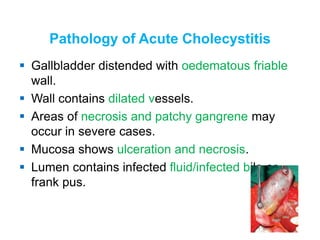
 Gallbladder distended with oedematous friable
wall.
 Wall contains dilated vessels.
 Areas of necrosis and patchy gangrene may
occur in severe cases.
 Mucosa shows ulceration and necrosis.
 Lumen contains infected fluid/infected bile or
frank pus.
Clinical Features
 Sudden onset of pain in the right
hypochondrium, with tenderness, guarding, and
rigidity.
 Fever, nausea (25%).
 Jaundice.
 Tachycardia.
 Palpable, tender, smooth, soft gallbladder.
 Area of hyperaesthesia between 9th and 11th
ribs right posteriorly (Boas’s sign).
 Murphy’s sign: positive.
Investigations
 Total blood count: neutrophilia.
 LFT increased serum bilirubin.
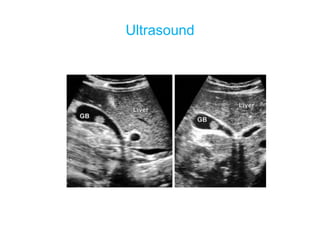
 Ultrasound abdomen—reveals presence or
absence of gallstones; and thickening of
gallbladder wall.
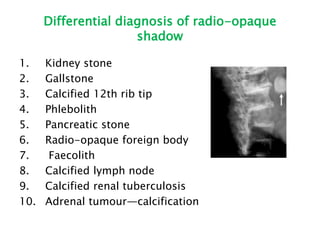
 Plain X-ray abdomen—10% of gallstones are
radio-opaque.
 HIDA radioisotope study; Non-visualisation of
gallbladder.
 CT scan to identify perforation, impacted stone,
wall thickness and oedema.
Differential diagnosis of radio-opaque
shadow
1. Kidney stone
2. Gallstone
3. Calcified 12th rib tip
4. Phlebolith
5. Pancreatic stone
6. Radio-opaque foreign body
7. Faecolith
8. Calcified lymph node
9. Calcified renal tuberculosis
10. Adrenal tumour—calcification
Ultrasound
Complications of Acute Cholecystitis
 Perforation.
 Peritonitis.
 Empyema gallbladder.
 Cholecystoduodenal, cholecystobiliary fistula,
mirrrizi's syndrome.
 Pericholecystitic abscess.
 Cholangitis and septicaemia.
Differential diagnosis
 Duodenal ulcer perforation
 Acute pancreatitis
 Acute appendicitis
 Acute pyelonephritis
 Lobar pneumonia,
 Myocardial infarction
Treatment
Conservative treatment (95%):
i. NPO-Nil per mouth.
ii. IV fluids.
iii. Analgesics and antispasmodics.
iv. Broad spectrum antibiotics (i.e.cefuroxime,
ceftriaxone, metronidazole).
After 6 weeks elective cholecystectomy.
EMPYEMA GALLBLADDER
 It is a type of acute cholecystitis wherein the
gallbladder is filled with pus.
 When mucocele of the gallbladder gets
infected.
Treatment
 Antibiotics: cefotaxime, quinolones,
ceftriaxone.
 Cholecystectomy—an emergency procedure.
 Cholecystostomy with foley’s or malecot’s
catheter kept in situ.
 After 6 weeks, cholecystectomy is done.
MUCOCELE OF THE GALLBLADDER
 It is due to obstruction of the cystic
duct by a stone in the neck
(Hartmann’s pouch) of the gallbladder,
without infection or inflammation.
 This causes absorption of all bile and
secretion of mucous allowing
gallbladder to distend causing
mucocele of the gallbladder.
 Content is usually sterile.
Features:
 Painless swelling in the right
hypochondrium.
 Non-tender, smooth, soft, globular,
palpable gallbladder.
Treatment:
 Cholecystectomy

Acute cholecystitis

  • 1.
    ACUTE CHOLECYSTITIS LT COLSM SHAHADAT HOSSAIN MCPS,FCPS( Surgery),FCPS(Thoracic Surgery) Adv Trg on Thoracoscopy,CNUH,South Korea
  • 2.
    ACUTE CHOLECYSTITIS  Commonly,it occurs in a patient with pre- existing chronic cholecystitis but often also can occur as a first presentation.  Usual cause is impacted gallstone in the Hartmann’s pouch, obstructing cystic duct.
  • 3.
    Causative bacteria  E.coli—most common  Klebsiella, Pseudomonas, Proteus  Strep. faecalis  Salmonella  Clostridium welchii
  • 4.
    Classification 1. Acute calculouscholecystitis. 2. Acute acalculous cholecystitis (10%).
  • 5.
    Mode of Infection Haematogenous through hepatic artery—cystic artery.  Portal vein.  Through bile.
  • 6.
    Pathology of AcuteCholecystitis  Gallbladder distended with oedematous friable wall.  Wall contains dilated vessels.  Areas of necrosis and patchy gangrene may occur in severe cases.  Mucosa shows ulceration and necrosis.  Lumen contains infected fluid/infected bile or frank pus.
  • 7.
    Clinical Features  Suddenonset of pain in the right hypochondrium, with tenderness, guarding, and rigidity.  Fever, nausea (25%).  Jaundice.  Tachycardia.  Palpable, tender, smooth, soft gallbladder.  Area of hyperaesthesia between 9th and 11th ribs right posteriorly (Boas’s sign).  Murphy’s sign: positive.
  • 8.
    Investigations  Total bloodcount: neutrophilia.  LFT increased serum bilirubin.  Ultrasound abdomen—reveals presence or absence of gallstones; and thickening of gallbladder wall.  Plain X-ray abdomen—10% of gallstones are radio-opaque.  HIDA radioisotope study; Non-visualisation of gallbladder.  CT scan to identify perforation, impacted stone, wall thickness and oedema.
  • 9.
    Differential diagnosis ofradio-opaque shadow 1. Kidney stone 2. Gallstone 3. Calcified 12th rib tip 4. Phlebolith 5. Pancreatic stone 6. Radio-opaque foreign body 7. Faecolith 8. Calcified lymph node 9. Calcified renal tuberculosis 10. Adrenal tumour—calcification
  • 10.
  • 11.
    Complications of AcuteCholecystitis  Perforation.  Peritonitis.  Empyema gallbladder.  Cholecystoduodenal, cholecystobiliary fistula, mirrrizi's syndrome.  Pericholecystitic abscess.  Cholangitis and septicaemia.
  • 12.
    Differential diagnosis  Duodenalulcer perforation  Acute pancreatitis  Acute appendicitis  Acute pyelonephritis  Lobar pneumonia,  Myocardial infarction
  • 13.
    Treatment Conservative treatment (95%): i.NPO-Nil per mouth. ii. IV fluids. iii. Analgesics and antispasmodics. iv. Broad spectrum antibiotics (i.e.cefuroxime, ceftriaxone, metronidazole). After 6 weeks elective cholecystectomy.
  • 14.
    EMPYEMA GALLBLADDER  Itis a type of acute cholecystitis wherein the gallbladder is filled with pus.  When mucocele of the gallbladder gets infected.
  • 15.
    Treatment  Antibiotics: cefotaxime,quinolones, ceftriaxone.  Cholecystectomy—an emergency procedure.  Cholecystostomy with foley’s or malecot’s catheter kept in situ.  After 6 weeks, cholecystectomy is done.
  • 16.
    MUCOCELE OF THEGALLBLADDER  It is due to obstruction of the cystic duct by a stone in the neck (Hartmann’s pouch) of the gallbladder, without infection or inflammation.  This causes absorption of all bile and secretion of mucous allowing gallbladder to distend causing mucocele of the gallbladder.  Content is usually sterile.
  • 17.
    Features:  Painless swellingin the right hypochondrium.  Non-tender, smooth, soft, globular, palpable gallbladder. Treatment:  Cholecystectomy