ACUTE CHEST PAIN
ACUTE CORONARY SYNDROMES
CAUSES
• Angina & MI
• Muskuloskeletal pain
• Esophagitis & Esophagial spasm
• Pleurisy
• Pneumothorax
• Costochondritis
• Aortic dissection
• Pancreatititis & Cholecystitis
• Root pain
• Pericarditis
• Fibromyalgia
• Mediastinitis
APPROACH
• Asess general condition sick/not sick
• Check vitals
• Short history
• Quick examination
• Severe pain give Morphine/Pethidine(C/I Br Asthma)
• Get ECG Done
• S/L Sorbitrate/Aspirin 325mg
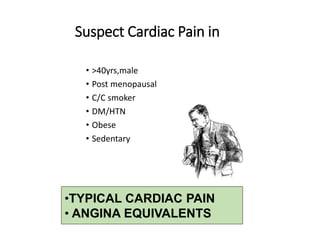
Suspect Cardiac Pain in
• >40yrs,male
• Post menopausal
• C/C smoker
• DM/HTN
• Obese
• Sedentary
•TYPICAL CARDIAC PAIN
• ANGINA EQUIVALENTS
PHYSICAL FINDINGS
• Apprehensive look, Angor amini
• Sweating, cold skin,Hypotension,
• Tachy/Bradycardia,Arrythmias
• Wide/Narrow pulse pressure
• Dyskinetic Apex
• S3,S4,Apical sys murmur
• Pericardial rub
• Basal creps
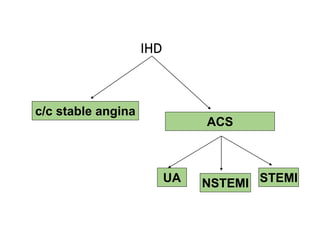
IHD
c/c stable angina
ACS
UA NSTEMI STEMI
ACS
60% UA
40%MI
2/3NSTEMI 1/3STEMI
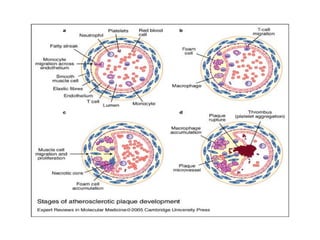
PATHOPHYSIOLOGY
1. A/C plaque change
2. Dynamic obstruction (vasospastic)
3. Progressive mechanical obstruction
4. INCREASED myocardial O2 demand
5. Decreased supply of O2
UA & NSTEMI
UA Presents as
•Rest angina >10 minutes
•Severe & new onset angina
•Crescendo angina
NSTEMI
•Above features + evidence of
myocardial necrosis
ECG
1. Labile ST Segment depression
2. T Inversion
3. Transient ST Elevation
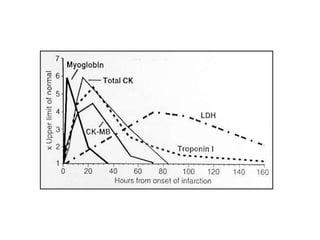
Cardiac Specific markers
1. Myoglobin- first to rise (with in 2 hrs) less value
2. Troponin I- has got prognostic
value,PREFFERED MARKER
3. CPK-MB-
4. LDH 1
NOT elevated in Pts with UA
Rx of UA / NSTEMI
GOALS
1. Prevention of Thrombus
2. Restoration of coronary blood flow
3. Reduction in myocardial o2 demand
• Supplemental o2
• Morphine SO4
1. Reduces pain
2. Causes venodialatation
3. Arteriolar dialatation
4. Vagotonic effect
5. Useful in pul edema
Dosage – 2 -4 mg Iv Rpted every 5 mts or until S/E ensue
S/E – Hypotension,Nausea, vomitting,Apnea,Urinary retention
Antiplatelet therapy
1. Aspirin-325 mg non enteric chew stat if no c/I . Later
150 mg /day
2. Clopidogrel- 300mg stat & 75 mg / d
3. Combination – ecospirin + clopidogrel
4. Gp 2 b 3a antagonists
1. Absciximab
2. Epifibatide
3. tirofiban
Anticoagulant therapy
1. UFH – 50 – 60 IU/kg Max (5000IU) IV bolus-----
>12IU/kg/hr (Max 1000) aPTT Titrated to 1.5 to 2.5
2. LMWH-
1. Dalteparin(Fragmin)
2. Enoxaparin
Heparin induced thrombocytopenia
1. PLT Count Dec after 5 – 7 days
2. Occurs in 1 – 3% people
3. LEPIRUDIN & ARGATROBAN used instead
Anti ischemic Rx
• Nitrates – NTG 0.5 mg s/l,Sorbitrate 5 mg s/l
C/I – Hypotension,
1. RVMI
2. Tachycardia >100bpm
• BETA Blockers
• Metoprolol 12.5 1 BD,Atenolol 25 1 OD,Carvedilol 3.125 1 BD,Betaxolol
• Decreases myocardial o2 demand
• C/I – Hypotension,
HR <60 bpm
Marked 1 AV Block
BR Asthma
Complete HB
1. CCB-
2. ACEI – Enalapril 2.5 ½ OD / BD
1. Inhibits cardiac remodelling
3. Thrombolytic Therapy – not indicated
4. Coronary Revascularisation (PCI,CABG)
5. RISK FACTOR MODIFICATION
1. Stop smoking
2. Lose weight (BMI<25 Desirable,WC < 40in M & <35in F)
3. Exercise
4. BP Controll
5. DM & Hyperlipidemia management
STEMI
• MC Cause of death is VF
DIAGNOSIS ( 2 or > of the following)
1. H/o Prolonged chest discomfort / Angina equivalent >30 mts
2. 2mm or < STE in precordial leads OR 1mm or > STE in Inferior leads
3. Elevated biomarkers
History
1. Typical cardiac pain / Angina equivalent
2. Silent MI- present with confusion,dyspnoea,unexplained hypotension
1. Elderly
2. Diabetics
3. Hypertensives
4. Post op Pts
O/E
1. PSM Mitral area
2. RVMI – Cardiogenic shock,hypotension,^JVP No features of pul
edema
ECG
1. Hyperacute T Waves
2. ST Segment changes
1. 2, 3 aVF - IWMI
2. V1 V2 V3 – AWMI
3. 1 aVL V5 V6- Lateral
4. PWMI- reciprocal changes in anterior leads
5. RVMI – STE in V4R Q Waves
Investigations
• FLP/ FBS
• Trop I,CPK MB
• CXR
• ECG
• PT
• ECHO
Rx
1. General measures
1. Continuous ECG, BP, SpO2 measurement
2. O2
3. Two IV Lines
4. RVMI – Start IV Fluids. C/I in Pul Edema
5. CCU
Medications
•Aspirin-325 mg non enteric chew stat if no c/I . Later
150 mg /day
•Clopidogrel- 300mg stat & 75 mg / d
•No role for Gp 2 b 3a antagonists
•Nitrates
•Beta Blockers
•Atropine 0.6mg iv (Max 2mg) For bradycardia
•Morphine+ Phenergan
Contd
• THROMBOLYTIC THERAPY
IND- STE 2mm or > in precordial leads
STE 1mm or>in Inf leads
Fresh LBBB
Posterior MI
THROMBOLYTIC THERAPY
• C/I
1. H/O ICH
2. AVM, Aneurysms
3. Intracranial tumours
4. Ischemic stroke <3 months
5. Aortic dissection
6. Major Trauma with in 3 months
7. High BP , SBP>180 mm DBP >110mm
8. Bleeding diathesis
9. Previous STK use > 5days & <2 yr
10. >12 hrs after onset of pain
Administration
• 1.5 million IU STK in 100 ml NS over 1HR
• Inj Avil + Efcorlin given prior
• ECG & BP monitoring
Adverse reactions
• Life threatening ICH
• Hypotension
• Bleeding from puncture sites
• allergy
Signs of therapeutic Efficacy
• Symptomatic improvement
• ECG Change
1. Late diastolic VPCs
2. AIVR
3. Fall of STE
• Early peaking & Fall in Enzyme levels
•Heparin is used If infarct is large or if pain continues
Periinfarct management
• Bed Rest
Absolute bed rest for 12 hrs
Sit upright in 24hrs
Ambulated by 2nd & 3rd day
After 3rd day -> gradually ^ ambulation
• Low residue liquid Diet
• Bowels Avoid dstraining at stools . Give laxatives
• Sedation – Alprax 0.25mg 1 HS, Lorazepam 1mg
Contd
•Statins - HMG Co A Reductase inhibitors
ATORVASTATIN 10-80 mg/day
Started in those with Dyslipidemias
Target LDL <100 in all Pts with CAD
<70 in those with very high risk
S/E
Hepatotoxicity
Myopathy
Rhabdomyolysis
RISK ASSESMENT AFTER MI
• NON INVASIVE- Stress Test evaluation (TMT)
•Done 3-6 wks after D/D from Hospital
• INVASIVE- Cardiac catheterisation
• Done in those with R/C angina,ischemia,CCF,Mechanical complication of MI
ATIONS
• A/C pericarditis
• Occurs in 15-20 % pts with large MI
• Pleuritic type of chest pain with friction rub
• Diffuse STE in ECG
• Rx- Analgesics,>Aspirin 650 ,Indop 25-50 qid
• Steroids
• Avoided in 1st 4 wks ( risk of ventricular rupture)
• Dresslers syndrome
• A I process
• ^ ESR,Pericardial effusion,fever
S
•WITH HEMODYNAMIC COMPROMISE REQUIRE
PROMPT Rx
•Left antr fascicle block
•Bradycardia - in MI involving R coro A
• Observation
• Atropine
• pacing
•1st degree HB – no Rx needed
•2nd degree HB
• Mobitz 1- IWMI > No Rx
• Mobitz 2 – AWMI > Temporary pacing
• 3rd degree AV Block & Asystole - Trans venous pacing
• SVT
• Sinus Tachycardia
• PSVT
• AF & AFl
• Accelerated junctional rytham
Ventricular arrythmias
• VPCs
• AIVR- Ventricular rate>60 – 125 bpm
• NSVT
• VT
• Stable – Inj xylocard 50 mg IV
• Inj Amiodarone75 stat & 500 mg in 500 ml NS Iv infusion
• Not stable - DC Version 200J
•VF – good prognosis – DC version needed
A/C LVF
Avoid IV Fluids
Morphine is helpful
Diuretics , ACEI,Nitrates
RVMI – in IWMI & PWMI
Cardiogenic shock
Give IVF,support with Dopamine , Dobutamine
Intra aortic balloon pump
Mechanical complications
•Aneurysm – due to wall motion abnormality
• A/W Mural Thrombi
• Persistent STE > 1 monthsEmpirical anticoagulation (Warf) INR 2-3
•Pappillary M Rupture
• Postr medial lip is mostly affected
• Echo, Doppler diagnostic
• Ventricular septal rupture A/W AWMI
• Free wall rupture
• Catastrophic complication
• Occurs in hypertensives with large mural thrombi
• Common after 1st week
FOLLOW UP CARE
•Continue drugs & Dose Adjustment
•Every 4- 6 months in 1st year
•Thereafter yrly & SOS
Acute chest pain medicos notes-com

Acute chest pain medicos notes-com

  • 1.
    ACUTE CHEST PAIN ACUTECORONARY SYNDROMES
  • 2.
    CAUSES • Angina &MI • Muskuloskeletal pain • Esophagitis & Esophagial spasm • Pleurisy • Pneumothorax • Costochondritis • Aortic dissection • Pancreatititis & Cholecystitis • Root pain • Pericarditis • Fibromyalgia • Mediastinitis
  • 3.
    APPROACH • Asess generalcondition sick/not sick • Check vitals • Short history • Quick examination • Severe pain give Morphine/Pethidine(C/I Br Asthma) • Get ECG Done • S/L Sorbitrate/Aspirin 325mg
  • 4.
    Suspect Cardiac Painin • >40yrs,male • Post menopausal • C/C smoker • DM/HTN • Obese • Sedentary •TYPICAL CARDIAC PAIN • ANGINA EQUIVALENTS
  • 5.
    PHYSICAL FINDINGS • Apprehensivelook, Angor amini • Sweating, cold skin,Hypotension, • Tachy/Bradycardia,Arrythmias • Wide/Narrow pulse pressure • Dyskinetic Apex • S3,S4,Apical sys murmur • Pericardial rub • Basal creps
  • 6.
  • 7.
  • 8.
    PATHOPHYSIOLOGY 1. A/C plaquechange 2. Dynamic obstruction (vasospastic) 3. Progressive mechanical obstruction 4. INCREASED myocardial O2 demand 5. Decreased supply of O2
  • 10.
    UA & NSTEMI UAPresents as •Rest angina >10 minutes •Severe & new onset angina •Crescendo angina NSTEMI •Above features + evidence of myocardial necrosis
  • 11.
    ECG 1. Labile STSegment depression 2. T Inversion 3. Transient ST Elevation
  • 12.
    Cardiac Specific markers 1.Myoglobin- first to rise (with in 2 hrs) less value 2. Troponin I- has got prognostic value,PREFFERED MARKER 3. CPK-MB- 4. LDH 1 NOT elevated in Pts with UA
  • 14.
    Rx of UA/ NSTEMI GOALS 1. Prevention of Thrombus 2. Restoration of coronary blood flow 3. Reduction in myocardial o2 demand
  • 15.
    • Supplemental o2 •Morphine SO4 1. Reduces pain 2. Causes venodialatation 3. Arteriolar dialatation 4. Vagotonic effect 5. Useful in pul edema Dosage – 2 -4 mg Iv Rpted every 5 mts or until S/E ensue S/E – Hypotension,Nausea, vomitting,Apnea,Urinary retention
  • 16.
    Antiplatelet therapy 1. Aspirin-325mg non enteric chew stat if no c/I . Later 150 mg /day 2. Clopidogrel- 300mg stat & 75 mg / d 3. Combination – ecospirin + clopidogrel 4. Gp 2 b 3a antagonists 1. Absciximab 2. Epifibatide 3. tirofiban
  • 17.
    Anticoagulant therapy 1. UFH– 50 – 60 IU/kg Max (5000IU) IV bolus----- >12IU/kg/hr (Max 1000) aPTT Titrated to 1.5 to 2.5 2. LMWH- 1. Dalteparin(Fragmin) 2. Enoxaparin Heparin induced thrombocytopenia 1. PLT Count Dec after 5 – 7 days 2. Occurs in 1 – 3% people 3. LEPIRUDIN & ARGATROBAN used instead
  • 18.
    Anti ischemic Rx •Nitrates – NTG 0.5 mg s/l,Sorbitrate 5 mg s/l C/I – Hypotension, 1. RVMI 2. Tachycardia >100bpm
  • 19.
    • BETA Blockers •Metoprolol 12.5 1 BD,Atenolol 25 1 OD,Carvedilol 3.125 1 BD,Betaxolol • Decreases myocardial o2 demand • C/I – Hypotension, HR <60 bpm Marked 1 AV Block BR Asthma Complete HB
  • 20.
    1. CCB- 2. ACEI– Enalapril 2.5 ½ OD / BD 1. Inhibits cardiac remodelling 3. Thrombolytic Therapy – not indicated 4. Coronary Revascularisation (PCI,CABG) 5. RISK FACTOR MODIFICATION 1. Stop smoking 2. Lose weight (BMI<25 Desirable,WC < 40in M & <35in F) 3. Exercise 4. BP Controll 5. DM & Hyperlipidemia management
  • 21.
    STEMI • MC Causeof death is VF DIAGNOSIS ( 2 or > of the following) 1. H/o Prolonged chest discomfort / Angina equivalent >30 mts 2. 2mm or < STE in precordial leads OR 1mm or > STE in Inferior leads 3. Elevated biomarkers
  • 22.
    History 1. Typical cardiacpain / Angina equivalent 2. Silent MI- present with confusion,dyspnoea,unexplained hypotension 1. Elderly 2. Diabetics 3. Hypertensives 4. Post op Pts
  • 23.
    O/E 1. PSM Mitralarea 2. RVMI – Cardiogenic shock,hypotension,^JVP No features of pul edema
  • 24.
    ECG 1. Hyperacute TWaves 2. ST Segment changes 1. 2, 3 aVF - IWMI 2. V1 V2 V3 – AWMI 3. 1 aVL V5 V6- Lateral 4. PWMI- reciprocal changes in anterior leads 5. RVMI – STE in V4R Q Waves
  • 25.
    Investigations • FLP/ FBS •Trop I,CPK MB • CXR • ECG • PT • ECHO
  • 26.
    Rx 1. General measures 1.Continuous ECG, BP, SpO2 measurement 2. O2 3. Two IV Lines 4. RVMI – Start IV Fluids. C/I in Pul Edema 5. CCU
  • 27.
    Medications •Aspirin-325 mg nonenteric chew stat if no c/I . Later 150 mg /day •Clopidogrel- 300mg stat & 75 mg / d •No role for Gp 2 b 3a antagonists •Nitrates •Beta Blockers •Atropine 0.6mg iv (Max 2mg) For bradycardia •Morphine+ Phenergan
  • 28.
    Contd • THROMBOLYTIC THERAPY IND-STE 2mm or > in precordial leads STE 1mm or>in Inf leads Fresh LBBB Posterior MI
  • 29.
    THROMBOLYTIC THERAPY • C/I 1.H/O ICH 2. AVM, Aneurysms 3. Intracranial tumours 4. Ischemic stroke <3 months 5. Aortic dissection 6. Major Trauma with in 3 months 7. High BP , SBP>180 mm DBP >110mm 8. Bleeding diathesis 9. Previous STK use > 5days & <2 yr 10. >12 hrs after onset of pain
  • 30.
    Administration • 1.5 millionIU STK in 100 ml NS over 1HR • Inj Avil + Efcorlin given prior • ECG & BP monitoring Adverse reactions • Life threatening ICH • Hypotension • Bleeding from puncture sites • allergy
  • 31.
    Signs of therapeuticEfficacy • Symptomatic improvement • ECG Change 1. Late diastolic VPCs 2. AIVR 3. Fall of STE • Early peaking & Fall in Enzyme levels
  • 32.
    •Heparin is usedIf infarct is large or if pain continues Periinfarct management • Bed Rest Absolute bed rest for 12 hrs Sit upright in 24hrs Ambulated by 2nd & 3rd day After 3rd day -> gradually ^ ambulation • Low residue liquid Diet • Bowels Avoid dstraining at stools . Give laxatives • Sedation – Alprax 0.25mg 1 HS, Lorazepam 1mg
  • 33.
    Contd •Statins - HMGCo A Reductase inhibitors ATORVASTATIN 10-80 mg/day Started in those with Dyslipidemias Target LDL <100 in all Pts with CAD <70 in those with very high risk S/E Hepatotoxicity Myopathy Rhabdomyolysis
  • 34.
    RISK ASSESMENT AFTERMI • NON INVASIVE- Stress Test evaluation (TMT) •Done 3-6 wks after D/D from Hospital • INVASIVE- Cardiac catheterisation • Done in those with R/C angina,ischemia,CCF,Mechanical complication of MI
  • 35.
    ATIONS • A/C pericarditis •Occurs in 15-20 % pts with large MI • Pleuritic type of chest pain with friction rub • Diffuse STE in ECG • Rx- Analgesics,>Aspirin 650 ,Indop 25-50 qid • Steroids • Avoided in 1st 4 wks ( risk of ventricular rupture) • Dresslers syndrome • A I process • ^ ESR,Pericardial effusion,fever
  • 36.
    S •WITH HEMODYNAMIC COMPROMISEREQUIRE PROMPT Rx •Left antr fascicle block •Bradycardia - in MI involving R coro A • Observation • Atropine • pacing •1st degree HB – no Rx needed •2nd degree HB • Mobitz 1- IWMI > No Rx • Mobitz 2 – AWMI > Temporary pacing
  • 37.
    • 3rd degreeAV Block & Asystole - Trans venous pacing • SVT • Sinus Tachycardia • PSVT • AF & AFl • Accelerated junctional rytham
  • 38.
    Ventricular arrythmias • VPCs •AIVR- Ventricular rate>60 – 125 bpm • NSVT • VT • Stable – Inj xylocard 50 mg IV • Inj Amiodarone75 stat & 500 mg in 500 ml NS Iv infusion • Not stable - DC Version 200J
  • 39.
    •VF – goodprognosis – DC version needed A/C LVF Avoid IV Fluids Morphine is helpful Diuretics , ACEI,Nitrates RVMI – in IWMI & PWMI Cardiogenic shock Give IVF,support with Dopamine , Dobutamine Intra aortic balloon pump
  • 40.
    Mechanical complications •Aneurysm –due to wall motion abnormality • A/W Mural Thrombi • Persistent STE > 1 monthsEmpirical anticoagulation (Warf) INR 2-3 •Pappillary M Rupture • Postr medial lip is mostly affected • Echo, Doppler diagnostic
  • 41.
    • Ventricular septalrupture A/W AWMI • Free wall rupture • Catastrophic complication • Occurs in hypertensives with large mural thrombi • Common after 1st week FOLLOW UP CARE •Continue drugs & Dose Adjustment •Every 4- 6 months in 1st year •Thereafter yrly & SOS