ACTIVE & PASSIVE IMPLANTS
IMPLANT MICROGAPS
Dr R Viswa Chandra MDS;DNB;PhD
ACTIVE AND PASSIVE IMPLANTS
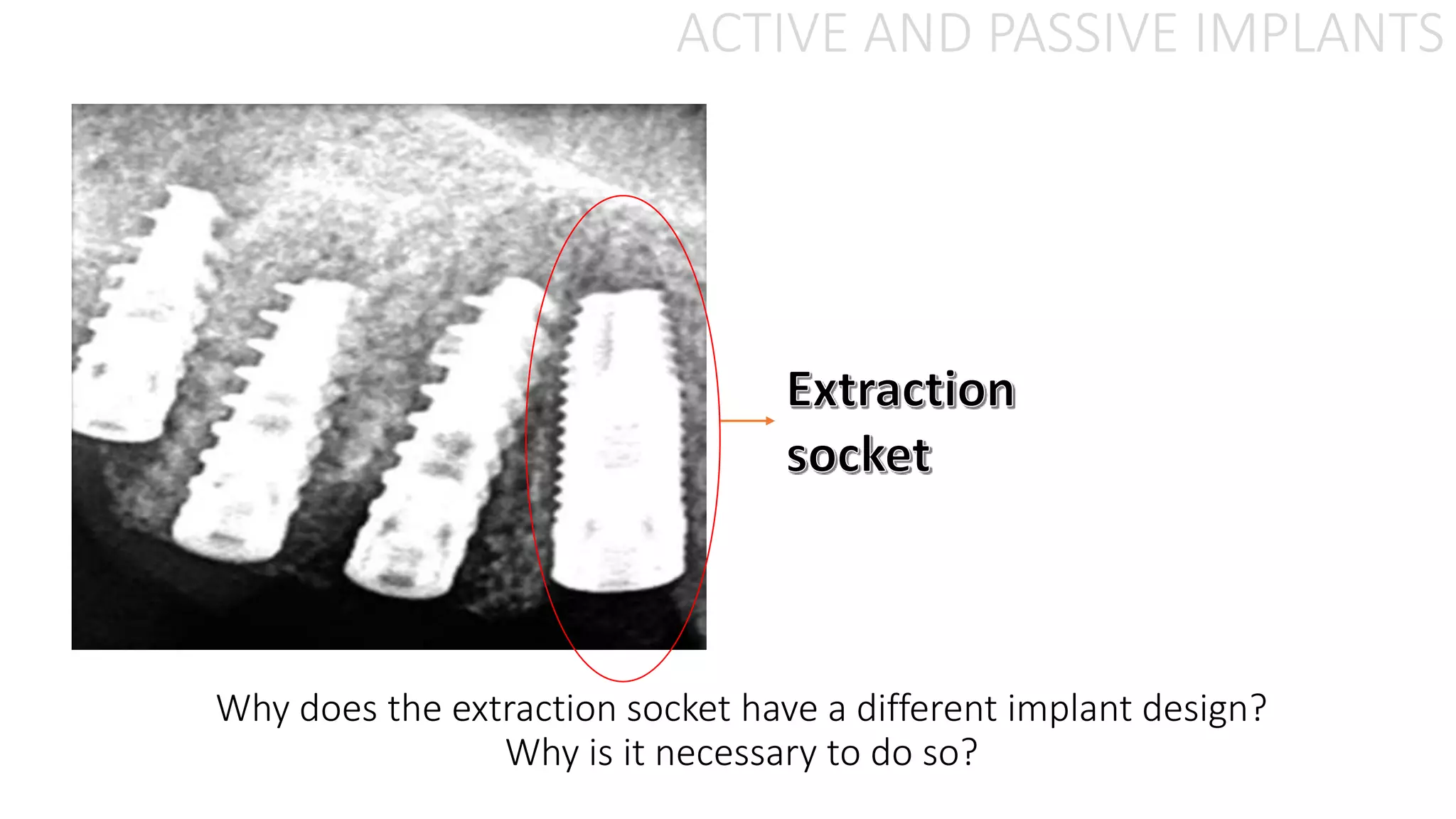
Why does the extraction socket have a different implant design?
Why is it necessary to do so?
ACTIVE AND PASSIVE IMPLANTS
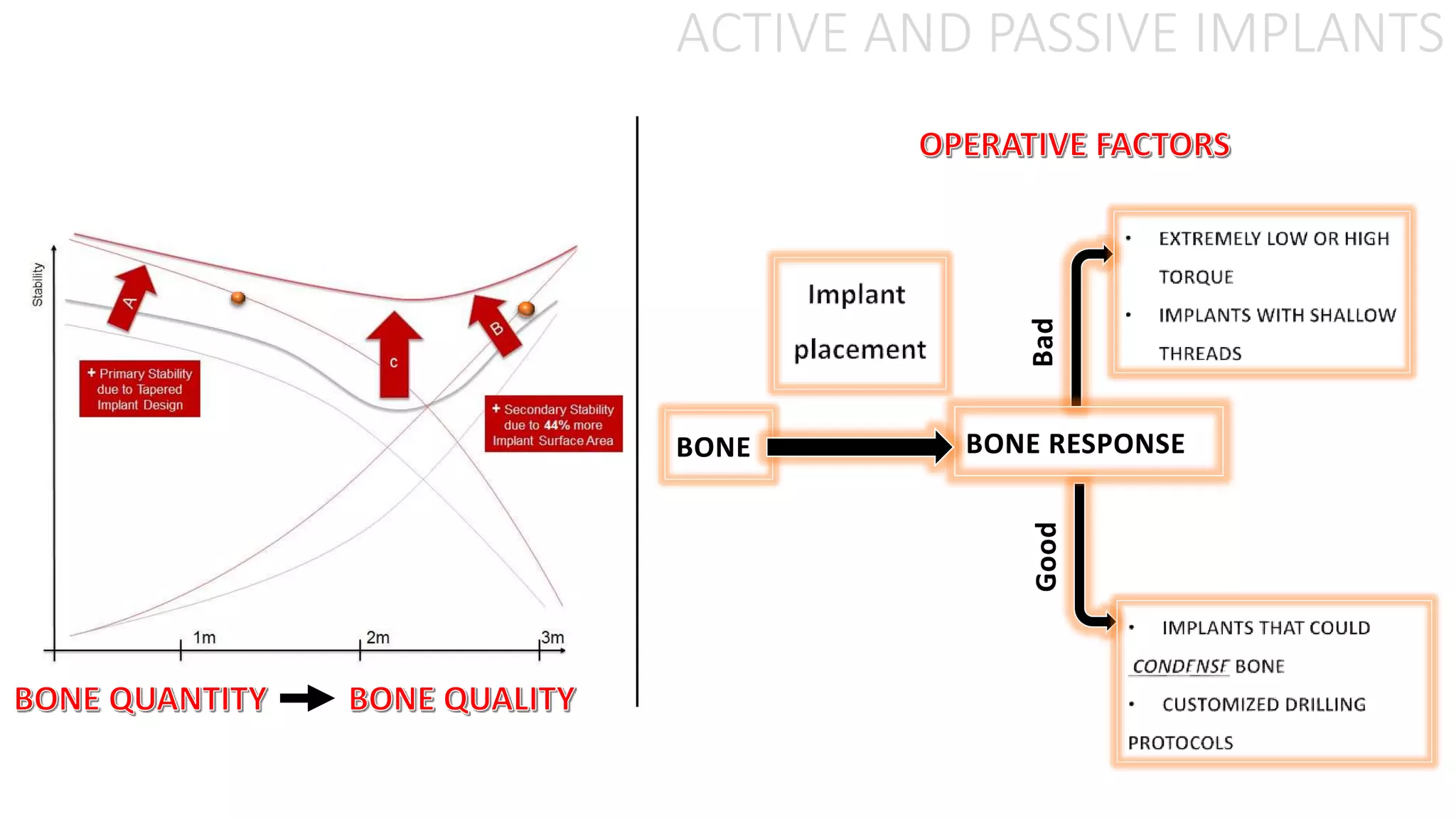
Bad
BONE
Good
BONE RESPONSE
ACTIVE AND PASSIVE IMPLANTS
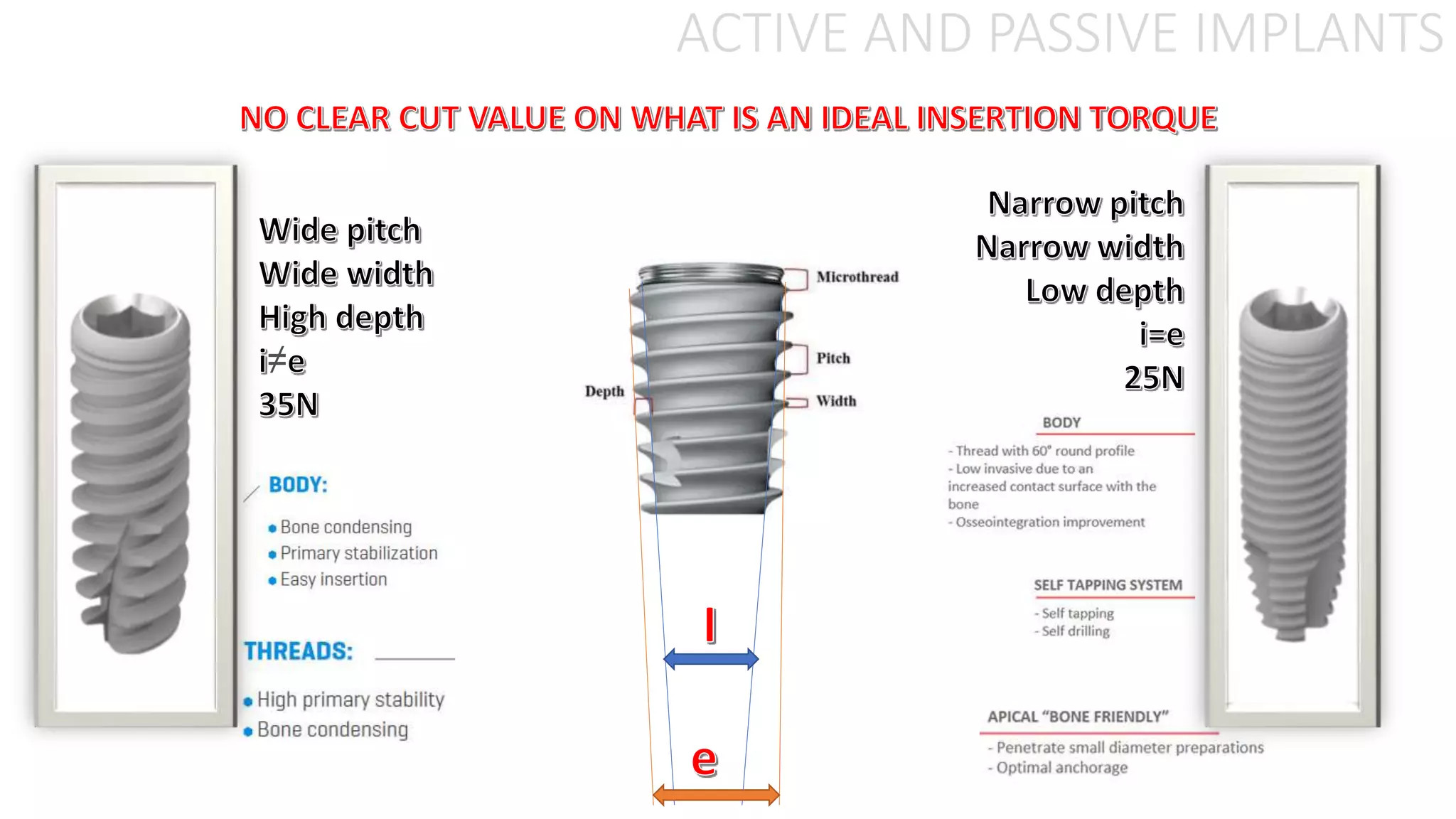
≠
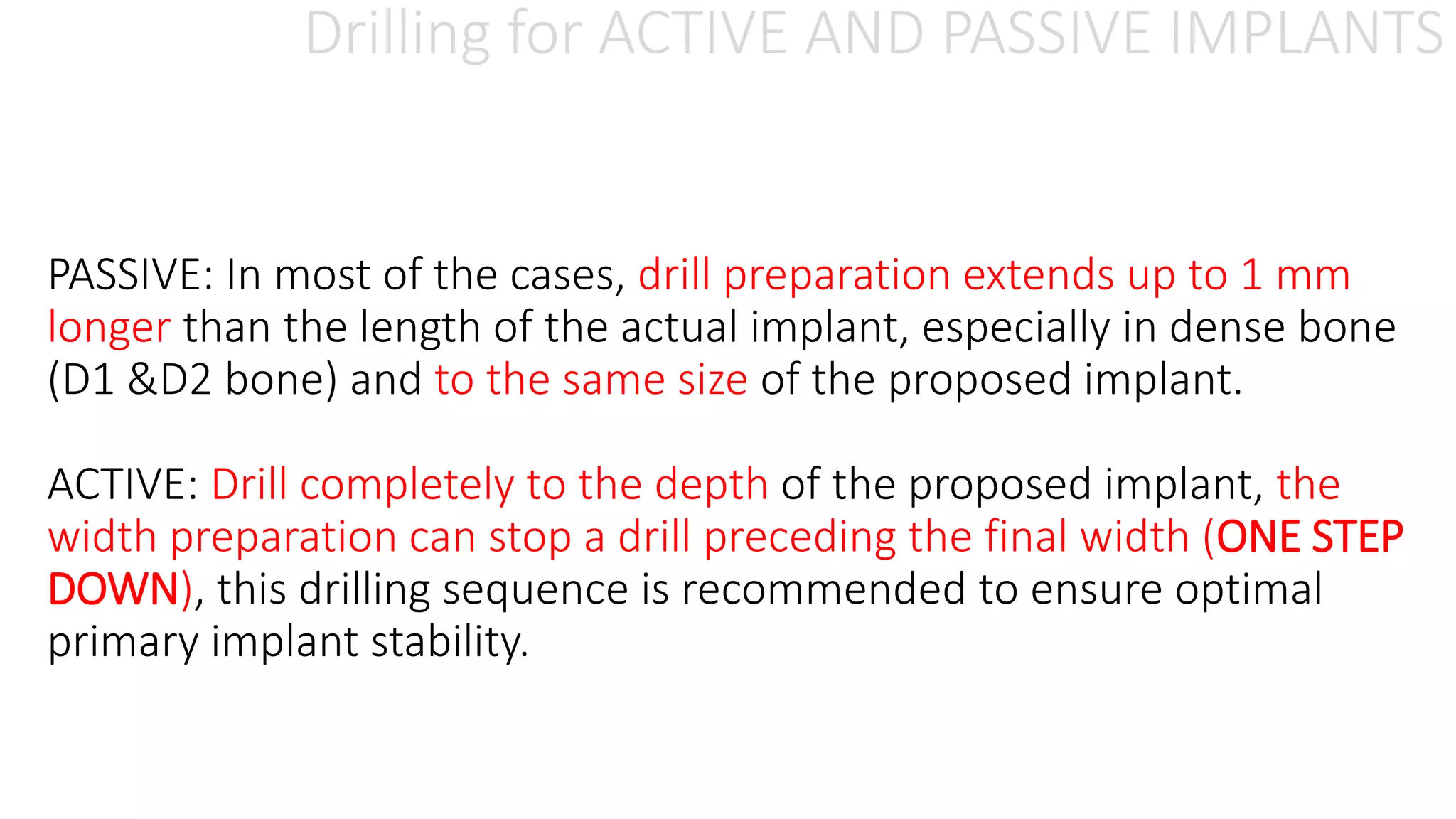
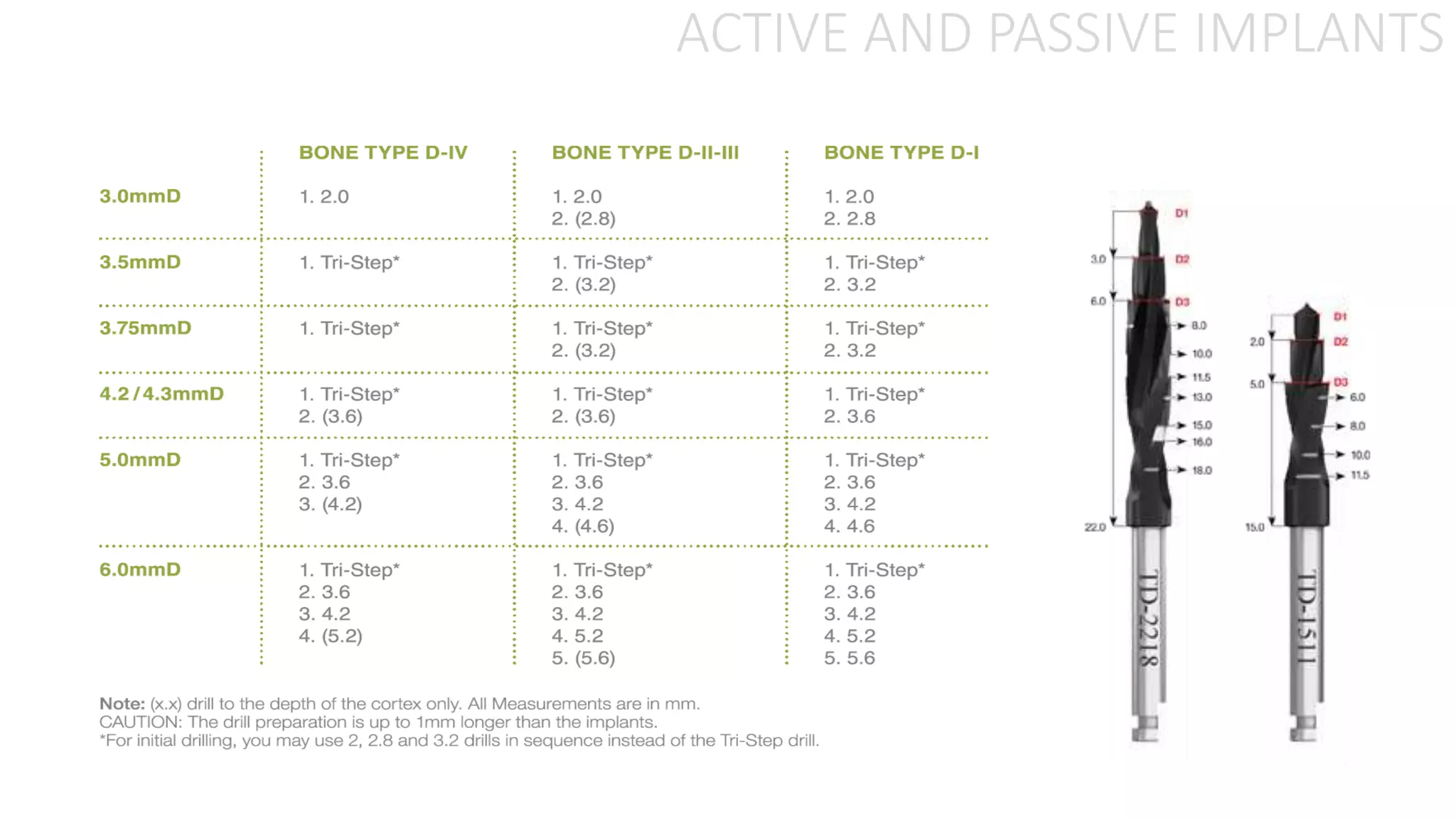
Drilling for ACTIVE AND PASSIVE IMPLANTS
PASSIVE: In most of the cases, drill preparation extends up to 1 mm
longer than the length of the actual implant, especially in dense bone
(D1 &D2 bone) and to the same size of the proposed implant.
ACTIVE: Drill completely to the depth of the proposed implant, the
width preparation can stop a drill preceding the final width (ONE STEP
DOWN), this drilling sequence is recommended to ensure optimal
primary implant stability.
ACTIVE AND PASSIVE IMPLANTS
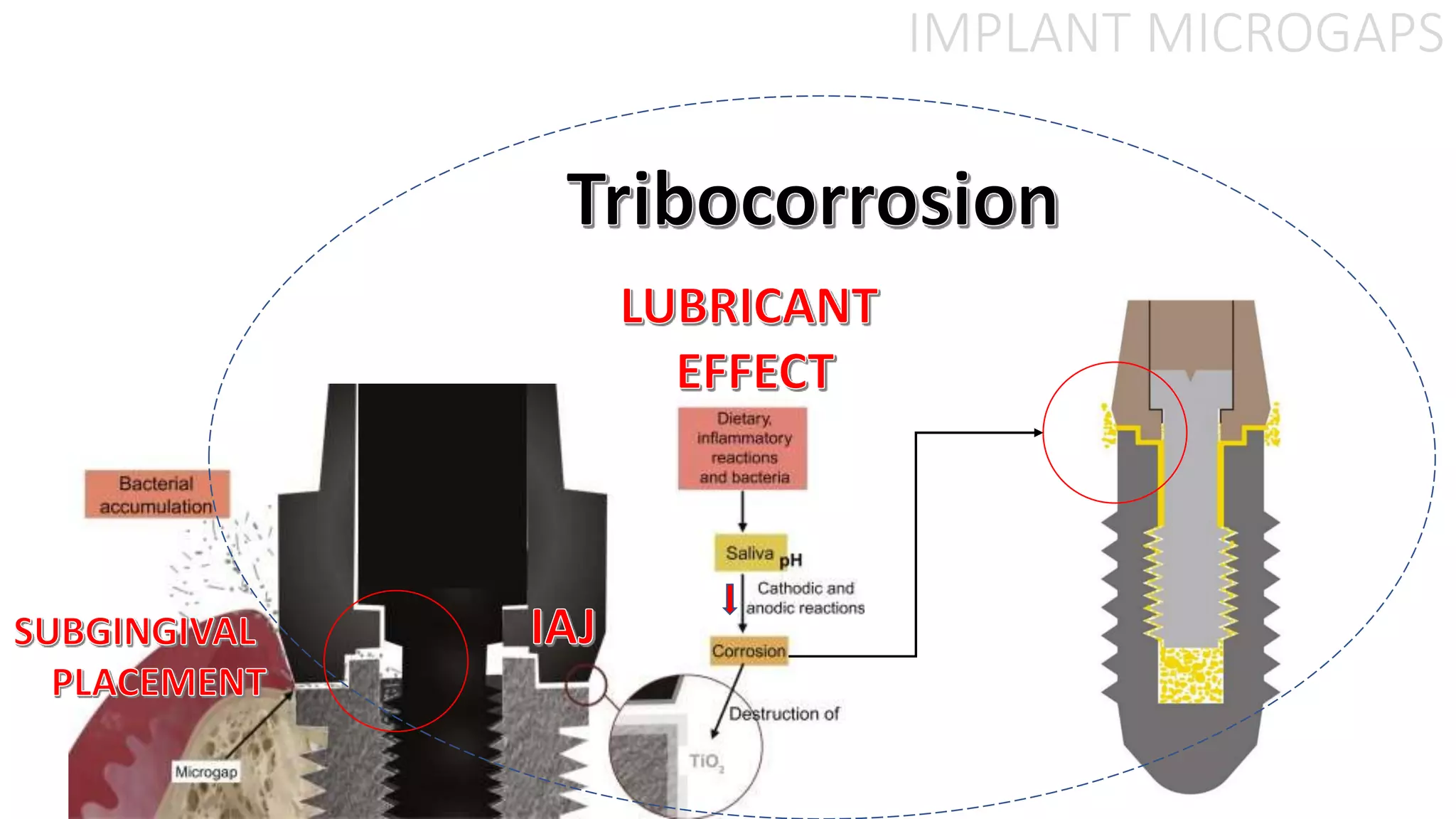
IMPLANT MICROGAPS
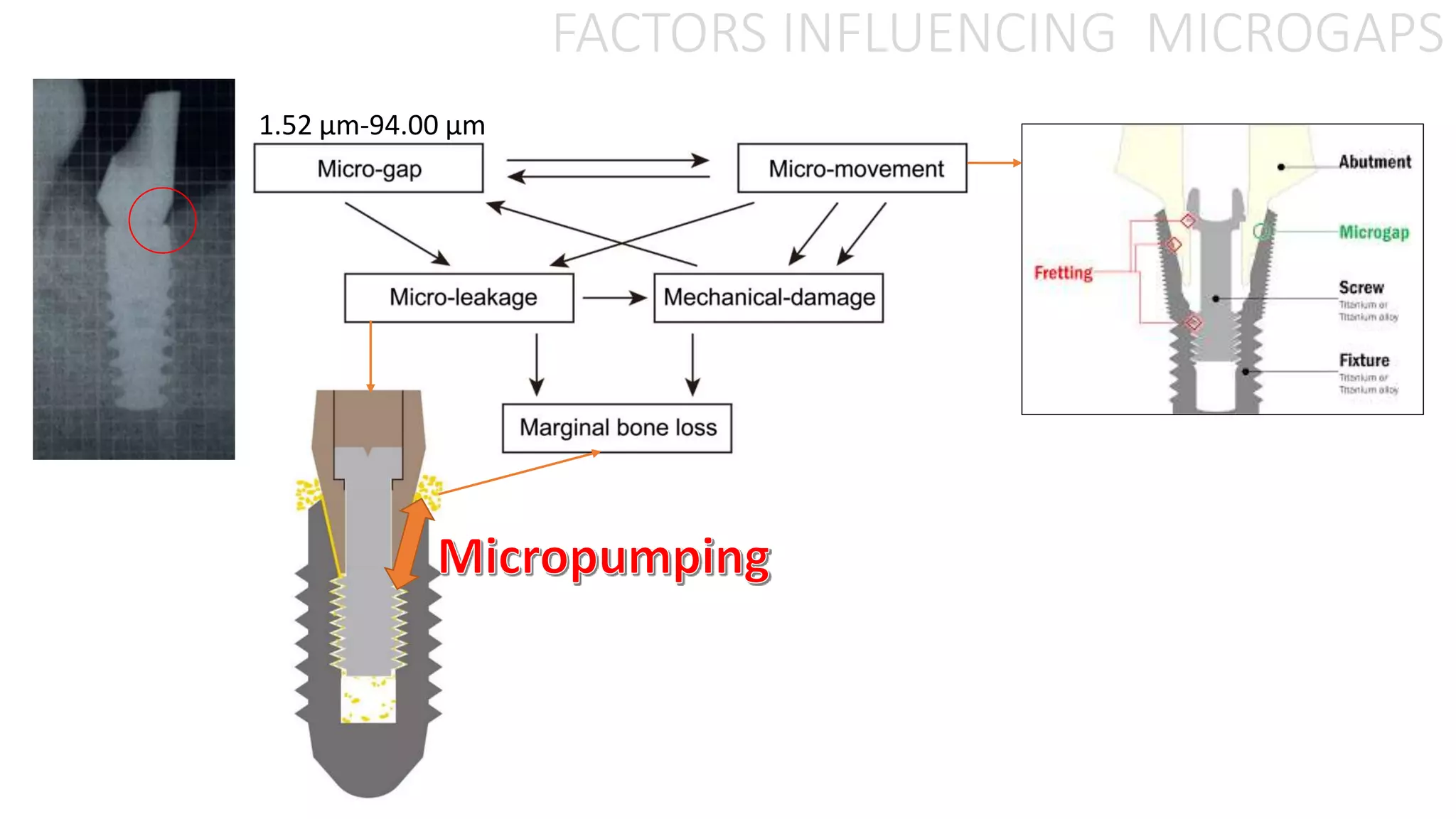
1.52 µm-94.00 µm
FACTORS INFLUENCING MICROGAPS
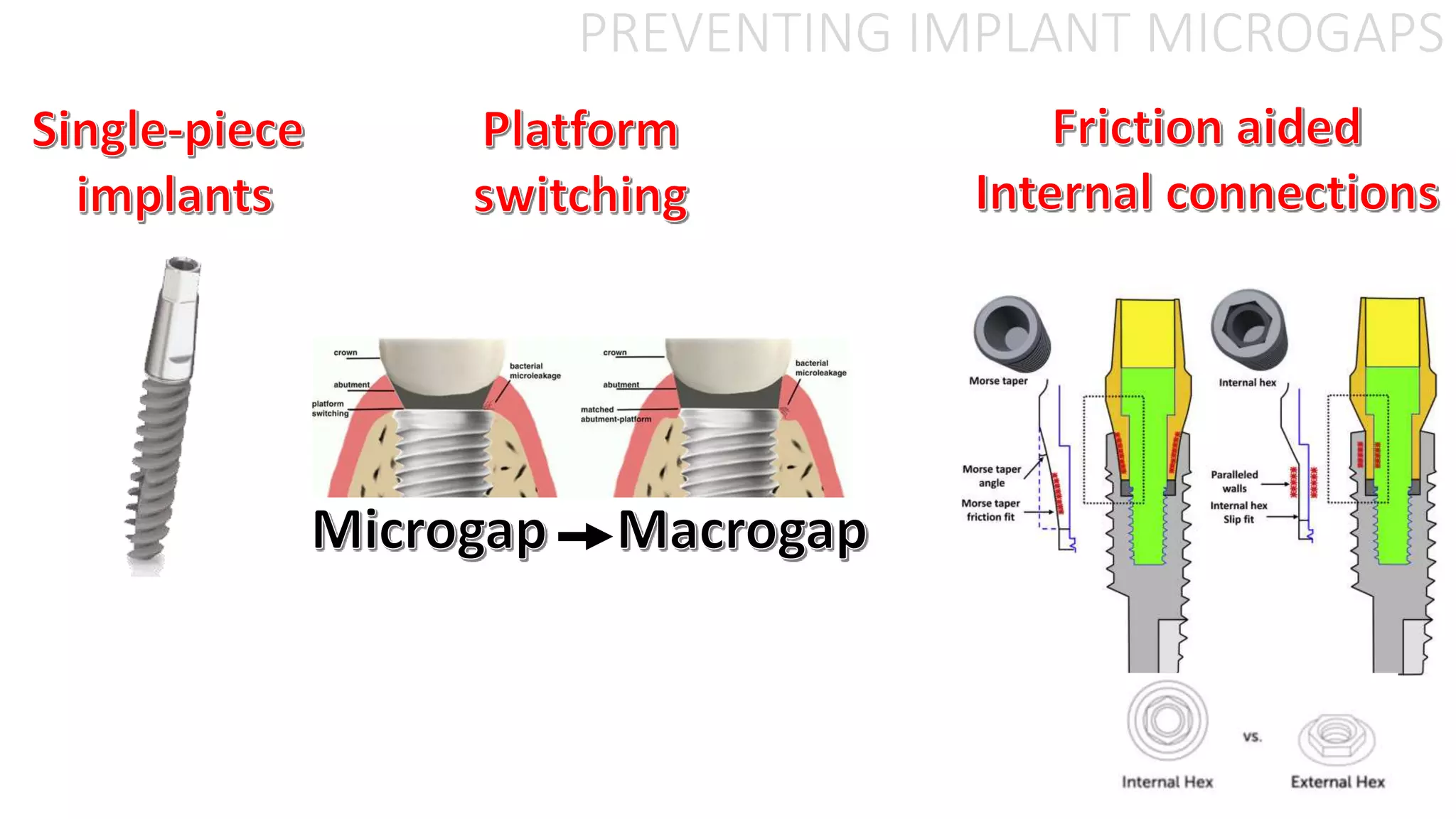
PREVENTING IMPLANT MICROGAPS
Active and passive implants and Microgap around implants

Active and passive implants and Microgap around implants

Editor's Notes

  • #3 In the current review, the term “passive” refers to implants that are not chemically or biologically reactive and present rather inert surfaces to the surrounding tissues, whereas the term “active” refers to implants that have been modified to deliberately interfere with the physiological environment. Passive- wont cut bone; active cut bone.
  • #5 able to cut a thread in the material into which it is inserted.
  • #8 Most dental implants have a 2-stage design in which (1) the implant is placed and the surrounding tissues are allowed to heal, and then (2) the abutment is placed and the restoration is completed. To prevent the unsightly metal ring that occurs with supragingival placement of the IAJ, most implants involve subgingival placement. The implant and the abutment cannot be accurately matched because of the precision limit during production . This subgingival placement makes the IAJ inaccessible for routine hygiene care and raises legitimate concerns about bacterial colonization within the IAJ micro-gap. In vitro studies show that biofilm in sliding contact surfaces could act like a lubricant, resulting in a friction behavior and reducing the mechanical integrity of the joint vs COLD WELDING Around implant-abutment connections, a lower pH value of 3–4 can induce corrosion at the contacting surfaces. Galvanic corrosion is the most common type of corrosion in dental implants. The study of the simultaneous degradation by wear and corrosion that occurs at the sliding contacts is known as tribocorrosion 
  • #9 The internal cavity of implant is similar to a reservoir (Nayak et al., 2014; Orsini et al., 2000; Proff et al., 2006). When the abutment is removed and replaced, bacteria can enter the implant internal cavity, where they reside and proliferate. The bacteria with their toxic by-products and small nutritious molecules can freely penetrate into the implant internal cavity or reverse through the IAI microgap. The destruction of the IAI micromotion is mainly displayed in two aspects. First, micromotion interferes the attachment of soft tissue around the implant neck and disrupts the stability of soft tissue that has completed integration (Passos, Gressler May, Faria, Ozcan, & Bottino, 2013). Second, micromotion causes a micropumping effect (Ericsson, et al., 1995), which intensifies the leakage of bacteria and their toxic by-products and accelerates the blood, saliva, and proteoglycans (including the extracellular matrix and mucus layer) into the internal cavity of implant (Baixe, Tenenbaum, & Etienne, 2016). Mechanical damages of microgap and micromotion include fretting wear, adhesive wear, and screw loosening (Jorn, Kohorst, Besdo, Borchers, & Stiesch, 2016; Sakamoto et al., 2016). Fretting wear refers to microfracture and chipping between the IAI, whereas adhesive wear is defined as the plastic deformation in the IAI (