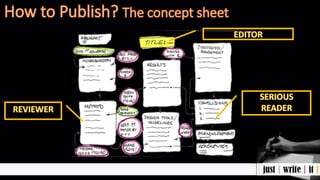
SUBMITTED IN HASTE
RETURNED AT LEISURE…….
WRITING AN ACADEMIC MANUSCRIPT
In India, less than 30% of Masters Theses are published*
Even good theses are never sent for publication;
72% of residents felt publications require a lot of effort**
*Indian J Opthalmol 2010;58:101-4 **Indian Pediatr. 2015 Mar 8;52(3):252-3 °J Obstet Gynaecol India. 2015 Feb; 65(1): 69–70.
Residents feel that research is still hidden behind pay-walls
and nobody might read their papers°
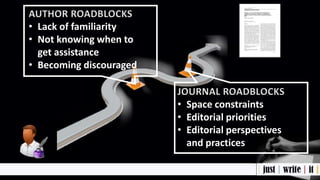
AUTHOR ROADBLOCKS
• Lack of familiarity
• Not knowing when to
get assistance
• Becoming discouraged
JOURNAL ROADBLOCKS
• Space constraints
• Editorial priorities
• Editorial perspectives
and practices
This is how research works!
A new idea is openly discussed, criticised, tested,
accepted or rejected
To publicise your research results
To develop a publications profile…..and to get a job
ORIGINALITY
“It is better to fail in originality than to succeed in imitation”
CONTENT
“What is written without effort is in general read without
pleasure”
SIMPLICITY
“Easy reading is hard writing!”
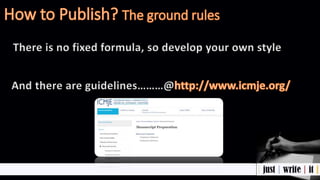
There is no fixed formula, so develop your own style
And there are guidelines………@
If you steal from one author it's ; if you steal
from many it's research.
Use “Medical English”*
• Avoid terms such as discovery, love, guarantee, health, money
• Use the word "perform" instead of "do" or "at this point of
time" instead of "now".
• Know the exact meaning of every word you use
*Archive of Oncology 2002;10(3):211.
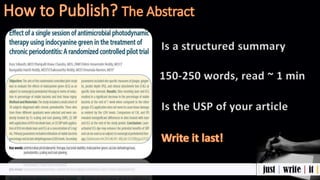
Is a structured summary
150-250 words, read ~ 1 min
Is the USP of your article
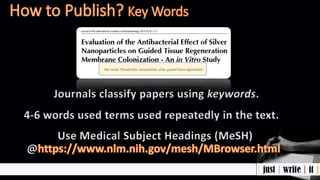
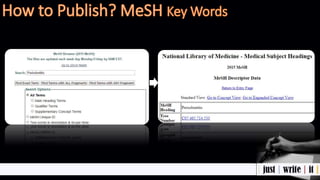
Journals classify papers using keywords.
4-6 words used terms used repeatedly in the text.
Use Medical Subject Headings (MeSH)
@
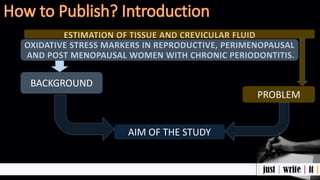
ESTIMATION OF TISSUE AND CREVICULAR FLUID
OXIDATIVE STRESS MARKERS IN REPRODUCTIVE, PERIMENOPAUSAL
AND POST MENOPAUSAL WOMEN WITH CHRONIC PERIODONTITIS.
BACKGROUND
PROBLEM
AIM OF THE STUDY
Keep the parts separated.
KISS
600-800 words
Description of the study site, material, procedure or
organism
The experimental OR sampling design the protocol for
collecting data
Data analysis
DON’T
• Describe every aspect in detail
• Describe wrong methodology
• Miss writing ethical aspects of the research
Present your results, WITHOUT interpretation
Report the key results and refer to your figures and
tables as you proceed.
Write concisely and objectively and use past tense
Do not reiterate each value from a Figure or Table
Use and over-use of the word "significant“!
Report negative results - they are important!
Frequently done badly- A classic “Achilles heel”
The purpose of a Discussion section is to interpret the
results, relating them to previous studies that the author
and other authors have done
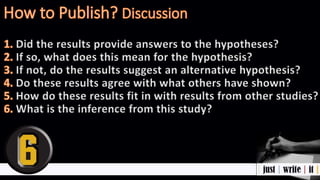
Did the results provide answers to the hypotheses?
If so, what does this mean for the hypothesis?
If not, do the results suggest an alternative hypothesis?
Do these results agree with what others have shown?
How do these results fit in with results from other studies?
What is the inference from this study?
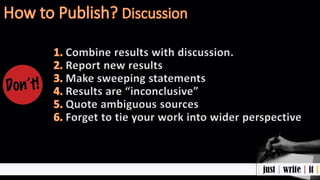
Combine results with discussion.
Report new results
Make sweeping statements
Results are “inconclusive”
Quote ambiguous sources
Forget to tie your work into wider perspective
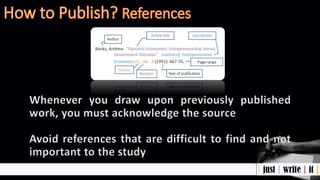
Whenever you draw upon previously published
work, you must acknowledge the source
Avoid references that are difficult to find and not
important to the study
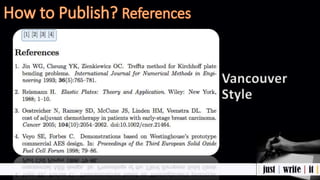
Vancouver
Style
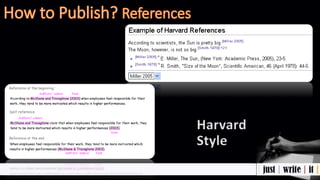
Harvard
Style
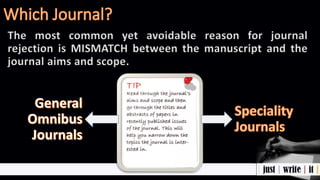
The most common yet avoidable reason for journal
rejection is MISMATCH between the manuscript and the
journal aims and scope.
There is a hierarchy of journals within each
discipline

A journal’s position in the hierarchy depends on
a number of factors
• Impact Factor
• Citation Index
Aim high but be realistic – and make sure you do
your research on the journal prior to submitting
an article
Does the paper fit the standards and scope of the
journal?
Is the research question clear?
Is the study design, methods and analysis appropriate to
the question being studied?
Does the study confirm to ethical guidelines?
Is the conclusion appropriate?
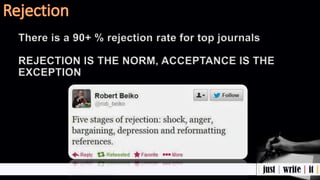
There is a 90+ % rejection rate for top journals
REJECTION IS THE NORM, ACCEPTANCE IS THE
EXCEPTION
It’s the paper that is rejected- Not you!
Often you get a rejection after review -unless you
have targeted the wrong journal
The reviewers will explain, in detail, why they
rejected the paper
This gives you a basis for improving or changing
the paper and submitting elsewhere
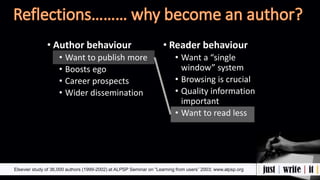
• Author behaviour
• Want to publish more
• Boosts ego
• Career prospects
• Wider dissemination
• Reader behaviour
• Want a “single
window” system
• Browsing is crucial
• Quality information
important
• Want to read less
Elsevier study of 36,000 authors (1999-2002) at ALPSP Seminar on “Learning from users” 2003; www.alpsp.org
Publish and submit
Publish and submit

Publish and submit

  • 1.
    SUBMITTED IN HASTE RETURNEDAT LEISURE……. WRITING AN ACADEMIC MANUSCRIPT
  • 2.
    In India, lessthan 30% of Masters Theses are published* Even good theses are never sent for publication; 72% of residents felt publications require a lot of effort** *Indian J Opthalmol 2010;58:101-4 **Indian Pediatr. 2015 Mar 8;52(3):252-3 °J Obstet Gynaecol India. 2015 Feb; 65(1): 69–70. Residents feel that research is still hidden behind pay-walls and nobody might read their papers°
  • 3.
    AUTHOR ROADBLOCKS • Lackof familiarity • Not knowing when to get assistance • Becoming discouraged JOURNAL ROADBLOCKS • Space constraints • Editorial priorities • Editorial perspectives and practices
  • 5.
    This is howresearch works! A new idea is openly discussed, criticised, tested, accepted or rejected To publicise your research results To develop a publications profile…..and to get a job
  • 6.
    ORIGINALITY “It is betterto fail in originality than to succeed in imitation” CONTENT “What is written without effort is in general read without pleasure” SIMPLICITY “Easy reading is hard writing!”
  • 7.
    There is nofixed formula, so develop your own style And there are guidelines………@
  • 8.
    If you stealfrom one author it's ; if you steal from many it's research. Use “Medical English”* • Avoid terms such as discovery, love, guarantee, health, money • Use the word "perform" instead of "do" or "at this point of time" instead of "now". • Know the exact meaning of every word you use *Archive of Oncology 2002;10(3):211.
  • 12.
    Is a structuredsummary 150-250 words, read ~ 1 min Is the USP of your article
  • 13.
    Journals classify papersusing keywords. 4-6 words used terms used repeatedly in the text. Use Medical Subject Headings (MeSH) @
  • 15.
    ESTIMATION OF TISSUEAND CREVICULAR FLUID OXIDATIVE STRESS MARKERS IN REPRODUCTIVE, PERIMENOPAUSAL AND POST MENOPAUSAL WOMEN WITH CHRONIC PERIODONTITIS. BACKGROUND PROBLEM AIM OF THE STUDY
  • 16.
    Keep the partsseparated. KISS 600-800 words
  • 17.
    Description of thestudy site, material, procedure or organism The experimental OR sampling design the protocol for collecting data Data analysis
  • 18.
    DON’T • Describe everyaspect in detail • Describe wrong methodology • Miss writing ethical aspects of the research
  • 19.
    Present your results,WITHOUT interpretation Report the key results and refer to your figures and tables as you proceed. Write concisely and objectively and use past tense
  • 20.
    Do not reiterateeach value from a Figure or Table Use and over-use of the word "significant“! Report negative results - they are important!
  • 22.
    Frequently done badly-A classic “Achilles heel” The purpose of a Discussion section is to interpret the results, relating them to previous studies that the author and other authors have done
  • 23.
    Did the resultsprovide answers to the hypotheses? If so, what does this mean for the hypothesis? If not, do the results suggest an alternative hypothesis? Do these results agree with what others have shown? How do these results fit in with results from other studies? What is the inference from this study?
  • 24.
    Combine results withdiscussion. Report new results Make sweeping statements Results are “inconclusive” Quote ambiguous sources Forget to tie your work into wider perspective
  • 25.
    Whenever you drawupon previously published work, you must acknowledge the source Avoid references that are difficult to find and not important to the study
  • 26.
  • 27.
  • 28.
    The most commonyet avoidable reason for journal rejection is MISMATCH between the manuscript and the journal aims and scope.
  • 29.
    There is ahierarchy of journals within each discipline A journal’s position in the hierarchy depends on a number of factors • Impact Factor • Citation Index Aim high but be realistic – and make sure you do your research on the journal prior to submitting an article
  • 30.
    Does the paperfit the standards and scope of the journal? Is the research question clear? Is the study design, methods and analysis appropriate to the question being studied? Does the study confirm to ethical guidelines? Is the conclusion appropriate?
  • 31.
    There is a90+ % rejection rate for top journals REJECTION IS THE NORM, ACCEPTANCE IS THE EXCEPTION
  • 32.
    It’s the paperthat is rejected- Not you! Often you get a rejection after review -unless you have targeted the wrong journal The reviewers will explain, in detail, why they rejected the paper This gives you a basis for improving or changing the paper and submitting elsewhere
  • 33.
    • Author behaviour •Want to publish more • Boosts ego • Career prospects • Wider dissemination • Reader behaviour • Want a “single window” system • Browsing is crucial • Quality information important • Want to read less Elsevier study of 36,000 authors (1999-2002) at ALPSP Seminar on “Learning from users” 2003; www.alpsp.org

Editor's Notes

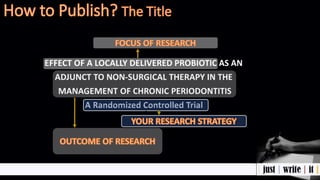
  • #4 Roadblocks to publishing.
  • #7 Originality- Herman Meliville Content- Samuel Johnson Simplicity- Nathaniel Hawthorne
  • #8 ICMJE- International Committee of Medical Journal Editors
  • #12 Describes the paper’s content clearly and precisely including keywords Is the advertisement for the article Do not use abbreviations and jargon Search engines/indexing databases depend on the accuracy of the title - since they use the keywords to identify relevant articles