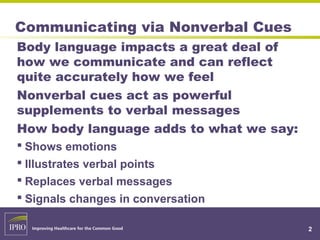
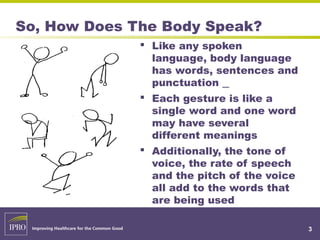
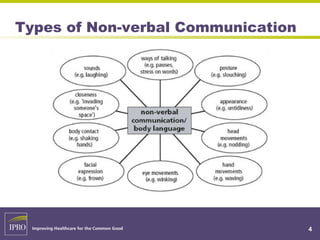
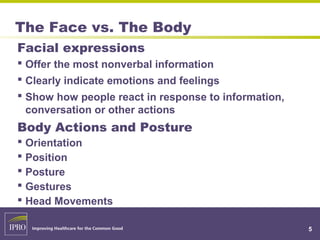
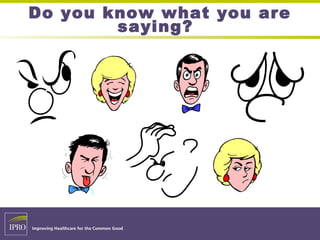
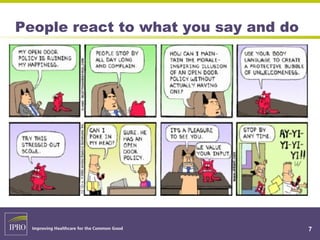
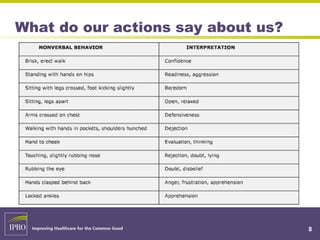
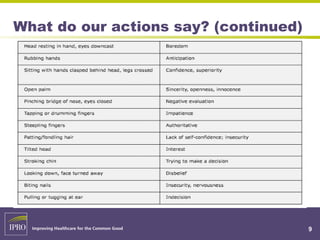
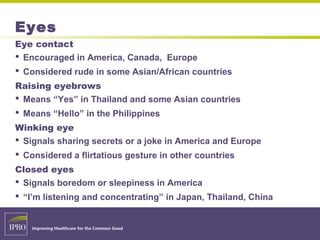
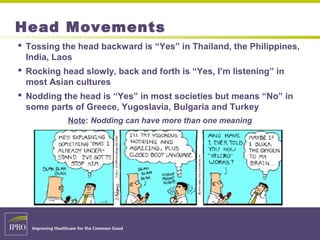
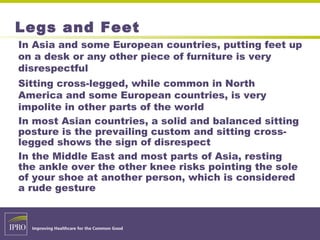
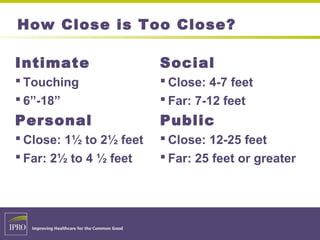
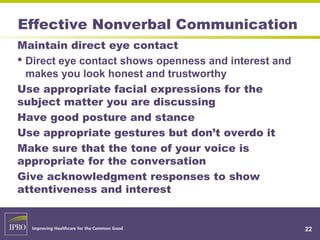
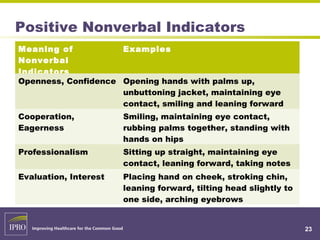
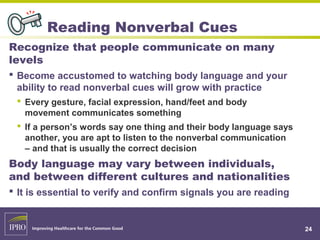
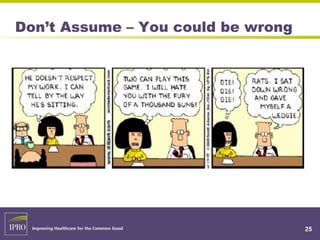
This document discusses how nonverbal communication such as body language, facial expressions, gestures, eye contact, and posture can significantly impact and supplement verbal messages. It notes that nonverbal cues act as powerful additions to what is said and can accurately reflect emotions. The document provides examples of various nonverbal cues like eye contact, head movements, hand gestures, and personal space and how their meanings can differ across cultures. It emphasizes the importance of being aware that people communicate on many levels and that nonverbal signals should be verified through conversation to avoid incorrect assumptions.





![Body language[1]](https://cdn.slidesharecdn.com/ss_thumbnails/bodylanguage1-121230052517-phpapp01-thumbnail.jpg?width=640&height=640&fit=bounds)


