 Turn and face your partner, and with as much
genuineness as you can muster, say “I really
love/like you.” Then the other person has their
turn with the same words.
 Did anyone feel believed? Why not?
 Words are important for their accuracy in
conveying information, such as MHPE content, but
the other aspects of language must also be
congruent (match) with the words.
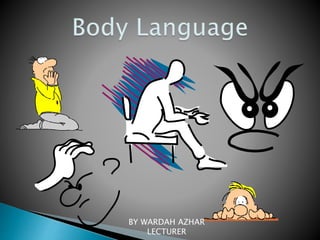
BY WARDAH AZHAR
LECTURER
 To keep people’s attention
 To create a good atmosphere
 To create more impact
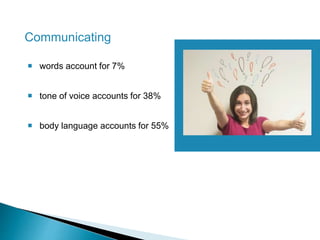
Communicating
 words account for 7%
 tone of voice accounts for 38%
 body language accounts for 55%
 Julius Fast was the first author who
published a book on ’Body Language’
in 1971
 Scientific study on ’how the body
speaks’ has been labelled as KINESICS
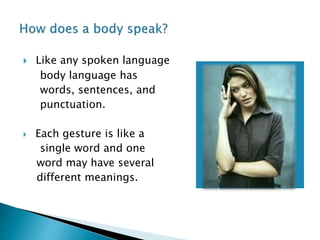
 Like any spoken language
body language has
words, sentences, and
punctuation.
 Each gesture is like a
single word and one
word may have several
different meanings.
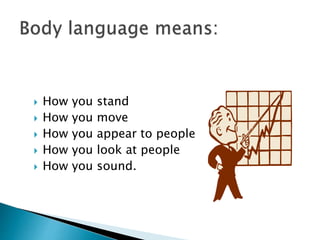
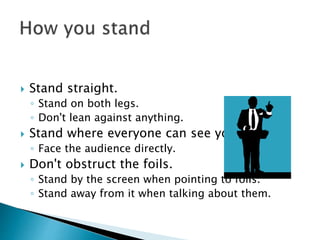
 How you stand
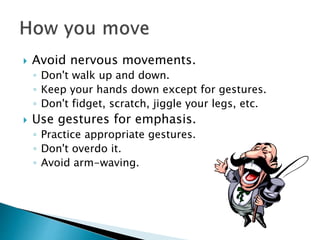
 How you move
 How you appear to people
 How you look at people
 How you sound.
 Stand straight.
◦ Stand on both legs.
◦ Don't lean against anything.
 Stand where everyone can see you.
◦ Face the audience directly.
 Don't obstruct the foils.
◦ Stand by the screen when pointing to foils.
◦ Stand away from it when talking about them.
 Avoid nervous movements.
◦ Don't walk up and down.
◦ Keep your hands down except for gestures.
◦ Don't fidget, scratch, jiggle your legs, etc.
 Use gestures for emphasis.
◦ Practice appropriate gestures.
◦ Don't overdo it.
◦ Avoid arm-waving.
 Why
◦ Energy holds people's attention. Lack of energy
puts people to sleep.
 How
◦ Stand straight.
◦ Put energy into your eyes, voice, and movements.
 Why
◦ If you relax people will have more confidence in you.
◦ If you are not relaxed people cannot focus on the
content.
 How
◦ Smile.
◦ Make it informal.
◦ Use humor--enjoy yourself!
◦ Slow down.
◦ Breathe slowly.
◦ Let your arms hang loose.
◦ Don't make nervous movements.
• Don't say sorry.
• Don't make excuses.
• Don't be afraid of the audience.
• Don't be too modest.
• Be prepared for problems.
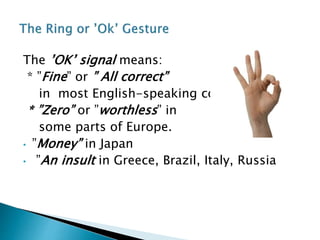
The ’OK’ signal means:
* ”Fine” or ” All correct”
in most English-speaking countries.
* ”Zero” or ”worthless” in
some parts of Europe.
• ”Money” in Japan
• ”An insult in Greece, Brazil, Italy, Russia
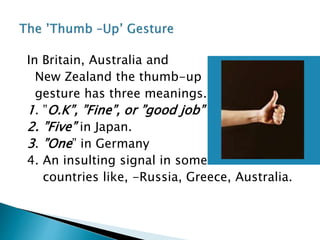
In Britain, Australia and
New Zealand the thumb-up
gesture has three meanings.
1. ”O.K”, ”Fine”, or ”good job”
2. ”Five” in Japan.
3. ”One” in Germany
4. An insulting signal in some
countries like, -Russia, Greece, Australia.
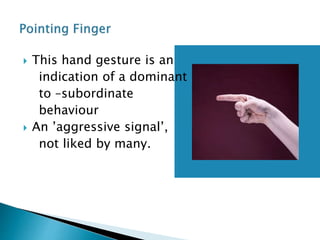
 This hand gesture is an
indication of a dominant
to –subordinate
behaviour
 An ’aggressive signal’,
not liked by many.
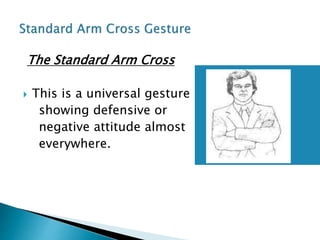
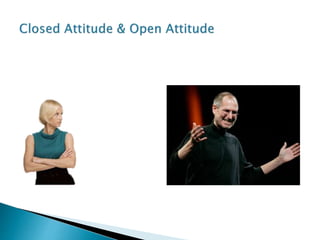
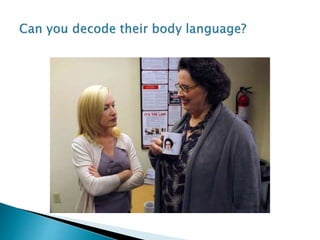
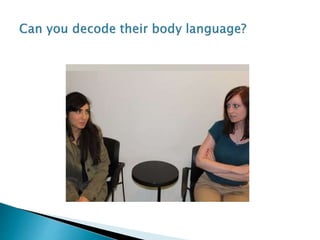
The Standard Arm Cross
 This is a universal gesture
showing defensive or
negative attitude almost
everywhere.
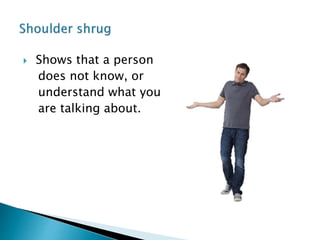
 Shows that a person
does not know, or
understand what you
are talking about.
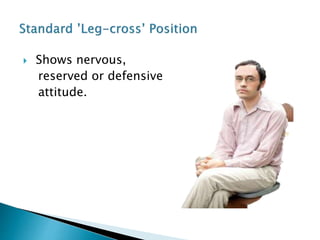
 Shows nervous,
reserved or defensive
attitude.
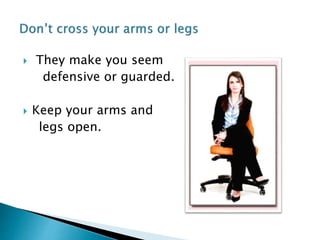
 They make you seem
defensive or guarded.
 Keep your arms and
legs open.
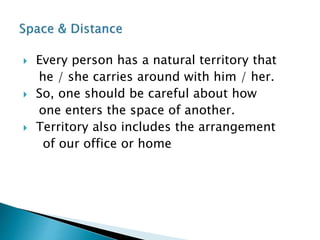
 Every person has a natural territory that
he / she carries around with him / her.
 So, one should be careful about how
one enters the space of another.
 Territory also includes the arrangement
of our office or home
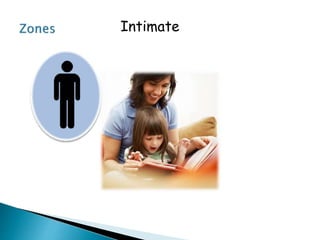
Intimate
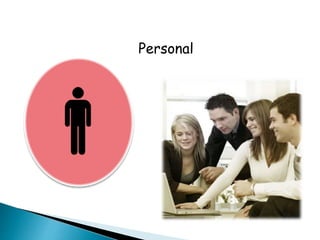
Personal
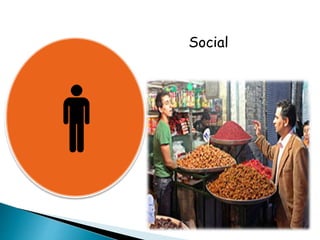
Social
Public
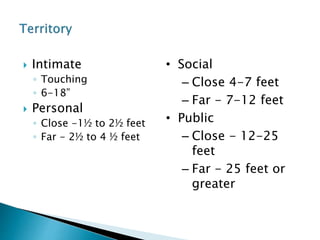
 Intimate
◦ Touching
◦ 6-18”
 Personal
◦ Close -1½ to 2½ feet
◦ Far - 2½ to 4 ½ feet
• Social
– Close 4-7 feet
– Far - 7-12 feet
• Public
– Close - 12-25
feet
– Far - 25 feet or
greater
 Nodding the head
* ”Yes” in most societies
* ”No” in some parts of Greece, Bulgaria,
Turkey & Yugoslavia.
 Tossing the head backward
* ”Yes”in Thailand, India, Laos, Philippins
 Rocking the head slowly, back & forth:
* ”Yes, I am listening”
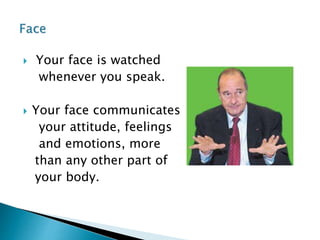
 Your face is watched
whenever you speak.
 Your face communicates
your attitude, feelings
and emotions, more
than any other part of
your body.
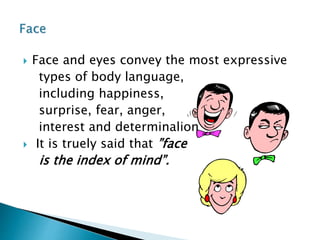
 Face and eyes convey the most expressive
types of body language,
including happiness,
surprise, fear, anger,
interest and determinalion
 It is truely said that ”face
is the index of mind”.
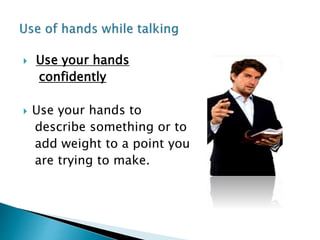
 Use your hands
confidently
 Use your hands to
describe something or to
add weight to a point you
are trying to make.
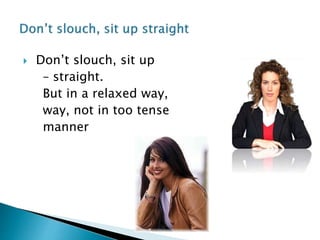
 Don’t slouch, sit up
– straight.
But in a relaxed way,
way, not in too tense
manner
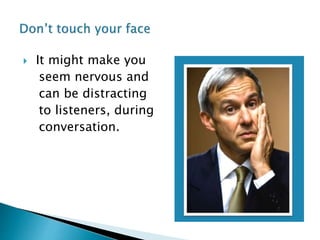
 It might make you
seem nervous and
can be distracting
to listeners, during
conversation.
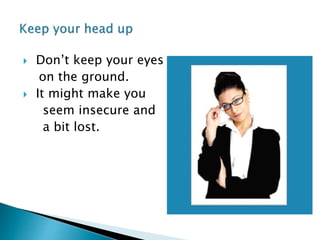
 Don’t keep your eyes
on the ground.
 It might make you
seem insecure and
a bit lost.
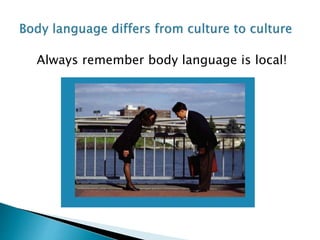
Always remember body language is local!
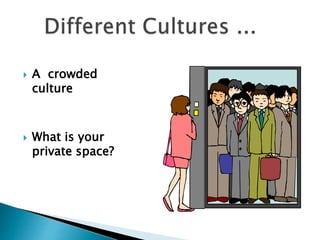
 A crowded
culture
 What is your
private space?
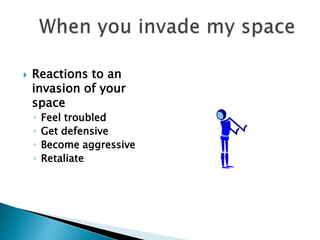
 Reactions to an
invasion of your
space
◦ Feel troubled
◦ Get defensive
◦ Become aggressive
◦ Retaliate
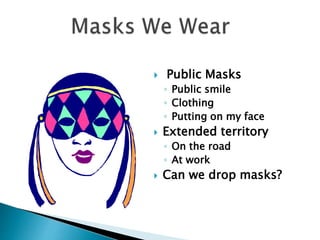
 Public Masks
◦ Public smile
◦ Clothing
◦ Putting on my face
 Extended territory
◦ On the road
◦ At work
 Can we drop masks?
A woman went for a walk one day and met her
friend, whom she had not seen, heard from, or
heard of in ten years.
After an exchange of greetings, the woman
said, “Is this your little boy?” and her friend
replied, “Yes, I got married about six years
ago.”
The woman then asked the child, “What is your
name?” and the boy replied, “Same as my
father’s.”
“Oh,” said the woman, “then it must be Peter.”
body language and communication

body language and communication

  • 1.
     Turn andface your partner, and with as much genuineness as you can muster, say “I really love/like you.” Then the other person has their turn with the same words.  Did anyone feel believed? Why not?  Words are important for their accuracy in conveying information, such as MHPE content, but the other aspects of language must also be congruent (match) with the words.
  • 2.
  • 3.
     To keeppeople’s attention  To create a good atmosphere  To create more impact
  • 4.
    Communicating  words accountfor 7%  tone of voice accounts for 38%  body language accounts for 55%
  • 5.
     Julius Fastwas the first author who published a book on ’Body Language’ in 1971  Scientific study on ’how the body speaks’ has been labelled as KINESICS
  • 6.
     Like anyspoken language body language has words, sentences, and punctuation.  Each gesture is like a single word and one word may have several different meanings.
  • 7.
     How youstand  How you move  How you appear to people  How you look at people  How you sound.
  • 8.
     Stand straight. ◦Stand on both legs. ◦ Don't lean against anything.  Stand where everyone can see you. ◦ Face the audience directly.  Don't obstruct the foils. ◦ Stand by the screen when pointing to foils. ◦ Stand away from it when talking about them.
  • 9.
     Avoid nervousmovements. ◦ Don't walk up and down. ◦ Keep your hands down except for gestures. ◦ Don't fidget, scratch, jiggle your legs, etc.  Use gestures for emphasis. ◦ Practice appropriate gestures. ◦ Don't overdo it. ◦ Avoid arm-waving.
  • 10.
     Why ◦ Energyholds people's attention. Lack of energy puts people to sleep.  How ◦ Stand straight. ◦ Put energy into your eyes, voice, and movements.
  • 11.
     Why ◦ Ifyou relax people will have more confidence in you. ◦ If you are not relaxed people cannot focus on the content.  How ◦ Smile. ◦ Make it informal. ◦ Use humor--enjoy yourself! ◦ Slow down. ◦ Breathe slowly. ◦ Let your arms hang loose. ◦ Don't make nervous movements.
  • 12.
    • Don't saysorry. • Don't make excuses. • Don't be afraid of the audience. • Don't be too modest. • Be prepared for problems.
  • 13.
    The ’OK’ signalmeans: * ”Fine” or ” All correct” in most English-speaking countries. * ”Zero” or ”worthless” in some parts of Europe. • ”Money” in Japan • ”An insult in Greece, Brazil, Italy, Russia
  • 14.
    In Britain, Australiaand New Zealand the thumb-up gesture has three meanings. 1. ”O.K”, ”Fine”, or ”good job” 2. ”Five” in Japan. 3. ”One” in Germany 4. An insulting signal in some countries like, -Russia, Greece, Australia.
  • 15.
     This handgesture is an indication of a dominant to –subordinate behaviour  An ’aggressive signal’, not liked by many.
  • 16.
    The Standard ArmCross  This is a universal gesture showing defensive or negative attitude almost everywhere.
  • 17.
     Shows thata person does not know, or understand what you are talking about.
  • 18.
     Shows nervous, reservedor defensive attitude.
  • 19.
     They makeyou seem defensive or guarded.  Keep your arms and legs open.
  • 20.
     Every personhas a natural territory that he / she carries around with him / her.  So, one should be careful about how one enters the space of another.  Territory also includes the arrangement of our office or home
  • 21.
  • 22.
  • 23.
  • 24.
  • 25.
     Intimate ◦ Touching ◦6-18”  Personal ◦ Close -1½ to 2½ feet ◦ Far - 2½ to 4 ½ feet • Social – Close 4-7 feet – Far - 7-12 feet • Public – Close - 12-25 feet – Far - 25 feet or greater
  • 27.
     Nodding thehead * ”Yes” in most societies * ”No” in some parts of Greece, Bulgaria, Turkey & Yugoslavia.  Tossing the head backward * ”Yes”in Thailand, India, Laos, Philippins  Rocking the head slowly, back & forth: * ”Yes, I am listening”
  • 28.
     Your faceis watched whenever you speak.  Your face communicates your attitude, feelings and emotions, more than any other part of your body.
  • 29.
     Face andeyes convey the most expressive types of body language, including happiness, surprise, fear, anger, interest and determinalion  It is truely said that ”face is the index of mind”.
  • 30.
     Use yourhands confidently  Use your hands to describe something or to add weight to a point you are trying to make.
  • 32.
     Don’t slouch,sit up – straight. But in a relaxed way, way, not in too tense manner
  • 33.
     It mightmake you seem nervous and can be distracting to listeners, during conversation.
  • 34.
     Don’t keepyour eyes on the ground.  It might make you seem insecure and a bit lost.
  • 37.
    Always remember bodylanguage is local!
  • 38.
     A crowded culture What is your private space?
  • 39.
     Reactions toan invasion of your space ◦ Feel troubled ◦ Get defensive ◦ Become aggressive ◦ Retaliate
  • 40.
     Public Masks ◦Public smile ◦ Clothing ◦ Putting on my face  Extended territory ◦ On the road ◦ At work  Can we drop masks?
  • 41.
    A woman wentfor a walk one day and met her friend, whom she had not seen, heard from, or heard of in ten years. After an exchange of greetings, the woman said, “Is this your little boy?” and her friend replied, “Yes, I got married about six years ago.” The woman then asked the child, “What is your name?” and the boy replied, “Same as my father’s.” “Oh,” said the woman, “then it must be Peter.”