CHEMISTRY PERFORMANCE
WORK
Name-Surname: Mehmet EROĞLU
Class-Number: 9-I 591
Subject: Acid Rain and Its
Damage
Definition of Acid Rain
First Acid Rain Record
"Clean" or unpolluted rain has an acidic pH, but
usually no lower than 5.7, because carbon dioxide
and water in the air react together to form carbonic
acid, a weak acid.
Since the Industrial Revolution, emissions of sulfur
dioxide and nitrogen oxides into the atmosphere have
increased. In 1852, Robert Angus Smith was the first
to show the relationship between acid rain and
atmospheric pollution in Manchester,England.
Which factor cause ‘’Acid Rain’’ ?
Compounds from human sources, such as
electricity generation, factories, and motor
vehicles.The principal cause of acid rain is
sulfur and nitrogen.
Acid Rain’s Damage
Other plants can also be damaged by
acid rain, but the effect on food crops
is minimized by the application of lime
and fertilizers to replace lost
nutrients.
Acid Rain Can Cause Health
Problems in People
Air pollution like sulfur dioxide and nitrogen oxides can cause
respiratory diseases, or can make these diseases worse.
Respiratory diseases like asthma or chronic bronchitis make it
hard for people to breathe. The pollution that causes acid rain
can also create tiny particles. When these particles get into
people’s lungs, they can cause health problems, or can make
existing health problems worse. Also, nitrogen oxides cause
ground-level ozone. This ground-level ozone causes respiratory
problems, like pneumonia and bronchitis, and can even cause
permanent lung damage. The health effects that people have to
worry about are not caused by the acid rain, but are caused
when people breathe in these tiny particles or ozone. Swimming
in an acidic lake or walking in an acidic puddle is no more
harmful to people than swimming or walking in clean water.
Acid Rain Harms Forests
Acid rain can be extremely harmful to forests. Acid rain that
seeps into the ground can dissolve nutrients, such as
magnesium and calcium, that trees need to be healthy. Acid
rain also causes aluminum to be released into the soil,
which makes it difficult for trees to take up water. Trees
that are located in mountainous regions at higher
elevations, such as spruce or fir trees, are at greater risk
because they are exposed to acidic clouds and fog, which
contain greater amounts of acid than rain or snow. The
acidic clouds and fog strip important nutrients from their
leaves and needles. This loss of nutrients makes it easier
for infections, insects, and cold weather to damage trees
and forests.
Acid Rain Damages Lakes and
Streams
Without pollution or acid rain, most lakes and streams
would have a pH level near 6.5. Acid rain, however, has
caused many lakes and streams in the northeast United
States and certain other places to have much lower pH
levels. In addition, aluminum that is released into the soil
eventually ends up in lakes and streams. Unfortunately, this
increase in acidity and aluminum levels can be deadly to
aquatic wildlife, including phytoplankton, mayflies, rainbow
trout, small mouth bass, frogs, spotted salamanders,
crayfish, and other creatures that are part of the food web
This problem can become much worse during heavy
downpours of rain or when the snow begins to melt in the
spring. These types of events are known as episodic
acidification.
Acid Rain Damages Buildings
and Objects
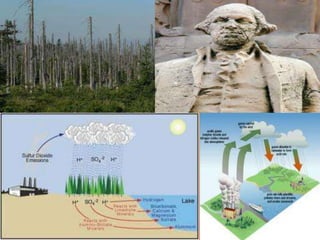
Acid rain can also have a damaging effect on many objects,
including buildings, statues, monuments, and cars. The
chemicals found in acid rain can cause paint to peel and
stone statues to begin to appear old and worn down, which
reduces their value and beauty.
International Treaties
Canada and the US signed the Air Quality
Agreement in 1991. Most European countries and
Canada have signed the treaties.
The first emissions trading market was established
in the United States by enactment of the Clean Air
Act Amendments of 1990. The overall goal of the
Acid Rain Program established by the Act is to
achieve significant environmental and public health
Acid Rain
Acid Rain

Acid Rain

  • 1.
    CHEMISTRY PERFORMANCE WORK Name-Surname: MehmetEROĞLU Class-Number: 9-I 591 Subject: Acid Rain and Its Damage
  • 2.
  • 3.
    First Acid RainRecord "Clean" or unpolluted rain has an acidic pH, but usually no lower than 5.7, because carbon dioxide and water in the air react together to form carbonic acid, a weak acid. Since the Industrial Revolution, emissions of sulfur dioxide and nitrogen oxides into the atmosphere have increased. In 1852, Robert Angus Smith was the first to show the relationship between acid rain and atmospheric pollution in Manchester,England.
  • 4.
    Which factor cause‘’Acid Rain’’ ? Compounds from human sources, such as electricity generation, factories, and motor vehicles.The principal cause of acid rain is sulfur and nitrogen.
  • 5.
    Acid Rain’s Damage Otherplants can also be damaged by acid rain, but the effect on food crops is minimized by the application of lime and fertilizers to replace lost nutrients.
  • 6.
    Acid Rain CanCause Health Problems in People Air pollution like sulfur dioxide and nitrogen oxides can cause respiratory diseases, or can make these diseases worse. Respiratory diseases like asthma or chronic bronchitis make it hard for people to breathe. The pollution that causes acid rain can also create tiny particles. When these particles get into people’s lungs, they can cause health problems, or can make existing health problems worse. Also, nitrogen oxides cause ground-level ozone. This ground-level ozone causes respiratory problems, like pneumonia and bronchitis, and can even cause permanent lung damage. The health effects that people have to worry about are not caused by the acid rain, but are caused when people breathe in these tiny particles or ozone. Swimming in an acidic lake or walking in an acidic puddle is no more harmful to people than swimming or walking in clean water.
  • 7.
    Acid Rain HarmsForests Acid rain can be extremely harmful to forests. Acid rain that seeps into the ground can dissolve nutrients, such as magnesium and calcium, that trees need to be healthy. Acid rain also causes aluminum to be released into the soil, which makes it difficult for trees to take up water. Trees that are located in mountainous regions at higher elevations, such as spruce or fir trees, are at greater risk because they are exposed to acidic clouds and fog, which contain greater amounts of acid than rain or snow. The acidic clouds and fog strip important nutrients from their leaves and needles. This loss of nutrients makes it easier for infections, insects, and cold weather to damage trees and forests.
  • 8.
    Acid Rain DamagesLakes and Streams Without pollution or acid rain, most lakes and streams would have a pH level near 6.5. Acid rain, however, has caused many lakes and streams in the northeast United States and certain other places to have much lower pH levels. In addition, aluminum that is released into the soil eventually ends up in lakes and streams. Unfortunately, this increase in acidity and aluminum levels can be deadly to aquatic wildlife, including phytoplankton, mayflies, rainbow trout, small mouth bass, frogs, spotted salamanders, crayfish, and other creatures that are part of the food web This problem can become much worse during heavy downpours of rain or when the snow begins to melt in the spring. These types of events are known as episodic acidification.
  • 9.
    Acid Rain DamagesBuildings and Objects Acid rain can also have a damaging effect on many objects, including buildings, statues, monuments, and cars. The chemicals found in acid rain can cause paint to peel and stone statues to begin to appear old and worn down, which reduces their value and beauty.
  • 10.
    International Treaties Canada andthe US signed the Air Quality Agreement in 1991. Most European countries and Canada have signed the treaties. The first emissions trading market was established in the United States by enactment of the Clean Air Act Amendments of 1990. The overall goal of the Acid Rain Program established by the Act is to achieve significant environmental and public health