ACHALASIA
MR PRITESH PATEL
ASSISTANT PROFESSOR
VATSALYA NURSING AND RESEARCH
INSTITUTE
DEFINITION
• Achalasia is a rare disorder that makes it
difficult for food and liquid to pass from the
swallowing tube connecting your mouth and
stomach (esophagus) into your stomach.
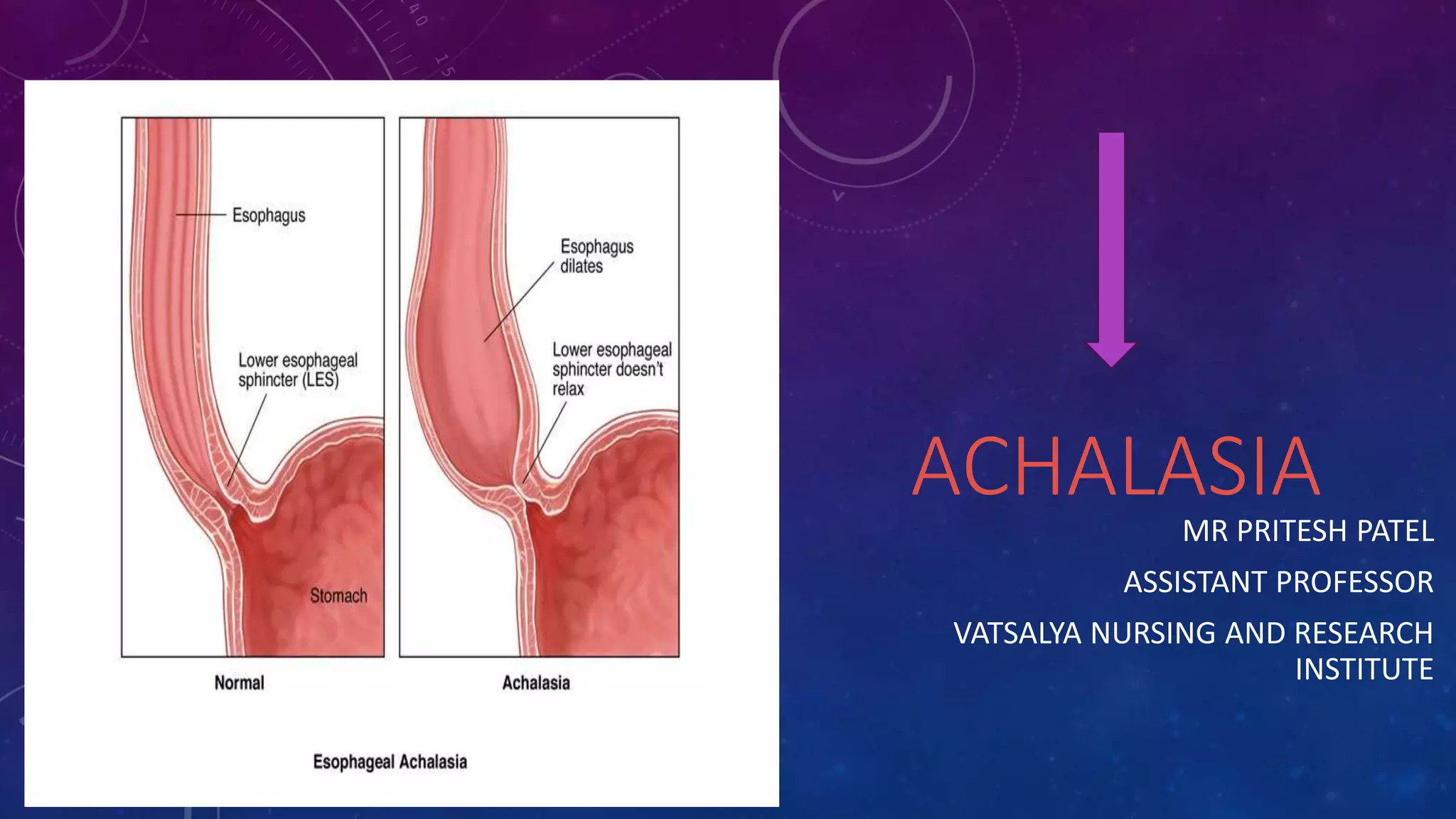
Achalasia occurs when nerves in the esophagus
become damaged. As a result, the esophagus
becomes paralyzed and dilated over time and
eventually loses the ability to squeeze food down
into the stomach. Food then collects in the
esophagus, sometimes fermenting and washing
back up into the mouth. Some people mistake this
for gastroesophageal reflux disease (GERD).
However, in achalasia the food is coming from the
esophagus, whereas in GERD the material comes from
the stomach.
ETIOLOGY
The exact cause of achalasia is poorly
understood. Researchers suspect it may be
caused by a loss of nerve cells in the
esophagus. There are theories about what
causes this, but viral infection or
autoimmune responses have been
suspected. Very rarely, achalasia may be
caused by an inherited genetic disorder or
infection.
Symptoms
Achalasia symptoms generally appear gradually and worsen over time. Signs and
symptoms may include:
• Inability to swallow (dysphagia), which may feel like food or drink is stuck in your
throat
• Regurgitating food or saliva
• Heartburn
• Belching
• Chest pain that comes and goes
• Coughing at night
• Pneumonia (from aspiration of food into the lungs)
• Weight loss
• Vomiting
Diagnosis
Esophageal manometry. This test measures the
rhythmic muscle contractions in your esophagus when
you swallow, the coordination and force exerted by the
esophagus muscles, and how well your lower
esophageal sphincter relaxes or opens during a
swallow. This test is the most helpful when
determining which type of motility problem you might
have.
• X-rays of your upper digestive system
• Upper endoscopy. Your doctor inserts a thin, flexible
tube equipped with a light and camera (endoscope)
down your throat, to examine the inside of your
esophagus and stomach. Endoscopy can be used to
define a partial blockage of the esophagus if your
symptoms or results of a barium study indicate that
possibility. Endoscopy can also be used to collect a
sample of tissue (biopsy) to be tested for
complications
Treatment
• Achalasia treatment focuses on relaxing or stretching open
the lower esophageal sphincter so that food and liquid can
move more easily through your digestive tract.
• Specific treatment depends on your age, health condition
and the severity of the achalasia.
Nonsurgical treatment
• Pneumatic dilation. A balloon is inserted by endoscopy
into the center of the esophageal sphincter and inflated
to enlarge the opening. This outpatient procedure may
need to be repeated if the esophageal sphincter doesn't
stay open. Nearly one-third of people treated with
balloon dilation need repeat treatment within five years.
This procedure requires sedation.
• Botox (botulinum toxin type . This muscle
relaxant can be injected directly into the
esophageal sphincter with an endoscopic
needle. The injections may need to be
repeated, and repeat injections may make it
more difficult to perform surgery later if
needed.
Medicine
• Medicines, such as nitrates or nifedipine, can
help to relax the muscles in your esophagus.
This makes swallowing easier and less painful
for some people, although they do not work for
everyone.
• The effect only lasts for a short time, so medicine
may be used to ease symptoms while you wait
for a more permanent treatment. They may
cause headaches, but this usually improves over
time.
• Injection botulinum toxin injection is given via
endoscopy .it insists the contraction of smooth
muscles .
• Patient is instructed to eat slowly and drink fluid with
meals .
• Stretching the muscle (balloon dilation)
• Under a sedative or general anesthetic, a balloon
is passed into the esophagus using a long, thin
flexible tube (endoscope). The balloon is then
inflated to help stretch the ring of muscle that lets
food into your stomach.
Surgery
• Under general anesthetic, the muscle fibers
in the ring of muscle that lets food into your
stomach are cut. This is done using keyhole
surgery (laparoscopy) and is called Heller's
Myotomy.
• In rare cases some people may need an
operation to remove part of their esophagus.
Nursing diagnoses for Achalasia
A nursing diagnosis is a clinical judgment about individual, family, or community experiences/responses to actual or
potential health problems/life processes. Here are 10 possible nursing diagnoses for a patient with achalasia:
1.Imbalanced Nutrition: Less Than Body Requirements related to difficulty
swallowing and reduced oral intake.
2.Risk for Aspiration related to regurgitation of food and fluids secondary to achalasia.
3.Impaired Swallowing related to esophageal dysmotility and lower esophageal
sphincter dysfunction.
4.Anxiety related to the diagnosis, symptoms, and future uncertainties.
5.Chronic Pain related to esophageal spasm and chest discomfort from food impaction.
6.Deficient Knowledge about the disease, its management, and self-care
requirements.
7.Risk for Social Isolation related to eating difficulties, fear of eating in public, and
possible embarrassment.
8.Ineffective Coping related to the chronic nature of the disease, frequent hospital
visits, and lifestyle changes.
9.Self-Care Deficit: Feeding related to physical difficulties with swallowing and fear of
choking or aspiration.
10.Disturbed Body Image related to significant weight loss and changes in physical
Achalasia.pptx

Achalasia.pptx

  • 1.
    ACHALASIA MR PRITESH PATEL ASSISTANTPROFESSOR VATSALYA NURSING AND RESEARCH INSTITUTE
  • 2.
    DEFINITION • Achalasia isa rare disorder that makes it difficult for food and liquid to pass from the swallowing tube connecting your mouth and stomach (esophagus) into your stomach.
  • 3.
    Achalasia occurs whennerves in the esophagus become damaged. As a result, the esophagus becomes paralyzed and dilated over time and eventually loses the ability to squeeze food down into the stomach. Food then collects in the esophagus, sometimes fermenting and washing back up into the mouth. Some people mistake this for gastroesophageal reflux disease (GERD). However, in achalasia the food is coming from the esophagus, whereas in GERD the material comes from the stomach.
  • 4.
    ETIOLOGY The exact causeof achalasia is poorly understood. Researchers suspect it may be caused by a loss of nerve cells in the esophagus. There are theories about what causes this, but viral infection or autoimmune responses have been suspected. Very rarely, achalasia may be caused by an inherited genetic disorder or infection.
  • 5.
    Symptoms Achalasia symptoms generallyappear gradually and worsen over time. Signs and symptoms may include: • Inability to swallow (dysphagia), which may feel like food or drink is stuck in your throat • Regurgitating food or saliva • Heartburn • Belching • Chest pain that comes and goes • Coughing at night • Pneumonia (from aspiration of food into the lungs) • Weight loss • Vomiting
  • 6.
    Diagnosis Esophageal manometry. Thistest measures the rhythmic muscle contractions in your esophagus when you swallow, the coordination and force exerted by the esophagus muscles, and how well your lower esophageal sphincter relaxes or opens during a swallow. This test is the most helpful when determining which type of motility problem you might have.
  • 7.
    • X-rays ofyour upper digestive system • Upper endoscopy. Your doctor inserts a thin, flexible tube equipped with a light and camera (endoscope) down your throat, to examine the inside of your esophagus and stomach. Endoscopy can be used to define a partial blockage of the esophagus if your symptoms or results of a barium study indicate that possibility. Endoscopy can also be used to collect a sample of tissue (biopsy) to be tested for complications
  • 8.
    Treatment • Achalasia treatmentfocuses on relaxing or stretching open the lower esophageal sphincter so that food and liquid can move more easily through your digestive tract. • Specific treatment depends on your age, health condition and the severity of the achalasia. Nonsurgical treatment • Pneumatic dilation. A balloon is inserted by endoscopy into the center of the esophageal sphincter and inflated to enlarge the opening. This outpatient procedure may need to be repeated if the esophageal sphincter doesn't stay open. Nearly one-third of people treated with balloon dilation need repeat treatment within five years. This procedure requires sedation.
  • 9.
    • Botox (botulinumtoxin type . This muscle relaxant can be injected directly into the esophageal sphincter with an endoscopic needle. The injections may need to be repeated, and repeat injections may make it more difficult to perform surgery later if needed.
  • 10.
    Medicine • Medicines, suchas nitrates or nifedipine, can help to relax the muscles in your esophagus. This makes swallowing easier and less painful for some people, although they do not work for everyone. • The effect only lasts for a short time, so medicine may be used to ease symptoms while you wait for a more permanent treatment. They may cause headaches, but this usually improves over time.
  • 11.
    • Injection botulinumtoxin injection is given via endoscopy .it insists the contraction of smooth muscles . • Patient is instructed to eat slowly and drink fluid with meals . • Stretching the muscle (balloon dilation) • Under a sedative or general anesthetic, a balloon is passed into the esophagus using a long, thin flexible tube (endoscope). The balloon is then inflated to help stretch the ring of muscle that lets food into your stomach.
  • 12.
    Surgery • Under generalanesthetic, the muscle fibers in the ring of muscle that lets food into your stomach are cut. This is done using keyhole surgery (laparoscopy) and is called Heller's Myotomy. • In rare cases some people may need an operation to remove part of their esophagus.
  • 13.
    Nursing diagnoses forAchalasia A nursing diagnosis is a clinical judgment about individual, family, or community experiences/responses to actual or potential health problems/life processes. Here are 10 possible nursing diagnoses for a patient with achalasia: 1.Imbalanced Nutrition: Less Than Body Requirements related to difficulty swallowing and reduced oral intake. 2.Risk for Aspiration related to regurgitation of food and fluids secondary to achalasia. 3.Impaired Swallowing related to esophageal dysmotility and lower esophageal sphincter dysfunction. 4.Anxiety related to the diagnosis, symptoms, and future uncertainties. 5.Chronic Pain related to esophageal spasm and chest discomfort from food impaction. 6.Deficient Knowledge about the disease, its management, and self-care requirements. 7.Risk for Social Isolation related to eating difficulties, fear of eating in public, and possible embarrassment. 8.Ineffective Coping related to the chronic nature of the disease, frequent hospital visits, and lifestyle changes. 9.Self-Care Deficit: Feeding related to physical difficulties with swallowing and fear of choking or aspiration. 10.Disturbed Body Image related to significant weight loss and changes in physical