
Accelerating the end of
hunger and undernutrition
Rajul Pandya-Lorch
Chief of Staff and Head, 2020 Vision Initiative, IFPRI
ReSAKSS Annual Conference
October 18, 2016
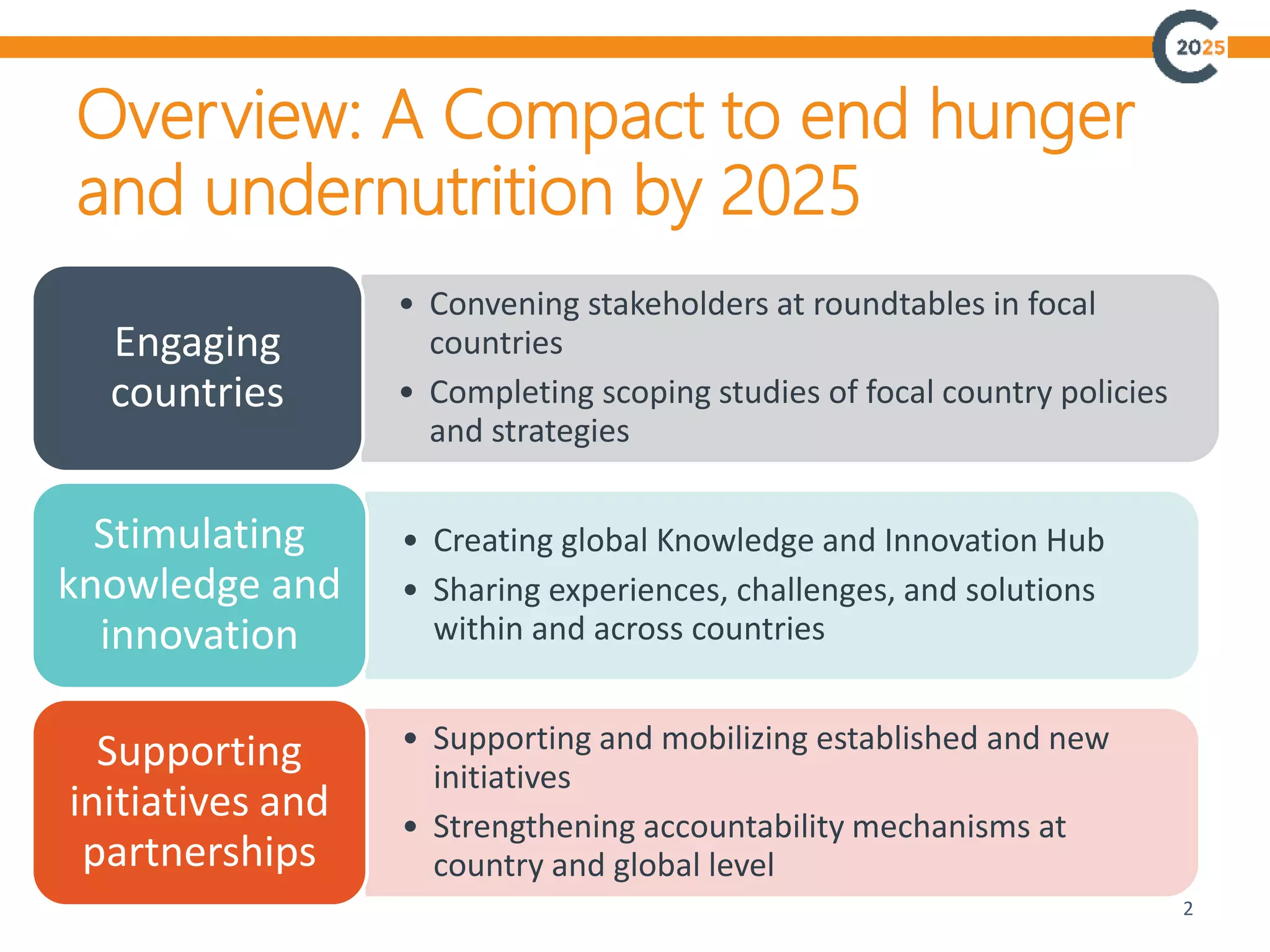
Overview: A Compact to end hunger
and undernutrition by 2025
2
• Convening stakeholders at roundtables in focal
countries
• Completing scoping studies of focal country policies
and strategies
Engaging
countries
• Creating global Knowledge and Innovation Hub
• Sharing experiences, challenges, and solutions
within and across countries
Stimulating
knowledge and
innovation
• Supporting and mobilizing established and new
initiatives
• Strengthening accountability mechanisms at
country and global level
Supporting
initiatives and
partnerships
Anastase Murekezi, Prime
Minister of Rwanda and
Shenggen Fan
Mashiur Rahman, Economic
Affairs Adviser to the Prime
Minister of Bangladesh
Shenggen Fan; Demeke
Mekonnen, Deputy Prime
Minister of Ethiopia; and
Newai Gebre-Ab
Saulos Chilima, Vice President
of Malawi
Country roundtable discussions
Bangladesh
May 5, 2016
Ethiopia
March 28, 2016
Rwanda
March 24, 2016
Malawi
May 26, 2016
3Roundtable discussion participants
Roundtable discussion results
4
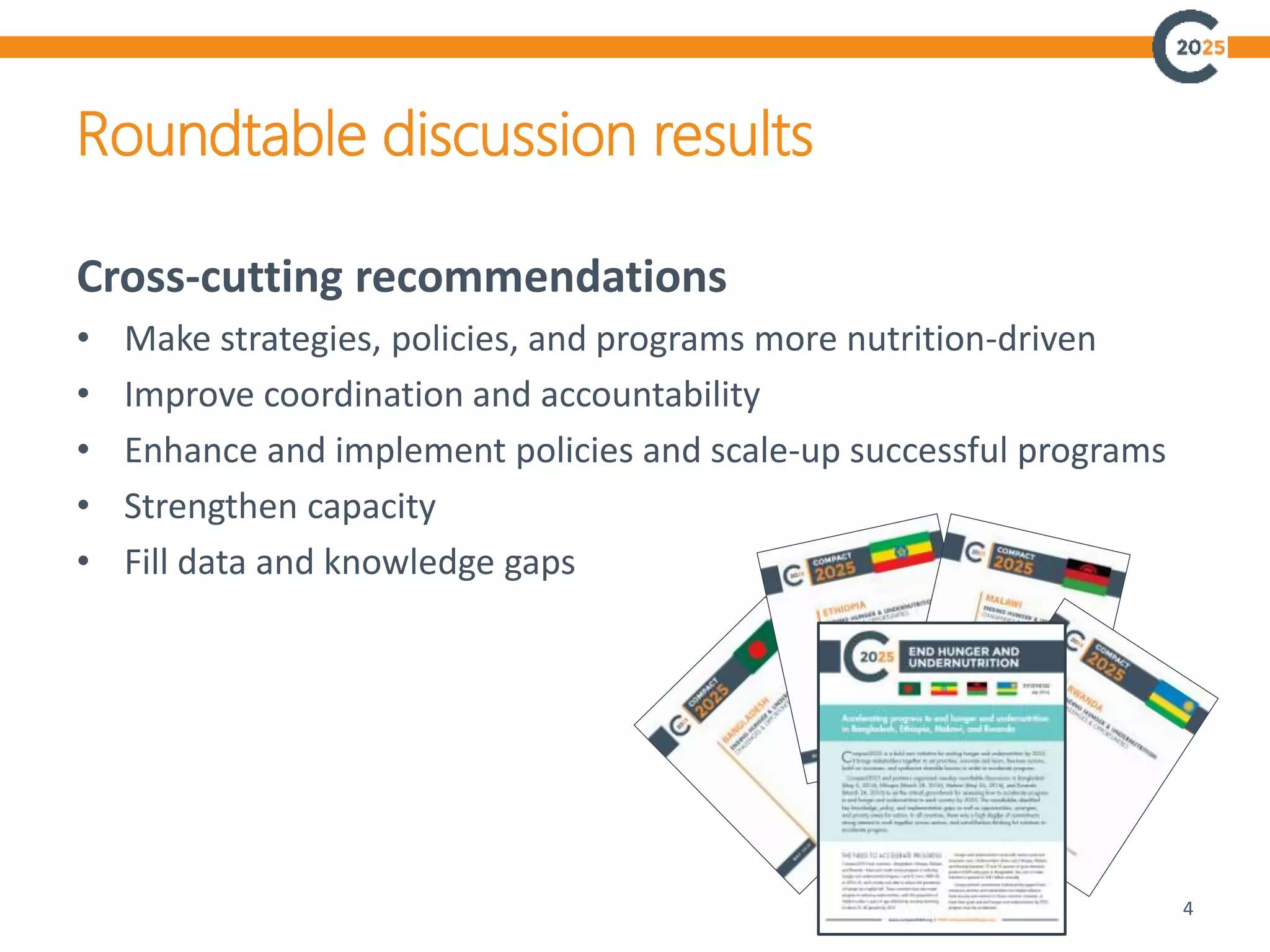
Cross-cutting recommendations
• Make strategies, policies, and programs more nutrition-driven
• Improve coordination and accountability
• Enhance and implement policies and scale-up successful programs
• Strengthen capacity
• Fill data and knowledge gaps
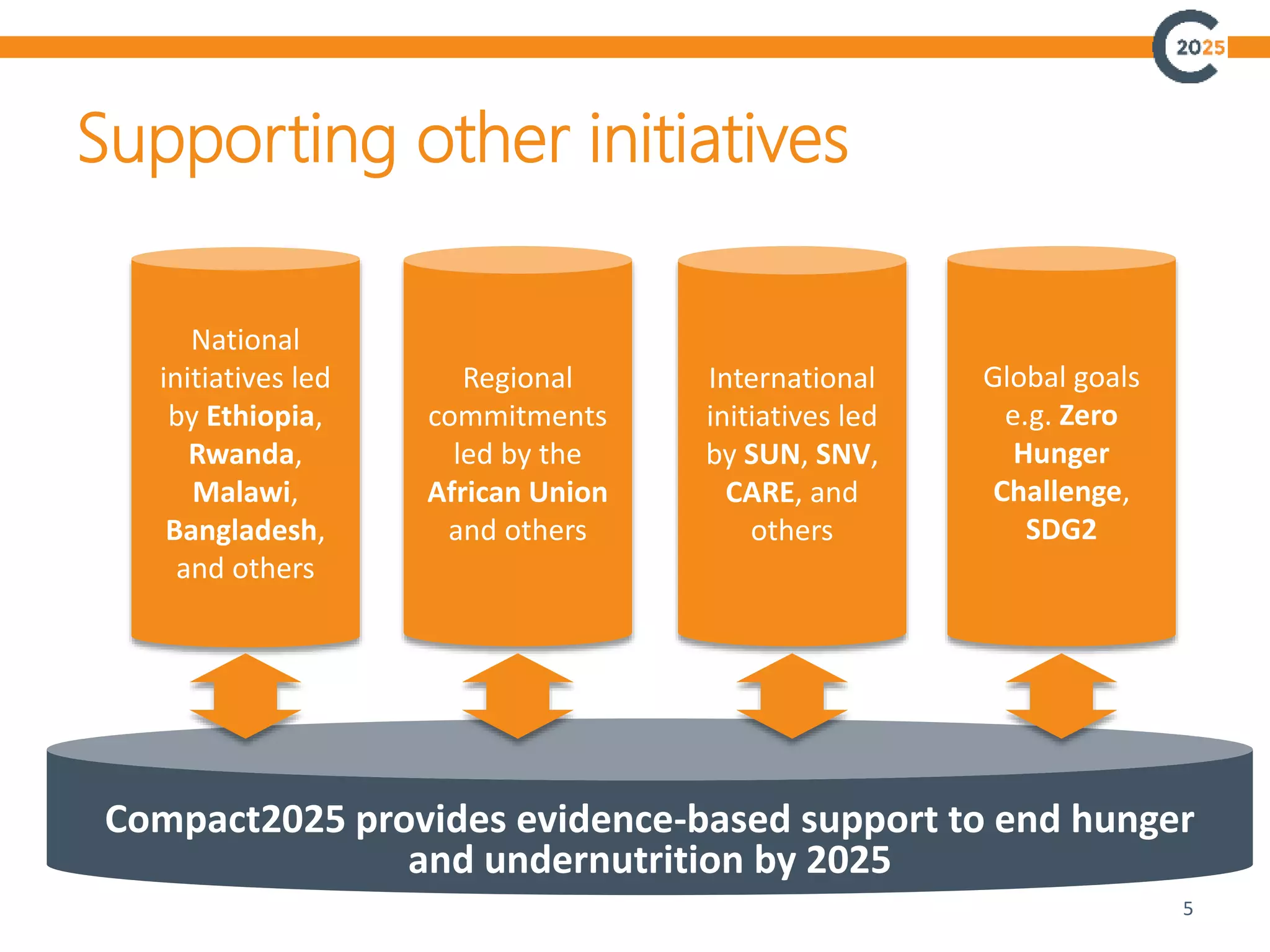
Supporting other initiatives
5
Compact2025 provides evidence-based support to end hunger
and undernutrition by 2025
National
initiatives led
by Ethiopia,
Rwanda,
Malawi,
Bangladesh,
and others
Regional
commitments
led by the
African Union
and others
International
initiatives led
by SUN, SNV,
CARE, and
others
Global goals
e.g. Zero
Hunger
Challenge,
SDG2
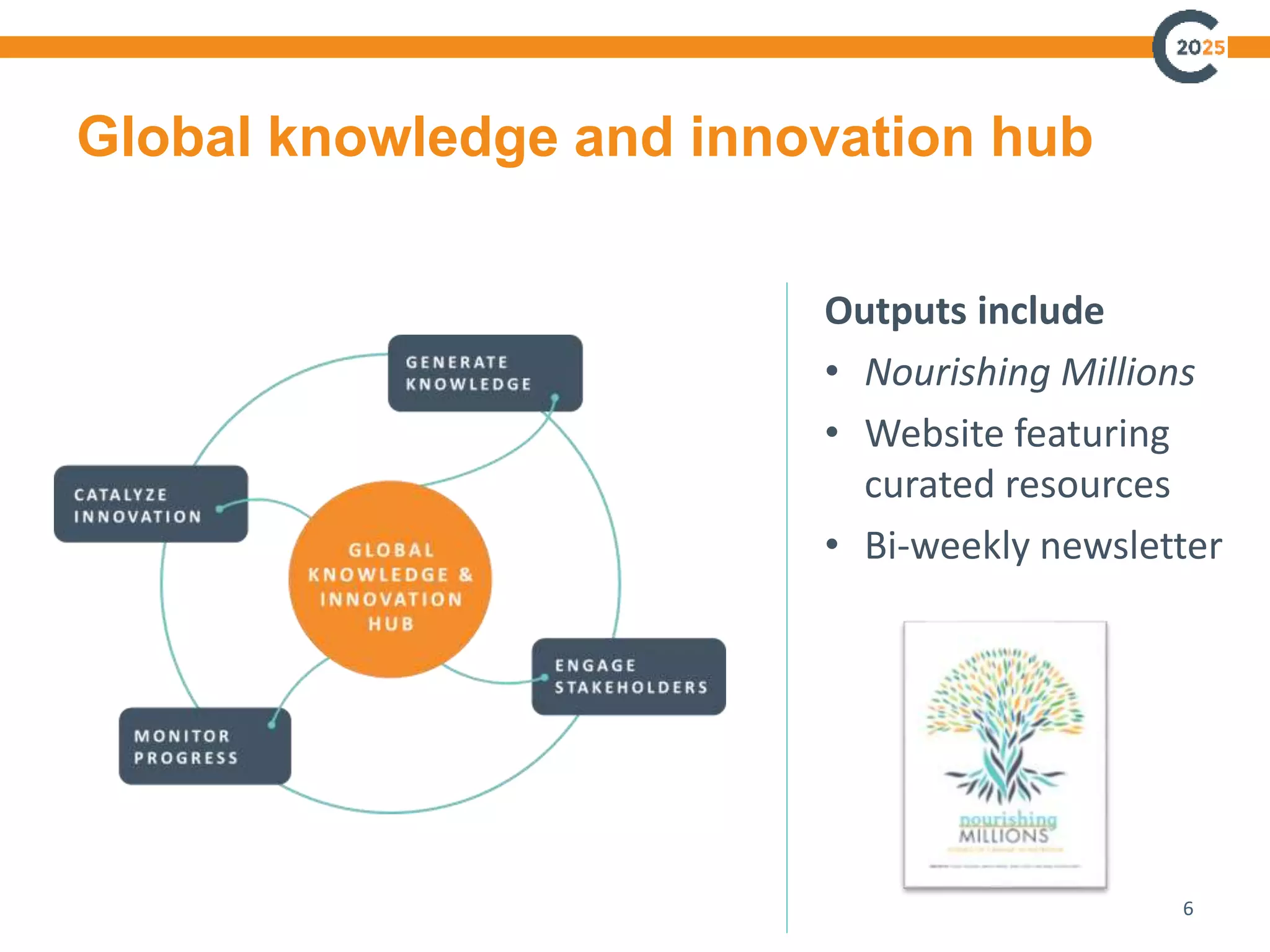
Global knowledge and innovation hub
6
Outputs include
• Nourishing Millions
• Website featuring
curated resources
• Bi-weekly newsletter
7
Nourishing Millions:
A Compact2025 product
8
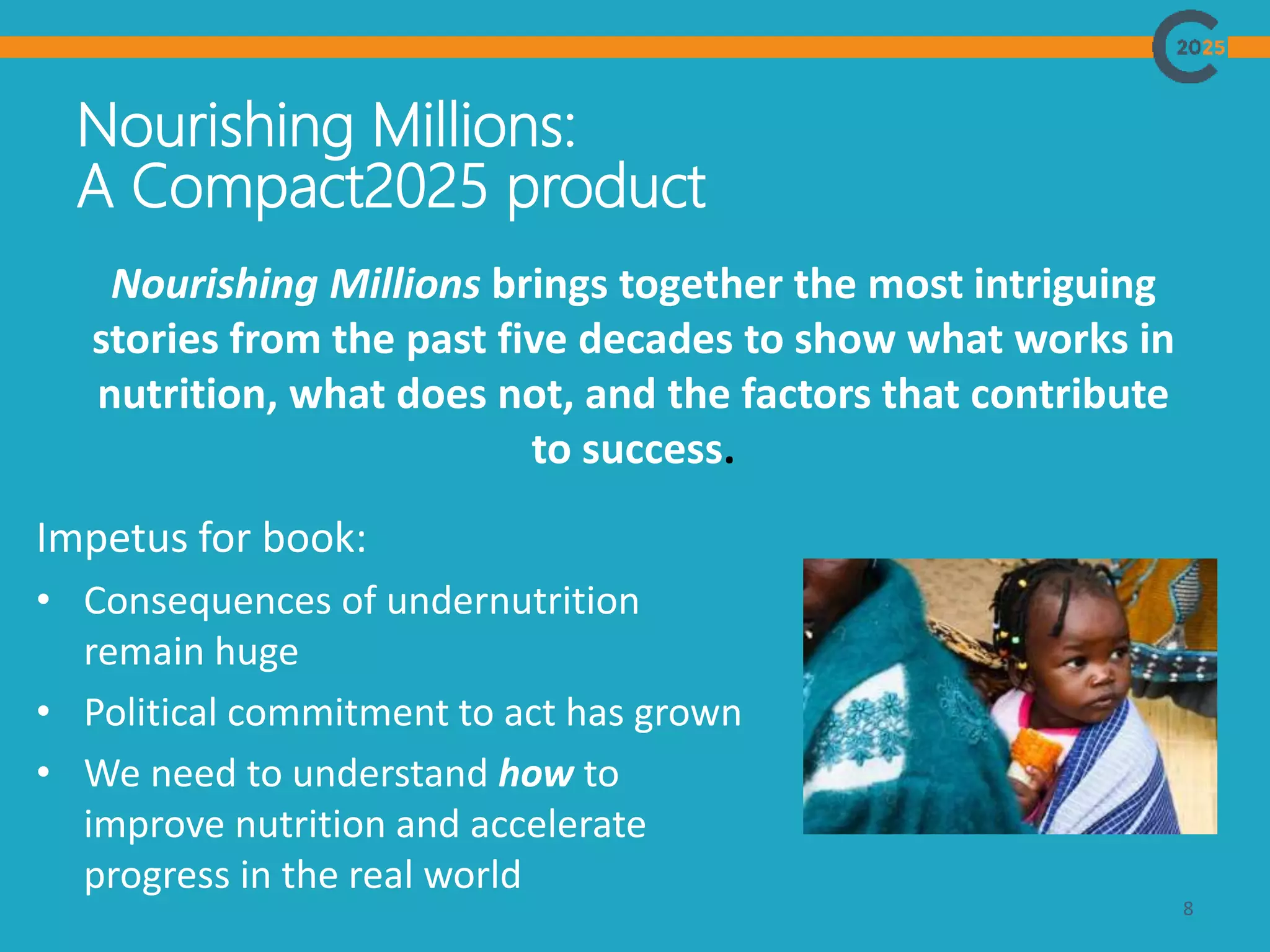
Nourishing Millions brings together the most intriguing
stories from the past five decades to show what works in
nutrition, what does not, and the factors that contribute
to success.
Impetus for book:
• Consequences of undernutrition
remain huge
• Political commitment to act has grown
• We need to understand how to
improve nutrition and accelerate
progress in the real world
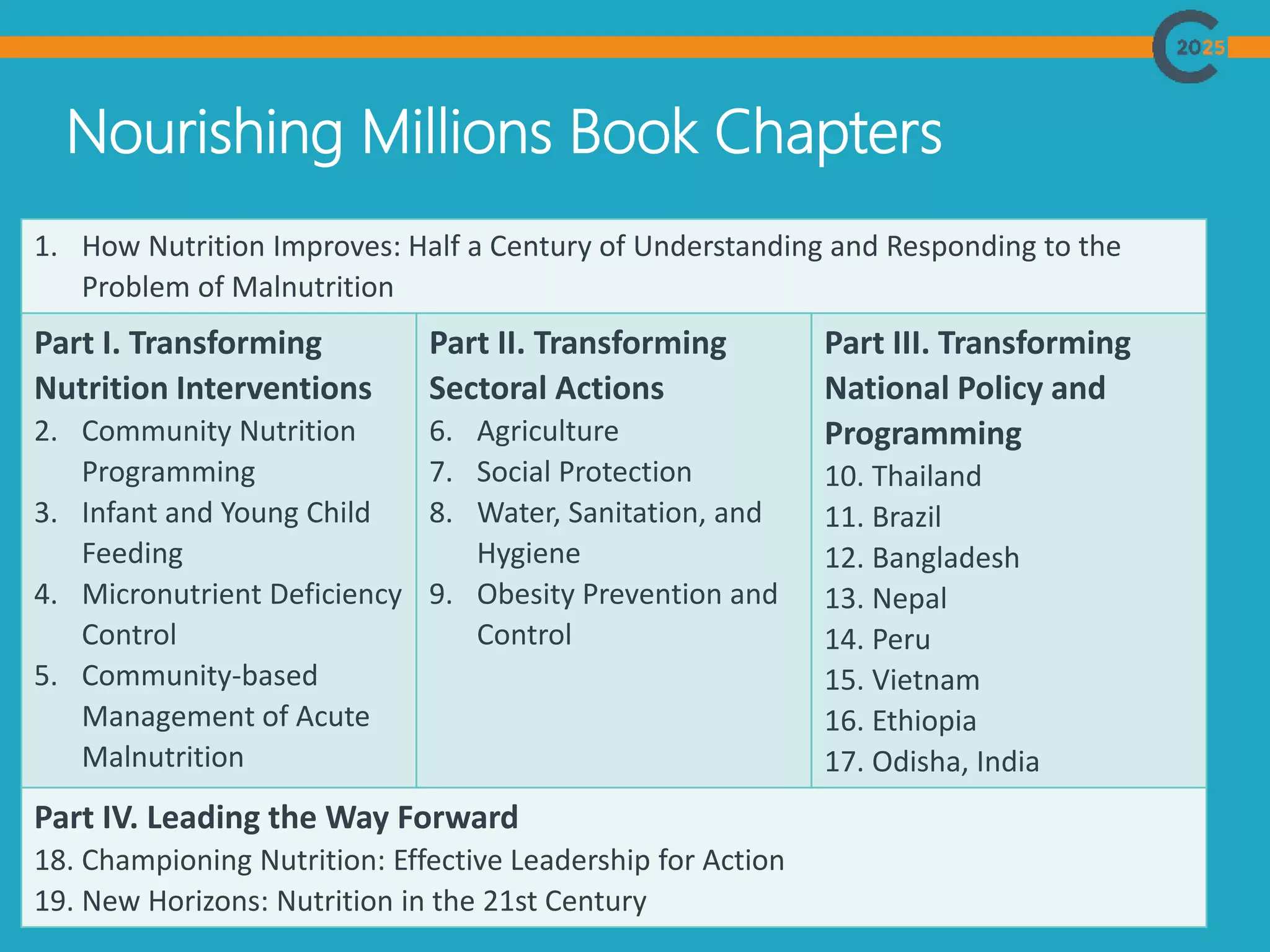
Nourishing Millions Book Chapters
9
1. How Nutrition Improves: Half a Century of Understanding and Responding to the
Problem of Malnutrition
Part I. Transforming
Nutrition Interventions
2. Community Nutrition
Programming
3. Infant and Young Child
Feeding
4. Micronutrient Deficiency
Control
5. Community-based
Management of Acute
Malnutrition
Part II. Transforming
Sectoral Actions
6. Agriculture
7. Social Protection
8. Water, Sanitation, and
Hygiene
9. Obesity Prevention and
Control
Part III. Transforming
National Policy and
Programming
10. Thailand
11. Brazil
12. Bangladesh
13. Nepal
14. Peru
15. Vietnam
16. Ethiopia
17. Odisha, India
Part IV. Leading the Way Forward
18. Championing Nutrition: Effective Leadership for Action
19. New Horizons: Nutrition in the 21st Century
Agriculture, WASH, and Safety Nets:
Ethiopia’s Multisector Story
Ethiopia has made significant progress in addressing both
immediate determinants of undernutrition (e.g. health
status and nutrient intake) and underlying determinants
(e.g. education, sanitation, and food security).
Stunting
reduced
from 57% to
44% in 2000-
2011.
In 2000-2010, gov’t spending
on education rose from 9% to
17%, and on social protection
from 7% to 20%.
Food production per
capita rose 2-3% per
year from 2002-2012.
Ethiopia’s Multisector Story: Factors
Contributing to Success
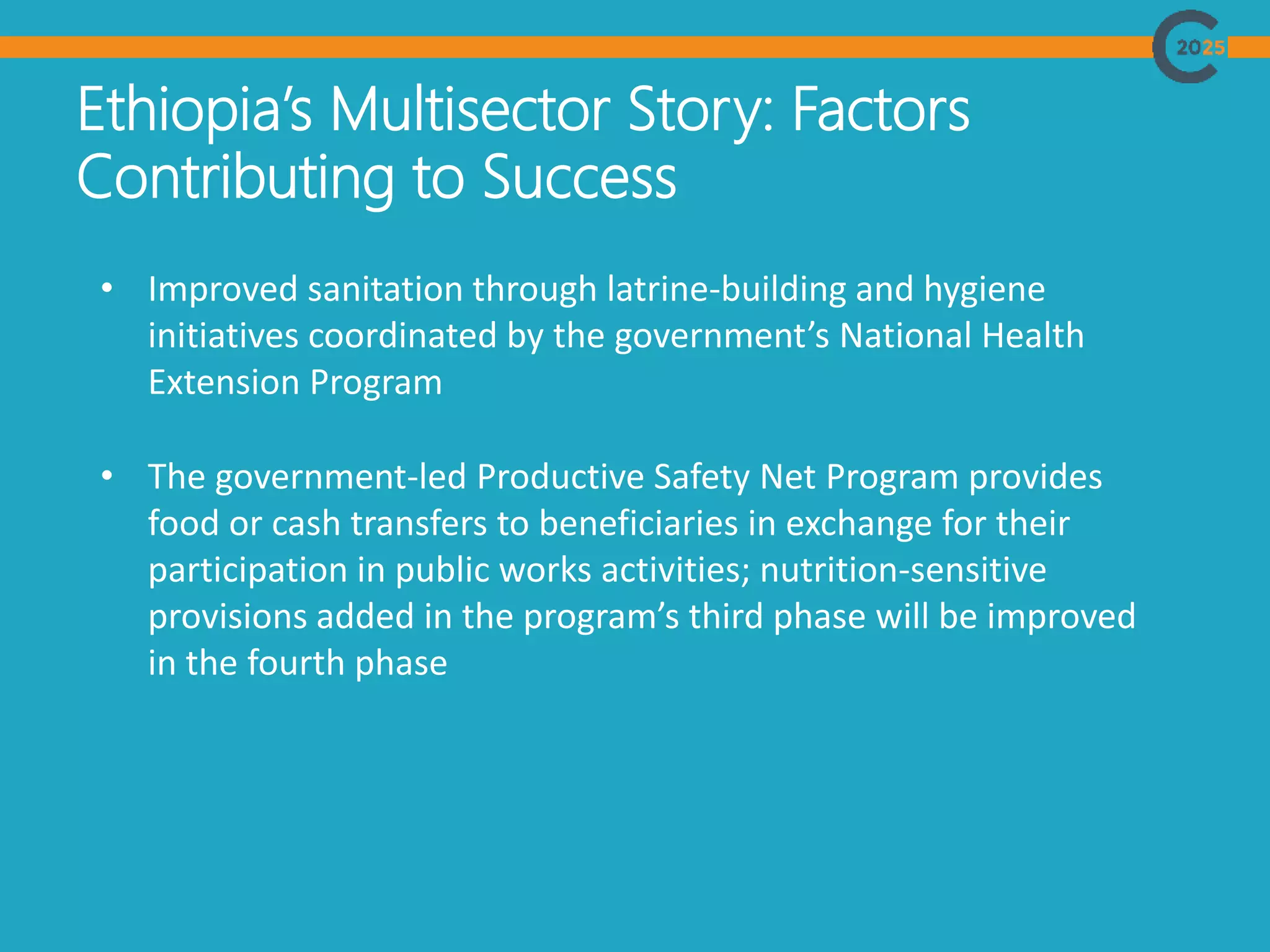
• National improvements in agricultural production
• Until recently, agricultural programs focused on food
production… landscape changing but slowly
• But agriculture is not enough.
Significant investments in:
– Improved sanitation and hygiene
– Social protection (PSNP)
IFPRI/M. Mitchell
Ethiopia’s Multisector Story: Factors
Contributing to Success
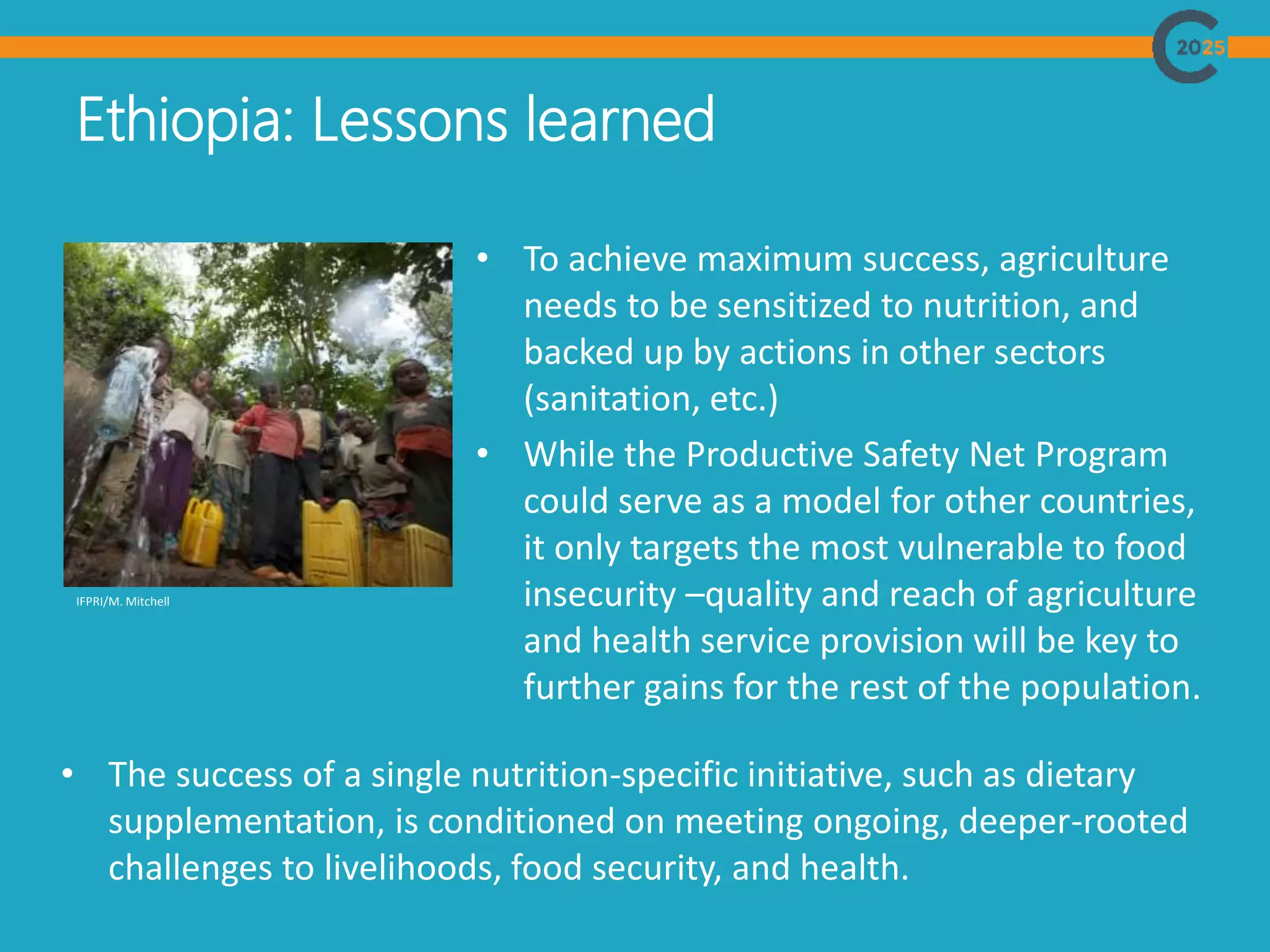
• Improved sanitation through latrine-building and hygiene
initiatives coordinated by the government’s National Health
Extension Program
• The government-led Productive Safety Net Program provides
food or cash transfers to beneficiaries in exchange for their
participation in public works activities; nutrition-sensitive
provisions added in the program’s third phase will be improved
in the fourth phase
Ethiopia: Lessons learned
• To achieve maximum success, agriculture
needs to be sensitized to nutrition, and
backed up by actions in other sectors
(sanitation, etc.)
• While the Productive Safety Net Program
could serve as a model for other countries,
it only targets the most vulnerable to food
insecurity –quality and reach of agriculture
and health service provision will be key to
further gains for the rest of the population.
IFPRI/M. Mitchell
• The success of a single nutrition-specific initiative, such as dietary
supplementation, is conditioned on meeting ongoing, deeper-rooted
challenges to livelihoods, food security, and health.
Key Lessons from Nourishing Millions
14
• At the individual level, malnutrition is caused by inadequate
dietary intake, often interacting with disease and poor care.
Nutrition-specific interventions can make inroads if well-
targeted and well-implemented, but they cannot solve the
problem by themselves.
• Transforming sectoral actions to make them more nutrition-
sensitive is critical for improvements at household and
community levels.
• At the country level, enabling environments are key and
include political commitment, governance, policy, legal
frameworks, capacity, and financing
Compact2025
A global partnership to accelerate progress to
end hunger and undernutrition

Accelerating the end of hunger and undernutrition

  • 1.
    Accelerating the endof hunger and undernutrition Rajul Pandya-Lorch Chief of Staff and Head, 2020 Vision Initiative, IFPRI ReSAKSS Annual Conference October 18, 2016
  • 2.
    Overview: A Compactto end hunger and undernutrition by 2025 2 • Convening stakeholders at roundtables in focal countries • Completing scoping studies of focal country policies and strategies Engaging countries • Creating global Knowledge and Innovation Hub • Sharing experiences, challenges, and solutions within and across countries Stimulating knowledge and innovation • Supporting and mobilizing established and new initiatives • Strengthening accountability mechanisms at country and global level Supporting initiatives and partnerships
  • 3.
    Anastase Murekezi, Prime Ministerof Rwanda and Shenggen Fan Mashiur Rahman, Economic Affairs Adviser to the Prime Minister of Bangladesh Shenggen Fan; Demeke Mekonnen, Deputy Prime Minister of Ethiopia; and Newai Gebre-Ab Saulos Chilima, Vice President of Malawi Country roundtable discussions Bangladesh May 5, 2016 Ethiopia March 28, 2016 Rwanda March 24, 2016 Malawi May 26, 2016 3Roundtable discussion participants
  • 4.
    Roundtable discussion results 4 Cross-cuttingrecommendations • Make strategies, policies, and programs more nutrition-driven • Improve coordination and accountability • Enhance and implement policies and scale-up successful programs • Strengthen capacity • Fill data and knowledge gaps
  • 5.
    Supporting other initiatives 5 Compact2025provides evidence-based support to end hunger and undernutrition by 2025 National initiatives led by Ethiopia, Rwanda, Malawi, Bangladesh, and others Regional commitments led by the African Union and others International initiatives led by SUN, SNV, CARE, and others Global goals e.g. Zero Hunger Challenge, SDG2
  • 6.
    Global knowledge andinnovation hub 6 Outputs include • Nourishing Millions • Website featuring curated resources • Bi-weekly newsletter
  • 7.
  • 8.
    Nourishing Millions: A Compact2025product 8 Nourishing Millions brings together the most intriguing stories from the past five decades to show what works in nutrition, what does not, and the factors that contribute to success. Impetus for book: • Consequences of undernutrition remain huge • Political commitment to act has grown • We need to understand how to improve nutrition and accelerate progress in the real world
  • 9.
    Nourishing Millions BookChapters 9 1. How Nutrition Improves: Half a Century of Understanding and Responding to the Problem of Malnutrition Part I. Transforming Nutrition Interventions 2. Community Nutrition Programming 3. Infant and Young Child Feeding 4. Micronutrient Deficiency Control 5. Community-based Management of Acute Malnutrition Part II. Transforming Sectoral Actions 6. Agriculture 7. Social Protection 8. Water, Sanitation, and Hygiene 9. Obesity Prevention and Control Part III. Transforming National Policy and Programming 10. Thailand 11. Brazil 12. Bangladesh 13. Nepal 14. Peru 15. Vietnam 16. Ethiopia 17. Odisha, India Part IV. Leading the Way Forward 18. Championing Nutrition: Effective Leadership for Action 19. New Horizons: Nutrition in the 21st Century
  • 10.
    Agriculture, WASH, andSafety Nets: Ethiopia’s Multisector Story Ethiopia has made significant progress in addressing both immediate determinants of undernutrition (e.g. health status and nutrient intake) and underlying determinants (e.g. education, sanitation, and food security). Stunting reduced from 57% to 44% in 2000- 2011. In 2000-2010, gov’t spending on education rose from 9% to 17%, and on social protection from 7% to 20%. Food production per capita rose 2-3% per year from 2002-2012.
  • 11.
    Ethiopia’s Multisector Story:Factors Contributing to Success • National improvements in agricultural production • Until recently, agricultural programs focused on food production… landscape changing but slowly • But agriculture is not enough. Significant investments in: – Improved sanitation and hygiene – Social protection (PSNP) IFPRI/M. Mitchell
  • 12.
    Ethiopia’s Multisector Story:Factors Contributing to Success • Improved sanitation through latrine-building and hygiene initiatives coordinated by the government’s National Health Extension Program • The government-led Productive Safety Net Program provides food or cash transfers to beneficiaries in exchange for their participation in public works activities; nutrition-sensitive provisions added in the program’s third phase will be improved in the fourth phase
  • 13.
    Ethiopia: Lessons learned •To achieve maximum success, agriculture needs to be sensitized to nutrition, and backed up by actions in other sectors (sanitation, etc.) • While the Productive Safety Net Program could serve as a model for other countries, it only targets the most vulnerable to food insecurity –quality and reach of agriculture and health service provision will be key to further gains for the rest of the population. IFPRI/M. Mitchell • The success of a single nutrition-specific initiative, such as dietary supplementation, is conditioned on meeting ongoing, deeper-rooted challenges to livelihoods, food security, and health.
  • 14.
    Key Lessons fromNourishing Millions 14 • At the individual level, malnutrition is caused by inadequate dietary intake, often interacting with disease and poor care. Nutrition-specific interventions can make inroads if well- targeted and well-implemented, but they cannot solve the problem by themselves. • Transforming sectoral actions to make them more nutrition- sensitive is critical for improvements at household and community levels. • At the country level, enabling environments are key and include political commitment, governance, policy, legal frameworks, capacity, and financing
  • 15.
    Compact2025 A global partnershipto accelerate progress to end hunger and undernutrition

Editor's Notes

  • #9 During the last 10-15 years, malnutrition has received unprecedented attention SUN Movement Lancet Maternal and Child Nutrition Series ICN2 The attention has come just in time, considering the huge social and economic costs of undernutrition Undernutrition kills and stunts millions of young children annually, reduces the amount of schooling children attain, and increases the likelihood of their being poor as adults. Underweight mothers are more likely to give birth to underweight children, perpetuating undernutrition across generations. Undernutrition reduces global gross domestic product by up to $2.1 trillion a year—the size of the total economy of Africa south of the Sahara. This era of “recommitment” prompted IFPRI and Compact2025 to launch the Nourishing Millions book– to give guidance on how to actually design, implement, evaluate, and scale up nutrition policies and programs. It collected nominations and conducted interviews to select the case studies, all of which are peer-reviewed. NM looks at the evolution of nutrition during the past few decades, and then launches into case studies: of nutrition-specific actions like breastfeeding and community-based treatment of acute malnutrition; nutrition-sensitive actions through sectors like agriculture and water and sanitation; country stories of success; and an exploration of leadership in nutrition. NM takes a storytelling approach, since stories are effective in inspiring people. At the same time, it is a collection of the latest evidence on various nutrition-specific and nutrition-sensitive interventions. How effective they actually were, what kind of impact they made.
  • #10 Example from Part 1: The Community nutrition programming chapter profiles community-based and community-driven interventions. One example is the Iringa Nutrition Program in Tanzania, which ran in the 1980s and used a community model. Community workers monitored and identified malnourished children and then worked with families to analyze possible causes and draw up an action plan in conjunction with local government organizations. The action plan could involve counseling, health services, or participation in a livelihood-creation, microcredit, or social protection program. In 5 years, the program almost eliminated severe malnutrition (from 6.3% to 1.8%) and reduced moderate malnutrition by half. Example from Part 2: The water, sanitation, and hygiene (WASH) chapter looks at the impact of these interventions on nutrition outcomes through pathways that could include : diarrhea, other types of infection (e.g. parasites); and environmental enteropathy (ingestion of pathogens that damage the gut and prevent full absorption of nutrients). Studies have found that 54% of variation in average child height in poor and middle-income countries can be attributed to open defecation. In Mali, a community-led total sanitation (CLTS) campaign was spearheaded in 2009 by the government and aimed at complete elimination of open defecation. 1,400 villages achieved open-defecation-free status as of 2014 and children <5 yrs in participating villages had 0.18 higher height-for-age z scores and were 13% less likely to be stunted
  • #11 Over the past 25 years, Ethiopia has made remarkable headway in addressing the country’s nutrition situation. Despite ongoing challenges, significant progress has been made toward meeting the Millennium Development Goals, including halving child mortality, doubling the number of people with access to clean water quadrupling primary school enrollment. The programs, strategies, and partnerships developed by the government during the past 10 years, including the National Health Extension Program, Community-Based Nutrition Program, wheat fortification and salt iodization programs, and the National Nutrition Program, have made major inroads. Despite all of these actions, the most significant contributions to reducing child stunting nationwide may have come from growth in the agricultural sector, along with widespread improvements in sanitation.
  • #12 Between 2004-2014, agricultural grew nearly 8 percent annually. Crop production accounts for 1/3 of all GDP growth. The Ethiopian government invested significantly in widespread distribution of improved seed and fertilizer, and also environmental rehabilitation of degraded areas, using physical labor from its Productive Safety Net Program, or PSNP. Until recently, agricultural programs focused largely on the sectoral mandate of increasing food production, while giving less attention to consumption. This emphasis is changing, with extension workers beginning to advise farmers to grow and consume a variety of fruits and vegetables. Increases in crop production do not inevitably translate into better nutritional outcomes in the immediate term but can lay the foundation for more diversified pathways between agriculture and improved nutrition to come. But agriculture is not enough. Ethiopia’s story is a multisectoral one and involved sanitation and social protection as well.
  • #13 Around the same time, in 2003, there was a drive to promote small doable practices to improve sanitation and hygiene, emphasizing latrine-building and hand washing at critical times. This was considered to be a high impact preventative approach to sanitation, and it was also combined with elements from the successful Community-Led Total Sanitation Program, which emphasizes zero defecation using behavior change communication. The approach was piloted in 20 districts before being scaled up, backed up by budgetary support and resources and staff from the existing National Health Extension Program. The PSNP is one last piece of the puzzle. It is one of the largest social protection programs in Africa south of the Sahara. It is now in its 4th phase, and will attempt to tie agriculture and health efforts together with nutrition. It will do so by, for example, linking with the Ministry of Health to connect clients with health services, giving clients the option to replace a portion of their public works obligations with behavior change communication, making public works more sensitive to gender, and including households with temporary nutrition emergencies.
  • #14 Ethiopia’s successes demonstrates a commitment to multisectoral action. While a focus on improving the distribution of agricultural inputs (such as fertilizer and seeds ) is credited with increased food production, it is not enough to impact all facets of nutrition. The government begun sensitizing agriculture to nutrition (by emphasizing crop diversity, for example) and invested heavily in other sectors such as sanitation and hygiene. It also invested in social protection as a way of supporting agricultural efforts, and is planning on sensitizing the program to nutrition in its next phase. This cascade of interventions also show that the success of a single nutrition-specific initiative is conditioned on meeting ongoing, deeper-rooted challenges to livelihoods, food security, and health that other sectors may be able to address.
  • #15 These are just two case studies from the many featured in NM. The three sections of the NM book highlight the three core levels of response to malnutrition. For individuals, malnutrition is caused by inadequate dietary intake, often interacting with disease and poor care. Nutrition-specific interventions can make progress at this level but they are not enough by themselves. At the underlying level, corresponding to households and communities, we see the importance of transforming sectoral actions—for example, within agriculture, social protection, and water, sanitation, and hygiene—to make them more nutrition-sensitive. And at the base of the framework lie country-level enabling environments, in which political commitment, governance, policy, and financing are all key. Political commitment is a fundamental ingredient of any enabling environment, and in that area, we have done well during the past decade. Even if malnutrition does succeed in capturing the attention of politicians and policymakers, the next challenge is to figure out what to do. Commitment and knowledge of what works must lead to large-scale implementation of nutrition-relevant policies and programs. This is the new frontier for nutrition and the main take-home message of Nourishing Millions. The Nourishing Millions book and other resources like an 8-page synopsis, 100-slide powerpoint, infographic, and more can be found on the website nourishingmillions.ifpri.info.