© 2014 Bill & Melinda Gates Foundation
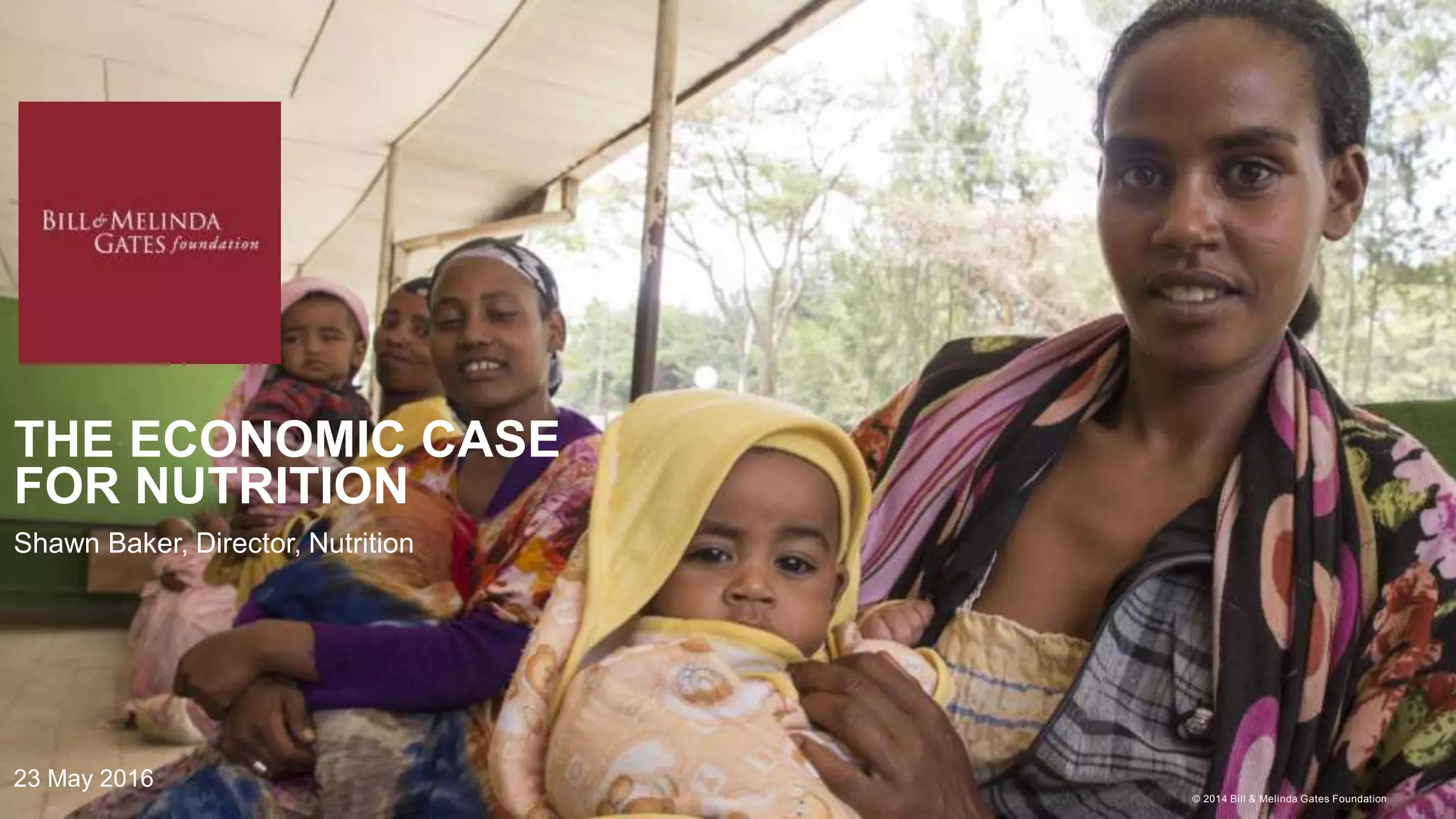
THE ECONOMIC CASE
FOR NUTRITION
Shawn Baker, Director, Nutrition
23 May 2016
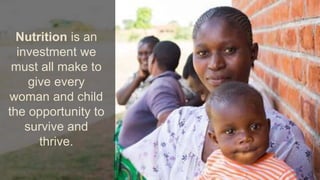
Nutrition is an
investment we
must all make to
give every
woman and child
the opportunity to
survive and
thrive.
© Bill & Melinda Gates Foundation | 3
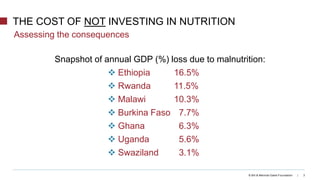
Snapshot of annual GDP (%) loss due to malnutrition:
 Ethiopia 16.5%
 Rwanda 11.5%
 Malawi 10.3%
 Burkina Faso 7.7%
 Ghana 6.3%
 Uganda 5.6%
 Swaziland 3.1%
THE COST OF NOT INVESTING IN NUTRITION
Assessing the consequences
© Bill & Melinda Gates Foundation | 4
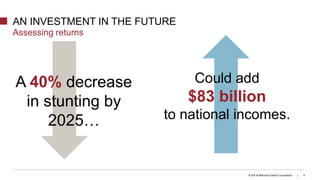
AN INVESTMENT IN THE FUTURE
Assessing returns
A 40% decrease
in stunting by
2025…
Could add
$83 billion
to national incomes.
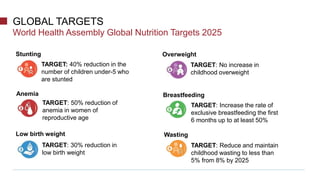
GLOBAL TARGETS
World Health Assembly Global Nutrition Targets 2025
TARGET: 40% reduction in the
number of children under-5 who
are stunted
Stunting
Anemia
TARGET: 50% reduction of
anemia in women of
reproductive age
Low birth weight
TARGET: 30% reduction in
low birth weight
TARGET: Reduce and maintain
childhood wasting to less than
5% from 8% by 2025
Wasting
Breastfeeding
TARGET: Increase the rate of
exclusive breastfeeding the first
6 months up to at least 50%
Overweight
TARGET: No increase in
childhood overweight
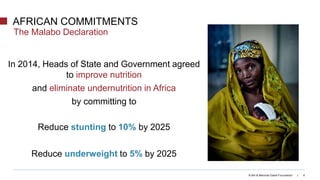
The Malabo Declaration
© Bill & Melinda Gates Foundation | 6
In 2014, Heads of State and Government agreed
to improve nutrition
and eliminate undernutrition in Africa
by committing to
Reduce stunting to 10% by 2025
Reduce underweight to 5% by 2025
AFRICAN COMMITMENTS
© Bill & Melinda Gates Foundation | 7
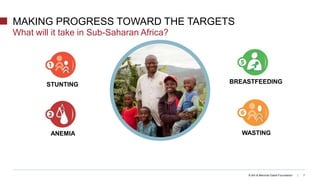
MAKING PROGRESS TOWARD THE TARGETS
What will it take in Sub-Saharan Africa?
ANEMIA
WASTING
BREASTFEEDINGSTUNTING
ANEMIA
© Bill & Melinda Gates Foundation | 8
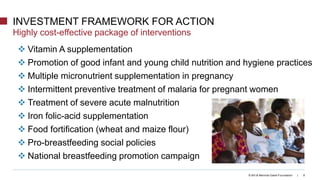
 Vitamin A supplementation
 Promotion of good infant and young child nutrition and hygiene practices
 Multiple micronutrient supplementation in pregnancy
 Intermittent preventive treatment of malaria for pregnant women
 Treatment of severe acute malnutrition
 Iron folic-acid supplementation
 Food fortification (wheat and maize flour)
 Pro-breastfeeding social policies
 National breastfeeding promotion campaign
INVESTMENT FRAMEWORK FOR ACTION
Highly cost-effective package of interventions
© Bill & Melinda Gates Foundation | 9
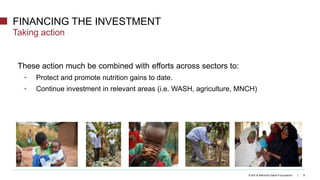
These action much be combined with efforts across sectors to:
• Protect and promote nutrition gains to date.
• Continue investment in relevant areas (i.e. WASH, agriculture, MNCH)
FINANCING THE INVESTMENT
Taking action
Because progress is possible
INVEST IN NUTRITION NOW
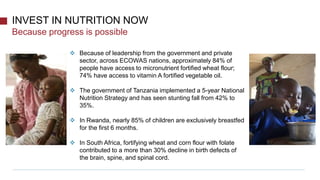
 Because of leadership from the government and private
sector, across ECOWAS nations, approximately 84% of
people have access to micronutrient fortified wheat flour;
74% have access to vitamin A fortified vegetable oil.
 The government of Tanzania implemented a 5-year National
Nutrition Strategy and has seen stunting fall from 42% to
35%.
 In Rwanda, nearly 85% of children are exclusively breastfed
for the first 6 months.
 In South Africa, fortifying wheat and corn flour with folate
contributed to a more than 30% decline in birth defects of
the brain, spine, and spinal cord.
#InvestinNutrition

The economic case for investing in nutrition

  • 1.
    © 2014 Bill& Melinda Gates Foundation THE ECONOMIC CASE FOR NUTRITION Shawn Baker, Director, Nutrition 23 May 2016
  • 2.
    Nutrition is an investmentwe must all make to give every woman and child the opportunity to survive and thrive.
  • 3.
    © Bill &Melinda Gates Foundation | 3 Snapshot of annual GDP (%) loss due to malnutrition:  Ethiopia 16.5%  Rwanda 11.5%  Malawi 10.3%  Burkina Faso 7.7%  Ghana 6.3%  Uganda 5.6%  Swaziland 3.1% THE COST OF NOT INVESTING IN NUTRITION Assessing the consequences
  • 4.
    © Bill &Melinda Gates Foundation | 4 AN INVESTMENT IN THE FUTURE Assessing returns A 40% decrease in stunting by 2025… Could add $83 billion to national incomes.
  • 5.
    GLOBAL TARGETS World HealthAssembly Global Nutrition Targets 2025 TARGET: 40% reduction in the number of children under-5 who are stunted Stunting Anemia TARGET: 50% reduction of anemia in women of reproductive age Low birth weight TARGET: 30% reduction in low birth weight TARGET: Reduce and maintain childhood wasting to less than 5% from 8% by 2025 Wasting Breastfeeding TARGET: Increase the rate of exclusive breastfeeding the first 6 months up to at least 50% Overweight TARGET: No increase in childhood overweight
  • 6.
    The Malabo Declaration ©Bill & Melinda Gates Foundation | 6 In 2014, Heads of State and Government agreed to improve nutrition and eliminate undernutrition in Africa by committing to Reduce stunting to 10% by 2025 Reduce underweight to 5% by 2025 AFRICAN COMMITMENTS
  • 7.
    © Bill &Melinda Gates Foundation | 7 MAKING PROGRESS TOWARD THE TARGETS What will it take in Sub-Saharan Africa? ANEMIA WASTING BREASTFEEDINGSTUNTING ANEMIA
  • 8.
    © Bill &Melinda Gates Foundation | 8  Vitamin A supplementation  Promotion of good infant and young child nutrition and hygiene practices  Multiple micronutrient supplementation in pregnancy  Intermittent preventive treatment of malaria for pregnant women  Treatment of severe acute malnutrition  Iron folic-acid supplementation  Food fortification (wheat and maize flour)  Pro-breastfeeding social policies  National breastfeeding promotion campaign INVESTMENT FRAMEWORK FOR ACTION Highly cost-effective package of interventions
  • 9.
    © Bill &Melinda Gates Foundation | 9 These action much be combined with efforts across sectors to: • Protect and promote nutrition gains to date. • Continue investment in relevant areas (i.e. WASH, agriculture, MNCH) FINANCING THE INVESTMENT Taking action
  • 10.
    Because progress ispossible INVEST IN NUTRITION NOW  Because of leadership from the government and private sector, across ECOWAS nations, approximately 84% of people have access to micronutrient fortified wheat flour; 74% have access to vitamin A fortified vegetable oil.  The government of Tanzania implemented a 5-year National Nutrition Strategy and has seen stunting fall from 42% to 35%.  In Rwanda, nearly 85% of children are exclusively breastfed for the first 6 months.  In South Africa, fortifying wheat and corn flour with folate contributed to a more than 30% decline in birth defects of the brain, spine, and spinal cord.
  • 11.

Editor's Notes