NAIPs Appraisal and Design:
Status and Progress of IFPRI/ReSAKSS
Support to Countries
Ismael Fofana
International Food Policy Research Institute (IFPRI)
West and Central Africa Office (WCAO)
NAIPs Appraisal and Revision, Why?
First generation of NAIPs came to end in 2015
Malabo Declaration in 2014 brought in new
challenges
• Inclusive growth and value chain development
• Regional trade
• Nutrition
• Gender
• Climate smart agriculture
• Mutual Accountability
IFPRI/ReSAKSS Technical Support
•Toolkit document
•Task Force
•Expert groups
•Technical workshops
IFPRI/ReSAKSS Technical Support (cont.’)
•Metrics identified
•Tools proposed
•Data gathered
•Analytical questions raised
•Capacities mobilized
Support for Stepwise Strategic Analysis
•Goals and Targets Setting
•Baseline Status Assessment
•Capacity Needs Assessment
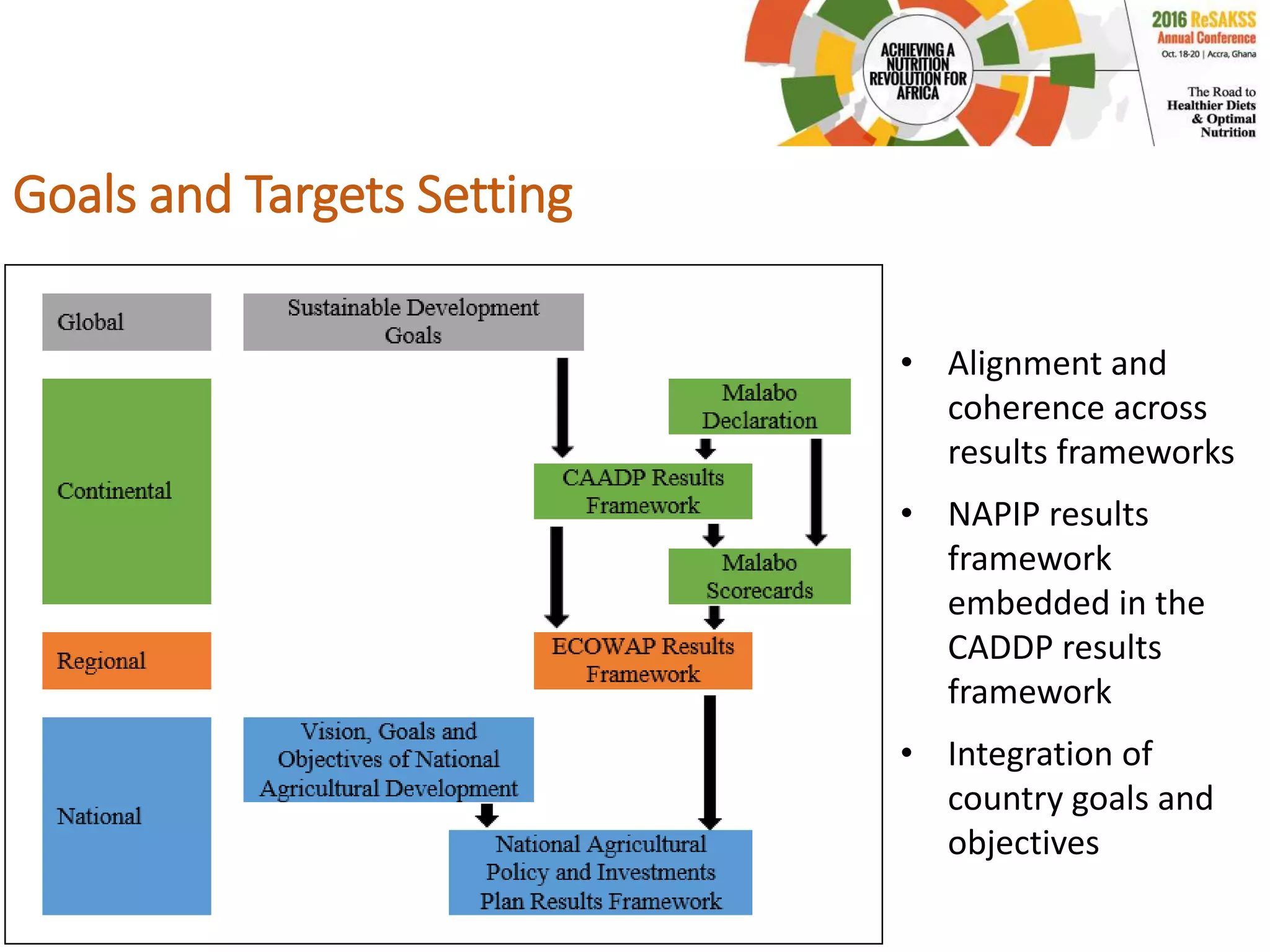
Goals and Targets Setting
• Alignment and
coherence across
results frameworks
• NAPIP results
framework
embedded in the
CADDP results
framework
• Integration of
country goals and
objectives
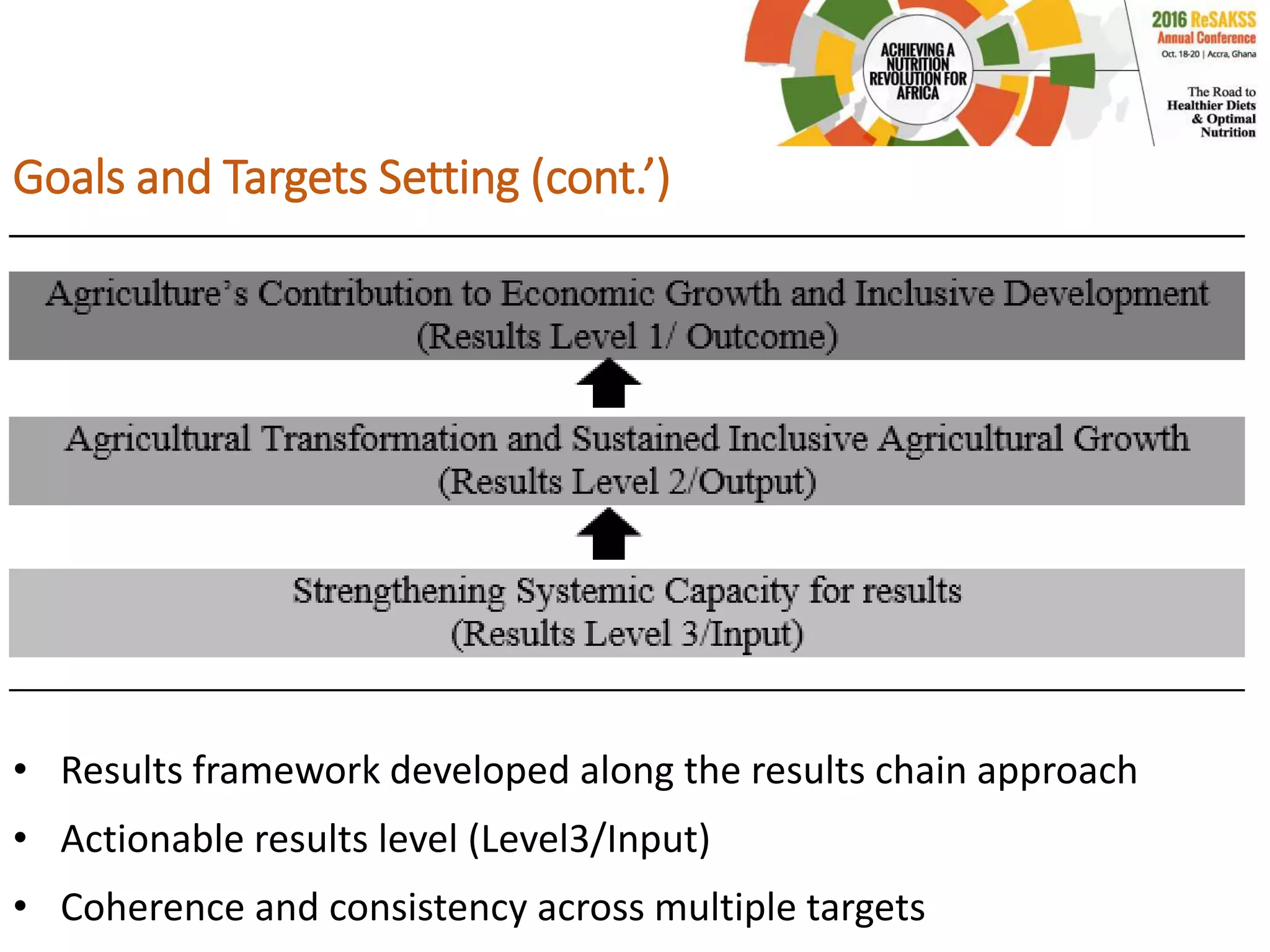
• Results framework developed along the results chain approach
• Actionable results level (Level3/Input)
• Coherence and consistency across multiple targets
Goals and Targets Setting (cont.’)
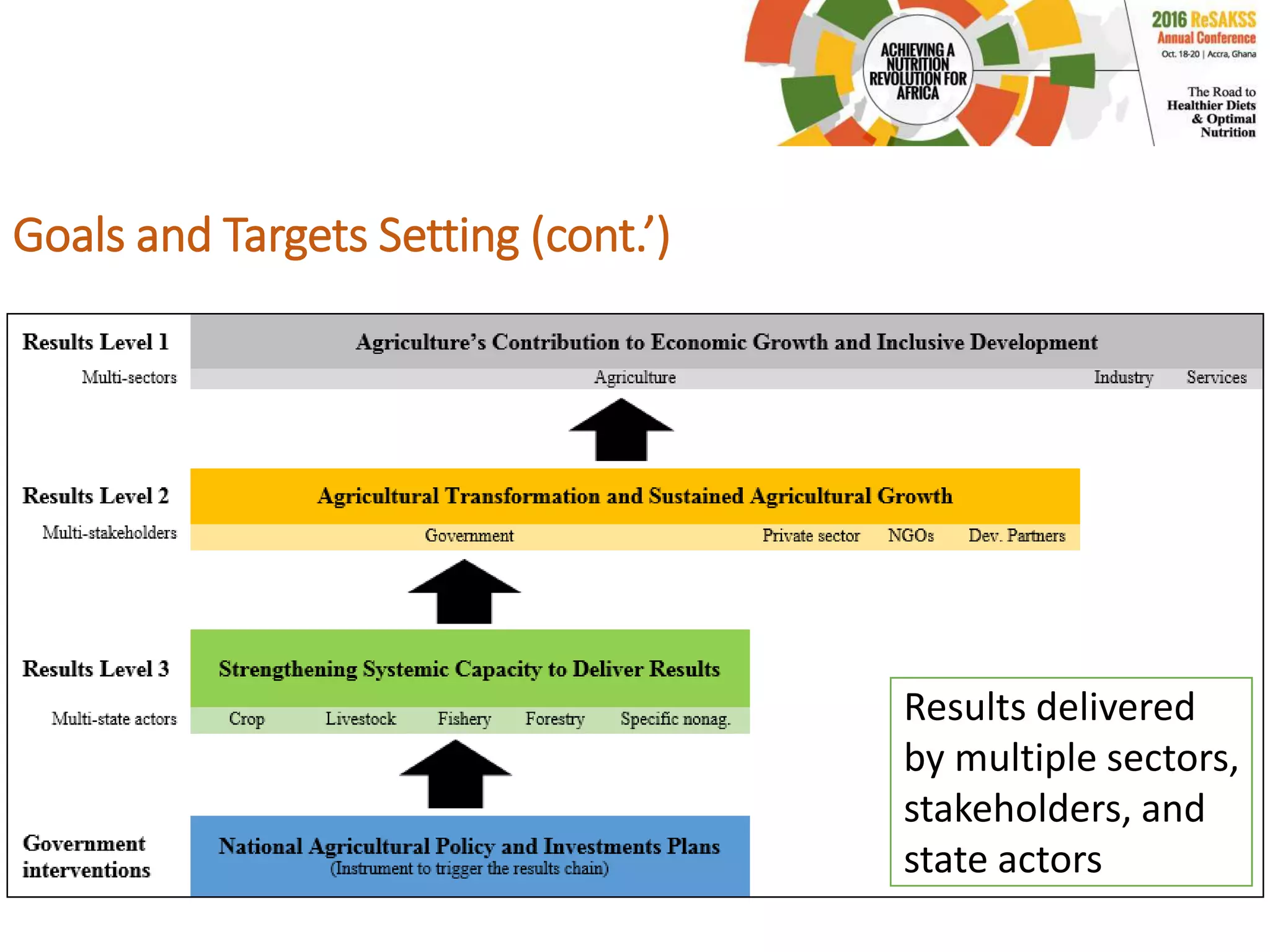
Results delivered
by multiple sectors,
stakeholders, and
state actors
Goals and Targets Setting (cont.’)
Baseline Status Assessment
• Assessment of agricultural performance results
• Assessment of agricultural production system status
• Baseline prospect for agricultural growth and poverty
reduction
Systemic Capacity Needs Assessment
• Alternative prospects for agricultural growth and
poverty reduction
• Assessment of required agricultural production systems
Conclusion
• Continent: CAADP Results Framework, and
Malabo M&E System/Biennial Review
• RECs: ECOWAP M&E Framework, and RAIP
Appraisal and Preparation
• Countries: NAIPs Appraisal and Preparation
NAIPs Appraisal and Design:
Status and Progress of IFPRI/ReSAKSS
Support to Countries
THANK YOU

NAIPs Appraisal and Design: Status and Progress of IFPRI/ReSAKSS Support to Countries

  • 1.
    NAIPs Appraisal andDesign: Status and Progress of IFPRI/ReSAKSS Support to Countries Ismael Fofana International Food Policy Research Institute (IFPRI) West and Central Africa Office (WCAO)
  • 2.
    NAIPs Appraisal andRevision, Why? First generation of NAIPs came to end in 2015 Malabo Declaration in 2014 brought in new challenges • Inclusive growth and value chain development • Regional trade • Nutrition • Gender • Climate smart agriculture • Mutual Accountability
  • 3.
    IFPRI/ReSAKSS Technical Support •Toolkitdocument •Task Force •Expert groups •Technical workshops
  • 4.
    IFPRI/ReSAKSS Technical Support(cont.’) •Metrics identified •Tools proposed •Data gathered •Analytical questions raised •Capacities mobilized
  • 5.
    Support for StepwiseStrategic Analysis •Goals and Targets Setting •Baseline Status Assessment •Capacity Needs Assessment
  • 6.
    Goals and TargetsSetting • Alignment and coherence across results frameworks • NAPIP results framework embedded in the CADDP results framework • Integration of country goals and objectives
  • 7.
    • Results frameworkdeveloped along the results chain approach • Actionable results level (Level3/Input) • Coherence and consistency across multiple targets Goals and Targets Setting (cont.’)
  • 8.
    Results delivered by multiplesectors, stakeholders, and state actors Goals and Targets Setting (cont.’)
  • 9.
    Baseline Status Assessment •Assessment of agricultural performance results • Assessment of agricultural production system status • Baseline prospect for agricultural growth and poverty reduction Systemic Capacity Needs Assessment • Alternative prospects for agricultural growth and poverty reduction • Assessment of required agricultural production systems
  • 10.
    Conclusion • Continent: CAADPResults Framework, and Malabo M&E System/Biennial Review • RECs: ECOWAP M&E Framework, and RAIP Appraisal and Preparation • Countries: NAIPs Appraisal and Preparation
  • 11.
    NAIPs Appraisal andDesign: Status and Progress of IFPRI/ReSAKSS Support to Countries THANK YOU