
2015-16
Presentation by,
Guru P. N.
Ph. D. 015/39
Dept. of Agril. Entomology,
PGI, MPKV, Rahuri.
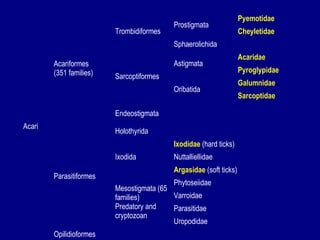
Acari
Acariformes
(351 families)
Trombidiformes
Prostigmata
Pyemotidae
Cheyletidae
Sphaerolichida
Sarcoptiformes
Astigmata
Acaridae
Pyroglypidae
Oribatida
Galumnidae
Sarcoptidae
Endeostigmata
Parasitiformes
Holothyrida
Ixodida
Ixodidae (hard ticks)
Nuttalliellidae
Argasidae (soft ticks)
Mesostigmata (65
families)
Predatory and
cryptozoan
Phytoseiidae
Varroidae
Parasitidae
Uropodidae
Opilidioformes
Acaridae
 Commonly found in association
with the Apis and Bombus
 Adults- Chelicera short and
massive, 1.5 times as long as high.
 Main part of chelicera with blunt
frontal tooth; each of its digits
bears 3 teeth, bent backward
(stationary digit has additional
inner tooth in the middle).
 Gnathosoma short and massive, no
more than 1.5 times as long as
wide.
 Hypostoma with rounded-
triangular median incision and
finely punctate sclerotized area
within it.
 Hypopharynx well-sclerotized, with almost rectangular distal end. Idiosoma
elongate. Chaetome of meiotrichous type.
Acarus siroAcarus siro: on flours and grain (that have
absorbed moisture); frequently associated
to Aspergillus, Penicillium and Eurotium.
Thermic thresholds: 3-30°C
Good resistance to scarce availability of
oxygen.
Tyrophagus putrescentiaeTyrophagus putrescentiae: prefers
products at high content of fats and
proteins (salami, cheeses, moulds on the
surfaces of these products). It lives also in
mushroom tunnels and damages were
observed on cucumber and melon.
It can carry viable spores in its digestive
tract as well as on the outside of the body.
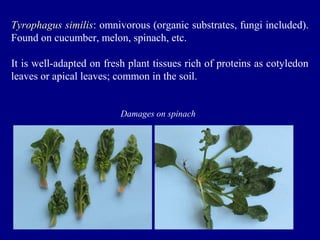
Tyrophagus similisTyrophagus similis: omnivorous (organic substrates, fungi included).
Found on cucumber, melon, spinach, etc.
It is well-adapted on fresh plant tissues rich of proteins as cotyledon
leaves or apical leaves; common in the soil.
Damages on spinach
It infests bulbous (onion, garlic, etc.) and
florals plants (Amaryllis, hyacinth,
narcisus, gladiolus, lily, freesia, etc.),
potatoes, grains; root of vegetables, vines,
wheat, oats and other crops; decaying
vegetable (e.g. fallen fruits) and animal
matter.
It prefers damaged bulbs.
It deeps gradually among the bulb scales.
Spread bacteria and fungi (Fusarium,
Pseudomonas, etc.).
Rhyzoglyphus robini
TICKS
Acari Parasitiformes Ixodida
Ixodidae (hard ticks) – 14
Nuttalliellidae – 1
Argasidae (soft ticks) – 4
Approx. 900 species of ticks in the world
HEAD & MOUTH PARTS
Palps
Chelicera
Hypostome
SOFT TICK
SOFT TICK
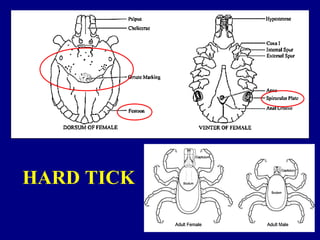
HARD TICK
HARD TICK
Feature Hard tick Soft tick
Scutum (dorsal shield) Present Not present
Capitulum (mouth parts)
Anterior, visible from
above
Ventral, not visible from
above
Nymphal stages One Several
Adult feeding time Several days 30 – 60 min
Female blood meals One Several
Egg laying events One Several
Total eggs laid 3,000-8,000 400-500
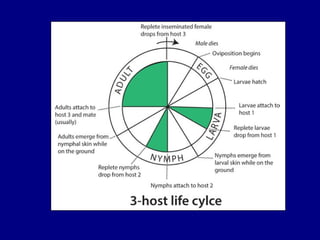
LIFE CYCLE
24 years for hard ticks and 10
years or more for soft ticks
2 Host
Tick
MULTIHOST
ARGASID
BEHAVIOUR
SHELTER
QUESTING
ENGORGEMENT
MATING
EGG LAYING

Acarology

  • 1.
    2015-16 Presentation by, Guru P.N. Ph. D. 015/39 Dept. of Agril. Entomology, PGI, MPKV, Rahuri.
  • 2.
  • 3.
    Acaridae  Commonly foundin association with the Apis and Bombus  Adults- Chelicera short and massive, 1.5 times as long as high.  Main part of chelicera with blunt frontal tooth; each of its digits bears 3 teeth, bent backward (stationary digit has additional inner tooth in the middle).  Gnathosoma short and massive, no more than 1.5 times as long as wide.  Hypostoma with rounded- triangular median incision and finely punctate sclerotized area within it.  Hypopharynx well-sclerotized, with almost rectangular distal end. Idiosoma elongate. Chaetome of meiotrichous type.
  • 4.
    Acarus siroAcarus siro:on flours and grain (that have absorbed moisture); frequently associated to Aspergillus, Penicillium and Eurotium. Thermic thresholds: 3-30°C Good resistance to scarce availability of oxygen. Tyrophagus putrescentiaeTyrophagus putrescentiae: prefers products at high content of fats and proteins (salami, cheeses, moulds on the surfaces of these products). It lives also in mushroom tunnels and damages were observed on cucumber and melon. It can carry viable spores in its digestive tract as well as on the outside of the body.
  • 5.
    Tyrophagus similisTyrophagus similis:omnivorous (organic substrates, fungi included). Found on cucumber, melon, spinach, etc. It is well-adapted on fresh plant tissues rich of proteins as cotyledon leaves or apical leaves; common in the soil. Damages on spinach
  • 6.
    It infests bulbous(onion, garlic, etc.) and florals plants (Amaryllis, hyacinth, narcisus, gladiolus, lily, freesia, etc.), potatoes, grains; root of vegetables, vines, wheat, oats and other crops; decaying vegetable (e.g. fallen fruits) and animal matter. It prefers damaged bulbs. It deeps gradually among the bulb scales. Spread bacteria and fungi (Fusarium, Pseudomonas, etc.). Rhyzoglyphus robini
  • 7.
    TICKS Acari Parasitiformes Ixodida Ixodidae(hard ticks) – 14 Nuttalliellidae – 1 Argasidae (soft ticks) – 4 Approx. 900 species of ticks in the world
  • 8.
    HEAD & MOUTHPARTS Palps Chelicera Hypostome
  • 9.
  • 10.
  • 11.
  • 12.
  • 13.
    Feature Hard tickSoft tick Scutum (dorsal shield) Present Not present Capitulum (mouth parts) Anterior, visible from above Ventral, not visible from above Nymphal stages One Several Adult feeding time Several days 30 – 60 min Female blood meals One Several Egg laying events One Several Total eggs laid 3,000-8,000 400-500
  • 14.
    LIFE CYCLE 24 yearsfor hard ticks and 10 years or more for soft ticks
  • 17.
  • 19.
  • 20.
  • 21.
  • 23.
  • 24.
  • 25.