HIGH RISK
PREGNANCY
MRS RAMESHWORI
ASSOCIATE PROFESSOR
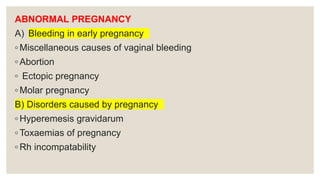
ABNORMAL PREGNANCY
A) Bleeding in early pregnancy
◦ Miscellaneous causes of vaginal bleeding
◦ Abortion
◦ Ectopic pregnancy
◦ Molar pregnancy
B) Disorders caused by pregnancy
◦ Hyperemesis gravidarum
◦ Toxaemias of pregnancy
◦ Rh incompatability
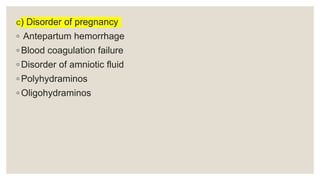
C) Disorder of pregnancy
◦ Antepartum hemorrhage
◦ Blood coagulation failure
◦ Disorder of amniotic fluid
◦ Polyhydraminos
◦ Oligohydraminos
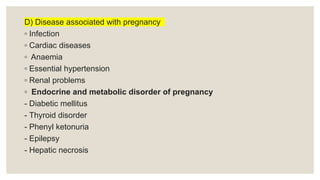
D) Disease associated with pregnancy
◦ Infection
◦ Cardiac diseases
◦ Anaemia
◦ Essential hypertension
◦ Renal problems
◦ Endocrine and metabolic disorder of pregnancy
- Diabetic mellitus
- Thyroid disorder
- Phenyl ketonuria
- Epilepsy
- Hepatic necrosis
E) Gynecological conditions complicating pregnancy
◦ Fibroid uterus
◦ Uterine prolapse
◦ Ovarian cysts.
F ) Structural abnormalities affecting pregnancy
◦ Uterine malformation
◦ Displacement of pregnant uterus
◦ Abnormalities of bony pelvis
F) Genital and sexually transmissible infections in pregnancy
◦ Local infection of the vulva and vagina
◦ Protozoa infection
◦ Bacterial infection
◦ Viral infection
◦ AIDS  HIV
BLEEDING IN EARLY PREGNANCY
Introduction
Pregnancy is one of the vital events in a woman's life.
Any complication may result in the loss of pregnancy.
Bleeding is one of the complicating factors it may occur any time
during pregnancy either early or late time.
Bleeding In Early Pregnancy
The causes of bleeding in early pregnancy are broadly divided
into two groups: Those related to the pregnant state: This
group related to abortion (95%), ectopic pregnancy,
hydatidiform mole and implantation bleeding.
Those associated with the pregnant state: Cervical lesion
such as vascular erosion, polyp, ruptured varicose vein and
malignancy.
ABORTION / MISCARRIAGE
◦ Abortion or miscarriage is defined as the expulsion or extraction from its
mother of a fetus or embryo weighing less than 500 grams (20-22 completed
weeks of gestation) whether that abortion was spontaneous or induced.
◦ About 20% of all pregnancies end in abortion. Since many pregnancies end
at or around the time of implantation, i.e. before the first missed menstrual
period, they go unnoticed.
◦ About 80% of all recognized abortions occur during the 2nd or 3rd months of
pregnancy. The others occur during the remaining months up to 22 weeks.
Causes of Abortion / miscarriage
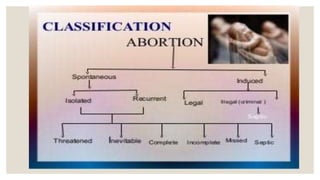
Abortions may be spontaneous or induced.
Spontaneous abortion / miscarriage: can be
due to: -
Fault in the embryo:
Embryos with chromosomal defects are
seen in about two-thirds of all early
abortions.
There may also be a defect in the placenta
causing death of the fetus. .
Fault in the maternal environment:
◦ Maternal diseases causing high fever.
◦ Infections by toxoplasma (common) or by
Listeria monocytogenes, rubella
syphilis,cytomegalo which readily cross
the placenta
◦ Hormonal deficiencies as in progesterone
deficiency in corpus luteum defect, or in
hypothyroidism.
◦ Cervical Incompetence
◦ Rh-ve pregnancy
◦ ABO incompatibility
◦ Uterine fibroid causing improper implantation of the
placenta
◦ Physical trauma, e.g. a blow on the abdomen or that
caused by a fall.
◦ Surgical trauma due to any operation.
◦ Congenital malformations of the uterus like
hypoplastic uterus, unicornuate, bicornuate uterus,
septate uterus etc.
Signs and Symptoms of Abortion / Miscarriage :
Spontaneous Abortions can occur in two ways:
Death of the embryo : Death of the embryo or the fetus can be the
first event to occur followed by its expulsion from the uterus. This is
usually seen in very early pregnancies.
Abnormal uterine activity: In these types of abortions, the main
event is abnormal uterine activity, causing the uterus to expel a
healthy fetus. This is usually a feature of abortions in the second
trimester (after 13 completed weeks of pregnancy).
Signs and Symptoms:
◦ The chief symptoms of abortion are pain and bleeding.
◦ .If the death of the fetus occurs first, the woman will notice bleeding as her first symptom. Slight
bleeding at first but later increases.
◦ The woman may complain of passage of blood clots per vagina.
◦ Pain occurs when the uterus starts to contract to expel the now unwanted product of gestation. It
is usually intermittent and is often described as 'colicky’.
Pain continues to increase until the product is expelled from the uterus. If the product is expelled
completely, pain may cease completely. But if any amount of the product is retained, the woman
may continue to feel pain or at least some discomfort until the uterus is completely empty, whether
spontaneously or by surgical intervention.
◦ If the abortion is due to abnormal uterine activity, pain is the first
symptom followed by bleeding.
◦ If the pregnancy is in the second trimester, the pain may be
severe enough to resemble labor pains.
◦ Bleeding is also heavy and there may be passage of large clots of
blood. If the fetus is around 18-20 weeks of gestation, it may
even be born alive at the time of the abortion.
◦ A mild haemorrhagic discharge, somewhat similar to the lochia
seen after childbirth continues for a few days, then gradually
ceases
Clinical Types Of Abortion / Miscarriage
◦ There are different clinical types of abortions:
1.Threatened Abortion:
It is a clinical entity where the process of abortion
has started but has not progressed to a state from
which recovery is impossible i,e possibility of
continuation of pregnancy on proper and timely
management.
Clinical features
Bleeding per vagina:Slight and bright red in
colour.
Pain: Mild backache or dull pain in lower
abdomen.
Pelvic examination:
a)Speculum examination-bleeding if any,escapes through the external os.
b)Digital examination-reveals closed external os.
c)The uterine size corresponds to the period of amenorrhoea.
Investigation
a)Blood investigation
b)USG
c) Urine for immunological test for pregnancy
Treatment
◦ Rest :2weeks of bed rest.
◦ Drugs : sedation and analgesics
◦ Phenobarbitone 30mg or Diazepam 5mg
◦ Advised to preserve vulval pads and anything expelled out per
vaginam for inspection. To report if bleeding or pain gets
aggravated. Routine note of pulse, temperature and vaginal
bleeding.
◦ Advice on discharge –
◦ Limit her activities at least for 2 weeks.
◦ - Avoid heavy work. -Coitus is contraindicated during this
◦ -Follow up after 1month to assess the growth of fetus.
2. Inevitable abortion:
It is the clinical type of abortion where the changes have progressed to a
state from where continuation of pregnancy is impossible.
Clinical features
-Increased vaginal bleeding
-Severe lower abdominal pain- colicky type
-General condition is proportionate to visible blood loss.
Internal examination
Reveals dilated internal os of the cervix through which the product of
conception are felt.
.
Management
Principles :
a.To take appropriate measures to look after the general
condition.
b. b. To accelerate the process of expulsion.
c. To maintain strict asepsis.
Active treatment
Before 12weeks : dilatation and evacuation followed by curettage of
uterine cavity.
After 12weeks :
i. Uterine contraction is accelerated by oxytocin drip (10 U in 500ml NS)
40-60drops/min.
ii. If the product is expelled and placenta retained, it is removed by
forceps(if lying separate)
iii. If placenta is not seperated, digital seperation followed by evacuation
under GA.
If bleeding is severe and cervix is closed then evacuation of uterus is
by Abdominal hysterectomy.
3.COMPLETE ABORTION
• When the products of conception are completely expelled, it is called
complete abortion.
Clinical features
-There is history of expulsion of a fleshy mass per vagina followed by: -
Subsidence of pain -Vaginal bleeding becomes trace or absent
Internal examination reveals: -
Uterus is smaller than the period of amenorrhoea
-Cervical os is closed
-Bleeding is trace
-Examination of the expelled fleshy mass is found intact.
Management
i. Blood loss should be assessed and treated.
ii If there is doubt about complete expulsion of products, uterine
curettage should be done.
iii.Transvaginal sonography is useful to prevent unnecessary
surgical procedure.
iv. In case of Rh negative mother antiD gamma globulin should be
given.
4. Incomplete abortion
When the entire products of conception are not expelled, instead
part of it is left inside the uterine cavity, is called incomplete
abortion.
Clinical features.
-History of expulsion of fleshy mass per vaginam followed by:
-Continuation of pain lower abdomen
-Persistence of vaginal bleeding
Internal examination
-Uterus smaller than the period of amenorrhoea
-Cervical os may admit the tip of the finger
-Varying amount of bleeding
-On examination,the expelled mass is found incomplete.
Termination If the products left behind it leads to
Profuse bleeding Sepsis Placental polyp Choriocarcinoma
◦ Management
◦ The principles to be followed are same as Inevitable
abortion. Patient may be in a state of shock due to
blood loss., she should be resuscitated before any
treatment.
◦ Early abortion: Dilatation and evacuation
◦ Late abortion: Uterus is evacuated under GA and the
products are removed by ovum forcep or by blunt
curette.
Missed abortion / Silent miscarriage or early fetal demise
• When the fetus is dead and retained inside the uterus for a variable
period,it is called as missed abortion or silent miscarriage. The patient
usually comes with a complaints of missed menstrual periods for a month
or two.
Pathology
Beyond 12wks: Fetus become macerated or mummified, liquor amnii get
absorbed, placenta becomes pale,thin and adherent.
Before 12wks: Because of haemorrhage blood will get collected around
ovum called as “blood mole"., water content from the blood gets
absorbed and flesh remains around the ovum called as “Fleshy mole or
Carneous mole”.
Clinical features
Persistence of brownish vaginal discharge
Subsidence of pregnancy symptoms
Retrogression of breast changes
Non audibility of fetal heart sound even with doppler
Cervix feels firm
On examination: The size of the uterus will be found to be smaller
the duration of pregnancy suggested by a no. of missed periods.
Immunological test for pregnancy becomes negative
USG reveals an empty sac
TREATMENT: To remove the dead products as early as possible
6. Septic abortion
Any abortion associated with clinical evidences of infection of the uterus
and its contents.
The underlying abortion is usually incomplete, but sometimes inevitable or
threatened.
The patient suffers from high fever and looks toxic.
There is foul-smelling vaginal discharge which may or may not be blood stained.
Extra-uterine spread of infection can occur. It is more commonly seen in
criminal abortions.
Mode of infection
Usually the micro-organisms present in the vagina are
involved in sepsis when the resistance power of the
mother becomes low.
Majority of cases the infection occurs following illegal
induced abortion.
Reasons for infection
• Proper antiseptic and asepsis are not taken
• Incomplete evacuation
Clinical features
◦ Pyrexia associated with chills and rigors.
◦ Purulent vaginal discharge
◦ Shock
◦ Pain abdomen of varying degrees
◦ Internal examination reveals:
-Offensive purulent vaginal discharge
- Tender uterus
Clinical grading
Grade I : Infection localised to uterus (commonest)
Grade II : infection spreads beyond the uterus to the
tubes and ovaries.
Grade III : Generalised peritonitis / shock / jaundice or
acute renal failure (associated with illegal induced
abortion).
Investigations
Routine investigations :
-Cervical or high vaginal swab for culture and
test.
-Blood for haemoglobin, total and differential count,
and Rh grouping.
-Urine analysis including culture
Special investigations :
-USG abdomen and pelvis
-Blood for culture, serum electrolytes, coagulation
Complications
Immediate :
Haemorrhage
Injury to uterus and
adjacent structures
Spread of infection
causes Peritonitis
Acute renal failure
Thrombophlebitis
Remote :
Chronic pelvic pain, Backache
Dyspareunia
Ectopic pregnancy
Secondary infertility due to
tubal blockage
Emotional depression.
Prevention
i. Use family planning method
ii. Encourage to go for legal abortion
Management
• Hospitalization
• High vaginal or cervical swab
• Vaginal examination to note the state of abortion process
Principles of management:
• To control the sepsis
• To remove the source of infection
• To give the supportive therapy
• To bring back the normal homeostatic and cellular metabolism
• To assess the response to treatment
◦
Specific management
Drugs :
Antibiotics
1.Gram positive aerobes
a)Aqueous Penicillin G 5million U IV every 6 hours
(b)Ampicillin 0.5-1gm IV every 6 hours.
2.Gram negative aerobes
(a)Gentamicin 1.5mg/kg IV every 8 hours.
(b)Ceftriaxone 1.5gm IV every 12 hours
3.For Anaerobes
(a) Metronidazole 500mg IV every 8hours
(b) Clindamycin 600mg IV every 6hours
Grade I
◦ 1.Antibiotics
◦ 2. Prophylactic anti gas-gangrene Serum of 8000 U and 3000 U of anti
tetanus serum IM are given.
◦ 3. Analgesics and Sedatives
◦ -Blood transfusion
◦ -Evacuation of the uterus within 24hours following antibiotic therapy
Grade II
Antibiotics
Clinical monitoring- to note pulse, temperature, urinary output and progress
of pain, tenderness and mass in lower abdomen.
Surgery
i. Evacuation of the Uterus
ii. Posterior colpotomy(pouch of douglas)
Grade III
Antibiotics
Clinical monitoring
Supportive therapy with IV fluids.
Active surgery -Laparotomy
7.Recurrent miscarriage is defined as a sequence of three or more
consecutive spontaneous abortion before 20weeks.
Recurrent / Spontaneous miscarriage
Etiology
During 1st trimester
-Genetic factors
-Endocrine and metabolic
-Infection
-Inherited Thrombophilia
Intra vascular coagulation .
-Immunological cause : Auto & Allo immunity -Unexplained
During 2nd trimester
◦ Cervical incompetence
◦ Defective mullerian fusion
-double uterus,bicornuate uterus,septate uterus.
◦ Uterine fibroid
◦ Retroverted uterus
◦ Chronic maternal illness
◦ Infection, Unexplained
Investigations
i. History on previous abortion.
ii. Any chronic illness
iii. Histology of placenta
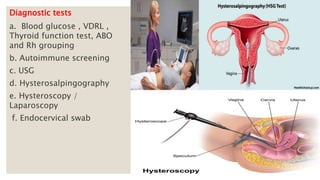
Diagnostic tests
a. Blood glucose , VDRL ,
Thyroid function test, ABO
and Rh grouping
b. Autoimmune screening
c. USG
d. Hysterosalpingography
e. Hysteroscopy /
Laparoscopy
f. Endocervical swab
Treatment
During Inter conceptional Period
To alleviate anxiety and improve psychology
Hysteroscopic resection of uterine septate
Uterine unification operation (metroplasty) for bicornuate uterus.
Genetic counselling if chromosomal abnormality .
Endocrine dysfunction has to be controlled.
Genital tract infections are treated.
During pregnancy
Reassurance and tender loving care.
Ultrasound
Adequate rest
Avoid strenuous activity
Intercourse
Travelling.
Luteal phase defect: Progesterone 100mg as vaginal suppository TID
started 2days after ovulation. During this time if pregnancy test is
continue treatment 12weeks of pregnancy. (corpus luteal insufficiency)
Inherited Thrombophilia :
antithrombotic therapy improves the pregnancy outcome.heparin
5000IUtwice daily S/C upto 34 weeks
Medical complications :
Specific management is continued.
Unexplained :
Supportive therapy improves pregnancy outcome.
• Circlage operation :non absorbable encircling suture is placed
around the cervix at the level of internal OS. Done at 14 weeks of
pregnancy or at least two weeks earlier than the previous
pregnancy loss -10th week
Nursing Diagnosis
1.Risk for fluid volume deficit r/t maternal bleeding
Nursing Interventions
•Report any tachycardia, hypotension, diaphoresis, or
indicating hemorrhage and shock.
•Draw blood for type and screen for possible blood
administration.
•Establish and maintain an IV with large-bore catheter for
possible transfusion and large quantities of fluid
Nursing Diagnosis
2•Anticipatory grieving r/t loss of pregnancy, cause of abortion,
future childbearing
Nursing Interventions
•Assess the reaction of patient and support person, and provide
information regarding current status, as needed.
•Encourage the patient to discuss feelings about the loss of the
baby’ include effects on relationship with the father.
•Do not minimize the loss by focusing on future childbearing;
rather acknowledge the loss and allow grieving.
•Providing time alone for the couple to discuss their feelings
Nursing Diagnosis
3.Risk for infection r/t dilated cervix and open uterine vessels
Nursing Interventions
•Evaluate temperature q 4H if normal, and every 2H if elevated.
•Check vaginal drainage for increased amount and odor, which
may indicate infection.
•Instruct on and encourage perineal care after each urination and
defecation to prevent contamination.
4.Acute pain r/t uterine cramping and possible procedures
Nursing Interventions
•Instruct patient on the cause of pain to decrease anxiety.
•Instruct and encourage the use of relaxation techniques to augment analgesics.
•Administer pain medication as needed and as prescribed.
5. Knowledge deficit r/t signs and symptoms of possible complications
Nursing Interventions
•Teach the woman to observe for signs of infection (fever, pelvic pain, change in character and
amount of vaginal discharge), and advise to report them to provider immediately.
•Deal with client’s anxiety. Present information out of sequence, if necessary, dealing first
material that is most anxiety producing when the anxiety is interfering with the client’s
process.
•Teach client of the complications for a mother has reason to be especially worried about her
infant’s health.
Induced abortion
Definition
Deliberate termination of pregnancy before the viability of the fetus is called induction
abortion
Elective: if performed for a woman’s desires Therapeutic: if performed for reasons of
maintaining health of the mother
MTP ACT -1971
• The continuation of pregnancy would involve seroius risk of life or grave injury to the
physical and mental health of the pregnant women
• There is a substantial risk of the child being born with serious physical and mental
abnormalities so as to be handicapped in life
• When the pregnancy caused by rape ,both in case of major and minor girl and in
mentally imbalance women
• Pregnancy result as a result of contraceptive failure
Indication
• To safe the life of the mother
-Cardiac diseases -Ch.Glomerulonephritis
-Malignant hypertension
-Hyperemesis gravidarum
-Cervical breast malignancy
-DM with retinopathy
-Epilepsy or psychiatric diaseases with advice of psychiatrist
• Social indications
-unplanned pregnancy with low socioeconomic status
-pregnancy caused by rape or failure of contraceptive methods
• Eugenic
-Structural-anencephaly ,chromosomal (down syndrome) or genetic (hemophilia)
-Teratogenic drugs(warfarrin)radiation exposure more than 10 rads in early pregnancy
- rubella infection
RECOMMENDATIONS
1.Qualified Registered medical practitioner
a) One has assisted at least 25 MTP in authorized centre and having certificate
b)6 months house surgeon training in OBG
c)Diploma or degree in OBG
1.2.Termination can only performed in hospitals established or maintained by Govt or
places approved by Govt
3.Pregnancy can only terminated on the written consent of the women.
Husband's consent is not required
4.Pregnancy in a minor girl (below the age of 18 years ) can not be terminated without the
written consent of the parent or legal guardian.
5.Termination is permitted up to 20 weeks of pregnancy When the pregnancy exceeds 12
weeks opinion of two medical practitioners is required
• The abortion has to be performed confidentially and to be reported to the director of
health services of state in the prescribed form
1. Induced abortion: statistics . . . • 1,180,000 abortions are reported to the CDC in 1997.
This is constant since 1980
• 305 abortions/1000 live births
• National abortion rate: 20/1000 women aged 15-44
• 79.7% of women obtaining abortions are unmarried
• 21 % of women obtaining abortions are younger 19 years old
• 55.2 % are younger than 24 years old
• 88% of women who abort are in the first trimester of pregnancy
• 97% of women having first trimester abortions have no complications or post abortion
complaints
• 2.5 % have minor complaints that are handled in a physicians office
• <0.5% require additional surgery
Roe vs. Wade 1/22/73 • “We recognize the right of the individual, married or single, to be
free from unwanted governmental intrusion into matters so fundamentally affecting a
person as the decision whether to bear or beget a child. That right necessarily includes
the right of a woman to decide whether or not to terminate her pregnancy.”
High risk pregnancy.pptx

High risk pregnancy.pptx

  • 1.
  • 2.
    ABNORMAL PREGNANCY A) Bleedingin early pregnancy ◦ Miscellaneous causes of vaginal bleeding ◦ Abortion ◦ Ectopic pregnancy ◦ Molar pregnancy B) Disorders caused by pregnancy ◦ Hyperemesis gravidarum ◦ Toxaemias of pregnancy ◦ Rh incompatability
  • 3.
    C) Disorder ofpregnancy ◦ Antepartum hemorrhage ◦ Blood coagulation failure ◦ Disorder of amniotic fluid ◦ Polyhydraminos ◦ Oligohydraminos
  • 4.
    D) Disease associatedwith pregnancy ◦ Infection ◦ Cardiac diseases ◦ Anaemia ◦ Essential hypertension ◦ Renal problems ◦ Endocrine and metabolic disorder of pregnancy - Diabetic mellitus - Thyroid disorder - Phenyl ketonuria - Epilepsy - Hepatic necrosis
  • 5.
    E) Gynecological conditionscomplicating pregnancy ◦ Fibroid uterus ◦ Uterine prolapse ◦ Ovarian cysts. F ) Structural abnormalities affecting pregnancy ◦ Uterine malformation ◦ Displacement of pregnant uterus ◦ Abnormalities of bony pelvis
  • 6.
    F) Genital andsexually transmissible infections in pregnancy ◦ Local infection of the vulva and vagina ◦ Protozoa infection ◦ Bacterial infection ◦ Viral infection ◦ AIDS HIV
  • 7.
    BLEEDING IN EARLYPREGNANCY Introduction Pregnancy is one of the vital events in a woman's life. Any complication may result in the loss of pregnancy. Bleeding is one of the complicating factors it may occur any time during pregnancy either early or late time.
  • 8.
    Bleeding In EarlyPregnancy The causes of bleeding in early pregnancy are broadly divided into two groups: Those related to the pregnant state: This group related to abortion (95%), ectopic pregnancy, hydatidiform mole and implantation bleeding. Those associated with the pregnant state: Cervical lesion such as vascular erosion, polyp, ruptured varicose vein and malignancy.
  • 9.
    ABORTION / MISCARRIAGE ◦Abortion or miscarriage is defined as the expulsion or extraction from its mother of a fetus or embryo weighing less than 500 grams (20-22 completed weeks of gestation) whether that abortion was spontaneous or induced. ◦ About 20% of all pregnancies end in abortion. Since many pregnancies end at or around the time of implantation, i.e. before the first missed menstrual period, they go unnoticed. ◦ About 80% of all recognized abortions occur during the 2nd or 3rd months of pregnancy. The others occur during the remaining months up to 22 weeks.
  • 11.
    Causes of Abortion/ miscarriage Abortions may be spontaneous or induced. Spontaneous abortion / miscarriage: can be due to: - Fault in the embryo: Embryos with chromosomal defects are seen in about two-thirds of all early abortions. There may also be a defect in the placenta causing death of the fetus. .
  • 12.
    Fault in thematernal environment: ◦ Maternal diseases causing high fever. ◦ Infections by toxoplasma (common) or by Listeria monocytogenes, rubella syphilis,cytomegalo which readily cross the placenta ◦ Hormonal deficiencies as in progesterone deficiency in corpus luteum defect, or in hypothyroidism. ◦ Cervical Incompetence ◦ Rh-ve pregnancy
  • 13.
    ◦ ABO incompatibility ◦Uterine fibroid causing improper implantation of the placenta ◦ Physical trauma, e.g. a blow on the abdomen or that caused by a fall. ◦ Surgical trauma due to any operation. ◦ Congenital malformations of the uterus like hypoplastic uterus, unicornuate, bicornuate uterus, septate uterus etc.
  • 14.
    Signs and Symptomsof Abortion / Miscarriage : Spontaneous Abortions can occur in two ways: Death of the embryo : Death of the embryo or the fetus can be the first event to occur followed by its expulsion from the uterus. This is usually seen in very early pregnancies. Abnormal uterine activity: In these types of abortions, the main event is abnormal uterine activity, causing the uterus to expel a healthy fetus. This is usually a feature of abortions in the second trimester (after 13 completed weeks of pregnancy).
  • 15.
    Signs and Symptoms: ◦The chief symptoms of abortion are pain and bleeding. ◦ .If the death of the fetus occurs first, the woman will notice bleeding as her first symptom. Slight bleeding at first but later increases. ◦ The woman may complain of passage of blood clots per vagina. ◦ Pain occurs when the uterus starts to contract to expel the now unwanted product of gestation. It is usually intermittent and is often described as 'colicky’. Pain continues to increase until the product is expelled from the uterus. If the product is expelled completely, pain may cease completely. But if any amount of the product is retained, the woman may continue to feel pain or at least some discomfort until the uterus is completely empty, whether spontaneously or by surgical intervention.
  • 16.
    ◦ If theabortion is due to abnormal uterine activity, pain is the first symptom followed by bleeding. ◦ If the pregnancy is in the second trimester, the pain may be severe enough to resemble labor pains. ◦ Bleeding is also heavy and there may be passage of large clots of blood. If the fetus is around 18-20 weeks of gestation, it may even be born alive at the time of the abortion. ◦ A mild haemorrhagic discharge, somewhat similar to the lochia seen after childbirth continues for a few days, then gradually ceases
  • 17.
    Clinical Types OfAbortion / Miscarriage ◦ There are different clinical types of abortions: 1.Threatened Abortion: It is a clinical entity where the process of abortion has started but has not progressed to a state from which recovery is impossible i,e possibility of continuation of pregnancy on proper and timely management. Clinical features Bleeding per vagina:Slight and bright red in colour. Pain: Mild backache or dull pain in lower abdomen.
  • 18.
    Pelvic examination: a)Speculum examination-bleedingif any,escapes through the external os. b)Digital examination-reveals closed external os. c)The uterine size corresponds to the period of amenorrhoea. Investigation a)Blood investigation b)USG c) Urine for immunological test for pregnancy
  • 19.
    Treatment ◦ Rest :2weeksof bed rest. ◦ Drugs : sedation and analgesics ◦ Phenobarbitone 30mg or Diazepam 5mg ◦ Advised to preserve vulval pads and anything expelled out per vaginam for inspection. To report if bleeding or pain gets aggravated. Routine note of pulse, temperature and vaginal bleeding. ◦ Advice on discharge – ◦ Limit her activities at least for 2 weeks. ◦ - Avoid heavy work. -Coitus is contraindicated during this ◦ -Follow up after 1month to assess the growth of fetus.
  • 20.
    2. Inevitable abortion: Itis the clinical type of abortion where the changes have progressed to a state from where continuation of pregnancy is impossible. Clinical features -Increased vaginal bleeding -Severe lower abdominal pain- colicky type -General condition is proportionate to visible blood loss. Internal examination Reveals dilated internal os of the cervix through which the product of conception are felt. .
  • 21.
    Management Principles : a.To takeappropriate measures to look after the general condition. b. b. To accelerate the process of expulsion. c. To maintain strict asepsis.
  • 22.
    Active treatment Before 12weeks: dilatation and evacuation followed by curettage of uterine cavity. After 12weeks : i. Uterine contraction is accelerated by oxytocin drip (10 U in 500ml NS) 40-60drops/min. ii. If the product is expelled and placenta retained, it is removed by forceps(if lying separate) iii. If placenta is not seperated, digital seperation followed by evacuation under GA. If bleeding is severe and cervix is closed then evacuation of uterus is by Abdominal hysterectomy.
  • 23.
    3.COMPLETE ABORTION • Whenthe products of conception are completely expelled, it is called complete abortion. Clinical features -There is history of expulsion of a fleshy mass per vagina followed by: - Subsidence of pain -Vaginal bleeding becomes trace or absent Internal examination reveals: - Uterus is smaller than the period of amenorrhoea -Cervical os is closed -Bleeding is trace -Examination of the expelled fleshy mass is found intact.
  • 24.
    Management i. Blood lossshould be assessed and treated. ii If there is doubt about complete expulsion of products, uterine curettage should be done. iii.Transvaginal sonography is useful to prevent unnecessary surgical procedure. iv. In case of Rh negative mother antiD gamma globulin should be given.
  • 25.
    4. Incomplete abortion Whenthe entire products of conception are not expelled, instead part of it is left inside the uterine cavity, is called incomplete abortion. Clinical features. -History of expulsion of fleshy mass per vaginam followed by: -Continuation of pain lower abdomen -Persistence of vaginal bleeding
  • 26.
    Internal examination -Uterus smallerthan the period of amenorrhoea -Cervical os may admit the tip of the finger -Varying amount of bleeding -On examination,the expelled mass is found incomplete. Termination If the products left behind it leads to Profuse bleeding Sepsis Placental polyp Choriocarcinoma
  • 27.
    ◦ Management ◦ Theprinciples to be followed are same as Inevitable abortion. Patient may be in a state of shock due to blood loss., she should be resuscitated before any treatment. ◦ Early abortion: Dilatation and evacuation ◦ Late abortion: Uterus is evacuated under GA and the products are removed by ovum forcep or by blunt curette.
  • 28.
    Missed abortion /Silent miscarriage or early fetal demise • When the fetus is dead and retained inside the uterus for a variable period,it is called as missed abortion or silent miscarriage. The patient usually comes with a complaints of missed menstrual periods for a month or two. Pathology Beyond 12wks: Fetus become macerated or mummified, liquor amnii get absorbed, placenta becomes pale,thin and adherent. Before 12wks: Because of haemorrhage blood will get collected around ovum called as “blood mole"., water content from the blood gets absorbed and flesh remains around the ovum called as “Fleshy mole or Carneous mole”.
  • 29.
    Clinical features Persistence ofbrownish vaginal discharge Subsidence of pregnancy symptoms Retrogression of breast changes Non audibility of fetal heart sound even with doppler Cervix feels firm On examination: The size of the uterus will be found to be smaller the duration of pregnancy suggested by a no. of missed periods. Immunological test for pregnancy becomes negative USG reveals an empty sac TREATMENT: To remove the dead products as early as possible
  • 30.
    6. Septic abortion Anyabortion associated with clinical evidences of infection of the uterus and its contents. The underlying abortion is usually incomplete, but sometimes inevitable or threatened. The patient suffers from high fever and looks toxic. There is foul-smelling vaginal discharge which may or may not be blood stained. Extra-uterine spread of infection can occur. It is more commonly seen in criminal abortions.
  • 31.
    Mode of infection Usuallythe micro-organisms present in the vagina are involved in sepsis when the resistance power of the mother becomes low. Majority of cases the infection occurs following illegal induced abortion. Reasons for infection • Proper antiseptic and asepsis are not taken • Incomplete evacuation
  • 32.
    Clinical features ◦ Pyrexiaassociated with chills and rigors. ◦ Purulent vaginal discharge ◦ Shock ◦ Pain abdomen of varying degrees ◦ Internal examination reveals: -Offensive purulent vaginal discharge - Tender uterus
  • 33.
    Clinical grading Grade I: Infection localised to uterus (commonest) Grade II : infection spreads beyond the uterus to the tubes and ovaries. Grade III : Generalised peritonitis / shock / jaundice or acute renal failure (associated with illegal induced abortion).
  • 34.
    Investigations Routine investigations : -Cervicalor high vaginal swab for culture and test. -Blood for haemoglobin, total and differential count, and Rh grouping. -Urine analysis including culture Special investigations : -USG abdomen and pelvis -Blood for culture, serum electrolytes, coagulation
  • 35.
    Complications Immediate : Haemorrhage Injury touterus and adjacent structures Spread of infection causes Peritonitis Acute renal failure Thrombophlebitis Remote : Chronic pelvic pain, Backache Dyspareunia Ectopic pregnancy Secondary infertility due to tubal blockage Emotional depression.
  • 36.
    Prevention i. Use familyplanning method ii. Encourage to go for legal abortion Management • Hospitalization • High vaginal or cervical swab • Vaginal examination to note the state of abortion process Principles of management: • To control the sepsis • To remove the source of infection • To give the supportive therapy • To bring back the normal homeostatic and cellular metabolism • To assess the response to treatment
  • 37.
    ◦ Specific management Drugs : Antibiotics 1.Grampositive aerobes a)Aqueous Penicillin G 5million U IV every 6 hours (b)Ampicillin 0.5-1gm IV every 6 hours. 2.Gram negative aerobes (a)Gentamicin 1.5mg/kg IV every 8 hours. (b)Ceftriaxone 1.5gm IV every 12 hours 3.For Anaerobes (a) Metronidazole 500mg IV every 8hours (b) Clindamycin 600mg IV every 6hours
  • 38.
    Grade I ◦ 1.Antibiotics ◦2. Prophylactic anti gas-gangrene Serum of 8000 U and 3000 U of anti tetanus serum IM are given. ◦ 3. Analgesics and Sedatives ◦ -Blood transfusion ◦ -Evacuation of the uterus within 24hours following antibiotic therapy
  • 39.
    Grade II Antibiotics Clinical monitoring-to note pulse, temperature, urinary output and progress of pain, tenderness and mass in lower abdomen. Surgery i. Evacuation of the Uterus ii. Posterior colpotomy(pouch of douglas) Grade III Antibiotics Clinical monitoring Supportive therapy with IV fluids. Active surgery -Laparotomy
  • 40.
    7.Recurrent miscarriage isdefined as a sequence of three or more consecutive spontaneous abortion before 20weeks. Recurrent / Spontaneous miscarriage Etiology During 1st trimester -Genetic factors -Endocrine and metabolic -Infection -Inherited Thrombophilia Intra vascular coagulation . -Immunological cause : Auto & Allo immunity -Unexplained
  • 41.
    During 2nd trimester ◦Cervical incompetence ◦ Defective mullerian fusion -double uterus,bicornuate uterus,septate uterus. ◦ Uterine fibroid ◦ Retroverted uterus ◦ Chronic maternal illness ◦ Infection, Unexplained
  • 42.
    Investigations i. History onprevious abortion. ii. Any chronic illness iii. Histology of placenta
  • 43.
    Diagnostic tests a. Bloodglucose , VDRL , Thyroid function test, ABO and Rh grouping b. Autoimmune screening c. USG d. Hysterosalpingography e. Hysteroscopy / Laparoscopy f. Endocervical swab
  • 44.
    Treatment During Inter conceptionalPeriod To alleviate anxiety and improve psychology Hysteroscopic resection of uterine septate Uterine unification operation (metroplasty) for bicornuate uterus. Genetic counselling if chromosomal abnormality . Endocrine dysfunction has to be controlled. Genital tract infections are treated.
  • 45.
    During pregnancy Reassurance andtender loving care. Ultrasound Adequate rest Avoid strenuous activity Intercourse Travelling. Luteal phase defect: Progesterone 100mg as vaginal suppository TID started 2days after ovulation. During this time if pregnancy test is continue treatment 12weeks of pregnancy. (corpus luteal insufficiency) Inherited Thrombophilia : antithrombotic therapy improves the pregnancy outcome.heparin 5000IUtwice daily S/C upto 34 weeks
  • 46.
    Medical complications : Specificmanagement is continued. Unexplained : Supportive therapy improves pregnancy outcome. • Circlage operation :non absorbable encircling suture is placed around the cervix at the level of internal OS. Done at 14 weeks of pregnancy or at least two weeks earlier than the previous pregnancy loss -10th week
  • 47.
    Nursing Diagnosis 1.Risk forfluid volume deficit r/t maternal bleeding Nursing Interventions •Report any tachycardia, hypotension, diaphoresis, or indicating hemorrhage and shock. •Draw blood for type and screen for possible blood administration. •Establish and maintain an IV with large-bore catheter for possible transfusion and large quantities of fluid
  • 48.
    Nursing Diagnosis 2•Anticipatory grievingr/t loss of pregnancy, cause of abortion, future childbearing Nursing Interventions •Assess the reaction of patient and support person, and provide information regarding current status, as needed. •Encourage the patient to discuss feelings about the loss of the baby’ include effects on relationship with the father. •Do not minimize the loss by focusing on future childbearing; rather acknowledge the loss and allow grieving. •Providing time alone for the couple to discuss their feelings
  • 49.
    Nursing Diagnosis 3.Risk forinfection r/t dilated cervix and open uterine vessels Nursing Interventions •Evaluate temperature q 4H if normal, and every 2H if elevated. •Check vaginal drainage for increased amount and odor, which may indicate infection. •Instruct on and encourage perineal care after each urination and defecation to prevent contamination.
  • 50.
    4.Acute pain r/tuterine cramping and possible procedures Nursing Interventions •Instruct patient on the cause of pain to decrease anxiety. •Instruct and encourage the use of relaxation techniques to augment analgesics. •Administer pain medication as needed and as prescribed. 5. Knowledge deficit r/t signs and symptoms of possible complications Nursing Interventions •Teach the woman to observe for signs of infection (fever, pelvic pain, change in character and amount of vaginal discharge), and advise to report them to provider immediately. •Deal with client’s anxiety. Present information out of sequence, if necessary, dealing first material that is most anxiety producing when the anxiety is interfering with the client’s process. •Teach client of the complications for a mother has reason to be especially worried about her infant’s health.
  • 51.
    Induced abortion Definition Deliberate terminationof pregnancy before the viability of the fetus is called induction abortion Elective: if performed for a woman’s desires Therapeutic: if performed for reasons of maintaining health of the mother MTP ACT -1971 • The continuation of pregnancy would involve seroius risk of life or grave injury to the physical and mental health of the pregnant women • There is a substantial risk of the child being born with serious physical and mental abnormalities so as to be handicapped in life • When the pregnancy caused by rape ,both in case of major and minor girl and in mentally imbalance women • Pregnancy result as a result of contraceptive failure
  • 52.
    Indication • To safethe life of the mother -Cardiac diseases -Ch.Glomerulonephritis -Malignant hypertension -Hyperemesis gravidarum -Cervical breast malignancy -DM with retinopathy -Epilepsy or psychiatric diaseases with advice of psychiatrist
  • 53.
    • Social indications -unplannedpregnancy with low socioeconomic status -pregnancy caused by rape or failure of contraceptive methods • Eugenic -Structural-anencephaly ,chromosomal (down syndrome) or genetic (hemophilia) -Teratogenic drugs(warfarrin)radiation exposure more than 10 rads in early pregnancy - rubella infection RECOMMENDATIONS 1.Qualified Registered medical practitioner a) One has assisted at least 25 MTP in authorized centre and having certificate b)6 months house surgeon training in OBG c)Diploma or degree in OBG
  • 54.
    1.2.Termination can onlyperformed in hospitals established or maintained by Govt or places approved by Govt 3.Pregnancy can only terminated on the written consent of the women. Husband's consent is not required 4.Pregnancy in a minor girl (below the age of 18 years ) can not be terminated without the written consent of the parent or legal guardian. 5.Termination is permitted up to 20 weeks of pregnancy When the pregnancy exceeds 12 weeks opinion of two medical practitioners is required • The abortion has to be performed confidentially and to be reported to the director of health services of state in the prescribed form
  • 55.
    1. Induced abortion:statistics . . . • 1,180,000 abortions are reported to the CDC in 1997. This is constant since 1980 • 305 abortions/1000 live births • National abortion rate: 20/1000 women aged 15-44 • 79.7% of women obtaining abortions are unmarried • 21 % of women obtaining abortions are younger 19 years old • 55.2 % are younger than 24 years old • 88% of women who abort are in the first trimester of pregnancy • 97% of women having first trimester abortions have no complications or post abortion complaints • 2.5 % have minor complaints that are handled in a physicians office • <0.5% require additional surgery Roe vs. Wade 1/22/73 • “We recognize the right of the individual, married or single, to be free from unwanted governmental intrusion into matters so fundamentally affecting a person as the decision whether to bear or beget a child. That right necessarily includes the right of a woman to decide whether or not to terminate her pregnancy.”