ABO Blood Type
Incompatibility09/19/2020
Dr. Agnas, Jennifer Jane L.
Dr. Aragon, Earl Jason N.
Dr. Cortez, Ylanie Scheherezade
Dr. Daza, Djev David
Dr. Loreno, Madonna E.
Dr. Pastrana, Jose Ranelle
Dr. Songcuya, Melissa
Presented By
Medicine-1st Year
1.Composition and importance of RBC membrane;
2. Comparison of direct and indirect blood typing; major and minor cross-matching;
3. Biochemical basis of ABO and Rh incompatibility;
4. Role of genetics and sugar in determining blood type;
5. Clinical management of Hemolytic disease of the newborn
Terminologies…
• Antigen – determine blood type and can either be protein or complexes of sugar molecules.
• Allele – is one of two or more version of gene, meaning it is one of two more versions of mutation at the same place
on a chromosomes. It can be dominant or recessive.
• Fucose - is an unusual sugar that is present in a variety of glycolipids and glycoproteins produced by mammalian cells
• Locus - is a specific, fixed position on a chromosome where a particular gene or genetic marker is located
• Homozygous - s a word that refers to a particular gene that has identical alleles on both homologous chromosomes. It
is referred to by two capital letters (XX) for a dominant trait, and two lowercase letters (xx) for a recessive trait.
• Heterozygous - refers to having inherited different forms of a particular gene from each parent. A heterozygous
genotype stands in contrast to a homozygous genotype, where an individual inherits identical forms of a particular
gene from each parent.
Terminologies…
• Fucosyl Transferase - is an enzyme that transfers an L-fucose sugar from a GDP-fucose (guanosine diphosphate-fucose)
donor substrate to an acceptor substrate.
• Galactose Transferase - catalyzes the galactosylation of the H antigen and is responsible for the formation of the blood
group antigen of phenotype B.
• N- Acetylgalactose Transferase - which catalyzes the transfer of GalNAc residues from the UDP-GalNAc donor nucleotide
to the Gal residues of the acceptor H antigen, converting the H antigen into A antigen in A and AB individuals.
• RBC (Red Blood Cell) – also known as erythrocyte, these are the cellular component of blood
• Oligosaccharides – is made up of group or chain of monosaccharide that can be attached to the RBC.
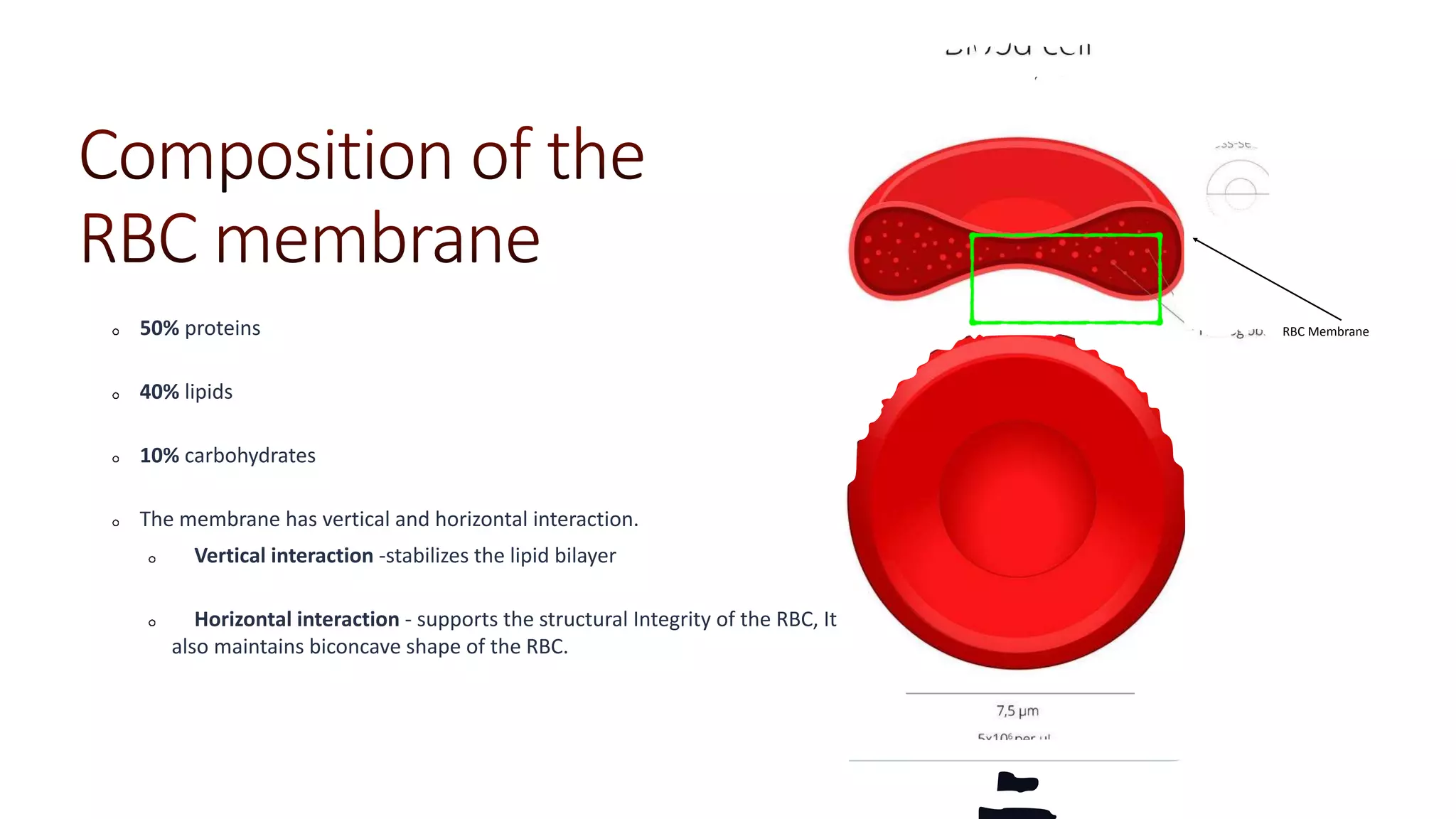
50% proteins
40% lipids
10% carbohydrates
The membrane has vertical and horizontal interaction.
Vertical interaction -stabilizes the lipid bilayer
Horizontal interaction - supports the structural Integrity of the RBC, It
also maintains biconcave shape of the RBC.
RBC Membrane
1. Lipid Bilayer
2. Membrane Skeleton
3. Glycocalyx
Horizontal Interaction
Source: https://www.researchgate.net/figure/A-schematic-representation-of-red-blood-cell-
RBC-membrane-structure-with-major_fig1_318273023
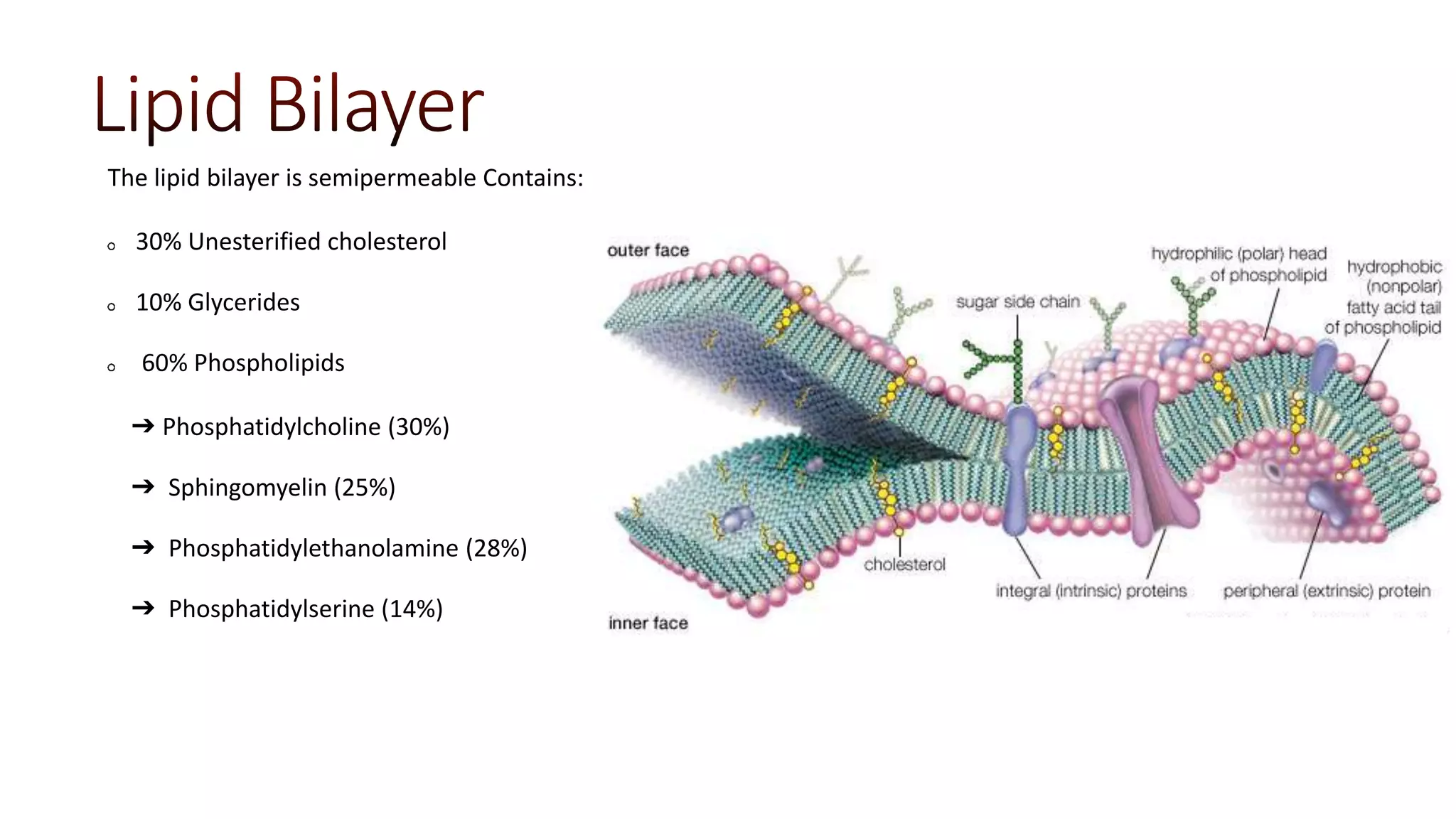
The lipid bilayer is semipermeable Contains:
30% Unesterified cholesterol
10% Glycerides
60% Phospholipids
➔ Phosphatidylcholine (30%)
➔ Sphingomyelin (25%)
➔ Phosphatidylethanolamine (28%)
➔ Phosphatidylserine (14%)
-Responsible for the elasticity and stability of the red cell membrane
A. Integral proteins
▰ Glycophorin (A, B, C) - imparts negative charge to the cell,
reducing interaction with other cells
▰ Band 3 - maintain red blood cell hydration anion exchanger protein
- Provides channel for exchange of bicarbonate and chloride (chloride shift)
▰ Aquaporins - water channel proteins
B. Peripheral Proteins
❖ Spectrin - major constituent, maintains cell shape and resists swelling
due to osmotic pressure
- Responsible for the biconcave shape of RBC
❖ Ankyrin - serves as anchor of the assembled spectrin molecules to the lipid bilayer
❖ Protein 4.1 - binds to spectrin close to actin binding site thereby strengthening and stabilizing the
cytoskeletal lattice
❖ Actin - globular protein composed of filaments that bind weakly to tail end of both α and β
spectrin
-The exterior part rich in carbohydrates. Glycophorins contributes
to the major portion of glycosylation at this extracellular layer
★ Glycophorins - have a single spanning alpha helix and are a
general class of proteins. These are glycoproteins which bear the
antigenic determinants of the blood groups.
Glycocalyx
★ For regulation of surface deformability, flexibility, cell adhesion, and
immune recognition
2. Discuss the biochemical basis of blood
typing and of blood type determination
• What is ABO blood group System?
• ABO blood group system used to denote the presence of one, both, or
neither of the A and B antigens of erythrocytes.
• The ABO blood types were discovered by Karl Landsteiner in 1901.
• Determination of blood type is essential to human blood transfusion,
mismatch can cause fatal adverse reaction that’s why this discovery played an
important role in medical practices.
Blood types are determined by the presence or absence of certain antigens – substances
that can trigger an immune response if they are foreign to the body. Since some antigens
can trigger a patient's immune system to attack the transfused blood, safe blood
transfusions depend on careful blood typing and cross-matching.
Typically, blood type tests are performed through addition of a blood sample to a solution
containing antibodies corresponding to each antigen. The presence of an antigen on the
surface of the blood cells is indicated by agglutination.
How Blood Type Is Determined And Why You Need To
Know?
Matching compatible blood types is important for blood transfusions.
Knowing your type and compatibility is crucial if you ever need a
transfusion. For those with rare blood types the supply can be limited. It is
important to know your blood type, especially if you have a rare type.
Don't wait until an emergency to find out your blood type.
The importance of knowing the blood type
All about blood typing…
A blood type (also known as a blood group) is a classification of blood, based on the
presence and absence of antibodies and inherited antigenic substances on the surface
of red blood cells (RBCs).
There are four major blood groups determined by the presence or absence of two antigens – A and B – on
the surface of red blood cells. In addition to the A and B antigens, there is a protein called the Rh factor, which
can be either present (+) or absent (–), creating the 8 most common blood types (A+, A-, B+, B-, O+, O-
, AB+, AB-).
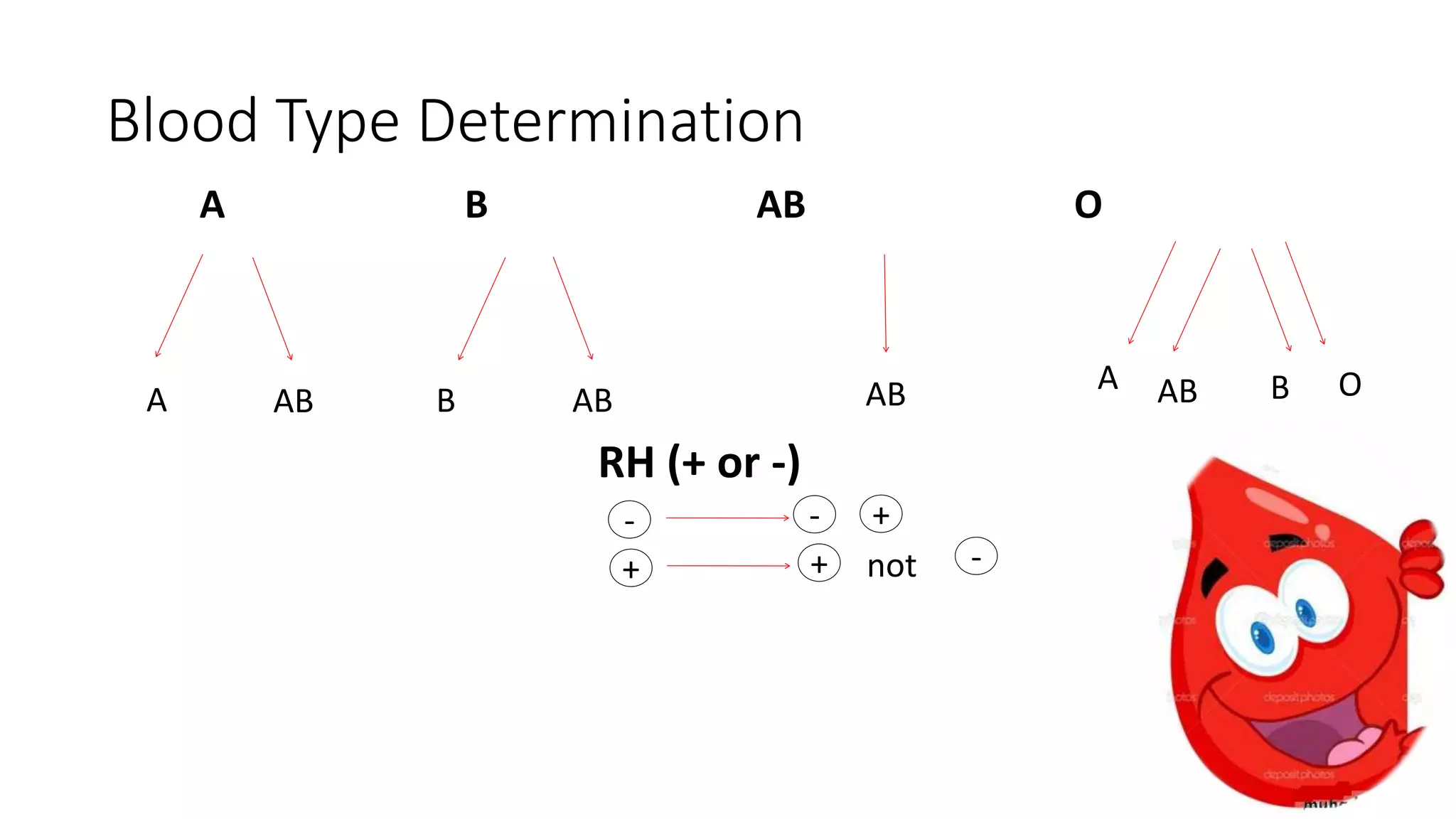
Blood Type Determination
A B AB O
A AB B AB AB A AB B O
- - +
-+ + not
RH (+ or -)
Blood Typing
Blood Type: A-
Donate: A+, A-, AB+, AB-
Receive: A-, O-
Blood Type: A+
Donate: A+, AB+
Receive: A-, O-, A+, O+
Blood Typing
Blood Type: B+
Donate: B+, AB+,
Receive: B-, B+, O+, O-
Blood Type: B-
Donate: B+, B-, AB+, AB-
Receive: B-, O-
Blood Typing
Blood Type: AB-
Donate: AB+, AB-
Receive: A-,B-, AB-, O-
Blood Type: AB+
Donate: AB+
Receive: A-,A+, B-, B+, AB-,
AB+, O-, O+
Blood type AB+ is
universal recipient.
Blood Typing
Blood Type: O-
Donate: A+, A-, B+, B-, AB+,
AB-, O+, O-
Receive: O-
Blood type O- is the
universal donor
Blood Type: O+
Donate: A+, B+, AB+, O+,
Receive: O-, O+
Blood Type Chart
3. Explain the importance of the oligosaccharide sequence in the RBC
membrane in blood determination
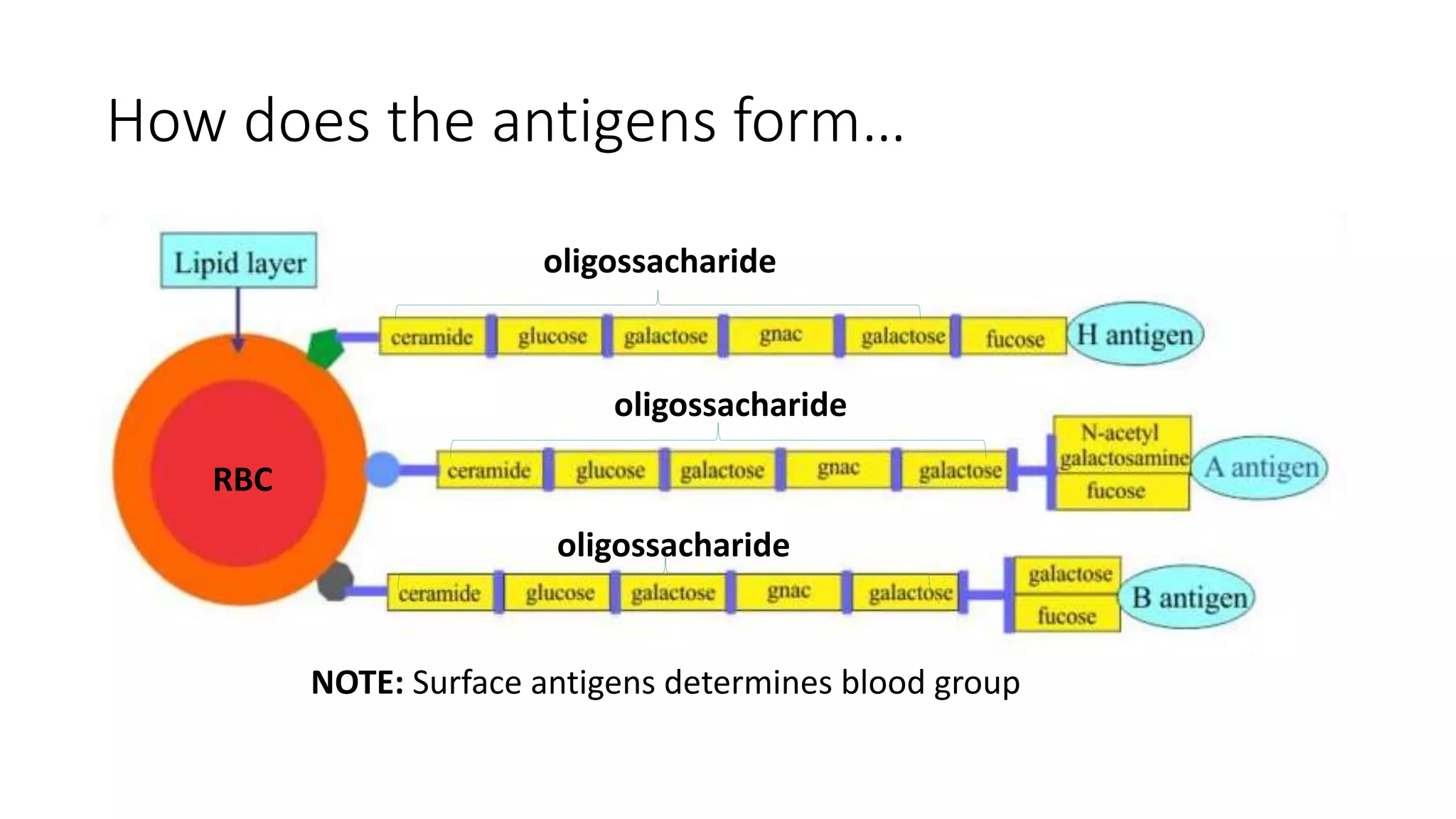
How does the antigens form…
oligossacharide
RBC
NOTE: Surface antigens determines blood group
oligossacharide
oligossacharide
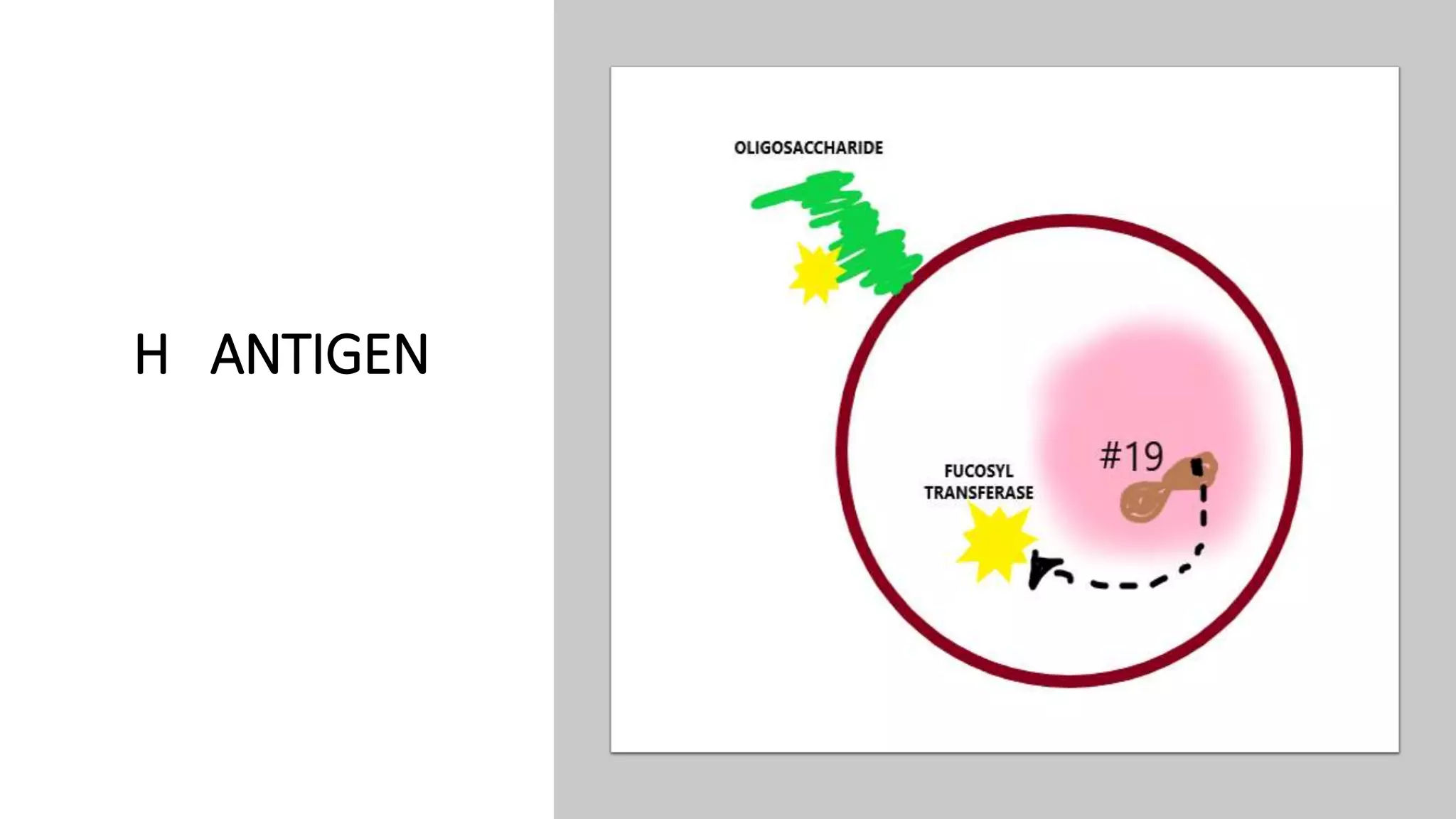
H-Antigen
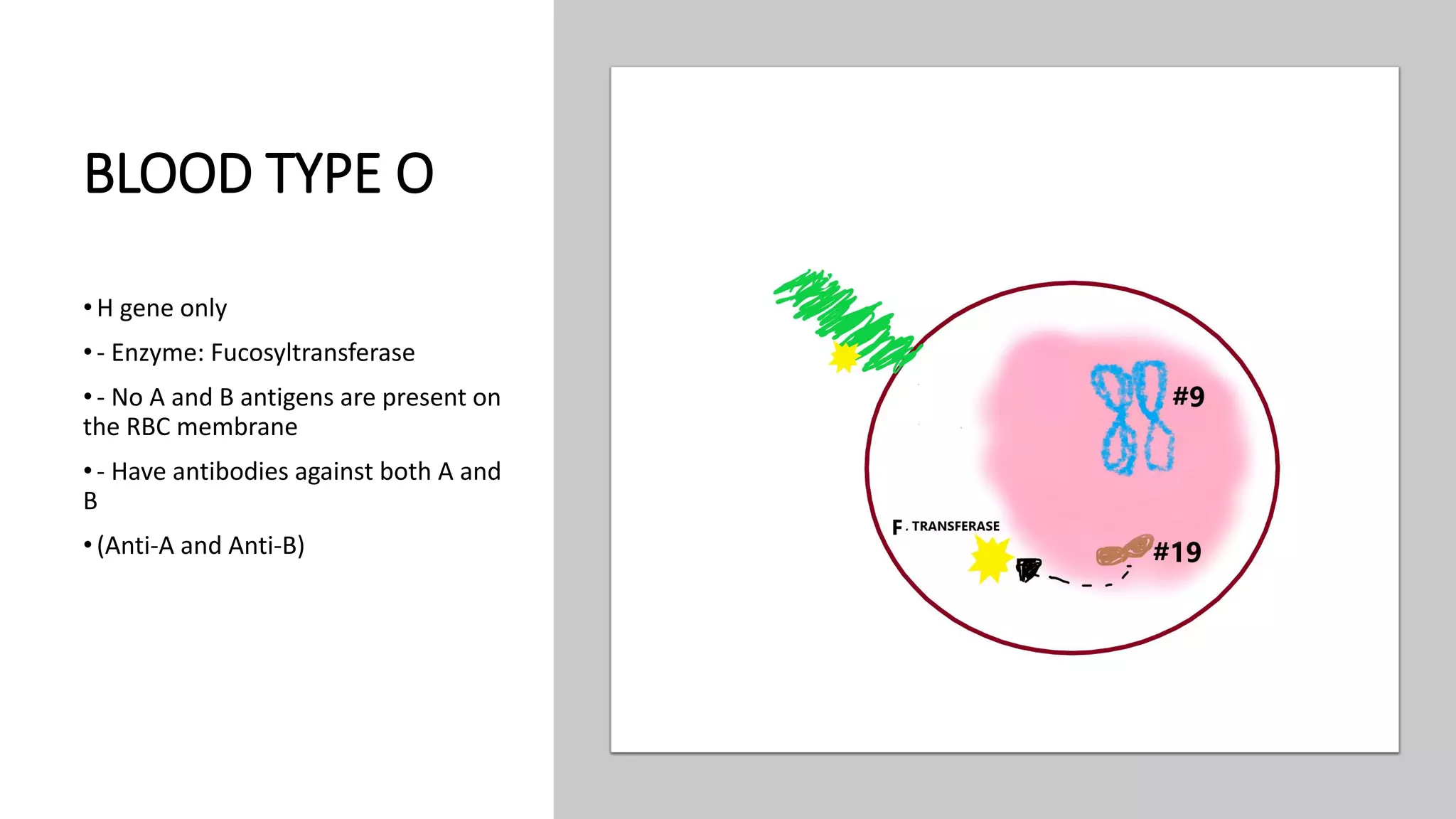
H - antigen is form when chromosome no. 9 found in the precursor cell of the
RBC cannot produce any enzyme but the gene found in chromosome no. 19
expresses Fucose transferase (the enzyme that catalyze FUCOSE) attaching it
to the OLIGOSSACHARIDE found in the surface of our red blood cells thereby
producing H substance or H antigen. H antigen acts as precursor of both A
and B antigen that’s why this process is always present in all ABO system.
Note: H antigen has no antibodies.
A-Antigen
A–antigen is form when the gene in chromosome no. 19 found in the precursor
cell expresses Fucose transferase which catalyze the FUCOSE and when the gene
in Chromosome no.9 expresses N-Acetyl Galactosamine Transferase which
catalyze the NAGA (N-Acetyl Galactosamine) thereby attaching it to the
OLIGOSSACHARIDE of the Red blood cell.
Note: A-antigen has B antibodies.
B-Antigen
B–Antigen – is form when the gene in chromosome no. 19 found in the
precursor cell expresses fucose transferase that catalyze FUCOS and the gene
in chromosome no. 9 expresses the enzyme galactose transferase which
catalyze galactose. When galactose and fucose attached to the
OLIGOSSACHARIDE found in the surface of the red blood cell it is know called
as B antigen.
Note: B-antigens has A antibodies.
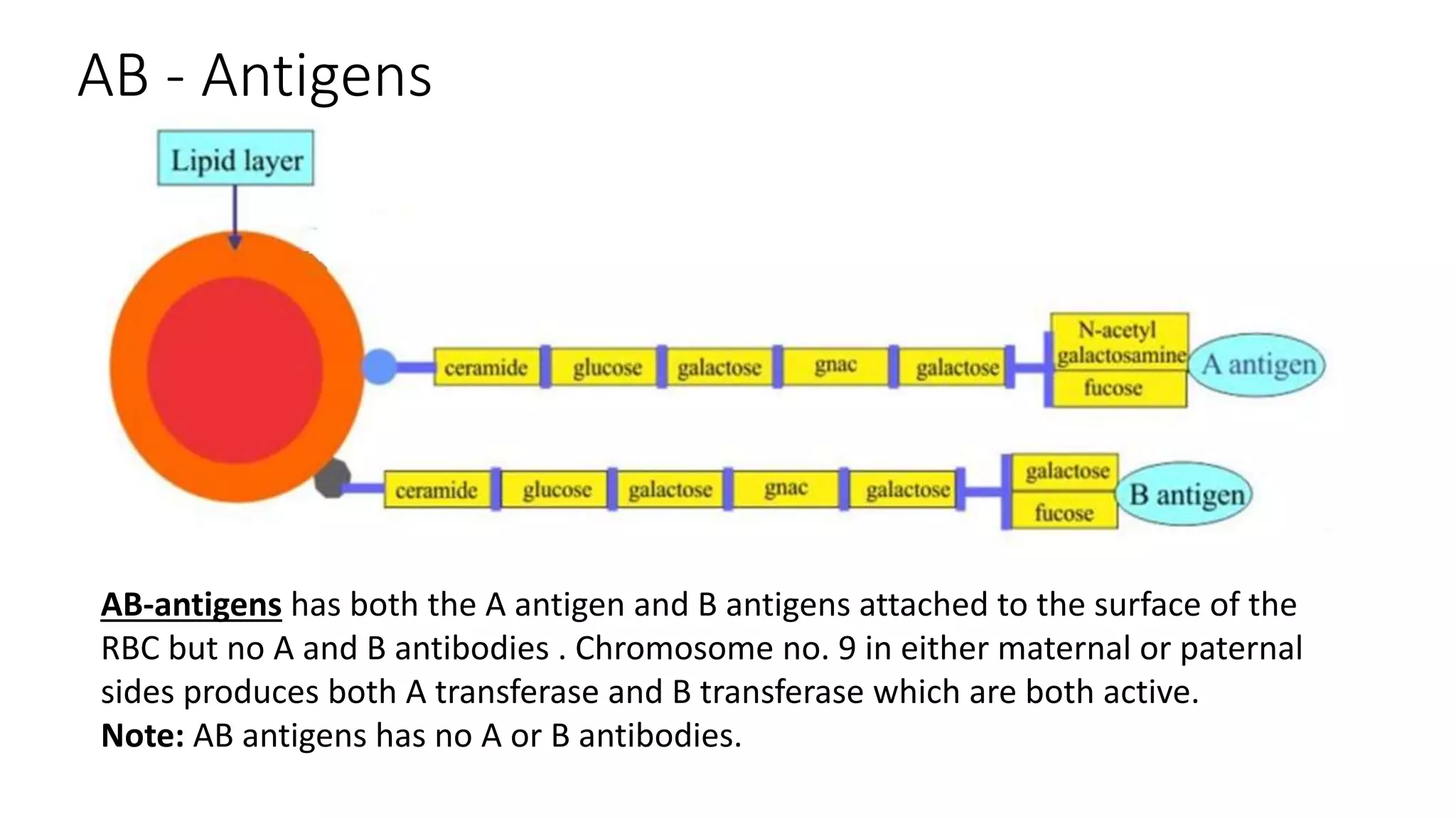
AB - Antigens
AB-antigens has both the A antigen and B antigens attached to the surface of the
RBC but no A and B antibodies . Chromosome no. 9 in either maternal or paternal
sides produces both A transferase and B transferase which are both active.
Note: AB antigens has no A or B antibodies.
4. Explain the role of genetics in
determining the blood type, especially in
the oligosaccharides content of membrane
lipoproteins
OLIGOSACCHARIDES
• ABO Antigens are complex oligosaccharides
present in most cell of the body and in certain
secretions.
• These oligosaccharides are bound to membrane
proteins or lipids and are referred to as: ABO
SUBSTANCES.
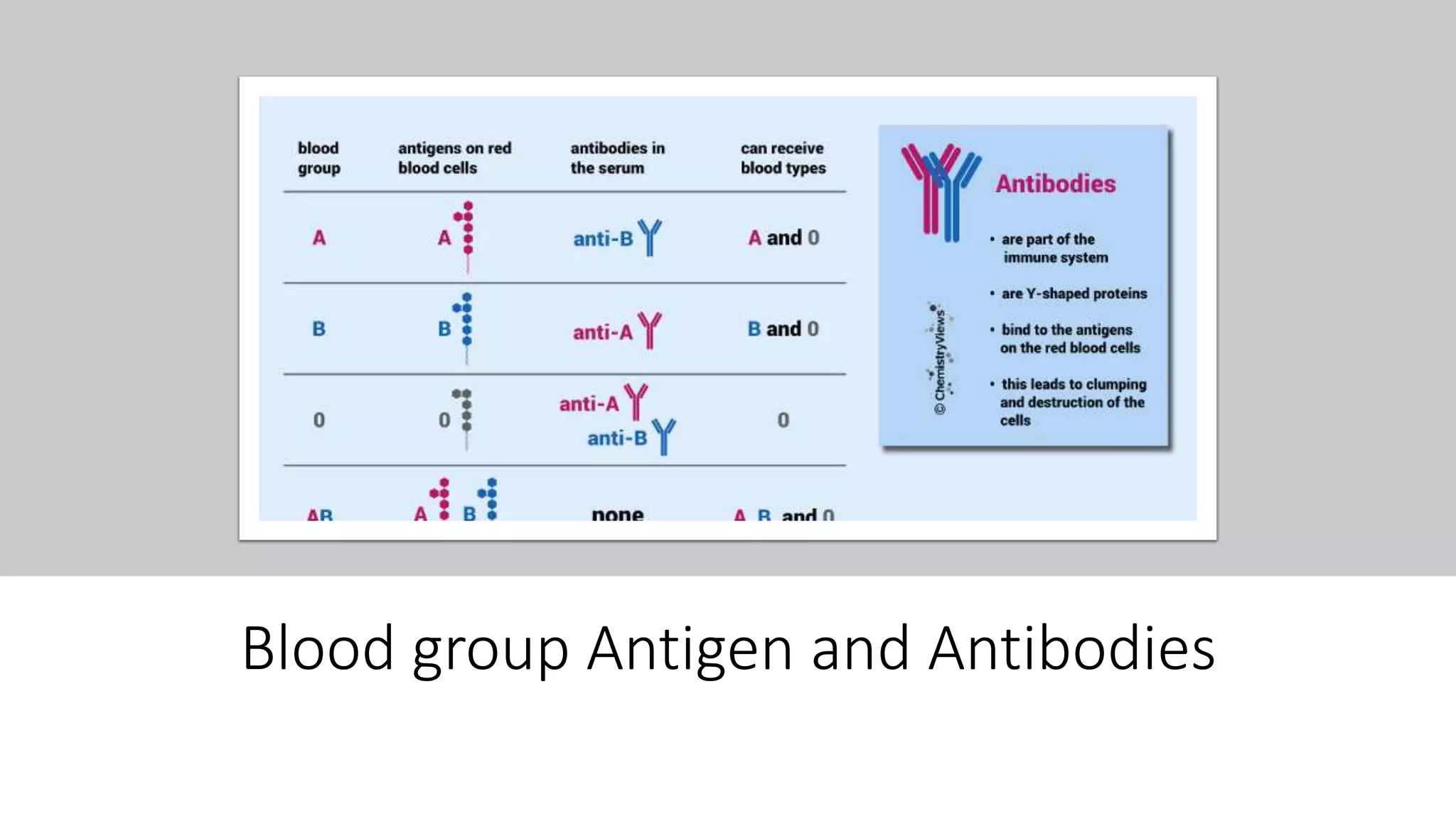
A Blood Group = A Antigen
B Blood Group = B Antigen
AB Blood Group = A and B Antigen
O Blood Group = H Antigen
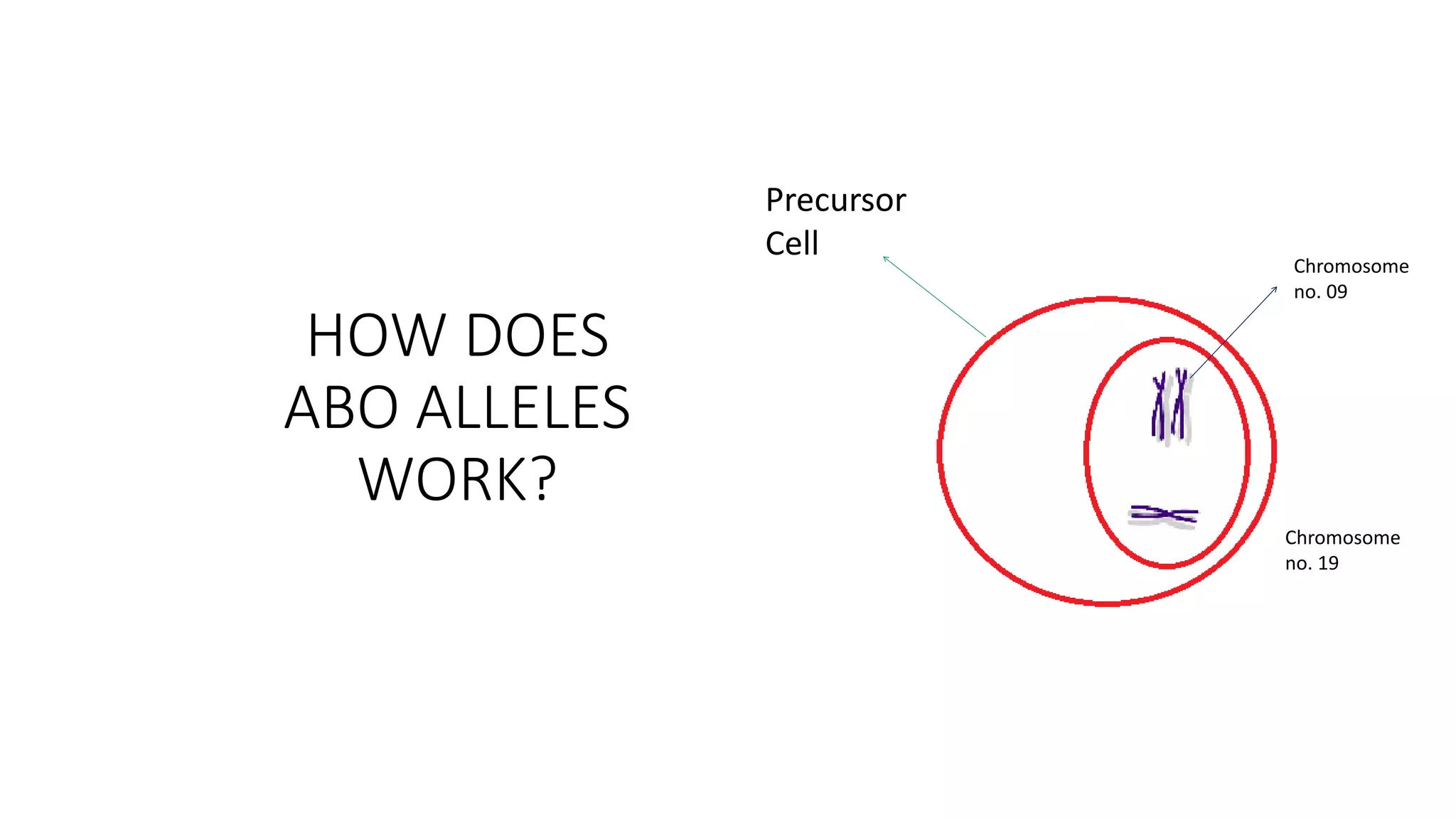
HOW DOES
ABO ALLELES
WORK?
Chromosome
no. 09
Chromosome
no. 19
Precursor
Cell
1. Individuals expressing A – Allele
2. Individuals expressing B - Allele
3. Individuals expressing O - Allele
4. Individuals expressing AB - Allele
H ANTIGEN
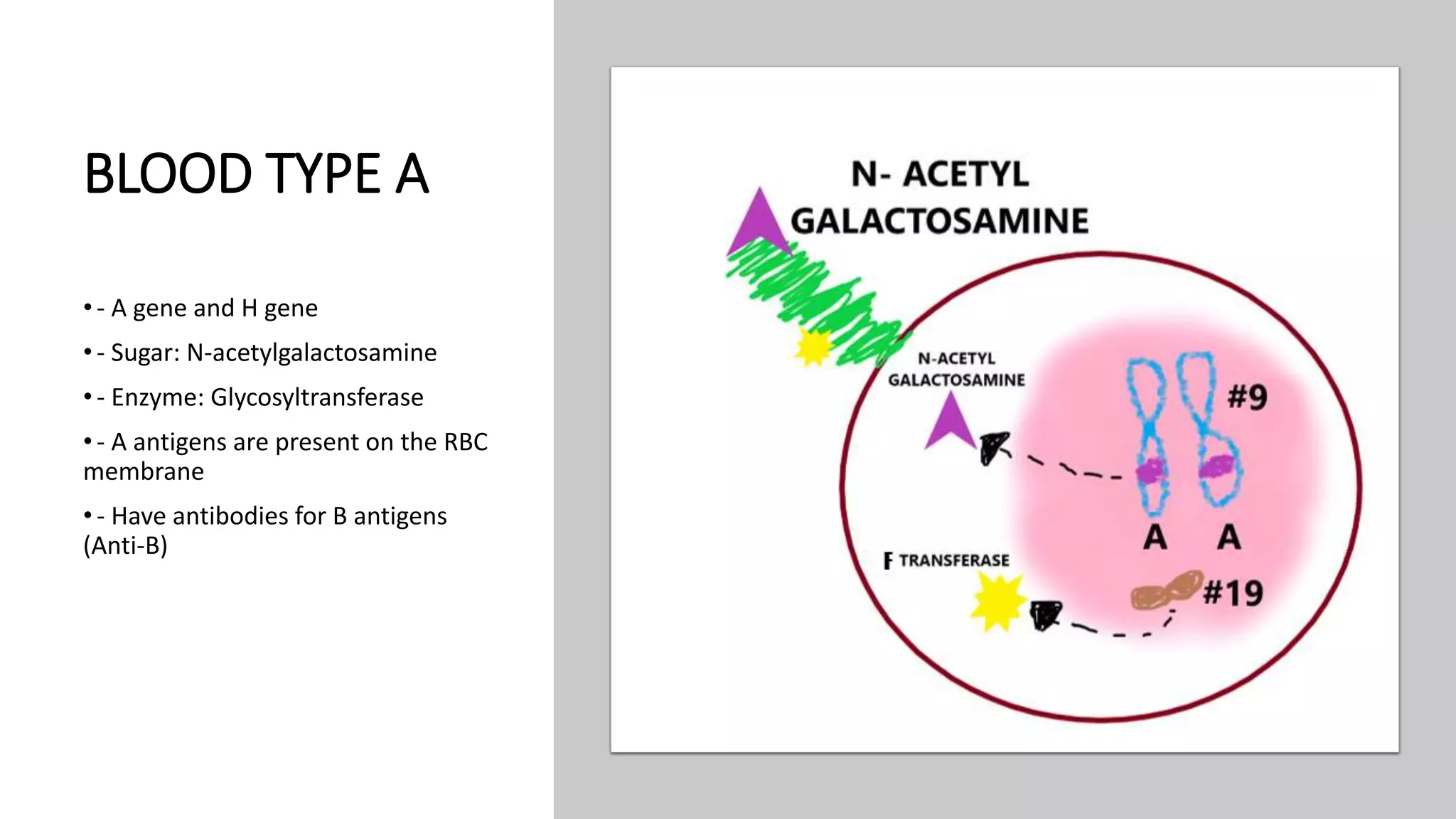
BLOOD TYPE A
•- A gene and H gene
•- Sugar: N-acetylgalactosamine
•- Enzyme: Glycosyltransferase
•- A antigens are present on the RBC
membrane
•- Have antibodies for B antigens
(Anti-B)
BLOOD TYPE B
•B gene and H gene
•- Sugar: D-galactose
•- Enzyme: Glycosyltransferase
•- B antigens are present on the RBC
membrane
•- Have antibodies for A antigens
(Anti-A)
BLOOD TYPE AB
•A gene, B gene and H gene
•- Sugar: N-acetylgalactosamine and
D-galactose
•- Enzyme: Glycosyltransferase
•- A and B antigens are present on
the RBC membrane
•- No antibodies against A and B
antigens
BLOOD TYPE O
•H gene only
•- Enzyme: Fucosyltransferase
•- No A and B antigens are present on
the RBC membrane
•- Have antibodies against both A and
B
•(Anti-A and Anti-B)
Blood Type Genes Enzyme Sugars
A H gene;
A gene
Fucosyl Transferase;
A transferase
N-acetylgalactosamine
B H gene;
B gene
Fucosyl Transferase;
B transferase
D-galactose
AB H gene;
AB gene
Fucosyl Transferase;
AB transferase
N-acetylgalactosamine
D-galactose
O H gene Fucosyl Transferase None
Blood group Antigen and Antibodies
5. Discuss the biochemical basis of ABO incompatibility and Rh
incompatibility and correlate clinically with hemolytic disease of the
newborn
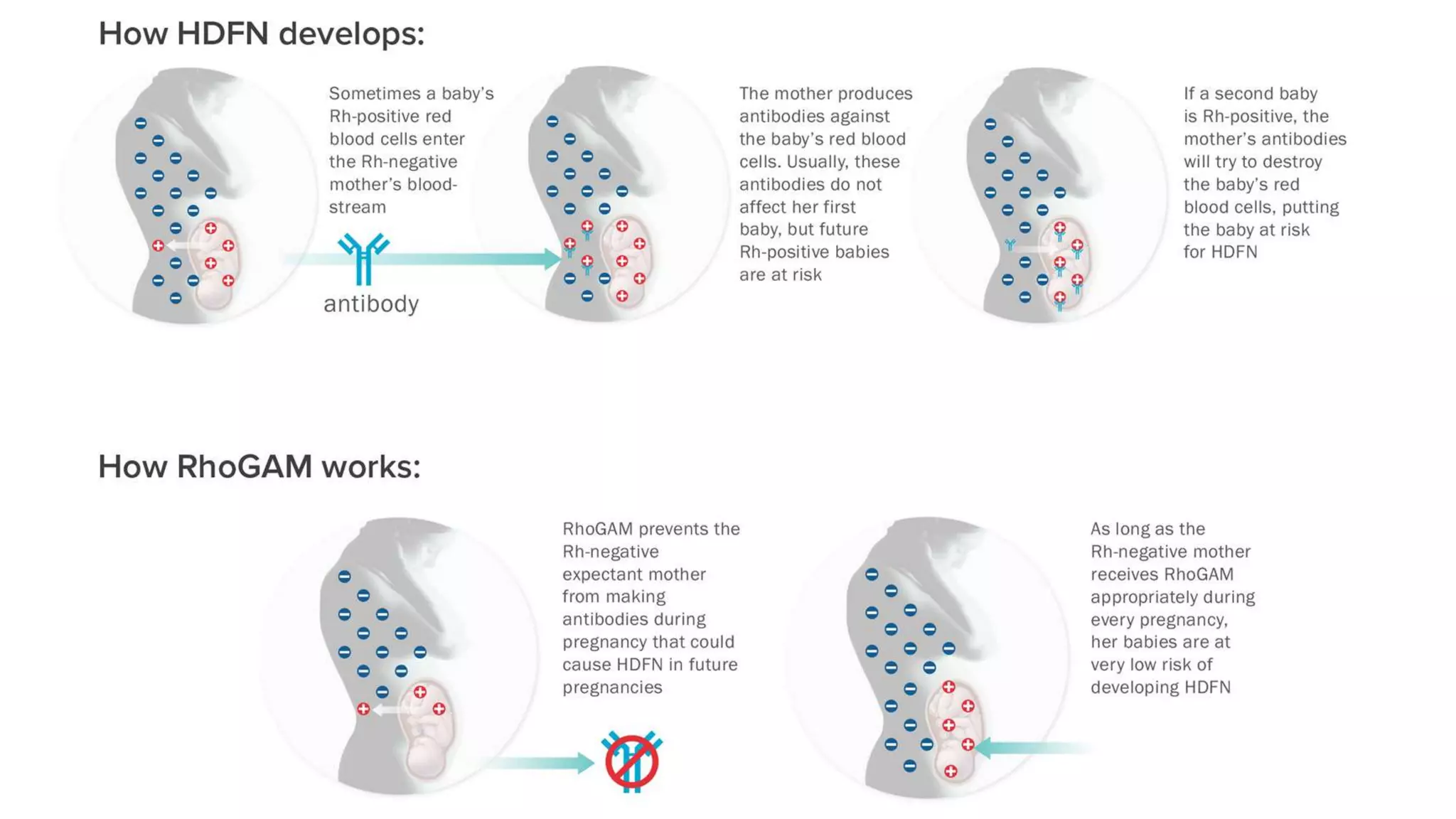
• also called Erythroblastosis fetalis
• A blood disorder in a fetus or newborn infant.
• caused by the destruction of the RBCs of the neonate by maternal
immunoglobulin G antibodies.
▻ during pregnancy, mother’s antibodies are transported to the placenta
towards the fetal circulation for protection
▻ due to the incompatibility, antibodies of the mother detect antigens
absent in its system therefore destroying these antigen-containing RBCs.
Hemolytic Disease of the Newborn
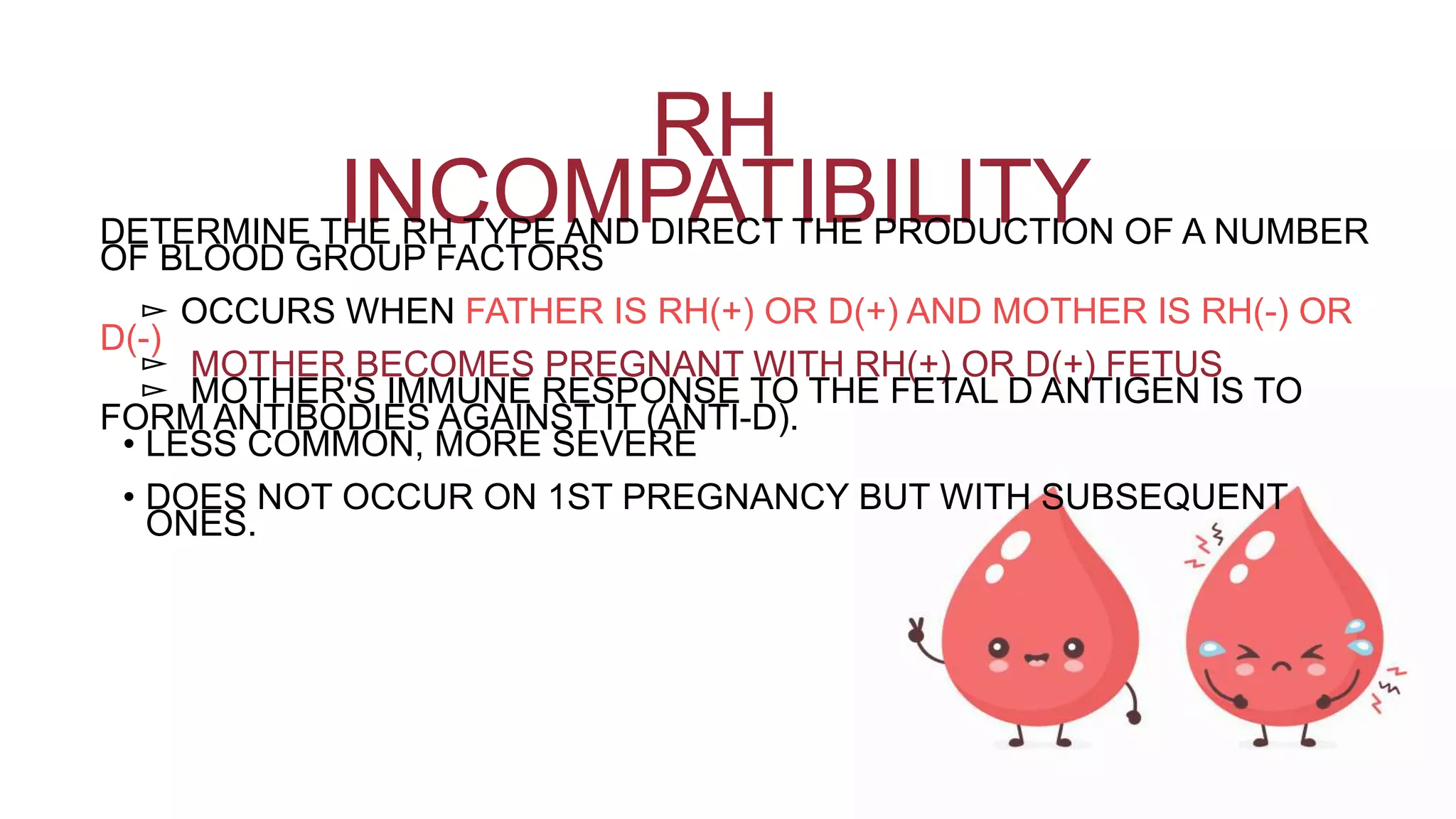
RH
INCOMPATIBILITYDETERMINE THE RH TYPE AND DIRECT THE PRODUCTION OF A NUMBER
OF BLOOD GROUP FACTORS
▻ OCCURS WHEN FATHER IS RH(+) OR D(+) AND MOTHER IS RH(-) OR
D(-)
▻ MOTHER BECOMES PREGNANT WITH RH(+) OR D(+) FETUS
▻ MOTHER'S IMMUNE RESPONSE TO THE FETAL D ANTIGEN IS TO
FORM ANTIBODIES AGAINST IT (ANTI-D).
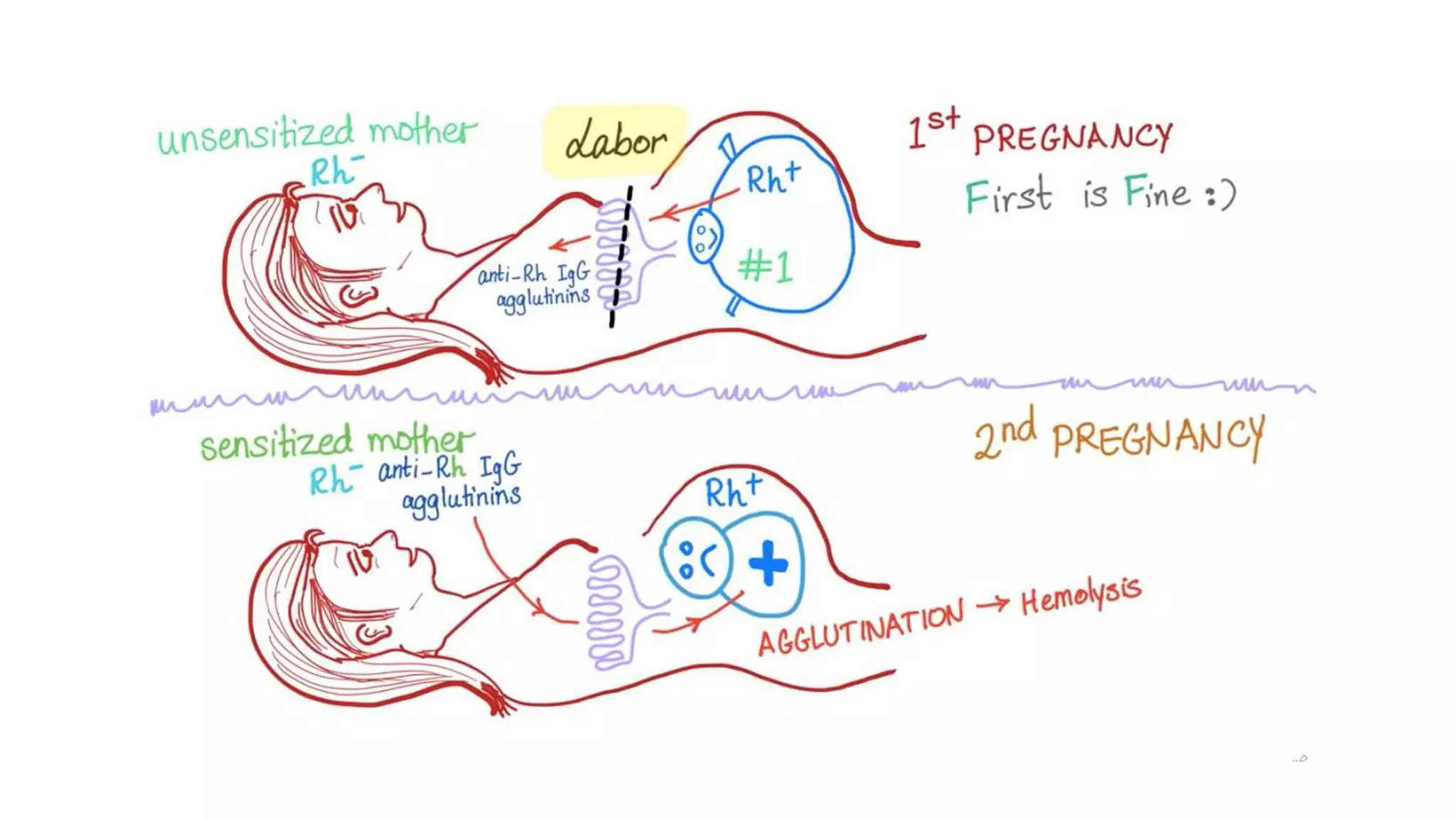
• LESS COMMON, MORE SEVERE
• DOES NOT OCCUR ON 1ST PREGNANCY BUT WITH SUBSEQUENT
ONES.
During 1st pregnancy,
SENSITIZATION occurs.
How does sensitization happen?
▻ Occurs during Fetomaternal Hemorrhage
▻ Labor & delivery
▻ Ruptured ectopic pregnancies
▻ Placental abruption
▻ Abortion
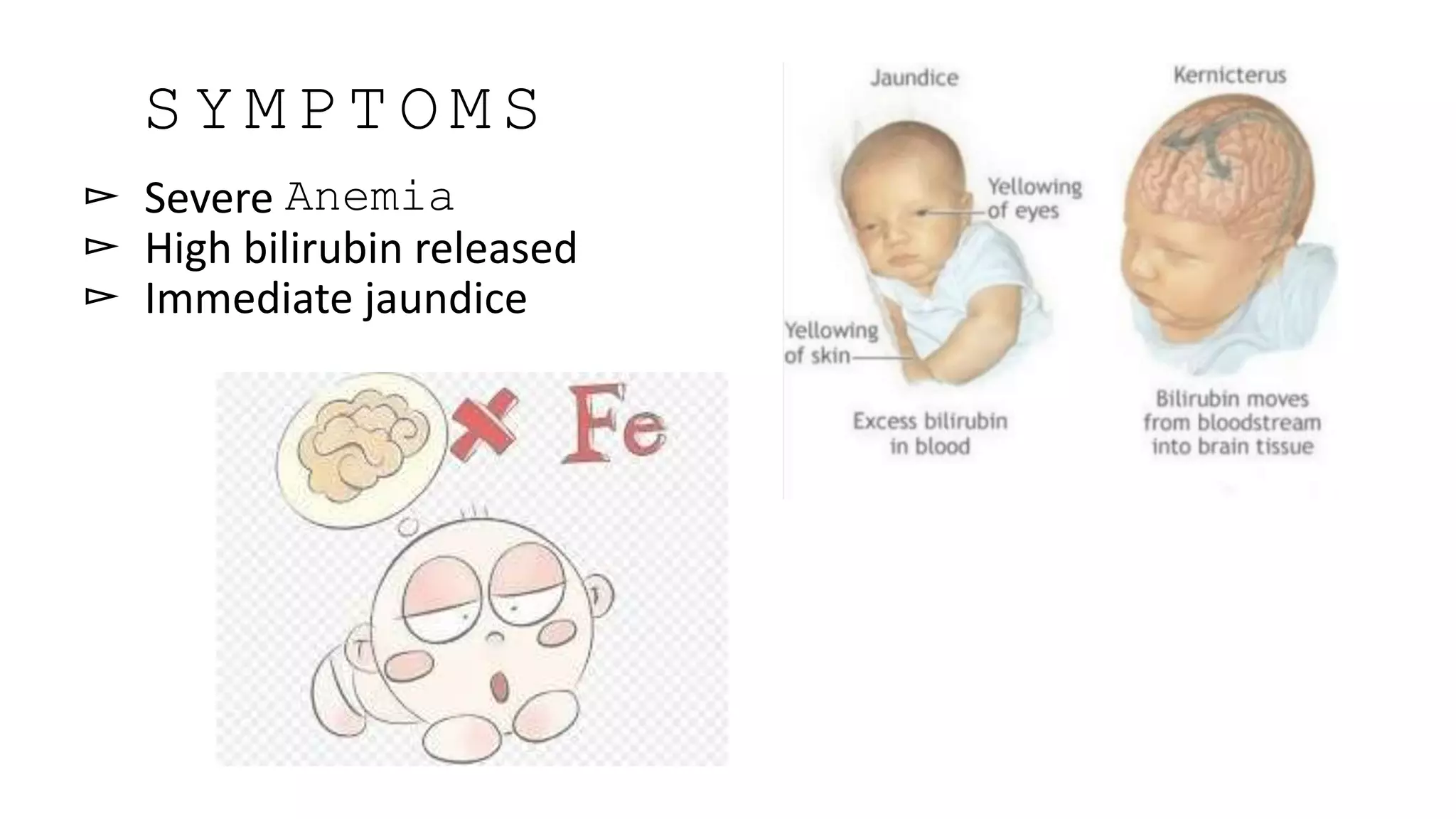
▻ Severe Anemia
▻ High bilirubin released
▻ Immediate jaundice
S Y M P T O M S
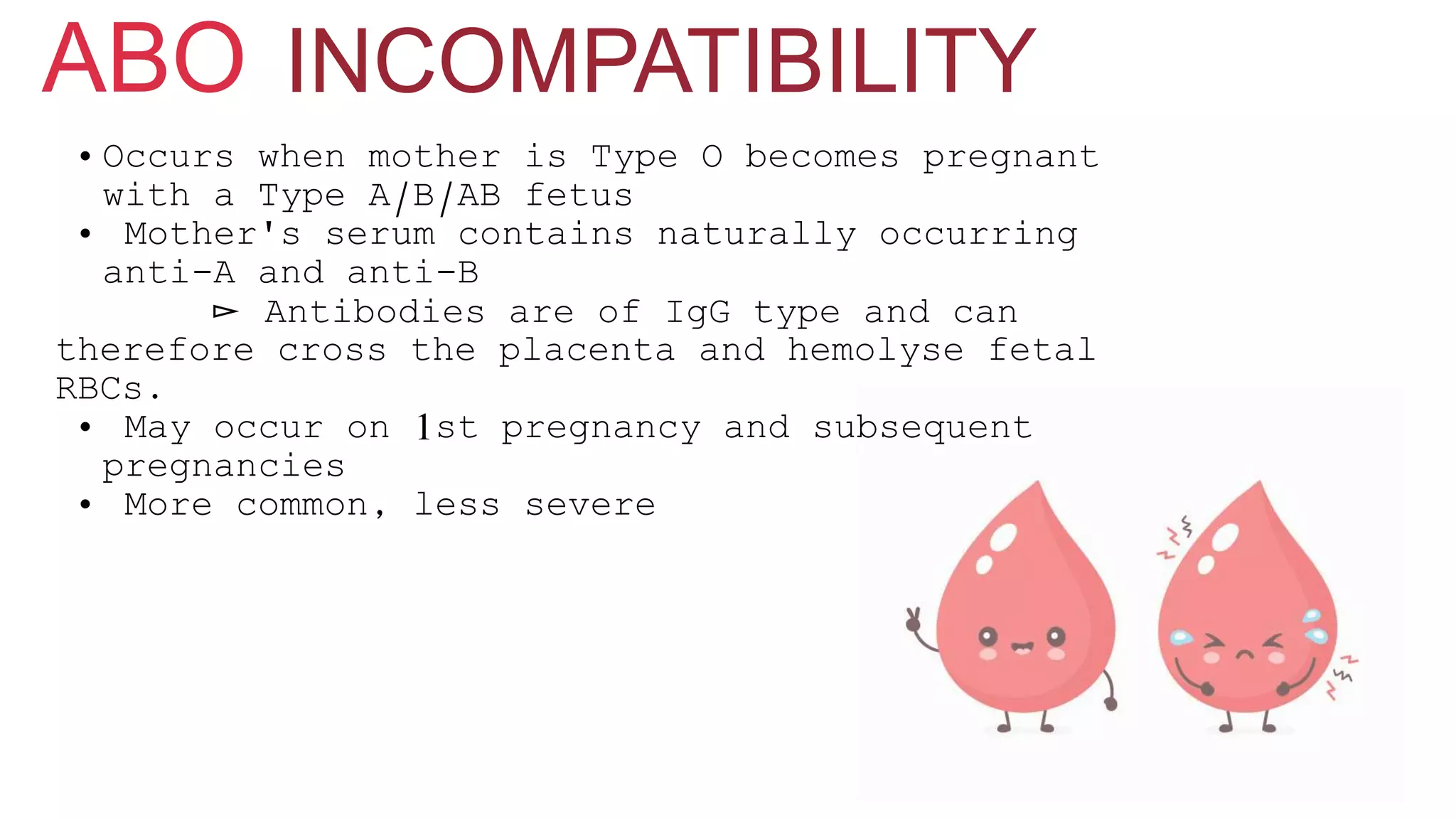
• Occurs when mother is Type O becomes pregnant
with a Type A/B/AB fetus
• Mother's serum contains naturally occurring
anti-A and anti-B
▻ Antibodies are of IgG type and can
therefore cross the placenta and
hemolyse fetal RBCs.
• May occur on 1st pregnancy and subsequent
pregnancies
• More common, less severe
ABO
INCOMPATIBILITY
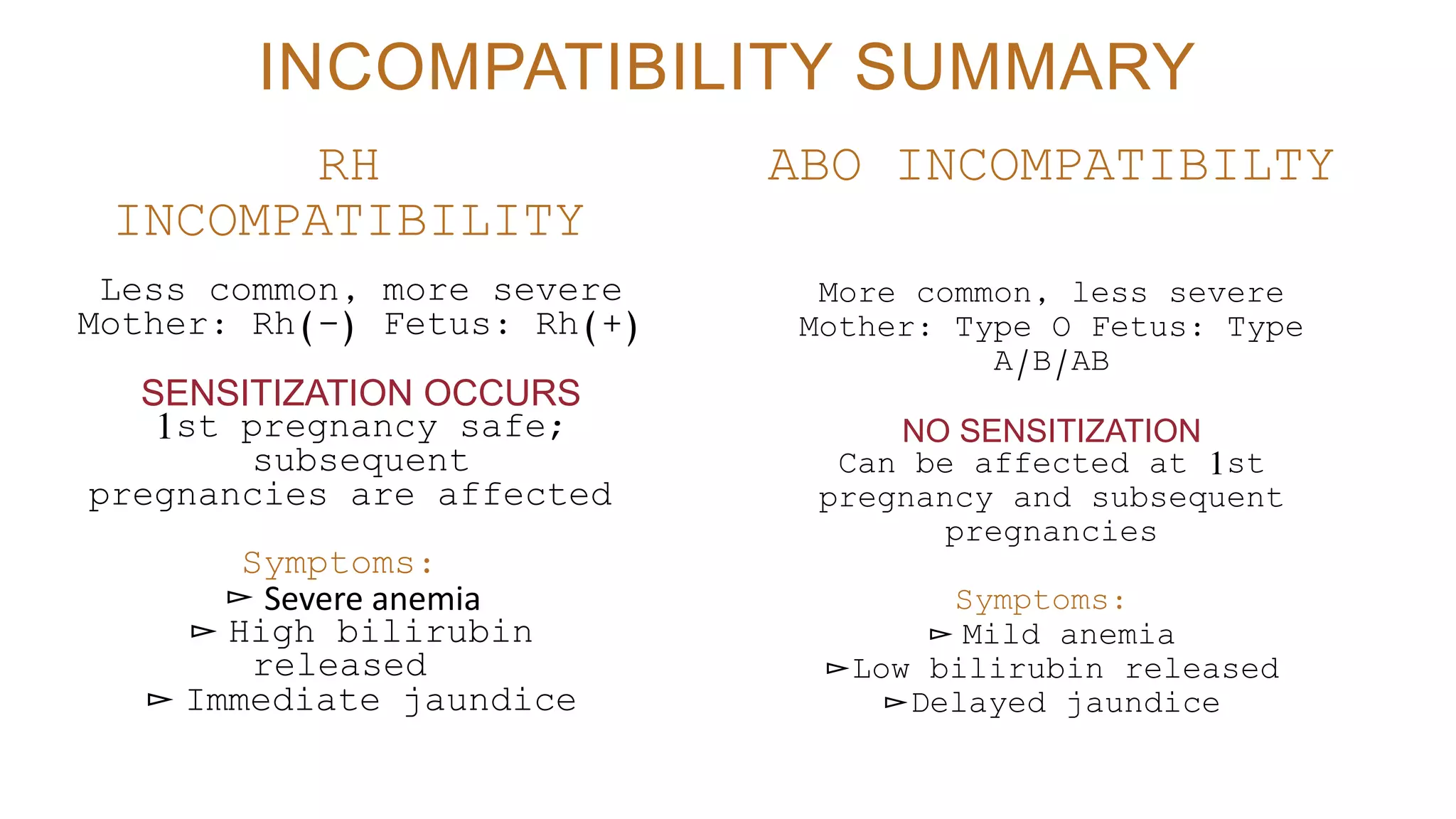
INCOMPATIBILITY SUMMARY
RH
INCOMPATIBILTYLess common, more severe
Mother: Rh(-) Fetus: Rh(+)
SENSITIZATION OCCURS
1st pregnancy safe;
subsequent
pregnancies are affected
Symptoms:
▻ Severe anemia
▻ High bilirubin released
▻ Immediate jaundice
ABO INCOMPATIBILTY
More common, less severe
Mother: Type O Fetus: Type
A/B/AB
NO SENSITIZATION
Can be affected at 1st
pregnancy and subsequent
pregnancies
Symptoms:
▻ Mild anemia
▻Low bilirubin released
▻Delayed jaundice
CLINICAL
MANAGEMENT
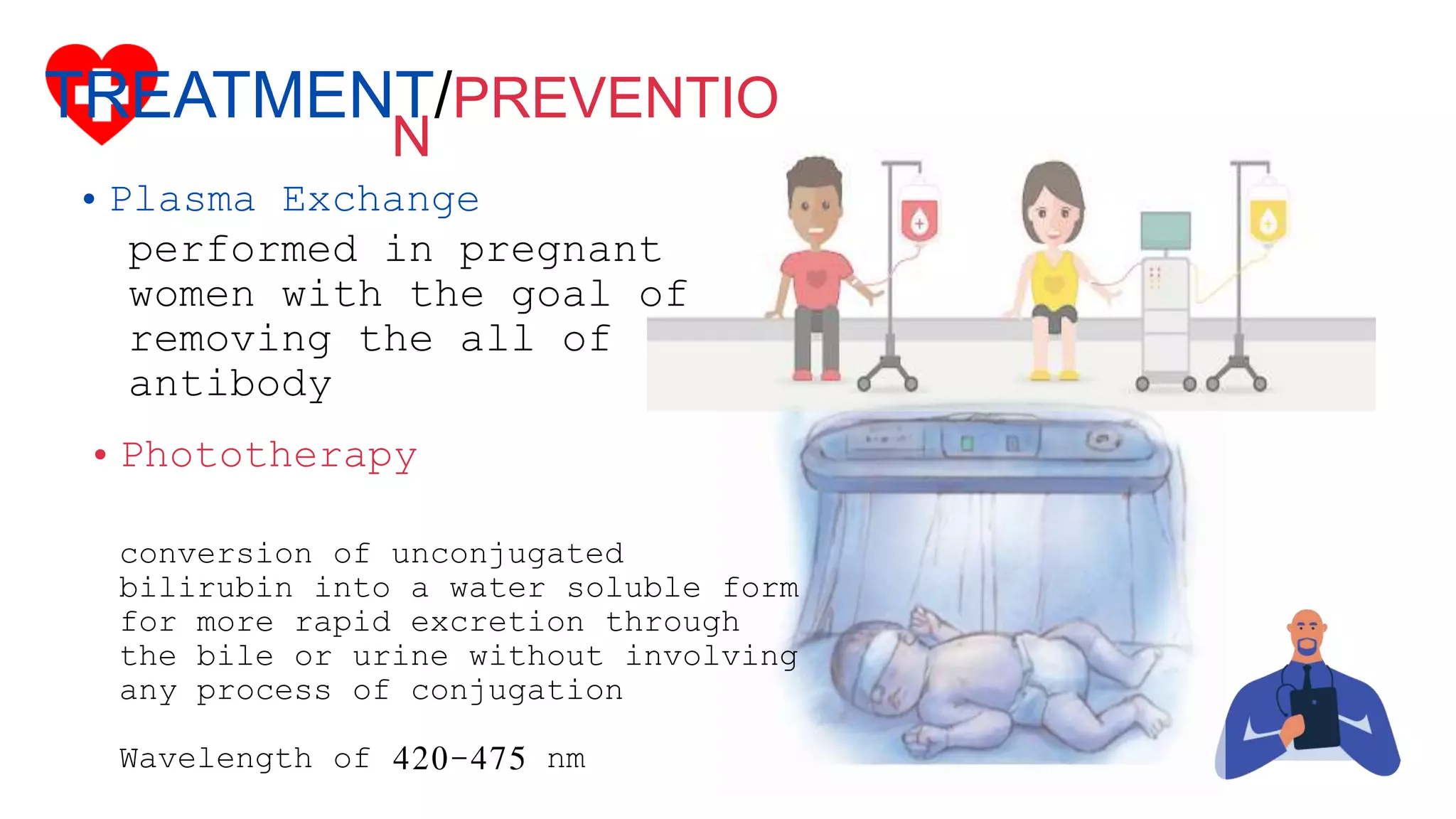
conversion of unconjugated
bilirubin into a water soluble form
for more rapid excretion through
the bile or urine without involving
any process of conjugation
Wavelength of 420-475 nm
TREATMENT/PREVENTIO
N
• Plasma Exchange
performed in pregnant
women with the goal of
removing the all of
antibody
• Phototherapy
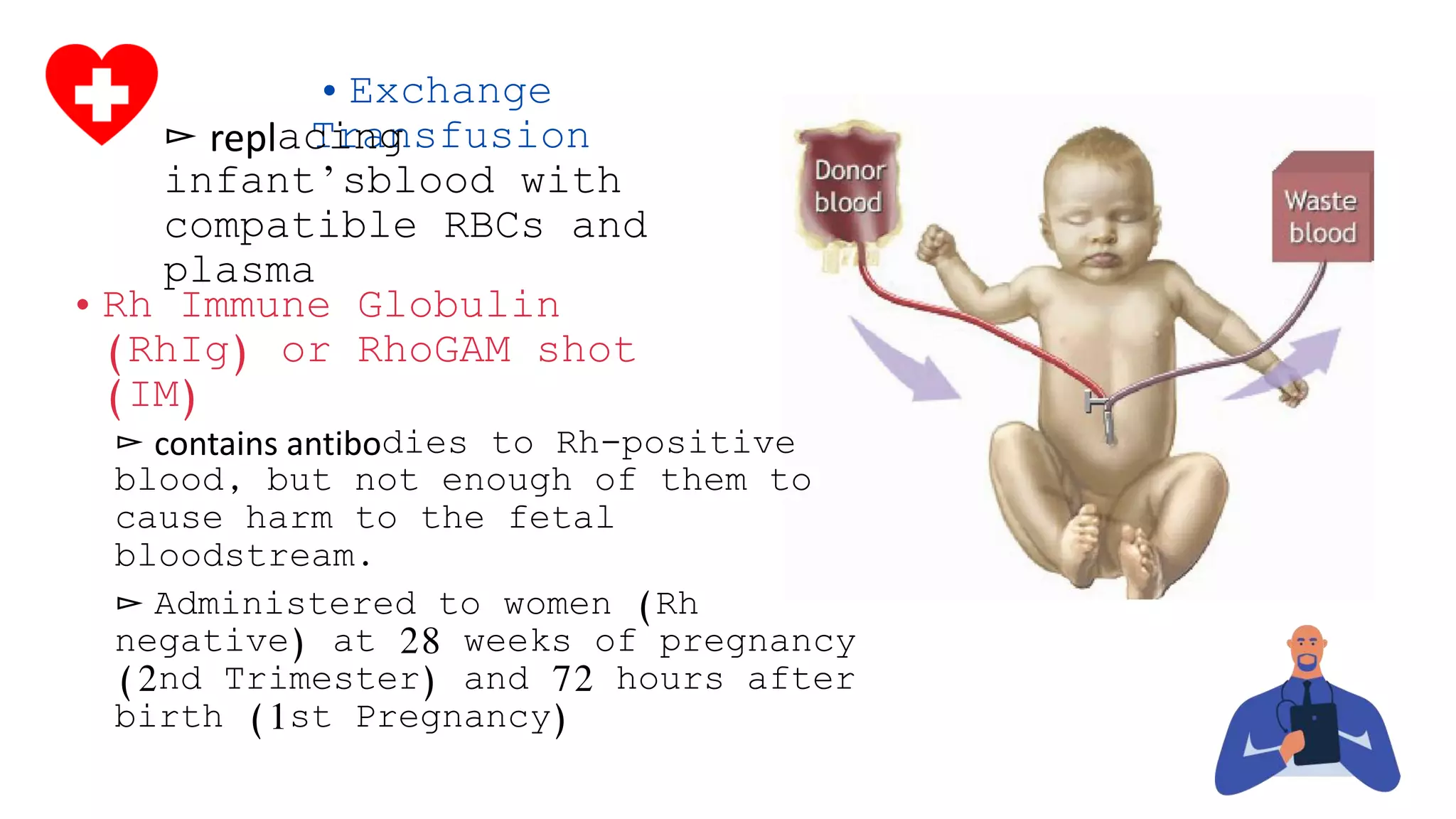
• Exchange
Transfusion▻ replacing
infant’sblood with
compatible RBCs and
plasma
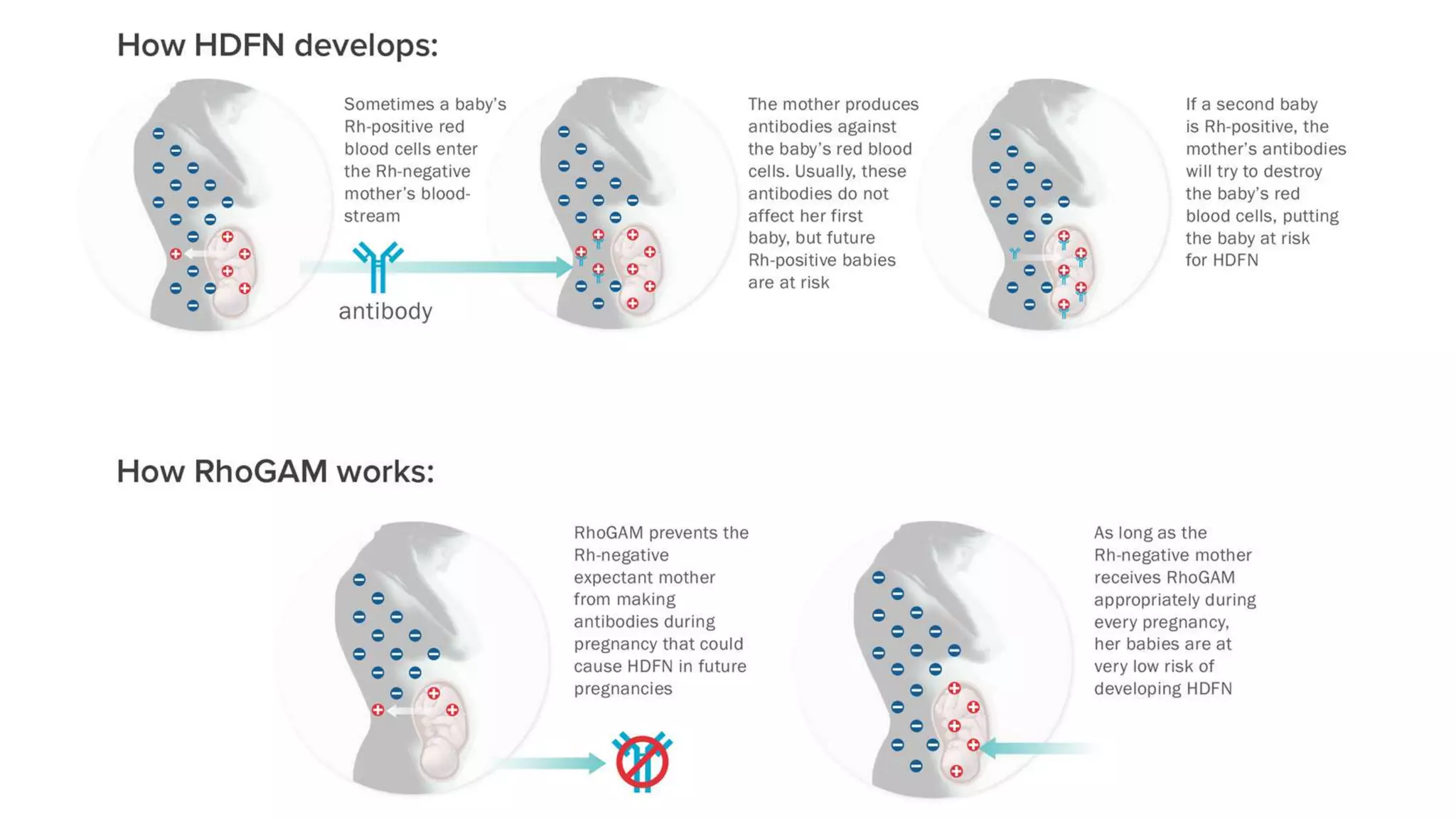
• Rh Immune Globulin
(RhIg) or RhoGAM shot
(IM)
▻ contains antibodies to Rh-positive
blood, but not enough of them to
cause harm to the fetal
bloodstream.
▻ Administered to women (Rh
negative) at 28 weeks of pregnancy
(2nd Trimester) and 72 hours after
birth (1st Pregnancy)
5. Discuss the biochemical basis of ABO incompatibility and Rh
incompatibility and correlate clinically with hemolytic disease of the newborn
• also called Erythroblastosis fetalis
• A blood disorder in a fetus or newborn infant.
• caused by the destruction of the RBCs of the neonate by maternal
immunoglobulin G antibodies.
▻ during pregnancy, mother’s antibodies are transported to the
placenta towards the fetal circulation for protection
▻ due to the incompatibility, antibodies of the mother detect
antigens absent in its system therefore destroying these antigen-
containing RBCs.
Hemolytic Disease of the Newborn
INCOMPATIBILITYRH
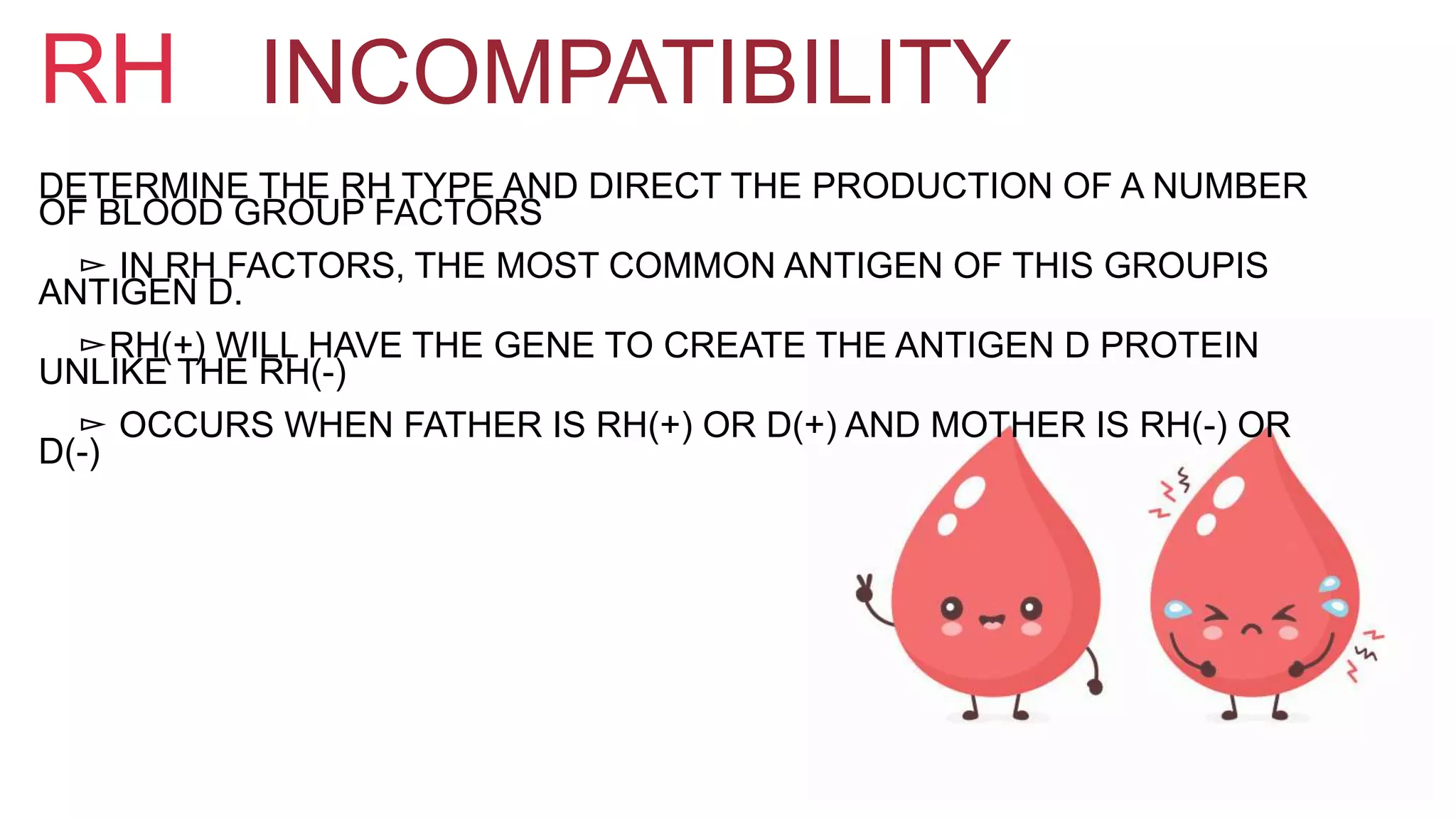
DETERMINE THE RH TYPE AND DIRECT THE PRODUCTION OF A NUMBER
OF BLOOD GROUP FACTORS
▻ IN RH FACTORS, THE MOST COMMON ANTIGEN OF THIS GROUPIS
ANTIGEN D.
▻RH(+) WILL HAVE THE GENE TO CREATE THE ANTIGEN D PROTEIN
UNLIKE THE RH(-)
▻ OCCURS WHEN FATHER IS RH(+) OR D(+) AND MOTHER IS RH(-) OR
D(-)
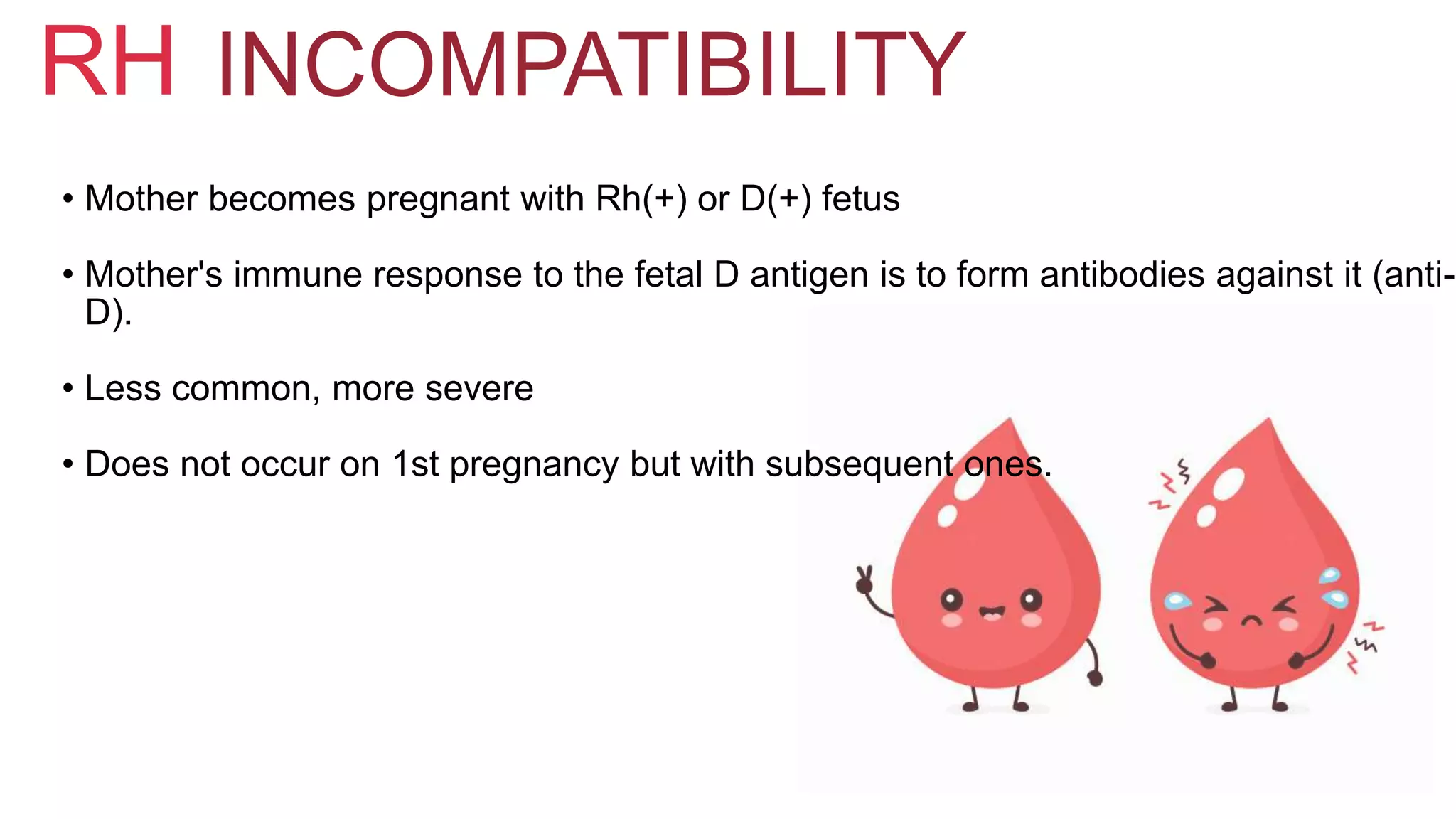
RH INCOMPATIBILITY
• Mother becomes pregnant with Rh(+) or D(+) fetus
• Mother's immune response to the fetal D antigen is to form antibodies against it (anti-
D).
• Less common, more severe
• Does not occur on 1st pregnancy but with subsequent ones.
During 1st pregnancy,
SENSITIZATION occurs.
How does sensitization happen?
▻ Occurs during Fetomaternal Hemorrhage
▻ Labor & delivery
▻ Ruptured ectopic pregnancies
▻ Placental abruption
▻ Abortion
▻ Severe Anemia
▻ High bilirubin released
▻ Immediate jaundice
S Y M P T O M S
• Occurs when mother is Type O becomes pregnant
with a Type A/B/AB fetus
• Mother's serum contains naturally occurring
anti-A and anti-B
▻ Antibodies are of IgG type and can
therefore cross the placenta and hemolyse fetal
RBCs.
• May occur on 1st pregnancy and subsequent
pregnancies
• More common, less severe
INCOMPATIBILITYABO
INCOMPATIBILITY SUMMARY
RH
INCOMPATIBILITY
Less common, more severe
Mother: Rh(-) Fetus: Rh(+)
SENSITIZATION OCCURS
1st pregnancy safe;
subsequent
pregnancies are affected
Symptoms:
▻ Severe anemia
▻ High bilirubin
released
▻ Immediate jaundice
ABO INCOMPATIBILTY
More common, less severe
Mother: Type O Fetus: Type
A/B/AB
NO SENSITIZATION
Can be affected at 1st
pregnancy and subsequent
pregnancies
Symptoms:
▻ Mild anemia
▻Low bilirubin released
▻Delayed jaundice
CLINICAL
MANAGEMENT
conversion of unconjugated
bilirubin into a water soluble
form for more rapid excretion
through the bile or urine
without involving any process of
conjugation
Wavelength of 420-475 nm
TREATMENT/PREVENTION
• Plasma Exchange
performed in pregnant
women with the goal
of removing the all
of antibody
• Phototherapy
• Exchange
Transfusion▻ replacing
infant’sblood with
compatible RBCs and
plasma• Rh Immune Globulin
(RhIg) or RhoGAM shot
(IM)
▻ contains antibodies to Rh-positive
blood, but not enough of them to
cause harm to the fetal
bloodstream.
▻ Administered to women (Rh
negative) at 28 weeks of pregnancy
(2nd Trimester) and 72 hours after
birth (1st Pregnancy)
• Introduction and Summary - Dr. Cortez, Ylanie Scheherezade Z.
• Reporter on No. 1 question- Dr. Aragon, Earl Jason N.
• Reporter on No. 2 question- Dr. Loreno, Madonna E.
• Reporter on no. 3 question - Dr. Pastrana, Jose Ranelle T.
• Reporter on No. 4 question- Dr. Daza, Djev David
• Reporter on No. 4 question- Dr. Agnas, Jennifer Jane L.
• Reporter on no. 5 question - Dr. Songcuya, Melissa R.
• Hemolytic disease of the Newborn. (2018). Retrieved from Stanford Children's Health:
https://www.stanfordchildrens.org/en/topic/default?id=hemolytic-disease-of-the-newborn-90-P02368
• Dean L. Blood Groups and Red Cell Antigens [Internet]. Bethesda (MD): National Center for
Biotechnology Information (US); 2005. Chapter 4, Hemolytic disease of the newborn. Available from:
https://www.ncbi.nlm.nih.gov/books/NBK2266/
• Rodwell, V., Bender, D., Botham, K., Kennelly, P., & Weil., P. (2015). Harper’s illustrated biochemistry
(30th ed.). New York, NY: Mcgraw-Hill Education.
• Dr. Najeeb Lectures https://www.drnajeeblectures.com/
End of Slide Presentation

ABO Blood Type Incompatibility

  • 1.
  • 2.
    Dr. Agnas, JenniferJane L. Dr. Aragon, Earl Jason N. Dr. Cortez, Ylanie Scheherezade Dr. Daza, Djev David Dr. Loreno, Madonna E. Dr. Pastrana, Jose Ranelle Dr. Songcuya, Melissa Presented By Medicine-1st Year
  • 3.
    1.Composition and importanceof RBC membrane; 2. Comparison of direct and indirect blood typing; major and minor cross-matching; 3. Biochemical basis of ABO and Rh incompatibility; 4. Role of genetics and sugar in determining blood type; 5. Clinical management of Hemolytic disease of the newborn
  • 4.
    Terminologies… • Antigen –determine blood type and can either be protein or complexes of sugar molecules. • Allele – is one of two or more version of gene, meaning it is one of two more versions of mutation at the same place on a chromosomes. It can be dominant or recessive. • Fucose - is an unusual sugar that is present in a variety of glycolipids and glycoproteins produced by mammalian cells • Locus - is a specific, fixed position on a chromosome where a particular gene or genetic marker is located • Homozygous - s a word that refers to a particular gene that has identical alleles on both homologous chromosomes. It is referred to by two capital letters (XX) for a dominant trait, and two lowercase letters (xx) for a recessive trait. • Heterozygous - refers to having inherited different forms of a particular gene from each parent. A heterozygous genotype stands in contrast to a homozygous genotype, where an individual inherits identical forms of a particular gene from each parent.
  • 5.
    Terminologies… • Fucosyl Transferase- is an enzyme that transfers an L-fucose sugar from a GDP-fucose (guanosine diphosphate-fucose) donor substrate to an acceptor substrate. • Galactose Transferase - catalyzes the galactosylation of the H antigen and is responsible for the formation of the blood group antigen of phenotype B. • N- Acetylgalactose Transferase - which catalyzes the transfer of GalNAc residues from the UDP-GalNAc donor nucleotide to the Gal residues of the acceptor H antigen, converting the H antigen into A antigen in A and AB individuals. • RBC (Red Blood Cell) – also known as erythrocyte, these are the cellular component of blood • Oligosaccharides – is made up of group or chain of monosaccharide that can be attached to the RBC.
  • 7.
    50% proteins 40% lipids 10%carbohydrates The membrane has vertical and horizontal interaction. Vertical interaction -stabilizes the lipid bilayer Horizontal interaction - supports the structural Integrity of the RBC, It also maintains biconcave shape of the RBC. RBC Membrane
  • 8.
    1. Lipid Bilayer 2.Membrane Skeleton 3. Glycocalyx
  • 9.
  • 10.
    The lipid bilayeris semipermeable Contains: 30% Unesterified cholesterol 10% Glycerides 60% Phospholipids ➔ Phosphatidylcholine (30%) ➔ Sphingomyelin (25%) ➔ Phosphatidylethanolamine (28%) ➔ Phosphatidylserine (14%)
  • 11.
    -Responsible for theelasticity and stability of the red cell membrane A. Integral proteins ▰ Glycophorin (A, B, C) - imparts negative charge to the cell, reducing interaction with other cells ▰ Band 3 - maintain red blood cell hydration anion exchanger protein - Provides channel for exchange of bicarbonate and chloride (chloride shift) ▰ Aquaporins - water channel proteins
  • 12.
    B. Peripheral Proteins ❖Spectrin - major constituent, maintains cell shape and resists swelling due to osmotic pressure - Responsible for the biconcave shape of RBC ❖ Ankyrin - serves as anchor of the assembled spectrin molecules to the lipid bilayer ❖ Protein 4.1 - binds to spectrin close to actin binding site thereby strengthening and stabilizing the cytoskeletal lattice ❖ Actin - globular protein composed of filaments that bind weakly to tail end of both α and β spectrin
  • 14.
    -The exterior partrich in carbohydrates. Glycophorins contributes to the major portion of glycosylation at this extracellular layer ★ Glycophorins - have a single spanning alpha helix and are a general class of proteins. These are glycoproteins which bear the antigenic determinants of the blood groups. Glycocalyx
  • 15.
    ★ For regulationof surface deformability, flexibility, cell adhesion, and immune recognition
  • 16.
    2. Discuss thebiochemical basis of blood typing and of blood type determination
  • 17.
    • What isABO blood group System? • ABO blood group system used to denote the presence of one, both, or neither of the A and B antigens of erythrocytes. • The ABO blood types were discovered by Karl Landsteiner in 1901. • Determination of blood type is essential to human blood transfusion, mismatch can cause fatal adverse reaction that’s why this discovery played an important role in medical practices.
  • 18.
    Blood types aredetermined by the presence or absence of certain antigens – substances that can trigger an immune response if they are foreign to the body. Since some antigens can trigger a patient's immune system to attack the transfused blood, safe blood transfusions depend on careful blood typing and cross-matching. Typically, blood type tests are performed through addition of a blood sample to a solution containing antibodies corresponding to each antigen. The presence of an antigen on the surface of the blood cells is indicated by agglutination. How Blood Type Is Determined And Why You Need To Know?
  • 19.
    Matching compatible bloodtypes is important for blood transfusions. Knowing your type and compatibility is crucial if you ever need a transfusion. For those with rare blood types the supply can be limited. It is important to know your blood type, especially if you have a rare type. Don't wait until an emergency to find out your blood type. The importance of knowing the blood type
  • 20.
    All about bloodtyping… A blood type (also known as a blood group) is a classification of blood, based on the presence and absence of antibodies and inherited antigenic substances on the surface of red blood cells (RBCs). There are four major blood groups determined by the presence or absence of two antigens – A and B – on the surface of red blood cells. In addition to the A and B antigens, there is a protein called the Rh factor, which can be either present (+) or absent (–), creating the 8 most common blood types (A+, A-, B+, B-, O+, O- , AB+, AB-).
  • 21.
    Blood Type Determination AB AB O A AB B AB AB A AB B O - - + -+ + not RH (+ or -)
  • 22.
    Blood Typing Blood Type:A- Donate: A+, A-, AB+, AB- Receive: A-, O- Blood Type: A+ Donate: A+, AB+ Receive: A-, O-, A+, O+
  • 23.
    Blood Typing Blood Type:B+ Donate: B+, AB+, Receive: B-, B+, O+, O- Blood Type: B- Donate: B+, B-, AB+, AB- Receive: B-, O-
  • 24.
    Blood Typing Blood Type:AB- Donate: AB+, AB- Receive: A-,B-, AB-, O- Blood Type: AB+ Donate: AB+ Receive: A-,A+, B-, B+, AB-, AB+, O-, O+ Blood type AB+ is universal recipient.
  • 25.
    Blood Typing Blood Type:O- Donate: A+, A-, B+, B-, AB+, AB-, O+, O- Receive: O- Blood type O- is the universal donor Blood Type: O+ Donate: A+, B+, AB+, O+, Receive: O-, O+
  • 26.
  • 27.
    3. Explain theimportance of the oligosaccharide sequence in the RBC membrane in blood determination
  • 28.
    How does theantigens form… oligossacharide RBC NOTE: Surface antigens determines blood group oligossacharide oligossacharide
  • 29.
    H-Antigen H - antigenis form when chromosome no. 9 found in the precursor cell of the RBC cannot produce any enzyme but the gene found in chromosome no. 19 expresses Fucose transferase (the enzyme that catalyze FUCOSE) attaching it to the OLIGOSSACHARIDE found in the surface of our red blood cells thereby producing H substance or H antigen. H antigen acts as precursor of both A and B antigen that’s why this process is always present in all ABO system. Note: H antigen has no antibodies.
  • 30.
    A-Antigen A–antigen is formwhen the gene in chromosome no. 19 found in the precursor cell expresses Fucose transferase which catalyze the FUCOSE and when the gene in Chromosome no.9 expresses N-Acetyl Galactosamine Transferase which catalyze the NAGA (N-Acetyl Galactosamine) thereby attaching it to the OLIGOSSACHARIDE of the Red blood cell. Note: A-antigen has B antibodies.
  • 31.
    B-Antigen B–Antigen – isform when the gene in chromosome no. 19 found in the precursor cell expresses fucose transferase that catalyze FUCOS and the gene in chromosome no. 9 expresses the enzyme galactose transferase which catalyze galactose. When galactose and fucose attached to the OLIGOSSACHARIDE found in the surface of the red blood cell it is know called as B antigen. Note: B-antigens has A antibodies.
  • 32.
    AB - Antigens AB-antigenshas both the A antigen and B antigens attached to the surface of the RBC but no A and B antibodies . Chromosome no. 9 in either maternal or paternal sides produces both A transferase and B transferase which are both active. Note: AB antigens has no A or B antibodies.
  • 34.
    4. Explain therole of genetics in determining the blood type, especially in the oligosaccharides content of membrane lipoproteins
  • 35.
    OLIGOSACCHARIDES • ABO Antigensare complex oligosaccharides present in most cell of the body and in certain secretions. • These oligosaccharides are bound to membrane proteins or lipids and are referred to as: ABO SUBSTANCES.
  • 36.
    A Blood Group= A Antigen B Blood Group = B Antigen AB Blood Group = A and B Antigen O Blood Group = H Antigen
  • 37.
    HOW DOES ABO ALLELES WORK? Chromosome no.09 Chromosome no. 19 Precursor Cell
  • 38.
    1. Individuals expressingA – Allele 2. Individuals expressing B - Allele 3. Individuals expressing O - Allele 4. Individuals expressing AB - Allele
  • 39.
  • 40.
    BLOOD TYPE A •-A gene and H gene •- Sugar: N-acetylgalactosamine •- Enzyme: Glycosyltransferase •- A antigens are present on the RBC membrane •- Have antibodies for B antigens (Anti-B)
  • 41.
    BLOOD TYPE B •Bgene and H gene •- Sugar: D-galactose •- Enzyme: Glycosyltransferase •- B antigens are present on the RBC membrane •- Have antibodies for A antigens (Anti-A)
  • 42.
    BLOOD TYPE AB •Agene, B gene and H gene •- Sugar: N-acetylgalactosamine and D-galactose •- Enzyme: Glycosyltransferase •- A and B antigens are present on the RBC membrane •- No antibodies against A and B antigens
  • 43.
    BLOOD TYPE O •Hgene only •- Enzyme: Fucosyltransferase •- No A and B antigens are present on the RBC membrane •- Have antibodies against both A and B •(Anti-A and Anti-B)
  • 44.
    Blood Type GenesEnzyme Sugars A H gene; A gene Fucosyl Transferase; A transferase N-acetylgalactosamine B H gene; B gene Fucosyl Transferase; B transferase D-galactose AB H gene; AB gene Fucosyl Transferase; AB transferase N-acetylgalactosamine D-galactose O H gene Fucosyl Transferase None
  • 45.
    Blood group Antigenand Antibodies
  • 46.
    5. Discuss thebiochemical basis of ABO incompatibility and Rh incompatibility and correlate clinically with hemolytic disease of the newborn
  • 47.
    • also calledErythroblastosis fetalis • A blood disorder in a fetus or newborn infant. • caused by the destruction of the RBCs of the neonate by maternal immunoglobulin G antibodies. ▻ during pregnancy, mother’s antibodies are transported to the placenta towards the fetal circulation for protection ▻ due to the incompatibility, antibodies of the mother detect antigens absent in its system therefore destroying these antigen-containing RBCs. Hemolytic Disease of the Newborn
  • 48.
    RH INCOMPATIBILITYDETERMINE THE RHTYPE AND DIRECT THE PRODUCTION OF A NUMBER OF BLOOD GROUP FACTORS ▻ OCCURS WHEN FATHER IS RH(+) OR D(+) AND MOTHER IS RH(-) OR D(-) ▻ MOTHER BECOMES PREGNANT WITH RH(+) OR D(+) FETUS ▻ MOTHER'S IMMUNE RESPONSE TO THE FETAL D ANTIGEN IS TO FORM ANTIBODIES AGAINST IT (ANTI-D). • LESS COMMON, MORE SEVERE • DOES NOT OCCUR ON 1ST PREGNANCY BUT WITH SUBSEQUENT ONES.
  • 49.
    During 1st pregnancy, SENSITIZATIONoccurs. How does sensitization happen? ▻ Occurs during Fetomaternal Hemorrhage ▻ Labor & delivery ▻ Ruptured ectopic pregnancies ▻ Placental abruption ▻ Abortion
  • 52.
    ▻ Severe Anemia ▻High bilirubin released ▻ Immediate jaundice S Y M P T O M S
  • 53.
    • Occurs whenmother is Type O becomes pregnant with a Type A/B/AB fetus • Mother's serum contains naturally occurring anti-A and anti-B ▻ Antibodies are of IgG type and can therefore cross the placenta and hemolyse fetal RBCs. • May occur on 1st pregnancy and subsequent pregnancies • More common, less severe ABO INCOMPATIBILITY
  • 55.
    INCOMPATIBILITY SUMMARY RH INCOMPATIBILTYLess common,more severe Mother: Rh(-) Fetus: Rh(+) SENSITIZATION OCCURS 1st pregnancy safe; subsequent pregnancies are affected Symptoms: ▻ Severe anemia ▻ High bilirubin released ▻ Immediate jaundice ABO INCOMPATIBILTY More common, less severe Mother: Type O Fetus: Type A/B/AB NO SENSITIZATION Can be affected at 1st pregnancy and subsequent pregnancies Symptoms: ▻ Mild anemia ▻Low bilirubin released ▻Delayed jaundice
  • 56.
  • 57.
    conversion of unconjugated bilirubininto a water soluble form for more rapid excretion through the bile or urine without involving any process of conjugation Wavelength of 420-475 nm TREATMENT/PREVENTIO N • Plasma Exchange performed in pregnant women with the goal of removing the all of antibody • Phototherapy
  • 58.
    • Exchange Transfusion▻ replacing infant’sbloodwith compatible RBCs and plasma • Rh Immune Globulin (RhIg) or RhoGAM shot (IM) ▻ contains antibodies to Rh-positive blood, but not enough of them to cause harm to the fetal bloodstream. ▻ Administered to women (Rh negative) at 28 weeks of pregnancy (2nd Trimester) and 72 hours after birth (1st Pregnancy)
  • 60.
    5. Discuss thebiochemical basis of ABO incompatibility and Rh incompatibility and correlate clinically with hemolytic disease of the newborn
  • 61.
    • also calledErythroblastosis fetalis • A blood disorder in a fetus or newborn infant. • caused by the destruction of the RBCs of the neonate by maternal immunoglobulin G antibodies. ▻ during pregnancy, mother’s antibodies are transported to the placenta towards the fetal circulation for protection ▻ due to the incompatibility, antibodies of the mother detect antigens absent in its system therefore destroying these antigen- containing RBCs. Hemolytic Disease of the Newborn
  • 62.
    INCOMPATIBILITYRH DETERMINE THE RHTYPE AND DIRECT THE PRODUCTION OF A NUMBER OF BLOOD GROUP FACTORS ▻ IN RH FACTORS, THE MOST COMMON ANTIGEN OF THIS GROUPIS ANTIGEN D. ▻RH(+) WILL HAVE THE GENE TO CREATE THE ANTIGEN D PROTEIN UNLIKE THE RH(-) ▻ OCCURS WHEN FATHER IS RH(+) OR D(+) AND MOTHER IS RH(-) OR D(-)
  • 63.
    RH INCOMPATIBILITY • Motherbecomes pregnant with Rh(+) or D(+) fetus • Mother's immune response to the fetal D antigen is to form antibodies against it (anti- D). • Less common, more severe • Does not occur on 1st pregnancy but with subsequent ones.
  • 64.
    During 1st pregnancy, SENSITIZATIONoccurs. How does sensitization happen? ▻ Occurs during Fetomaternal Hemorrhage ▻ Labor & delivery ▻ Ruptured ectopic pregnancies ▻ Placental abruption ▻ Abortion
  • 67.
    ▻ Severe Anemia ▻High bilirubin released ▻ Immediate jaundice S Y M P T O M S
  • 68.
    • Occurs whenmother is Type O becomes pregnant with a Type A/B/AB fetus • Mother's serum contains naturally occurring anti-A and anti-B ▻ Antibodies are of IgG type and can therefore cross the placenta and hemolyse fetal RBCs. • May occur on 1st pregnancy and subsequent pregnancies • More common, less severe INCOMPATIBILITYABO
  • 70.
    INCOMPATIBILITY SUMMARY RH INCOMPATIBILITY Less common,more severe Mother: Rh(-) Fetus: Rh(+) SENSITIZATION OCCURS 1st pregnancy safe; subsequent pregnancies are affected Symptoms: ▻ Severe anemia ▻ High bilirubin released ▻ Immediate jaundice ABO INCOMPATIBILTY More common, less severe Mother: Type O Fetus: Type A/B/AB NO SENSITIZATION Can be affected at 1st pregnancy and subsequent pregnancies Symptoms: ▻ Mild anemia ▻Low bilirubin released ▻Delayed jaundice
  • 71.
  • 72.
    conversion of unconjugated bilirubininto a water soluble form for more rapid excretion through the bile or urine without involving any process of conjugation Wavelength of 420-475 nm TREATMENT/PREVENTION • Plasma Exchange performed in pregnant women with the goal of removing the all of antibody • Phototherapy
  • 73.
    • Exchange Transfusion▻ replacing infant’sbloodwith compatible RBCs and plasma• Rh Immune Globulin (RhIg) or RhoGAM shot (IM) ▻ contains antibodies to Rh-positive blood, but not enough of them to cause harm to the fetal bloodstream. ▻ Administered to women (Rh negative) at 28 weeks of pregnancy (2nd Trimester) and 72 hours after birth (1st Pregnancy)
  • 75.
    • Introduction andSummary - Dr. Cortez, Ylanie Scheherezade Z. • Reporter on No. 1 question- Dr. Aragon, Earl Jason N. • Reporter on No. 2 question- Dr. Loreno, Madonna E. • Reporter on no. 3 question - Dr. Pastrana, Jose Ranelle T. • Reporter on No. 4 question- Dr. Daza, Djev David • Reporter on No. 4 question- Dr. Agnas, Jennifer Jane L. • Reporter on no. 5 question - Dr. Songcuya, Melissa R.
  • 76.
    • Hemolytic diseaseof the Newborn. (2018). Retrieved from Stanford Children's Health: https://www.stanfordchildrens.org/en/topic/default?id=hemolytic-disease-of-the-newborn-90-P02368 • Dean L. Blood Groups and Red Cell Antigens [Internet]. Bethesda (MD): National Center for Biotechnology Information (US); 2005. Chapter 4, Hemolytic disease of the newborn. Available from: https://www.ncbi.nlm.nih.gov/books/NBK2266/ • Rodwell, V., Bender, D., Botham, K., Kennelly, P., & Weil., P. (2015). Harper’s illustrated biochemistry (30th ed.). New York, NY: Mcgraw-Hill Education. • Dr. Najeeb Lectures https://www.drnajeeblectures.com/
  • 77.
    End of SlidePresentation

Editor's Notes

  • #2 Good Morning Future Physicians & Dr. Alcantara, Today we are going to present our topic which is ABO Blood type Incompatibility
  • #3 This Topic is presented by 1st year medical students of Group No. 2, The group comprises of Dr. Agnas, Aragon, Cortez, Daza, Loreno ,Pastrana, Songcuya and we are about to tackle ABO incompatibility.