By
 Mahmoud Zaghloul Raslan, MD
Surgical Consultant, MGH, Madina
Abdominal compartment syndrome
refers to organ dysfunction caused by
intraabdominal hypertension (IAH).

It may be under-recognized because:
   - it primarily affects patients who
 are already quite ill
   - organ dysfunction may be
 incorrectly ascribed to progression of
 the primary illness.
Since treatment can improve organ
 dysfunction, it is important that
 the diagnosis be considered in the
 appropriate clinical situation
 without any delay
Intraabdominal hypertension
 (IAH) and abdominal
 compartment syndrome
 (ACS) are distinct clinical
 entities and should not be
 used interchangeably.
Intraabdominal pressure (IAP) :
It is the steady state pressure concealed
 within the abdominal cavity. For most
 critically ill patients, an IAP of 5 to 7
 mmHg is considered normal.

Patients with increased abdominal girth
 that developed slowly e.g. the mobidly
 obese and pregnant individuals may
 have chronically higher baseline IAP (as
 high as 10 to 15 mmHg) without adverse
 sequelae
Abdominal perfusion pressure
  (APP):
     It is calculated as the mean
  arterial pressure (MAP) minus
  the IAP
   APP = MAP - IAP.

     Elevated IAP reduces blood
  flow to the abdominal viscera
Abdominal perfusion pressure
(APP) was found to be better
than other resuscitation
endpoints e.g. hourly urinary
output for predicting the
outcomes.

A target APP of at least 60 mmHg
is correlated with improved
survival from IAH and ACS.
Intraabdominal hypertension
 (IAH)
   It is defined as a sustained IAP
 of ≥12 mmHg.
Intraabdominal hypertension
 (IAH) can be further graded as
 follows:
   - Grade I = IAP 12 to 15
 mmHg
   - Grade II = IAP 16 to 20
 mmHg
   - Grade III = IAP 21 to 25
 mmHg
   - Grade IV = IAP >25 mmHg.
Hyperacute IAH :
  - Elevation of the IAP lasting only
 seconds.
  - It is due to laughing, coughing,
 straining, sneezing, defecation, or
 physical activity. IAH with ACS due to
 gastric over-distention following
 endoscopy has been described.

Acute IAH:
  - Elevation of the IAP that develops over
 hours.
  - It is usually the result of trauma or
 intraabdominal hemorrhage and can lead
 to the rapid development of ACS.
Subacute IAH :
 - Elevation of the IAP that develops
 over days.
 - It is most common in medical
 patients and can also lead to ACS.

Chronic IAH:
 - Elevation of IAP that develops over
 months (pregnancy) or years
 (morbid obesity).
 - It does not cause ACS, but does
 place the individual at higher risk for
 ACS if they develop superimposed
 acute or subacute IAH.
Abdominal compartment syndrome
 (ACS):
  - It is defined as a sustained IAP
 >20 mmHg (with or without APP
 <60 mmHg) that is associated with
 new organ dysfunction.

For clinical purposes, ACS is better
 defined as IAH-induced new organ
 dysfunction without a strict IAP
 threshold, because no IAP can
 predictably diagnose ACS in all
 patients.
Patients with an IAP < 10
mmHg generally do not have
ACS, while patients with an IAP
> 25 mmHg usually have ACS.

  Patients with an IAP 10-25
mmHg may or may not have
ACS, depending upon individual
variables such as blood pressure
and abdominal wall compliance.
Higher systemic blood
pressure may maintain
abdominal organ perfusion
when IAP is increased, since
the abdominal perfusion
pressure (APP) is the
difference between the mean
arterial pressure and the IAP.
Abdominal wall compliance initially
 minimizes the extent to which an
 increasing abdominal girth can elevate
 IAP .

     - When a critical abdominal girth is
 reached, abdominal wall compliance
 decreases abruptly. Further increases
 in abdominal girth beyond this critical
 level result in a rapid rise of IAP and
 ACS if untreated.

     - Increased abdominal wall
 compliance due to chronic increased
 abdominal girth (e.g. pregnancy,
 cirrhosis with ascites, morbid obesity)
 may protect against ACS .
The incidence of IAH is less
well characterized.
  - The incidence of ACS in
trauma patients varies
considerably.
  - It ranges from 1 to 14
percent in different studies.
ACS was considered present if there was:

   - persistent IAH
   - progressive organ dysfunction
   despite resuscitation and
   - improvement following
   decompression
ACS can be classified as:
 - Primary ACS is due to injury or disease in
 the abdominopelvic region (e.g. abdominal
 trauma, hemoperitoneum, pancreatitis);
 intervention (surgical or radiologic) of the
 primary condition is often needed.

 - Secondary ACS refers to conditions that
 do not originate in the abdomen or pelvis
 (e.g. fluid resuscitation, sepsis, burns).

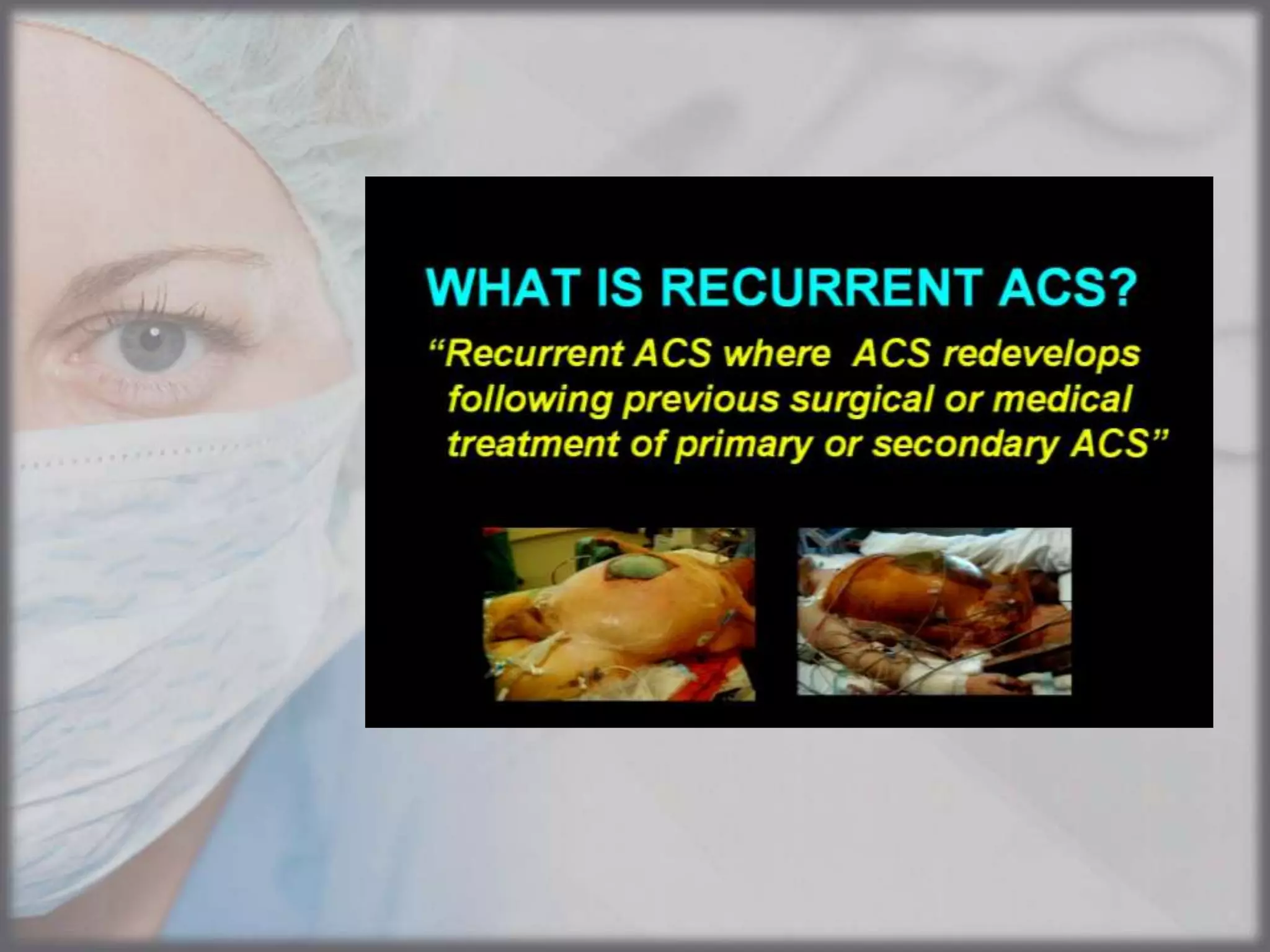
 - Recurrent ACS defines a condition in
 which ACS develops again following
 previous surgical or medical treatment of
 primary or secondary ACS
ACS generally occurs in patients who are critically ill due to any of a wide
  variety of medical and surgical conditions. Some of these include:
  -Trauma : Injured patients in shock who require aggressive fluid
  resuscitation are at risk for ACS.

  - Burns: Patients with severe burns (>30 percent total body surface
  area) with or without concomitant trauma are also at risk for ACS.
  Importantly, ACS must be distinguished from other intraabdominal
  problems that occur in these critically ill patients (eg, necrotizing
  enterocolitis, ischemic bowel).

  - Liver transplantation: IAH (IAP >25 mmHg) was found following liver
  transplantation in 32% patients.

  - Abdominal conditions : Massive ascites, bowel
  distension, abdominal surgery, or intraperitoneal bleeding can
  increase intraabdominal pressure.

  - Retroperitoneal conditions: Retroperitoneal pathologies, such as
  ruptured abdominal aortic aneurysm, pelvic fracture with
  bleeding, and pancreatitis, can lead to ACS.

  - Medical illness: Conditions that require extensive fluid
  resuscitation (e.g. sepsis) and are associated with third spacing of
  fluids and tissue edema can increase IAP.

  - Post-surgical patients: Patients undergoing operations in which
  they are given large volume resuscitation, particularly with crystalloid
  in the face of hemorrhagic or septic shock, are at risk for ACS.
IAH can impaire the function of
 nearly every organ system,
 thereby causing ACS .
It is desirable to recognize IAH early, so it
  can be treated before progressing to
  ACS.

Symptoms:
 - Most patients who develop ACS are
 critically ill and unable to communicate.

 - The rare patient who is able to convey
 symptoms may complain of malaise,
 weakness, lightheadedness, dyspnea,
 abdominal bloating, or abdominal pain.
Physical signs:
 - Nearly all patients with ACS have
 a tensely distended abdomen.
 Despite this, physical examination
 of the abdomen is a poor
 predictor of ACS.

- Progressive oliguria and
increased ventilatory
requirements are also common in
patients with ACS.
- Other findings may include
   hypotension, tachycardia, an
   elevated jugular venous pressure,
   jugular venous distension,
   peripheral edema, abdominal
   tenderness, or acute pulmonary
   decompensation.

  - There may also be evidence of
  hypoperfusion, including cool skin,
  obtundation, restlessness, or lactic
  acidosis
Imaging findings:
- Imaging is not helpful in the diagnosis of
ACS.

- CXR may show decreased lung volumes,
atelectasis, or elevated hemidiaphragms.

- Computed tomography (CT) may
demonstrate tense infiltration of the
retroperitoneum that is out of proportion
to peritoneal disease, extrinsic
compression of the inferior vena cava,
massive abdominal distention, direct
renal compression or displacement,
bowel wall thickening, or bilateral
inguinal herniation
Definitive diagnosis of ACS
requires measurement of the
IAP.

This is particularly true for
 patients who have trauma, liver
 transplantation, bowel
 obstruction, pancreatitis, or
 peritonitis because these
 conditions are known to be
 associated with ACS.
Measurement of intraabdominal
pressure:
- IAP can be measured indirectly
using intragastric, intracolonic,
intravesical (bladder), or inferior
vena cava catheters.

Measurement of bladder (ie,
intravesical) pressure is the
standard method to screen for IAH
and ACS. It is simple, minimally
invasive, and accurate.
Postoperative (abdom. Surgery) pts
Pts with abdominal trauma
Ventilated pts with other Organ
  Failure
Pts with signs of ACS:
      Oliguria, hypoxia, hypotension,
       acidosis, mesenteric ischemia, ileus,
       elevated ICP.
Pts with high cumulative fluid balance
Pts with abdominal packing
Management of IAH and ACS
consists of supportive care
and, when needed, abdominal
decompression.

Some exceptions include
 escharotomy release to relieve
 mechanical limitations due to
 burn eschars and percutaneous
 catheter decompression to relieve
 tense ascites.
Supportive care:
- Goals:
- Reduction of intraabdominal
volume.

- Measures to improve abdominal
wall compliance .
Nasogastric and rectal drainage
are a simple means for
reducing IAP in patients with
bowel distension.


Hemoperitoneum, ascites, intra
abdominal abscess and
retroperitoneal hematoma
occupy space and can elevate
IAP. In some cases, these
collections can be evacuated
using percutaneous techniques.
Patient should be placed in a supine
 position.

Abdominal wall compliance can be
 improved with adequate pain
 control and sedation.
Ventilatory support:
 - High peak and mean airway
 pressures can be problematic. Tidal
 volume reduction, a pressure-limited
 mode, and/or permissive
 hypercapnia may be necessary.

Positive end-expiratory pressure
 (PEEP) may reduce ventilation-
 perfusion mismatch and improve
 hypoxemia.
Hemodynamic support:

- For patients with IAH, limiting
the amount of fluid
administration may decrease the
risk of developing ACS.

- Some clinicians prefer to use
colloids under this circumstance
instead of crystalloids.
There is no role for diuretic therapy
 in the resuscitation of patients with
 acute ACS.

The only appropriate management is
 to open the abdomen.
SURGICAL DECOMPRESSION:
 - There is general agreement that
 surgical decompression is indicated
 for ACS.

- Decompressing the abdomen
prior to the development of ACS is
becoming increasingly common
and may improve survival.
Various approaches include:
 - Surgical decompression for
 all patients whose IAP is
 greater than 25 mmHg.

 - Many clinicians suggest
 surgical decompression at a
 lower IAP (e.g. 15 to 25
 mmHg.
Surgical decompression is considered
 when the IAP is 20 mmHg or greater,
 regardless of signs of ACS..

Most surgeons perform
decompression and then maintain
an open abdomen using temporary
abdominal wall closure.

Surgical decompression can be
 performed in the operating room if
 the patient is medically stable for
 transfer or at the bedside in the
 intensive care unit.
MORBIDITY AND MORTALITY:
- Failure to recognize IAH prior to the
development of ACS causes tissue
hypoperfusion, which may lead to
multisystem organ failure, and
potentially death.

 - Although the development of IAH
 alone is not a predictor of multiorgan
 failure, mortality for patients who have
 progressed to ACS range from 40 to
 100%.
INTRODUCTION:
 - Refers to a defect in the
 abdominal wall that exposes the
 abdominal viscera.

Damage control surgery associated
 with trauma and ACS is the most
 frequent reason for open
 abdomen.
Etiology:
- The most common circumstances
that result in open abdomen include
the following:


1. Damage control surgery:
- It is an operative strategy that is used
to manage immediately life-
threatening conditions by delaying
definitive management of less severe
2. Abdominal compartment syndrome
   (ACS):
   -Increased volume in the abdomen
   is typically the result of an increase
   in interstitial fluid as is seen with
   large volume resuscitation, but
   space occupying fluid (blood or
   ascites) in the peritoneum or
   retroperitoneum can also
   contribute.
3. Septic abdomen:
   - Bowel perforation with severe
  contamination of the peritoneal
  cavity can result in recurrent intra-
  abdominal sepsis.

  - Under this circumstance, it may be
  desirable to leave the abdominal
  wall open and use negative-pressure
  wound therapy to remove residual
  or reaccumulated fluid or pus.
4. Refractory intracranial
   hypertension :
   - A more controversial indication
   for open abdomen is refractory
   intracranial hypertension
   associated with traumatic brain
   injury.
Complications of open
  abdomen:
Related to fluid efflux from the abdomen,
   exposure of the bowel, and abdominal
   muscle retraction.

   - Fluid loss:
    - A significant amount of fluid can be lost
   through an open abdomen.

   - Protein loss:
   – The fluid that is secreted by the
   peritoneum is rich in protein with about 2
   grams of protein lost from the abdomen for
   each liter of fluid removed.
- Fistula formation:
     – With open abdomen, the bowel is
    frequently manipulated and is at risk
    for injury.

- Loss of domain:
   - With open abdomen from a midline
   abdominal incision, the musculature of
   the abdominal wall retracts the fascia
   laterally.

   - The use of a negative pressure wound
   system helps to counteract the lateral
   forces on the abdominal wall and may
   allow primary closure of the fascia and
   skin .
Temporary closure techniques:
 - In some patients, delayed primary
 closure of the abdominal fascia is
 possible once edema subsides.
 However, if closure is premature, ACS
 can recur.
ABDOMINAL CLOSURE — Each
time the patient is returned to
the operating room, the
abdomen is assessed for
potential closure.
Fascial closure:

1. Primary fascial closure:
    - Associated with the lowest rate
   of complications following
   management of the open
   abdomen.

   - Because of the high hernia rate,
  biologic mesh reinforcement
  during primary fascial closure is
  frequently used.
2. Functional closure:

  - Functional closure refers to the
  bridging of a residual fascial
  defect with a biologic mesh (in-
  lay technique).

  - Once the biologic mesh is
  placed, the skin is closed over
  surgical drains placed into the
  subcutaneous space.
3. Planned ventral hernia:
   - If primary fascial closure or
   functional closure cannot be
   achieved.
       - Skin-only closure:
              A skin-only closure
   approximates the skin over the
   fascial defect leaving a ventral
   hernia.
- Split-thickness skin
graft:
 - If the skin cannot be
approximated, the viscera within
the wound are allowed to adhere
to each other and to the
abdominal wall. Once the
abdominal contents have
“solidified” and there is a healthy
bed of granulation tissue overlying
the bowel, a split-thickness skin
graft can be placed.
Increased IAP is called intraabdominal
 hypertension (IAH). Abdominal
 compartment syndrome (ACS) refers to
 organ dysfunction caused by
 intraabdominal hypertension.

ACS can impair the function of nearly
 every organ system.

Diagnosis of ACS requires that IAP be
 measured. Symptoms, physical signs,
 and imaging findings are insufficient to
 diagnose ACS.
Management initially consists of careful
observation and supportive care. In
some cases abdominal compartment
decompression is required.

We suggest that surgical
decompression is not delayed until the
development of ACS (Grade 2C).

Following surgical decompression, an
 open abdomen is maintained using a
 variety of temporary abdominal
 closure techniques.
Following temporary abdominal
 closure, the patient is monitored in
 ICU.

- Abdominal dressings associated
with the closure (adhesive
dressings, gauze, negative pressure
systems) are changed, as needed,
and the abdominal contents
inspected every two to three days.
We suggest the use of a negative pressure
 system (towel or sponge based) to control
 and quantify fluid loss (Grade 2C).

Once the indication for the open abdomen
 has resolved, the abdomen is
 closed, preferably with a primary fascial
 closure. If primary fascial closure cannot
 be achieved, functional closure can be
 performed.

If the gap between the fascia is deemed to
  be too large for a functional
  closure, primary skin closure can be
  performed, or skin grafts placed once a
  layer of granulation tissue has developed.
The message is:

- Be ACS-minded.
- Decompress early.
- Apply TAC techniques.
- Definitive abdominal closure
as early as possible.
Abdominal compartment syndrome

Abdominal compartment syndrome

  • 1.
    By Mahmoud ZaghloulRaslan, MD Surgical Consultant, MGH, Madina
  • 2.
    Abdominal compartment syndrome refersto organ dysfunction caused by intraabdominal hypertension (IAH). It may be under-recognized because: - it primarily affects patients who are already quite ill - organ dysfunction may be incorrectly ascribed to progression of the primary illness.
  • 3.
    Since treatment canimprove organ dysfunction, it is important that the diagnosis be considered in the appropriate clinical situation without any delay
  • 4.
    Intraabdominal hypertension (IAH)and abdominal compartment syndrome (ACS) are distinct clinical entities and should not be used interchangeably.
  • 5.
    Intraabdominal pressure (IAP): It is the steady state pressure concealed within the abdominal cavity. For most critically ill patients, an IAP of 5 to 7 mmHg is considered normal. Patients with increased abdominal girth that developed slowly e.g. the mobidly obese and pregnant individuals may have chronically higher baseline IAP (as high as 10 to 15 mmHg) without adverse sequelae
  • 6.
    Abdominal perfusion pressure (APP): It is calculated as the mean arterial pressure (MAP) minus the IAP APP = MAP - IAP. Elevated IAP reduces blood flow to the abdominal viscera
  • 7.
    Abdominal perfusion pressure (APP)was found to be better than other resuscitation endpoints e.g. hourly urinary output for predicting the outcomes. A target APP of at least 60 mmHg is correlated with improved survival from IAH and ACS.
  • 8.
    Intraabdominal hypertension (IAH) It is defined as a sustained IAP of ≥12 mmHg.
  • 10.
    Intraabdominal hypertension (IAH)can be further graded as follows: - Grade I = IAP 12 to 15 mmHg - Grade II = IAP 16 to 20 mmHg - Grade III = IAP 21 to 25 mmHg - Grade IV = IAP >25 mmHg.
  • 11.
    Hyperacute IAH : - Elevation of the IAP lasting only seconds. - It is due to laughing, coughing, straining, sneezing, defecation, or physical activity. IAH with ACS due to gastric over-distention following endoscopy has been described. Acute IAH: - Elevation of the IAP that develops over hours. - It is usually the result of trauma or intraabdominal hemorrhage and can lead to the rapid development of ACS.
  • 12.
    Subacute IAH : - Elevation of the IAP that develops over days. - It is most common in medical patients and can also lead to ACS. Chronic IAH: - Elevation of IAP that develops over months (pregnancy) or years (morbid obesity). - It does not cause ACS, but does place the individual at higher risk for ACS if they develop superimposed acute or subacute IAH.
  • 13.
    Abdominal compartment syndrome (ACS): - It is defined as a sustained IAP >20 mmHg (with or without APP <60 mmHg) that is associated with new organ dysfunction. For clinical purposes, ACS is better defined as IAH-induced new organ dysfunction without a strict IAP threshold, because no IAP can predictably diagnose ACS in all patients.
  • 14.
    Patients with anIAP < 10 mmHg generally do not have ACS, while patients with an IAP > 25 mmHg usually have ACS. Patients with an IAP 10-25 mmHg may or may not have ACS, depending upon individual variables such as blood pressure and abdominal wall compliance.
  • 15.
    Higher systemic blood pressuremay maintain abdominal organ perfusion when IAP is increased, since the abdominal perfusion pressure (APP) is the difference between the mean arterial pressure and the IAP.
  • 16.
    Abdominal wall complianceinitially minimizes the extent to which an increasing abdominal girth can elevate IAP . - When a critical abdominal girth is reached, abdominal wall compliance decreases abruptly. Further increases in abdominal girth beyond this critical level result in a rapid rise of IAP and ACS if untreated. - Increased abdominal wall compliance due to chronic increased abdominal girth (e.g. pregnancy, cirrhosis with ascites, morbid obesity) may protect against ACS .
  • 17.
    The incidence ofIAH is less well characterized. - The incidence of ACS in trauma patients varies considerably. - It ranges from 1 to 14 percent in different studies.
  • 18.
    ACS was consideredpresent if there was: - persistent IAH - progressive organ dysfunction despite resuscitation and - improvement following decompression
  • 20.
    ACS can beclassified as: - Primary ACS is due to injury or disease in the abdominopelvic region (e.g. abdominal trauma, hemoperitoneum, pancreatitis); intervention (surgical or radiologic) of the primary condition is often needed. - Secondary ACS refers to conditions that do not originate in the abdomen or pelvis (e.g. fluid resuscitation, sepsis, burns). - Recurrent ACS defines a condition in which ACS develops again following previous surgical or medical treatment of primary or secondary ACS
  • 24.
    ACS generally occursin patients who are critically ill due to any of a wide variety of medical and surgical conditions. Some of these include: -Trauma : Injured patients in shock who require aggressive fluid resuscitation are at risk for ACS. - Burns: Patients with severe burns (>30 percent total body surface area) with or without concomitant trauma are also at risk for ACS. Importantly, ACS must be distinguished from other intraabdominal problems that occur in these critically ill patients (eg, necrotizing enterocolitis, ischemic bowel). - Liver transplantation: IAH (IAP >25 mmHg) was found following liver transplantation in 32% patients. - Abdominal conditions : Massive ascites, bowel distension, abdominal surgery, or intraperitoneal bleeding can increase intraabdominal pressure. - Retroperitoneal conditions: Retroperitoneal pathologies, such as ruptured abdominal aortic aneurysm, pelvic fracture with bleeding, and pancreatitis, can lead to ACS. - Medical illness: Conditions that require extensive fluid resuscitation (e.g. sepsis) and are associated with third spacing of fluids and tissue edema can increase IAP. - Post-surgical patients: Patients undergoing operations in which they are given large volume resuscitation, particularly with crystalloid in the face of hemorrhagic or septic shock, are at risk for ACS.
  • 25.
    IAH can impairethe function of nearly every organ system, thereby causing ACS .
  • 27.
    It is desirableto recognize IAH early, so it can be treated before progressing to ACS. Symptoms: - Most patients who develop ACS are critically ill and unable to communicate. - The rare patient who is able to convey symptoms may complain of malaise, weakness, lightheadedness, dyspnea, abdominal bloating, or abdominal pain.
  • 28.
    Physical signs: -Nearly all patients with ACS have a tensely distended abdomen. Despite this, physical examination of the abdomen is a poor predictor of ACS. - Progressive oliguria and increased ventilatory requirements are also common in patients with ACS.
  • 29.
    - Other findingsmay include hypotension, tachycardia, an elevated jugular venous pressure, jugular venous distension, peripheral edema, abdominal tenderness, or acute pulmonary decompensation. - There may also be evidence of hypoperfusion, including cool skin, obtundation, restlessness, or lactic acidosis
  • 30.
    Imaging findings: - Imagingis not helpful in the diagnosis of ACS. - CXR may show decreased lung volumes, atelectasis, or elevated hemidiaphragms. - Computed tomography (CT) may demonstrate tense infiltration of the retroperitoneum that is out of proportion to peritoneal disease, extrinsic compression of the inferior vena cava, massive abdominal distention, direct renal compression or displacement, bowel wall thickening, or bilateral inguinal herniation
  • 31.
    Definitive diagnosis ofACS requires measurement of the IAP. This is particularly true for patients who have trauma, liver transplantation, bowel obstruction, pancreatitis, or peritonitis because these conditions are known to be associated with ACS.
  • 32.
    Measurement of intraabdominal pressure: -IAP can be measured indirectly using intragastric, intracolonic, intravesical (bladder), or inferior vena cava catheters. Measurement of bladder (ie, intravesical) pressure is the standard method to screen for IAH and ACS. It is simple, minimally invasive, and accurate.
  • 33.
    Postoperative (abdom. Surgery)pts Pts with abdominal trauma Ventilated pts with other Organ Failure Pts with signs of ACS:  Oliguria, hypoxia, hypotension, acidosis, mesenteric ischemia, ileus, elevated ICP. Pts with high cumulative fluid balance Pts with abdominal packing
  • 36.
    Management of IAHand ACS consists of supportive care and, when needed, abdominal decompression. Some exceptions include escharotomy release to relieve mechanical limitations due to burn eschars and percutaneous catheter decompression to relieve tense ascites.
  • 37.
    Supportive care: - Goals: -Reduction of intraabdominal volume. - Measures to improve abdominal wall compliance .
  • 38.
    Nasogastric and rectaldrainage are a simple means for reducing IAP in patients with bowel distension. Hemoperitoneum, ascites, intra abdominal abscess and retroperitoneal hematoma occupy space and can elevate IAP. In some cases, these collections can be evacuated using percutaneous techniques.
  • 39.
    Patient should beplaced in a supine position. Abdominal wall compliance can be improved with adequate pain control and sedation.
  • 40.
    Ventilatory support: -High peak and mean airway pressures can be problematic. Tidal volume reduction, a pressure-limited mode, and/or permissive hypercapnia may be necessary. Positive end-expiratory pressure (PEEP) may reduce ventilation- perfusion mismatch and improve hypoxemia.
  • 41.
    Hemodynamic support: - Forpatients with IAH, limiting the amount of fluid administration may decrease the risk of developing ACS. - Some clinicians prefer to use colloids under this circumstance instead of crystalloids.
  • 42.
    There is norole for diuretic therapy in the resuscitation of patients with acute ACS. The only appropriate management is to open the abdomen.
  • 43.
    SURGICAL DECOMPRESSION: -There is general agreement that surgical decompression is indicated for ACS. - Decompressing the abdomen prior to the development of ACS is becoming increasingly common and may improve survival.
  • 44.
    Various approaches include: - Surgical decompression for all patients whose IAP is greater than 25 mmHg. - Many clinicians suggest surgical decompression at a lower IAP (e.g. 15 to 25 mmHg.
  • 45.
    Surgical decompression isconsidered when the IAP is 20 mmHg or greater, regardless of signs of ACS.. Most surgeons perform decompression and then maintain an open abdomen using temporary abdominal wall closure. Surgical decompression can be performed in the operating room if the patient is medically stable for transfer or at the bedside in the intensive care unit.
  • 46.
    MORBIDITY AND MORTALITY: -Failure to recognize IAH prior to the development of ACS causes tissue hypoperfusion, which may lead to multisystem organ failure, and potentially death. - Although the development of IAH alone is not a predictor of multiorgan failure, mortality for patients who have progressed to ACS range from 40 to 100%.
  • 47.
    INTRODUCTION: - Refersto a defect in the abdominal wall that exposes the abdominal viscera. Damage control surgery associated with trauma and ACS is the most frequent reason for open abdomen.
  • 48.
    Etiology: - The mostcommon circumstances that result in open abdomen include the following: 1. Damage control surgery: - It is an operative strategy that is used to manage immediately life- threatening conditions by delaying definitive management of less severe
  • 49.
    2. Abdominal compartmentsyndrome (ACS): -Increased volume in the abdomen is typically the result of an increase in interstitial fluid as is seen with large volume resuscitation, but space occupying fluid (blood or ascites) in the peritoneum or retroperitoneum can also contribute.
  • 50.
    3. Septic abdomen: - Bowel perforation with severe contamination of the peritoneal cavity can result in recurrent intra- abdominal sepsis. - Under this circumstance, it may be desirable to leave the abdominal wall open and use negative-pressure wound therapy to remove residual or reaccumulated fluid or pus.
  • 51.
    4. Refractory intracranial hypertension : - A more controversial indication for open abdomen is refractory intracranial hypertension associated with traumatic brain injury.
  • 53.
    Complications of open abdomen: Related to fluid efflux from the abdomen, exposure of the bowel, and abdominal muscle retraction. - Fluid loss: - A significant amount of fluid can be lost through an open abdomen. - Protein loss: – The fluid that is secreted by the peritoneum is rich in protein with about 2 grams of protein lost from the abdomen for each liter of fluid removed.
  • 54.
    - Fistula formation: – With open abdomen, the bowel is frequently manipulated and is at risk for injury. - Loss of domain: - With open abdomen from a midline abdominal incision, the musculature of the abdominal wall retracts the fascia laterally. - The use of a negative pressure wound system helps to counteract the lateral forces on the abdominal wall and may allow primary closure of the fascia and skin .
  • 56.
    Temporary closure techniques: - In some patients, delayed primary closure of the abdominal fascia is possible once edema subsides. However, if closure is premature, ACS can recur.
  • 66.
    ABDOMINAL CLOSURE —Each time the patient is returned to the operating room, the abdomen is assessed for potential closure.
  • 67.
    Fascial closure: 1. Primaryfascial closure: - Associated with the lowest rate of complications following management of the open abdomen. - Because of the high hernia rate, biologic mesh reinforcement during primary fascial closure is frequently used.
  • 68.
    2. Functional closure: - Functional closure refers to the bridging of a residual fascial defect with a biologic mesh (in- lay technique). - Once the biologic mesh is placed, the skin is closed over surgical drains placed into the subcutaneous space.
  • 69.
    3. Planned ventralhernia: - If primary fascial closure or functional closure cannot be achieved. - Skin-only closure: A skin-only closure approximates the skin over the fascial defect leaving a ventral hernia.
  • 70.
    - Split-thickness skin graft: - If the skin cannot be approximated, the viscera within the wound are allowed to adhere to each other and to the abdominal wall. Once the abdominal contents have “solidified” and there is a healthy bed of granulation tissue overlying the bowel, a split-thickness skin graft can be placed.
  • 84.
    Increased IAP iscalled intraabdominal hypertension (IAH). Abdominal compartment syndrome (ACS) refers to organ dysfunction caused by intraabdominal hypertension. ACS can impair the function of nearly every organ system. Diagnosis of ACS requires that IAP be measured. Symptoms, physical signs, and imaging findings are insufficient to diagnose ACS.
  • 85.
    Management initially consistsof careful observation and supportive care. In some cases abdominal compartment decompression is required. We suggest that surgical decompression is not delayed until the development of ACS (Grade 2C). Following surgical decompression, an open abdomen is maintained using a variety of temporary abdominal closure techniques.
  • 86.
    Following temporary abdominal closure, the patient is monitored in ICU. - Abdominal dressings associated with the closure (adhesive dressings, gauze, negative pressure systems) are changed, as needed, and the abdominal contents inspected every two to three days.
  • 87.
    We suggest theuse of a negative pressure system (towel or sponge based) to control and quantify fluid loss (Grade 2C). Once the indication for the open abdomen has resolved, the abdomen is closed, preferably with a primary fascial closure. If primary fascial closure cannot be achieved, functional closure can be performed. If the gap between the fascia is deemed to be too large for a functional closure, primary skin closure can be performed, or skin grafts placed once a layer of granulation tissue has developed.
  • 88.
    The message is: -Be ACS-minded. - Decompress early. - Apply TAC techniques. - Definitive abdominal closure as early as possible.