Getaneh Alemu (PhD)
October 2015
 ‘Data about data’
 Describes and locates information objects
 Provides context
 Enables the search-ability, browse-ability, find-ability and
management of information objects
 “The invisible hand” that enables effective information
organisation
 Metadata constitutes a central part of library functions
(Alemu, Stevens, Ross, & Chandler, 2012; Anderson, Delve, Pinchbeck, & Alemu, 2009; Day, 2001; Gartner,
2008; Lagoze, 2010; Nilsson, 2010; NISO, 2004; OCLC/RLG, 2001; Zeng & Qin, 2008)
 As library grow, of information
increases, changes and users’ expectations
change:
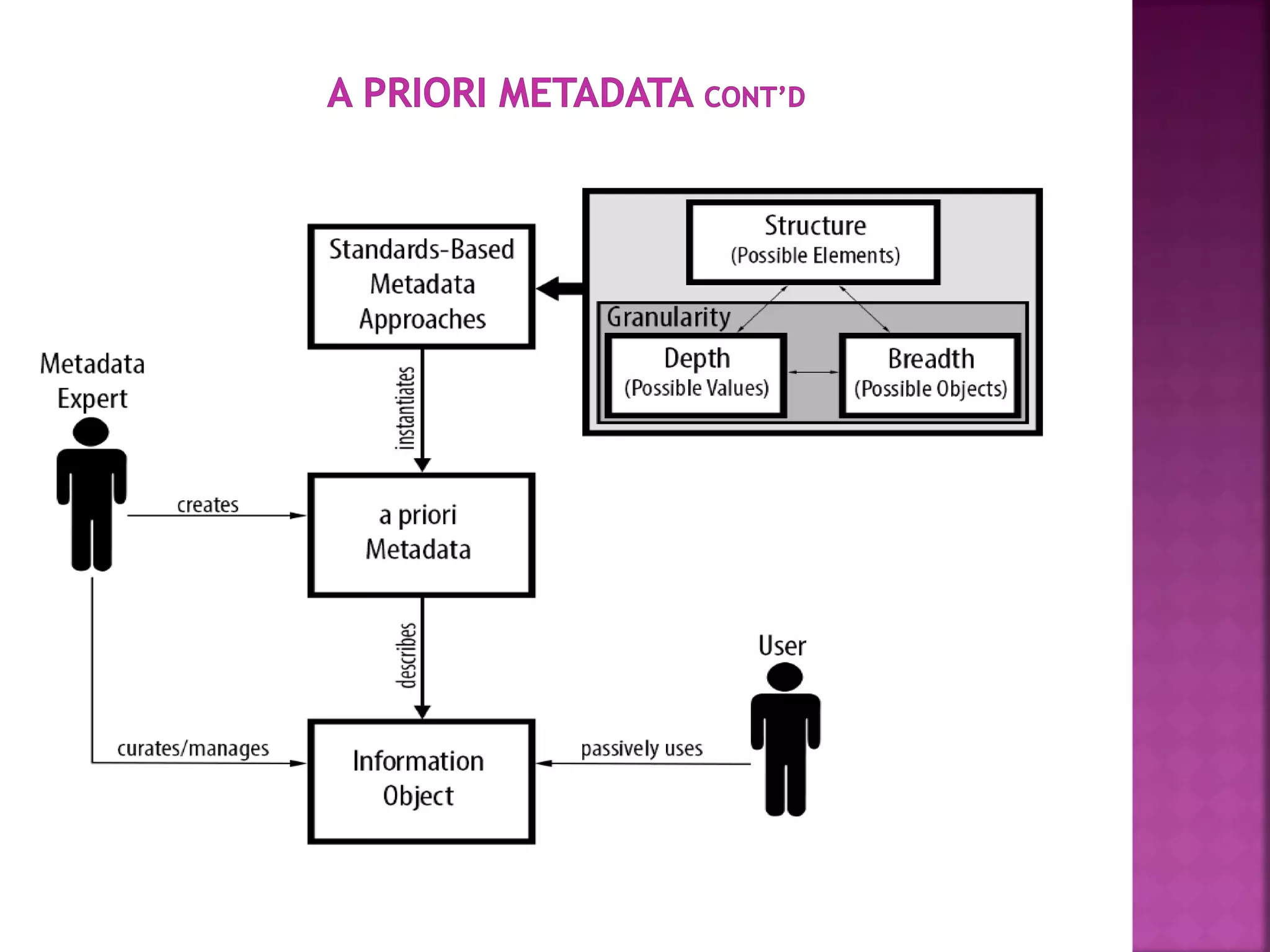
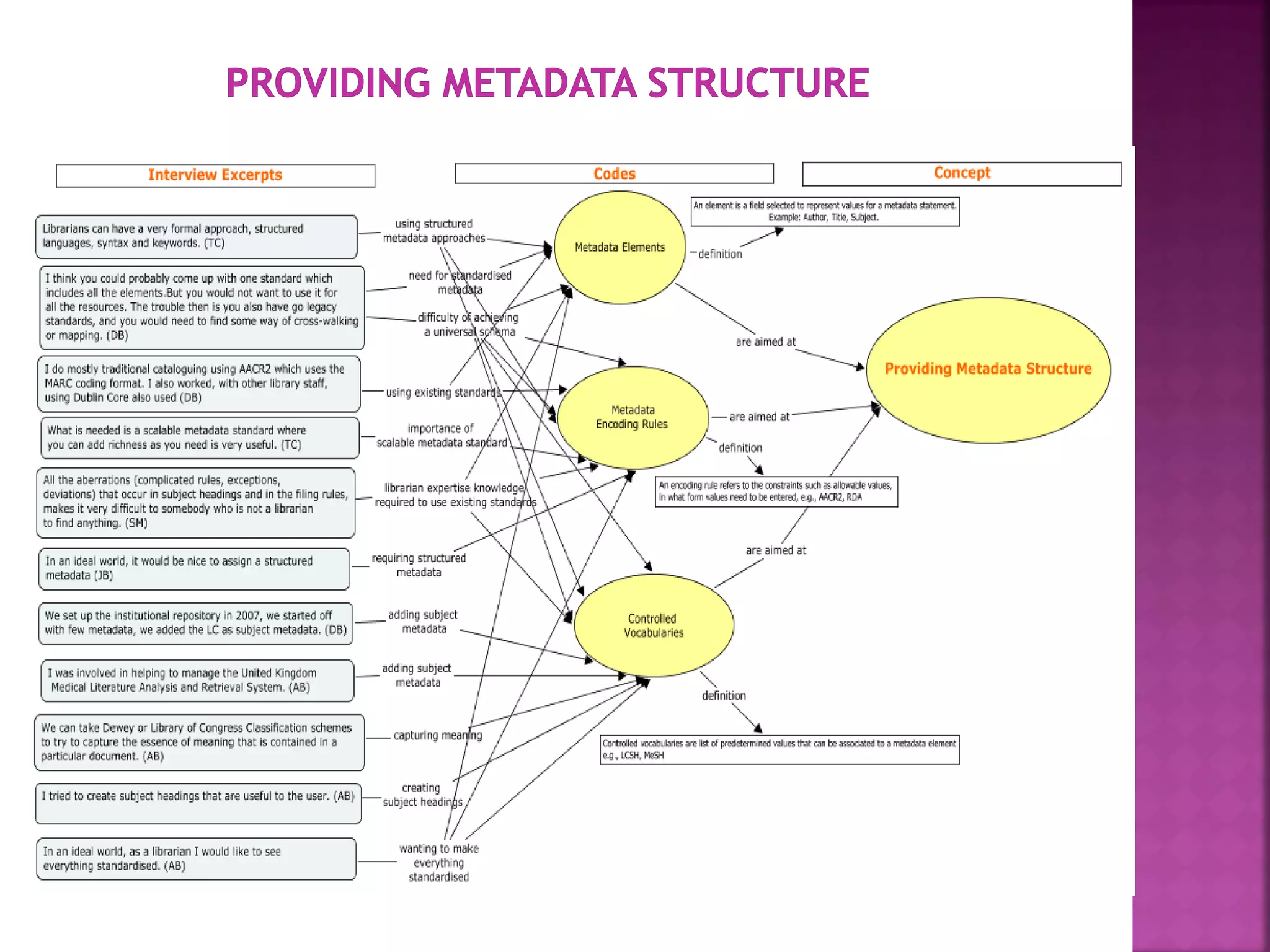
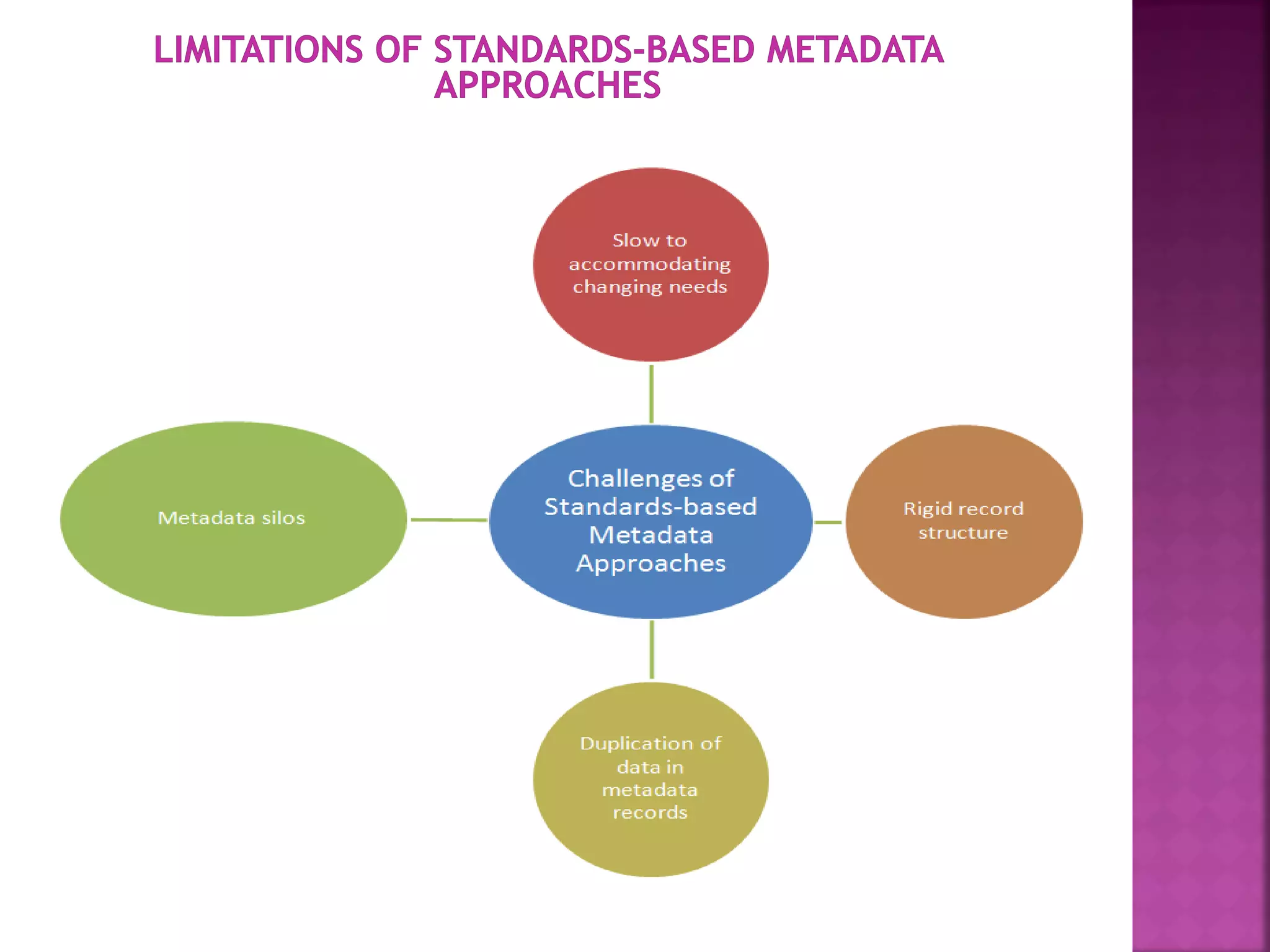
 Contemporary standards-based metadata approaches fail to
to adequately describe the semantic aspects of
information objects
 The of documents is missing (Otlet, 1934)
“In Otlet’s world each user would leave an imprint, a trail, which would
become part of the explicit history of each document” (Wright , 2007, p.190)
 Scant use of theories/theoretical frameworks in the inclusion
of socially-constructed metadata
(Coyle, 2010; Coyle & Hillmann, 2007; Lagoze, 2010; Mathes, 2004; Shirky, 2005;
Veltman, 2001; Weinberger, 2005, 2007; Wright, 2007)
(Lehmann, 2010; Andersen & Skouvig, 2006.; Floridi, 2000; Hjorland, 2000)
Developing a
Exploring the inclusion of
approaches
Inductively identify concepts
Identify principles
Develop framework
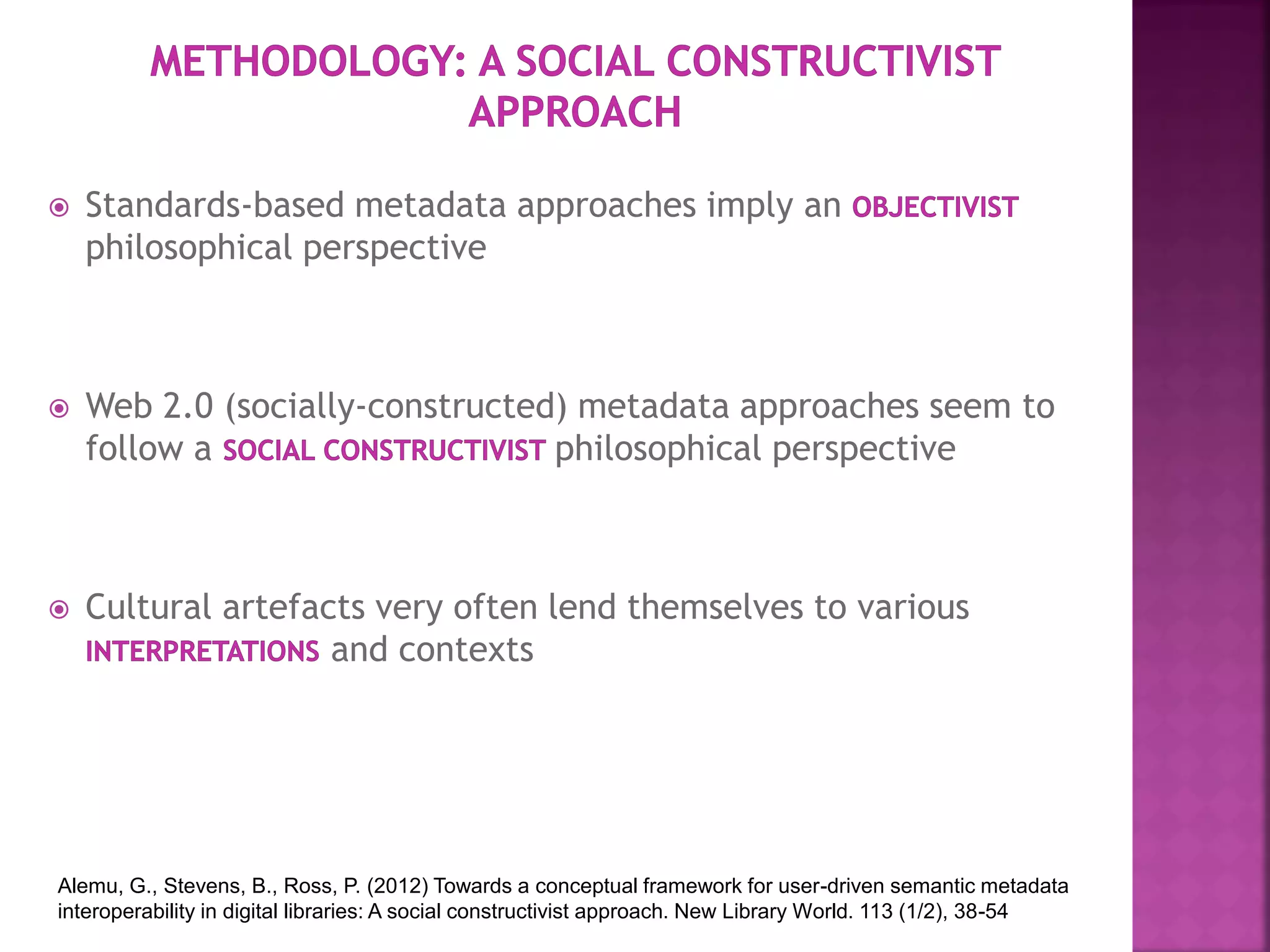
 Standards-based metadata approaches imply an
philosophical perspective
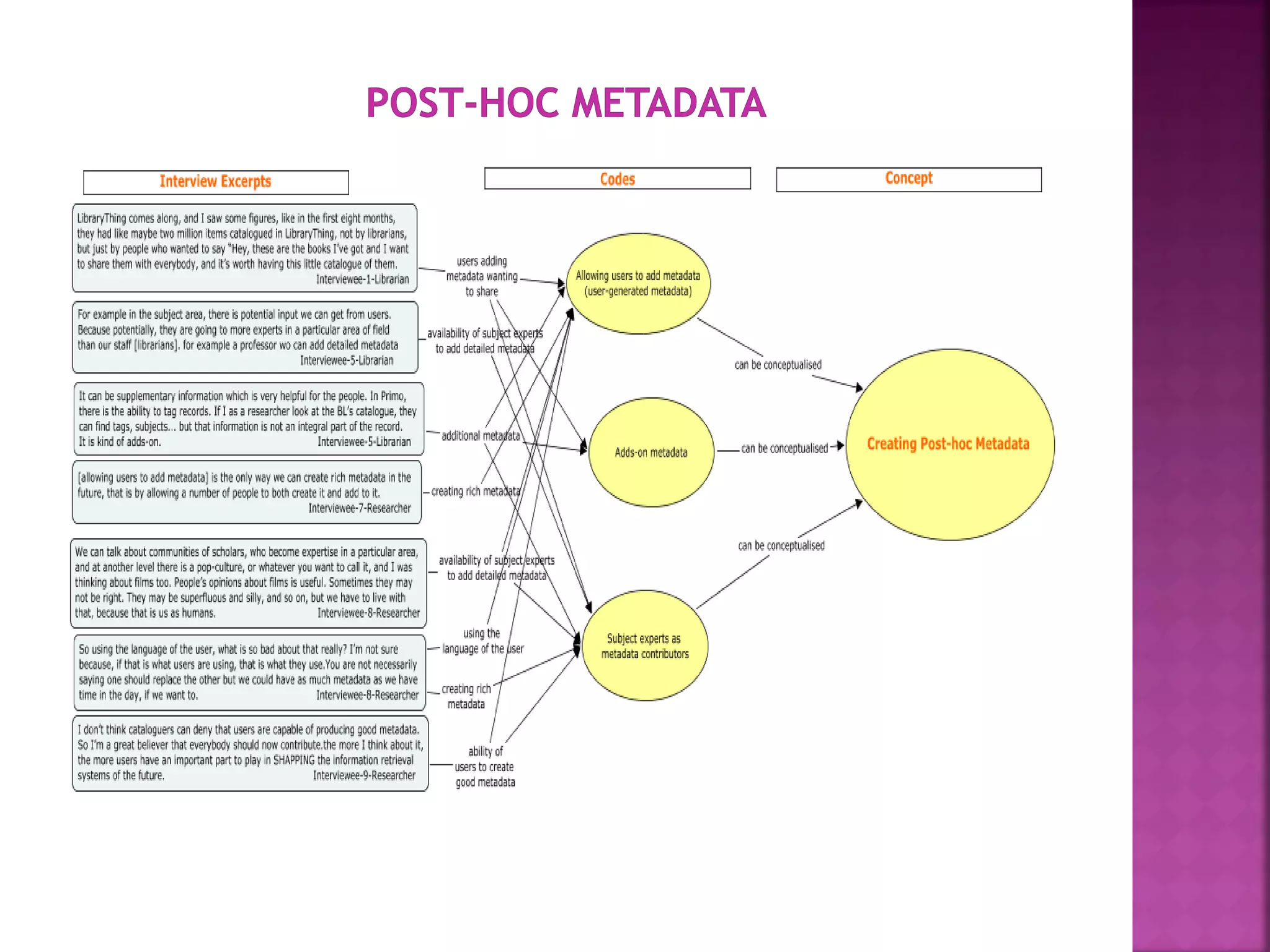
 Web 2.0 (socially-constructed) metadata approaches seem to
follow a philosophical perspective
 Cultural artefacts very often lend themselves to various
and contexts
Alemu, G., Stevens, B., Ross, P. (2012) Towards a conceptual framework for user-driven semantic metadata
interoperability in digital libraries: A social constructivist approach. New Library World. 113 (1/2), 38-54
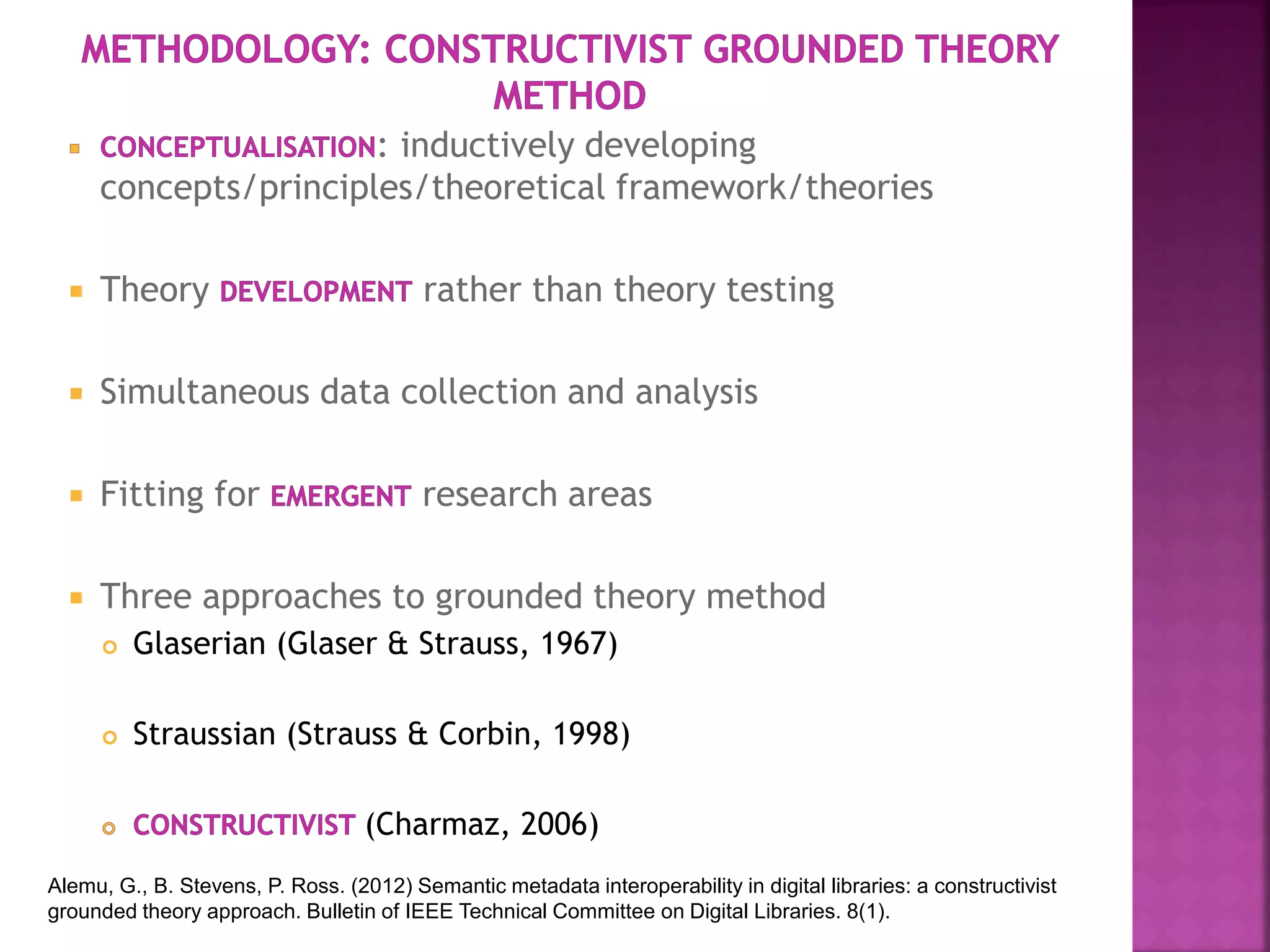
: inductively developing
concepts/principles/theoretical framework/theories
 Theory rather than theory testing
 Simultaneous data collection and analysis
 Fitting for research areas
 Three approaches to grounded theory method
 Glaserian (Glaser & Strauss, 1967)
 Straussian (Strauss & Corbin, 1998)
(Charmaz, 2006)
Alemu, G., B. Stevens, P. Ross. (2012) Semantic metadata interoperability in digital libraries: a constructivist
grounded theory approach. Bulletin of IEEE Technical Committee on Digital Libraries. 8(1).
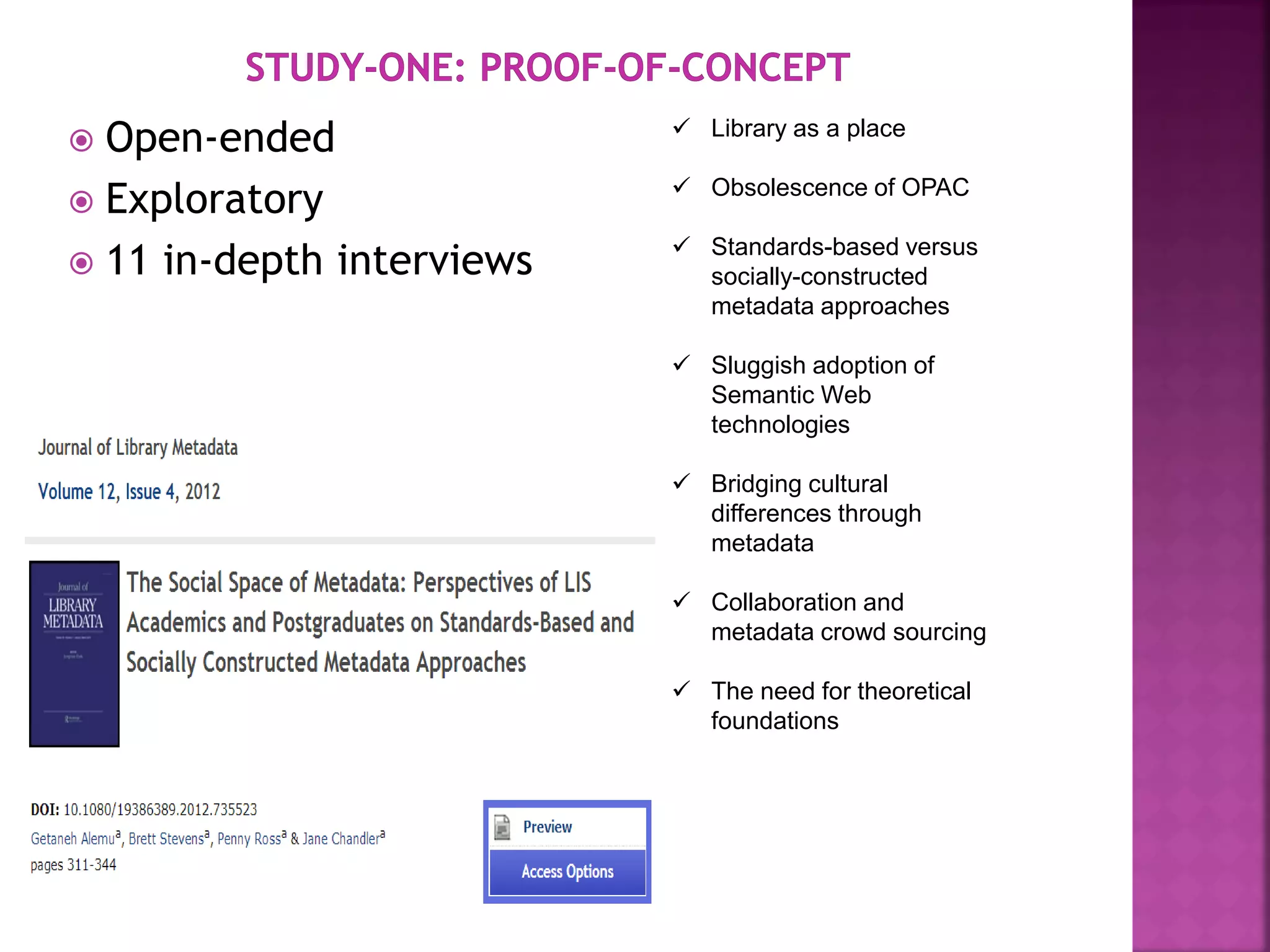
 Open-ended
 Exploratory
 11 in-depth interviews
 Library as a place
 Obsolescence of OPAC
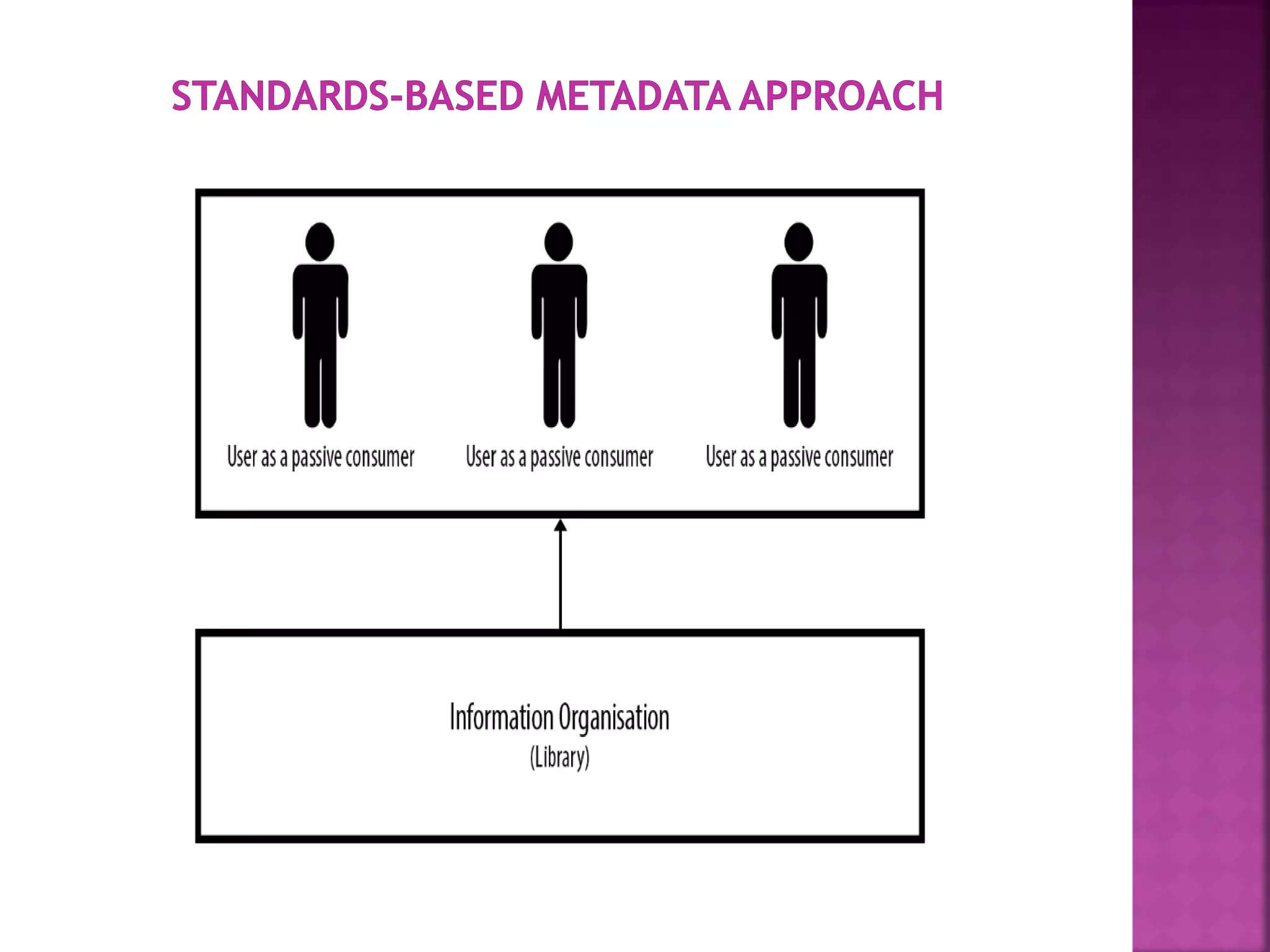
 Standards-based versus
socially-constructed
metadata approaches
 Sluggish adoption of
Semantic Web
technologies
 Bridging cultural
differences through
metadata
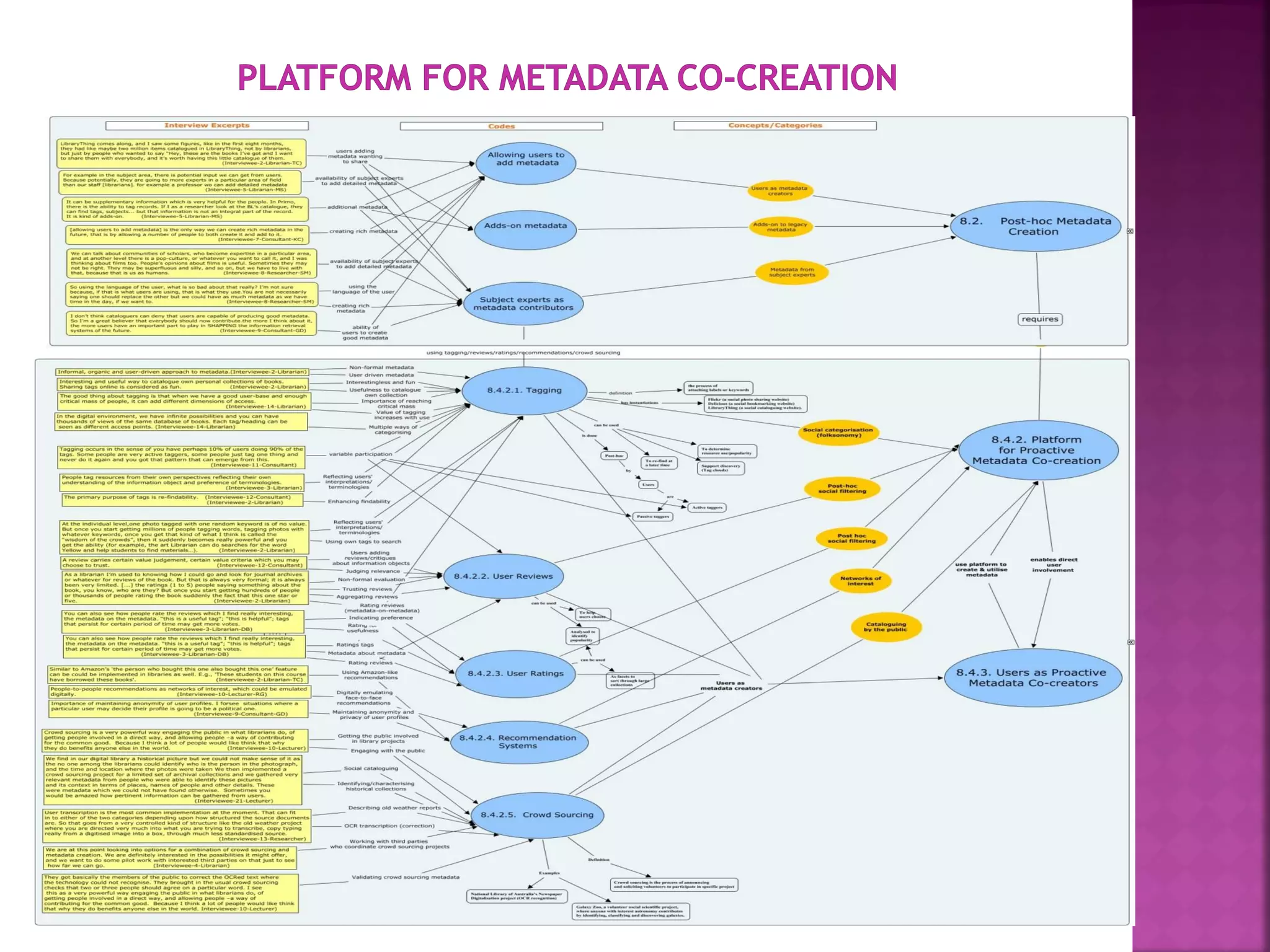
 Collaboration and
metadata crowd sourcing
 The need for theoretical
foundations
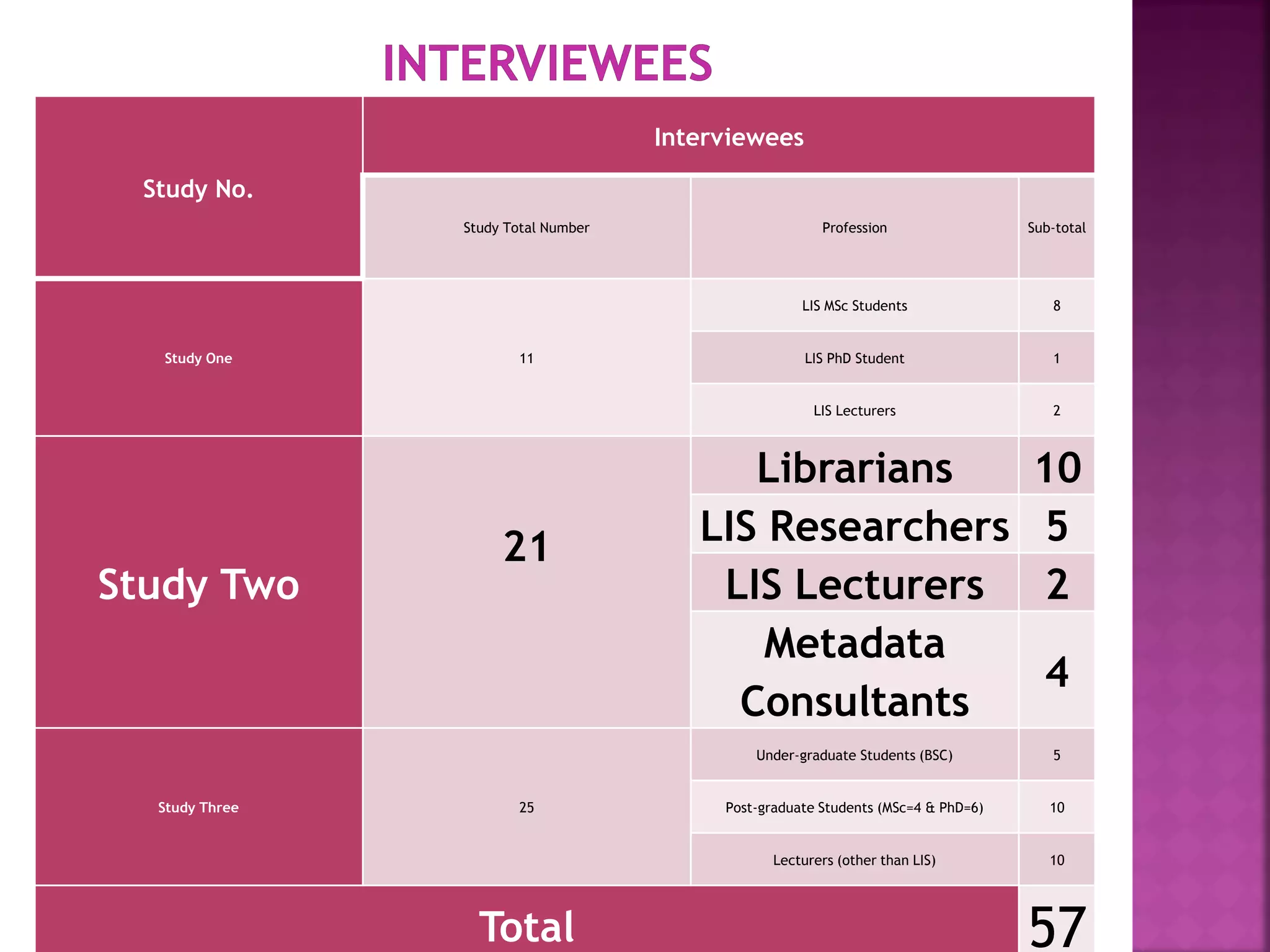
Study No.
Interviewees
Study Total Number Profession Sub-total
Study One 11
LIS MSc Students 8
LIS PhD Student 1
LIS Lecturers 2
Study Two
21
Librarians 10
LIS Researchers 5
LIS Lecturers 2
Metadata
Consultants
4
Study Three 25
Under-graduate Students (BSC) 5
Post-graduate Students (MSc=4 & PhD=6) 10
Lecturers (other than LIS) 10
Total 57
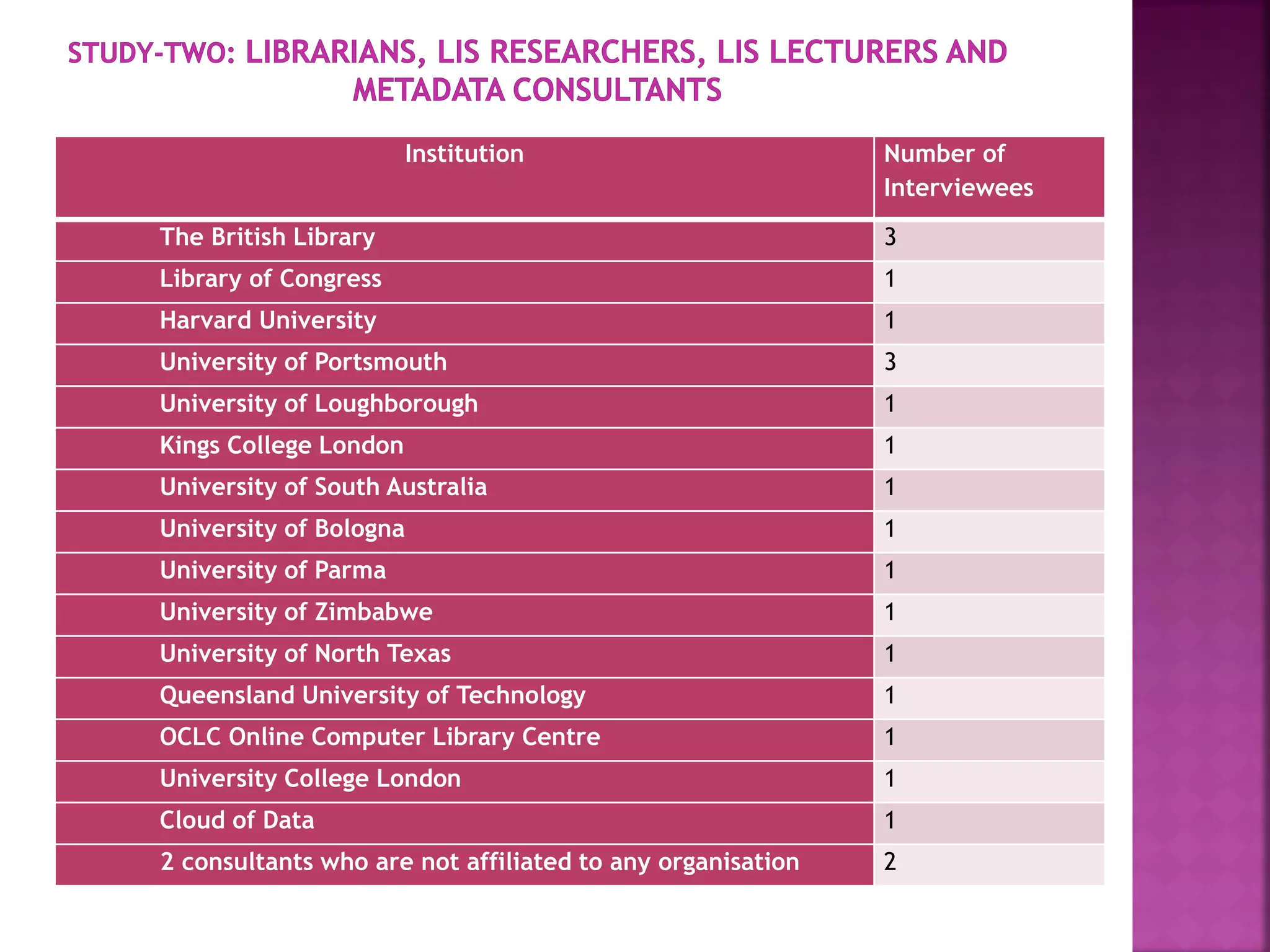
Institution Number of
Interviewees
The British Library 3
Library of Congress 1
Harvard University 1
University of Portsmouth 3
University of Loughborough 1
Kings College London 1
University of South Australia 1
University of Bologna 1
University of Parma 1
University of Zimbabwe 1
University of North Texas 1
Queensland University of Technology 1
OCLC Online Computer Library Centre 1
University College London 1
Cloud of Data 1
2 consultants who are not affiliated to any organisation 2
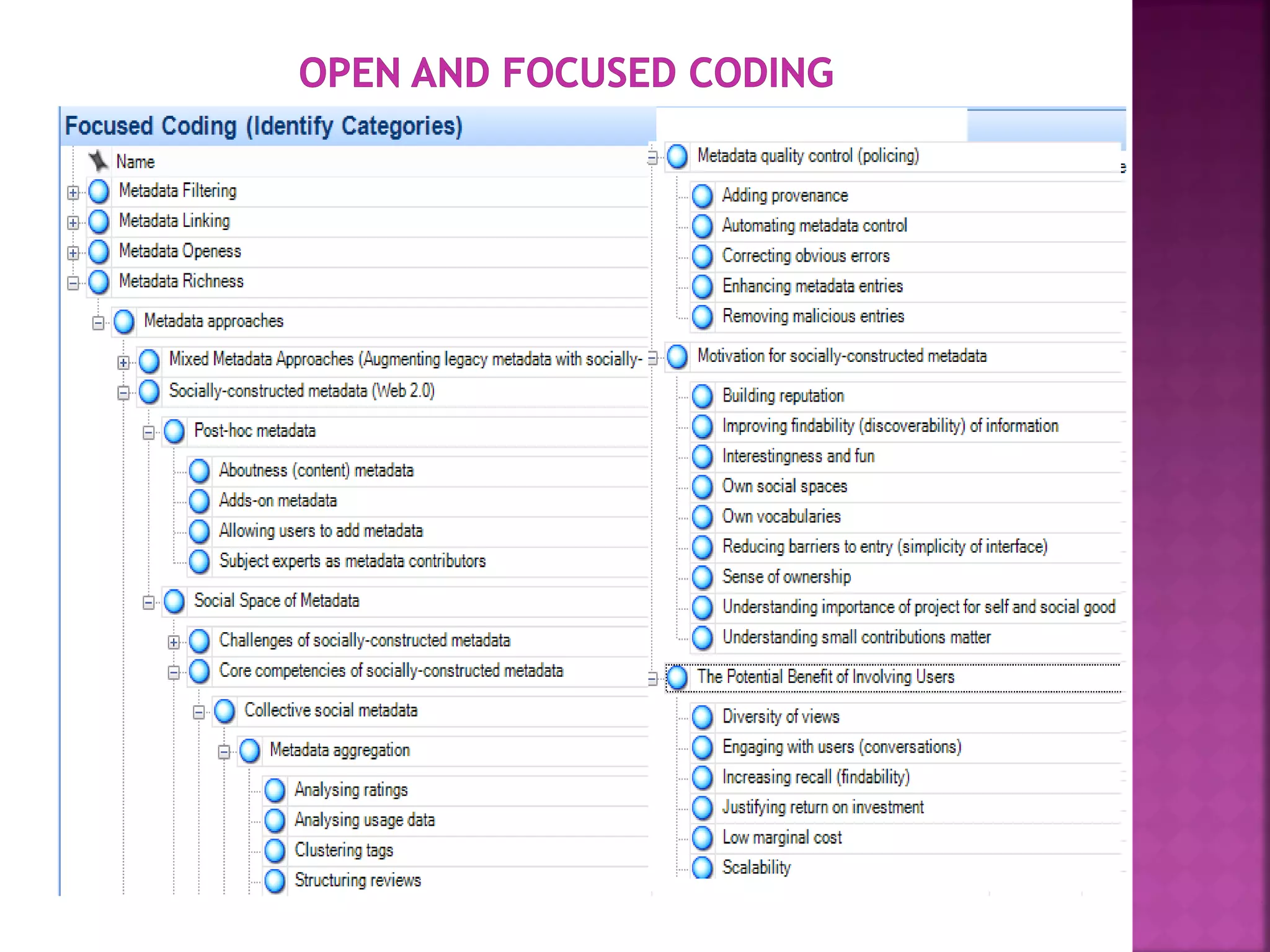
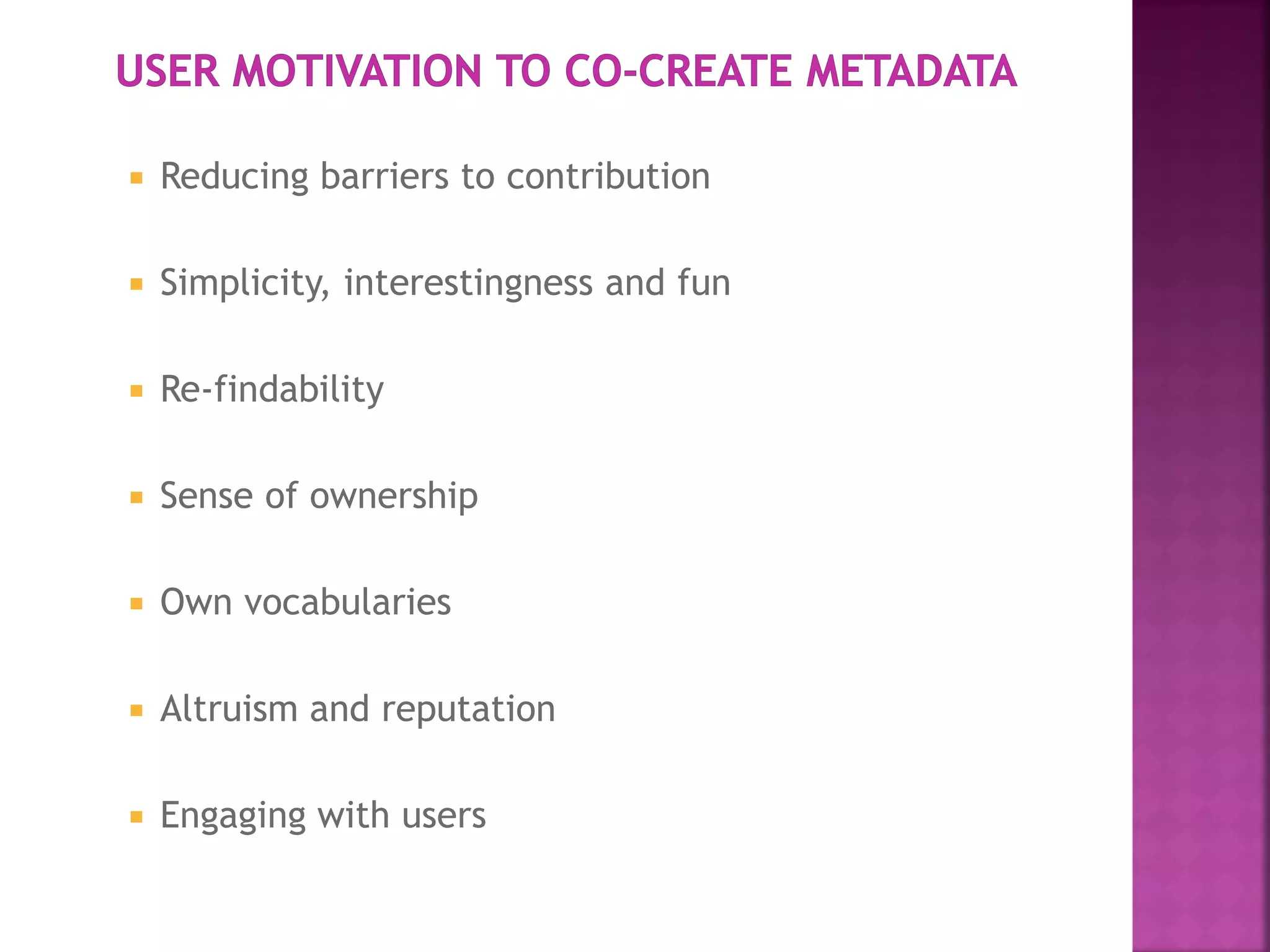
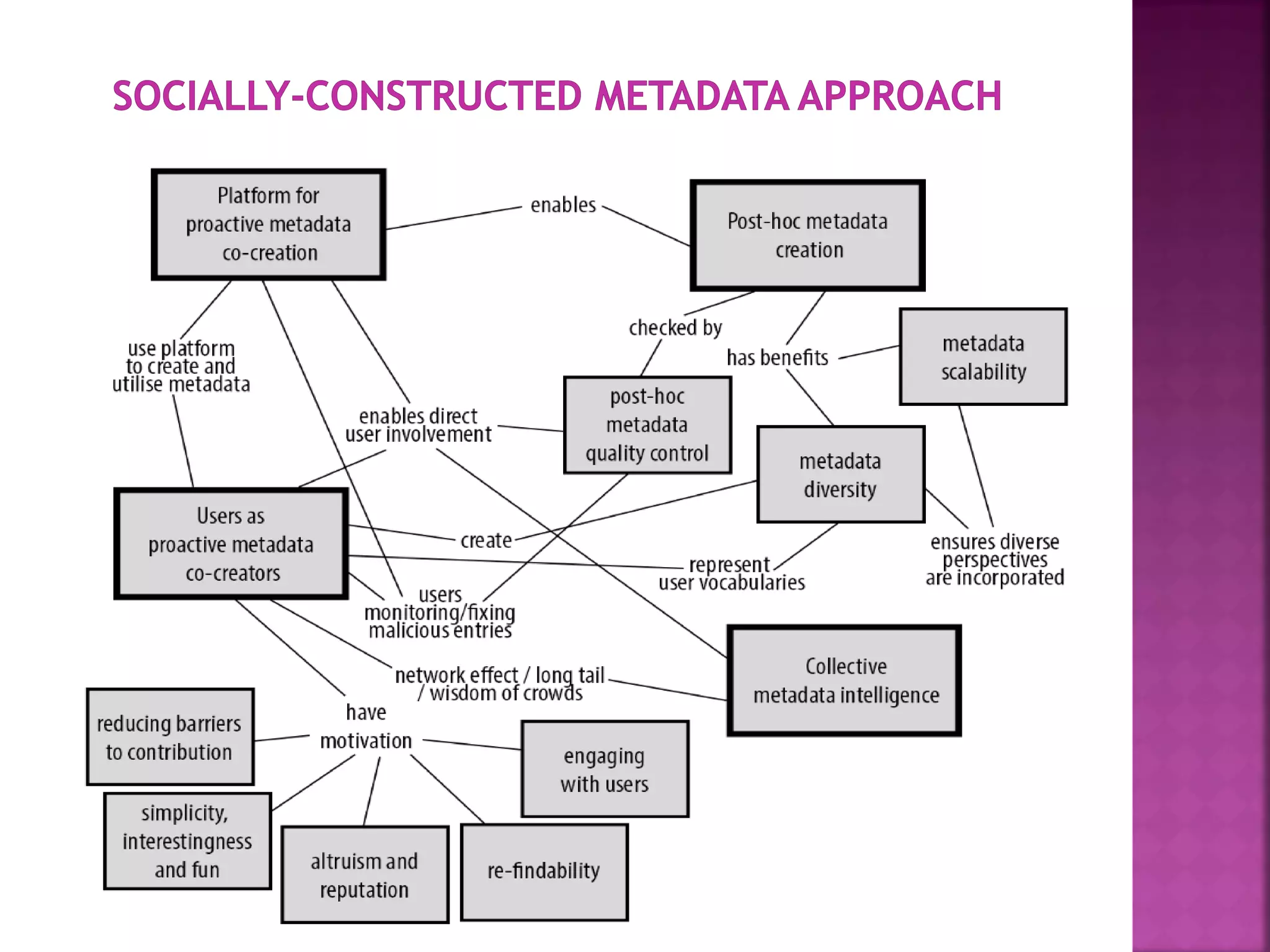
 Reducing barriers to contribution
 Simplicity, interestingness and fun
 Re-findability
 Sense of ownership
 Own vocabularies
 Altruism and reputation
 Engaging with users
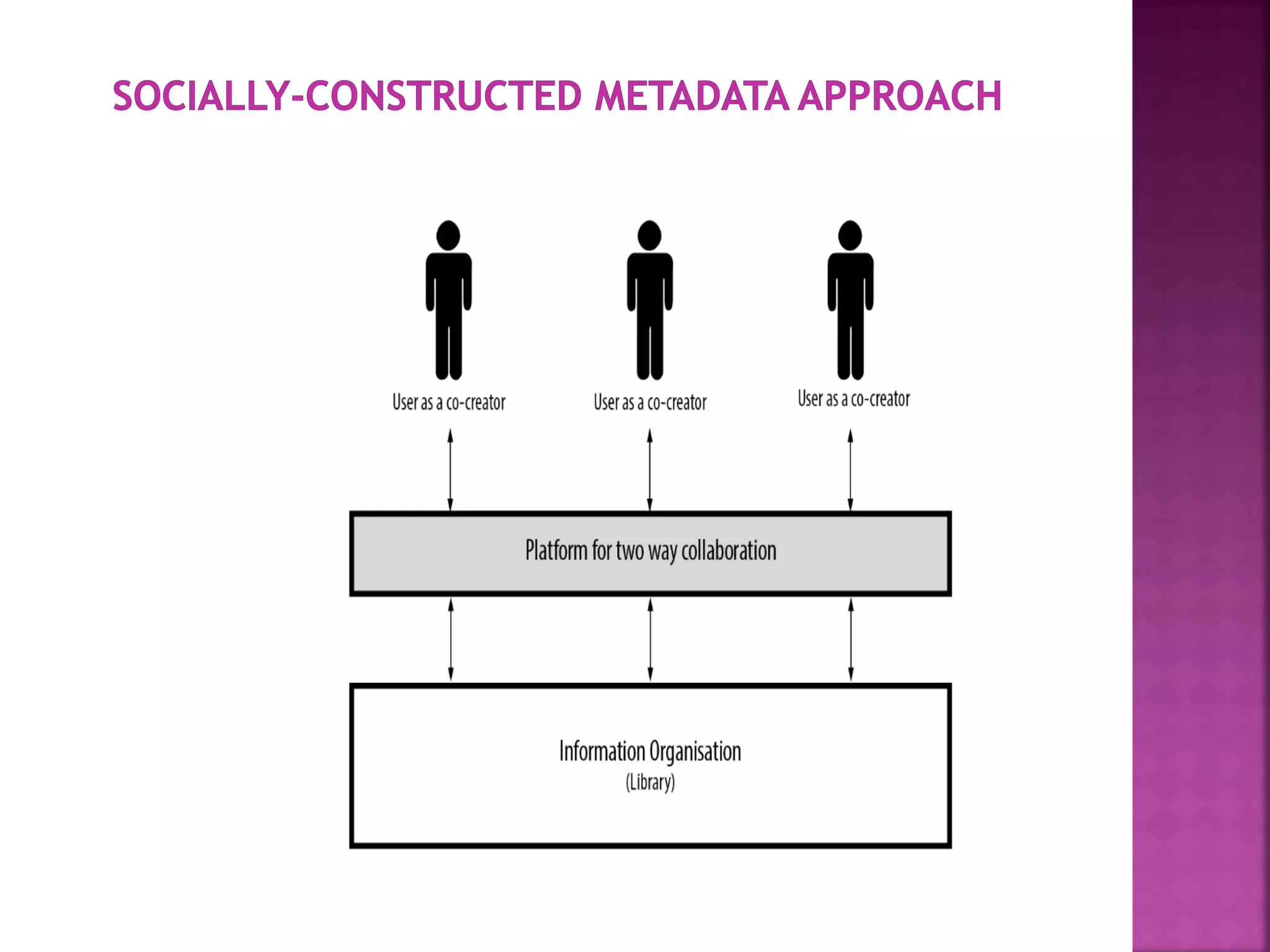
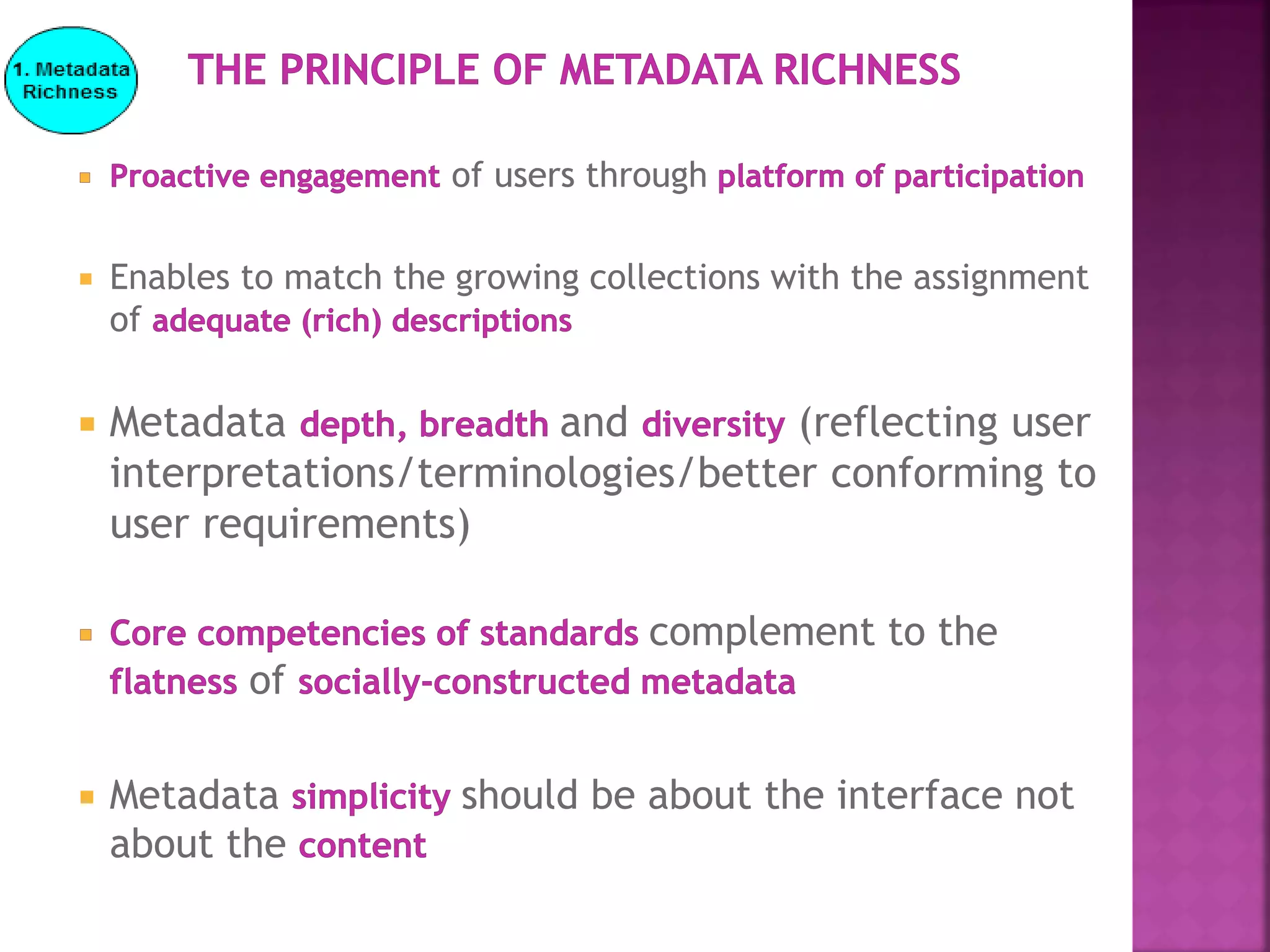
of users through
 Enables to match the growing collections with the assignment
of
 Metadata and (reflecting user
interpretations/terminologies/better conforming to
user requirements)
complement to the
of
 Metadata should be about the interface not
about the
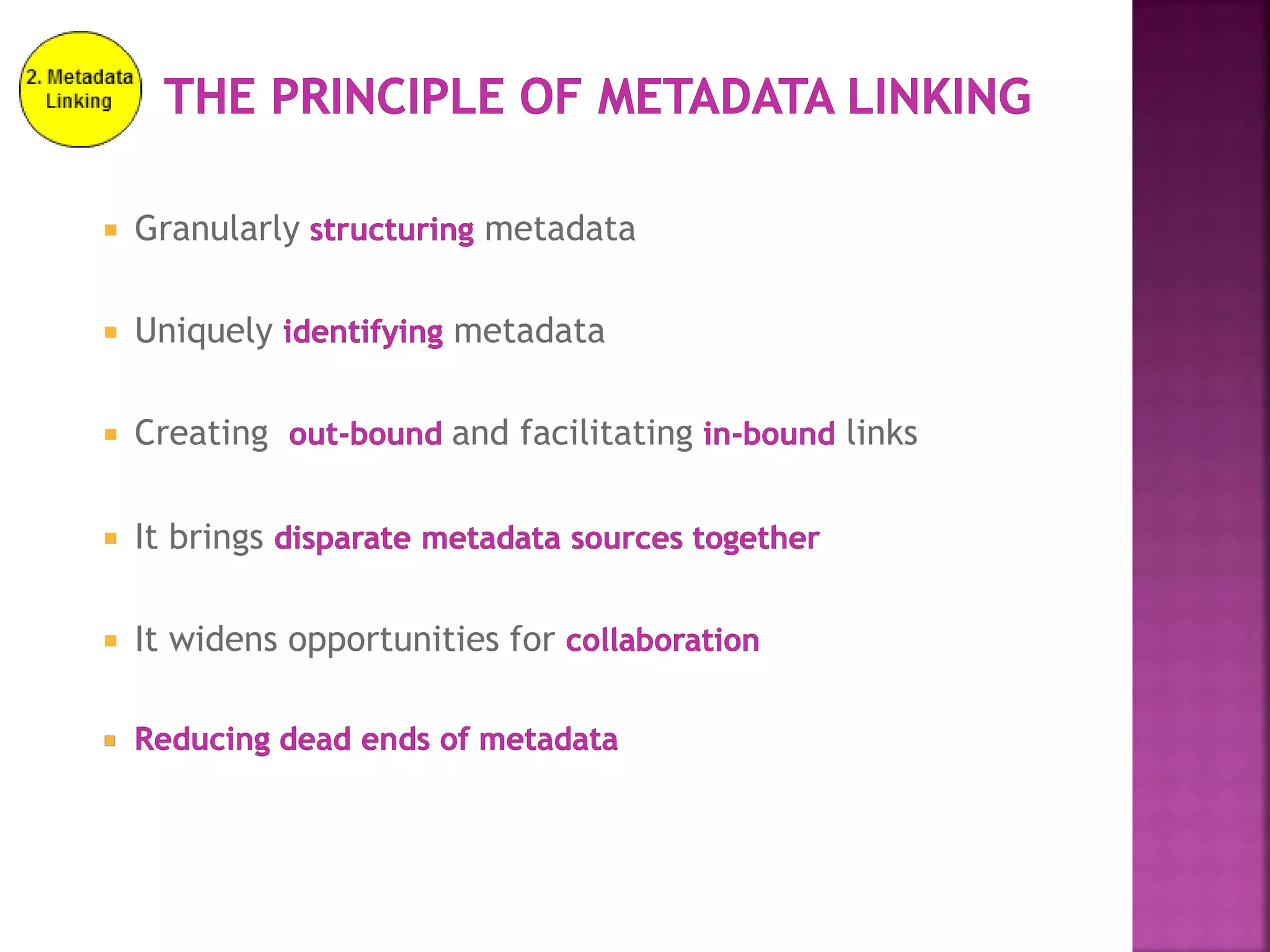
 Granularly metadata
 Uniquely metadata
 Creating and facilitating links
 It brings
 It widens opportunities for
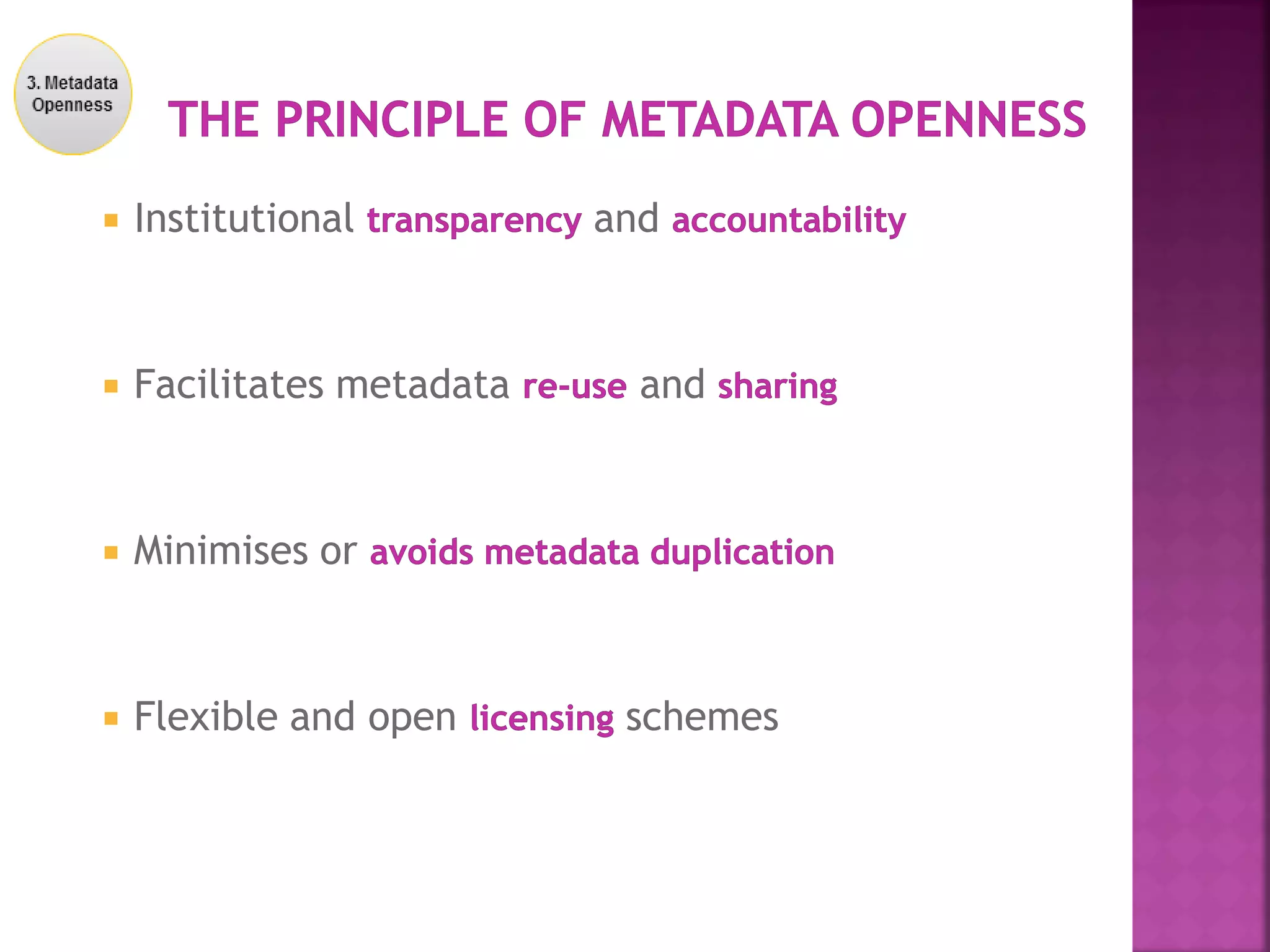
 Institutional and
 Facilitates metadata and
 Minimises or
 Flexible and open schemes
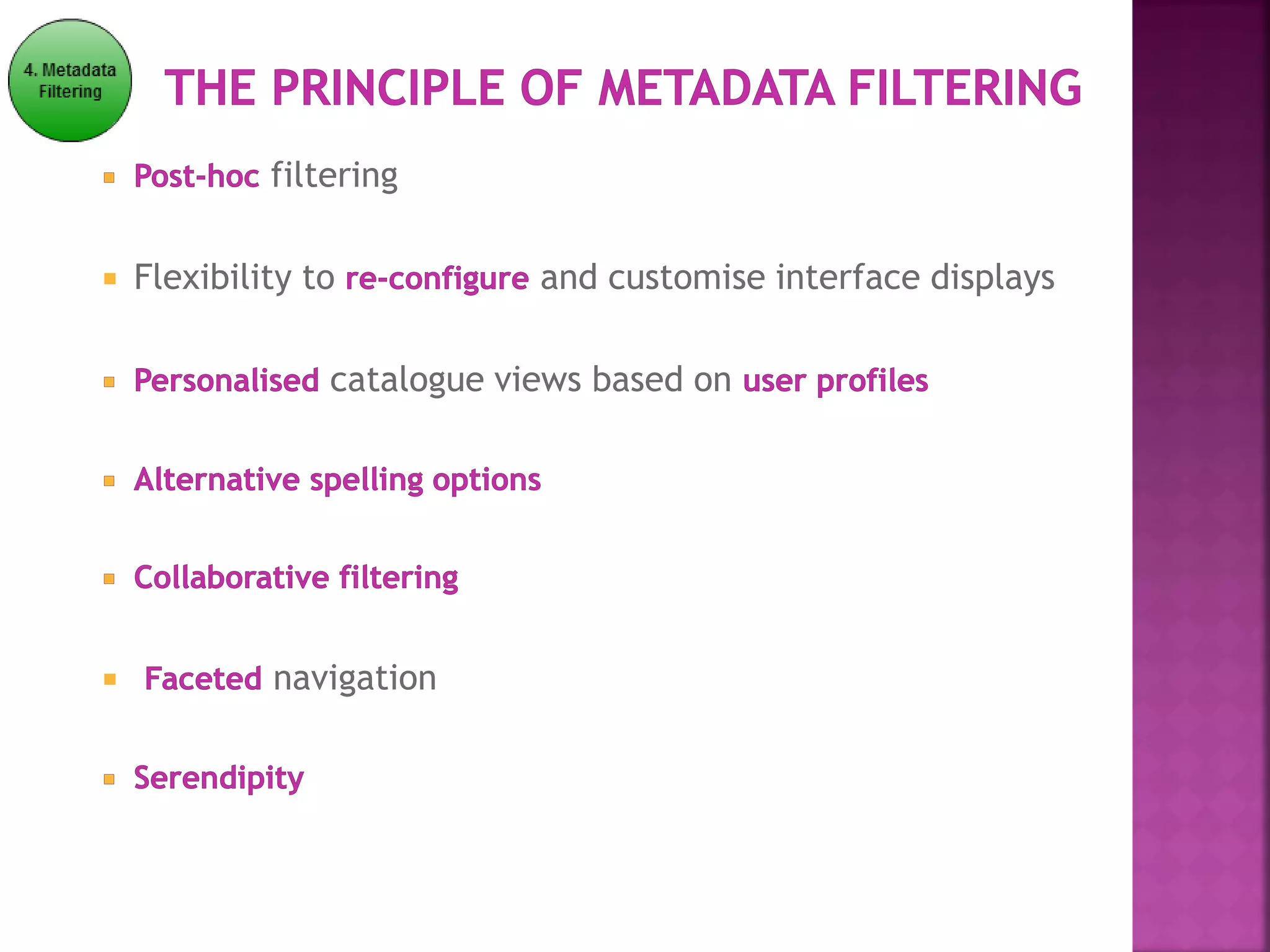
filtering
 Flexibility to and customise interface displays
catalogue views based on
 navigation
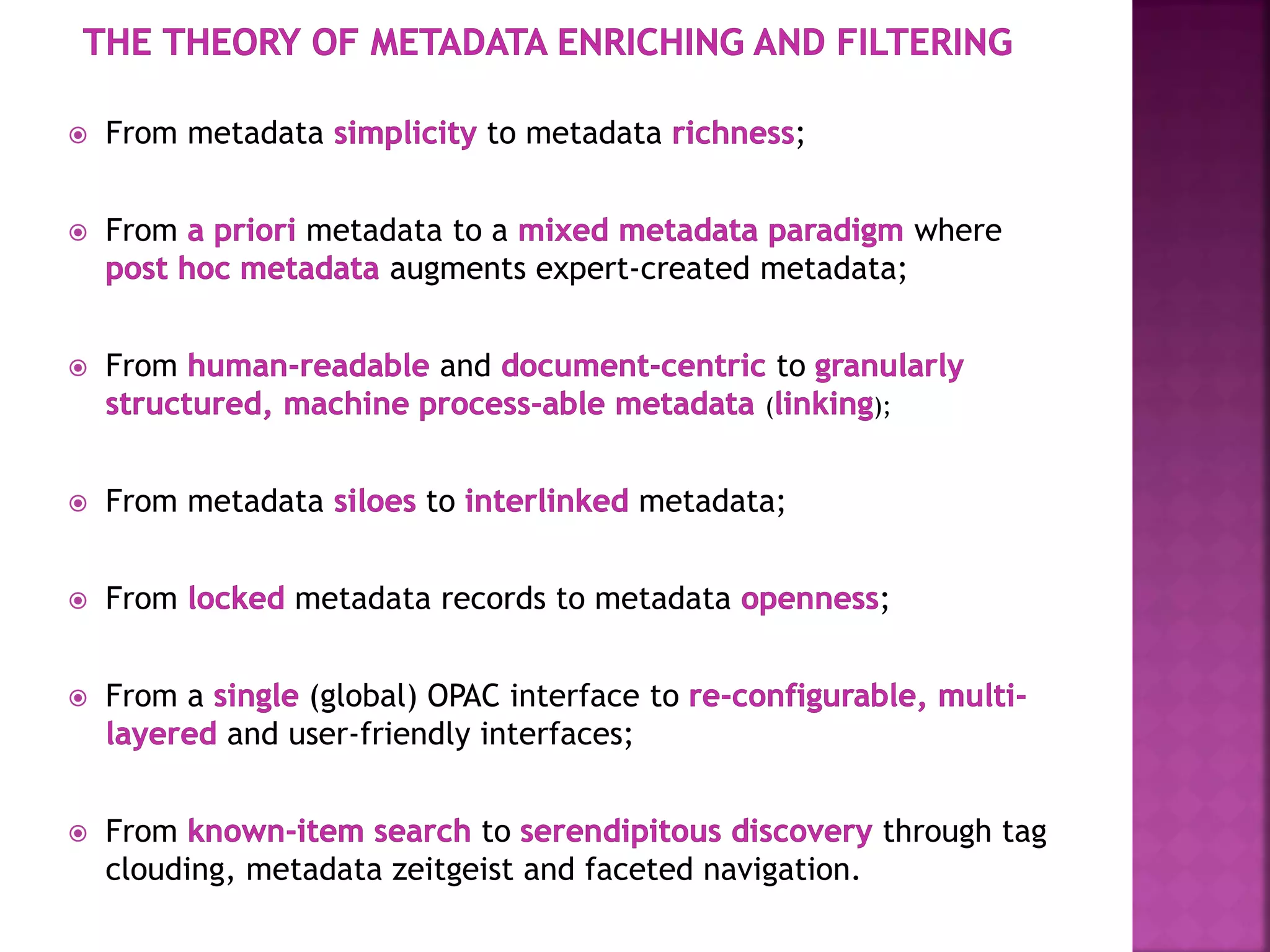
 From metadata to metadata ;
 From metadata to a where
augments expert-created metadata;
 From and to
( );
 From metadata to metadata;
 From metadata records to metadata ;
 From a (global) OPAC interface to
and user-friendly interfaces;
 From to through tag
clouding, metadata zeitgeist and faceted navigation.
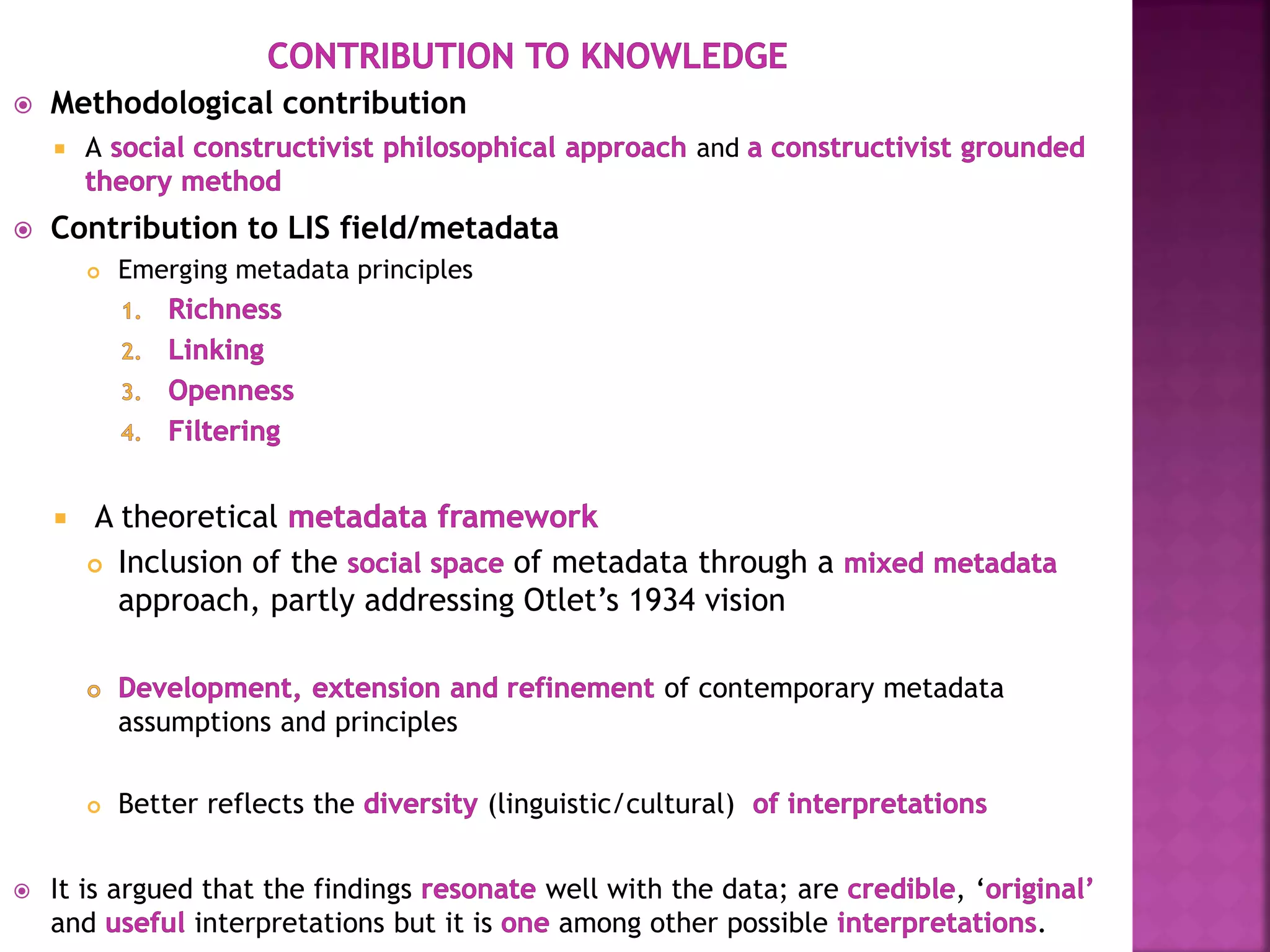
 Methodological contribution
 A and
 Contribution to LIS field/metadata
 Emerging metadata principles
 A theoretical
 Inclusion of the of metadata through a
approach, partly addressing Otlet’s 1934 vision
of contemporary metadata
assumptions and principles
 Better reflects the (linguistic/cultural)
 It is argued that the findings well with the data; are , ‘
and interpretations but it is among other possible .
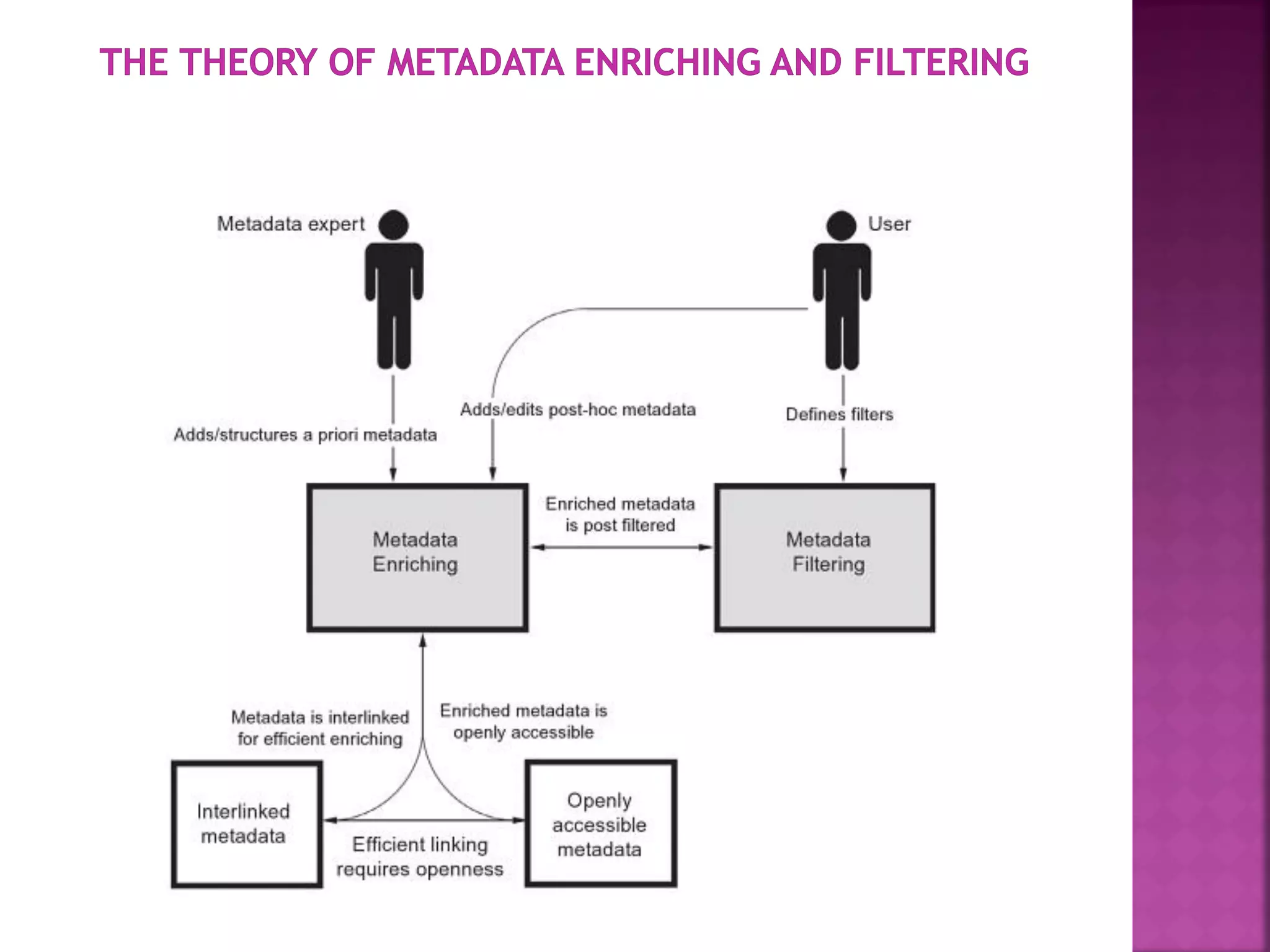
A theory of digital library metadata the emergence of enriching and filtering

A theory of digital library metadata the emergence of enriching and filtering

  • 1.
  • 2.
     ‘Data aboutdata’  Describes and locates information objects  Provides context  Enables the search-ability, browse-ability, find-ability and management of information objects  “The invisible hand” that enables effective information organisation  Metadata constitutes a central part of library functions (Alemu, Stevens, Ross, & Chandler, 2012; Anderson, Delve, Pinchbeck, & Alemu, 2009; Day, 2001; Gartner, 2008; Lagoze, 2010; Nilsson, 2010; NISO, 2004; OCLC/RLG, 2001; Zeng & Qin, 2008)
  • 3.
     As librarygrow, of information increases, changes and users’ expectations change:  Contemporary standards-based metadata approaches fail to to adequately describe the semantic aspects of information objects  The of documents is missing (Otlet, 1934) “In Otlet’s world each user would leave an imprint, a trail, which would become part of the explicit history of each document” (Wright , 2007, p.190)  Scant use of theories/theoretical frameworks in the inclusion of socially-constructed metadata (Coyle, 2010; Coyle & Hillmann, 2007; Lagoze, 2010; Mathes, 2004; Shirky, 2005; Veltman, 2001; Weinberger, 2005, 2007; Wright, 2007) (Lehmann, 2010; Andersen & Skouvig, 2006.; Floridi, 2000; Hjorland, 2000)
  • 4.
    Developing a Exploring theinclusion of approaches Inductively identify concepts Identify principles Develop framework
  • 5.
     Standards-based metadataapproaches imply an philosophical perspective  Web 2.0 (socially-constructed) metadata approaches seem to follow a philosophical perspective  Cultural artefacts very often lend themselves to various and contexts Alemu, G., Stevens, B., Ross, P. (2012) Towards a conceptual framework for user-driven semantic metadata interoperability in digital libraries: A social constructivist approach. New Library World. 113 (1/2), 38-54
  • 6.
    : inductively developing concepts/principles/theoreticalframework/theories  Theory rather than theory testing  Simultaneous data collection and analysis  Fitting for research areas  Three approaches to grounded theory method  Glaserian (Glaser & Strauss, 1967)  Straussian (Strauss & Corbin, 1998) (Charmaz, 2006) Alemu, G., B. Stevens, P. Ross. (2012) Semantic metadata interoperability in digital libraries: a constructivist grounded theory approach. Bulletin of IEEE Technical Committee on Digital Libraries. 8(1).
  • 7.
     Open-ended  Exploratory 11 in-depth interviews  Library as a place  Obsolescence of OPAC  Standards-based versus socially-constructed metadata approaches  Sluggish adoption of Semantic Web technologies  Bridging cultural differences through metadata  Collaboration and metadata crowd sourcing  The need for theoretical foundations
  • 11.
    Study No. Interviewees Study TotalNumber Profession Sub-total Study One 11 LIS MSc Students 8 LIS PhD Student 1 LIS Lecturers 2 Study Two 21 Librarians 10 LIS Researchers 5 LIS Lecturers 2 Metadata Consultants 4 Study Three 25 Under-graduate Students (BSC) 5 Post-graduate Students (MSc=4 & PhD=6) 10 Lecturers (other than LIS) 10 Total 57
  • 12.
    Institution Number of Interviewees TheBritish Library 3 Library of Congress 1 Harvard University 1 University of Portsmouth 3 University of Loughborough 1 Kings College London 1 University of South Australia 1 University of Bologna 1 University of Parma 1 University of Zimbabwe 1 University of North Texas 1 Queensland University of Technology 1 OCLC Online Computer Library Centre 1 University College London 1 Cloud of Data 1 2 consultants who are not affiliated to any organisation 2
  • 27.
     Reducing barriersto contribution  Simplicity, interestingness and fun  Re-findability  Sense of ownership  Own vocabularies  Altruism and reputation  Engaging with users
  • 31.
    of users through Enables to match the growing collections with the assignment of  Metadata and (reflecting user interpretations/terminologies/better conforming to user requirements) complement to the of  Metadata should be about the interface not about the
  • 32.
     Granularly metadata Uniquely metadata  Creating and facilitating links  It brings  It widens opportunities for
  • 33.
     Institutional and Facilitates metadata and  Minimises or  Flexible and open schemes
  • 34.
    filtering  Flexibility toand customise interface displays catalogue views based on  navigation
  • 36.
     From metadatato metadata ;  From metadata to a where augments expert-created metadata;  From and to ( );  From metadata to metadata;  From metadata records to metadata ;  From a (global) OPAC interface to and user-friendly interfaces;  From to through tag clouding, metadata zeitgeist and faceted navigation.
  • 37.
     Methodological contribution A and  Contribution to LIS field/metadata  Emerging metadata principles  A theoretical  Inclusion of the of metadata through a approach, partly addressing Otlet’s 1934 vision of contemporary metadata assumptions and principles  Better reflects the (linguistic/cultural)  It is argued that the findings well with the data; are , ‘ and interpretations but it is among other possible .