An Emergent Theory of
Digital Library Metadata:
Enrich then Filter
Getaneh Alemu (PhD)
Cataloguing & Metadata Librarian
Southampton Solent University
@getaneha
Paper presented at QQML-2016 - Exploring Trends and Challenges on Building the Future Libraries
May 27th 2016, London
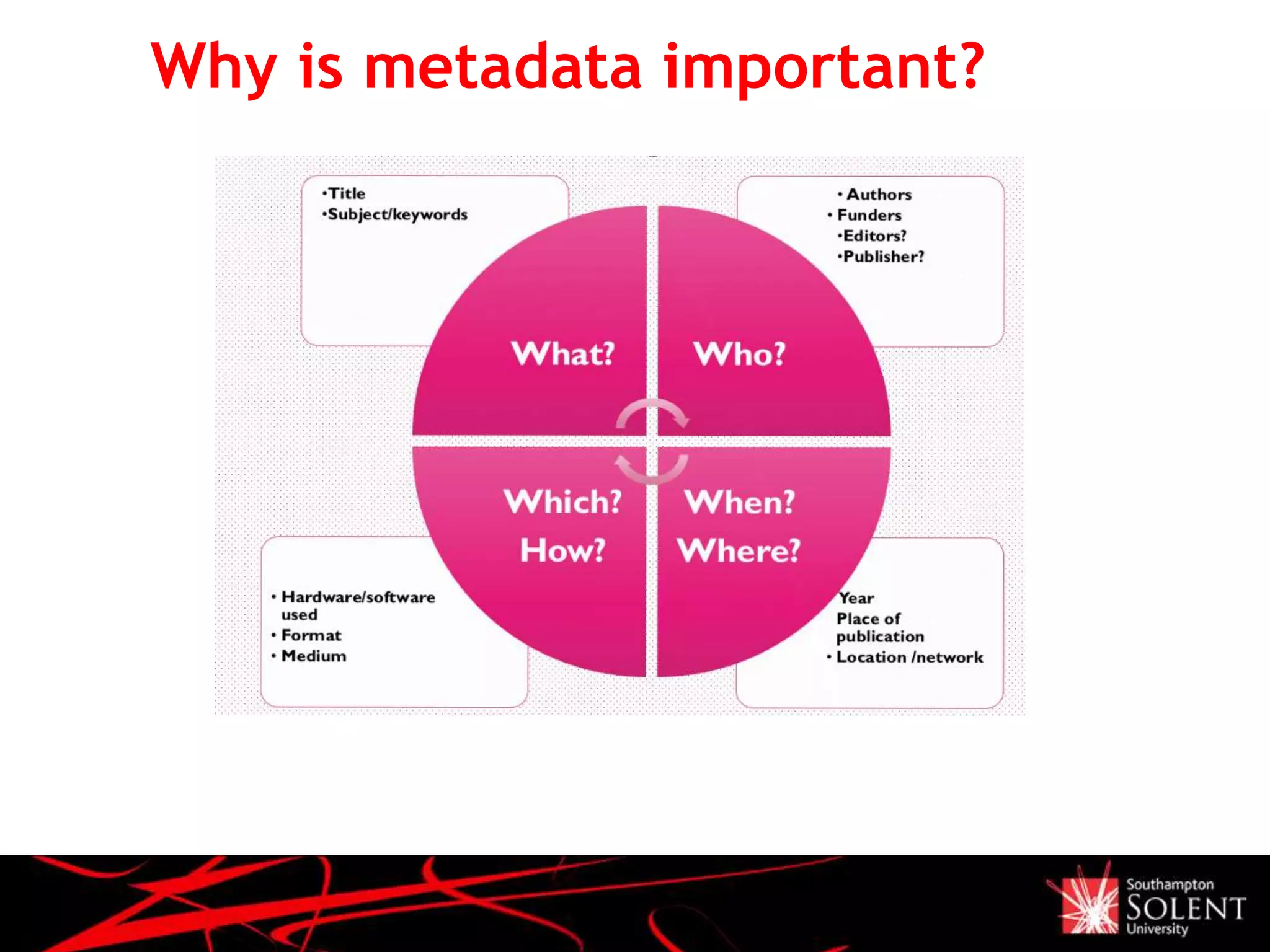
Why is metadata important?
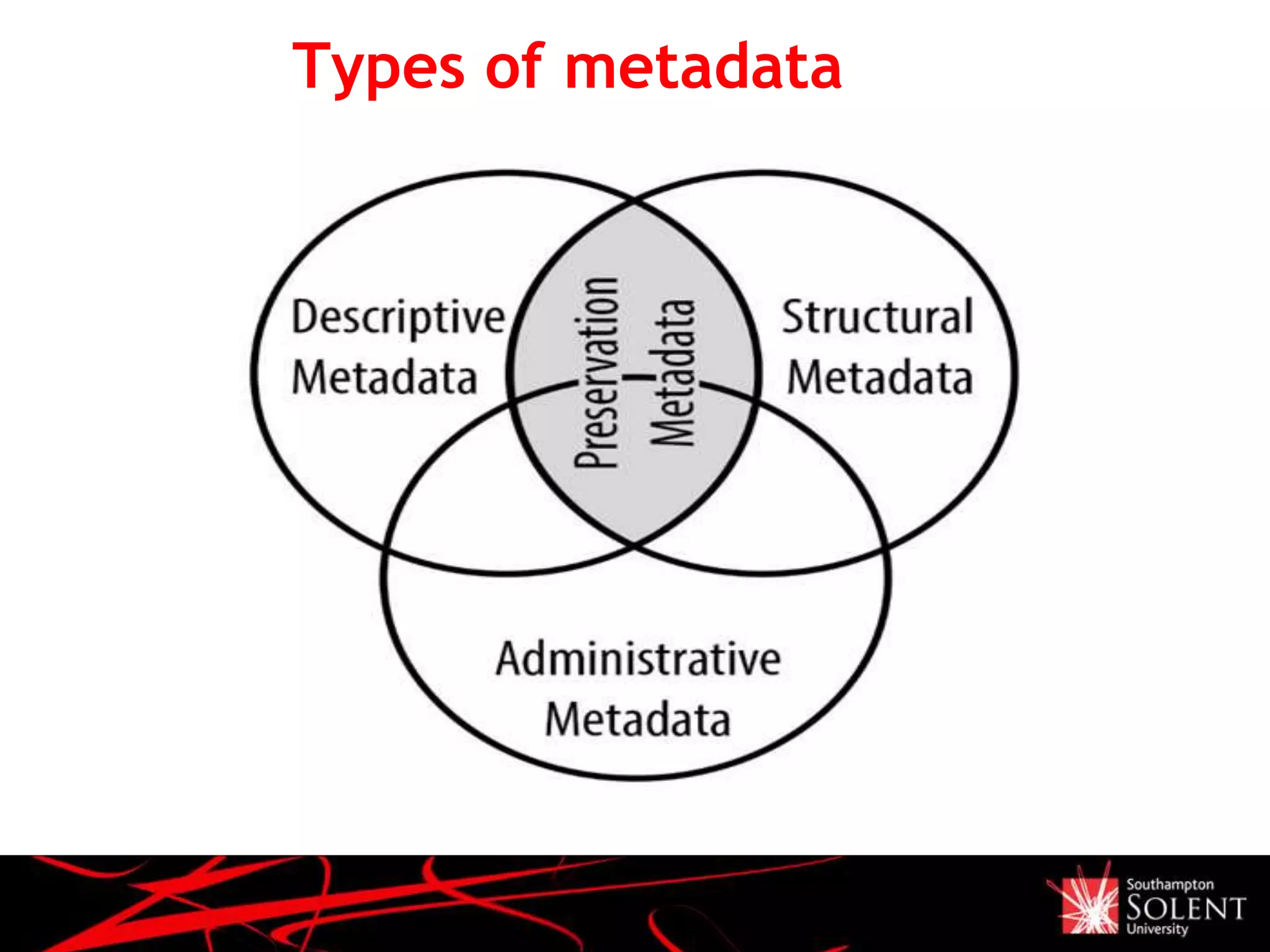
Types of metadata
Research context
(Coyle, 2010; Coyle & Hillmann, 2007; Lagoze, 2010; Mathes, 2004; Shirky, 2005; Veltman, 2001; Weinberger, 2005, 2007; Wright, 2007; Lehmann,
2010; Andersen & Skouvig, 2006.; Floridi, 2000; Hjorland, 2000)
 Growing library collections
 Ever changing technologies
 Changing users’ expectations
 Limitations of contemporary standards-based metadata approaches
 The social space of documents is missing (Otlet, 1934)
 Scant use of theories/theoretical frameworks in the inclusion of socially-
constructed metadata
Methodology
Alemu, G., Stevens, B., Ross, P. (2012). Towards a conceptual framework for user-driven semantic metadata interoperability in digital libraries: A social
constructivist approach. New Library World. 113 (1/2), 38-54
Alemu, G., Stevens, B., & Ross, P. (2011). A constructivist grounded theory approach to semantic metadata interoperability in digital libraries: preliminary
reflections. Paper presented at QQML 2011, Athens.
Alemu, G., Stevens, B., Ross, P., & Chandler, J. (2015). The Use of a Constructivist Grounded Theory Method to Explore the Role of Socially-Constructed Metadata
(Web 2.0) Approaches. QQML Journal, September 2015 Issue (pp. 517-540).
 A social constructivist approach
 Cultural artefacts very often lend themselves to various
interpretations and contexts
 Constructivist grounded theory method (Charmaz, 2006)
 Theory building rather than testing
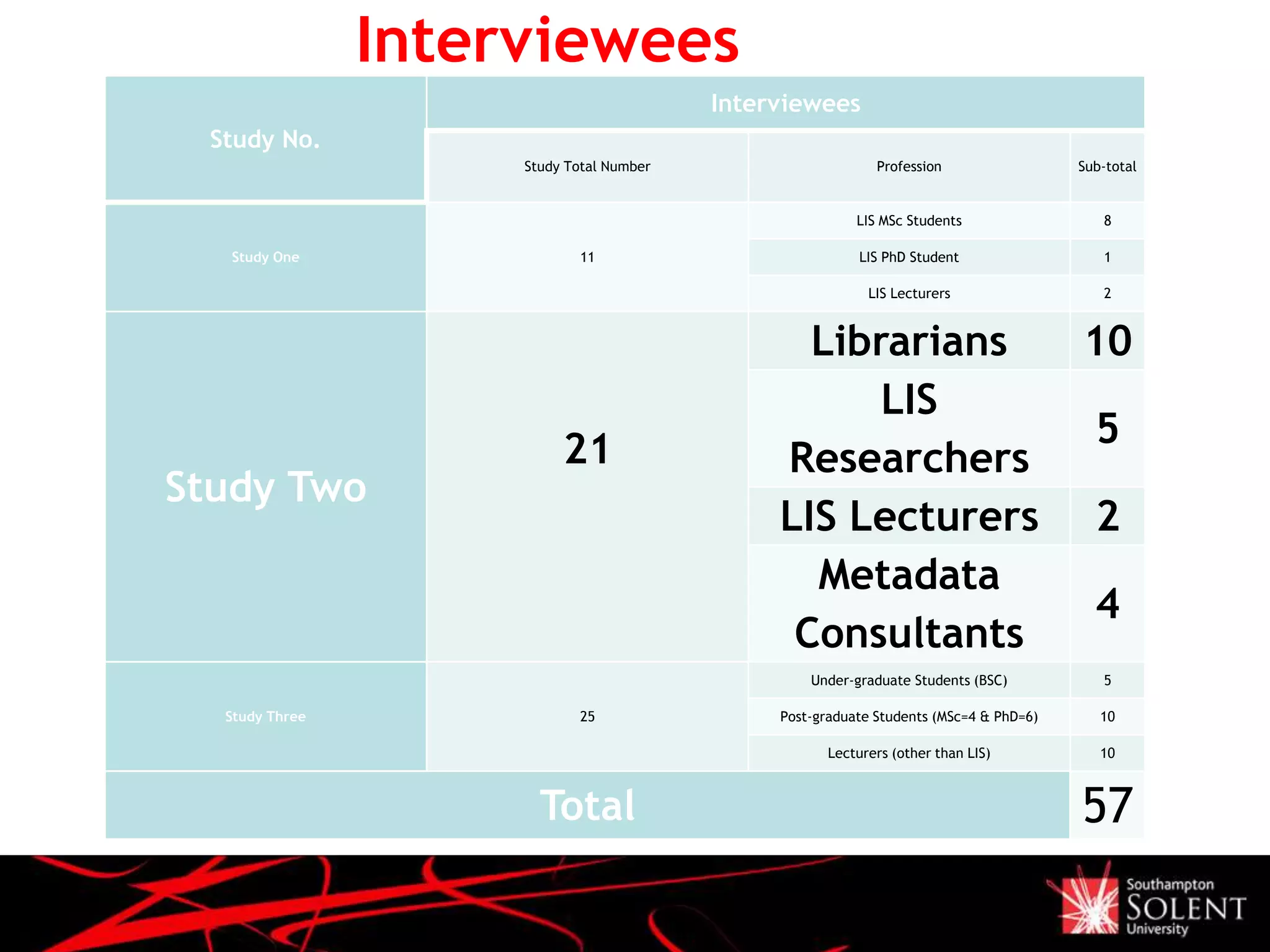
Interviewees
Study No.
Interviewees
Study Total Number Profession Sub-total
Study One 11
LIS MSc Students 8
LIS PhD Student 1
LIS Lecturers 2
Study Two
21
Librarians 10
LIS
Researchers
5
LIS Lecturers 2
Metadata
Consultants
4
Study Three 25
Under-graduate Students (BSC) 5
Post-graduate Students (MSc=4 & PhD=6) 10
Lecturers (other than LIS) 10
Total 57
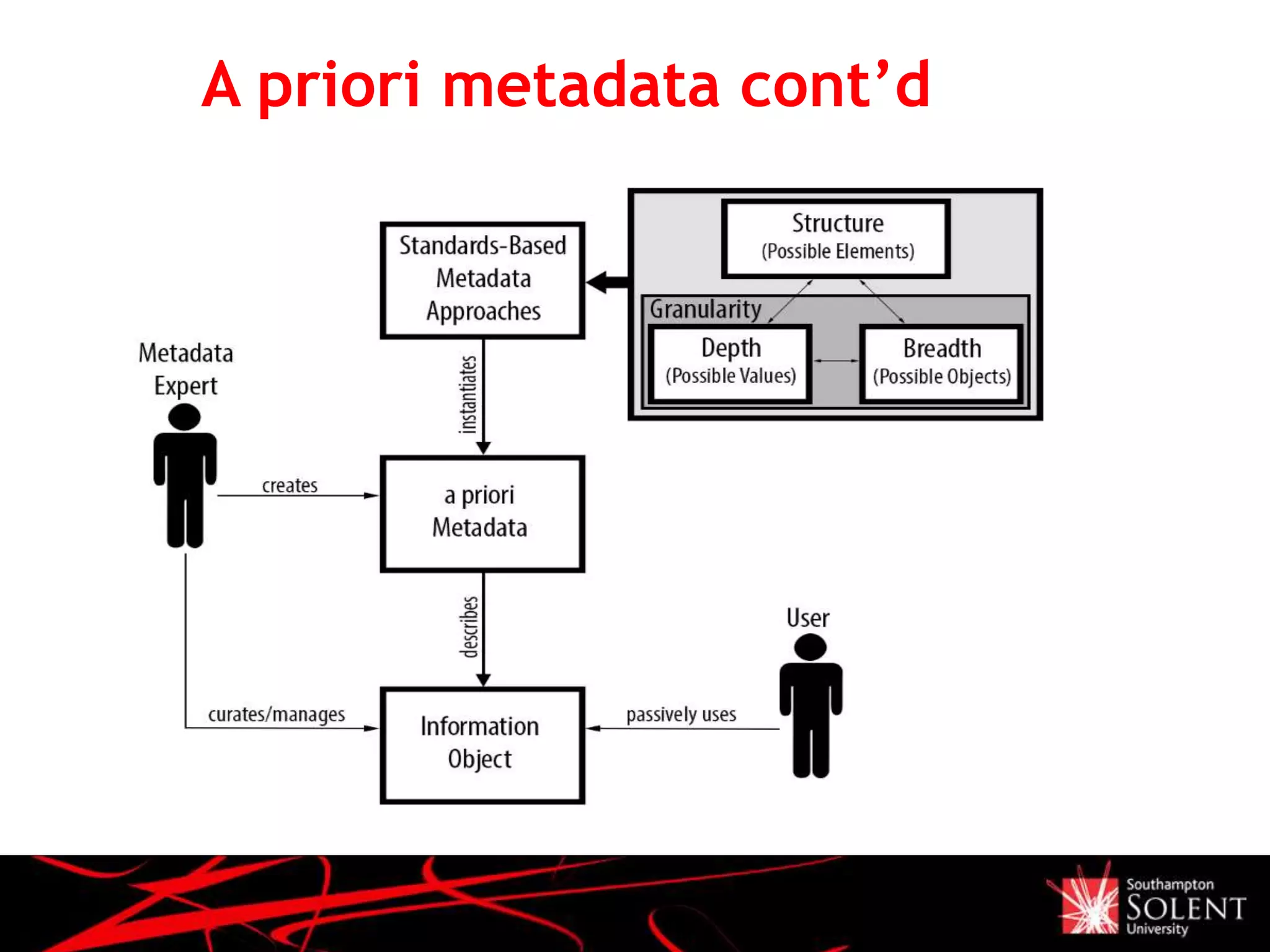
A priori metadata cont’d
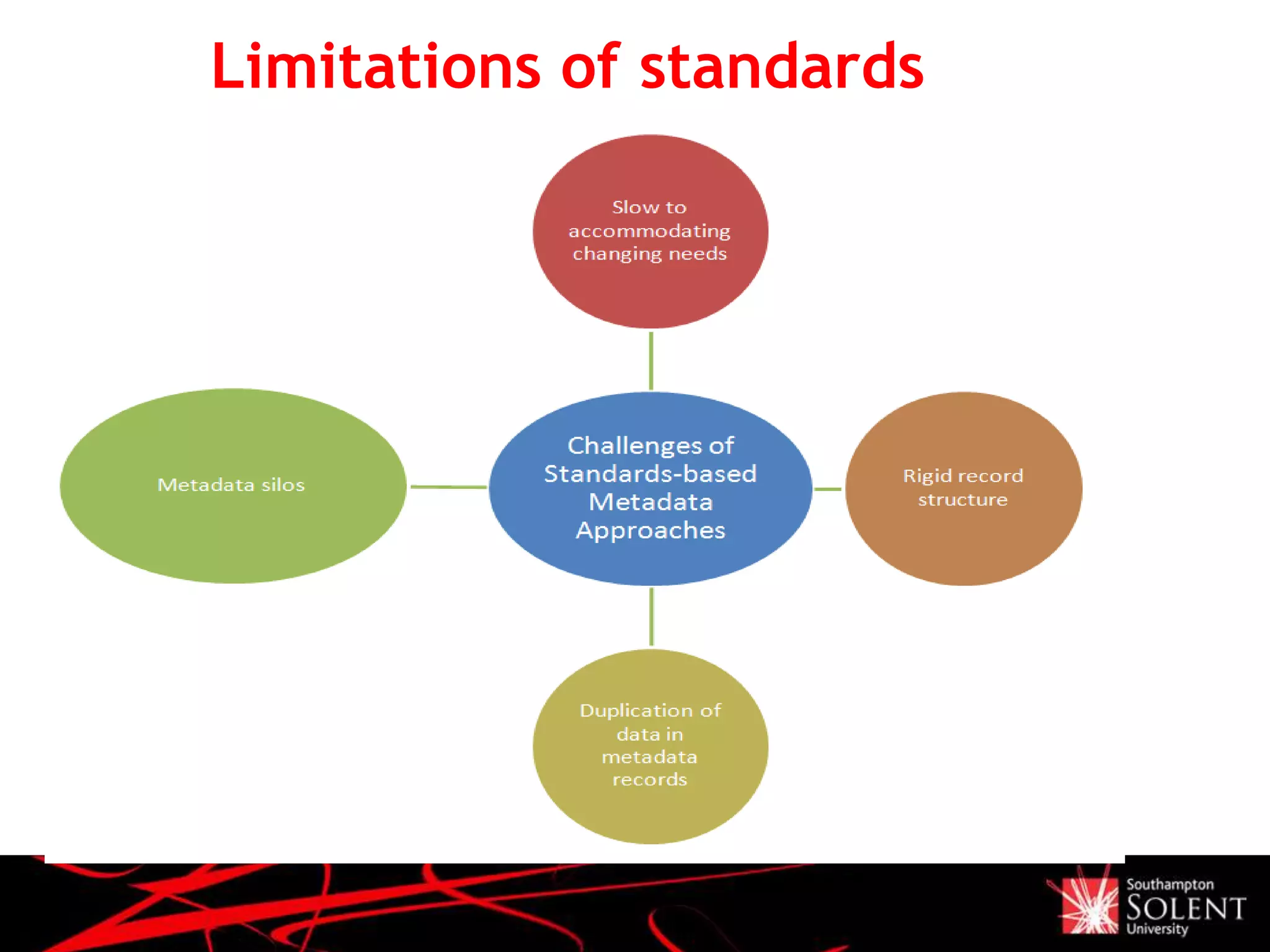
Limitations of standards
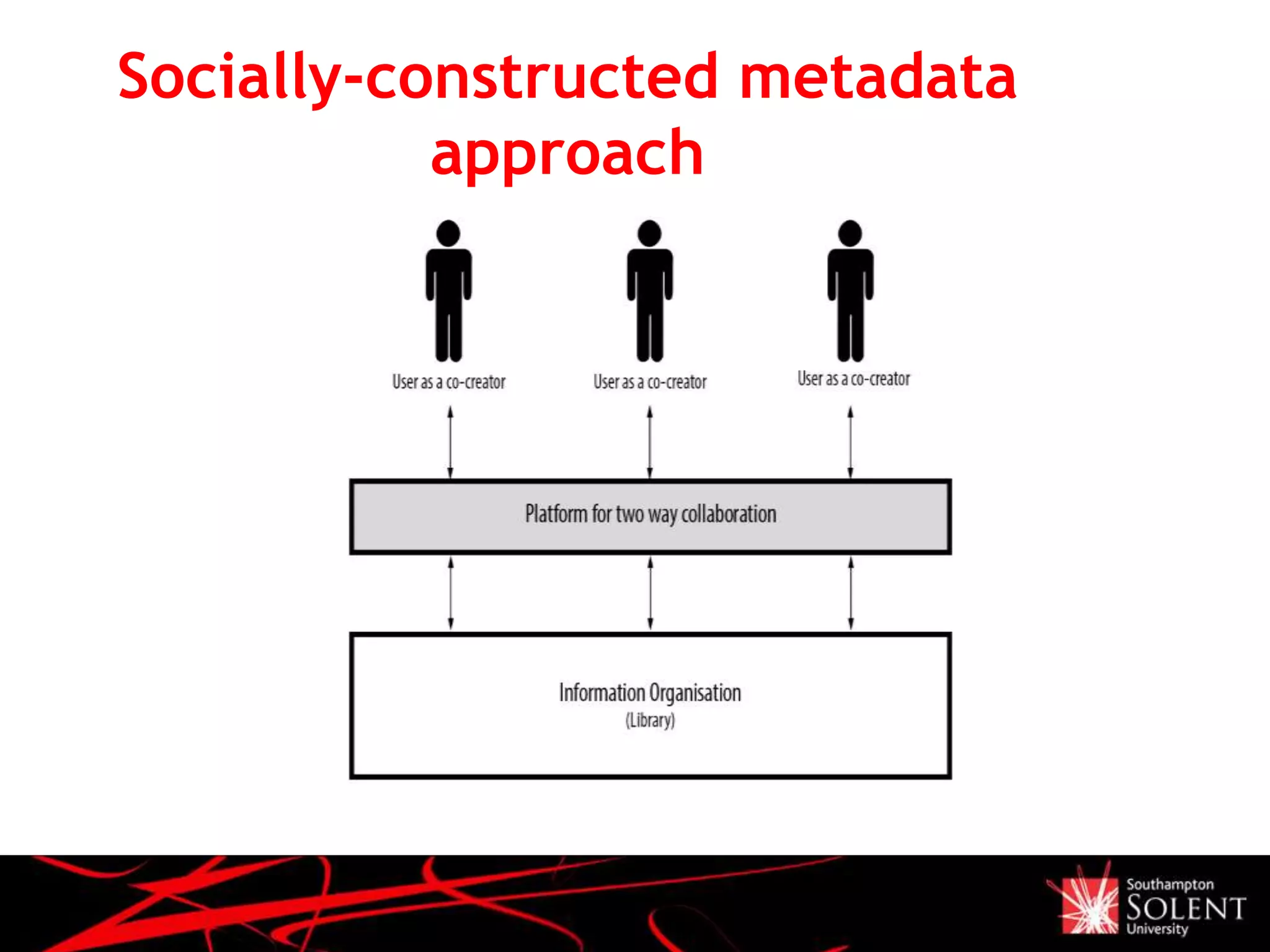
Socially-constructed metadata
approach
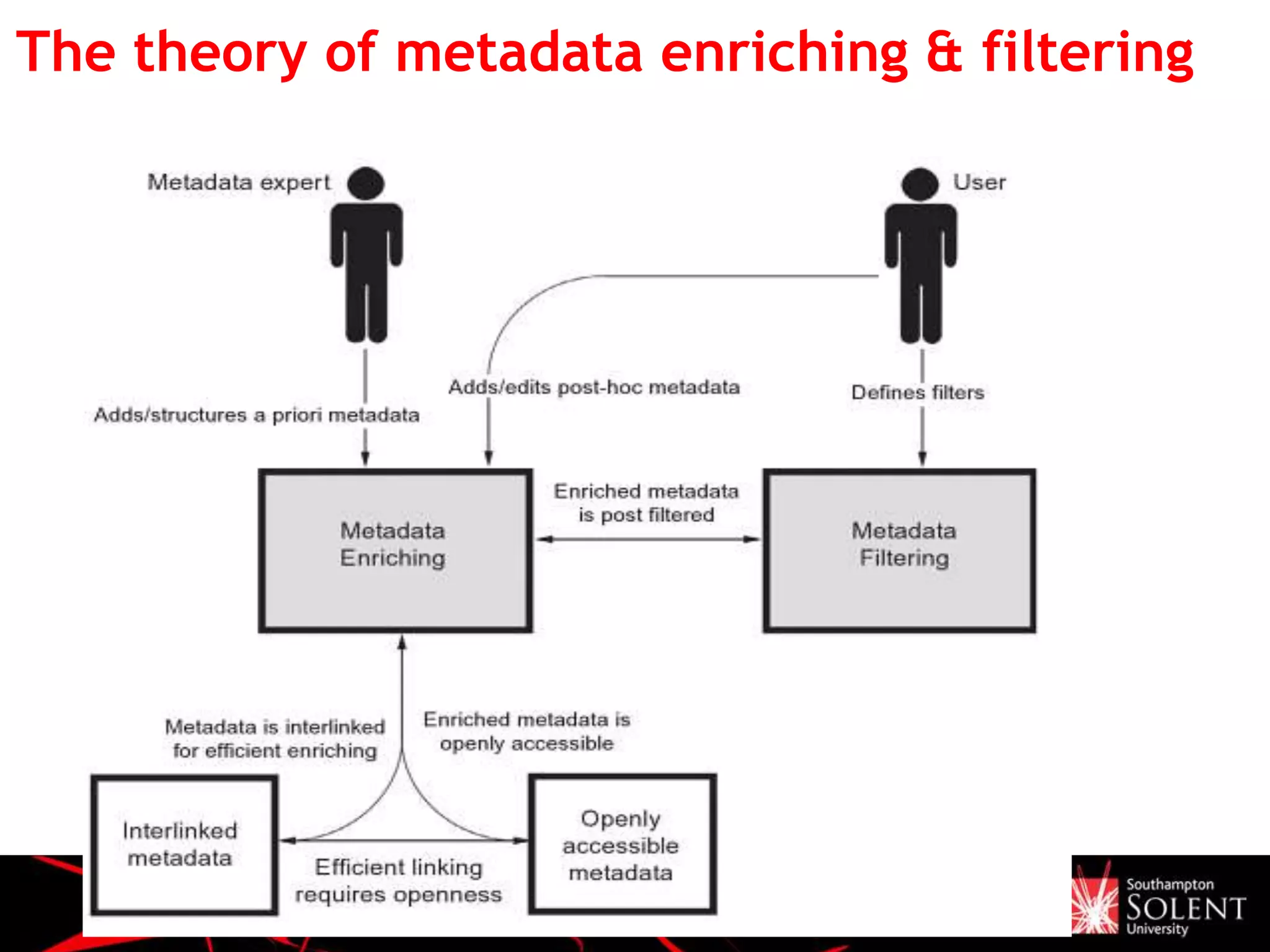
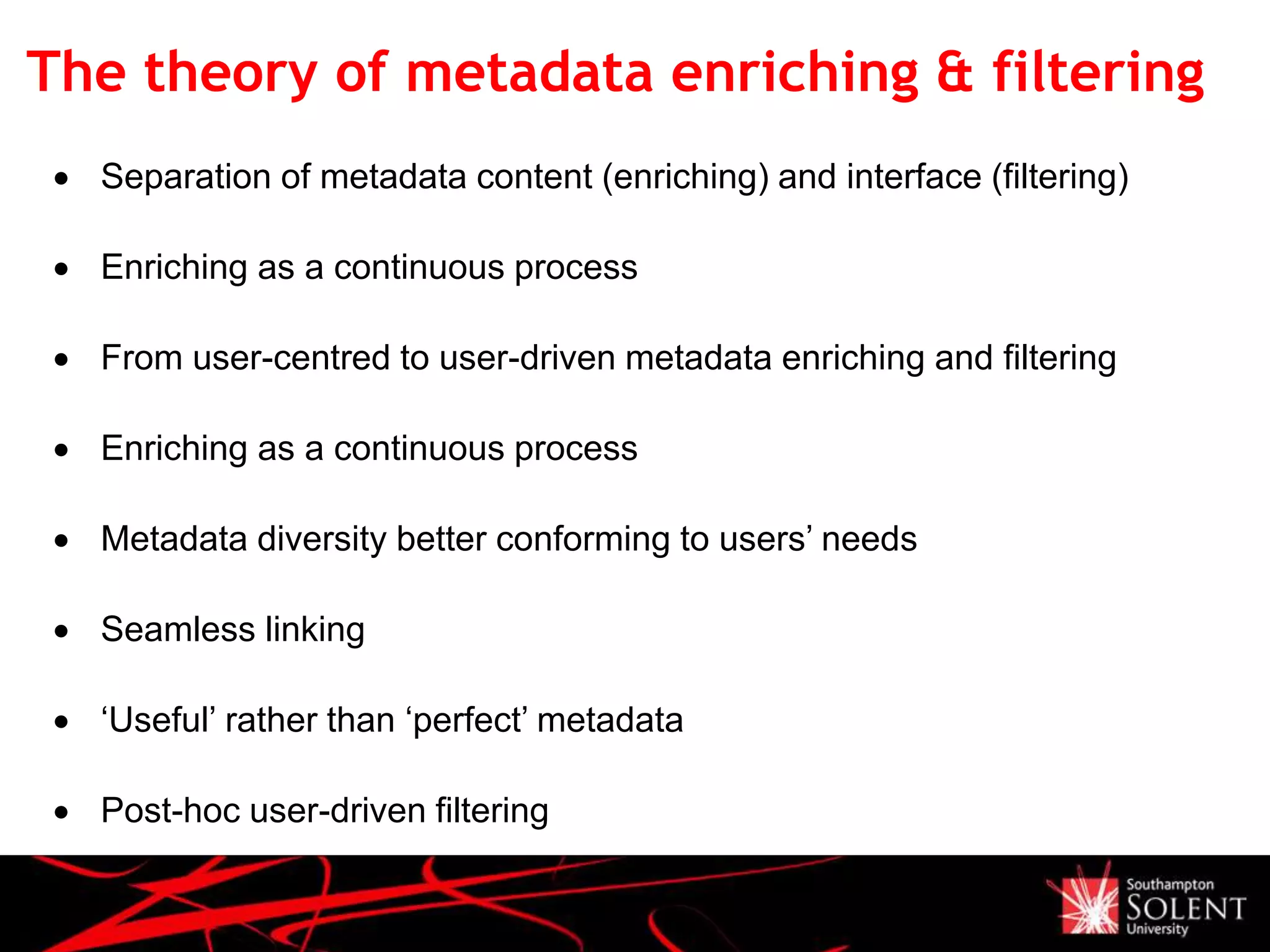
The theory of metadata enriching & filtering
 Separation of metadata content (enriching) and interface (filtering)
 Enriching as a continuous process
 From user-centred to user-driven metadata enriching and filtering
 Enriching as a continuous process
 Metadata diversity better conforming to users’ needs
 Seamless linking
 ‘Useful’ rather than ‘perfect’ metadata
 Post-hoc user-driven filtering
From theory to practice :
Southampton Solent University Library
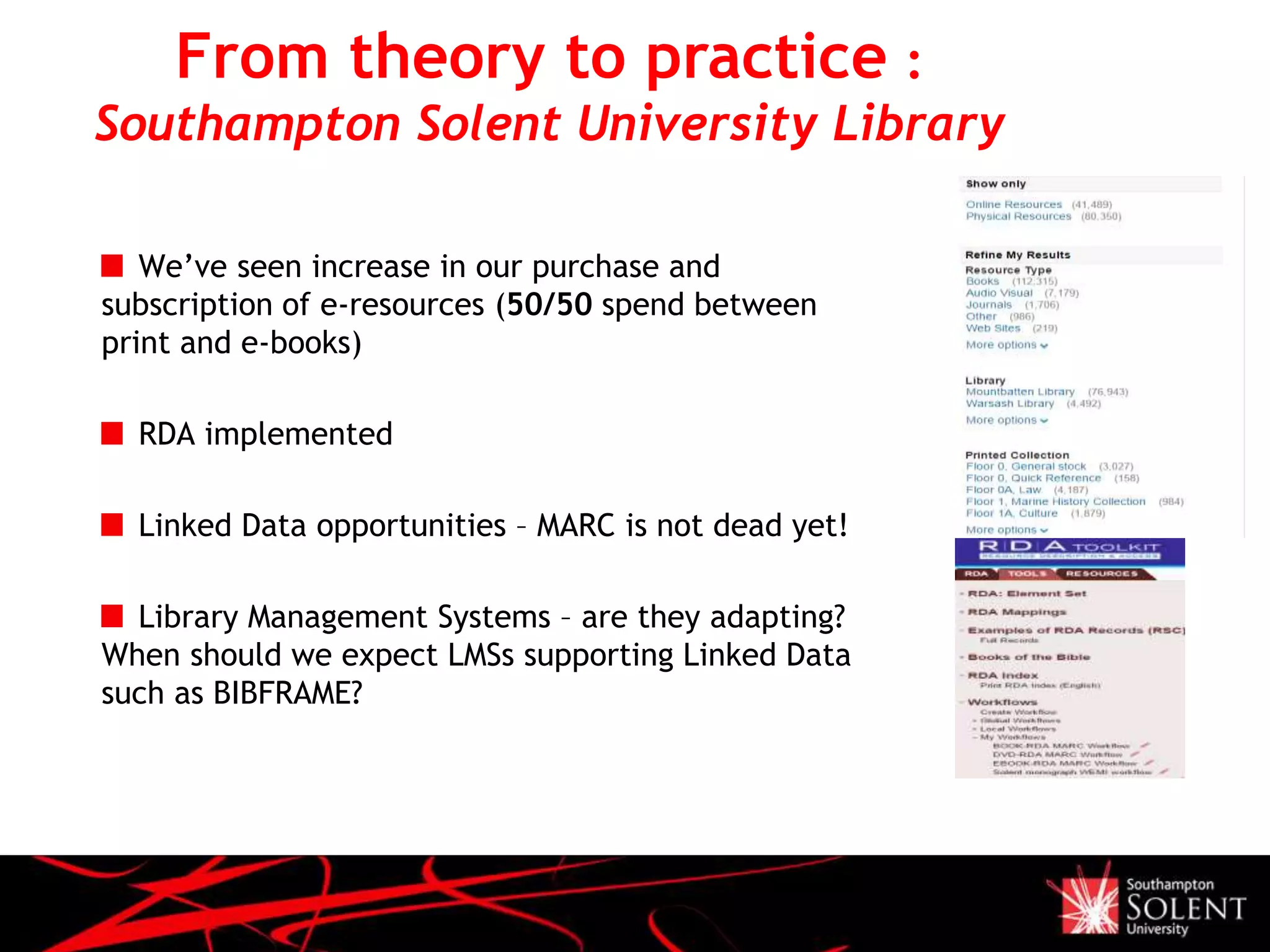
We’ve seen increase in our purchase and
subscription of e-resources (50/50 spend between
print and e-books)
RDA implemented
Linked Data opportunities – MARC is not dead yet!
Library Management Systems – are they adapting?
When should we expect LMSs supporting Linked Data
such as BIBFRAME?
Thank You!
Getaneh.Alemu@solent.ac.uk
https://portal.solent.ac.uk/library/essential-info/meet-team/getaneh-alemu.aspx

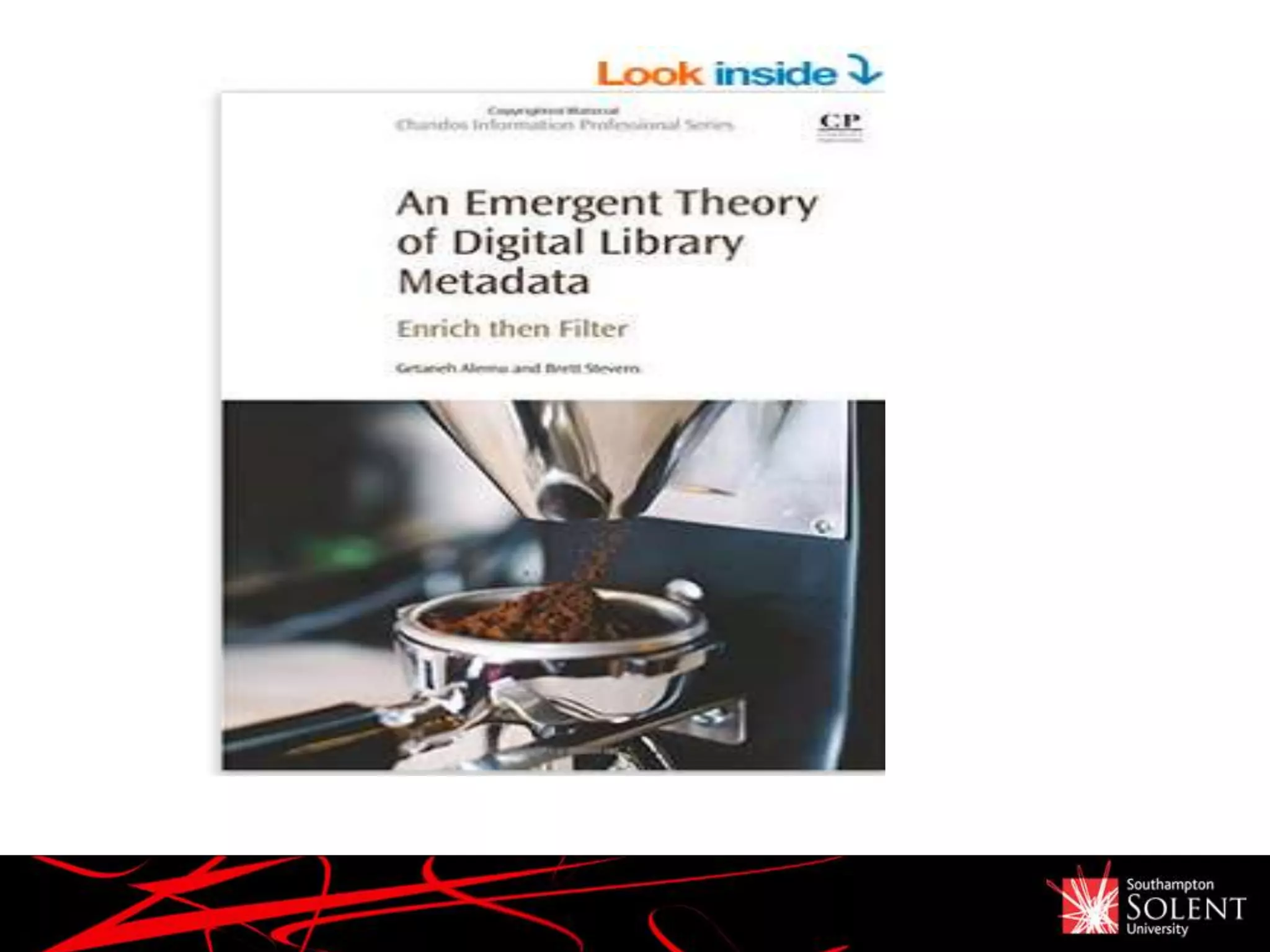
A theory of digital library metadata : enrich then filter

  • 1.
    An Emergent Theoryof Digital Library Metadata: Enrich then Filter Getaneh Alemu (PhD) Cataloguing & Metadata Librarian Southampton Solent University @getaneha Paper presented at QQML-2016 - Exploring Trends and Challenges on Building the Future Libraries May 27th 2016, London
  • 2.
    Why is metadataimportant?
  • 3.
  • 4.
    Research context (Coyle, 2010;Coyle & Hillmann, 2007; Lagoze, 2010; Mathes, 2004; Shirky, 2005; Veltman, 2001; Weinberger, 2005, 2007; Wright, 2007; Lehmann, 2010; Andersen & Skouvig, 2006.; Floridi, 2000; Hjorland, 2000)  Growing library collections  Ever changing technologies  Changing users’ expectations  Limitations of contemporary standards-based metadata approaches  The social space of documents is missing (Otlet, 1934)  Scant use of theories/theoretical frameworks in the inclusion of socially- constructed metadata
  • 5.
    Methodology Alemu, G., Stevens,B., Ross, P. (2012). Towards a conceptual framework for user-driven semantic metadata interoperability in digital libraries: A social constructivist approach. New Library World. 113 (1/2), 38-54 Alemu, G., Stevens, B., & Ross, P. (2011). A constructivist grounded theory approach to semantic metadata interoperability in digital libraries: preliminary reflections. Paper presented at QQML 2011, Athens. Alemu, G., Stevens, B., Ross, P., & Chandler, J. (2015). The Use of a Constructivist Grounded Theory Method to Explore the Role of Socially-Constructed Metadata (Web 2.0) Approaches. QQML Journal, September 2015 Issue (pp. 517-540).  A social constructivist approach  Cultural artefacts very often lend themselves to various interpretations and contexts  Constructivist grounded theory method (Charmaz, 2006)  Theory building rather than testing
  • 6.
    Interviewees Study No. Interviewees Study TotalNumber Profession Sub-total Study One 11 LIS MSc Students 8 LIS PhD Student 1 LIS Lecturers 2 Study Two 21 Librarians 10 LIS Researchers 5 LIS Lecturers 2 Metadata Consultants 4 Study Three 25 Under-graduate Students (BSC) 5 Post-graduate Students (MSc=4 & PhD=6) 10 Lecturers (other than LIS) 10 Total 57
  • 7.
  • 8.
  • 9.
  • 10.
    The theory ofmetadata enriching & filtering
  • 12.
    The theory ofmetadata enriching & filtering  Separation of metadata content (enriching) and interface (filtering)  Enriching as a continuous process  From user-centred to user-driven metadata enriching and filtering  Enriching as a continuous process  Metadata diversity better conforming to users’ needs  Seamless linking  ‘Useful’ rather than ‘perfect’ metadata  Post-hoc user-driven filtering
  • 13.
    From theory topractice : Southampton Solent University Library We’ve seen increase in our purchase and subscription of e-resources (50/50 spend between print and e-books) RDA implemented Linked Data opportunities – MARC is not dead yet! Library Management Systems – are they adapting? When should we expect LMSs supporting Linked Data such as BIBFRAME?
  • 14.