A GLOBAL WORLD
VOCABULARY 
• Globalization, 
• Anti- globalization movement 
• Underdeveloped country 
• Migration 
• Central Areas 
• Peripheral Areas 
• International Monetary Fund 
• G8 
• G20 
• Enrich 
• Capitalist economic model 
• Harmful 
• Supranational
What is Globalization? 
• A process of integration that affects 
economic, political and cultural systems 
across geographical boundaries. 
• Globalization has created a global market 
where people, goods, ideas, information and 
knowledge moves from one place to another. 
• It has been possible thanks to the new 
information and communication 
technologies (ICT) like Internet
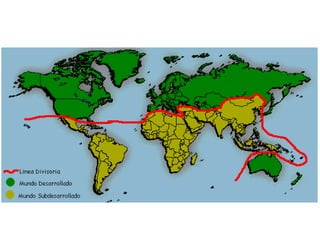
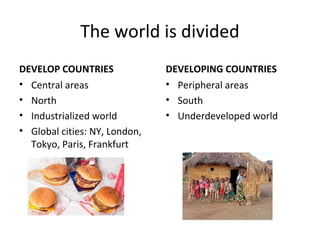
The world is divided 
DEVELOP COUNTRIES 
• Central areas 
• North 
• Industrialized world 
• Global cities: NY, London, 
Tokyo, Paris, Frankfurt 
DEVELOPING COUNTRIES 
• Peripheral areas 
• South 
• Underdeveloped world
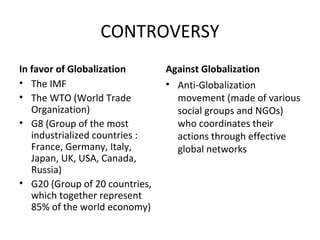
CONTROVERSY 
In favor of Globalization 
• The IMF 
• The WTO (World Trade 
Organization) 
• G8 (Group of the most 
industrialized countries : 
France, Germany, Italy, 
Japan, UK, USA, Canada, 
Russia) 
• G20 (Group of 20 countries, 
which together represent 
85% of the world economy) 
Against Globalization 
• Anti-Globalization 
movement (made of various 
social groups and NGOs) 
who coordinates their 
actions through effective 
global networks
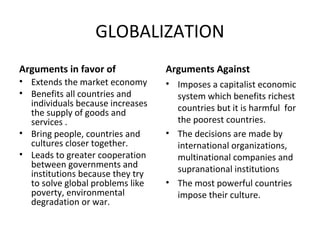
GLOBALIZATION 
Arguments in favor of 
• Extends the market economy 
• Benefits all countries and 
individuals because increases 
the supply of goods and 
services . 
• Bring people, countries and 
cultures closer together. 
• Leads to greater cooperation 
between governments and 
institutions because they try 
to solve global problems like 
poverty, environmental 
degradation or war. 
Arguments Against 
• Imposes a capitalist economic 
system which benefits richest 
countries but it is harmful for 
the poorest countries. 
• The decisions are made by 
international organizations, 
multinational companies and 
supranational institutions 
• The most powerful countries 
impose their culture.
ACTIVITIES
sources 
• Text book: geography, oxford education
sources 
• Text book: geography, oxford education

A global world

  • 1.
  • 2.
    VOCABULARY • Globalization, • Anti- globalization movement • Underdeveloped country • Migration • Central Areas • Peripheral Areas • International Monetary Fund • G8 • G20 • Enrich • Capitalist economic model • Harmful • Supranational
  • 3.
    What is Globalization? • A process of integration that affects economic, political and cultural systems across geographical boundaries. • Globalization has created a global market where people, goods, ideas, information and knowledge moves from one place to another. • It has been possible thanks to the new information and communication technologies (ICT) like Internet
  • 5.
    The world isdivided DEVELOP COUNTRIES • Central areas • North • Industrialized world • Global cities: NY, London, Tokyo, Paris, Frankfurt DEVELOPING COUNTRIES • Peripheral areas • South • Underdeveloped world
  • 6.
    CONTROVERSY In favorof Globalization • The IMF • The WTO (World Trade Organization) • G8 (Group of the most industrialized countries : France, Germany, Italy, Japan, UK, USA, Canada, Russia) • G20 (Group of 20 countries, which together represent 85% of the world economy) Against Globalization • Anti-Globalization movement (made of various social groups and NGOs) who coordinates their actions through effective global networks
  • 7.
    GLOBALIZATION Arguments infavor of • Extends the market economy • Benefits all countries and individuals because increases the supply of goods and services . • Bring people, countries and cultures closer together. • Leads to greater cooperation between governments and institutions because they try to solve global problems like poverty, environmental degradation or war. Arguments Against • Imposes a capitalist economic system which benefits richest countries but it is harmful for the poorest countries. • The decisions are made by international organizations, multinational companies and supranational institutions • The most powerful countries impose their culture.
  • 8.
  • 9.
    sources • Textbook: geography, oxford education
  • 10.
    sources • Textbook: geography, oxford education