DIASPORA VOLUNTEERING: HARNESSING THE  SKILLS OF DIASPORA COMMUNITIES FOR RURAL  DEVELOPMENT Alache Malia Ode (Ms) 11 December 2008, Brussels
Format THE WHO   - Who am I? THE WHAT  - Diaspora, volunteering and development – What do these concepts mean in the context of what we do THE WHY  – Benefits of the work we do THE HOW  – case studies and impact on rural development Conclusion  Framework for understanding Diaspora
WHO? Name – Alache Ode AFFORD VSO
WHAT? Diaspora Volunteering – maximising the benefits of intellectual and skills migration through co-development and circular migration interventions.  Mobilising Diaspora communities  to contribute to the development of their countries of heritage and their host countries through volunteering overseas and development awareness in the UK . Technical support –  in volunteer management system, M&E, fundraising and other organisational development e.g. governance structure, etc.  Financial support –  to cover volunteering and organisational costs. Advocacy –  Support network of Diaspora volunteering organisations to have a voice and to ensure that their contributions to development becomes part of mainstream development agenda
DEFINITIONS All concepts are contested and constantly evolving.  Diaspora   –  working definition (de-territoriality, homogeneous, hybridity - emotional, family or financial links, self definition) Volunteering  – not paid for work, expenses only covered, not for personal or family financial gains, etc.  Is deconstructed to become culturally relevant to our partners and by so doing enriches concept of volunteering. (Paroopkar, Retour aux sources, SEEDA, etc) Development  – within the context of the MDGs but sustainable and impactful interventions that can be monitored and evaluated
WHY? A DIASPORA PROGRAMME TWO VIEWS OF DIASPORA  (Chris Smart, former Chair, VSO Canada)– One etymology - from Greek –  Dia  (because of) +  Speiro  (scattered) – emphasising negative-the victimization of those who suffer 'scattering' or 'dispersal'-the loss of origin, place, homes.  Diaspora refers to historic, modern, voluntary, involuntary, young, old,(generational), communities. Our work with the Diaspora is located within the Positive view of assessing the Diaspora – (Chris Smart) “Greek  sporadikos,  through Latin sporadicus'  from the same base as spora, the 'act of sowing', and the obvious connection to 'spore' and so 'seed'.     This latter trace suggests that the individuals of modern diasporas can be valued as seeds within the societies that provide new 'homes (places to grow), seeds that germinate new perspectives on our connected world, ideas and values for the reappraisal of the fundamentals that under gird human society”. 
Starting premises -  Migration, in particular of skills and intellectual capital is inevitable, because like financial flows, it is a function of global labour market forces. The Diaspora have always contribute to the development of their countries of origin through investments and remittances but also through their skills, entrepreneurial activities and support for democratisation and human rights promotion. This positive impact of migration should also receive  increased recognition by all actors of international development co-operation -  Research is yet to paint a clear picture on the benefits of knowledge transfer so we hope the programme will produce evidence WHY 2
WHY 3 - Volunteering adds 25 billion pound annually to UK economy – Gordon Brown - Volunteering  is one of the ways in which people of all nationalities, religions, socio-.  economic  backgrounds and ages can  contribute  to positive change.  ... www.unv.org/ Each year 129,000 people give 3.8 million hours of their time as volunteers through CSV. www.csv.org.uk CSV (Community Service Volunteers)
Transforming rural communities through sustainable business development support and services – AFFORD CASE STUDY FACT 1 - Some of the fastest growing Asian economies have been Diaspora-led FACT 2 – volunteering is about community action African Foundation for Development – est 1995.  Started the SEEDA programme in 2006 JOB CREATION  through supporting Small, micro, medium enterprises and entrepreneurs (Sierra Leone,Ghana) Business training, mentoring and surgeries for over hundreds of small businesses through volunteers Business services  Partnerships with Universities, local & national government departments Negotiated new financial packages with banks for small businesses Supporting cooperatives Establishing business centres Access to international markets initiatives for business products
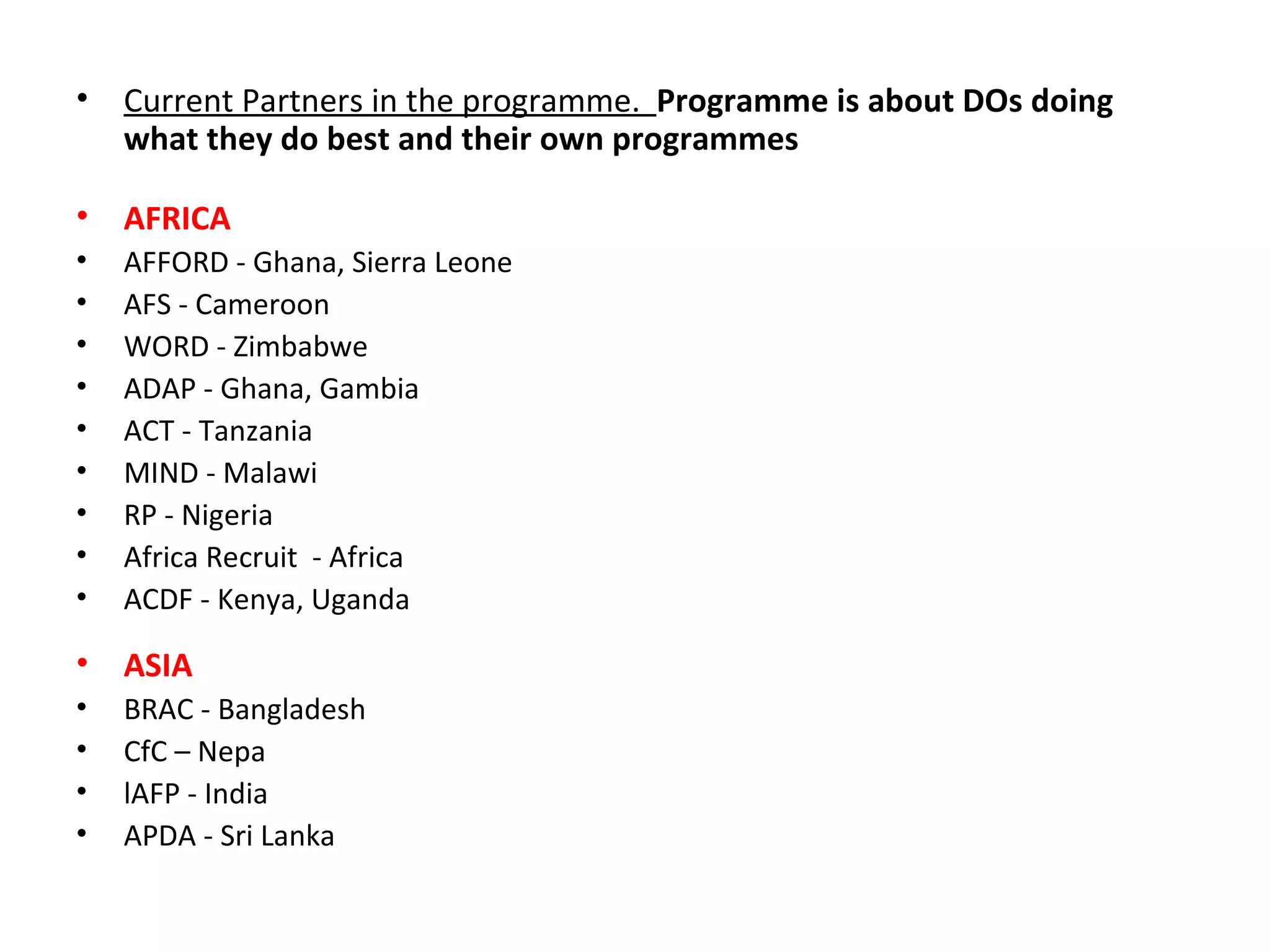
Current Partners in the programme.  Programme is about DOs doing what they do best and their own programmes AFRICA AFFORD - Ghana, Sierra Leone AFS - Cameroon WORD - Zimbabwe ADAP - Ghana, Gambia ACT - Tanzania MIND - Malawi RP - Nigeria Africa Recruit  - Africa ACDF -  Kenya, Uganda ASIA BRAC - Bangladesh  CfC – Nepa l AFP  - India APDA - Sri Lanka
FOOD FOR THOUGHT FOR POLICY MAKERS Push & Pull factors  - the major causes of skilled migration, there is a need to incorporate migration of skills and its many facets, into thinking and planning both for host and origin countries The ‘diaspora option’  – developing concrete, realistic and practical policies that draw upon Diaspora, their knowledge, skills and financial resources to stimulate, harness and consolidate development. Migration management  and migration regimes – policy coherence, use of admission policies and establishing best practices that facilitate greater development impact but mindful  that Diaspora or migrants are not “units of labour”.  There are intersecting race, class and gender vulnerabilities of migrants, as well as the discrimination and social marginalization and poverty. –  Civil Society Forum,UNHLDM
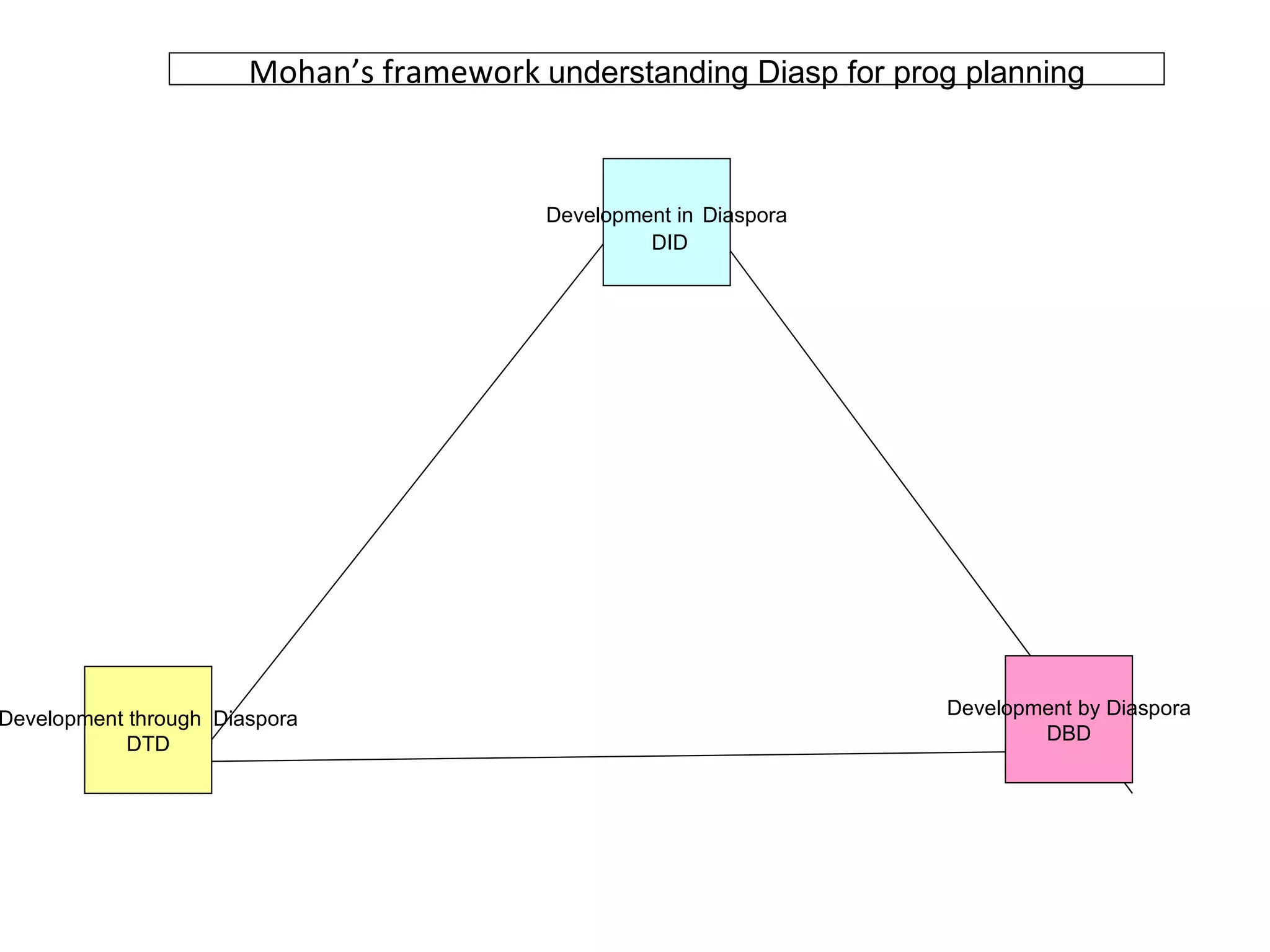
Development in   Diaspora DID Development by Diaspora DBD Development through  Diaspora DTD Mohan’s framework  understanding Diasp for prog planning

Diaspora volunteering: Harnessing the skills of Diaspora communities for rural development

  • 1.
    DIASPORA VOLUNTEERING: HARNESSINGTHE SKILLS OF DIASPORA COMMUNITIES FOR RURAL DEVELOPMENT Alache Malia Ode (Ms) 11 December 2008, Brussels
  • 2.
    Format THE WHO - Who am I? THE WHAT - Diaspora, volunteering and development – What do these concepts mean in the context of what we do THE WHY – Benefits of the work we do THE HOW – case studies and impact on rural development Conclusion Framework for understanding Diaspora
  • 3.
    WHO? Name –Alache Ode AFFORD VSO
  • 4.
    WHAT? Diaspora Volunteering– maximising the benefits of intellectual and skills migration through co-development and circular migration interventions. Mobilising Diaspora communities to contribute to the development of their countries of heritage and their host countries through volunteering overseas and development awareness in the UK . Technical support – in volunteer management system, M&E, fundraising and other organisational development e.g. governance structure, etc. Financial support – to cover volunteering and organisational costs. Advocacy – Support network of Diaspora volunteering organisations to have a voice and to ensure that their contributions to development becomes part of mainstream development agenda
  • 5.
    DEFINITIONS All conceptsare contested and constantly evolving. Diaspora – working definition (de-territoriality, homogeneous, hybridity - emotional, family or financial links, self definition) Volunteering – not paid for work, expenses only covered, not for personal or family financial gains, etc. Is deconstructed to become culturally relevant to our partners and by so doing enriches concept of volunteering. (Paroopkar, Retour aux sources, SEEDA, etc) Development – within the context of the MDGs but sustainable and impactful interventions that can be monitored and evaluated
  • 6.
    WHY? A DIASPORAPROGRAMME TWO VIEWS OF DIASPORA (Chris Smart, former Chair, VSO Canada)– One etymology - from Greek – Dia (because of) + Speiro (scattered) – emphasising negative-the victimization of those who suffer 'scattering' or 'dispersal'-the loss of origin, place, homes. Diaspora refers to historic, modern, voluntary, involuntary, young, old,(generational), communities. Our work with the Diaspora is located within the Positive view of assessing the Diaspora – (Chris Smart) “Greek sporadikos, through Latin sporadicus'  from the same base as spora, the 'act of sowing', and the obvious connection to 'spore' and so 'seed'.    This latter trace suggests that the individuals of modern diasporas can be valued as seeds within the societies that provide new 'homes (places to grow), seeds that germinate new perspectives on our connected world, ideas and values for the reappraisal of the fundamentals that under gird human society”. 
  • 7.
    Starting premises - Migration, in particular of skills and intellectual capital is inevitable, because like financial flows, it is a function of global labour market forces. The Diaspora have always contribute to the development of their countries of origin through investments and remittances but also through their skills, entrepreneurial activities and support for democratisation and human rights promotion. This positive impact of migration should also receive increased recognition by all actors of international development co-operation - Research is yet to paint a clear picture on the benefits of knowledge transfer so we hope the programme will produce evidence WHY 2
  • 8.
    WHY 3 -Volunteering adds 25 billion pound annually to UK economy – Gordon Brown - Volunteering is one of the ways in which people of all nationalities, religions, socio-. economic backgrounds and ages can contribute to positive change. ... www.unv.org/ Each year 129,000 people give 3.8 million hours of their time as volunteers through CSV. www.csv.org.uk CSV (Community Service Volunteers)
  • 9.
    Transforming rural communitiesthrough sustainable business development support and services – AFFORD CASE STUDY FACT 1 - Some of the fastest growing Asian economies have been Diaspora-led FACT 2 – volunteering is about community action African Foundation for Development – est 1995. Started the SEEDA programme in 2006 JOB CREATION through supporting Small, micro, medium enterprises and entrepreneurs (Sierra Leone,Ghana) Business training, mentoring and surgeries for over hundreds of small businesses through volunteers Business services Partnerships with Universities, local & national government departments Negotiated new financial packages with banks for small businesses Supporting cooperatives Establishing business centres Access to international markets initiatives for business products
  • 10.
    Current Partners inthe programme. Programme is about DOs doing what they do best and their own programmes AFRICA AFFORD - Ghana, Sierra Leone AFS - Cameroon WORD - Zimbabwe ADAP - Ghana, Gambia ACT - Tanzania MIND - Malawi RP - Nigeria Africa Recruit - Africa ACDF - Kenya, Uganda ASIA BRAC - Bangladesh CfC – Nepa l AFP - India APDA - Sri Lanka
  • 11.
    FOOD FOR THOUGHTFOR POLICY MAKERS Push & Pull factors - the major causes of skilled migration, there is a need to incorporate migration of skills and its many facets, into thinking and planning both for host and origin countries The ‘diaspora option’ – developing concrete, realistic and practical policies that draw upon Diaspora, their knowledge, skills and financial resources to stimulate, harness and consolidate development. Migration management and migration regimes – policy coherence, use of admission policies and establishing best practices that facilitate greater development impact but mindful that Diaspora or migrants are not “units of labour”. There are intersecting race, class and gender vulnerabilities of migrants, as well as the discrimination and social marginalization and poverty. – Civil Society Forum,UNHLDM
  • 12.
    Development in Diaspora DID Development by Diaspora DBD Development through Diaspora DTD Mohan’s framework understanding Diasp for prog planning