A Case Report of Facial Trauma
Gholamreza
Ghamatzadeh M.D
Boardman of Anesthesiology
Poursina Hospital - Rasht
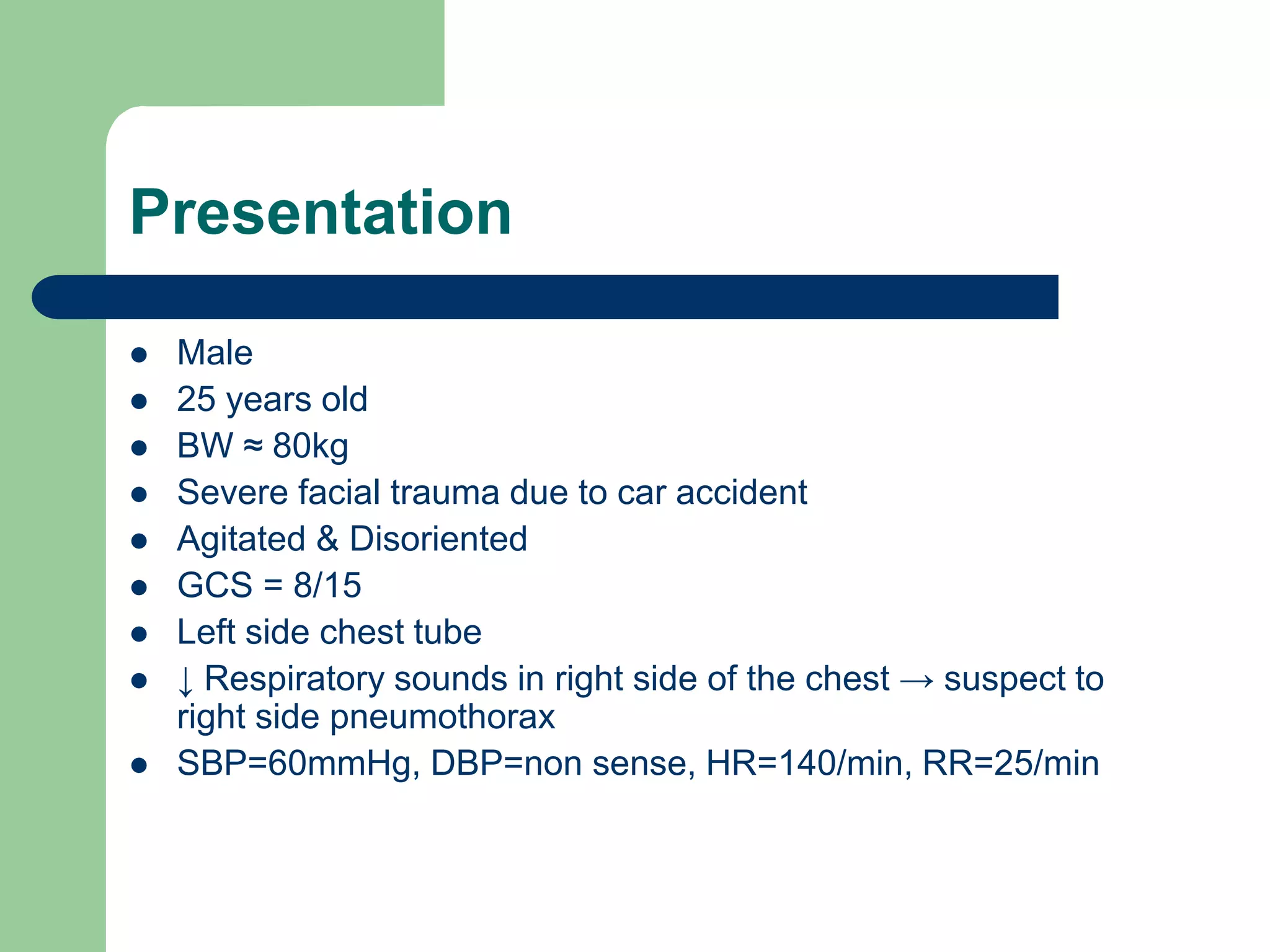
Presentation










Male
25 years old
BW ≈ 80kg
Severe facial trauma due to car accident
Agitated & Disoriented
GCS = 8/15
Left side chest tube
↓ Respiratory sounds in right side of the chest → suspect to
right side pneumothorax
SBP=60mmHg, DBP=non sense, HR=140/min, RR=25/min
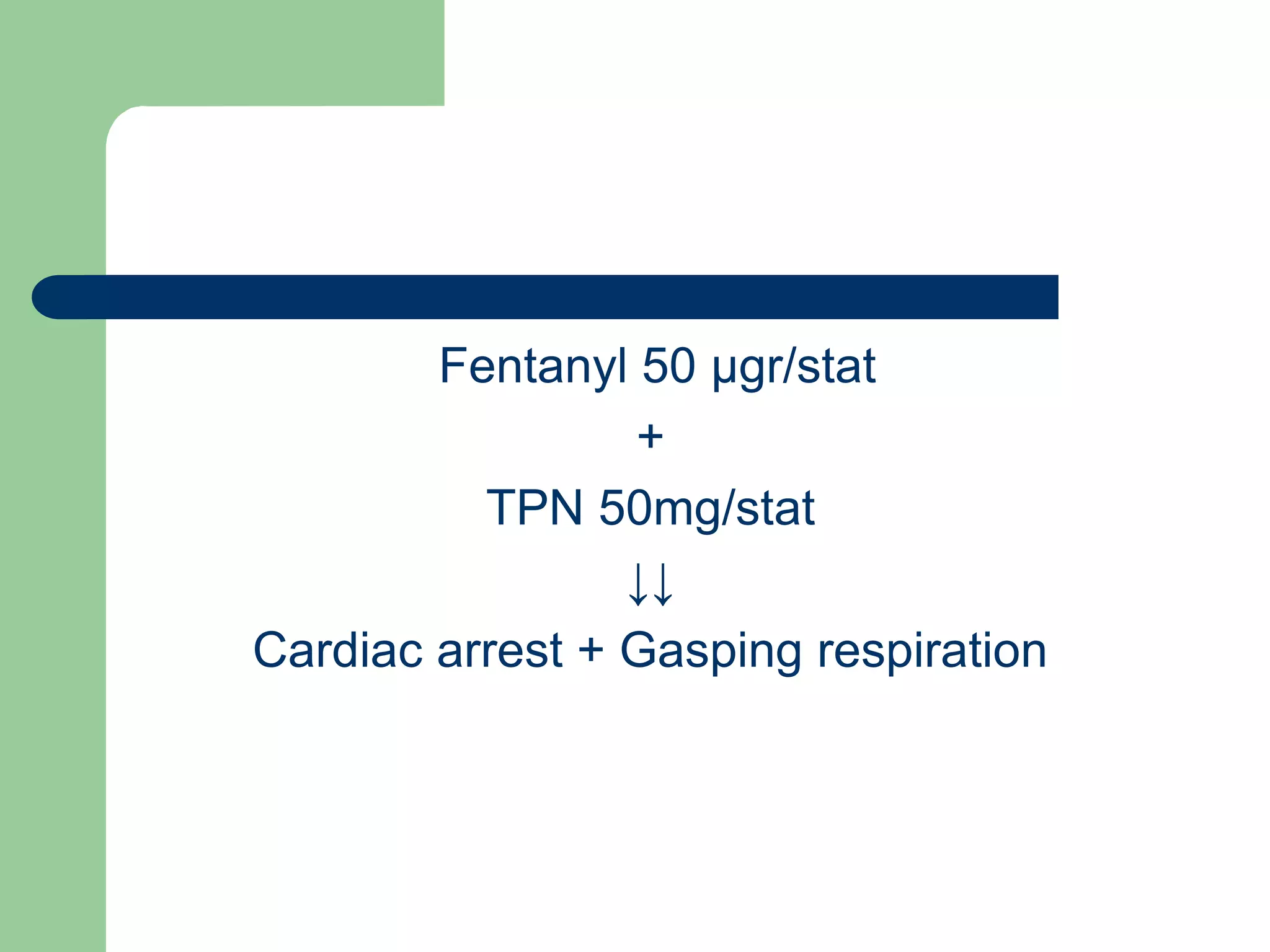
Fentanyl 50 µgr/stat
+
TPN 50mg/stat
↓↓
Cardiac arrest + Gasping respiration
CPR 1
Direct Laryngoscopy + Oral intubation
↓
O2 100%
↓
External Cardiac Massage
↓
Adrenaline 100µg (3 times)
↓
CPR 2
Bicarbonate Na 50 meq
↓soon
Adrenaline 1mg (3 times)
↓↓
Bradycardia
↓
Atropine 0.5mg (2 times)
↓↓
VT
CPR 3
VT
↓↓
Lidocaine 100mg
↓↓
Sinus Tachycardia
(BP=140/70, PR=143/min)
Maintenance of Anesthesia






Fentanyl 50µg
Cisatracurium 4mg
O2 100%
Ventilation rate= 12/min
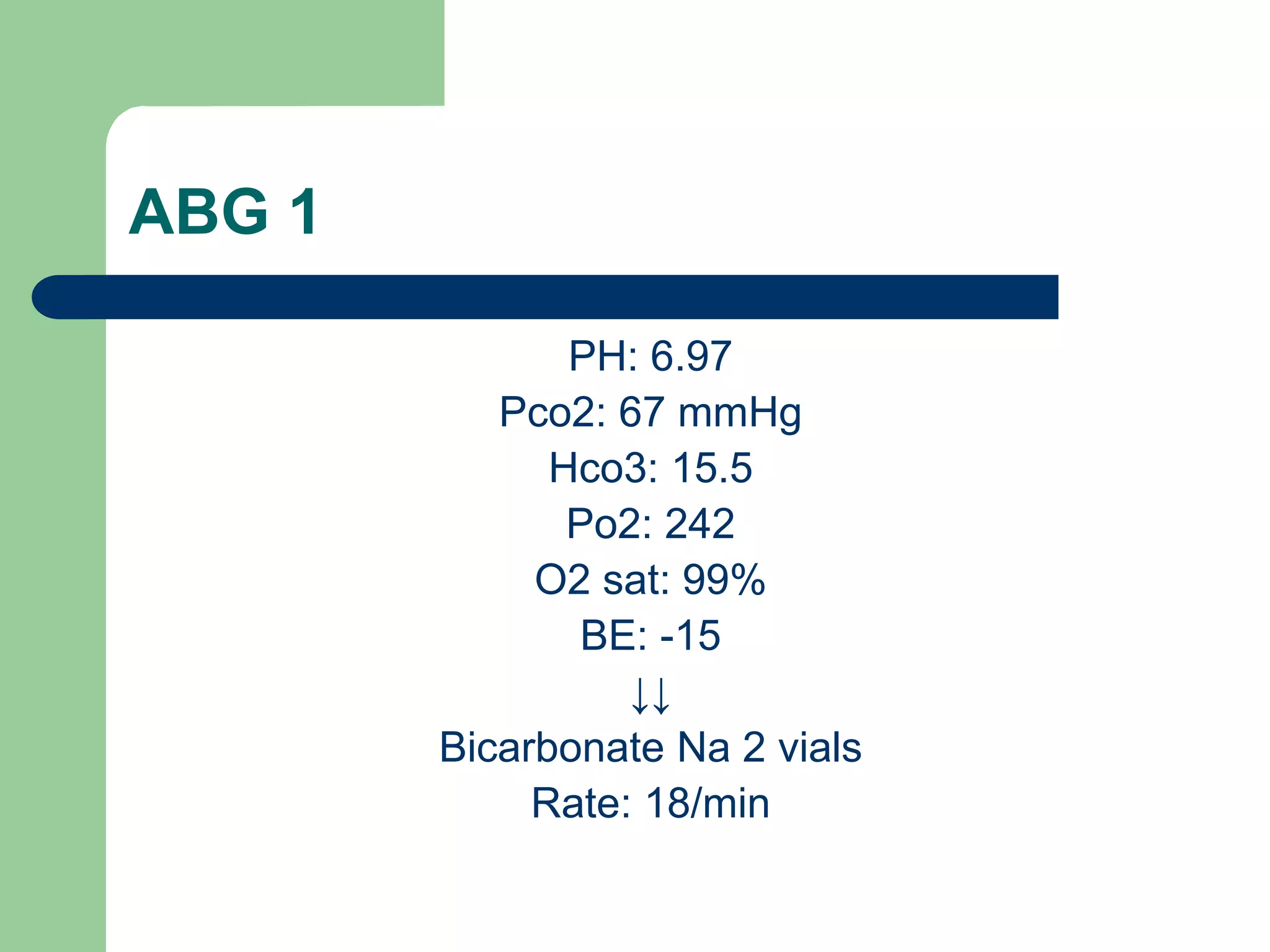
ABG 1
PH: 6.97
Pco2: 67 mmHg
Hco3: 15.5
Po2: 242
O2 sat: 99%
BE: -15
↓↓
Bicarbonate Na 2 vials
Rate: 18/min
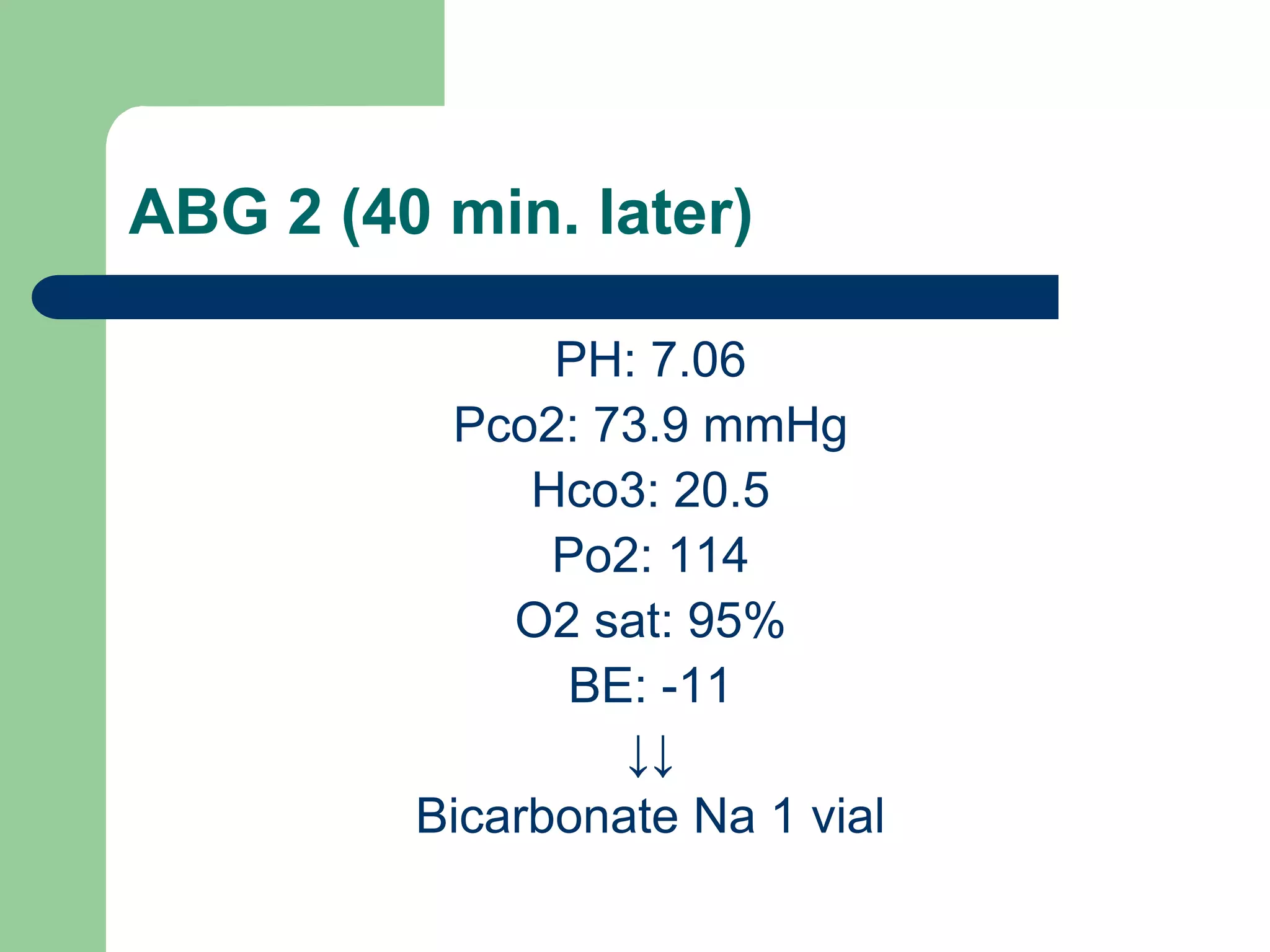
ABG 2 (40 min. later)
PH: 7.06
Pco2: 73.9 mmHg
Hco3: 20.5
Po2: 114
O2 sat: 95%
BE: -11
↓↓
Bicarbonate Na 1 vial
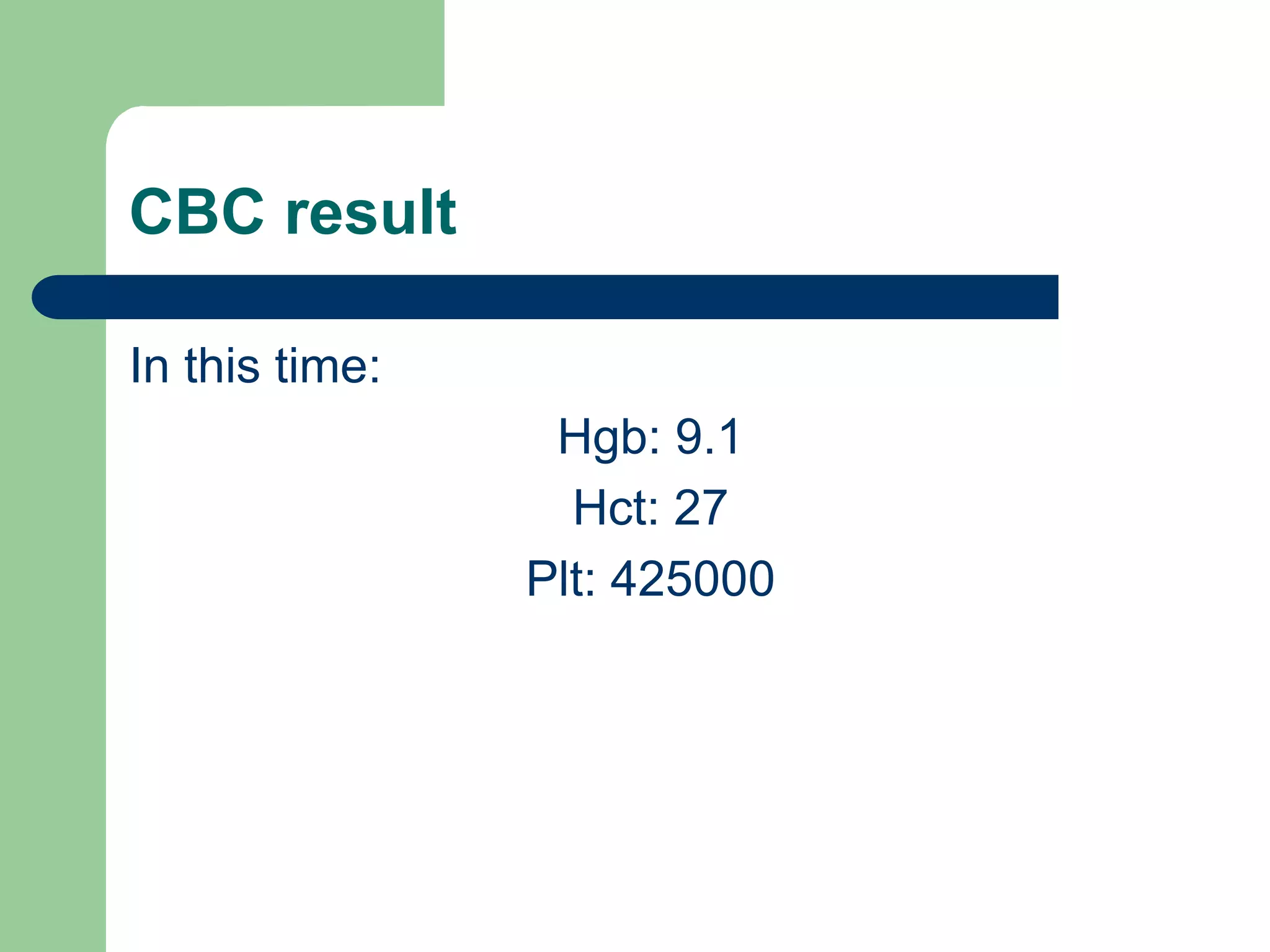
CBC result
In this time:
Hgb: 9.1
Hct: 27
Plt: 425000
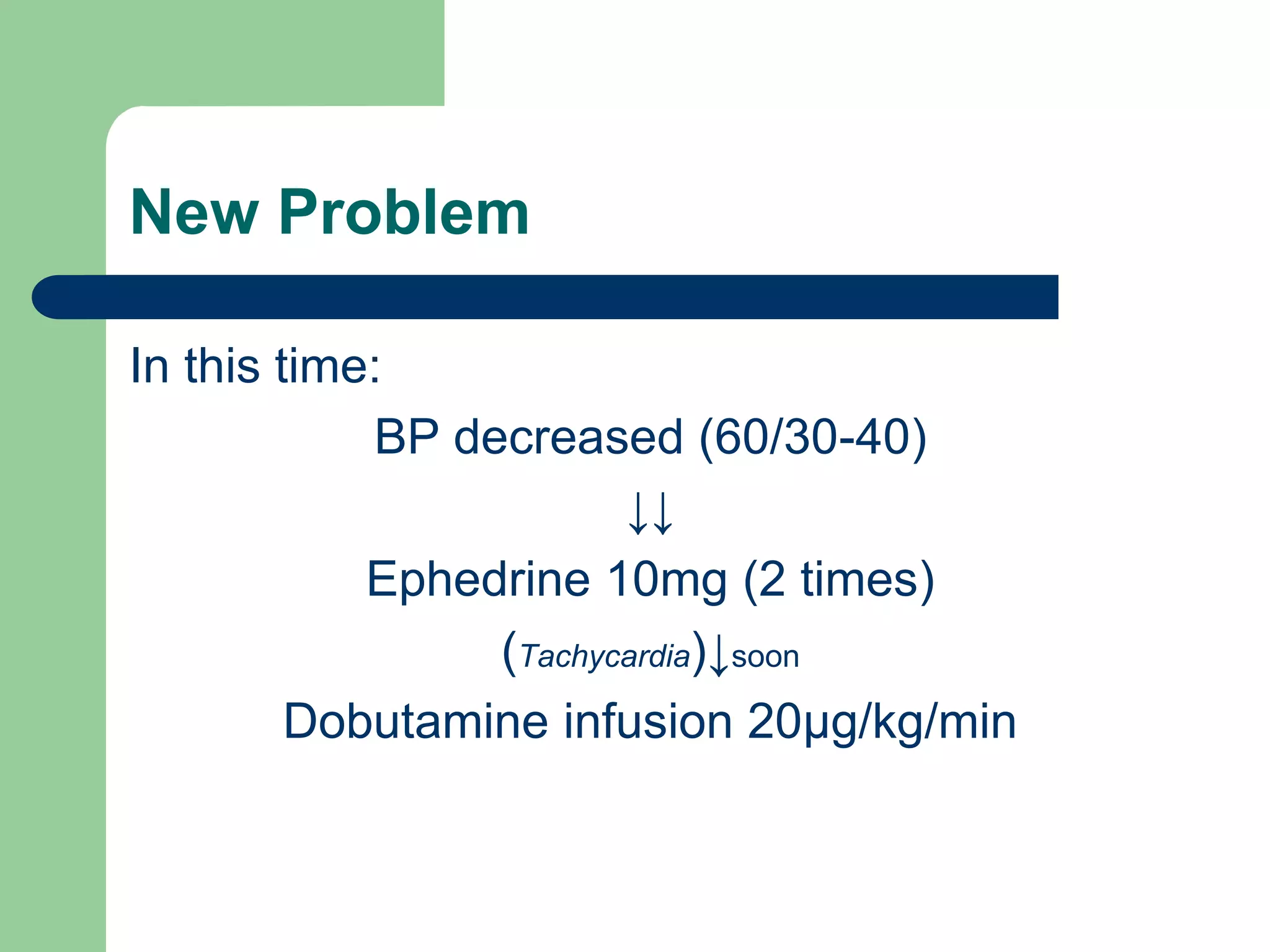
New Problem
In this time:
BP decreased (60/30-40)
↓↓
Ephedrine 10mg (2 times)
(Tachycardia)↓soon
Dobutamine infusion 20µg/kg/min
Another Problem
Because of ↓respiratory sounds:
CXR
↓↓
Right side Pneumothorax
↓
Surgical Consultation for Chest Tube insertion
↓
Chest Tube
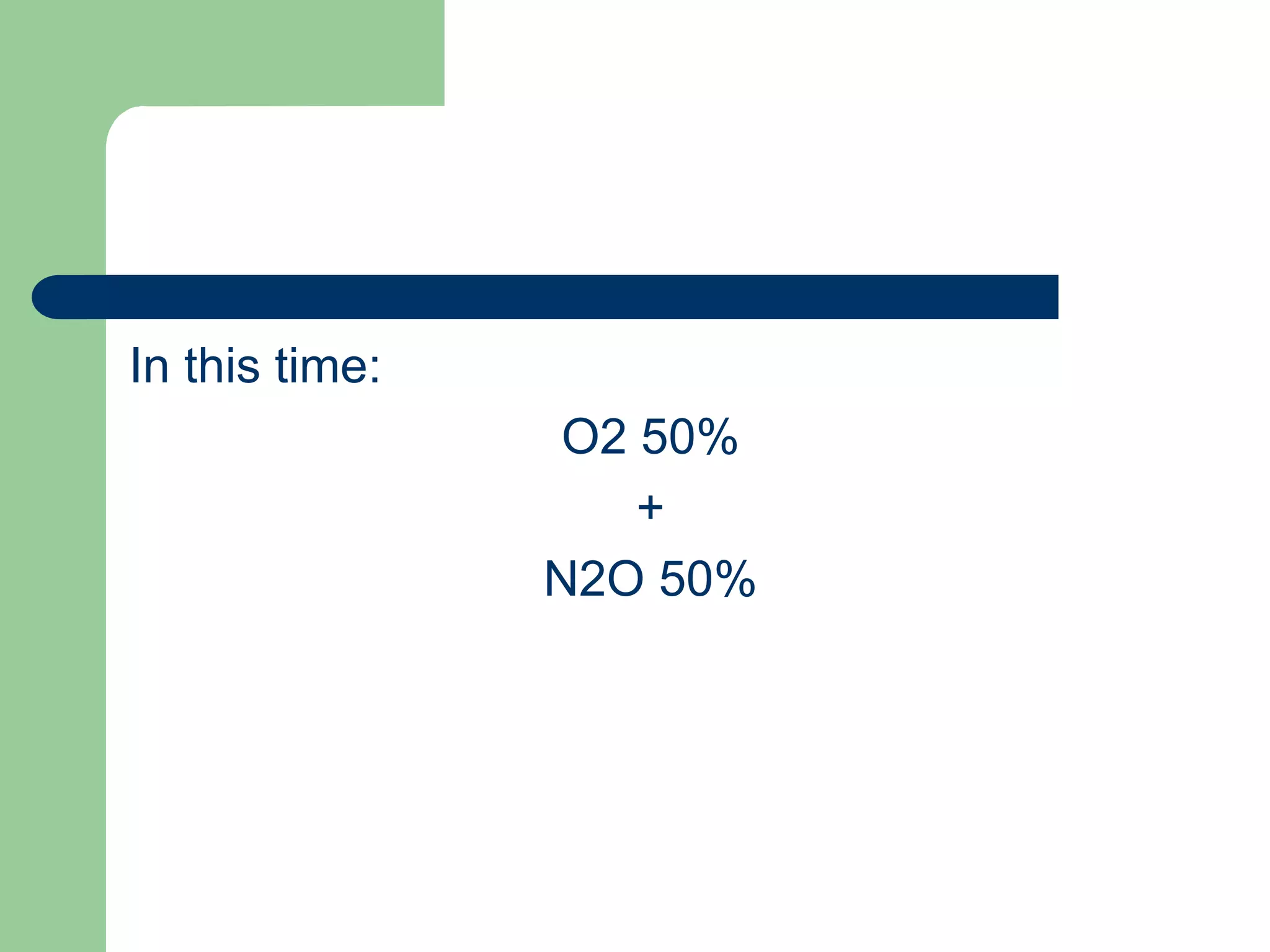
In this time:
O2 50%
+
N2O 50%
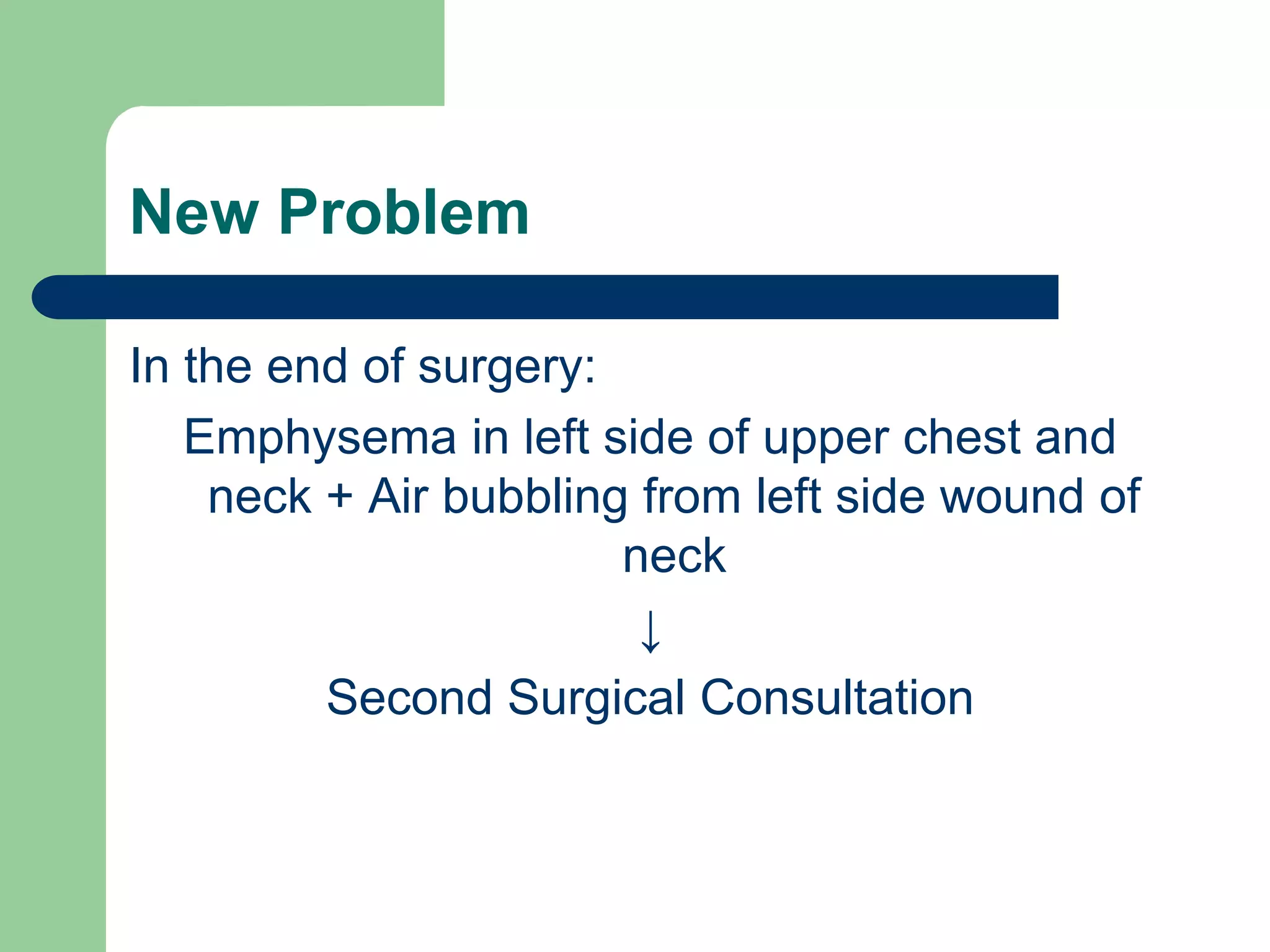
New Problem
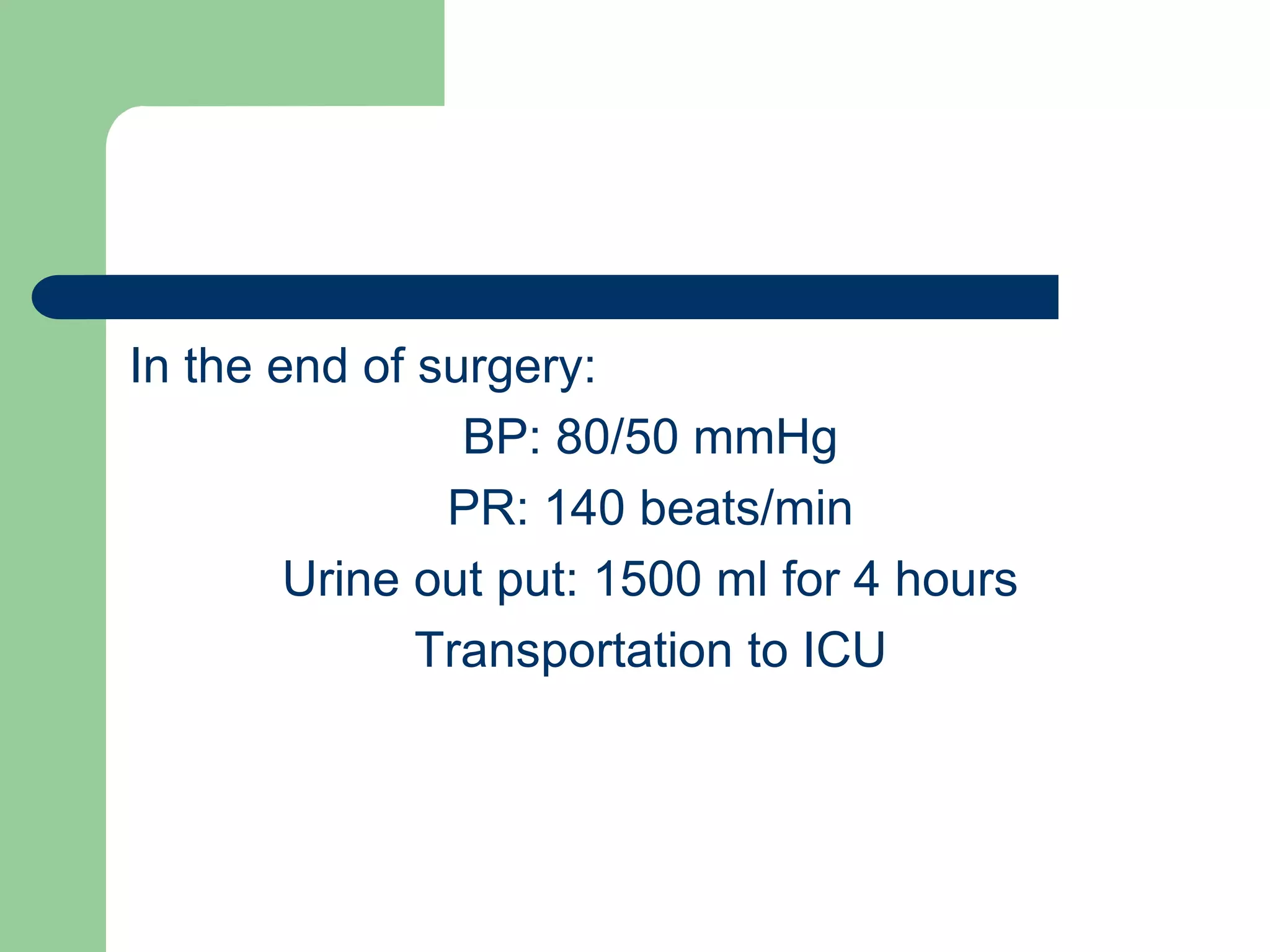
In the end of surgery:
Emphysema in left side of upper chest and
neck + Air bubbling from left side wound of
neck
↓
Second Surgical Consultation
In the end of surgery:
BP: 80/50 mmHg
PR: 140 beats/min
Urine out put: 1500 ml for 4 hours
Transportation to ICU
Received Fluids



Packed cell: 3 units
N/S: 3000ml
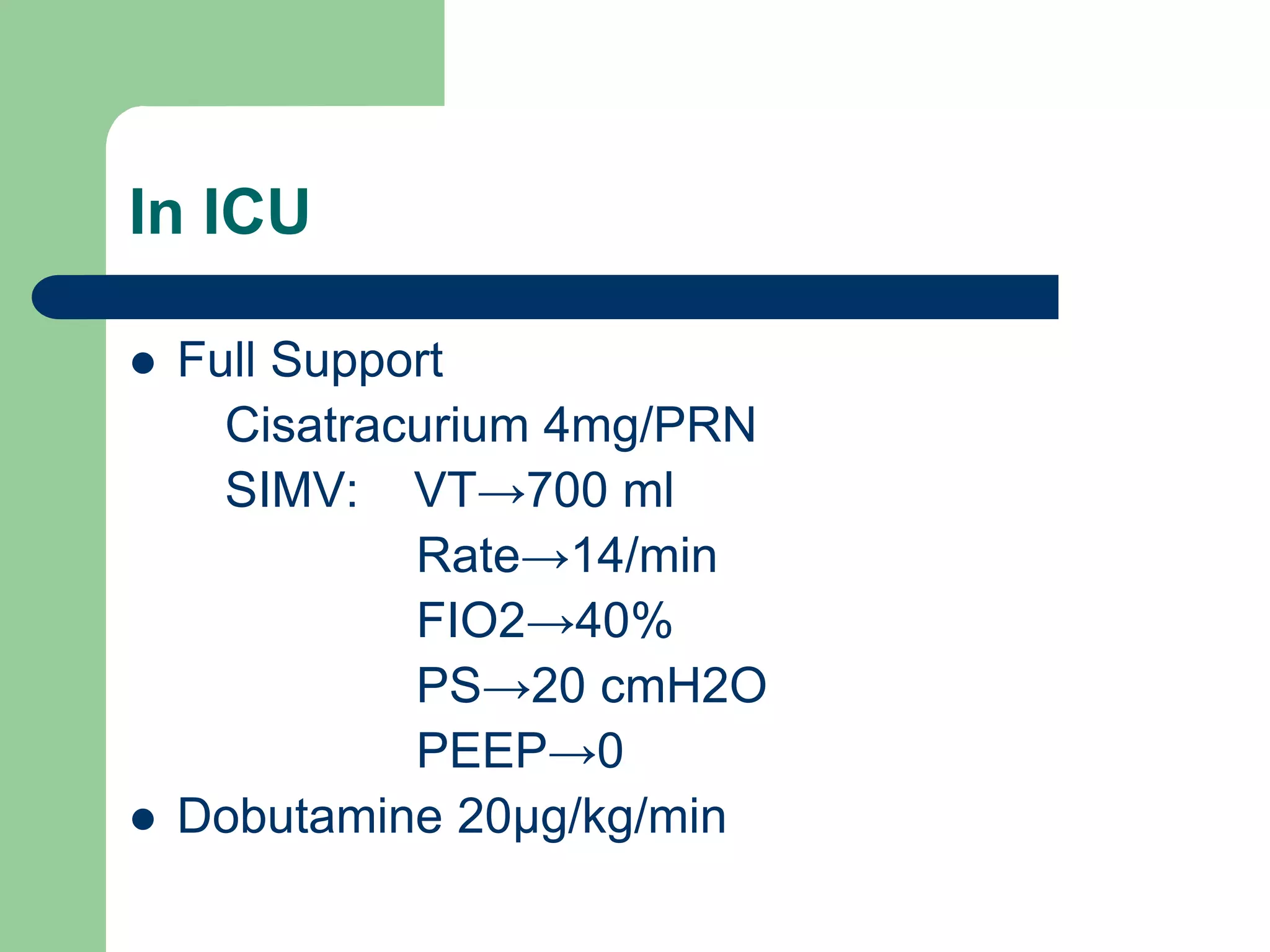
In ICU




Full Support
Cisatracurium 4mg/PRN
SIMV: VT→700 ml
Rate→14/min
FIO2→40%
PS→20 cmH2O
PEEP→0
Dobutamine 20µg/kg/min
ABG 3 (60 min. later in ICU)
PH: 7.31
Pco2: 37.2 mmHg
Hco3: 18.2
Po2: 227 mmHg
O2 sat: 99.7%
BE: -6.8
↓↓
FIO2 = 30%
In ICU
BP=160/80, PR=140/min
↓↓
Dobutamine 10µg/kg/min
30 min. later:
BP=140/80, PR=140/min
↓↓
Dobutamine 5µg/kg/min
45 min. later:
BP=130/80, PR=136/min
Conclusion
Compromised Airway 1




Unlike difficult intubations in normal airways,
patients with compromised airways must not
be given GA or muscle relaxants unless
control of airway is ensured.
Attempt at awake intubation should not be
done “blindly” in patients with uncertain
pathologic processes.
Compromised Airway 2
Safe techniques for managing compromised airways
include:
1.
Awake direct laryngoscopy after careful topical
laryngeal block
2.
Spontaneous breathing using an inhaled anesthetic
3.
Awake fiberoptic evaluation of the airway
4.
Tracheostomy under local anesthesia
5.
If necessary, lifesaving TTJV through a cricothyroid
puncture with a large-caliber(14-gauge) needle, or an
emergency cricothyroidotomy.
Facial Injury







The most common fractures involve the mandible
and midface (Le fort I,II,III)
A first priority is to secure the airway by placing the
patient in the lateral position, pulling the mandible or
maxilla forward and clearing the oropharynx of blood
or loose teeth.
If this action is not successful, endotracheal
intubation or emergency tracheostomy should be
considered.
These patients may also have head trauma or
fractures of the cervical spine.
Contraindications of Nasal Intubation






Coagulopathy
Severe intranasal disorder
Basilar skull fracture
Presence of a CSF leak
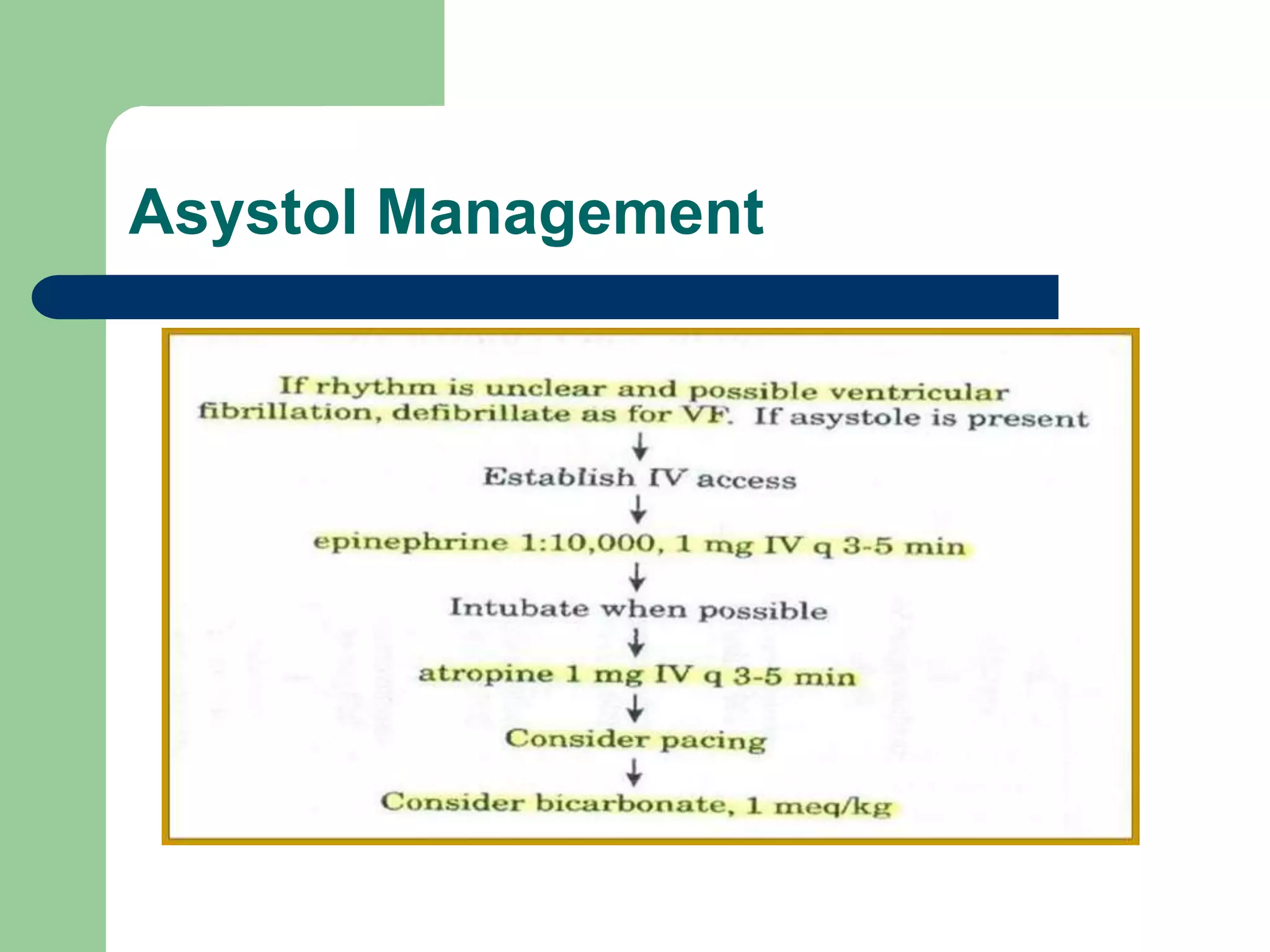
Asystol Management
Thanks

A case report (facial trauma)

  • 1.
    A Case Reportof Facial Trauma Gholamreza Ghamatzadeh M.D Boardman of Anesthesiology Poursina Hospital - Rasht
  • 2.
    Presentation          Male 25 years old BW≈ 80kg Severe facial trauma due to car accident Agitated & Disoriented GCS = 8/15 Left side chest tube ↓ Respiratory sounds in right side of the chest → suspect to right side pneumothorax SBP=60mmHg, DBP=non sense, HR=140/min, RR=25/min
  • 9.
    Fentanyl 50 µgr/stat + TPN50mg/stat ↓↓ Cardiac arrest + Gasping respiration
  • 10.
    CPR 1 Direct Laryngoscopy+ Oral intubation ↓ O2 100% ↓ External Cardiac Massage ↓ Adrenaline 100µg (3 times) ↓
  • 11.
    CPR 2 Bicarbonate Na50 meq ↓soon Adrenaline 1mg (3 times) ↓↓ Bradycardia ↓ Atropine 0.5mg (2 times) ↓↓ VT
  • 12.
    CPR 3 VT ↓↓ Lidocaine 100mg ↓↓ SinusTachycardia (BP=140/70, PR=143/min)
  • 15.
    Maintenance of Anesthesia     Fentanyl50µg Cisatracurium 4mg O2 100% Ventilation rate= 12/min
  • 16.
    ABG 1 PH: 6.97 Pco2:67 mmHg Hco3: 15.5 Po2: 242 O2 sat: 99% BE: -15 ↓↓ Bicarbonate Na 2 vials Rate: 18/min
  • 17.
    ABG 2 (40min. later) PH: 7.06 Pco2: 73.9 mmHg Hco3: 20.5 Po2: 114 O2 sat: 95% BE: -11 ↓↓ Bicarbonate Na 1 vial
  • 18.
    CBC result In thistime: Hgb: 9.1 Hct: 27 Plt: 425000
  • 19.
    New Problem In thistime: BP decreased (60/30-40) ↓↓ Ephedrine 10mg (2 times) (Tachycardia)↓soon Dobutamine infusion 20µg/kg/min
  • 20.
    Another Problem Because of↓respiratory sounds: CXR ↓↓ Right side Pneumothorax ↓ Surgical Consultation for Chest Tube insertion ↓ Chest Tube
  • 23.
    In this time: O250% + N2O 50%
  • 24.
    New Problem In theend of surgery: Emphysema in left side of upper chest and neck + Air bubbling from left side wound of neck ↓ Second Surgical Consultation
  • 26.
    In the endof surgery: BP: 80/50 mmHg PR: 140 beats/min Urine out put: 1500 ml for 4 hours Transportation to ICU
  • 27.
  • 29.
    In ICU   Full Support Cisatracurium4mg/PRN SIMV: VT→700 ml Rate→14/min FIO2→40% PS→20 cmH2O PEEP→0 Dobutamine 20µg/kg/min
  • 30.
    ABG 3 (60min. later in ICU) PH: 7.31 Pco2: 37.2 mmHg Hco3: 18.2 Po2: 227 mmHg O2 sat: 99.7% BE: -6.8 ↓↓ FIO2 = 30%
  • 31.
    In ICU BP=160/80, PR=140/min ↓↓ Dobutamine10µg/kg/min 30 min. later: BP=140/80, PR=140/min ↓↓ Dobutamine 5µg/kg/min 45 min. later: BP=130/80, PR=136/min
  • 32.
  • 33.
    Compromised Airway 1   Unlikedifficult intubations in normal airways, patients with compromised airways must not be given GA or muscle relaxants unless control of airway is ensured. Attempt at awake intubation should not be done “blindly” in patients with uncertain pathologic processes.
  • 34.
    Compromised Airway 2 Safetechniques for managing compromised airways include: 1. Awake direct laryngoscopy after careful topical laryngeal block 2. Spontaneous breathing using an inhaled anesthetic 3. Awake fiberoptic evaluation of the airway 4. Tracheostomy under local anesthesia 5. If necessary, lifesaving TTJV through a cricothyroid puncture with a large-caliber(14-gauge) needle, or an emergency cricothyroidotomy.
  • 35.
    Facial Injury     The mostcommon fractures involve the mandible and midface (Le fort I,II,III) A first priority is to secure the airway by placing the patient in the lateral position, pulling the mandible or maxilla forward and clearing the oropharynx of blood or loose teeth. If this action is not successful, endotracheal intubation or emergency tracheostomy should be considered. These patients may also have head trauma or fractures of the cervical spine.
  • 36.
    Contraindications of NasalIntubation     Coagulopathy Severe intranasal disorder Basilar skull fracture Presence of a CSF leak
  • 37.
  • 40.