SERIES AND PARALLEL COMBINATION:
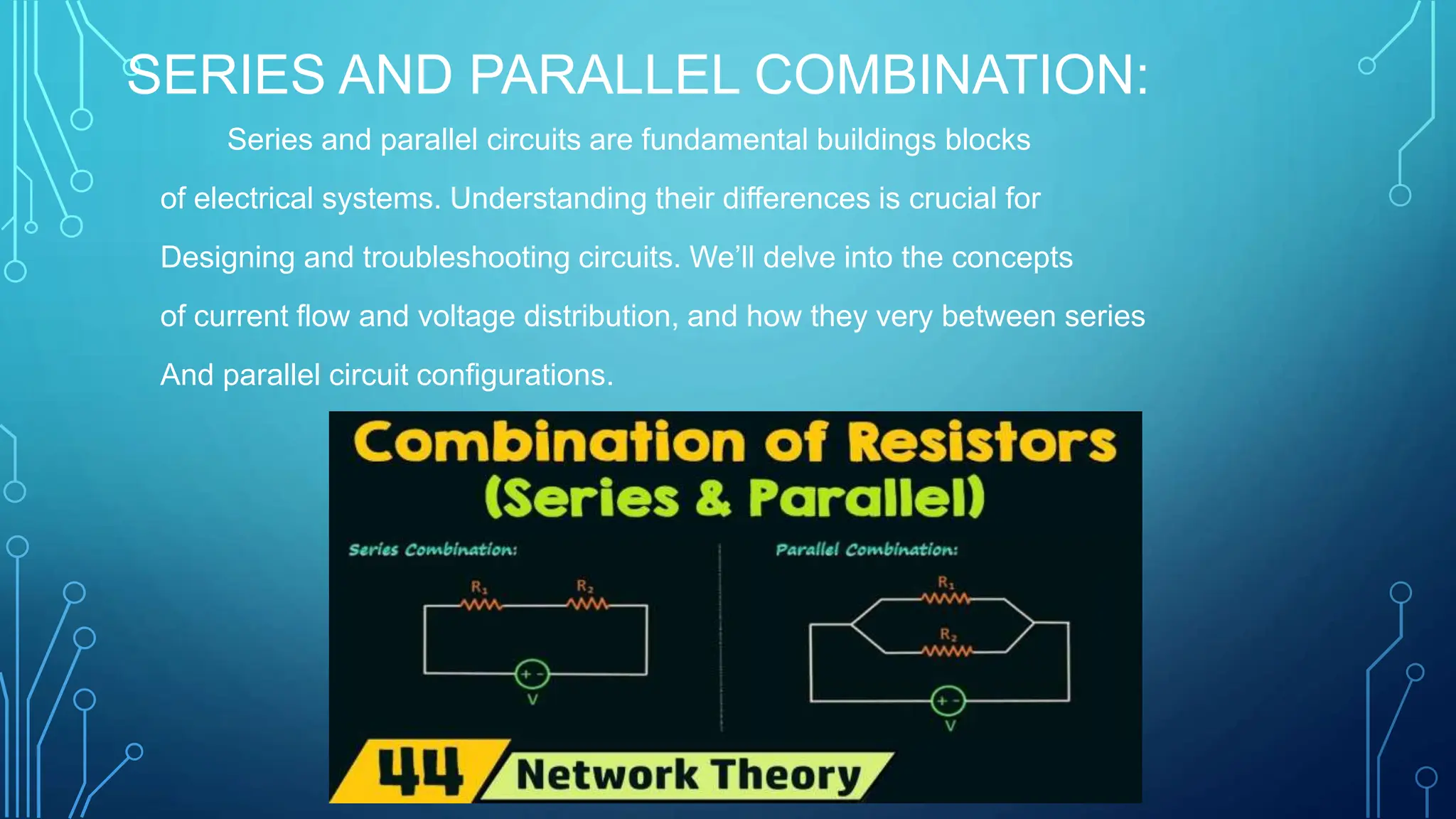
Series and parallel circuits are fundamental buildings blocks
of electrical systems. Understanding their differences is crucial for
Designing and troubleshooting circuits. We’ll delve into the concepts
of current flow and voltage distribution, and how they very between series
And parallel circuit configurations.
CALCULATING RESISTANCE IN SERIES:
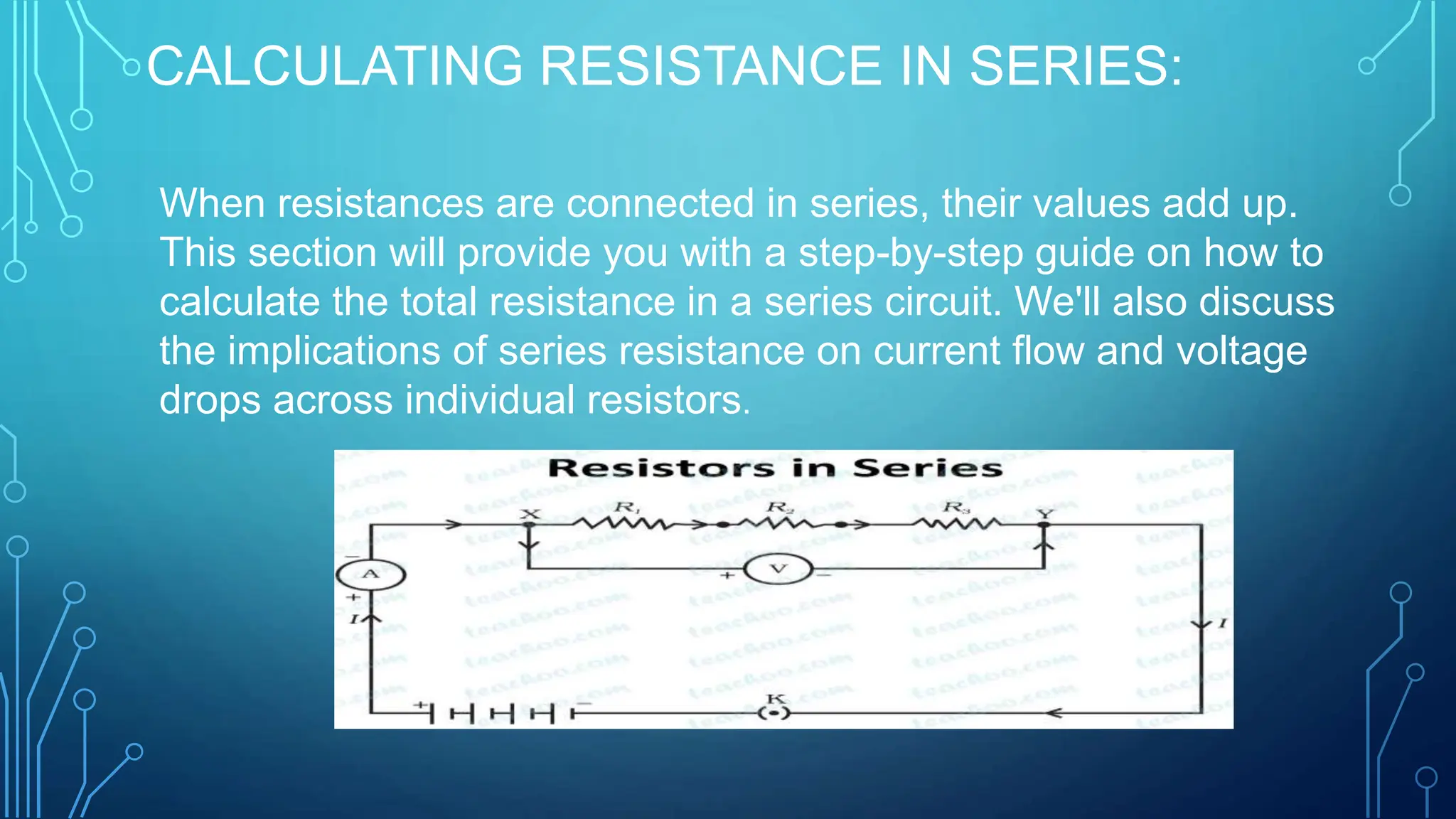
When resistances are connected in series, their values add up.
This section will provide you with a step-by-step guide on how to
calculate the total resistance in a series circuit. We'll also discuss
the implications of series resistance on current flow and voltage
drops across individual resistors.
CALCULATING RESISTANCE IN PARALLEL:
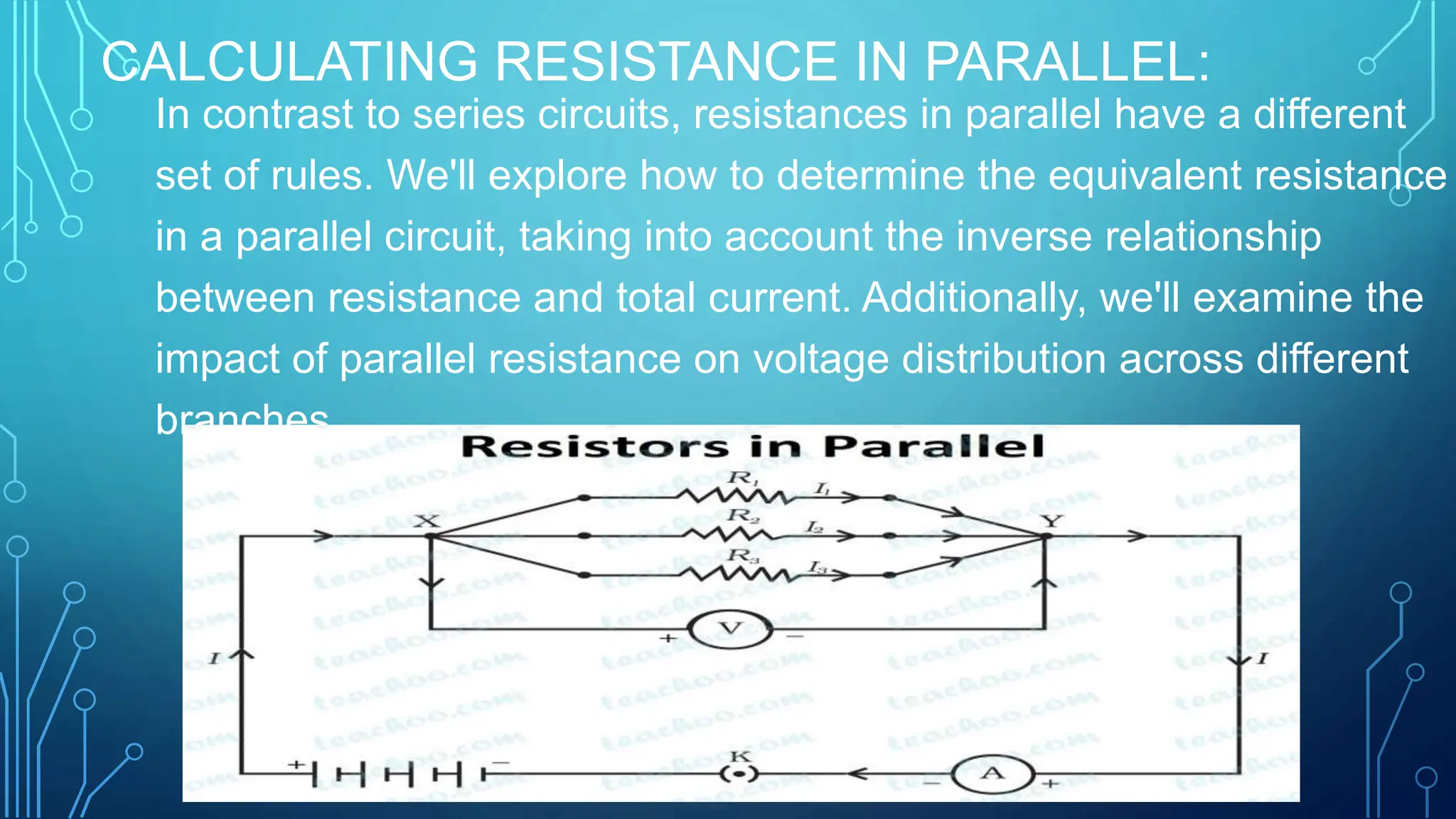
In contrast to series circuits, resistances in parallel have a different
set of rules. We'll explore how to determine the equivalent resistance
in a parallel circuit, taking into account the inverse relationship
between resistance and total current. Additionally, we'll examine the
impact of parallel resistance on voltage distribution across different
branches.
EQUIVALENT RESISTANCE OF SERIES CIRCUITS
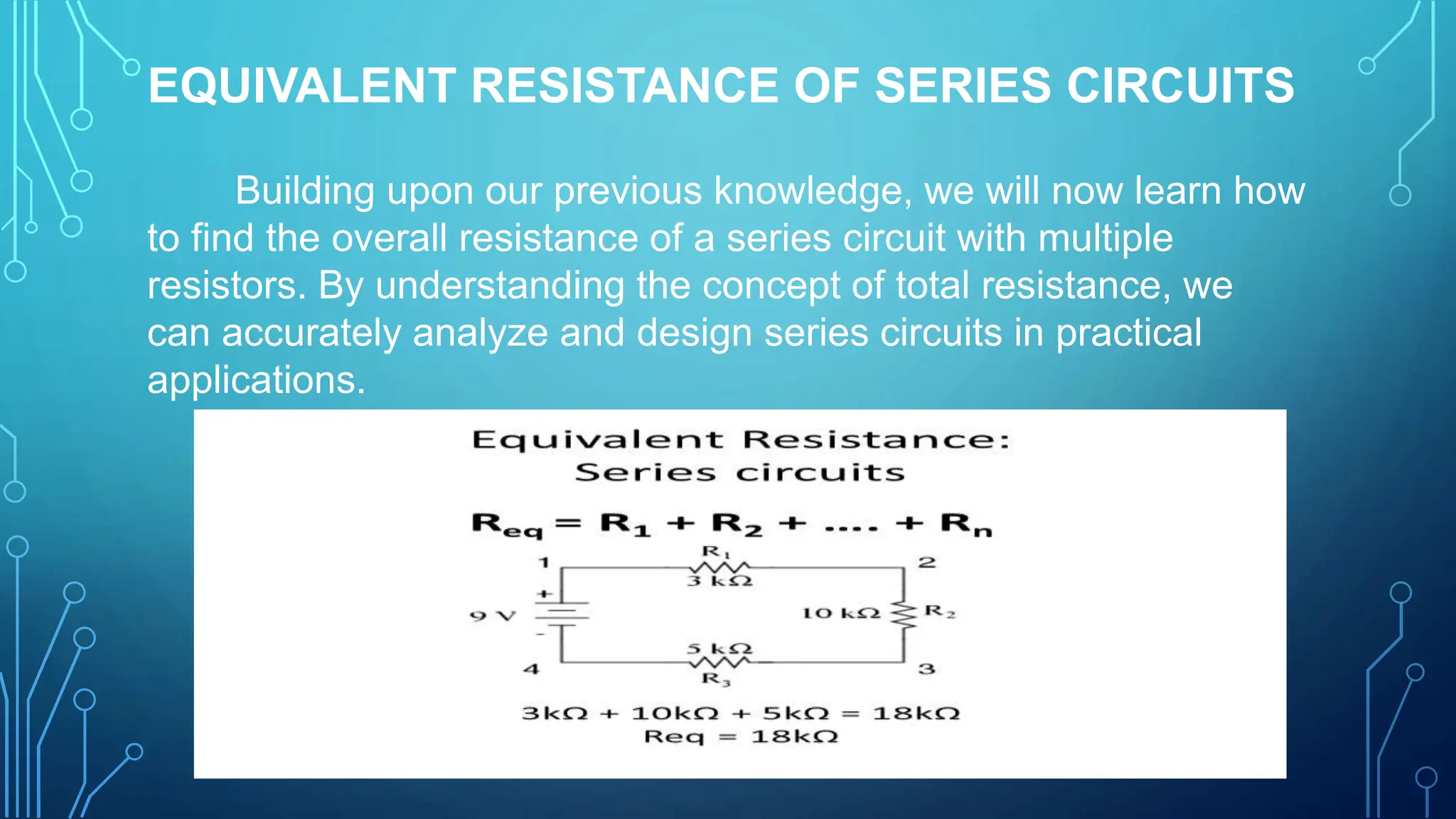
Building upon our previous knowledge, we will now learn how
to find the overall resistance of a series circuit with multiple
resistors. By understanding the concept of total resistance, we
can accurately analyze and design series circuits in practical
applications.
EQUIVALENT RESISTANCE OF PARALLEL
CIRCUITS
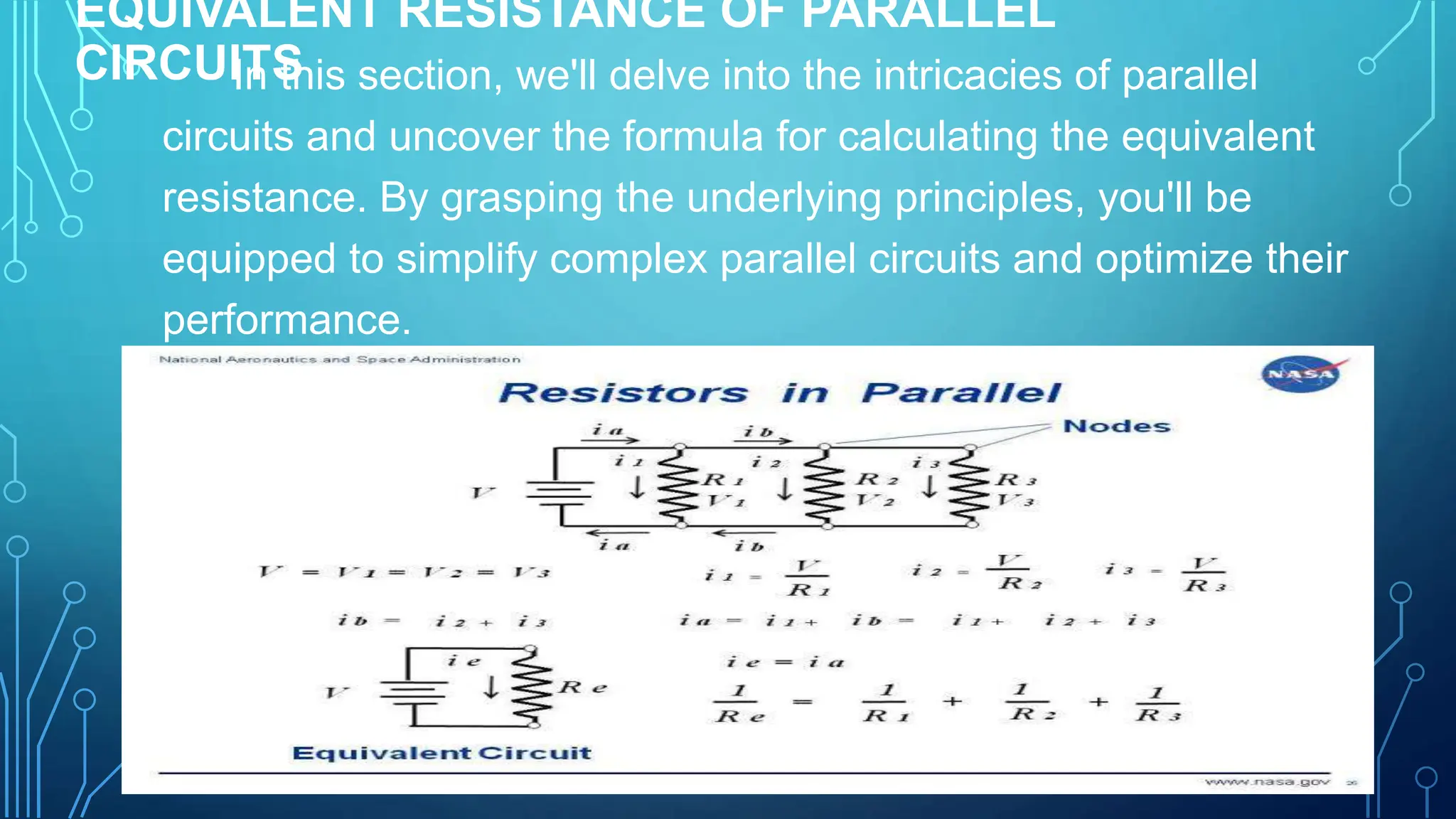
In this section, we'll delve into the intricacies of parallel
circuits and uncover the formula for calculating the equivalent
resistance. By grasping the underlying principles, you'll be
equipped to simplify complex parallel circuits and optimize their
performance.
SOLVING PROBLEMS WITH SERIES-PARALLEL
CIRCUITS
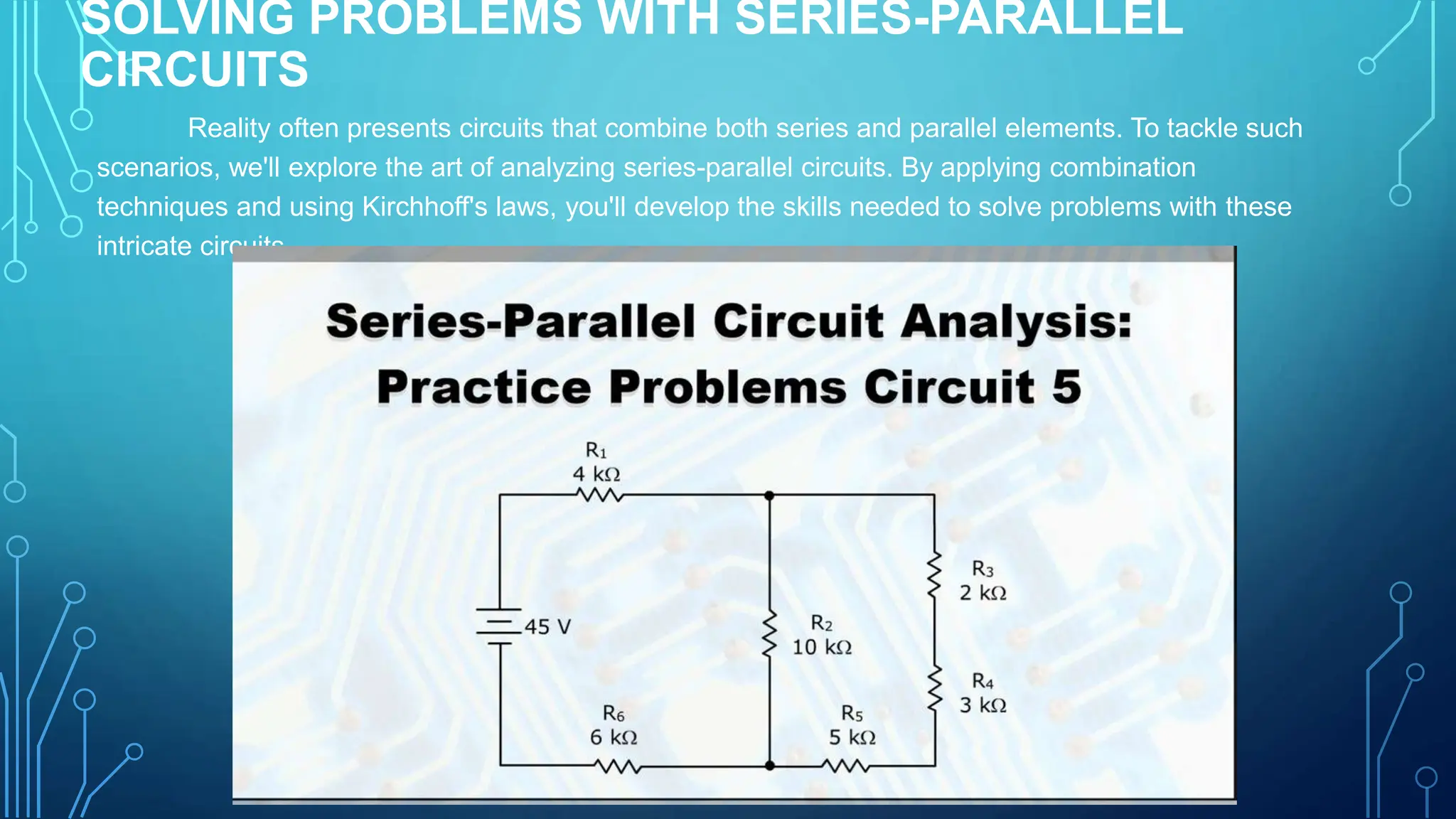
Reality often presents circuits that combine both series and parallel elements. To tackle such
scenarios, we'll explore the art of analyzing series-parallel circuits. By applying combination
techniques and using Kirchhoff's laws, you'll develop the skills needed to solve problems with these
intricate circuits.
REAL-WORLD APPLICATIONS OF SERIES-
PARALLEL CIRCUITS
Series-parallel circuits are ubiquitous in everyday life. From home wiring to
industrial machinery, understanding their applications is essential. We'll examine
practical examples, such as power distribution systems, electronic devices, and
even renewable energy systems, to showcase the relevance and impact of series-
parallel circuits in our modern world.
series paralle combination of cirucuits with diagram

series paralle combination of cirucuits with diagram

  • 1.
    SERIES AND PARALLELCOMBINATION: Series and parallel circuits are fundamental buildings blocks of electrical systems. Understanding their differences is crucial for Designing and troubleshooting circuits. We’ll delve into the concepts of current flow and voltage distribution, and how they very between series And parallel circuit configurations.
  • 2.
    CALCULATING RESISTANCE INSERIES: When resistances are connected in series, their values add up. This section will provide you with a step-by-step guide on how to calculate the total resistance in a series circuit. We'll also discuss the implications of series resistance on current flow and voltage drops across individual resistors.
  • 3.
    CALCULATING RESISTANCE INPARALLEL: In contrast to series circuits, resistances in parallel have a different set of rules. We'll explore how to determine the equivalent resistance in a parallel circuit, taking into account the inverse relationship between resistance and total current. Additionally, we'll examine the impact of parallel resistance on voltage distribution across different branches.
  • 4.
    EQUIVALENT RESISTANCE OFSERIES CIRCUITS Building upon our previous knowledge, we will now learn how to find the overall resistance of a series circuit with multiple resistors. By understanding the concept of total resistance, we can accurately analyze and design series circuits in practical applications.
  • 5.
    EQUIVALENT RESISTANCE OFPARALLEL CIRCUITS In this section, we'll delve into the intricacies of parallel circuits and uncover the formula for calculating the equivalent resistance. By grasping the underlying principles, you'll be equipped to simplify complex parallel circuits and optimize their performance.
  • 6.
    SOLVING PROBLEMS WITHSERIES-PARALLEL CIRCUITS Reality often presents circuits that combine both series and parallel elements. To tackle such scenarios, we'll explore the art of analyzing series-parallel circuits. By applying combination techniques and using Kirchhoff's laws, you'll develop the skills needed to solve problems with these intricate circuits.
  • 7.
    REAL-WORLD APPLICATIONS OFSERIES- PARALLEL CIRCUITS Series-parallel circuits are ubiquitous in everyday life. From home wiring to industrial machinery, understanding their applications is essential. We'll examine practical examples, such as power distribution systems, electronic devices, and even renewable energy systems, to showcase the relevance and impact of series- parallel circuits in our modern world.