U.S. Constitution – Major
Principles
 As the supreme law of the land, you might
  expect the Constitution to be long.
 When the founders drafted the Constitution
  in 1787, it was only around 7000 words &
  could be read in about ½ hour.
 They purposefully didn’t include many
  details about how the new government
  would work
 The new Constitution was built on 6 major
  principles
Popular Sovereignty
 “We the People” are the opening words
  of the Constitution
 All political power in the U.S. resides in
  the people
 People are the source of government
  power
 Government can only govern with the
  consent of the governed
Limited Government
 Government is not all powerful
 Government may only do the things that
  the people have given it the power to do
 In the Bill of Rights the founders
  strengthened the concept of limited
  government power over the people with
  the words, “Congress shall make no
  law”
Separation of Power
 The Constitution distributes the powers
  of government among 3 equal branches
 Legislative – Tasked with creation of
  laws (Article 1)
 Executive – Tasked with enforcement of
  the laws (Article 2)
 Judicial – Tasked with interpretation of
  the laws (Article 3)
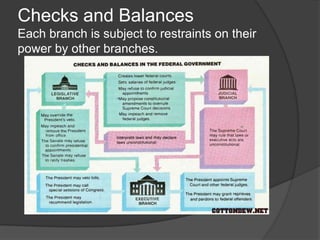
Checks and Balances
Each branch is subject to restraints on their
power by other branches.
Judicial Review
 The  power of judicial review is the
  power of courts to determine
  whether what government does is
  in accord with what the constitution
  provides.
 That means that any laws that the
  government creates cannot break
  any of our constitutional rights such
  as freedom of speech.
Federalism
 The  principle of federalism is the
  division of power among a central
  government and several regional
  governments.
 By spreading the powers throughout
  the different states the Framers of
  the constitution built a
  stronger, more effective national
  government while preserving the
  existing states and the concept of
  local self government.

6 major principles constitution

  • 1.
    U.S. Constitution –Major Principles  As the supreme law of the land, you might expect the Constitution to be long.  When the founders drafted the Constitution in 1787, it was only around 7000 words & could be read in about ½ hour.  They purposefully didn’t include many details about how the new government would work  The new Constitution was built on 6 major principles
  • 2.
    Popular Sovereignty  “Wethe People” are the opening words of the Constitution  All political power in the U.S. resides in the people  People are the source of government power  Government can only govern with the consent of the governed
  • 3.
    Limited Government  Governmentis not all powerful  Government may only do the things that the people have given it the power to do  In the Bill of Rights the founders strengthened the concept of limited government power over the people with the words, “Congress shall make no law”
  • 4.
    Separation of Power The Constitution distributes the powers of government among 3 equal branches  Legislative – Tasked with creation of laws (Article 1)  Executive – Tasked with enforcement of the laws (Article 2)  Judicial – Tasked with interpretation of the laws (Article 3)
  • 5.
    Checks and Balances Eachbranch is subject to restraints on their power by other branches.
  • 6.
    Judicial Review  The power of judicial review is the power of courts to determine whether what government does is in accord with what the constitution provides.  That means that any laws that the government creates cannot break any of our constitutional rights such as freedom of speech.
  • 7.
    Federalism  The principle of federalism is the division of power among a central government and several regional governments.  By spreading the powers throughout the different states the Framers of the constitution built a stronger, more effective national government while preserving the existing states and the concept of local self government.