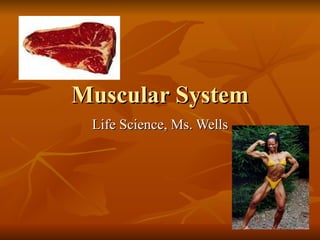
Muscular System Life Science, Ms. Wells
Function: Movement Work with skeletal system to move body contract = shorten/tighten Muscles PULL bones, never push muscle cells are called muscle fibers Often work in pairs/groups for one movement
Function: Body Temperature HOMEOSTASIS: Muscle contraction releases heat to keep your body the right temperature Shivers: fast muscle contractions to raise body temperature
Function: Maintain Posture Most muscles always hold a little bit of contraction/tension Tension = “muscle tone” Keep you standing up straight (posture)
Types of Muscle Skeletal Muscle Smooth Muscle Cardiac Muscle Skeletal = you control it (called VOLUNTARY) Smooth/Cardiac = you don’t control it (called INVOLUNTARY)
Skeletal Muscle Attached to your skeleton Voluntary Structure =  bundles of fibers Examples: quadriceps, biceps, triceps, abs, etc.
Skeletal Muscle: Bundles of Fibers
Smooth Muscle Inside organs Involuntary (automatic movements) Shorter fibers than skeletal muscle Example: pushes food through stomach and intestines
Cardiac Muscle Fibers have branched shape (like tree branches) that form webs and layers Make up the heart <3
Cardiac Muscle: Branched Fibers
Muscle Types: Fiber Shapes
Tendons Attach muscles to bones White skinny part of muscle “Gristle”
Muscles and Exercise Soreness DURING exercise: chemicals build-up as you use up energy (lactic acid) Soreness AFTER exercise: tears and damage to muscle fibers Healing and replacement of damaged cells = muscle growth
Skeletal Muscle Development Skeletal muscles “mature” and strengthen as you grow up Increase coordination Babies can’t lift head (neck muscles still weak)
THE END

Muscular System

  • 1.
    Muscular System LifeScience, Ms. Wells
  • 2.
    Function: Movement Workwith skeletal system to move body contract = shorten/tighten Muscles PULL bones, never push muscle cells are called muscle fibers Often work in pairs/groups for one movement
  • 3.
    Function: Body TemperatureHOMEOSTASIS: Muscle contraction releases heat to keep your body the right temperature Shivers: fast muscle contractions to raise body temperature
  • 4.
    Function: Maintain PostureMost muscles always hold a little bit of contraction/tension Tension = “muscle tone” Keep you standing up straight (posture)
  • 5.
    Types of MuscleSkeletal Muscle Smooth Muscle Cardiac Muscle Skeletal = you control it (called VOLUNTARY) Smooth/Cardiac = you don’t control it (called INVOLUNTARY)
  • 6.
    Skeletal Muscle Attachedto your skeleton Voluntary Structure = bundles of fibers Examples: quadriceps, biceps, triceps, abs, etc.
  • 7.
  • 8.
    Smooth Muscle Insideorgans Involuntary (automatic movements) Shorter fibers than skeletal muscle Example: pushes food through stomach and intestines
  • 9.
    Cardiac Muscle Fibershave branched shape (like tree branches) that form webs and layers Make up the heart <3
  • 10.
  • 11.
  • 12.
    Tendons Attach musclesto bones White skinny part of muscle “Gristle”
  • 13.
    Muscles and ExerciseSoreness DURING exercise: chemicals build-up as you use up energy (lactic acid) Soreness AFTER exercise: tears and damage to muscle fibers Healing and replacement of damaged cells = muscle growth
  • 14.
    Skeletal Muscle DevelopmentSkeletal muscles “mature” and strengthen as you grow up Increase coordination Babies can’t lift head (neck muscles still weak)
  • 15.