Prepared by: Conrad M. Morales
MAED-Biological Science
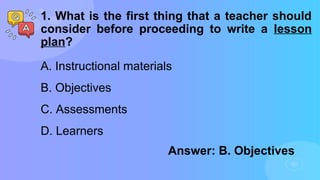
1. What is the first thing that a teacher should
consider before proceeding to write a lesson
plan?
A. Instructional materials
B. Objectives
C. Assessments
D. Learners
Answer: B. Objectives
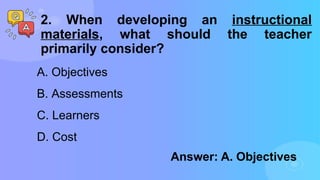
2. When developing an instructional
materials, what should the teacher
primarily consider?
A. Objectives
B. Assessments
C. Learners
D. Cost
Answer: A. Objectives
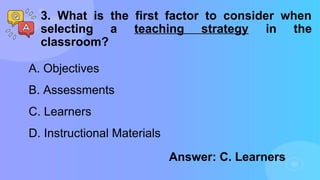
3. What is the first factor to consider when
selecting a teaching strategy in the
classroom?
A. Objectives
B. Assessments
C. Learners
D. Instructional Materials
Answer: C. Learners
ELEMENTS OF LESSON PLAN IN SCIENCE
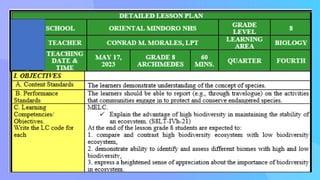
I. Objectives
a. Content Standards
b. Performance Standards
c. Learning Competencies/Objectives
ELEMENTS OF LESSON PLAN IN SCIENCE
II. Content
ELEMENTS OF LESSON PLAN IN SCIENCE
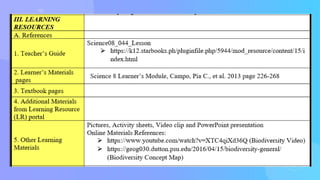
III. Learning Resources
A. References
1. Teacher’s Guide
2. Learner’s Materials page
3. Textbook pages
4. Additional Materials from Learning Resources (LR) portal
5. Other Learning Materials
ELEMENTS OF LESSON PLAN IN SCIENCE
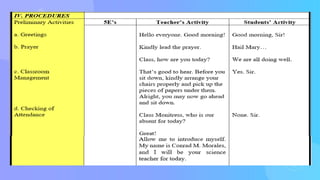
IV. Procedures
1. Preliminary Activities
a. Greetings
b. Prayer
c. Classroom Management
d. Class Attendance
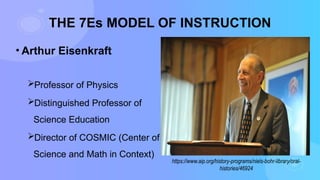
THE 7Es MODEL OF INSTRUCTION
• Arthur Eisenkraft
Professor of Physics
Distinguished Professor of
Science Education
Director of COSMIC (Center of
Science and Math in Context)
https://www.aip.org/history-programs/niels-bohr-library/oral-
histories/46924
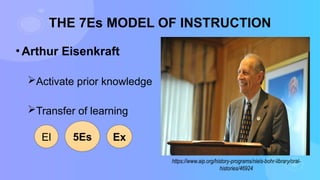
THE 7Es MODEL OF INSTRUCTION
• Arthur Eisenkraft
Activate prior knowledge
Transfer of learning
https://www.aip.org/history-programs/niels-bohr-library/oral-
histories/46924
El 5Es Ex
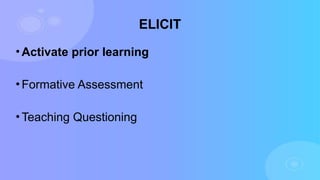
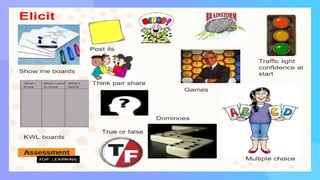
ELICIT
• Activate prior learning
• Formative Assessment
• Teaching Questioning
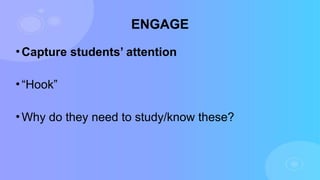
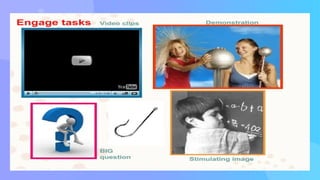
ENGAGE
• Capture students’ attention
• “Hook”
• Why do they need to study/know these?
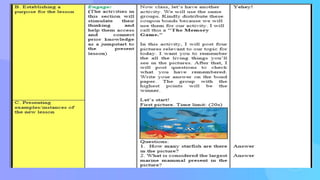
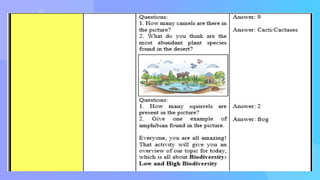
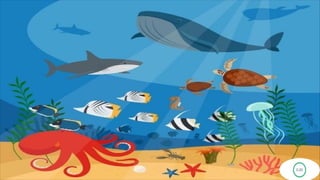
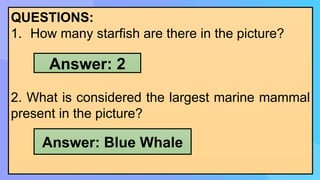
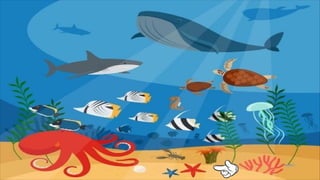
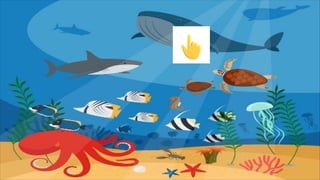
QUESTIONS:
1. How many starfish are there in the picture?
2. What is considered the largest marine mammal
present in the picture?
Answer: 2
Answer: Blue Whale
BIODIVERSITY: HIGH AND LOW
BIODIVERSITY
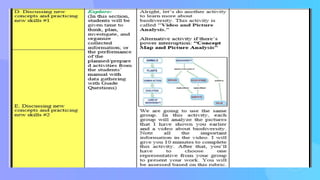
EXPLORE
• Investigate the topic
Observing
Analyzing
Hypothesizing
Constructing
Organizing
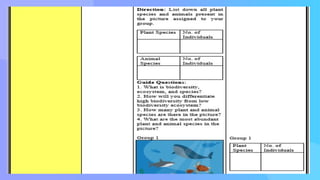
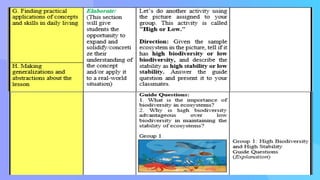
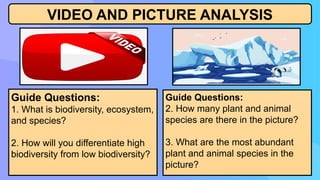
VIDEO AND PICTURE ANALYSIS
Guide Questions:
1. What is biodiversity, ecosystem,
and species?
2. How will you differentiate high
biodiversity from low biodiversity?
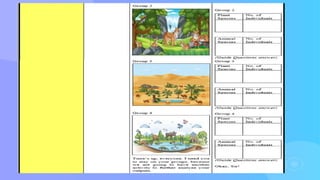
Guide Questions:
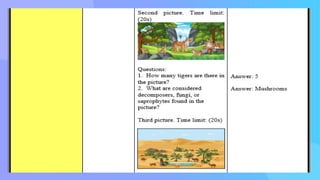
2. How many plant and animal
species are there in the picture?
3. What are the most abundant
plant and animal species in the
picture?
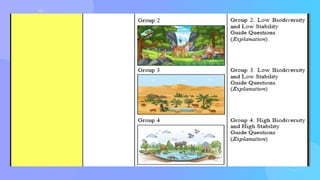
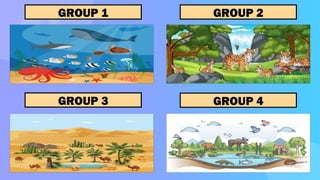
GROUP 1 GROUP 2
GROUP 3 GROUP 4
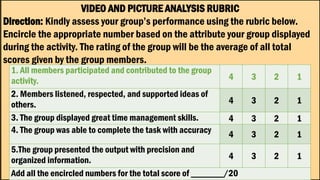
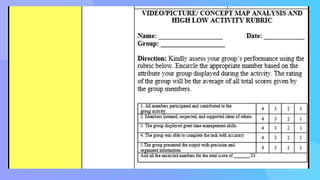
VIDEO AND PICTURE ANALYSIS RUBRIC
Direction: Kindly assess your group’s performance using the rubric below.
Encircle the appropriate number based on the attribute your group displayed
during the activity. The rating of the group will be the average of all total
scores given by the group members.
1. All members participated and contributed to the group
activity. 4 3 2 1
2. Members listened, respected, and supported ideas of
others. 4 3 2 1
3. The group displayed great time management skills. 4 3 2 1
4. The group was able to complete the task with accuracy 4 3 2 1
5.The group presented the output with precision and
organized information. 4 3 2 1
Add all the encircled numbers for the total score of _______/20
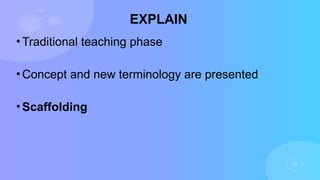
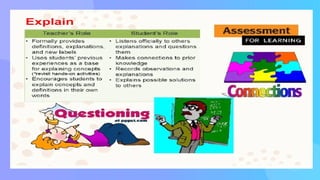
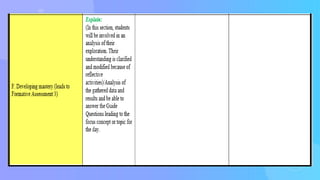
EXPLAIN
•Traditional teaching phase
•Concept and new terminology are presented
•Scaffolding
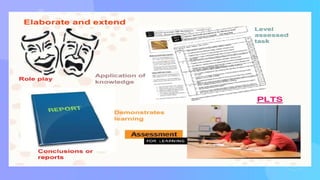
ELABORATE
•Students apply their new knowledge
EVALUATE
•Formative and Summative Assessment
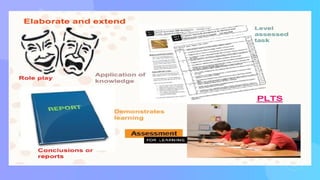
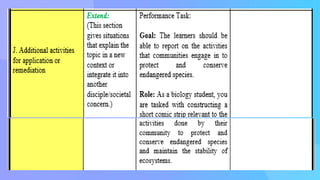
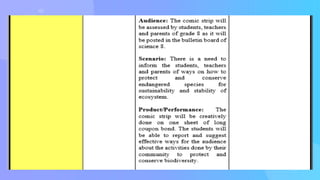
EXTEND
•Applying of knowledge to new and different situation
•“Extra credits” to challenge your “gifted students”
•All students should be challenged
ELEMENTS OF LESSON PLAN IN SCIENCE
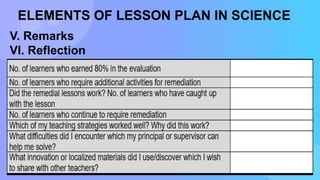
V. Remarks
VI. Reflection
SUMMARY OF 7Es
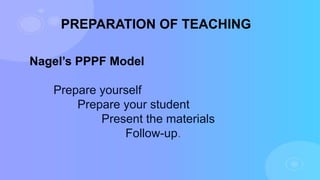
PREPARATION OF TEACHING
Nagel’s PPPF Model
Prepare yourself
Prepare your student
Present the materials
Follow-up.
References:
• dEVELOPMENT OF Instructional materials and media. (n.d.).
PPT. https://www.slideshare.net/kathy_mac/development-of-instructional-materials-and-media
• Buno, C. (n.d.). Principles in selecting instructional media.
prezi.com. https://prezi.com/wfcrhfef-jnf/principles-in-selecting-instructional-media/
• Planning a science unit. (2017). studylib.net. https://studylib.net/doc/18550928/planning-a-science-
unit
• Science 10-day Unit Plan. (2017). studylib.net. https://studylib.net/doc/7515342/science-10-day-
unit-plan
• 7es of lesson planning. (n.d.). Scribd. https://www.scribd.com/presentation/421064206/7es-of-
Lesson-Planning

7-Es-Lesson-Plan.pptx for every teachers

  • 1.
    Prepared by: ConradM. Morales MAED-Biological Science
  • 2.
    1. What isthe first thing that a teacher should consider before proceeding to write a lesson plan? A. Instructional materials B. Objectives C. Assessments D. Learners Answer: B. Objectives
  • 3.
    2. When developingan instructional materials, what should the teacher primarily consider? A. Objectives B. Assessments C. Learners D. Cost Answer: A. Objectives
  • 4.
    3. What isthe first factor to consider when selecting a teaching strategy in the classroom? A. Objectives B. Assessments C. Learners D. Instructional Materials Answer: C. Learners
  • 5.
    ELEMENTS OF LESSONPLAN IN SCIENCE I. Objectives a. Content Standards b. Performance Standards c. Learning Competencies/Objectives
  • 7.
    ELEMENTS OF LESSONPLAN IN SCIENCE II. Content
  • 8.
    ELEMENTS OF LESSONPLAN IN SCIENCE III. Learning Resources A. References 1. Teacher’s Guide 2. Learner’s Materials page 3. Textbook pages 4. Additional Materials from Learning Resources (LR) portal 5. Other Learning Materials
  • 10.
    ELEMENTS OF LESSONPLAN IN SCIENCE IV. Procedures 1. Preliminary Activities a. Greetings b. Prayer c. Classroom Management d. Class Attendance
  • 12.
    THE 7Es MODELOF INSTRUCTION • Arthur Eisenkraft Professor of Physics Distinguished Professor of Science Education Director of COSMIC (Center of Science and Math in Context) https://www.aip.org/history-programs/niels-bohr-library/oral- histories/46924
  • 13.
    THE 7Es MODELOF INSTRUCTION • Arthur Eisenkraft Activate prior knowledge Transfer of learning https://www.aip.org/history-programs/niels-bohr-library/oral- histories/46924 El 5Es Ex
  • 14.
    ELICIT • Activate priorlearning • Formative Assessment • Teaching Questioning
  • 18.
    ENGAGE • Capture students’attention • “Hook” • Why do they need to study/know these?
  • 25.
    QUESTIONS: 1. How manystarfish are there in the picture? 2. What is considered the largest marine mammal present in the picture? Answer: 2 Answer: Blue Whale
  • 28.
    BIODIVERSITY: HIGH ANDLOW BIODIVERSITY
  • 29.
    EXPLORE • Investigate thetopic Observing Analyzing Hypothesizing Constructing Organizing
  • 34.
    VIDEO AND PICTUREANALYSIS Guide Questions: 1. What is biodiversity, ecosystem, and species? 2. How will you differentiate high biodiversity from low biodiversity? Guide Questions: 2. How many plant and animal species are there in the picture? 3. What are the most abundant plant and animal species in the picture?
  • 35.
    GROUP 1 GROUP2 GROUP 3 GROUP 4
  • 36.
    VIDEO AND PICTUREANALYSIS RUBRIC Direction: Kindly assess your group’s performance using the rubric below. Encircle the appropriate number based on the attribute your group displayed during the activity. The rating of the group will be the average of all total scores given by the group members. 1. All members participated and contributed to the group activity. 4 3 2 1 2. Members listened, respected, and supported ideas of others. 4 3 2 1 3. The group displayed great time management skills. 4 3 2 1 4. The group was able to complete the task with accuracy 4 3 2 1 5.The group presented the output with precision and organized information. 4 3 2 1 Add all the encircled numbers for the total score of _______/20
  • 37.
    EXPLAIN •Traditional teaching phase •Conceptand new terminology are presented •Scaffolding
  • 40.
  • 45.
  • 49.
    EXTEND •Applying of knowledgeto new and different situation •“Extra credits” to challenge your “gifted students” •All students should be challenged
  • 54.
    ELEMENTS OF LESSONPLAN IN SCIENCE V. Remarks VI. Reflection
  • 55.
  • 56.
    PREPARATION OF TEACHING Nagel’sPPPF Model Prepare yourself Prepare your student Present the materials Follow-up.
  • 57.
    References: • dEVELOPMENT OFInstructional materials and media. (n.d.). PPT. https://www.slideshare.net/kathy_mac/development-of-instructional-materials-and-media • Buno, C. (n.d.). Principles in selecting instructional media. prezi.com. https://prezi.com/wfcrhfef-jnf/principles-in-selecting-instructional-media/ • Planning a science unit. (2017). studylib.net. https://studylib.net/doc/18550928/planning-a-science- unit • Science 10-day Unit Plan. (2017). studylib.net. https://studylib.net/doc/7515342/science-10-day- unit-plan • 7es of lesson planning. (n.d.). Scribd. https://www.scribd.com/presentation/421064206/7es-of- Lesson-Planning