The document discusses the 7 C's of communication that are important for effective business communication:
1. Correctness - Ensuring proper spelling and punctuation.
2. Clarity - Making information easy to understand through logical organization and avoiding ambiguity.
3. Conciseness - Communicating information using as few words as possible.
4. Completeness - Providing all necessary details to avoid further questions.
5. Consideration - Understanding others' perspectives and communicating empathetically.
6. Concreteness - Using specific examples, facts and details rather than vague language.
7. Courtesy - Interacting with others in a polite, respectful manner.
Topic: 7 C’sof Communication
1.) Correctness
2.) Clarity
3.) Conciseness
4.) Completeness
5.) Consideration
6.) Concreteness
7.) Courtesy
Rameez Shah
1st Semester MBA HCA
2015-16
Ashoka Institute of HC Administration
2.
In Communication particularlywith business colleagues, partners, service
providers, employees or regulatory officials, the correctness of your approach can determine
your effectiveness.
One shall always keep two important things in mind regarding correctness on communication.
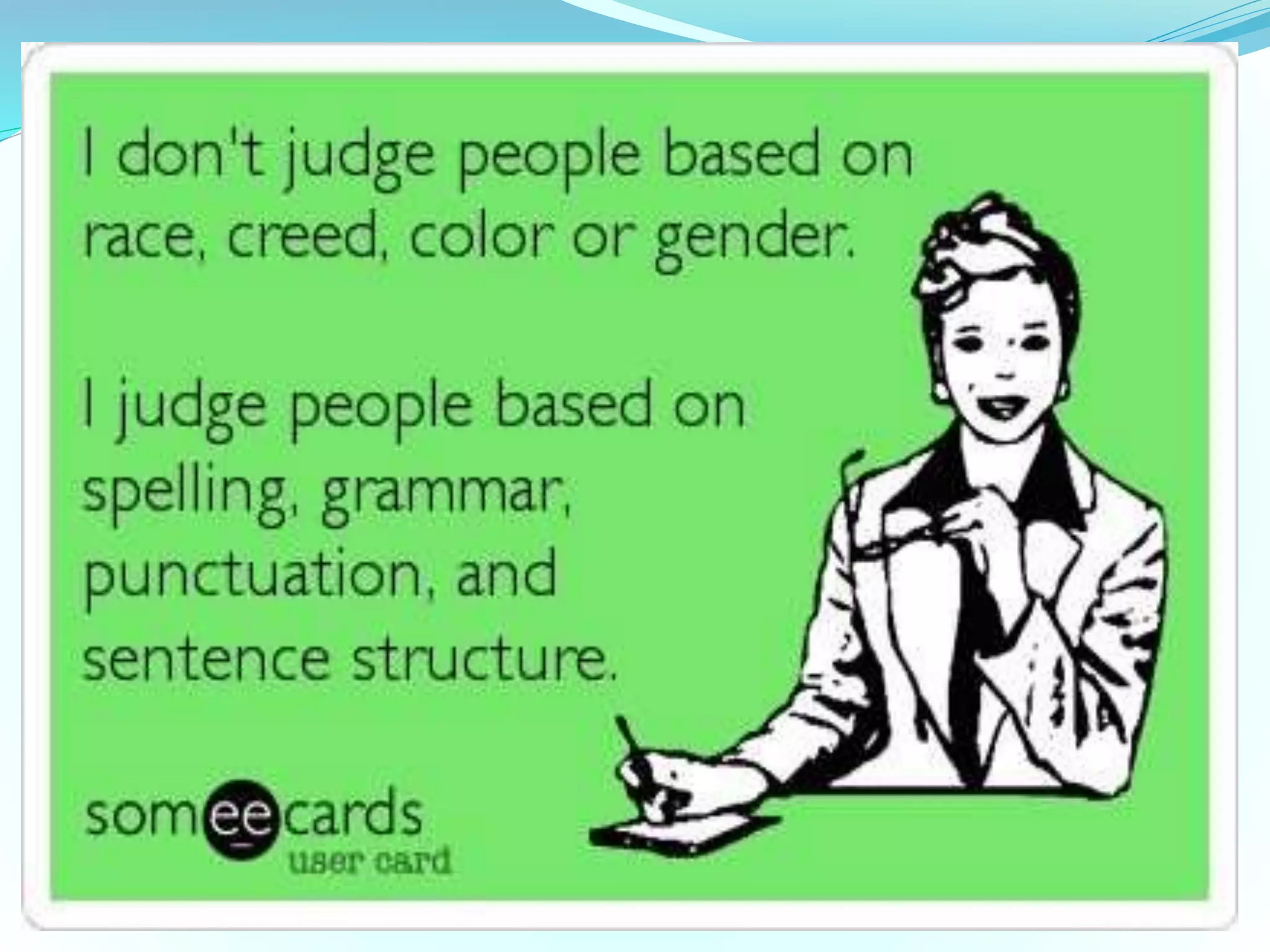
a.) Spelling
b.) Punctuation
Spelling
You will appear uneducated or sloppy if you use incorrect
spelling in written business communications.
No matter how well-reasoned your content may be, your recipient
may think you don't know your subject if you don't know how to
spell. Spell-checking software is available, one can use it
frequently for spelling mistakes.
3.
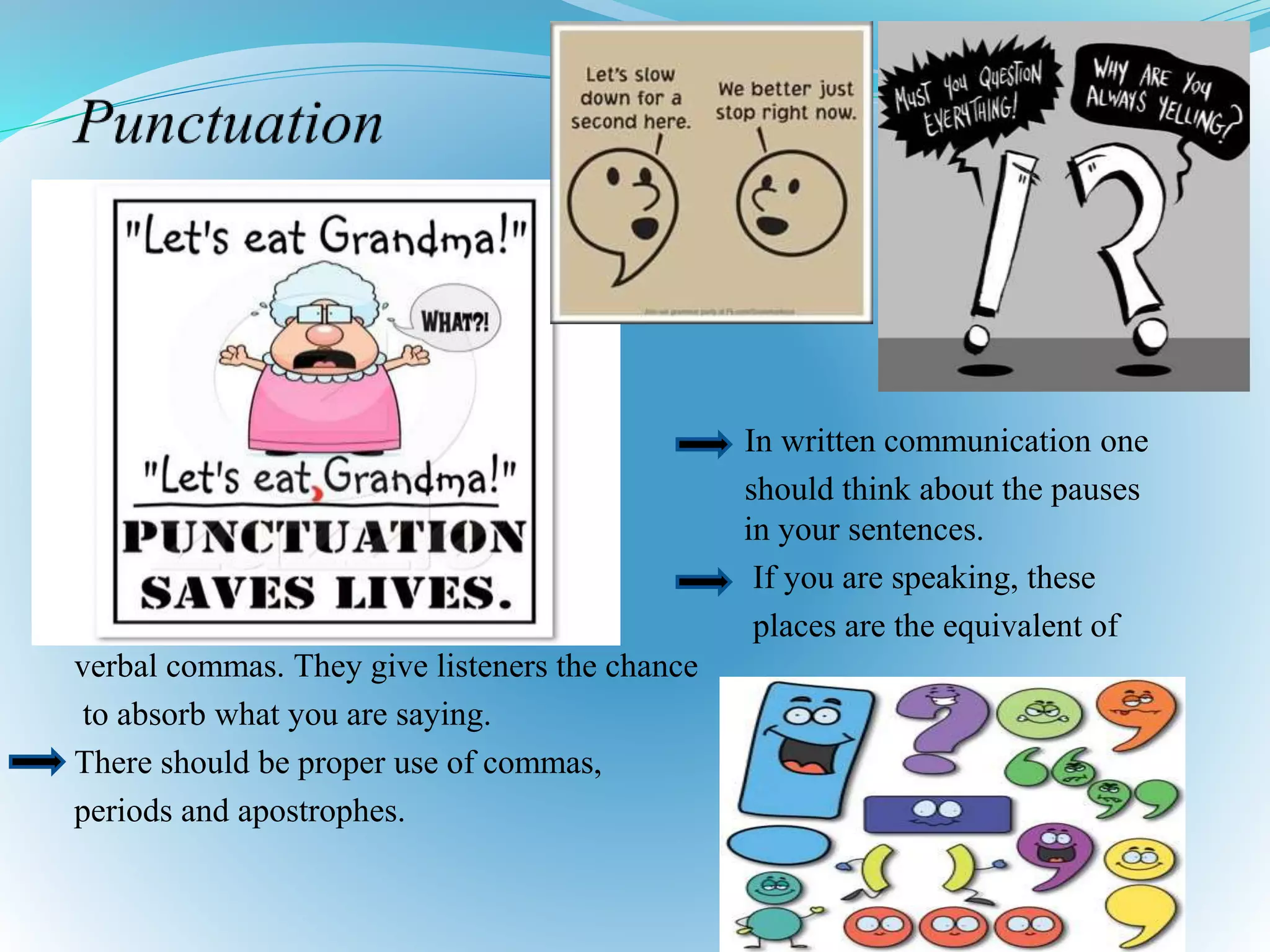
In written communicationone
should think about the pauses
in in your sentences.
If you are speaking, these
places are the equivalent of
verbal commas. They give listeners the chance
to absorb what you are saying.
There should be proper use of commas,
periods and apostrophes.
5.
What clarity means?
•The quality of being easy to see or hear; sharpness of image or sound
• The quality of being certain or definite
Coherency and intelligibility
Being logical, interpretable and understandable
Ease of perception
Being accessible, comfortably viewable and legible
Certainty
Preventing confusion and defining desired responses
Transparency
Never obscuring or blocking the discovery of information
Over-simplicity
Can be confusing, restrictive and in some cases condescending
6.
Conciseness is theextent to which a piece of writing is efficient, which is to say the extent to
which it communicates clear information in as few words as possible.
Being concise means that you are using only the necessary amount of words to describe an
idea.
Writing with conciseness prevents confusion by eliminating wordiness and saves time by
shortening the document for easier reading.
Eliminating Unnecessary Phrases
To achieve conciseness in a document avoid using unnecessary
phrases, verbs and words.
It should go without saying that it is absolutely essential to
avoid each and every phrase in our writing that generally
doesn't have, for all intents and purposes, a specific meaning.
7.
A business communicationhas to be complete.
Incomplete letters keep the receiver guessing, or making wrong choices, or taking wrong
decisions.
A complete message will bring the expected result or desired response from the receiver.
Imagine a situation where you want a hall to be fixed for an exhibition or demonstration or you
want an event-managing agency to organise an event or a function.
Then you have to provide them with all the information to make your request complete.
You have to tell them why you want the event to be organised and what its precise purpose is.
You have to tell them where you prefer it to be held and when it should be held.
You have to tell them what exactly should be the scope and how it should be gone through.
You cannot be frequently communicating with them over
such a simple issue.
If your first communication is complete, doubts will be fewer.
Completeness prevents the need for further communication,
amending, elaborating and expounding (explaining) the first one
and thus saves time and resource.
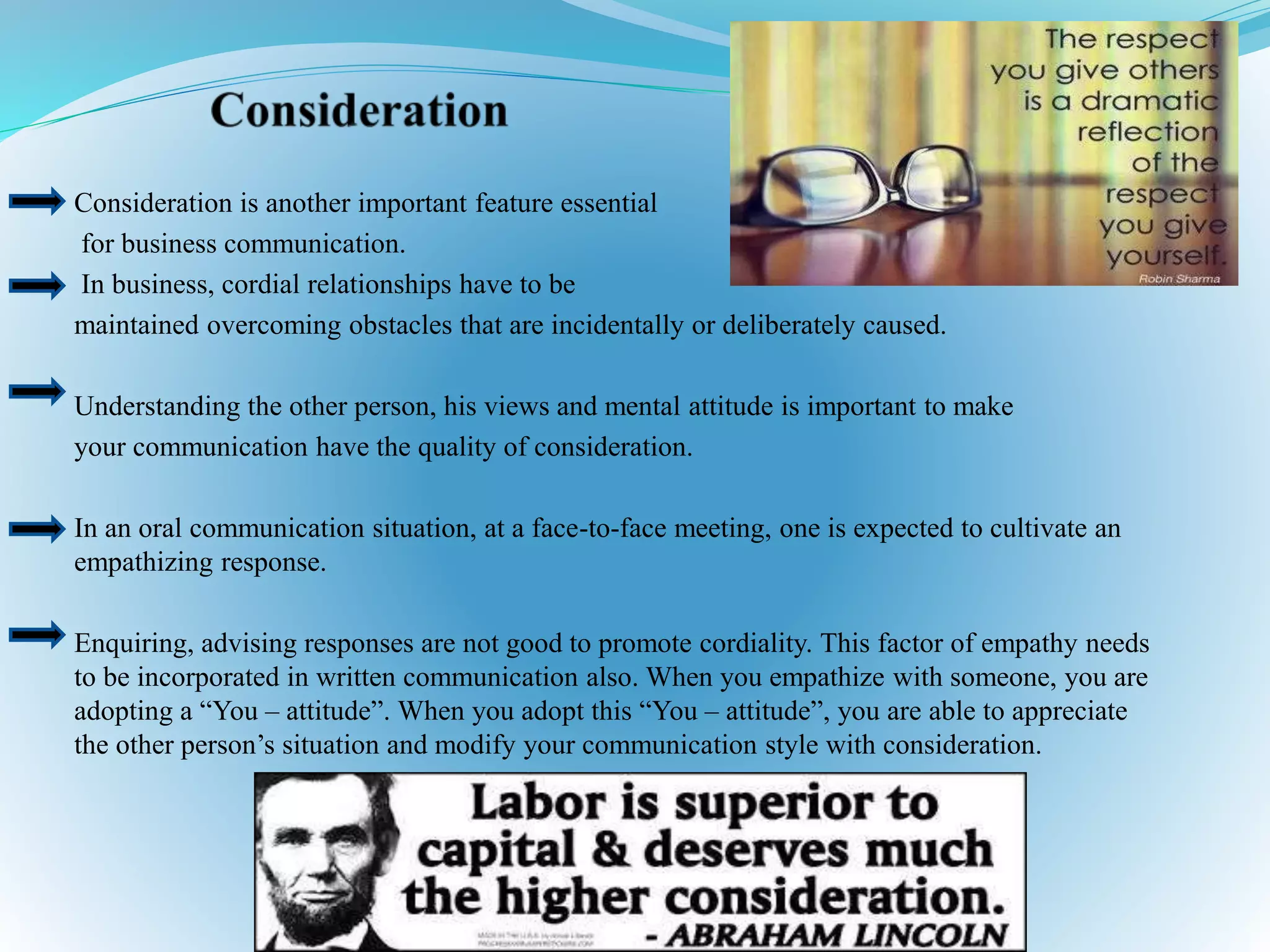
Consideration is anotherimportant feature essential
for business communication.
In business, cordial relationships have to be
maintained overcoming obstacles that are incidentally or deliberately caused.
Understanding the other person, his views and mental attitude is important to make
your communication have the quality of consideration.
In an oral communication situation, at a face-to-face meeting, one is expected to cultivate an
empathizing response.
Enquiring, advising responses are not good to promote cordiality. This factor of empathy needs
to be incorporated in written communication also. When you empathize with someone, you are
adopting a “You – attitude”. When you adopt this “You – attitude”, you are able to appreciate
the other person’s situation and modify your communication style with consideration.
10.
Concreteness is anaspect of communication that means being specific, definite, and vivid
rather than vague and general.
A concrete communication uses specific facts and figures.
Concreteness is often taught in college communication
courses as one of the aspects of effective communication.
Counsellors, attorneys, job interviewers, etc. often prod their
interviewees to speak with greater concreteness.
A job interviewer will often ask probing questions to
elicit more concrete information; e.g., "Could you give
me an example of when you did ______?
11.
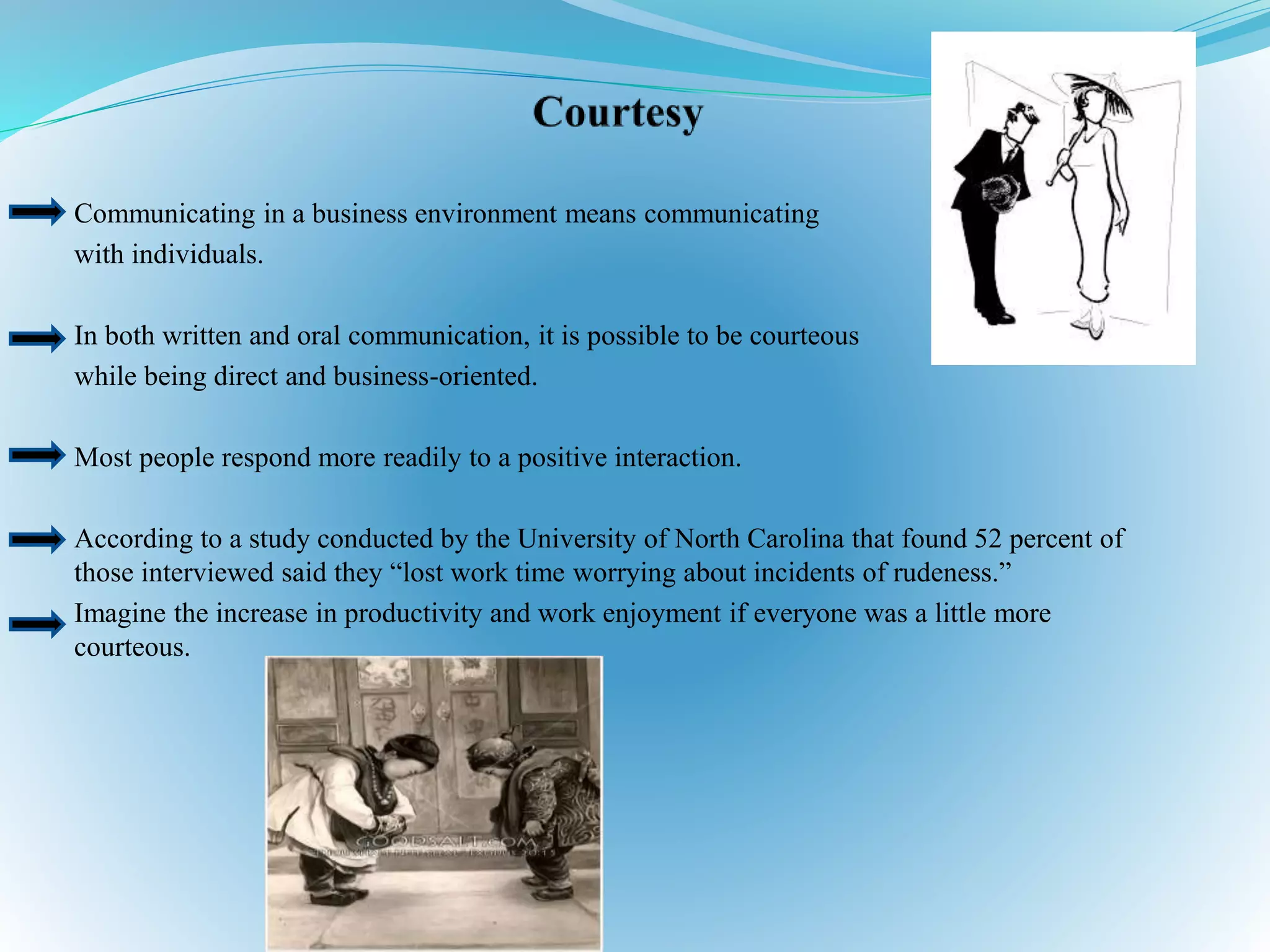
Communicating in abusiness environment means communicating
with individuals.
In both written and oral communication, it is possible to be courteous
while being direct and business-oriented.
Most people respond more readily to a positive interaction.
According to a study conducted by the University of North Carolina that found 52 percent of
those interviewed said they “lost work time worrying about incidents of rudeness.”
Imagine the increase in productivity and work enjoyment if everyone was a little more
courteous.