Cylinder Deactivation
Content
• Introduction
• Approach to the Problem
• Cylinder deactivation mechanism
• Methods used for cylinder deactivation
• Advantages
• Disadvantages
• Key players using cylinder deactivation
• Future trends
• Conclusion
Introduction
• Reducing fuel consumption
• Cutting emission of green house gases
• Cylinders are shutdown during light load
• Reduce pumping losses
• 8-25% reduction in fuel consumption
• More cylinders - More fuel to keep running.
• Not using all cylinders - Less fuel.
• Overtaking - High-speed runs on the freeway-
Require - High output
• Most ordinary situations, high power output
not required all the time.
Introduction
• Under no circumstances - you would use 100%
of the engine's power
• Cruising speed – Only a fraction of power -
High power not required.
• Low-mid RPM range, Part-throttle.
• Accelerator pedal not down, save fuel. Not all
cylinders are operating at full capacity.
• Cylinder deactivation allows the engine to
stop using some of its cylinders when that
extra power isn’t needed.
Introduction
Cylinder Deactivation Mechanism
• Considerations:
• Coolant temperature, vehicle speed, engine load
parameters.
• Action:
• Disable exhaust/inlet valves, spark plug, fuel.
CDA Hardware
Components:
• Electronic Control Module
• Solenoid valves
• Hydraulic subsytem
• Lifter locking pin mechanism
Engine Control Module
• Measuring multiple instantaneous events
• Dynamic response for coordinating the
deactivation hardware with other engine
control functions.
• Dynamic response: solenoid plunger, hydraulic
subsytem, lifter locking pin.
Methods
• Displacement on Demand
• (General Motors)
• Variable Cylinder Management
• (Lotus Automotive System)
• Active Valve Train Technology
Displacement on Demand
Variable Cylinder Management
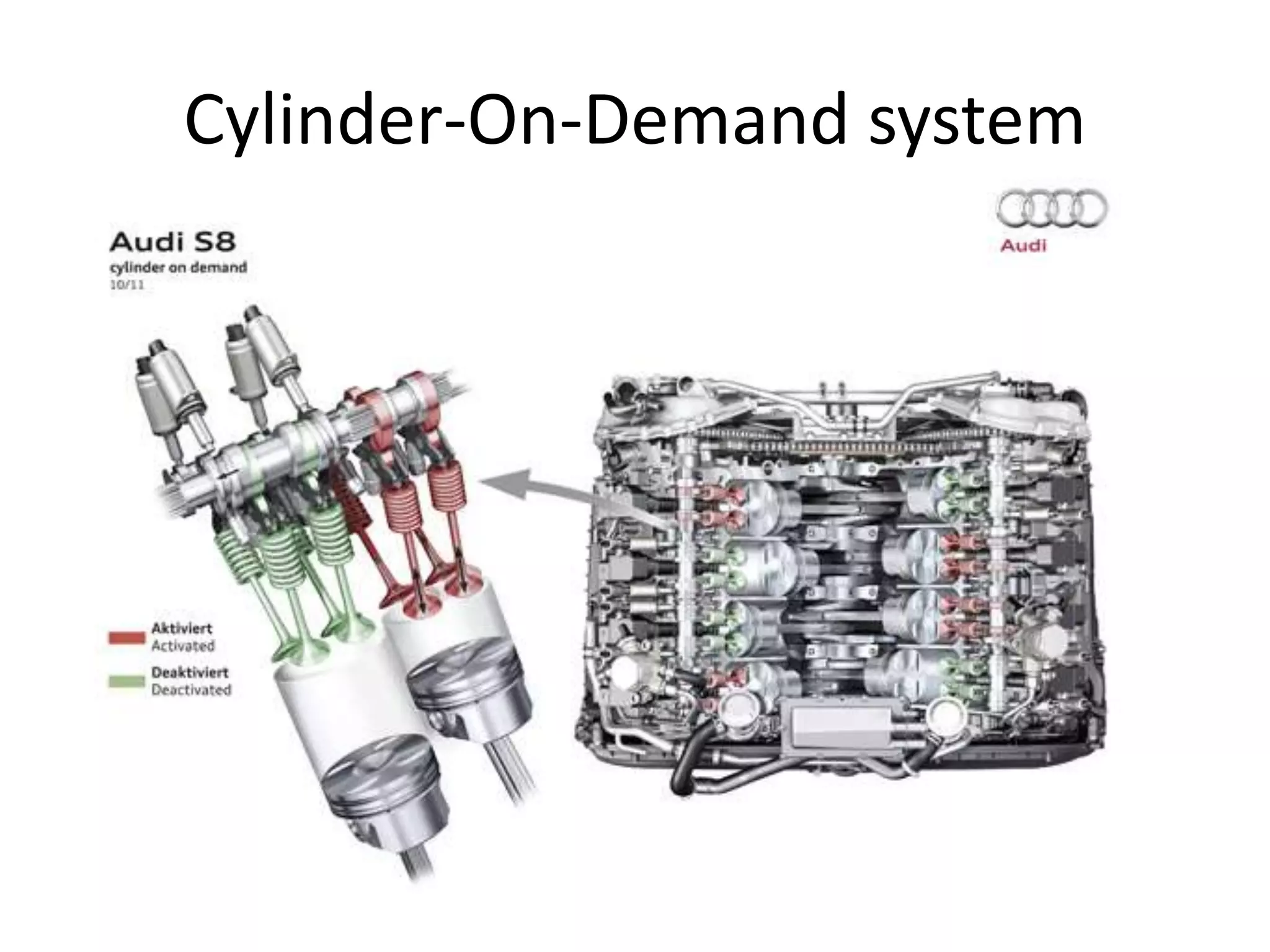
Cylinder-On-Demand system
Active Cylinder Technology (ACT)
Advantages
• Increased fuel efficiency (10-20%)
• Decreased emissions from deactivated
cylinders
• Better breathing capability of the engine,
thereby reducing power consumed in suction
stroke.
Disadvantages
• Earlier Engines – balancing issue.
• Increased cost of manufacturing
• Overall increase in weight
Cylinder Deactivation Trends
• Active Valve Train Technology - uses valve
controls with high speed hydraulic actuators
there by eliminating the use of Cam shaft.
• Tula Technologies - developed a technology -
Dynamic Skip Fire.
• Monitors torque demands and determines
whether or not to fire each cylinder at each
firing opportunity. General Motors – investor -
future models.
Conclusion
• Pollution free environment –
• Norms like EUROIII & BS6 (Bharath Stage VI).
• Future world demands automobile with less
fuel. A Solution- Cylinder Deactivation.

68512133-Cylinder-Deactivation.pptx

  • 1.
  • 2.
    Content • Introduction • Approachto the Problem • Cylinder deactivation mechanism • Methods used for cylinder deactivation • Advantages • Disadvantages • Key players using cylinder deactivation • Future trends • Conclusion
  • 3.
    Introduction • Reducing fuelconsumption • Cutting emission of green house gases • Cylinders are shutdown during light load • Reduce pumping losses • 8-25% reduction in fuel consumption
  • 4.
    • More cylinders- More fuel to keep running. • Not using all cylinders - Less fuel. • Overtaking - High-speed runs on the freeway- Require - High output • Most ordinary situations, high power output not required all the time. Introduction
  • 5.
    • Under nocircumstances - you would use 100% of the engine's power • Cruising speed – Only a fraction of power - High power not required. • Low-mid RPM range, Part-throttle. • Accelerator pedal not down, save fuel. Not all cylinders are operating at full capacity. • Cylinder deactivation allows the engine to stop using some of its cylinders when that extra power isn’t needed. Introduction
  • 6.
    Cylinder Deactivation Mechanism •Considerations: • Coolant temperature, vehicle speed, engine load parameters. • Action: • Disable exhaust/inlet valves, spark plug, fuel.
  • 7.
    CDA Hardware Components: • ElectronicControl Module • Solenoid valves • Hydraulic subsytem • Lifter locking pin mechanism
  • 9.
    Engine Control Module •Measuring multiple instantaneous events • Dynamic response for coordinating the deactivation hardware with other engine control functions. • Dynamic response: solenoid plunger, hydraulic subsytem, lifter locking pin.
  • 10.
    Methods • Displacement onDemand • (General Motors) • Variable Cylinder Management • (Lotus Automotive System) • Active Valve Train Technology
  • 11.
  • 12.
  • 13.
  • 14.
  • 15.
    Advantages • Increased fuelefficiency (10-20%) • Decreased emissions from deactivated cylinders • Better breathing capability of the engine, thereby reducing power consumed in suction stroke.
  • 16.
    Disadvantages • Earlier Engines– balancing issue. • Increased cost of manufacturing • Overall increase in weight
  • 17.
    Cylinder Deactivation Trends •Active Valve Train Technology - uses valve controls with high speed hydraulic actuators there by eliminating the use of Cam shaft. • Tula Technologies - developed a technology - Dynamic Skip Fire. • Monitors torque demands and determines whether or not to fire each cylinder at each firing opportunity. General Motors – investor - future models.
  • 18.
    Conclusion • Pollution freeenvironment – • Norms like EUROIII & BS6 (Bharath Stage VI). • Future world demands automobile with less fuel. A Solution- Cylinder Deactivation.