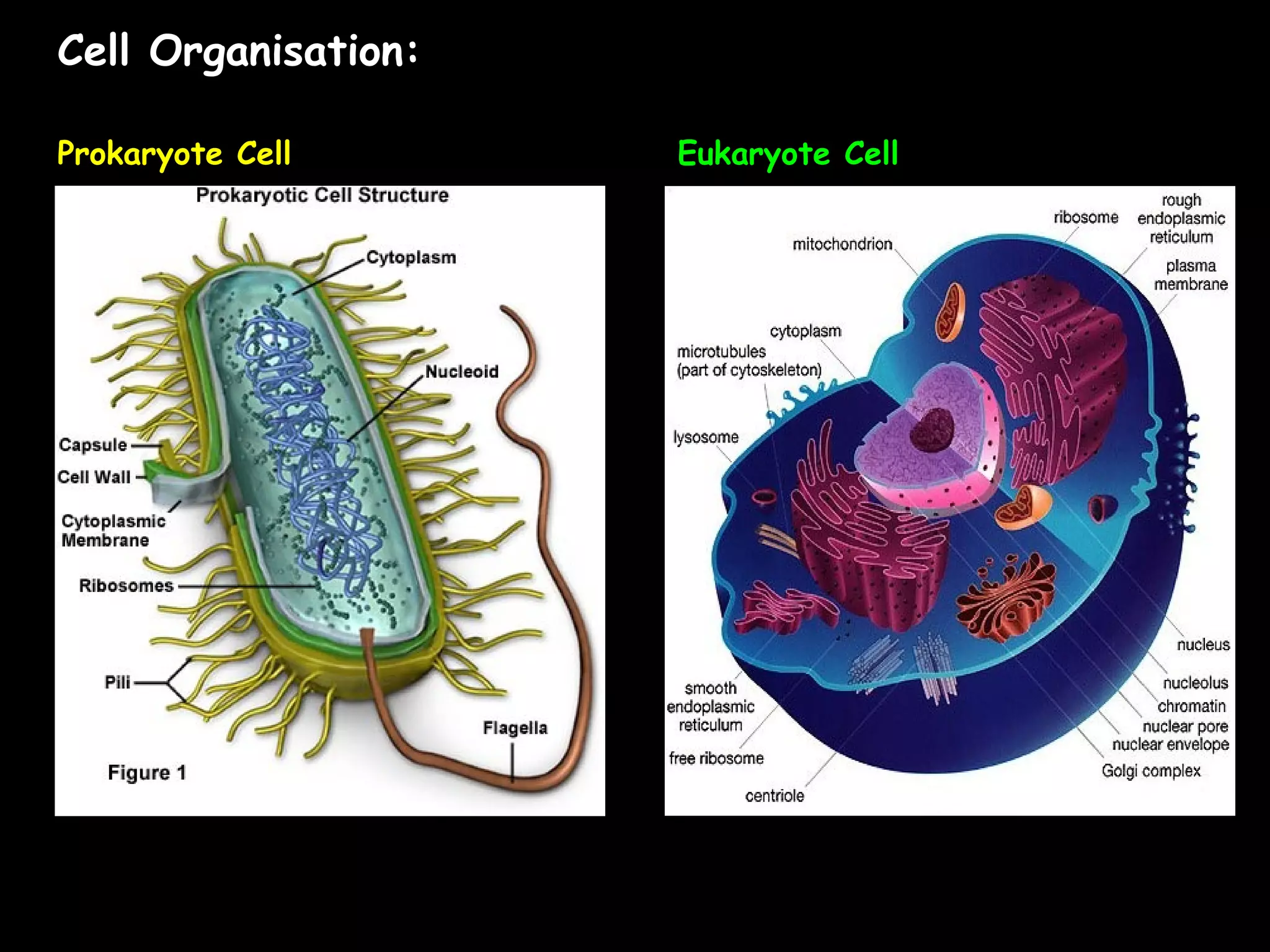
Cell Organisation:
Prokaryote Cell Eukaryote Cell
Cell Organisation:
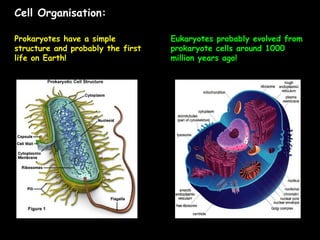
Prokaryotes have a simple
structure and probably the first
life on Earth!
Eukaryotes probably evolved from
prokaryote cells around 1000
million years ago!
Features:
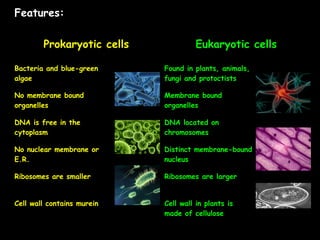
Prokaryotic cells Eukaryotic cells
Bacteria and blue-green
algae
Found in plants, animals,
fungi and protoctists
No membrane bound
organelles
Membrane bound
organelles
DNA is free in the
cytoplasm
DNA located on
chromosomes
No nuclear membrane or
E.R.
Distinct membrane-bound
nucleus
Ribosomes are smaller Ribosomes are larger
Cell wall contains murein Cell wall in plants is
made of cellulose
Viruses:
Cause a variety of
infectious diseases in
humans, animals and plants.
Extremely small and can only
be seen with an electron
microscope.
Can be called ‘non cells’ as
they have no cytoplasm,
organelles and no
chromosomes.
Exist as an inert ‘viron’ when outside
a cell.
Take over a cell’s metabolism and multiply
within the host cell.
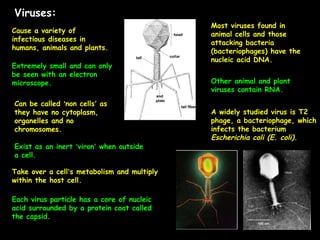
Each virus particle has a core of nucleic
acid surrounded by a protein coat called
the capsid.
Most viruses found in
animal cells and those
attacking bacteria
(bacteriophages) have the
nucleic acid DNA.
Other animal and plant
viruses contain RNA.
A widely studied virus is T2
phage, a bacteriophage, which
infects the bacterium
Escherichia coli (E. coli).
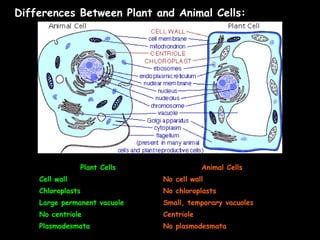
Differences Between Plant and Animal Cells:
Plant Cells Animal Cells
Cell wall No cell wall
Chloroplasts No chloroplasts
Large permanent vacuole Small, temporary vacuoles
No centriole Centriole
Plasmodesmata No plasmodesmata
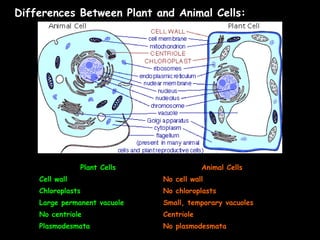
Differences Between Plant and Animal Cells:
Plant Cells Animal Cells
Cell wall No cell wall
Chloroplasts No chloroplasts
Large permanent vacuole Small, temporary vacuoles
No centriole Centriole
Plasmodesmata No plasmodesmata

6.12B Cell Organization

  • 1.
  • 2.
    Cell Organisation: Prokaryotes havea simple structure and probably the first life on Earth! Eukaryotes probably evolved from prokaryote cells around 1000 million years ago!
  • 3.
    Features: Prokaryotic cells Eukaryoticcells Bacteria and blue-green algae Found in plants, animals, fungi and protoctists No membrane bound organelles Membrane bound organelles DNA is free in the cytoplasm DNA located on chromosomes No nuclear membrane or E.R. Distinct membrane-bound nucleus Ribosomes are smaller Ribosomes are larger Cell wall contains murein Cell wall in plants is made of cellulose
  • 4.
    Viruses: Cause a varietyof infectious diseases in humans, animals and plants. Extremely small and can only be seen with an electron microscope. Can be called ‘non cells’ as they have no cytoplasm, organelles and no chromosomes. Exist as an inert ‘viron’ when outside a cell. Take over a cell’s metabolism and multiply within the host cell. Each virus particle has a core of nucleic acid surrounded by a protein coat called the capsid. Most viruses found in animal cells and those attacking bacteria (bacteriophages) have the nucleic acid DNA. Other animal and plant viruses contain RNA. A widely studied virus is T2 phage, a bacteriophage, which infects the bacterium Escherichia coli (E. coli).
  • 5.
    Differences Between Plantand Animal Cells: Plant Cells Animal Cells Cell wall No cell wall Chloroplasts No chloroplasts Large permanent vacuole Small, temporary vacuoles No centriole Centriole Plasmodesmata No plasmodesmata
  • 6.
    Differences Between Plantand Animal Cells: Plant Cells Animal Cells Cell wall No cell wall Chloroplasts No chloroplasts Large permanent vacuole Small, temporary vacuoles No centriole Centriole Plasmodesmata No plasmodesmata