What are they?
Why are they important?
How are they identified?
What are minerals?
A naturally forming inorganic
(non-living) solid
Crystal structure due to internal
arrangement of atoms.
Specific chemical composition
Minerals are inorganic
Never been alive
Example: copper, quartz, calcite.
Fossils are NOT minerals- they
were once living
Natural gas and oil are NOT
minerals- they came from once-
living organisms
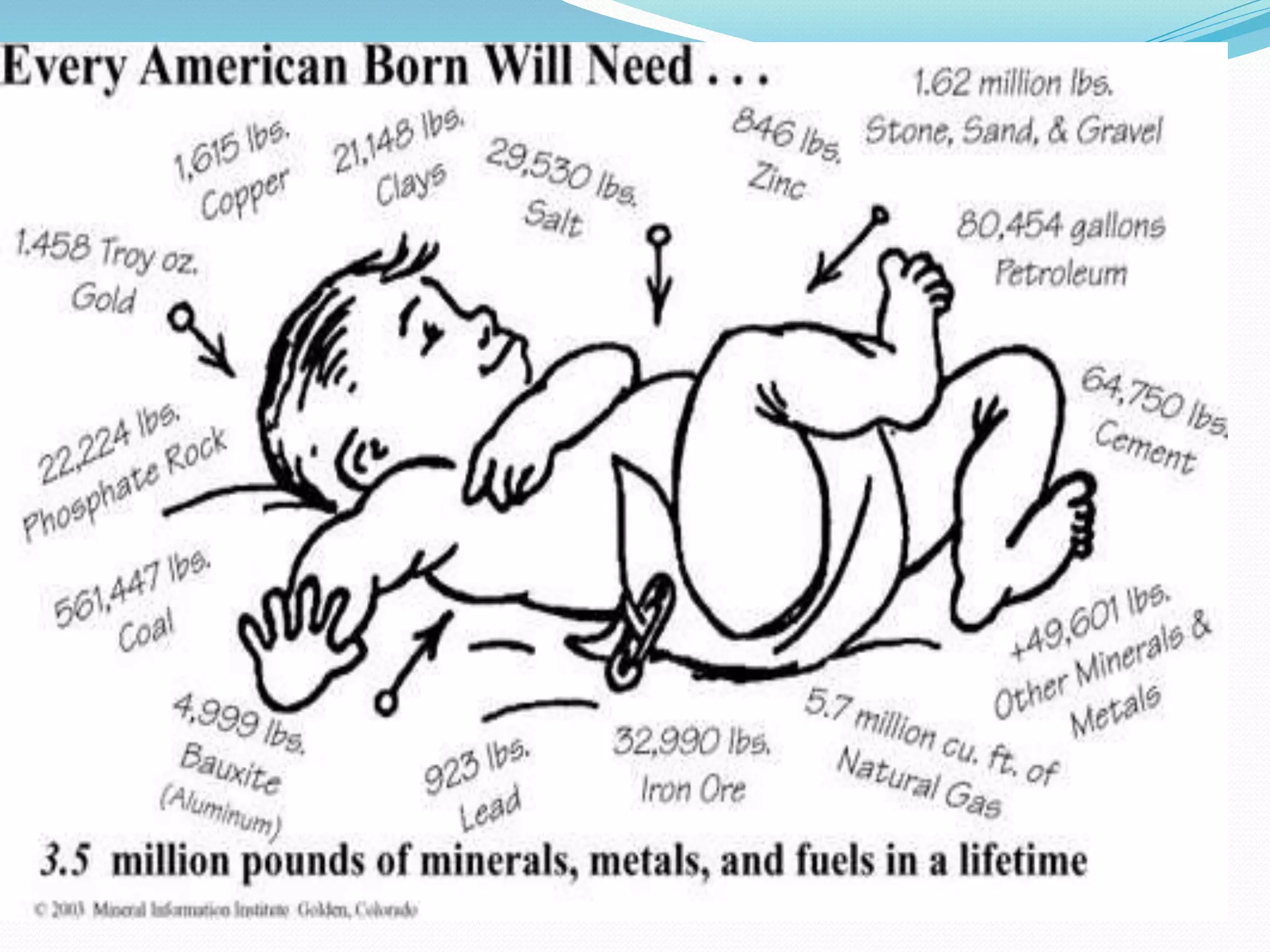
Why are minerals important?
Essential natural resources
“If it can’t be grown it must be mined”
 Mining –is taking valuable minerals out of the
Earth.
What do we mine for?
Metals- buildings, homes, plumbing,
electrical, manufacturing, transportation
Rocks- buildings, roads, manufacturing
Jewelry, currency, art
Health, medicine
Mineral Identification
Properties
1. Hardness
2. Luster
3. Streak
4. Color
5. Cleavage
6. Fracture
Moh’s Hardness Scale
Hardness is the ability to scratch another
mineral
Moh’s uses 10 relatively common
minerals to compare their relative
hardness
Uses common items of known hardness
to compare with ten minerals (fingernail,
steel nail, glass plate, copper penny)
Very important in mineral identification
Moh’s Hardness Scale
1. Talc
Softest mineral
2. Gypsum
Gypsum can
scratch talc.
Moh’s Hardness test
A fingernail can scratch
both talc(1) and
gypsum(2)
A fingernail is assigned
the hardness number of
2.5
3. Calcite
Calcite can
scratch
gypsum
4. Fluorite
fluorite can
scratch calcite
and softer
minerals
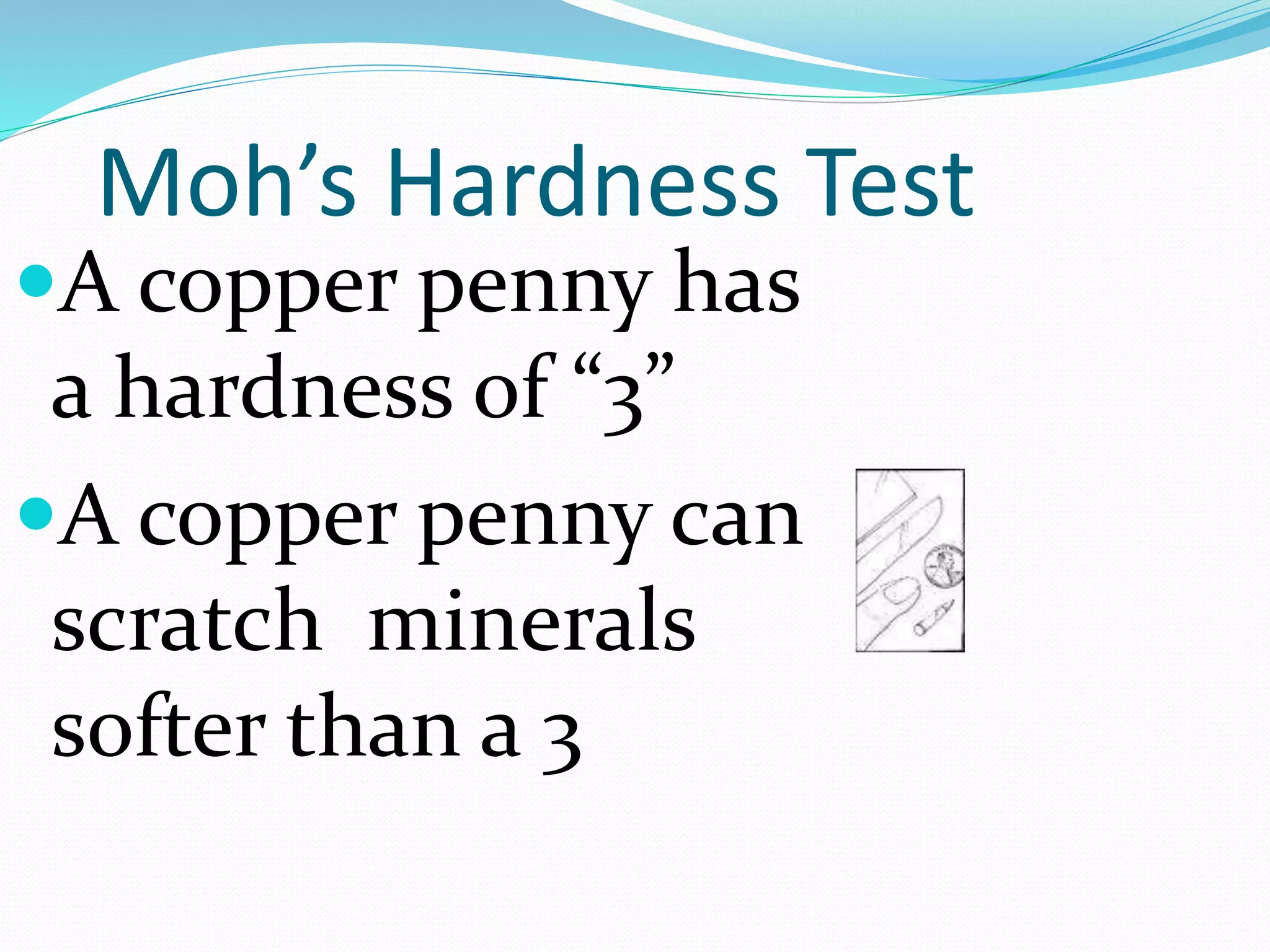
Moh’s Hardness Test
A copper penny has
a hardness of “3”
A copper penny can
scratch minerals
softer than a 3
5. Apatite
 Can scratch Fluorite
6. Potassium
Feldspar
 “K-spar”
 K spar can scratch all
softer minerals. None
of the softer minerals
can scratch it.
7. Quartz
so hard it can
scratch glass
8. Topaz
Topaz is
harder than
quartz
9. Corundum
Can scratch Topaz
10. Diamond
is the hardest
natural substance
known
It is harder than
all other minerals
Luster
Quality and intensity of
light reflecting off the
faces of the crystal
Non-metallic
Metallic
Non-metallic luster
 Shiny like a metal
Metallic luster
• Dull/ Earthy
• Waxy, greasy or soapy
• Glassy
• Pearly
• Silky
Vitreous luster
Glasslike
Most
common
Ex. Quartz
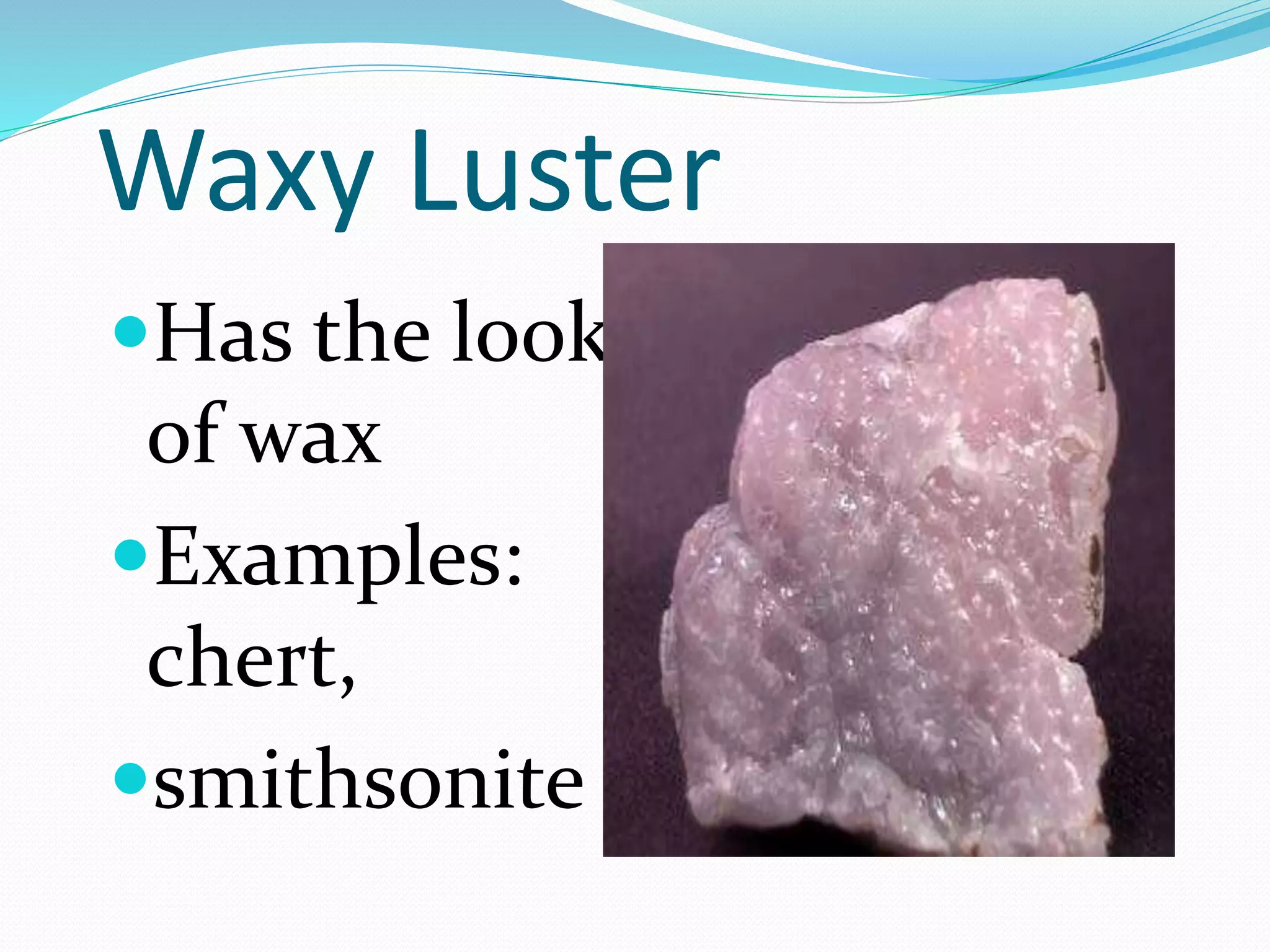
Waxy Luster
Has the look
of wax
Examples:
chert,
smithsonite
Earthy/Dull Luster
Non-reflective
surface
Dirt-like
appearance
Examples: barite
“roses”; bauxite,
limonite
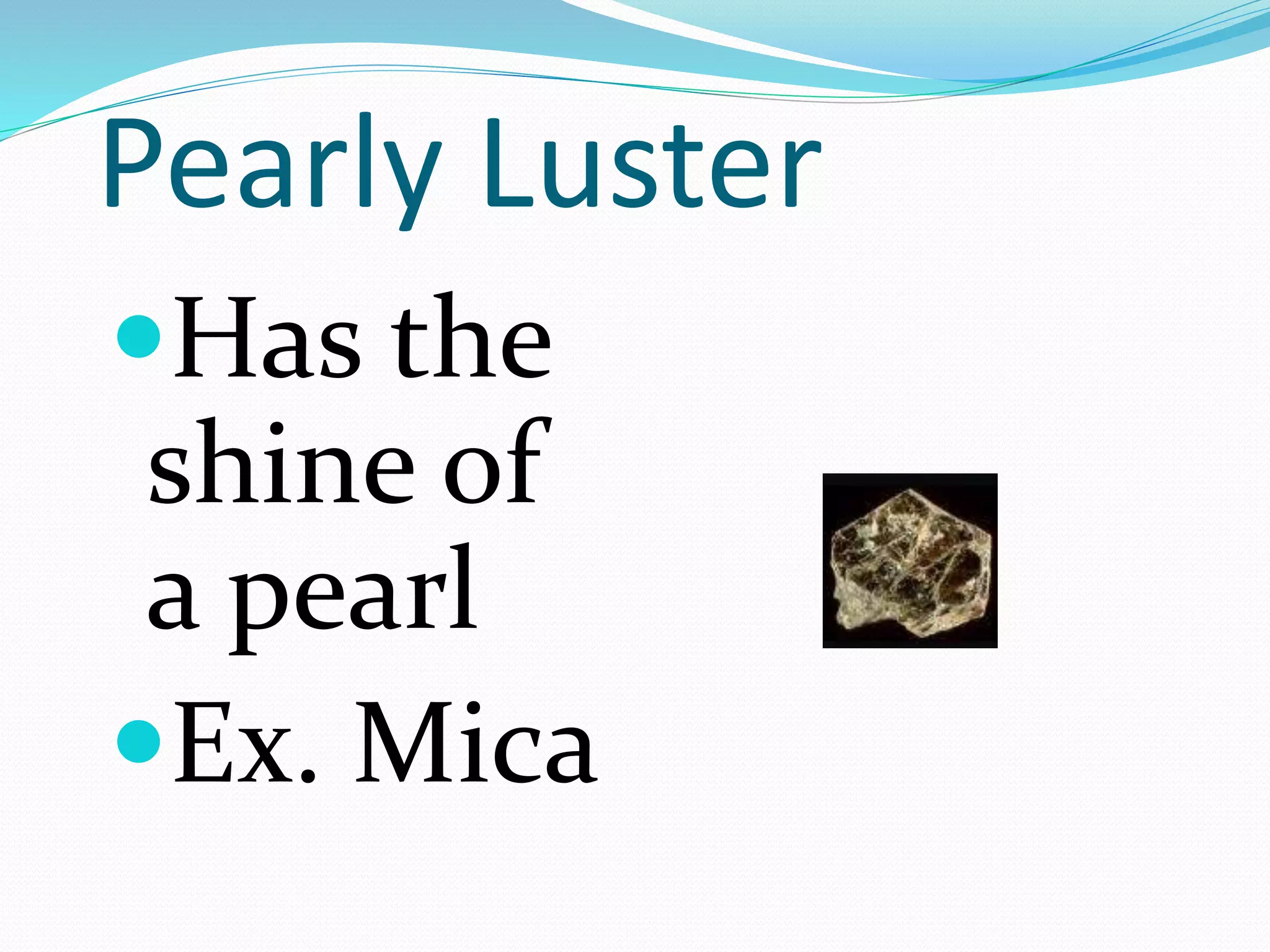
Pearly Luster
Has the
shine of
a pearl
Ex. Mica
Silky Luster
Looks like silk
Used to
describe
fibrous
minerals, such
as asbestos
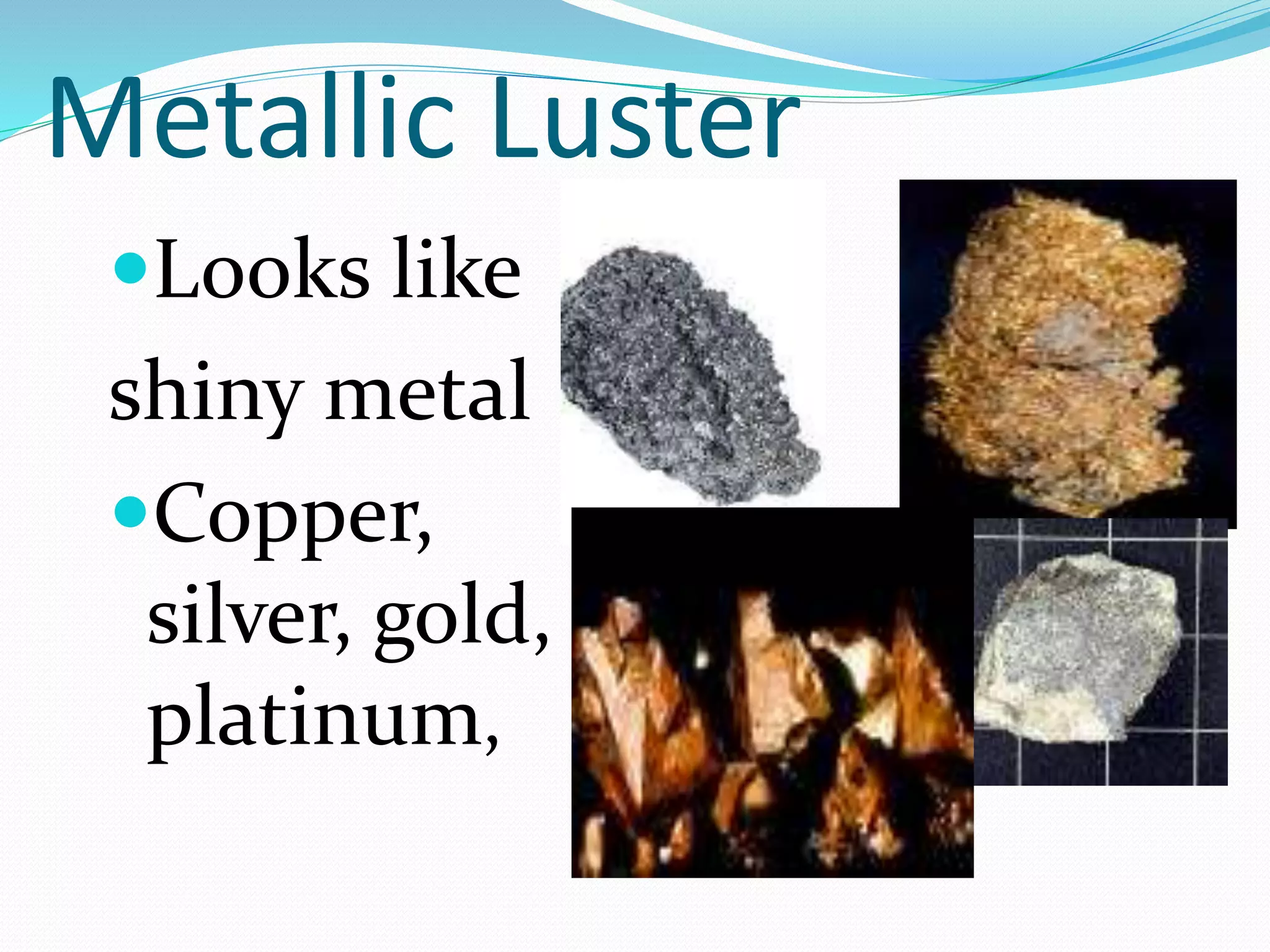
Metallic Luster
Looks like
shiny metal
Copper,
silver, gold,
platinum,
Mineral Streak
The color of the powder left when
a mineral is rubbed on a streak
plate
The ability/inability of a mineral
to create a streak helps ID it
Mineral Streak
When rubbed on a
ceramic tile, some
minerals leave
certain color
streaks.
(EX) Grey
hematite leaves a
red streak
Color
Color is based on what wavelength of
light is absorbed and reflected.
Color is the LEAST reliable mineral
ID test
 Many different minerals have the same
color.
 The same mineral can often have different
colors
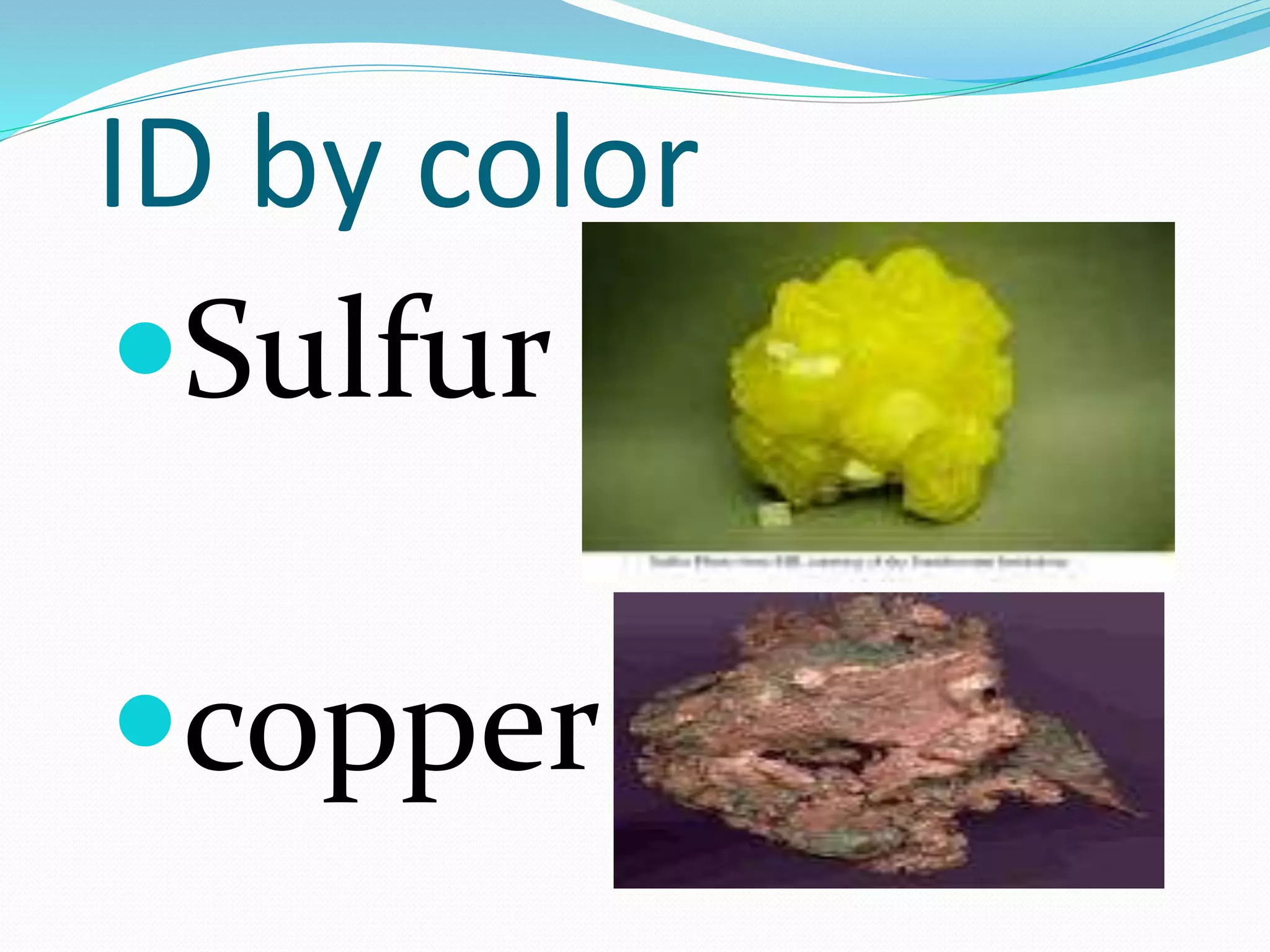
ID by color
Sulfur
copper
Same mineral-
Different colors
quartz
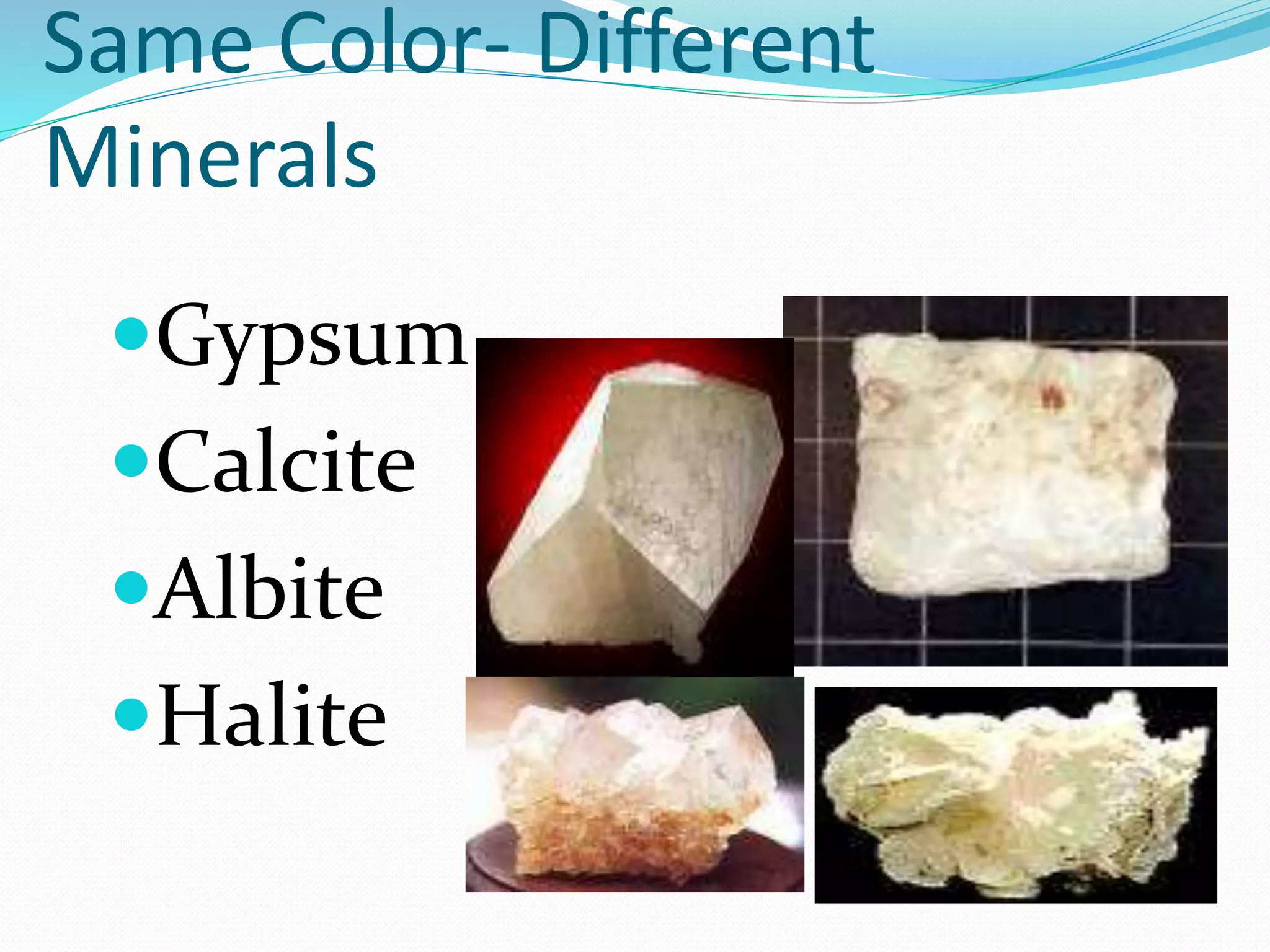
Same Color- Different
Minerals
Gypsum
Calcite
Albite
Halite
Cleavage
How a mineral breaks or splits along
planes of their crystal structure
Cleaves along the same parallel plane
over and over again
Occurs in minerals with specific planes
of weakness
Several different types of cleaving
Octahedral cleavage
Multiple
cleavage
planes-
Fluorite
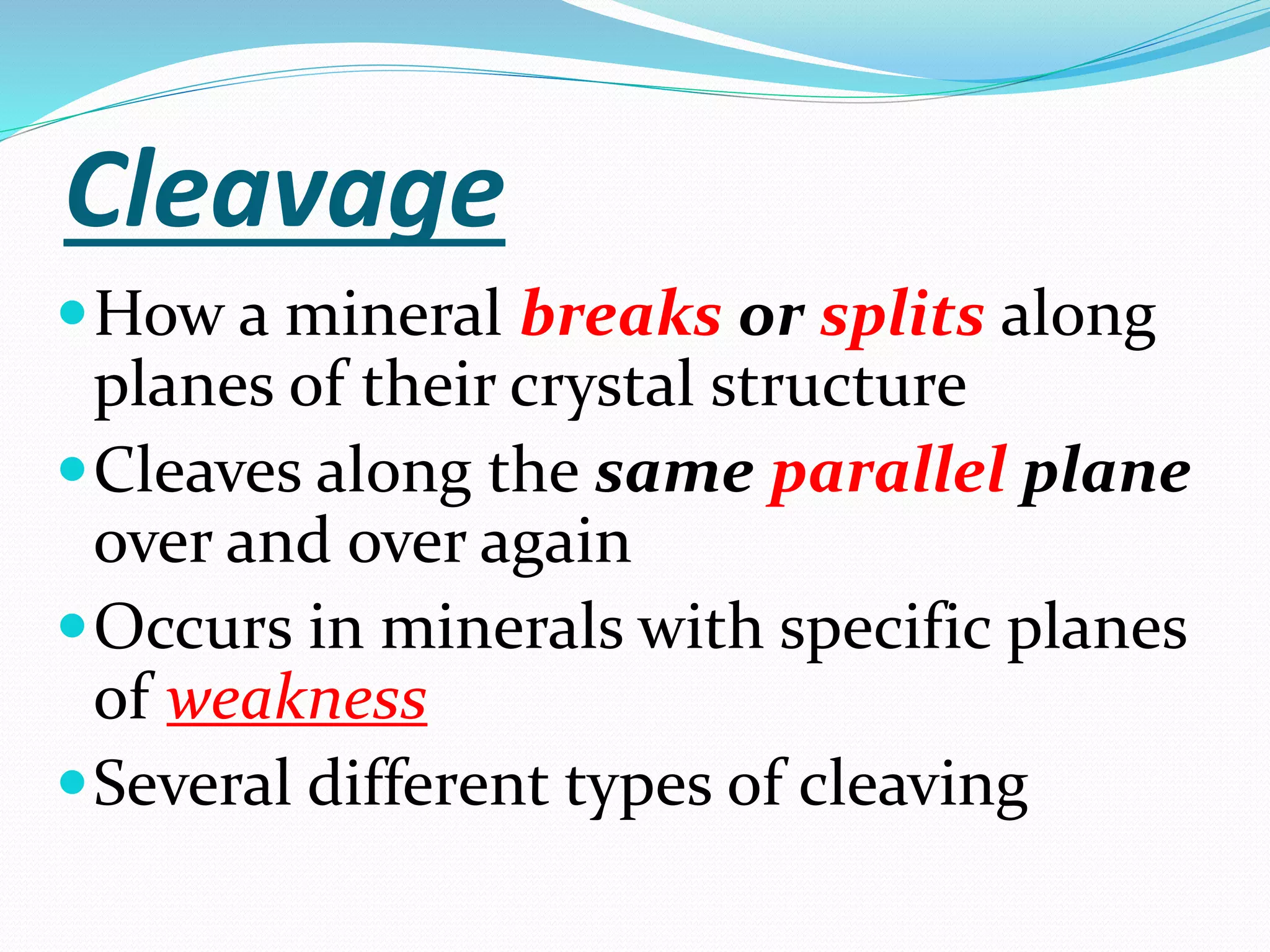
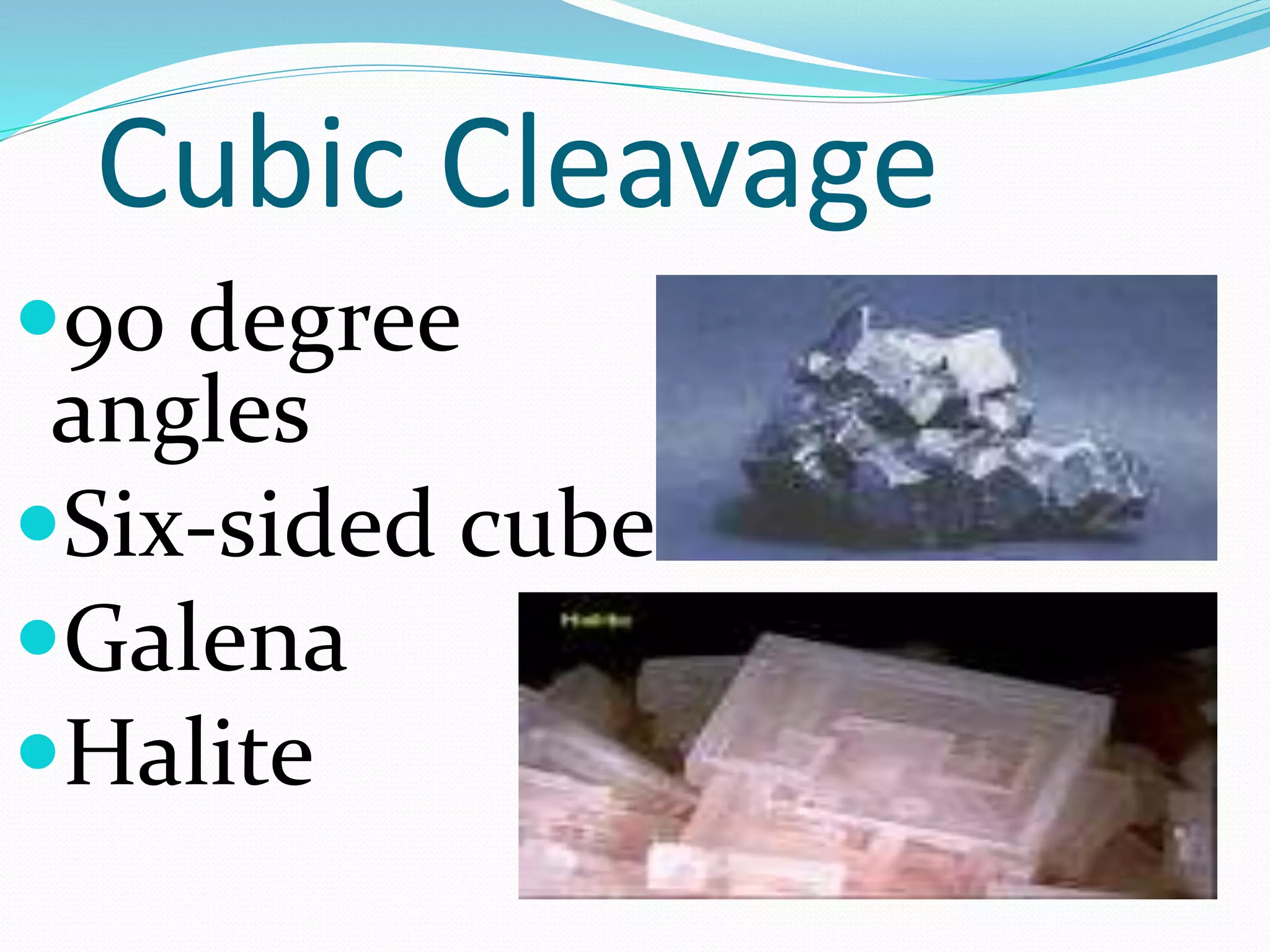
Cubic Cleavage
90 degree
angles
Six-sided cube
Galena
Halite
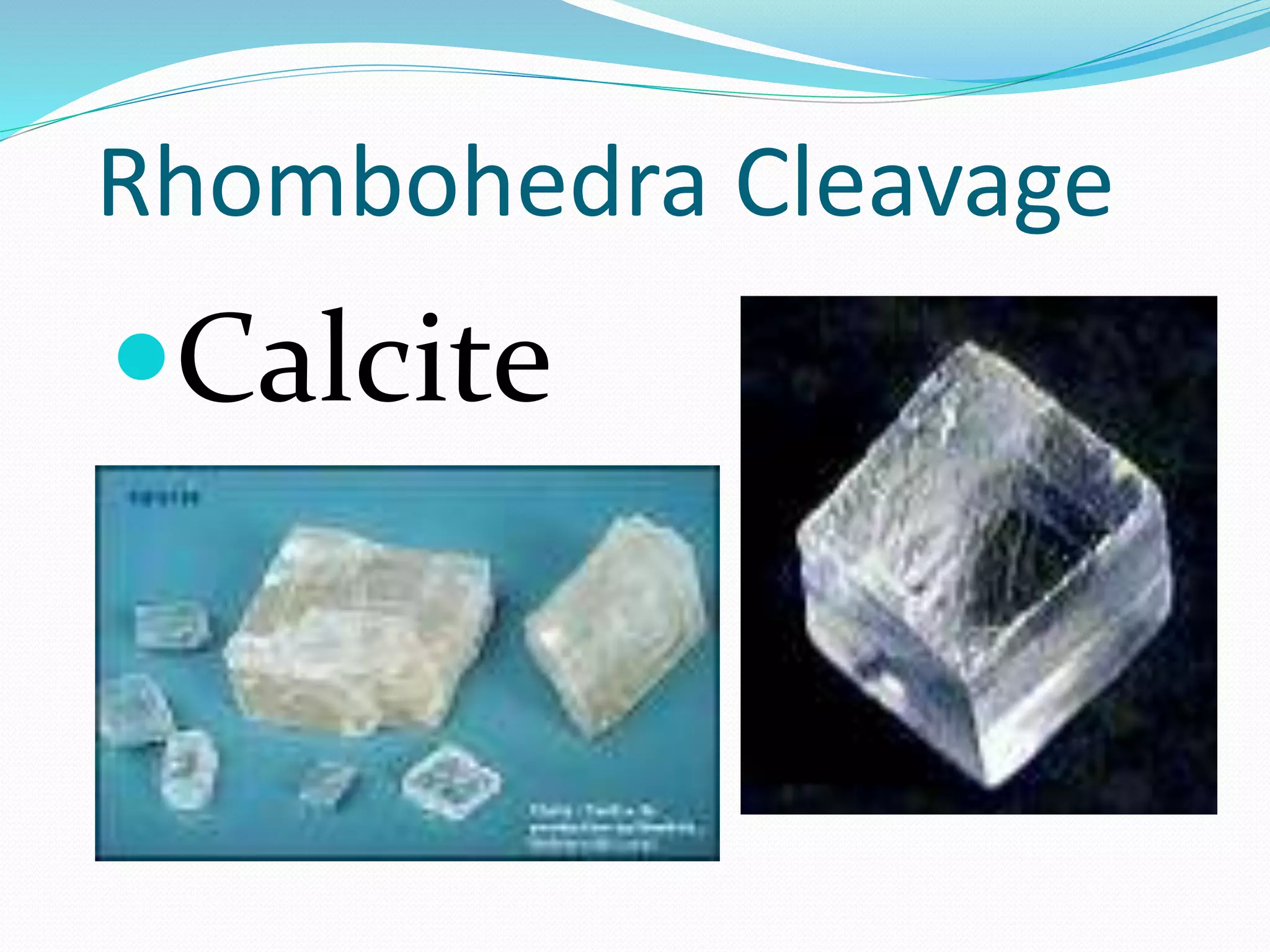
Rhombohedra Cleavage
Calcite
Fracture
Mineral breaks along
uneven lines and
results in rough and
curved surfaces.
Conchoidal Fracture-
looks like a clam
shell.
Due to atomic
configuration.
Other Properties
used to ID minerals
Magnetism
Acid test – calcium bubbles
when touched with an acid:
calcite
Fluorescence – glow under UV
light
Salty- contain naturally occurring
salt: (halite)

Minerals (1)