




Visual Imagination
Ornamental Design (n) is a design whose principal
purpose is decorative.
Much of ornamental design emerges from patterns
derived from national handicrafts such as weaving,
jewelry design, embroidery, lace, etc. Other can be
found chiseled in stone, painted on ceramic or wood
or stamped
or printed on fabric and paper. Ornamental design is
found nearly everywhere in the world.
Its presence in art or artifact symbolizes the
cultural or national identity of a people. In theatre
it’s importance can not be overstated, because it
can serve as an identifier. As an architectural
feature, for example, it can pinpoint a location.
As a piece of jewelry, it can suggest the origin of
the bearer.
Let us define the major components of
ornamental or decorative design.
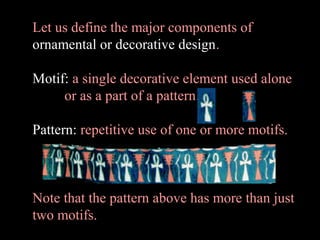
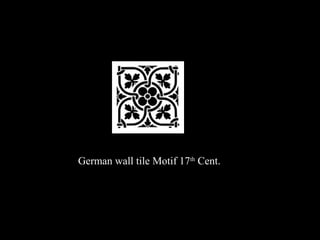
Motif: a single decorative element used alone
or as a part of a pattern.
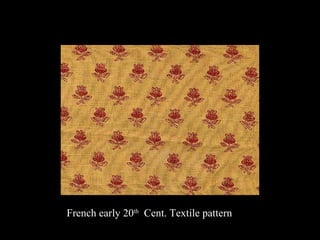
Pattern: repetitive use of one or more motifs.

Note that the pattern above has more than just
two motifs.
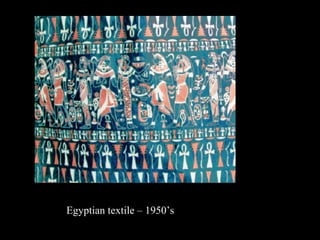
Egyptian textile – 1950’s
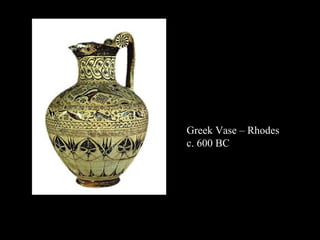
Greek Vase – Rhodes
c. 600 BC
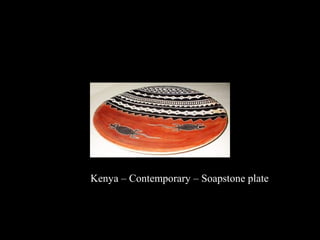
Kenya – Contemporary – Soapstone plate
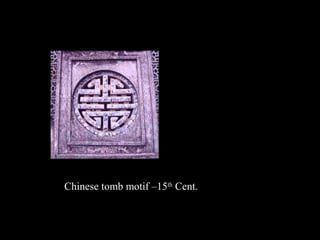
Chinese tomb motif –15th Cent.
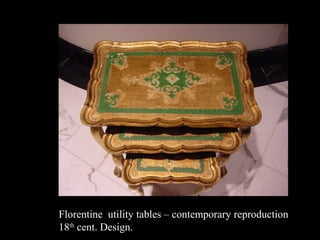
Florentine utility tables – contemporary reproduction
18th cent. Design.
German wall tile Motif 17th Cent.
French early 20th Cent. Textile pattern
Irish Jewelry box of Brasilian
Walnut. c 1700
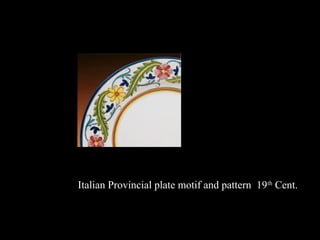
Italian Provincial plate motif and pattern 19th Cent.
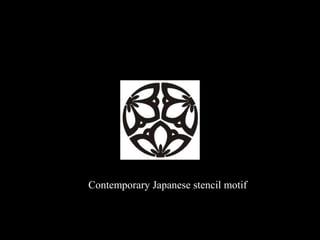
Contemporary Japanese stencil motif
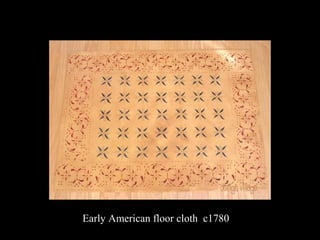
Early American floor cloth c1780
Kashmir – India – Shawl fragment 19th Cent.`
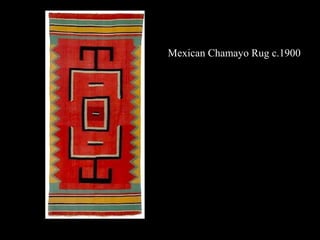
Mexican Chamayo Rug c.1900
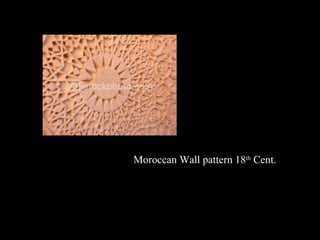
Moroccan Wall pattern 18th Cent.
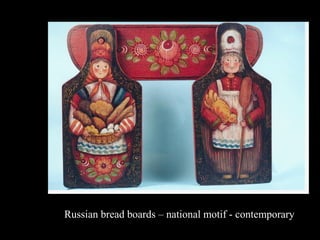
Russian bread boards – national motif - contemporary
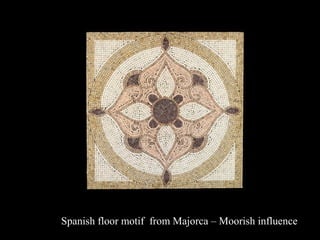
Spanish floor motif from Majorca – Moorish influence
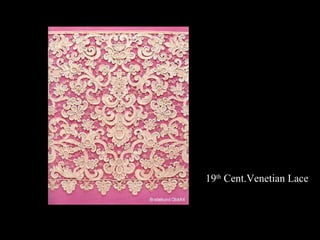
19th Cent.Venetian Lace
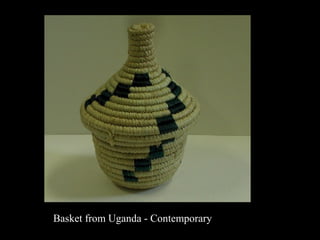
Basket from Uganda - Contemporary
THE HOMEWORK PROJECT
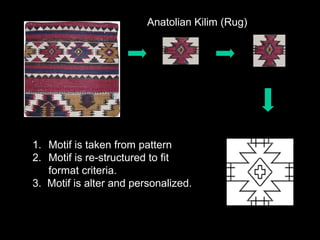
Anatolian Kilim (Rug)

1. Motif is taken from pattern
2. Motif is re-structured to fit
format criteria.
3. Motif is alter and personalized.
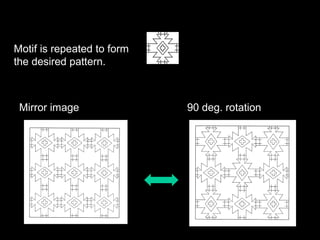
Motif is repeated to form
the desired pattern.

Mirror image

90 deg. rotation
6   motif and pattern

6 motif and pattern