The Principles of Design
Fashion Strategies
The Principles of Design
Fashion Strategies
PRINCIPLES OF DESIGN
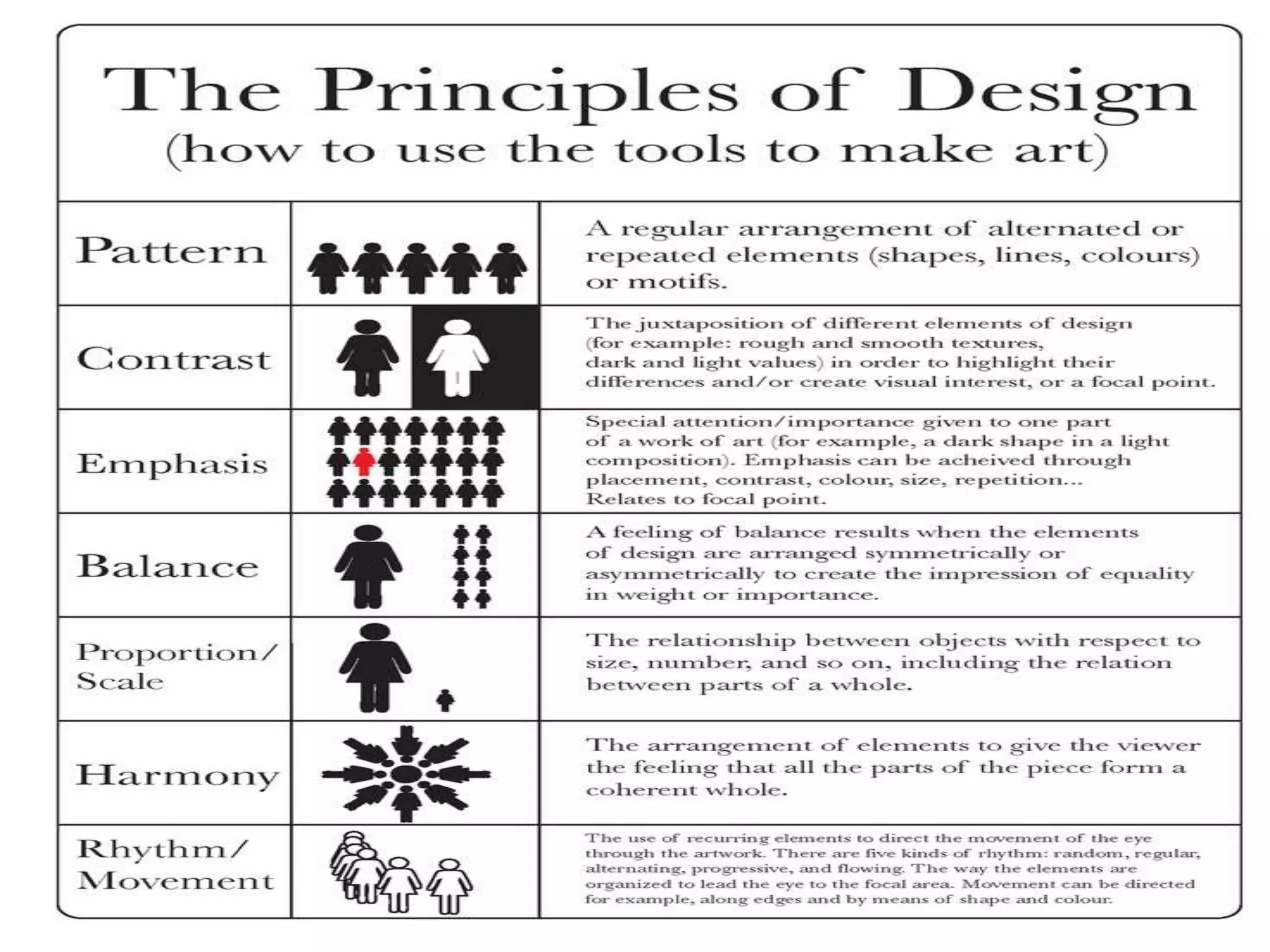
The principles of design serve as a guide lines for combining
elements. The principles combine the elements to create an
aesthetic placement of things that will produce a good design.
Again, the way in which these principles are applied affects the
expressive content, or the message of the work. Fashion
Designers are taught Principles of designs in beginning of their
student life, so in futures they may not consciously think of these
principles as they work but if some thing is wrong with a design,
they are able to analyze the problem in terms of proportions,
balance, rhythm, emphasis and unity to create a harmonious
design.
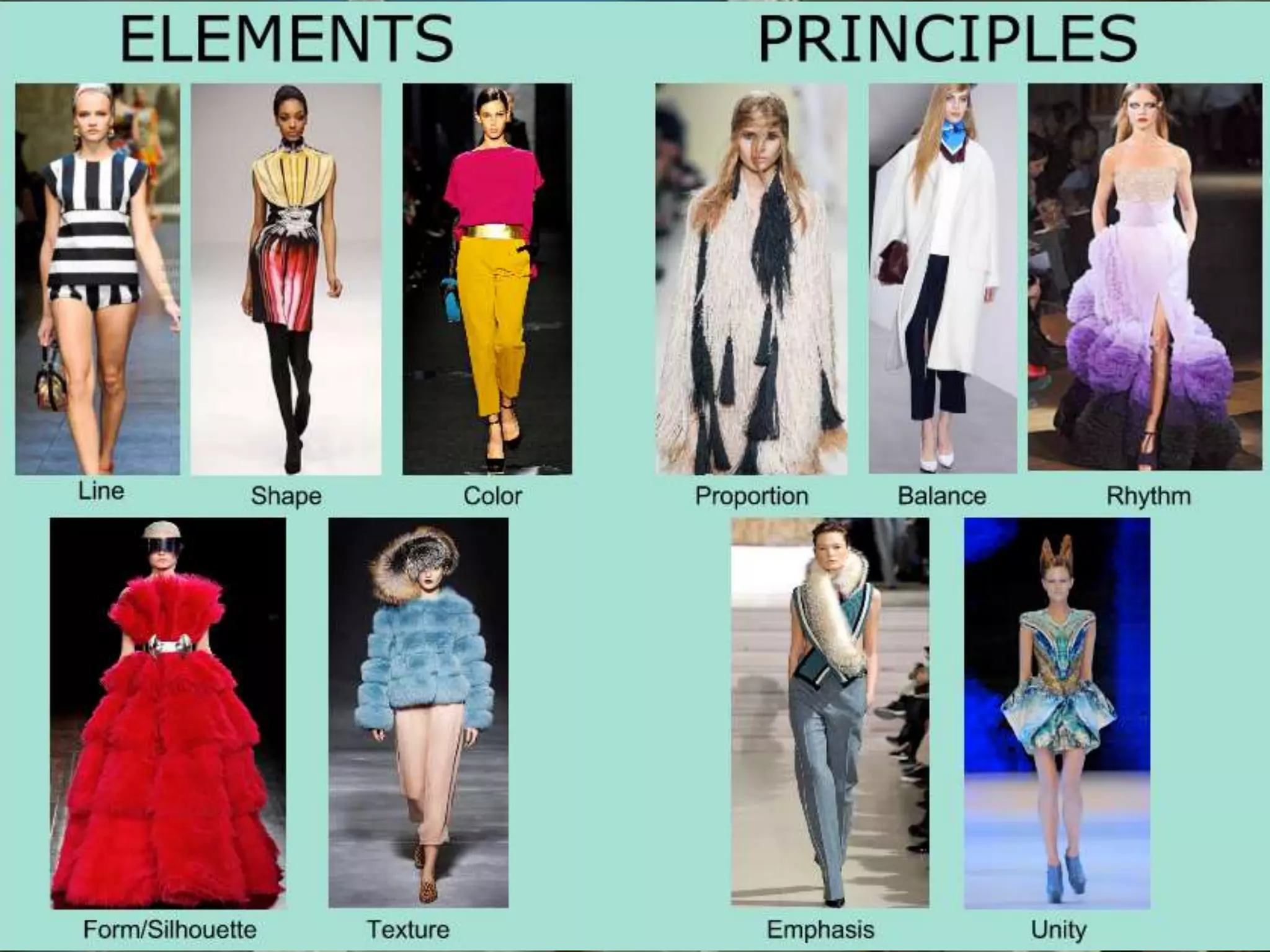
PRINCIPLES ARE…
• Proportion (Scale)
• Balance
• Emphasis
• Rhythm
• Harmony
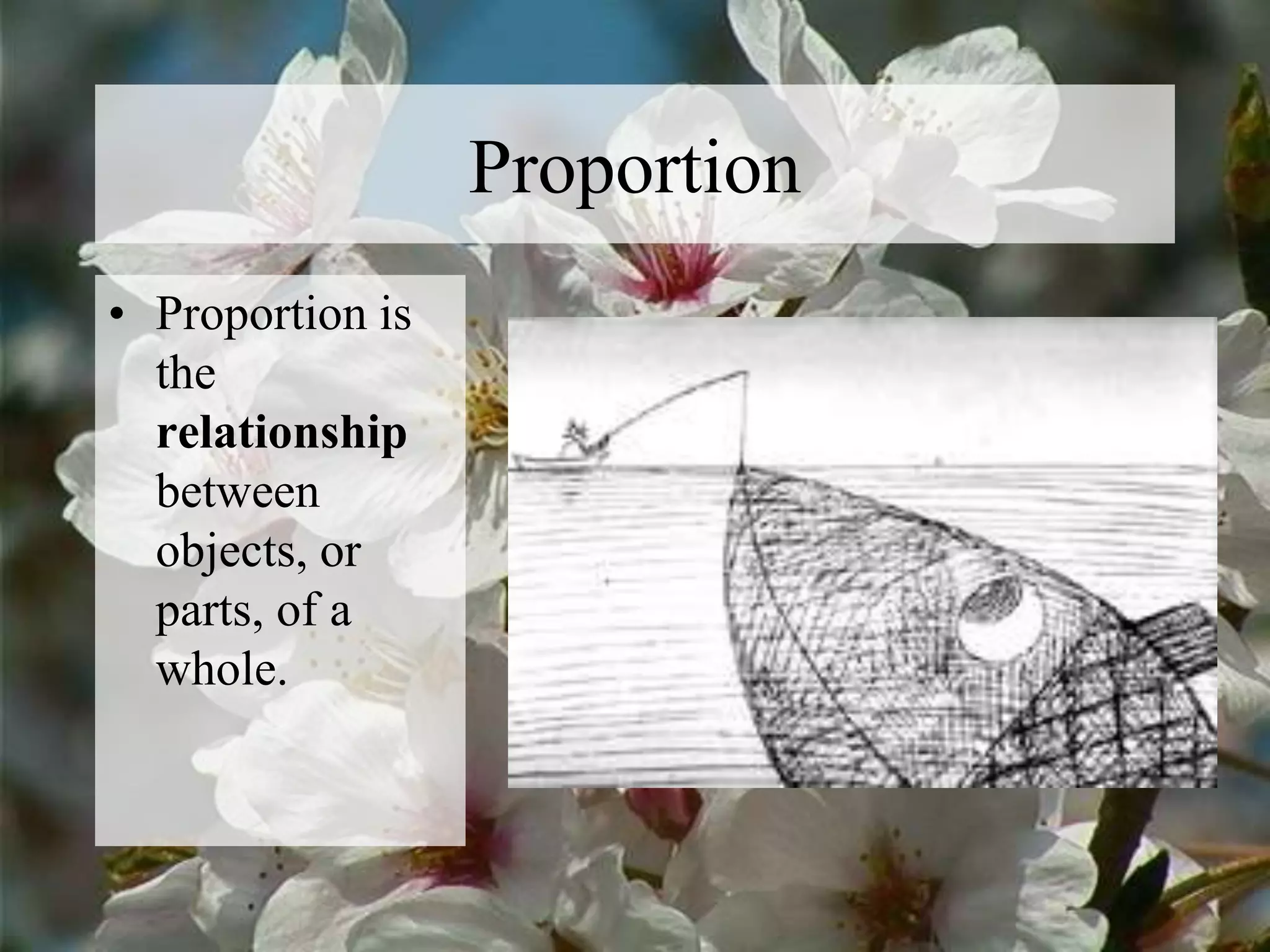
Proportion
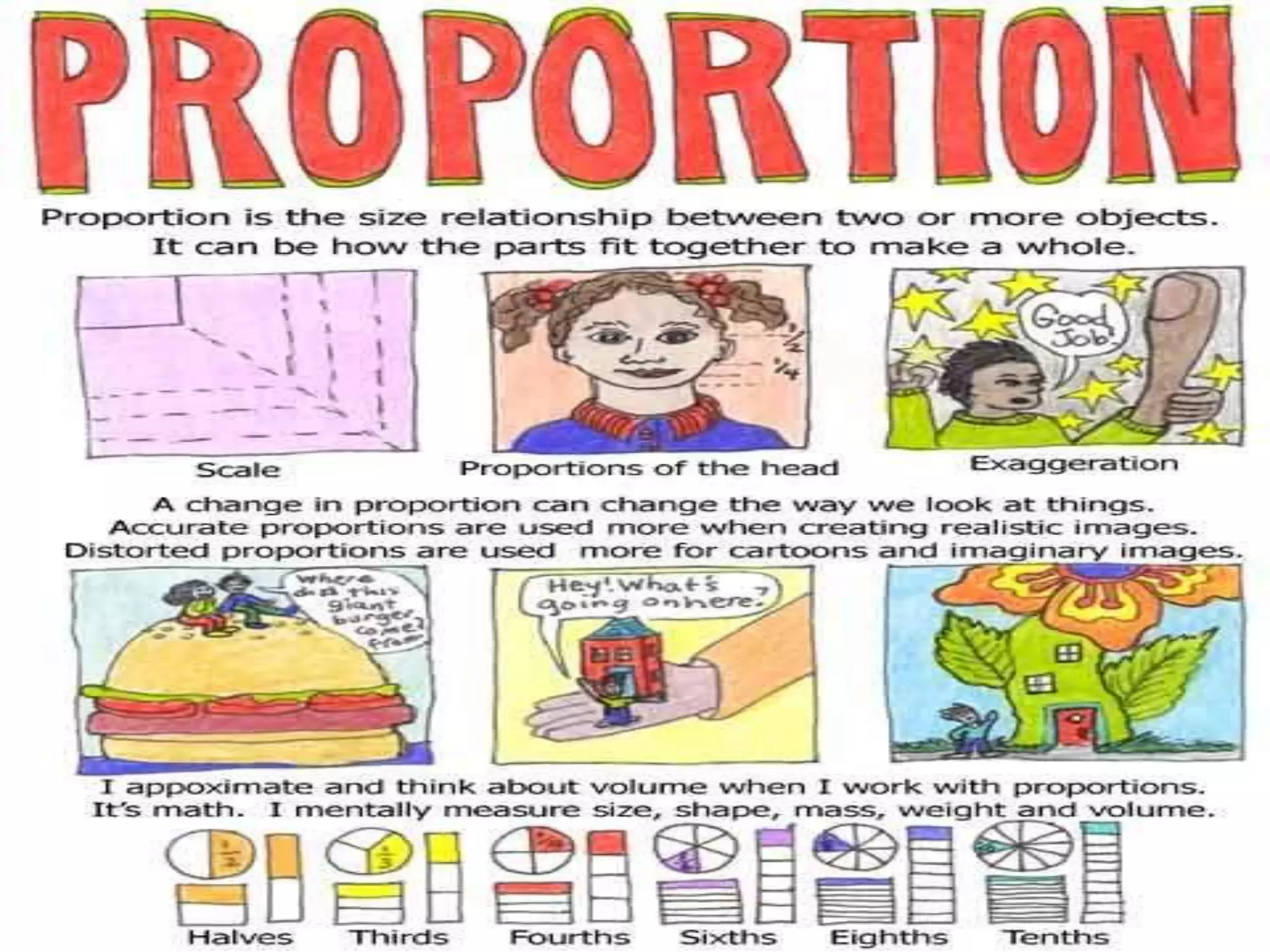
• Proportion is
the
relationship
between
objects, or
parts, of a
whole.
Proportion is simply the pleasing interrelationship of the sizes
of all parts of the garments. Standards of proportion change with
fashion cycles along with the evolution in silhouette and line. The
length and size of design features like pockets, trimmings,
surface ornamentation or parts of garments within the silhouettes
should compliment the whole.
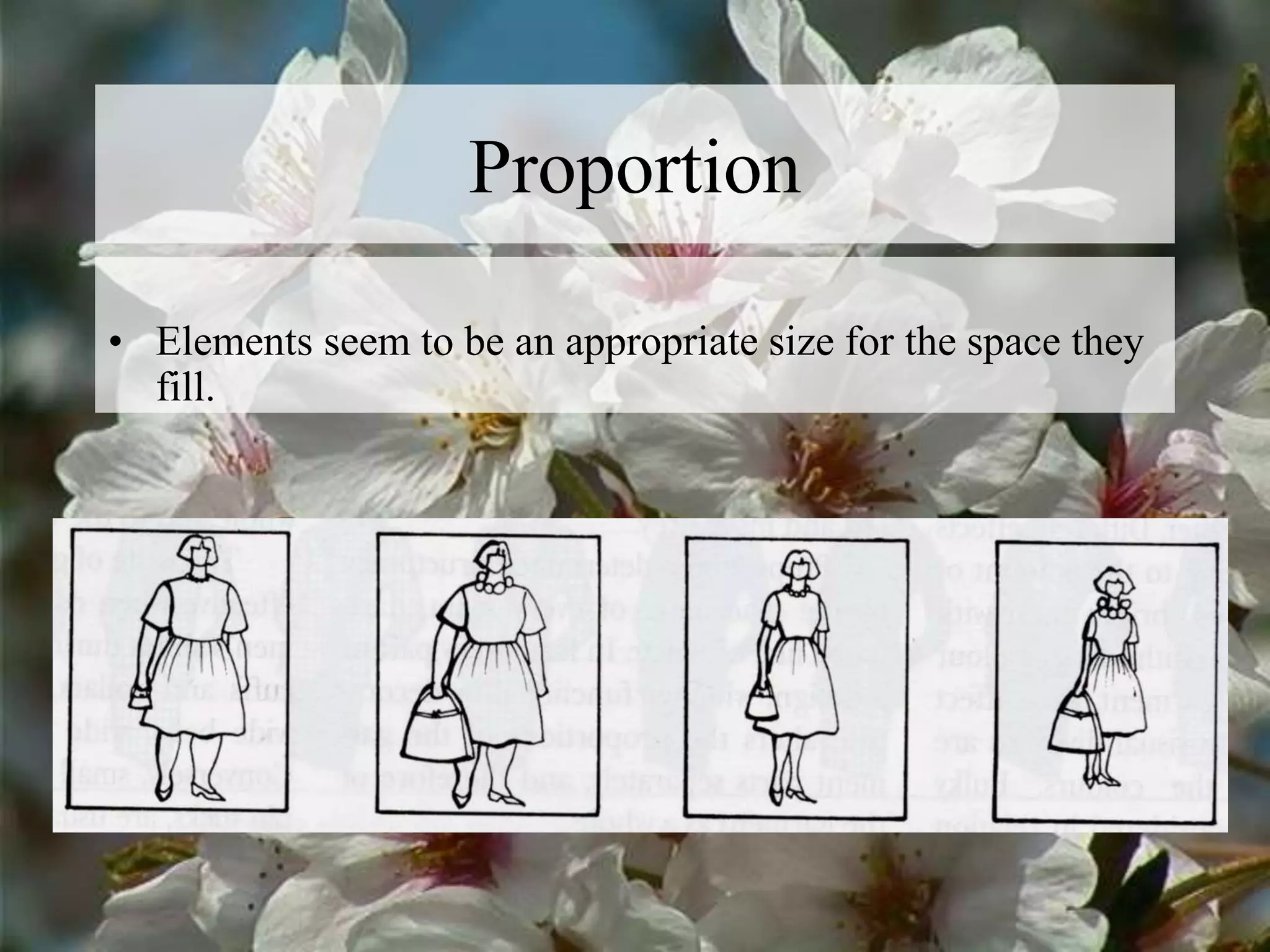
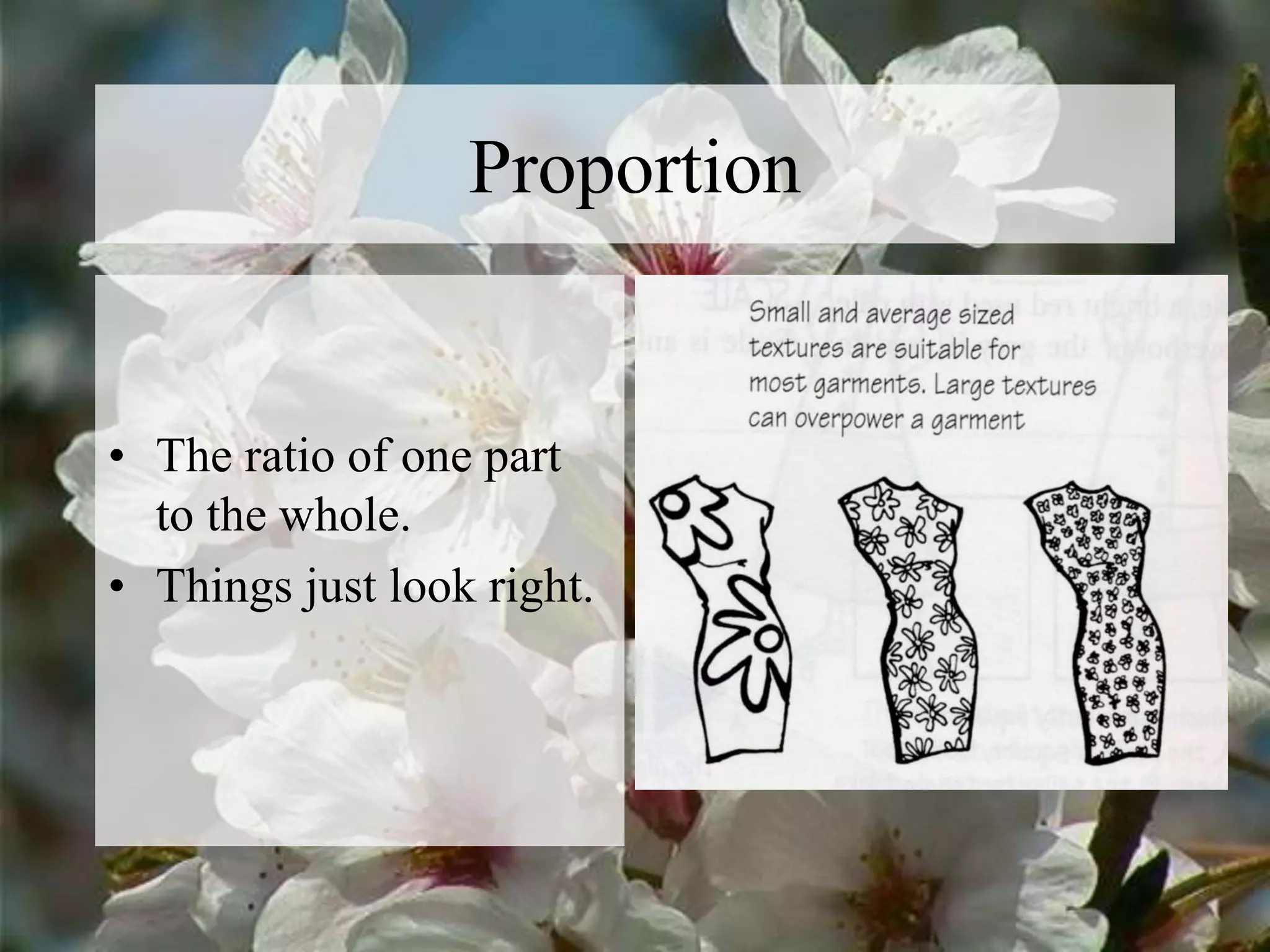
Proportion
• Elements seem to be an appropriate size for the space they
fill.
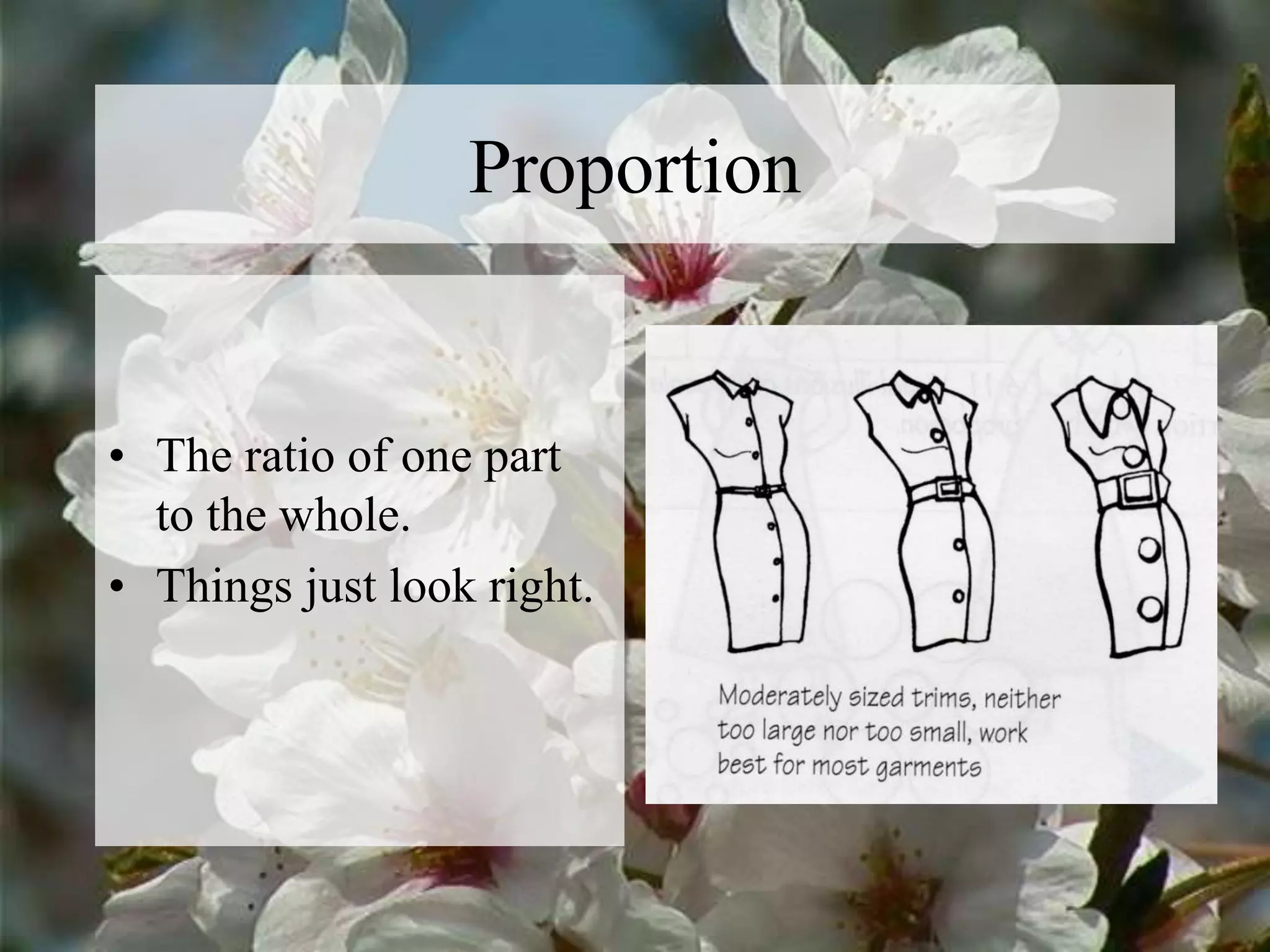
Proportion
• The ratio of one part
to the whole.
• Things just look right.
Proportion
• The ratio of one part
to the whole.
• Things just look right.
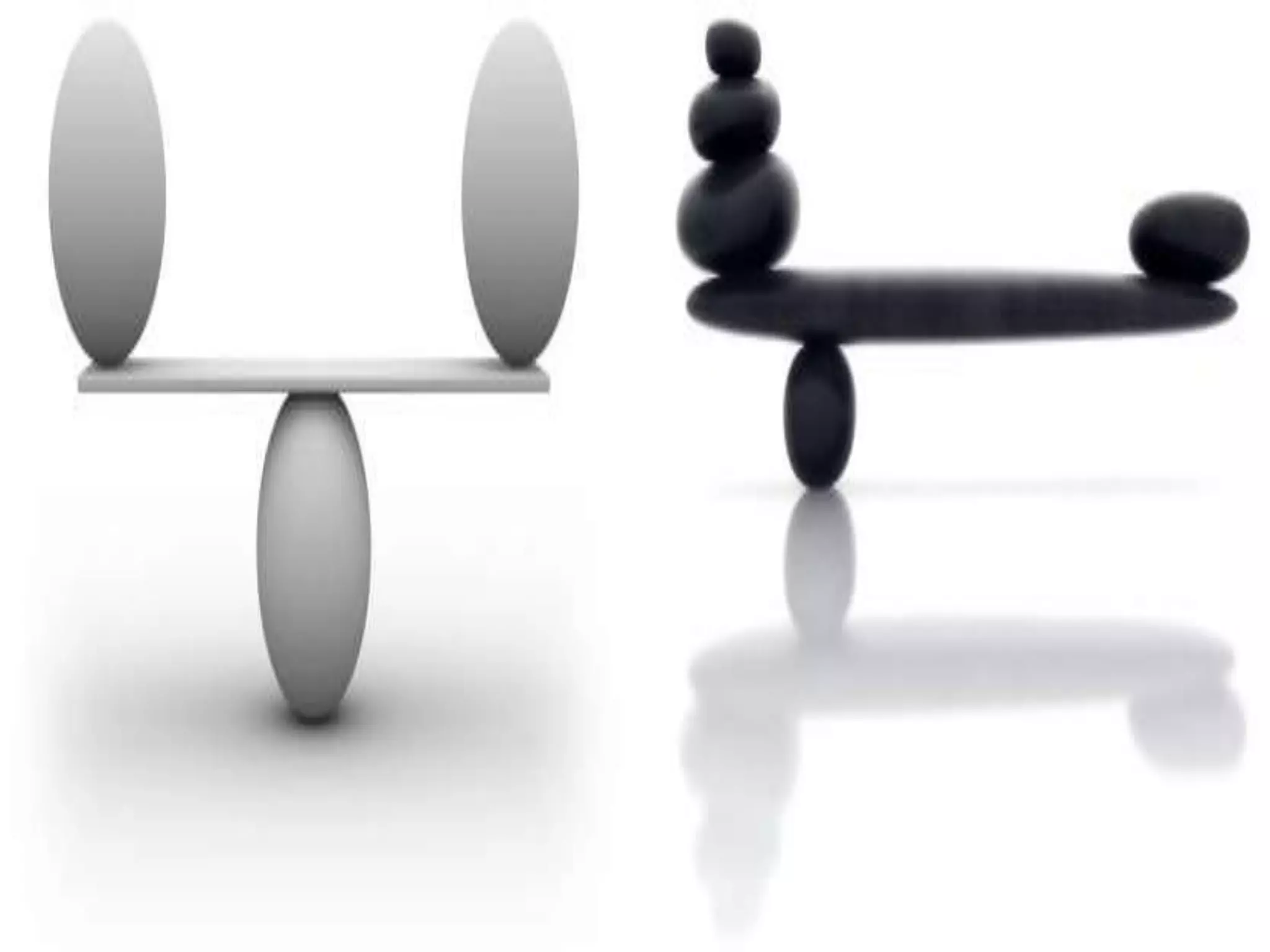
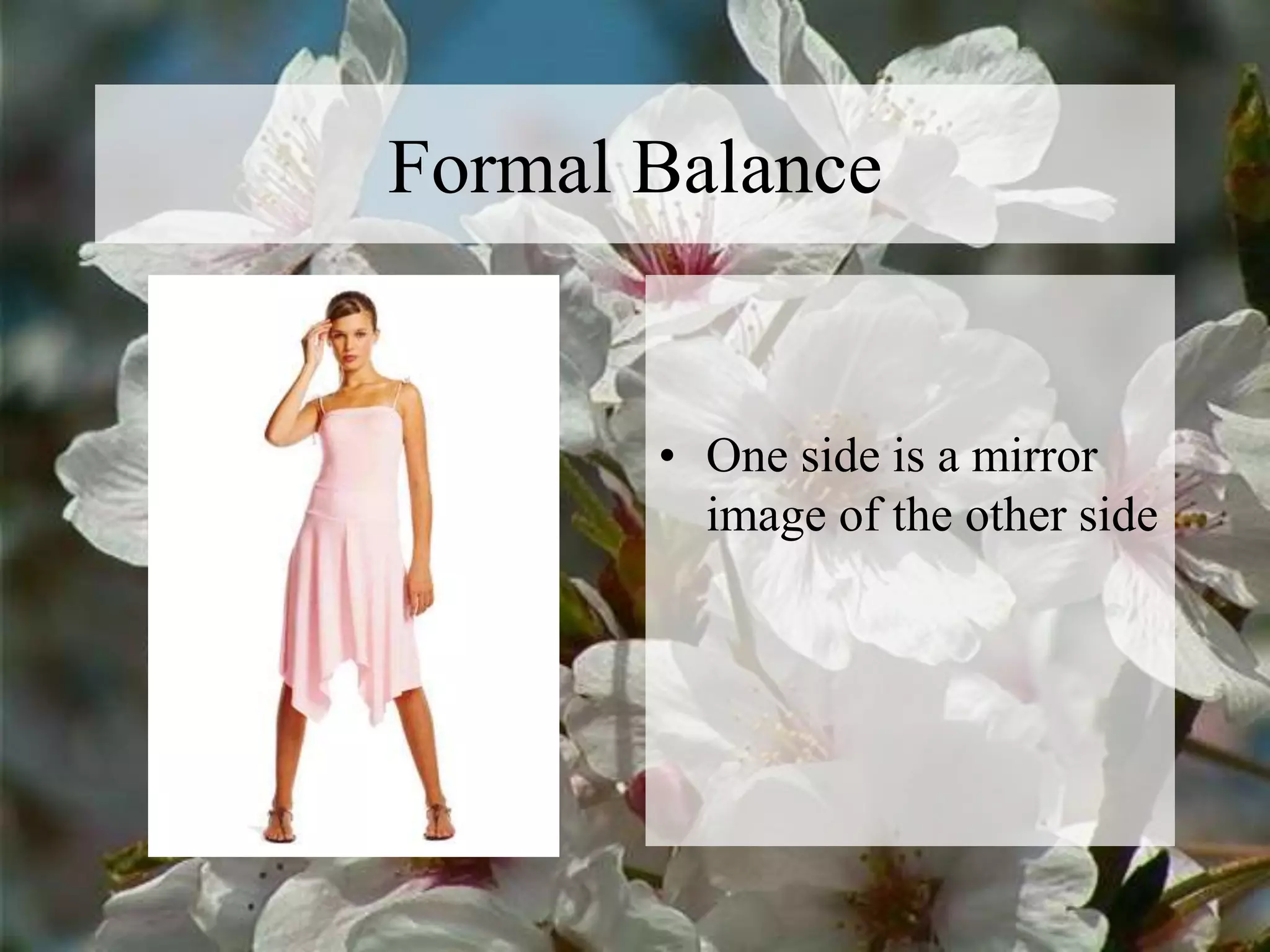
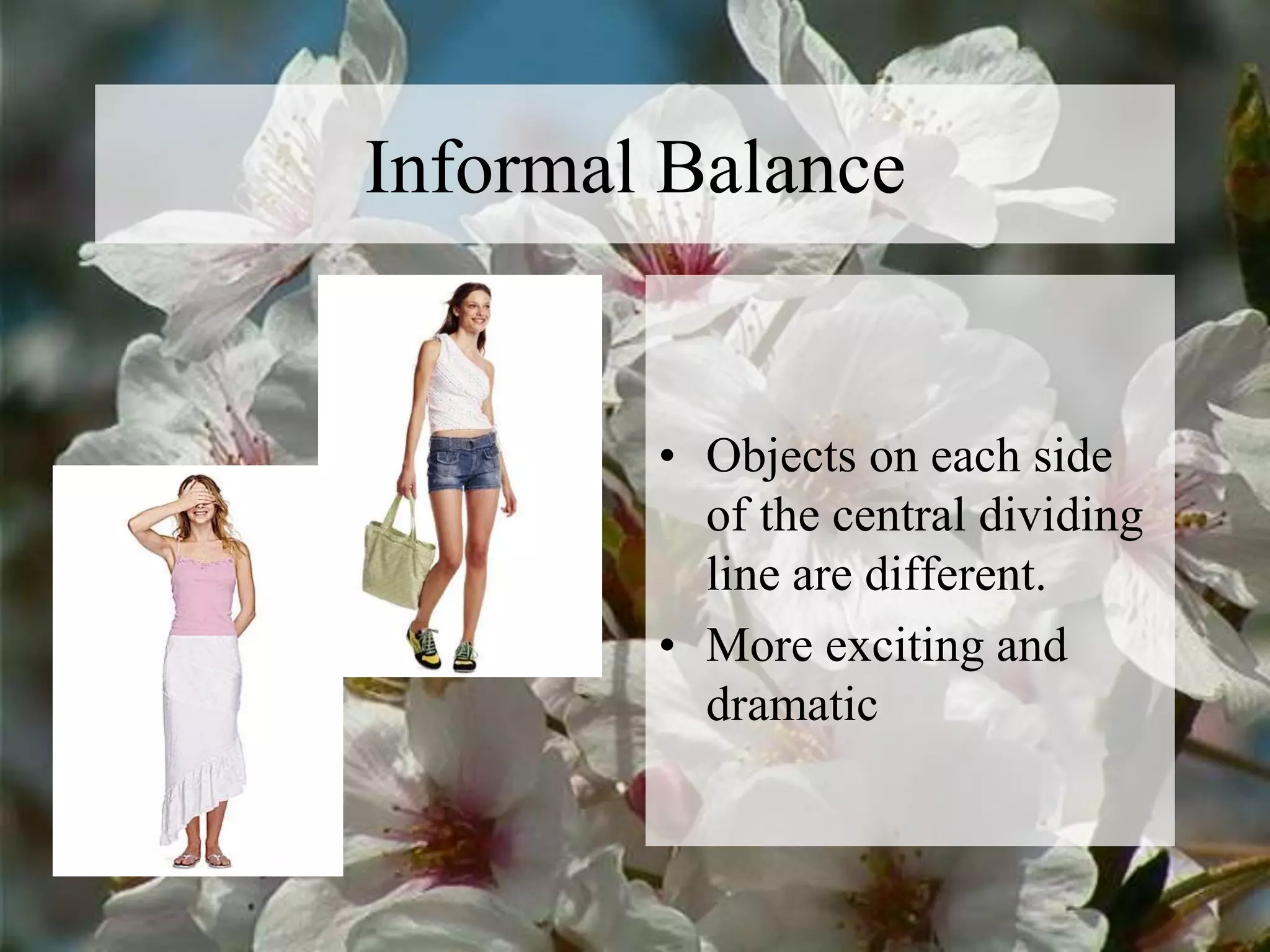
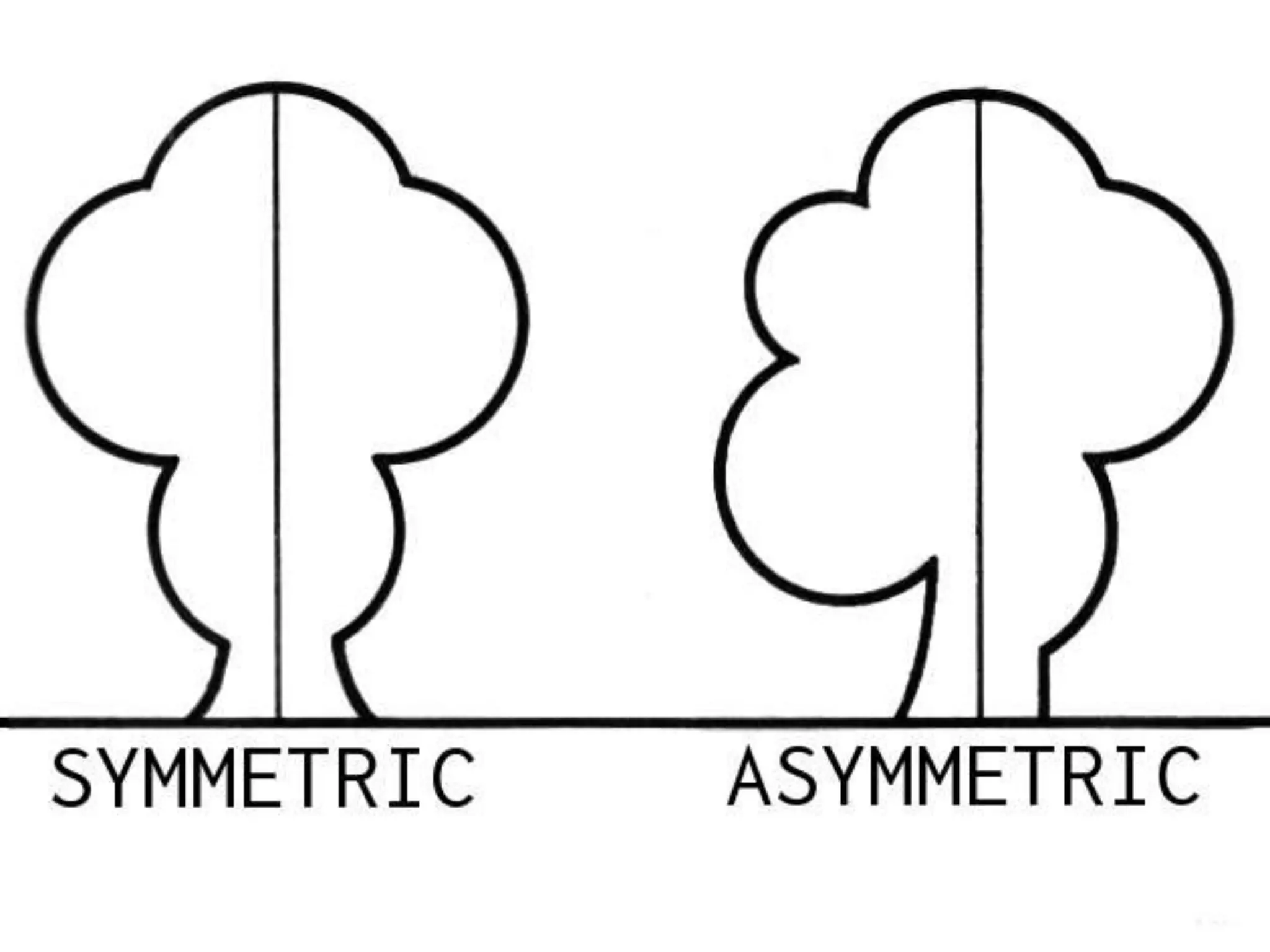
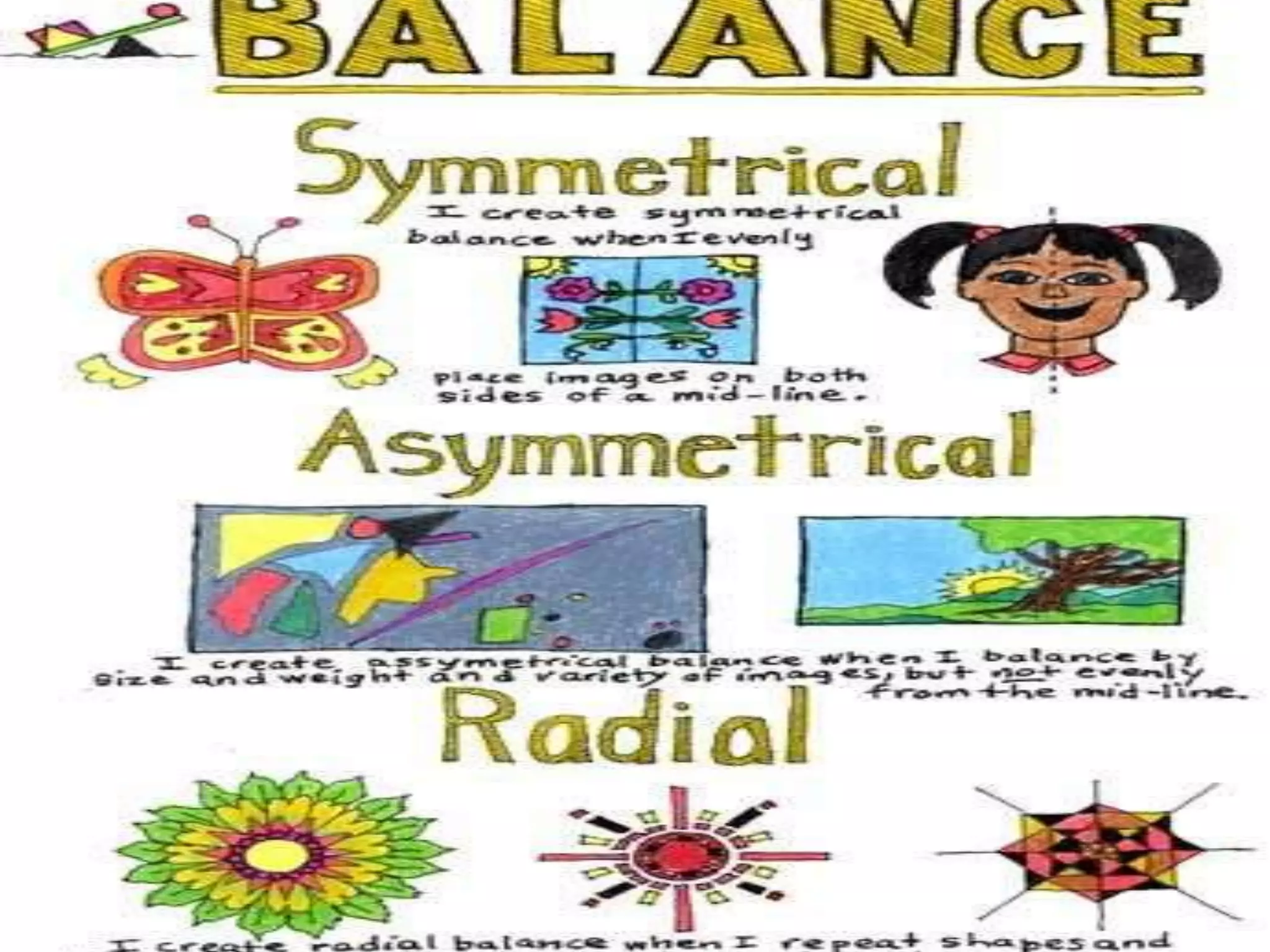
BALANCE
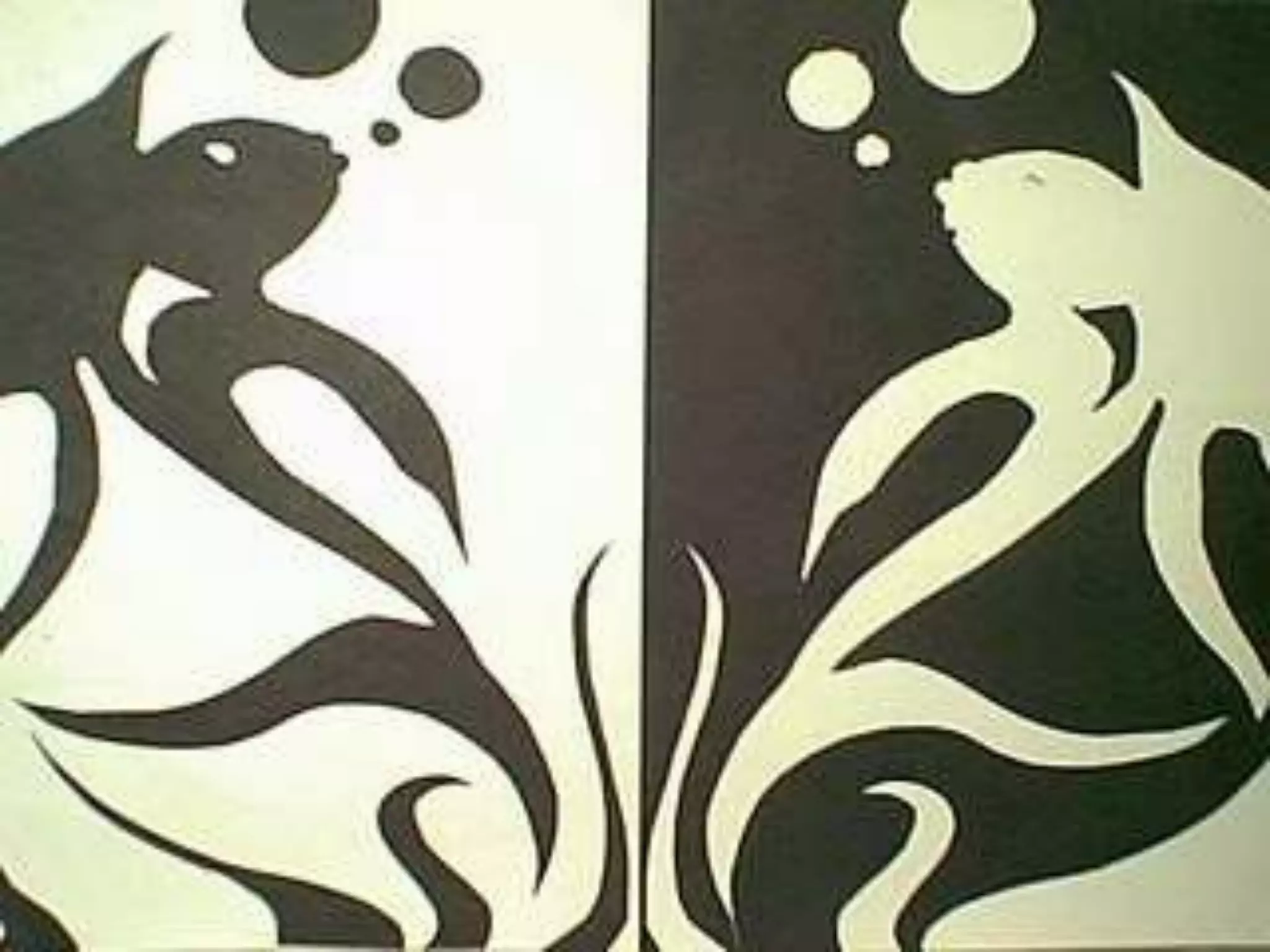
Formal Balance
• One side is a mirror
image of the other side
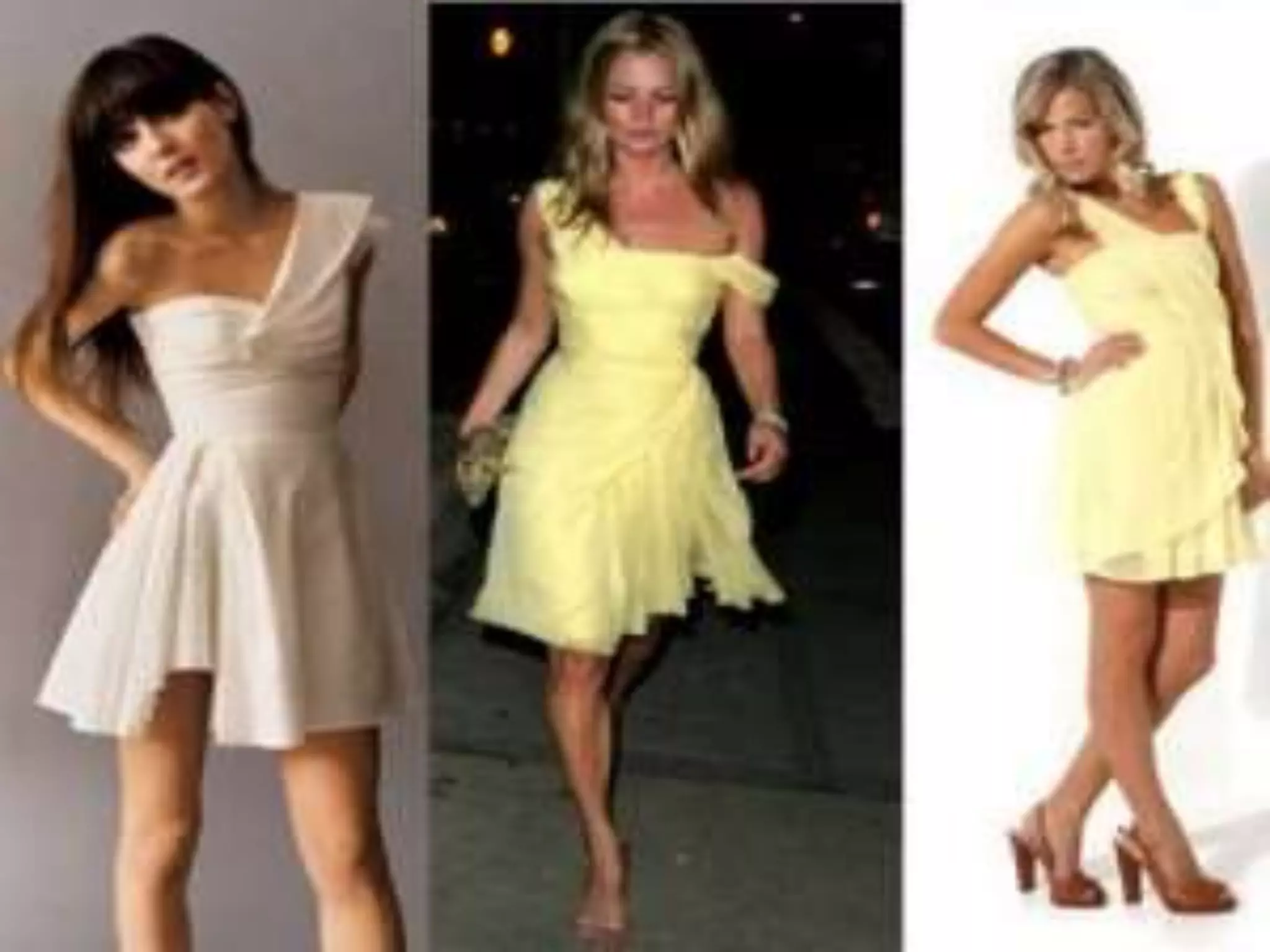
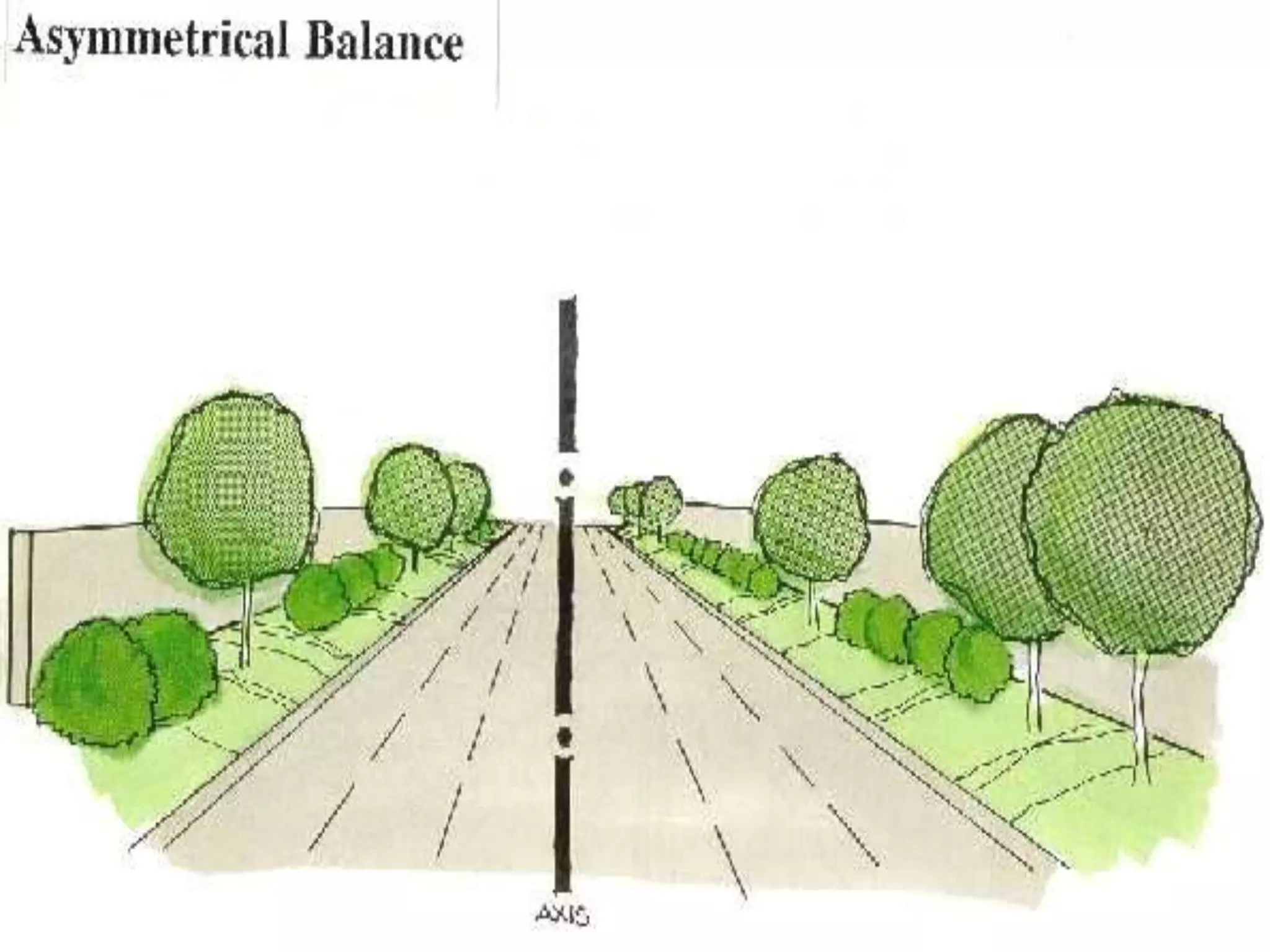
Informal Balance
• Objects on each side
of the central dividing
line are different.
• More exciting and
dramatic
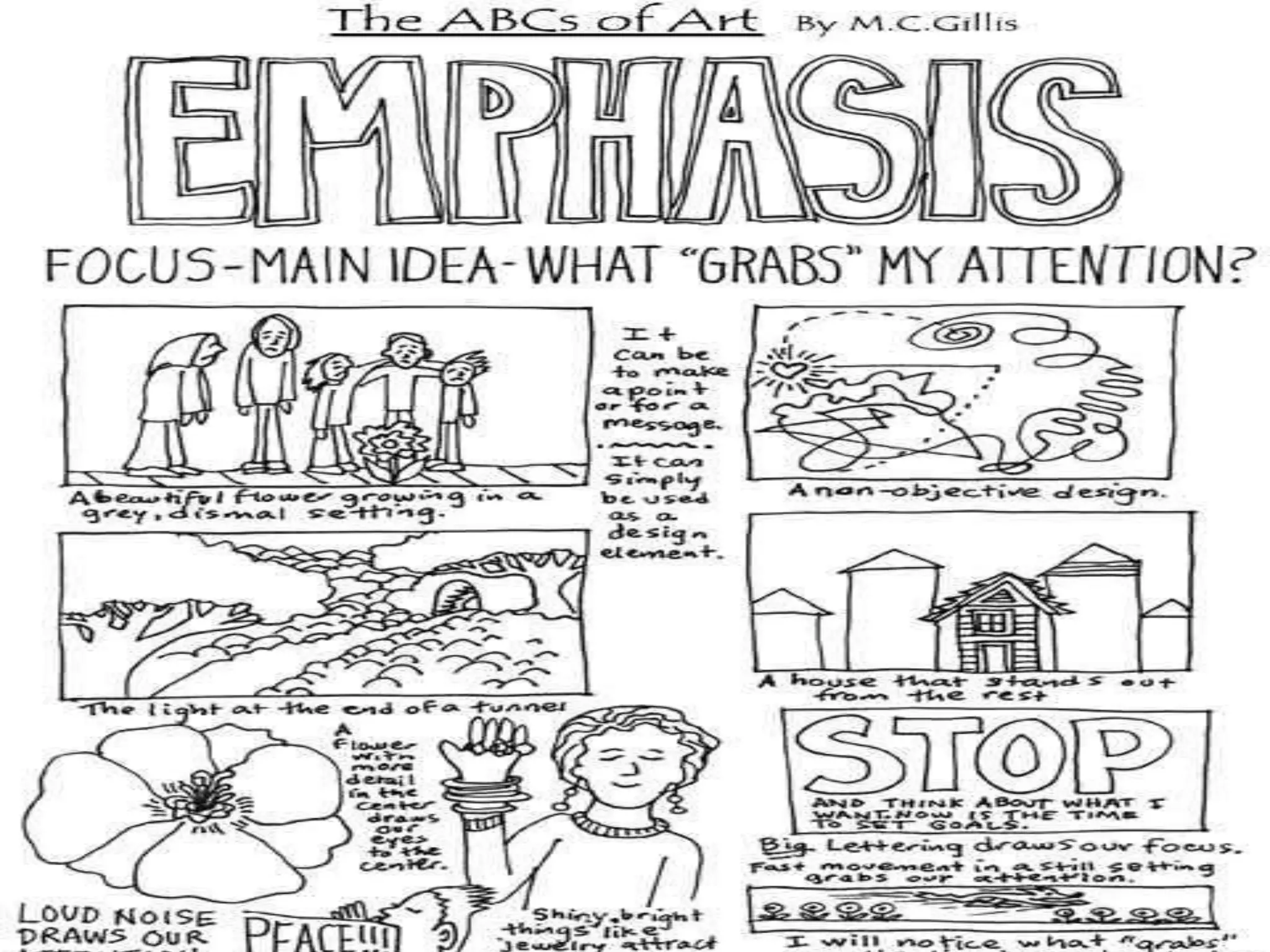
EMPHASIS
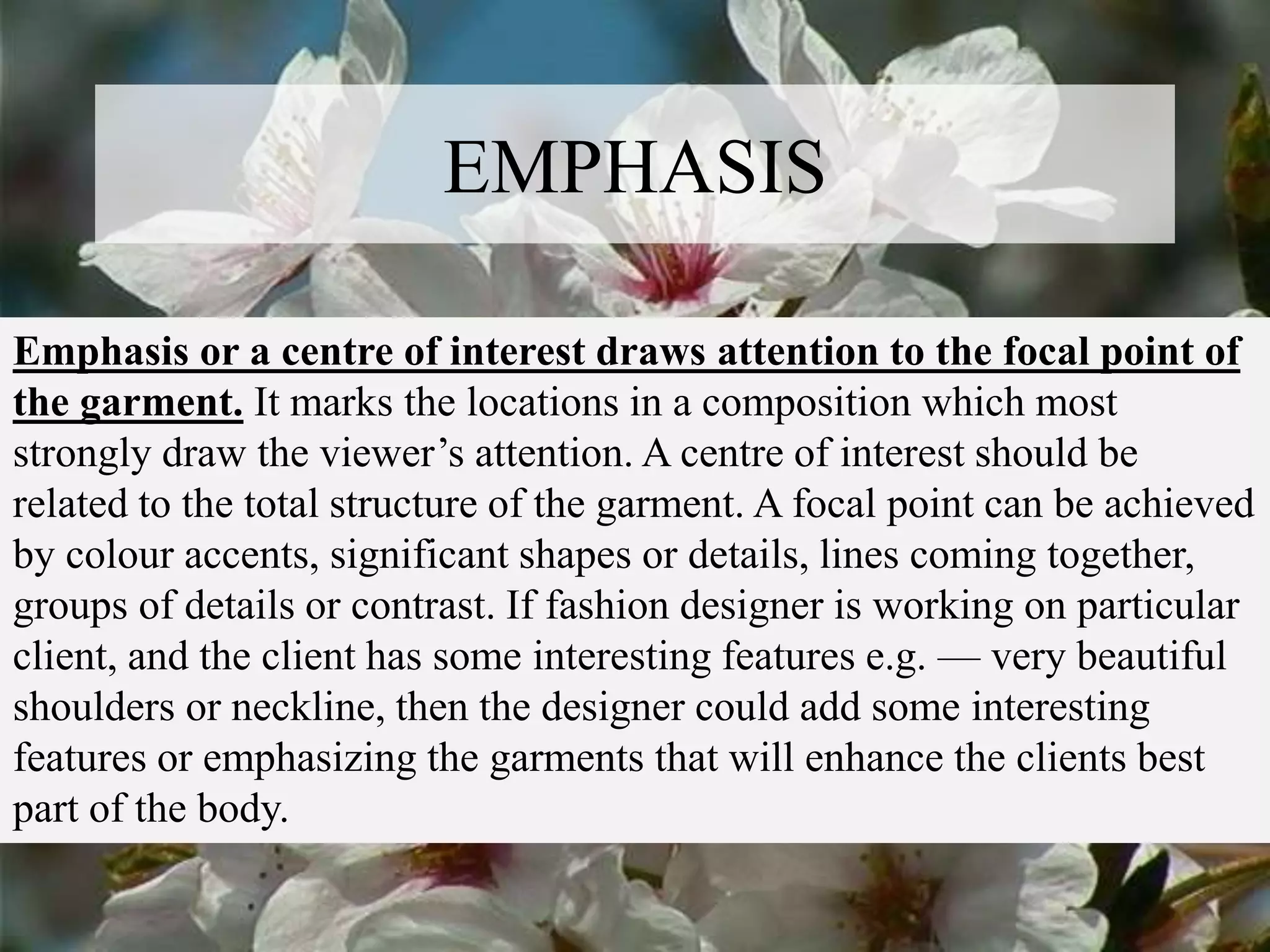
Emphasis or a centre of interest draws attention to the focal point of
the garment. It marks the locations in a composition which most
strongly draw the viewer’s attention. A centre of interest should be
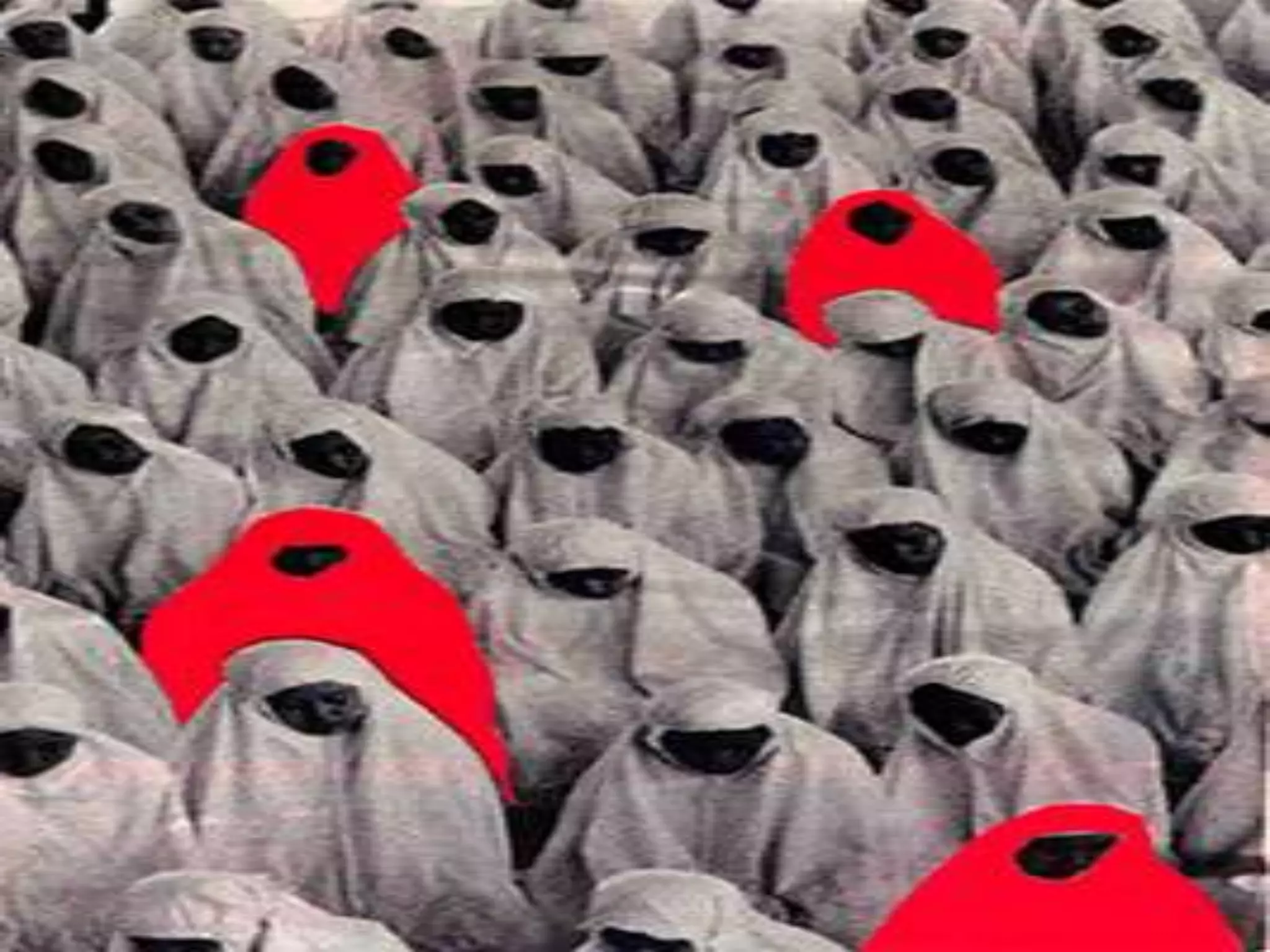
related to the total structure of the garment. A focal point can be achieved
by colour accents, significant shapes or details, lines coming together,
groups of details or contrast. If fashion designer is working on particular
client, and the client has some interesting features e.g. — very beautiful
shoulders or neckline, then the designer could add some interesting
features or emphasizing the garments that will enhance the clients best
part of the body.
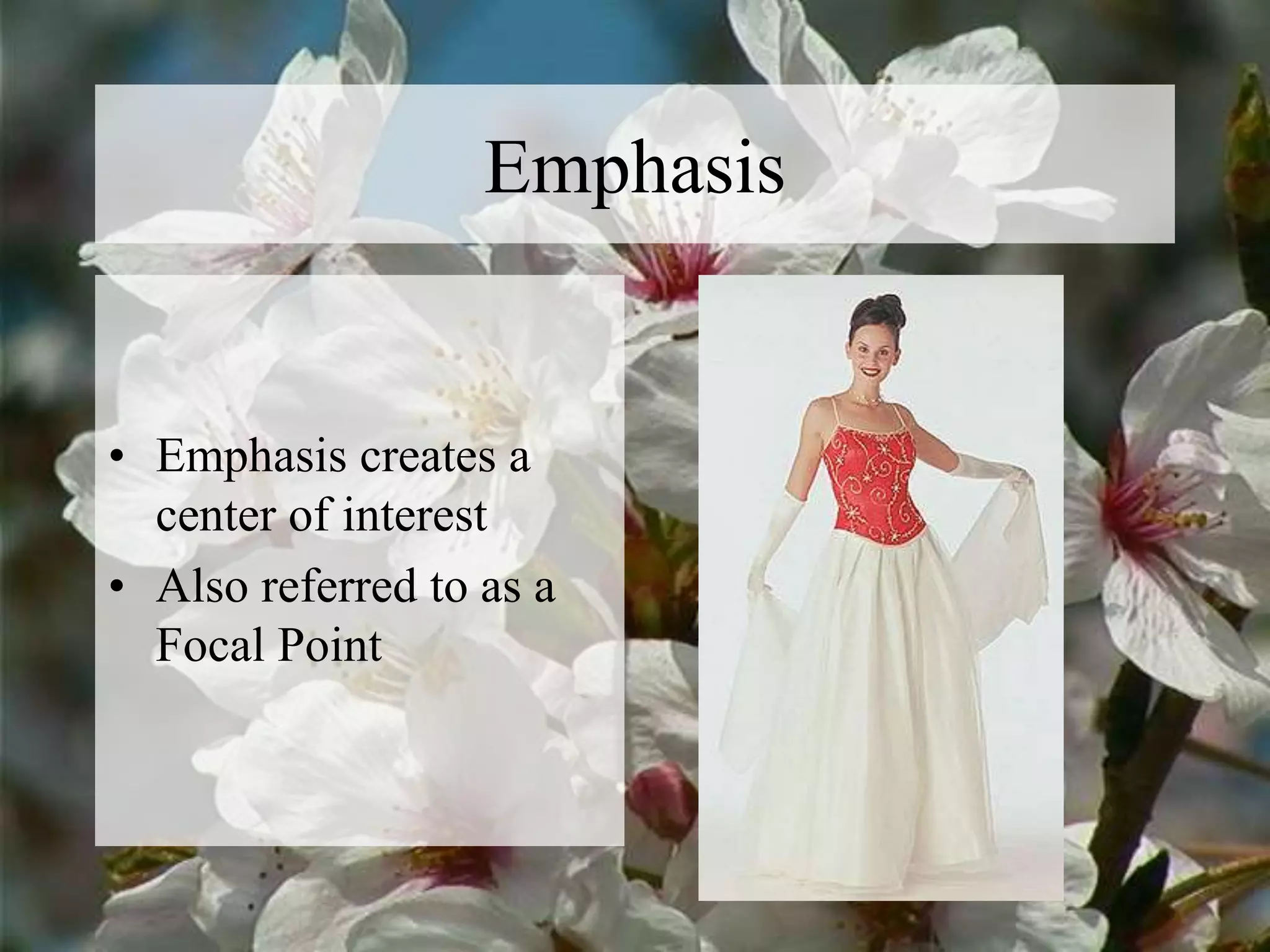
Emphasis
• Emphasis creates a
center of interest
• Also referred to as a
Focal Point
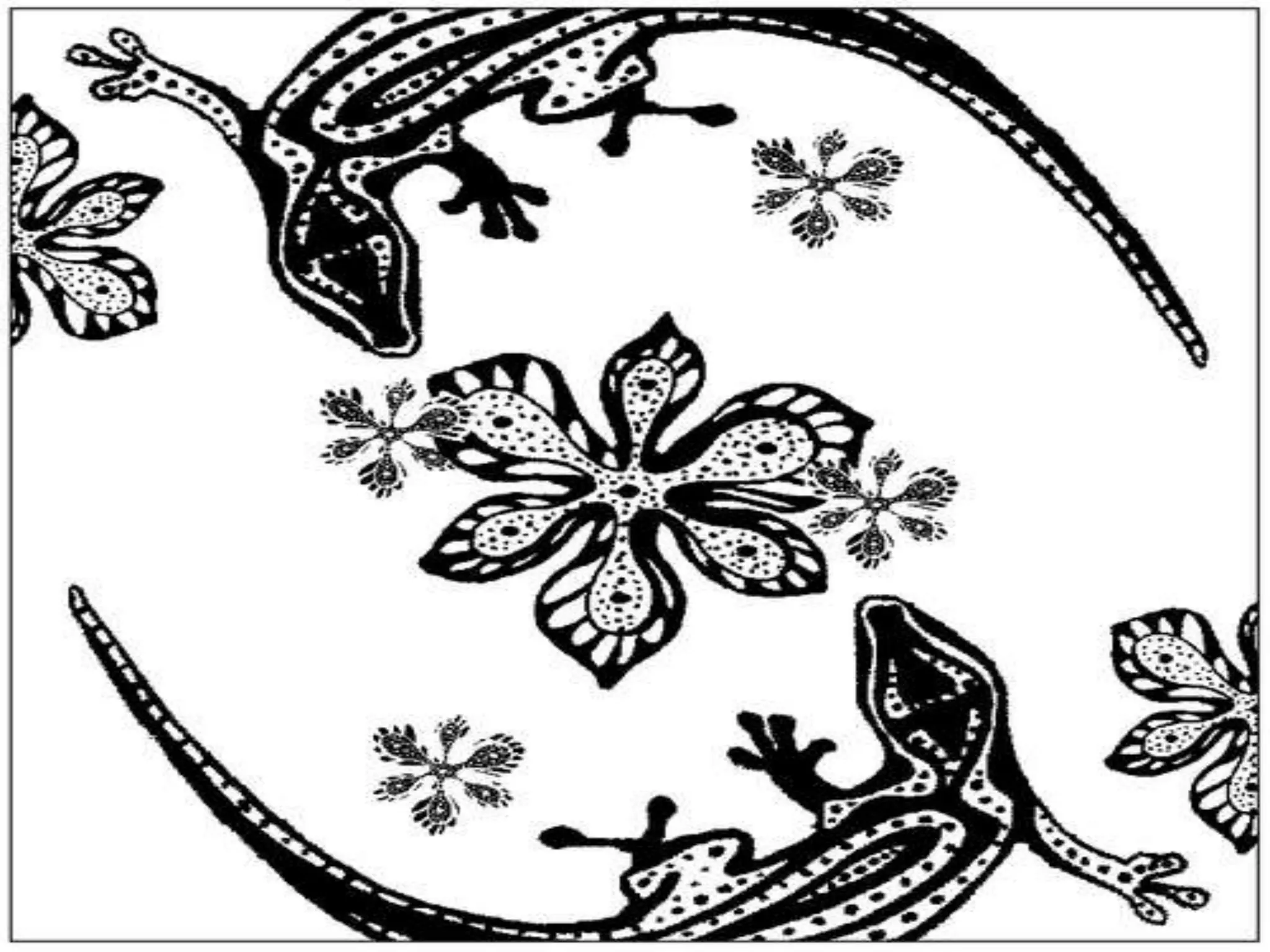
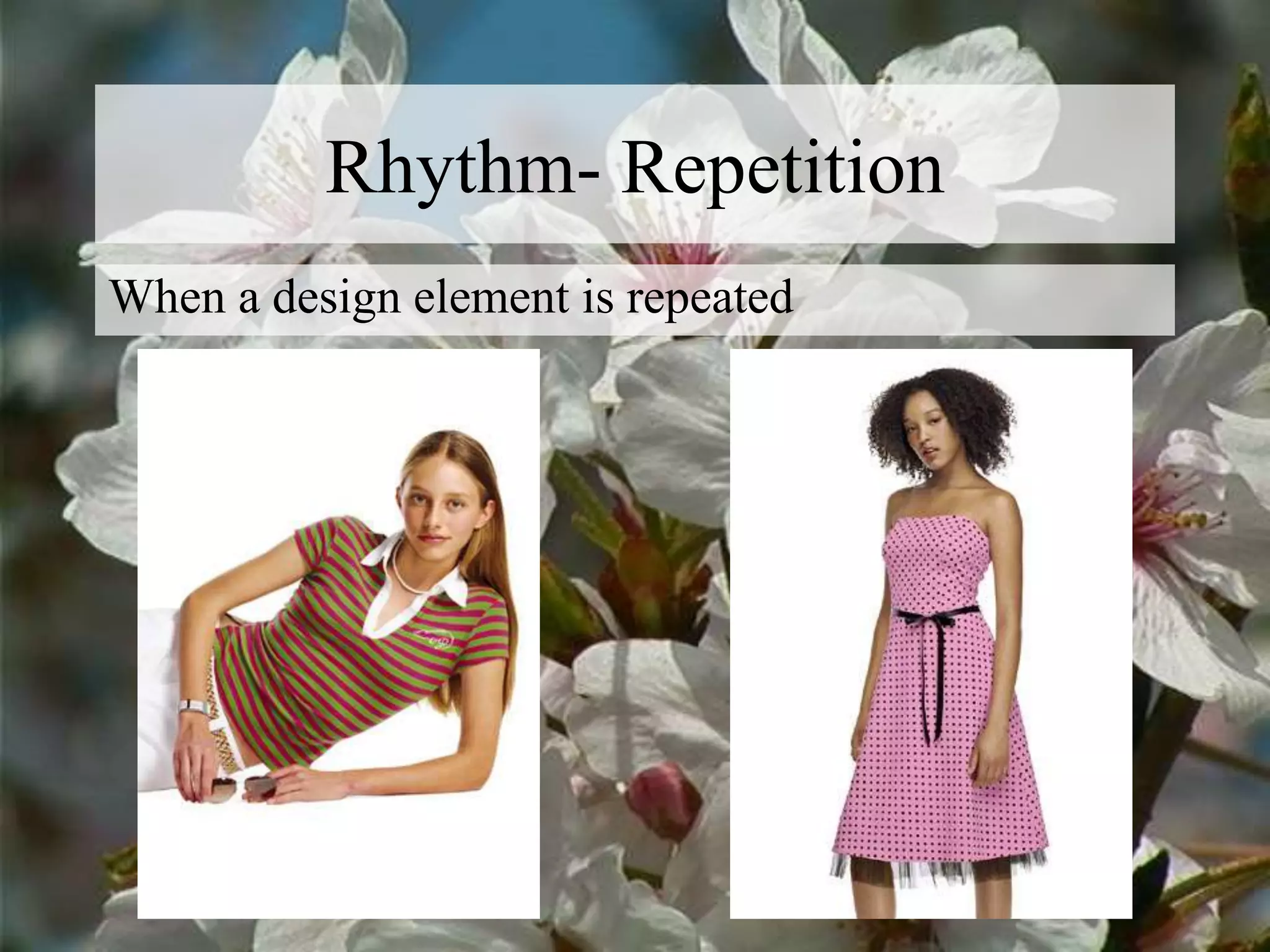
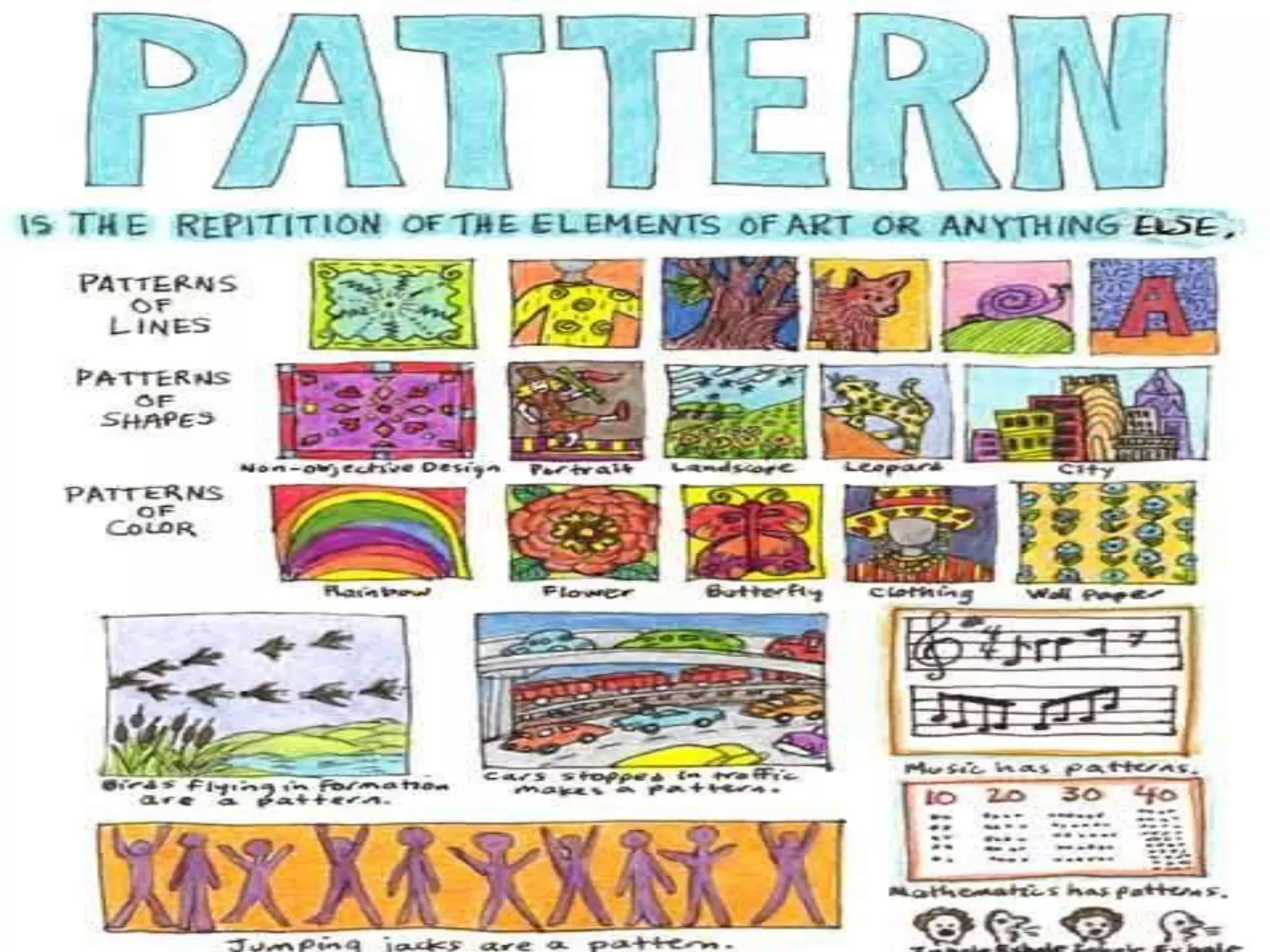
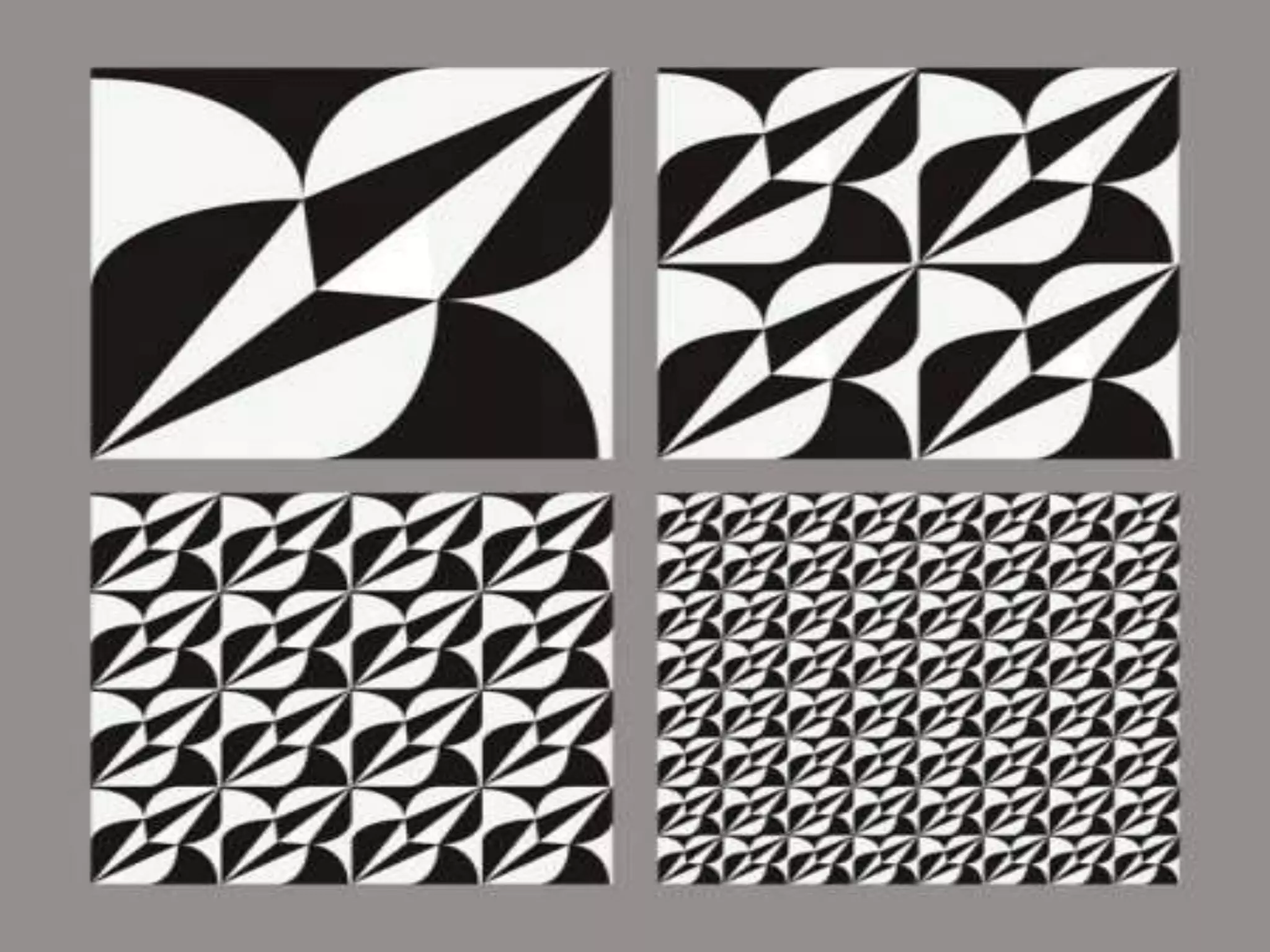
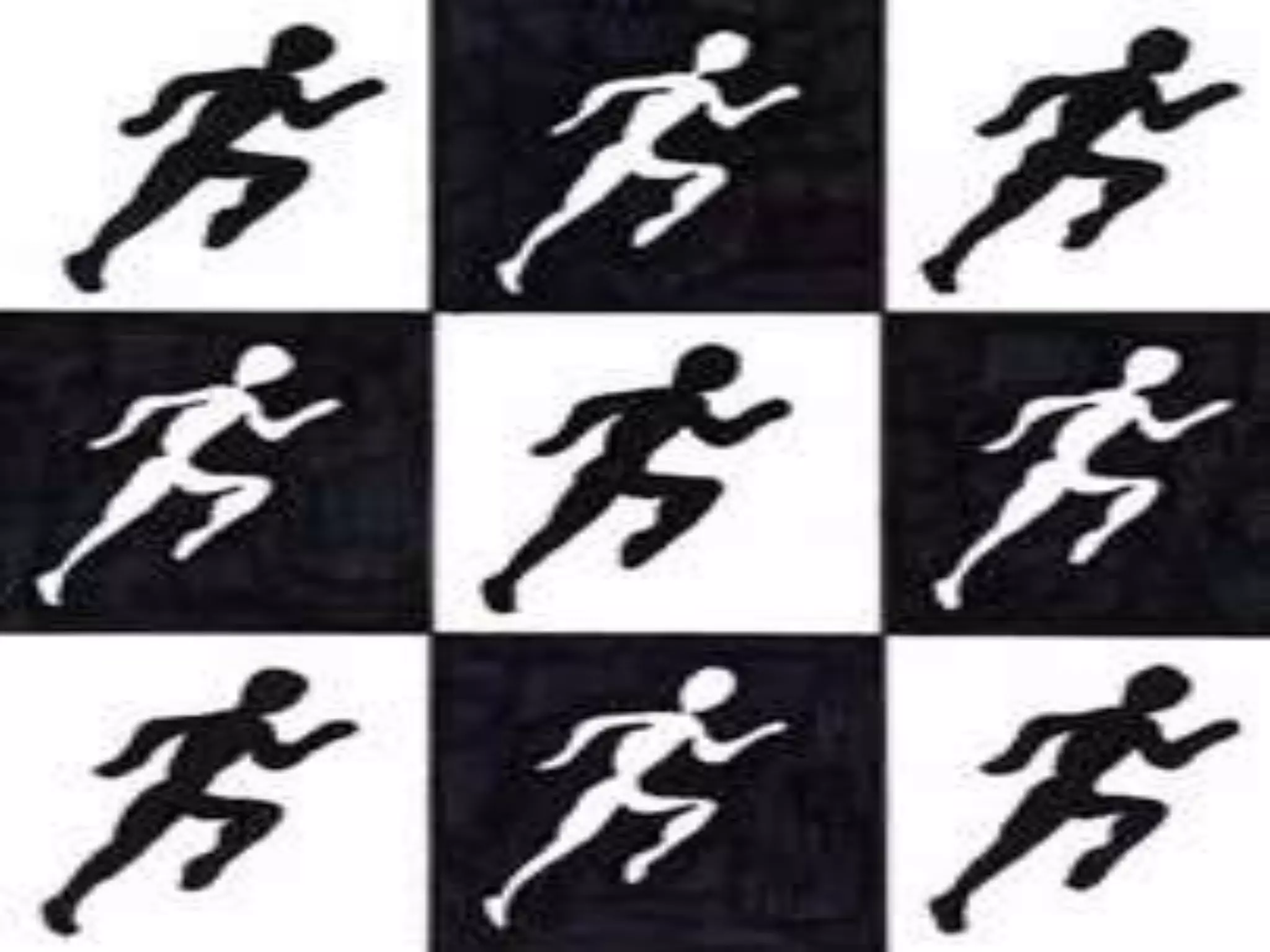
Rhythm- Repetition
When a design element is repeated
RHYTHM
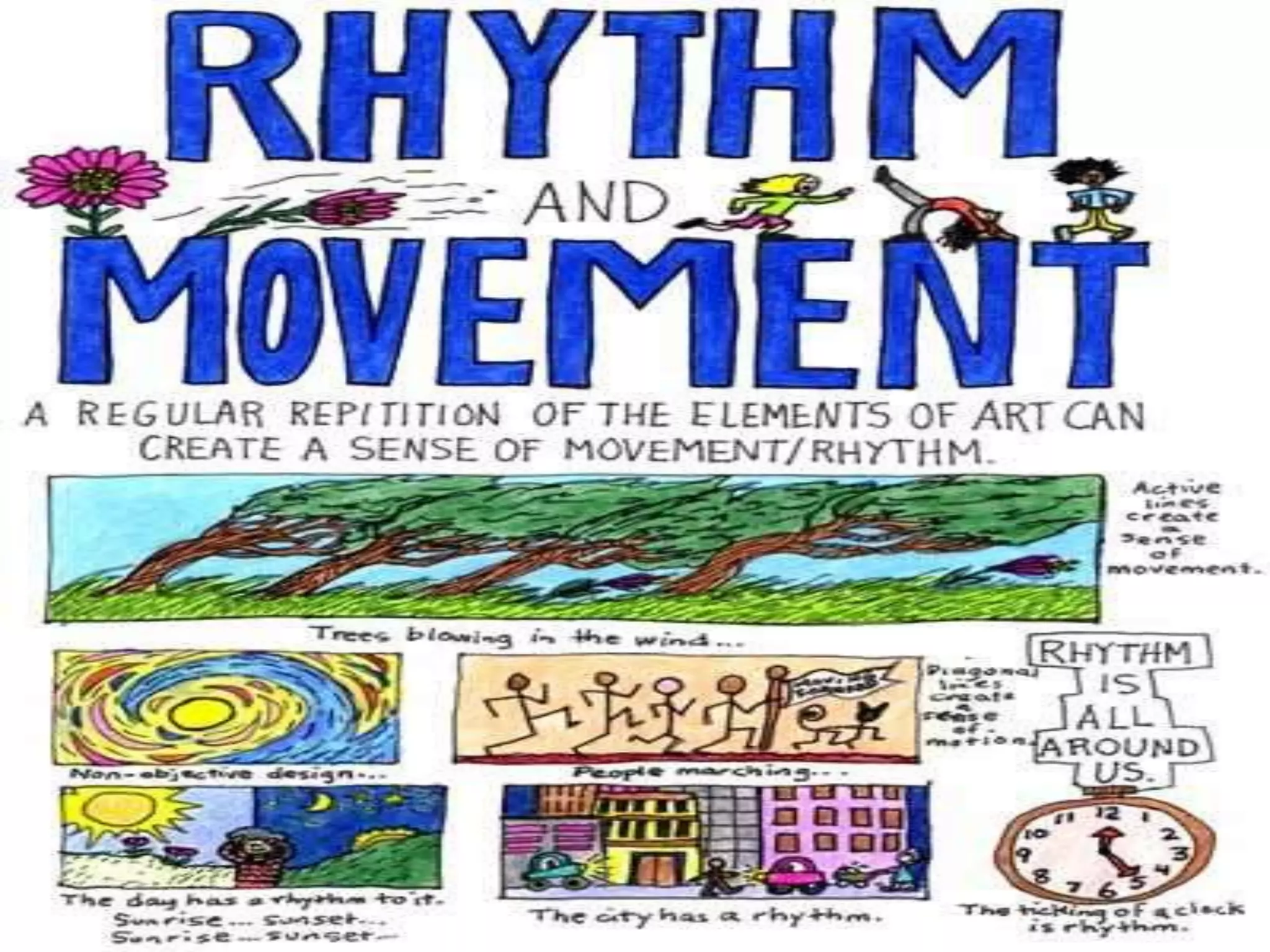
Rhythm is a sense of movement and is necessary to create
interest in a design and carry out the central theme. Rhythm can
be achieved by the repetition of lines, shapes and color to get
direction.
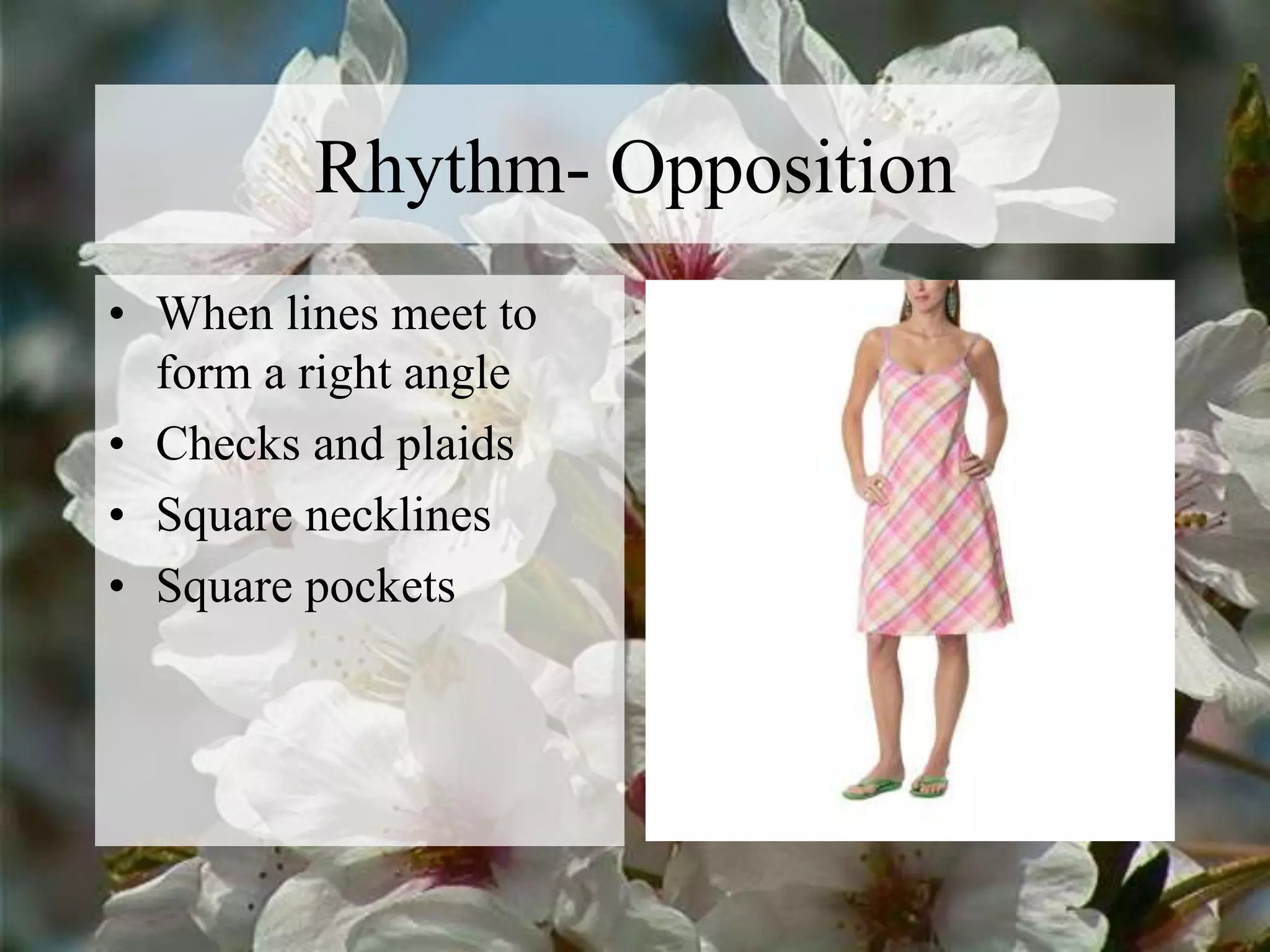
Rhythm- Opposition
• When lines meet to
form a right angle
• Checks and plaids
• Square necklines
• Square pockets
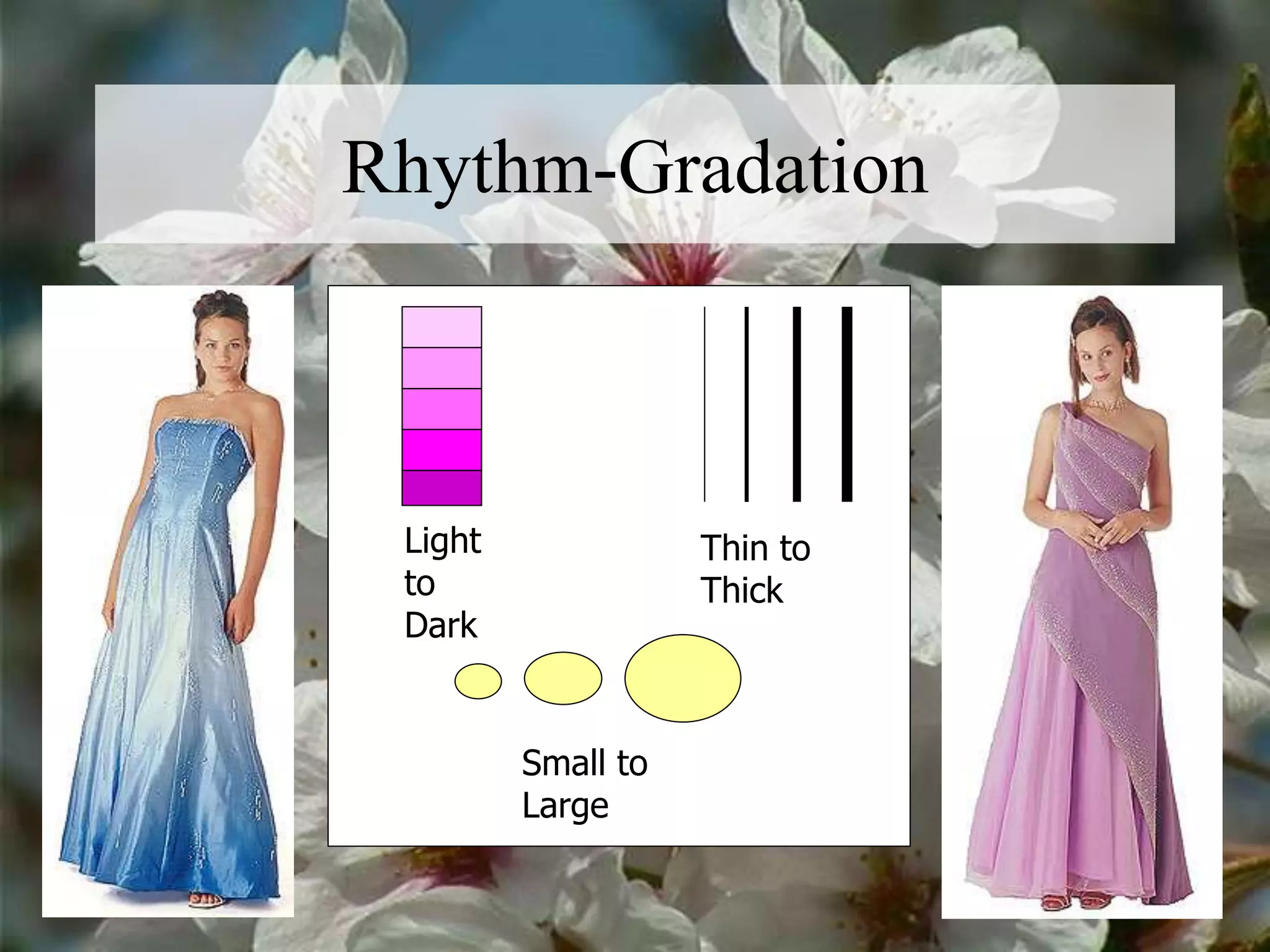
Rhythm-Gradation
Light
to
Dark
Thin to
Thick
Small to
Large
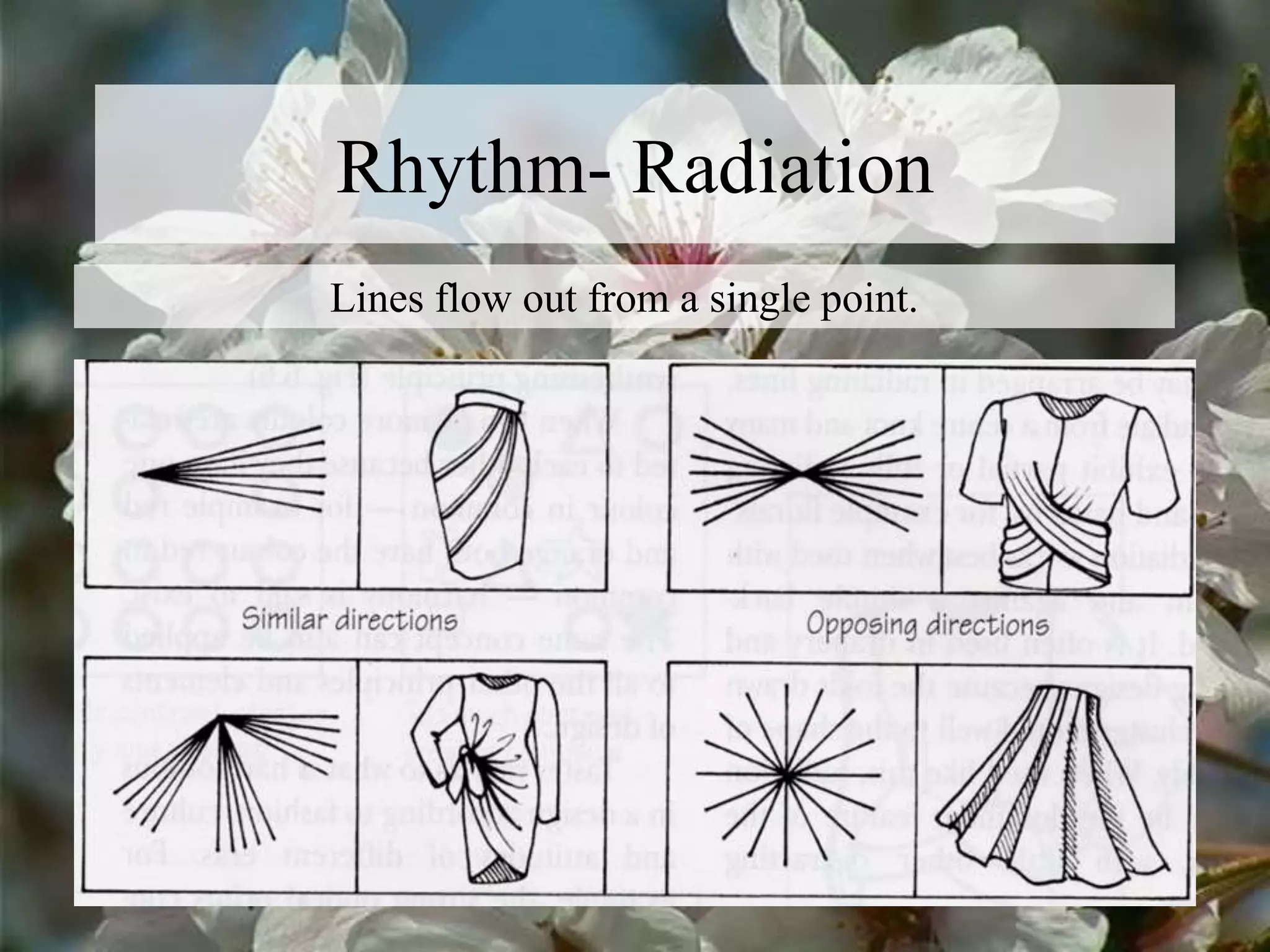
Rhythm- Radiation
Lines flow out from a single point.
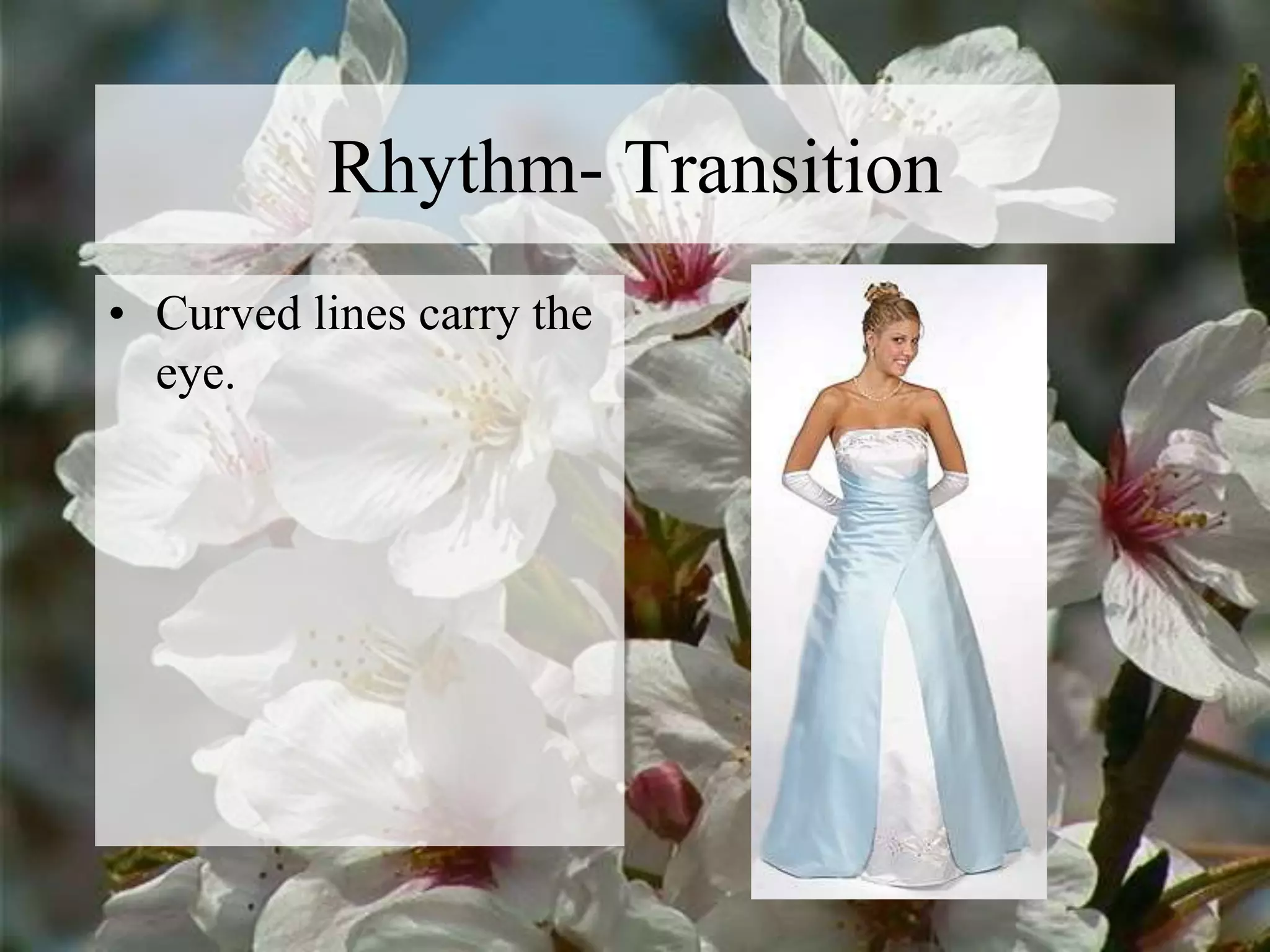
Rhythm- Transition
• Curved lines carry the
eye.
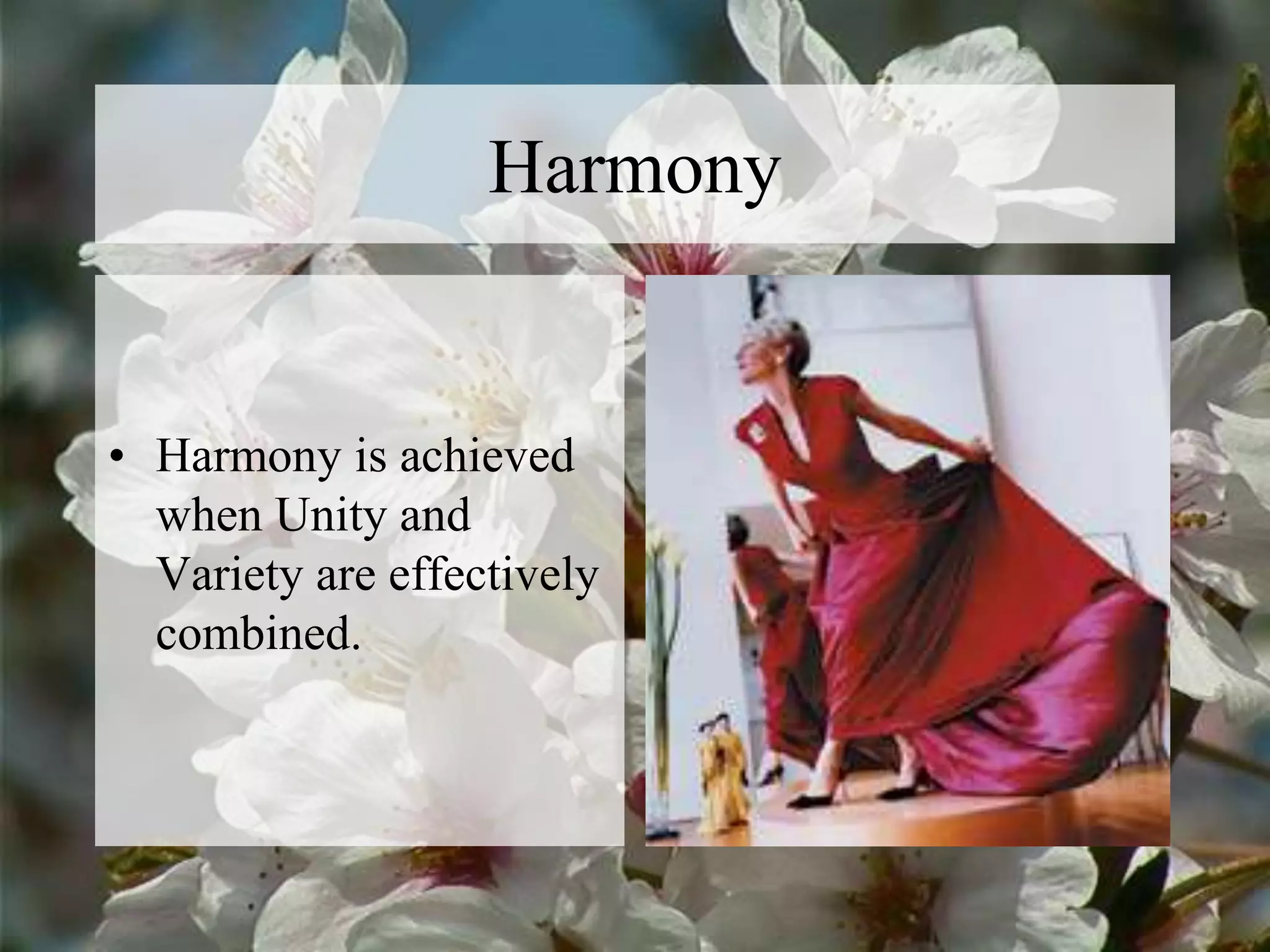
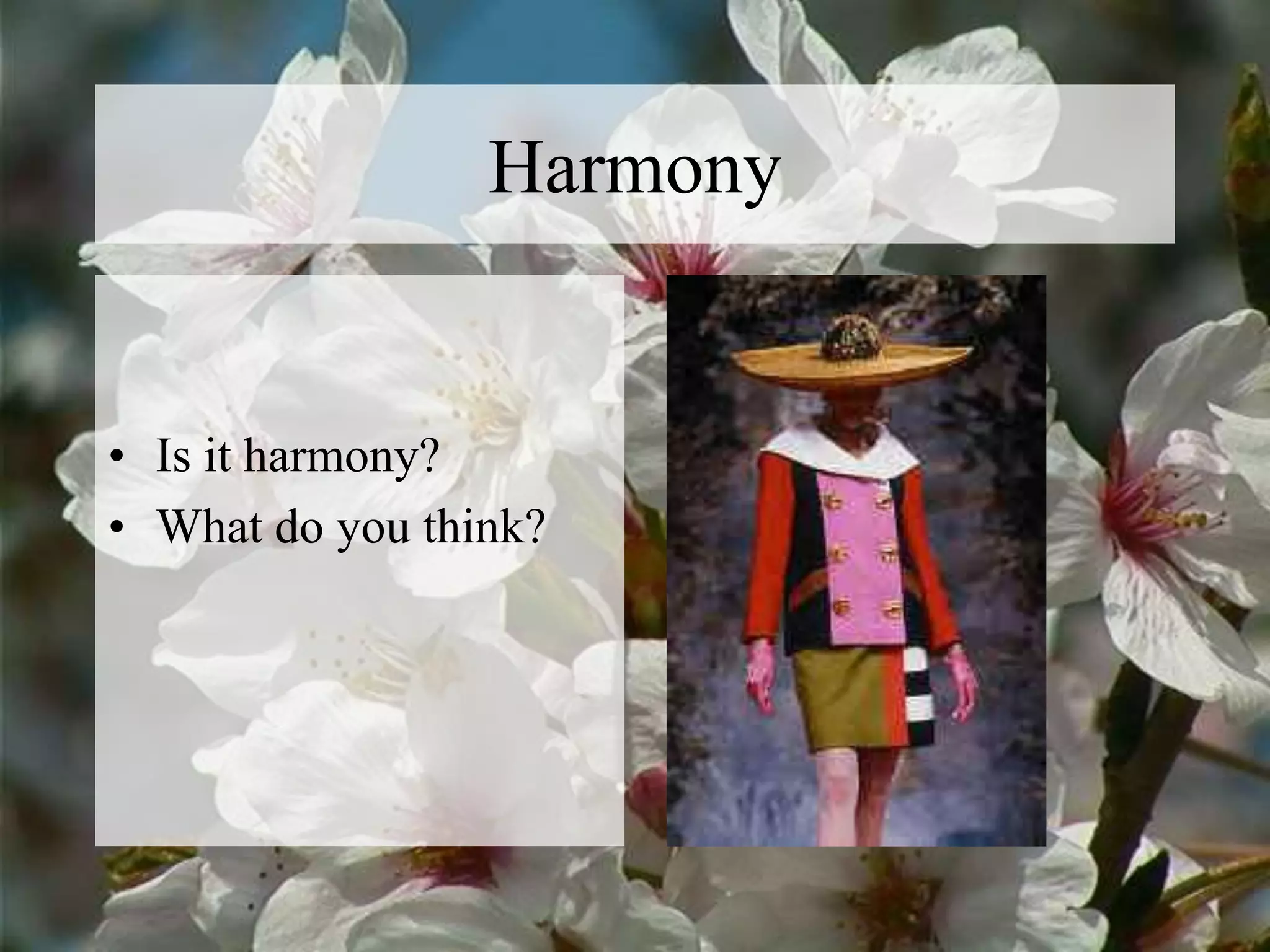
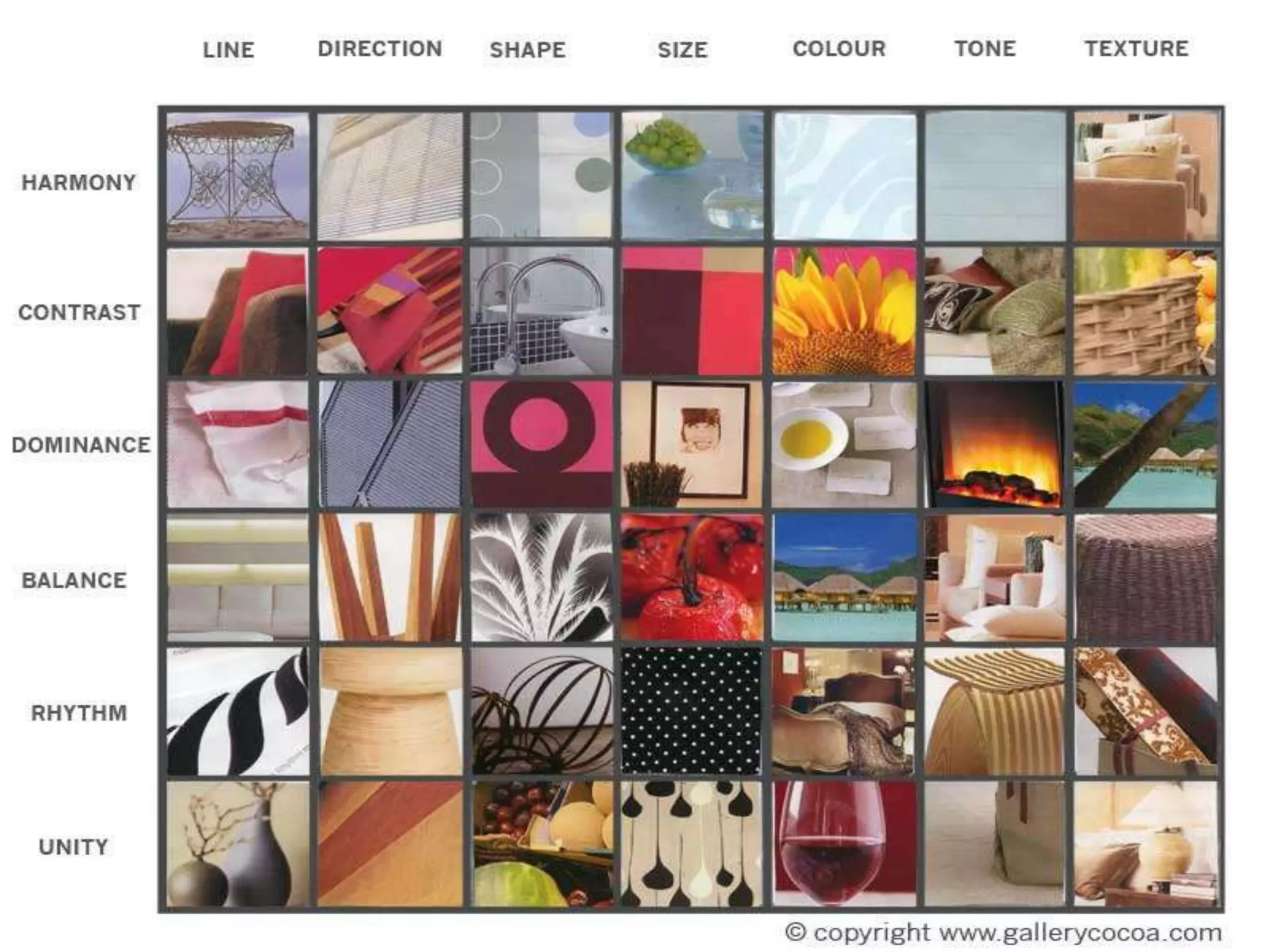
Harmony
• Harmony is achieved
when Unity and
Variety are effectively
combined.
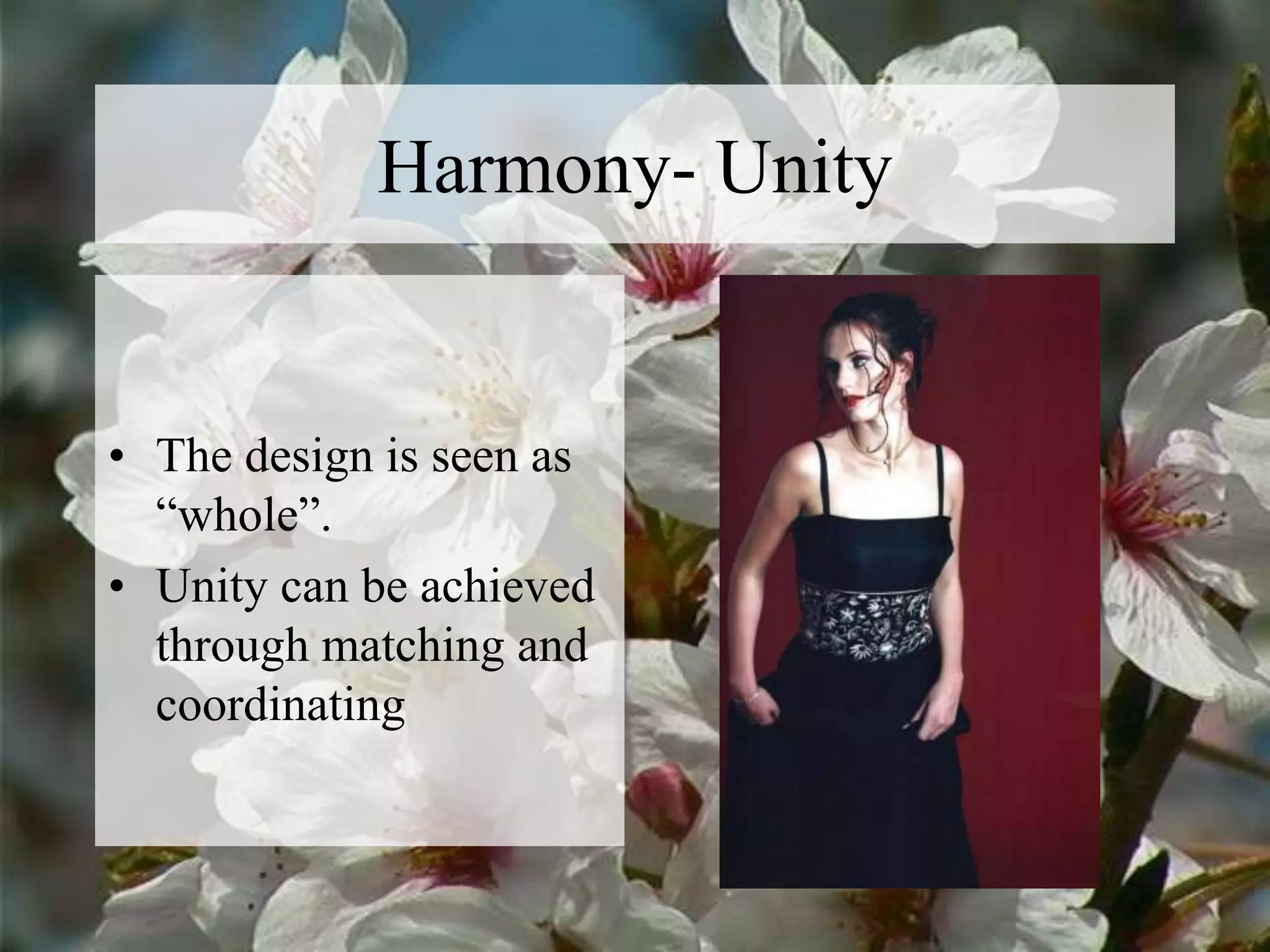
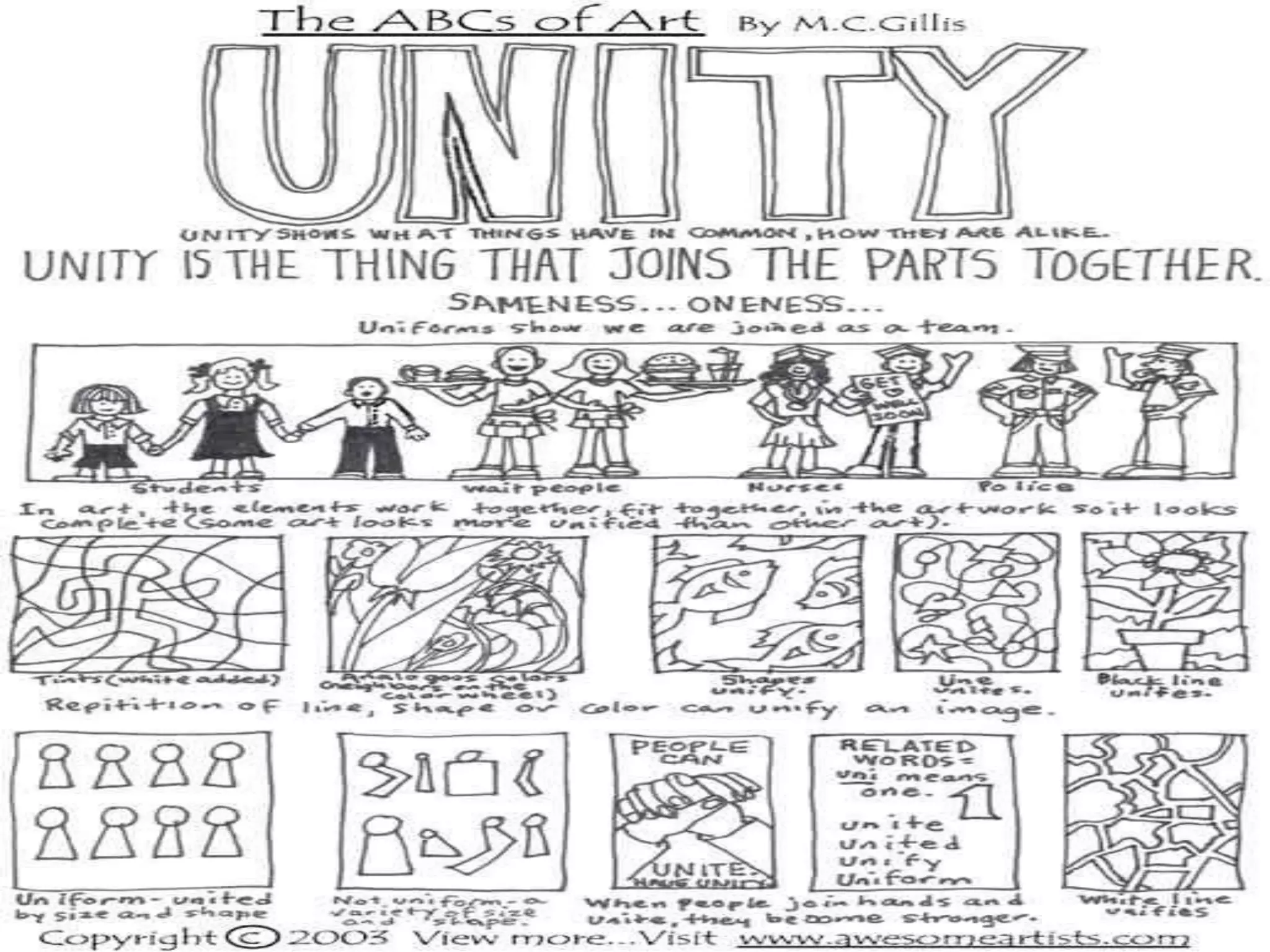
Harmony- Unity
• The design is seen as
“whole”.
• Unity can be achieved
through matching and
coordinating
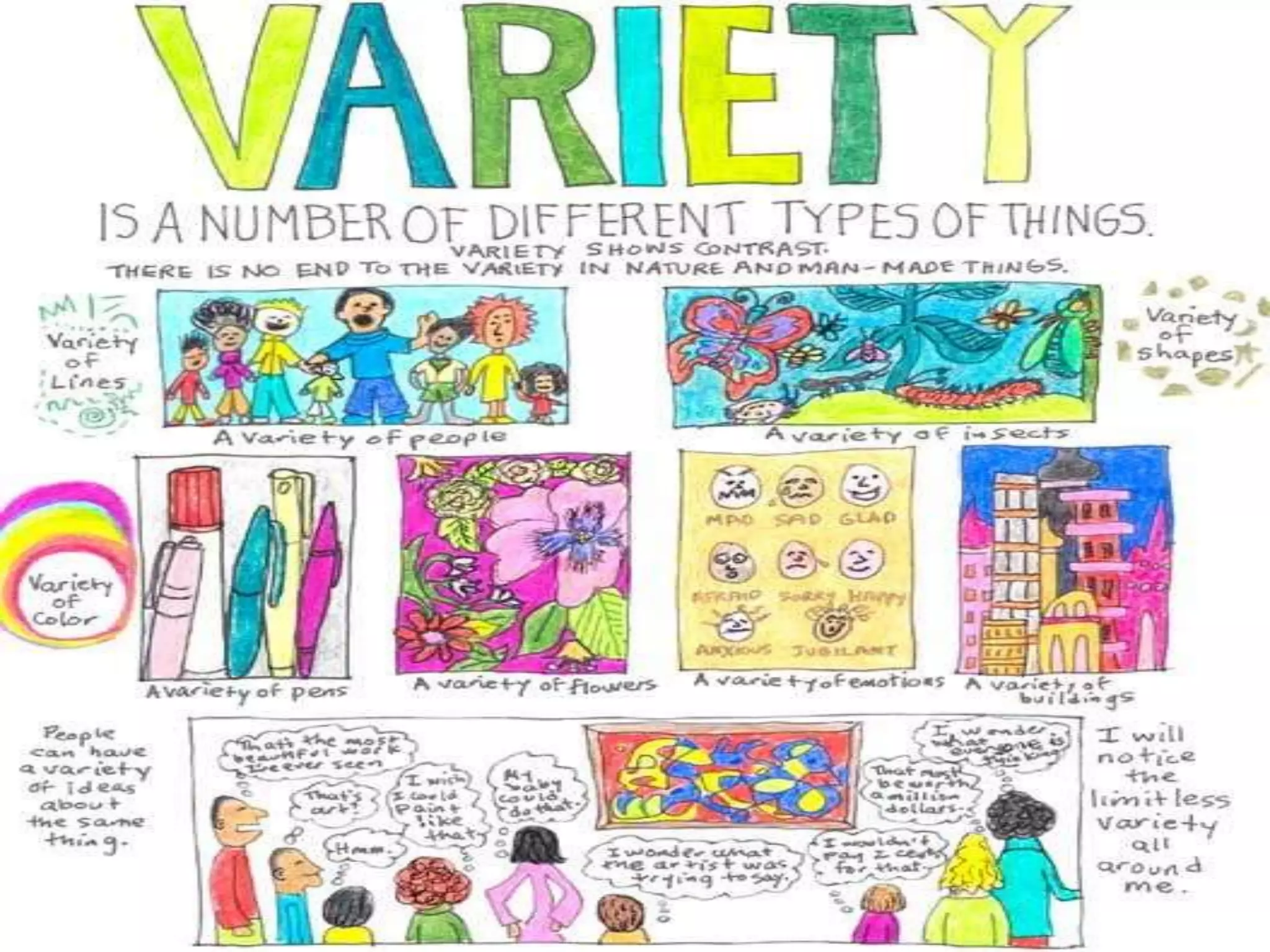
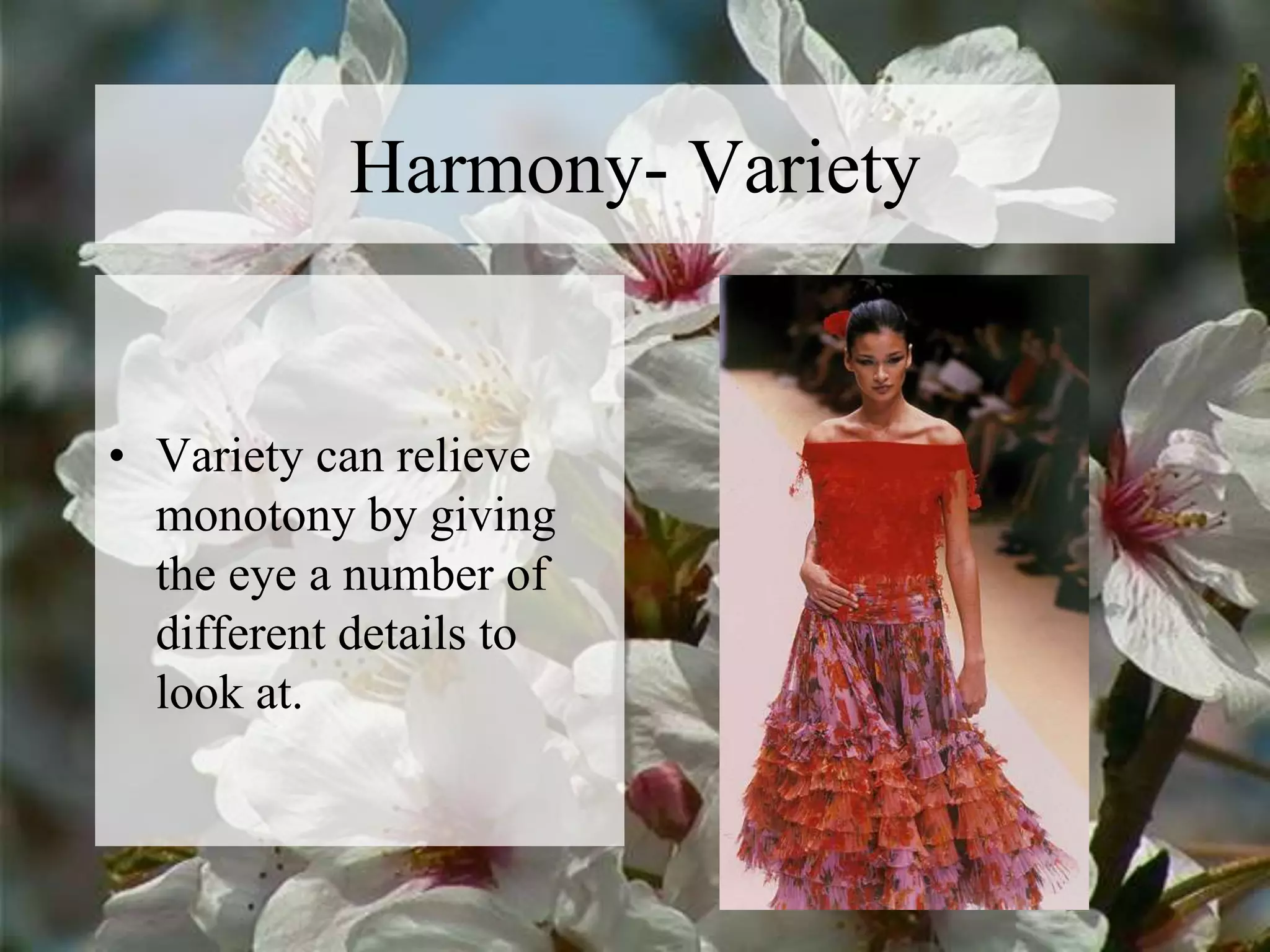
Harmony- Variety
• Variety can relieve
monotony by giving
the eye a number of
different details to
look at.
Harmony
• Is it harmony?
• What do you think?
Conclusion
As you can see the Principles of Design
overlap some but through practice and
exposure you will see these principles come to
life all around you.

Principles of design_ppt

  • 1.
    The Principles ofDesign Fashion Strategies
  • 2.
    The Principles ofDesign Fashion Strategies
  • 3.
    PRINCIPLES OF DESIGN Theprinciples of design serve as a guide lines for combining elements. The principles combine the elements to create an aesthetic placement of things that will produce a good design. Again, the way in which these principles are applied affects the expressive content, or the message of the work. Fashion Designers are taught Principles of designs in beginning of their student life, so in futures they may not consciously think of these principles as they work but if some thing is wrong with a design, they are able to analyze the problem in terms of proportions, balance, rhythm, emphasis and unity to create a harmonious design.
  • 4.
    PRINCIPLES ARE… • Proportion(Scale) • Balance • Emphasis • Rhythm • Harmony
  • 5.
  • 6.
    Proportion is simplythe pleasing interrelationship of the sizes of all parts of the garments. Standards of proportion change with fashion cycles along with the evolution in silhouette and line. The length and size of design features like pockets, trimmings, surface ornamentation or parts of garments within the silhouettes should compliment the whole.
  • 7.
    Proportion • Elements seemto be an appropriate size for the space they fill.
  • 8.
    Proportion • The ratioof one part to the whole. • Things just look right.
  • 9.
    Proportion • The ratioof one part to the whole. • Things just look right.
  • 11.
  • 13.
    Formal Balance • Oneside is a mirror image of the other side
  • 14.
    Informal Balance • Objectson each side of the central dividing line are different. • More exciting and dramatic
  • 21.
    EMPHASIS Emphasis or acentre of interest draws attention to the focal point of the garment. It marks the locations in a composition which most strongly draw the viewer’s attention. A centre of interest should be related to the total structure of the garment. A focal point can be achieved by colour accents, significant shapes or details, lines coming together, groups of details or contrast. If fashion designer is working on particular client, and the client has some interesting features e.g. — very beautiful shoulders or neckline, then the designer could add some interesting features or emphasizing the garments that will enhance the clients best part of the body.
  • 22.
    Emphasis • Emphasis createsa center of interest • Also referred to as a Focal Point
  • 25.
    Rhythm- Repetition When adesign element is repeated
  • 29.
    RHYTHM Rhythm is asense of movement and is necessary to create interest in a design and carry out the central theme. Rhythm can be achieved by the repetition of lines, shapes and color to get direction.
  • 30.
    Rhythm- Opposition • Whenlines meet to form a right angle • Checks and plaids • Square necklines • Square pockets
  • 31.
  • 33.
    Rhythm- Radiation Lines flowout from a single point.
  • 34.
    Rhythm- Transition • Curvedlines carry the eye.
  • 36.
    Harmony • Harmony isachieved when Unity and Variety are effectively combined.
  • 37.
    Harmony- Unity • Thedesign is seen as “whole”. • Unity can be achieved through matching and coordinating
  • 39.
    Harmony- Variety • Varietycan relieve monotony by giving the eye a number of different details to look at.
  • 42.
    Harmony • Is itharmony? • What do you think?
  • 46.
    Conclusion As you cansee the Principles of Design overlap some but through practice and exposure you will see these principles come to life all around you.