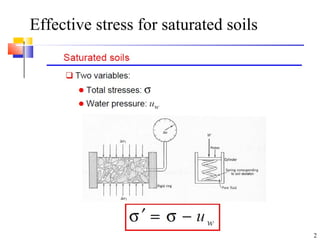
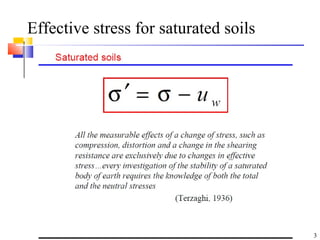
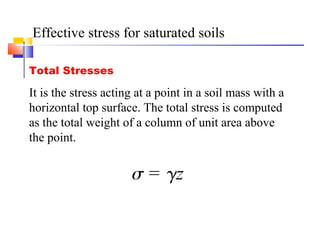
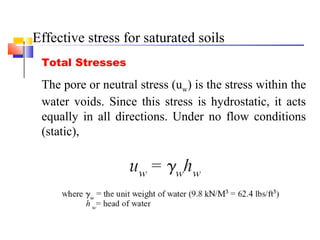
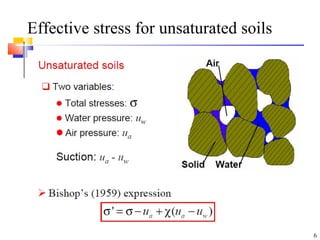
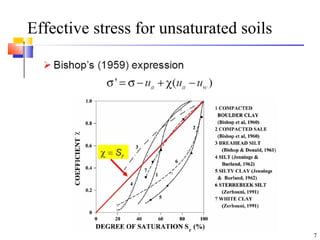
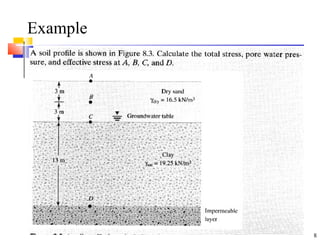
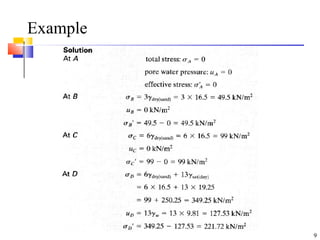
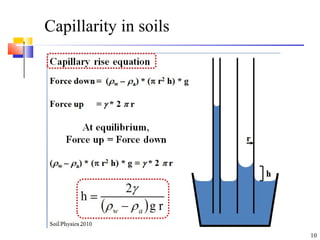
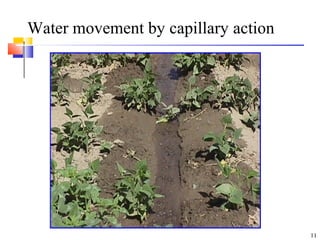
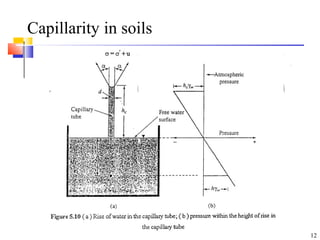
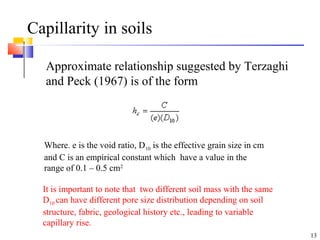
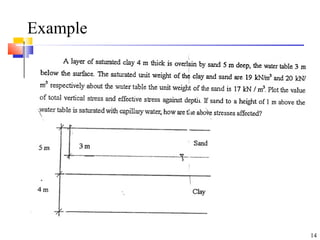
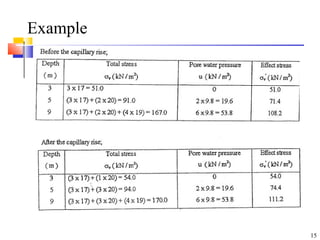
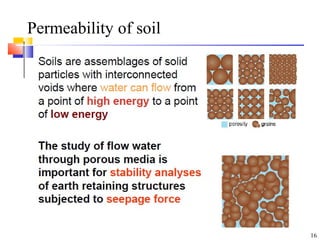
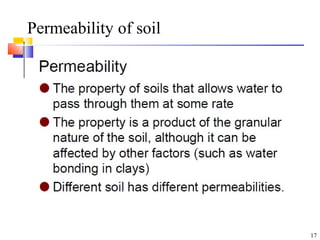
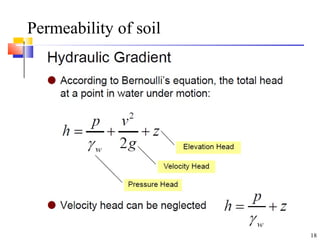
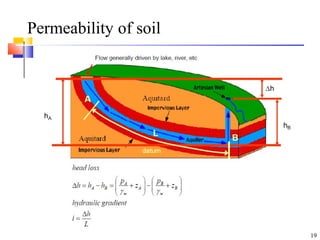
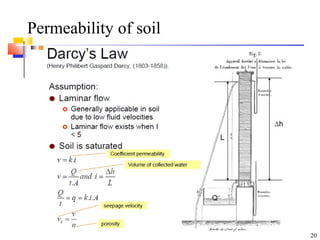
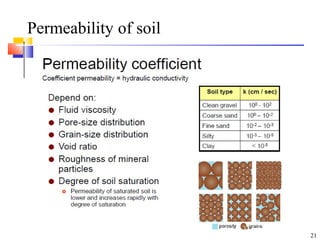
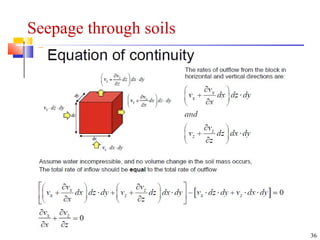
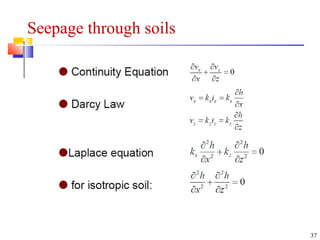
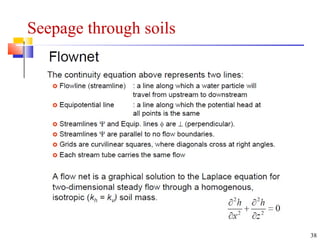
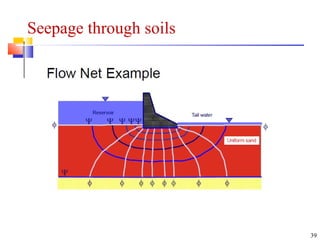
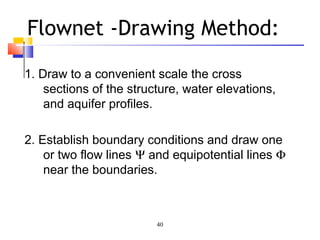
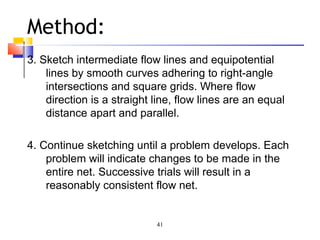
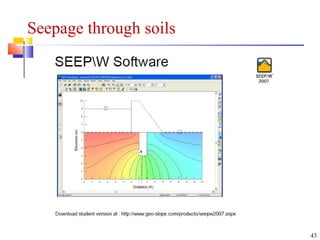
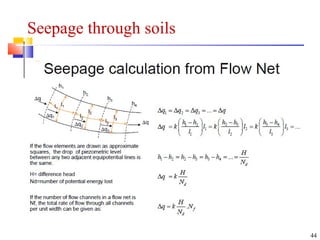
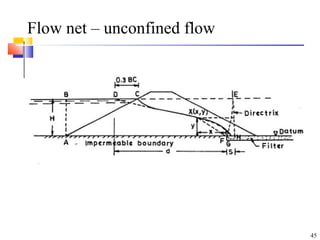
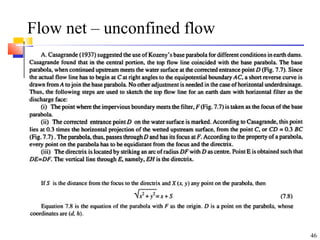
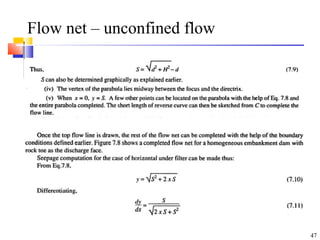
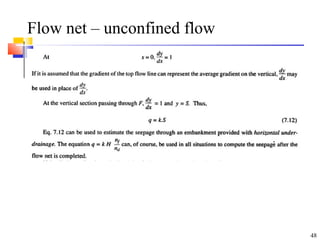
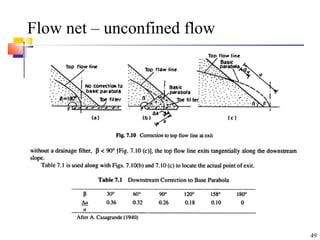
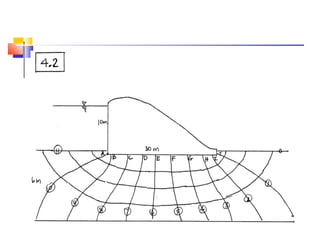
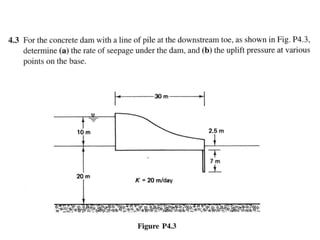
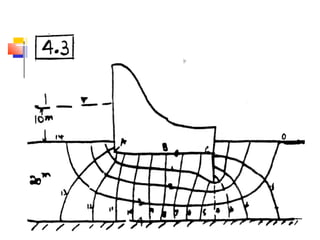
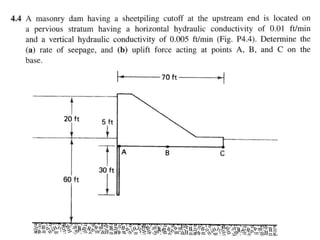
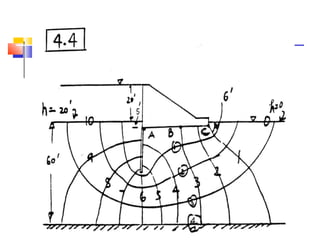
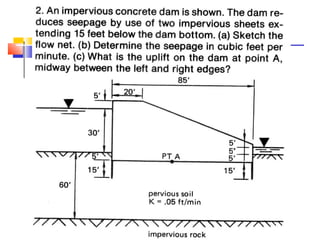
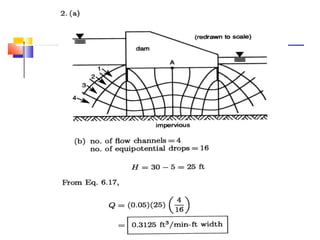
This document discusses principles of effective stress, capillarity, and seepage through soil. It defines total stress as the stress acting at a point from the total weight of soil above it, and effective stress as the total stress minus the pore water pressure. Capillarity allows water to move upward through small soil pores due to adhesive and cohesive forces. Seepage is the flow of water through soil, which depends on factors like permeability. Flow nets can be used to model two-dimensional seepage by drawing curves representing flow lines and equipotential lines meeting at right angles.
![1
Principles of Effective stress, capillarity
and seepage through soil
Dr. Amit Srivastava, PhD, M.ASCE, LMIGS, LMISRMTT, MITS,
MISSMGE, AMIE
[B.E. University of Roorkee (now IIT Roorkee),
M.E. & Ph.D, IISc, Bangalore]
Assistant Professor (Senior Grade), Department of Civil Engineering
Jaypee University of Engineering & Technology,
Agra-Bombay Road, Raghogarh, District: Guna
Madhya Pradesh - 473 226, India
Mob.No. (+91)94797729, Home: 07544267030](https://image.slidesharecdn.com/6effectivestresscapillaritypermeability-180419065118/85/6-effective-stress-capillarity_permeability-1-320.jpg)
![1
Principles of Effective stress, capillarity
and seepage through soil
Dr. Amit Srivastava, PhD, M.ASCE, LMIGS, LMISRMTT, MITS,
MISSMGE, AMIE
[B.E. University of Roorkee (now IIT Roorkee),
M.E. & Ph.D, IISc, Bangalore]
Assistant Professor (Senior Grade), Department of Civil Engineering
Jaypee University of Engineering & Technology,
Agra-Bombay Road, Raghogarh, District: Guna
Madhya Pradesh - 473 226, India
Mob.No. (+91)94797729, Home: 07544267030](https://image.slidesharecdn.com/6effectivestresscapillaritypermeability-180419065118/75/6-effective-stress-capillarity_permeability-1-2048.jpg)



![Geotechnical Engineering-II [Lec #6: Stress Distribution in Soil]](https://cdn.slidesharecdn.com/ss_thumbnails/6-180930132732-thumbnail.jpg?width=640&height=640&fit=bounds)


![Geotechnical Engineering-I [Lec #19: Consolidation-III]](https://cdn.slidesharecdn.com/ss_thumbnails/19-180924141035-thumbnail.jpg?width=640&height=640&fit=bounds)
![Geotechnical Engineering-I [Lec #17: Consolidation]](https://cdn.slidesharecdn.com/ss_thumbnails/17-180924140731-thumbnail.jpg?width=640&height=640&fit=bounds)


![Geotechnical Engineering-II [Lec #2: Mohr-Coulomb Failure Criteria]](https://cdn.slidesharecdn.com/ss_thumbnails/2-180930132603-thumbnail.jpg?width=640&height=640&fit=bounds)


